|
|
|
|
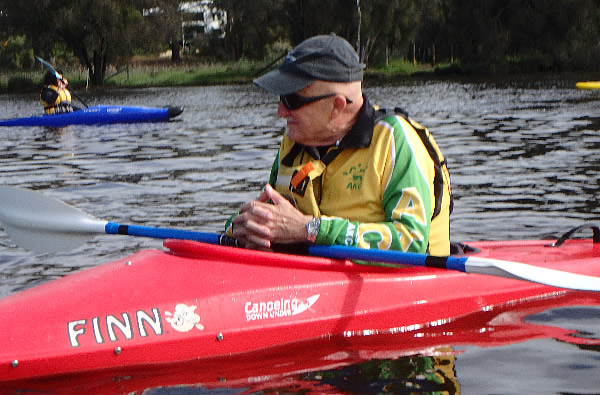
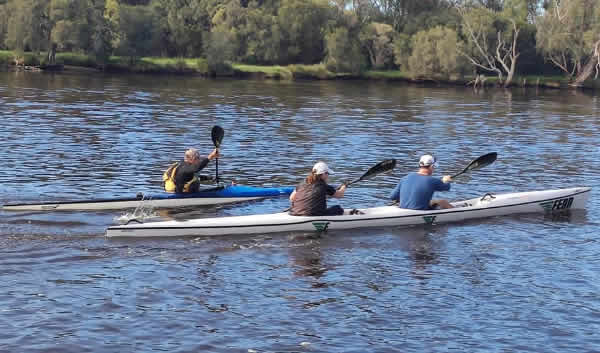
This week I paddled 242 kms, bringing my total paddled in 19 weeks to 3925kms. Another 3 days and I will have passed the 4000km mark.
I still have 33 weeks to go before my year is up so I still have a lot of paddling and some tough times ahead, physically and mentally.
*************************************************************************
Checking out the birds (with feathers) taking photos and talking to paddlers on the river help me to pass the time away. I'm virtually paddling on the same stretch of river every day but it is an interesting stretch with a lot of bird life around, although many of the Darters, Cormorants and the Pelicans have moved away, I expect to better feeding grounds. These are still several nests with young in them though.
There are lots of Kingfishers, Willy Wagtails, Galahs and Cockatoos though. This morning I was watching 7 Pelicans way up in the sky gliding and circling on the thermals. I'm thinking why are they up there doing that, there is no food up there.
One of my favourite times on the river is just before sunset and just after sunset when darkness creeps in. When there are a few clouds around there is usually a beautiful sunset and at dark, when I paddle the straight near home I watch all the lights of the planes heading to the airport. You would be surprised how many planes are landing at that time.
Paddling all these kilometres has become like a 7 day job. Every day I have to get up and walk down to the river, press the button on my watch to record the kilometres. I don't usually head home until I have done around 22 kms. Then I go out again on the afternoon shift and paddle another 13 kms, if I don't have a meeting or something that stops me going out.
Despite the hard work, I'm still enjoying the challenge.
*************************************************************************
It was this week that the Masters Games were going to be held in Perth before it was cancelled because of covid. It is now on the 23rd - 30th April 2022 but kayaking won't be taking part because of a clash of dates.
It is a pity that it is not going ahead because not everyone, especially masters don't take part in an Australian Championships.
The problem is the Australian Marathon Champs being held in Queensland is on the same date as the Masters Games, held here. However I'm sure many master paddlers in WA won't be taking a trip over to Queensland, but would have taken part in the Masters Marathon if it was here in Perth.
Yes the field of quality paddlers would have been reduced, but its a opportunity missed for those who were still keen to enter.
Just to take part in a Masters Games and being part of the hype would have been great.
- Local Birds
- Tad Sieczka
- Dean Gardiner Wins Award
- Paddle WA - Who We Are
- Progressive Racing Group
- Saturday Morning Dash
- Peter & Jane on the Frankland River
- Kimberley Kayak Expedition #5
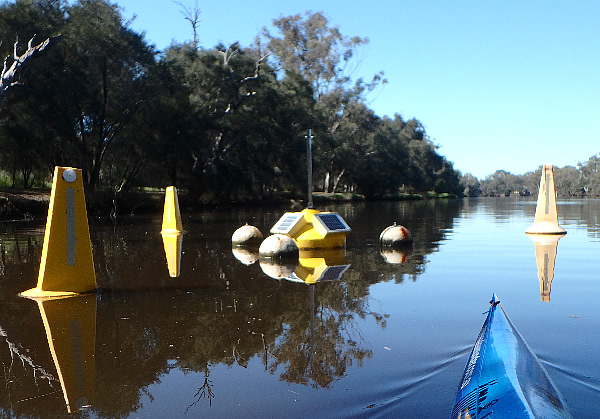
- Swan River Monitoring Stations
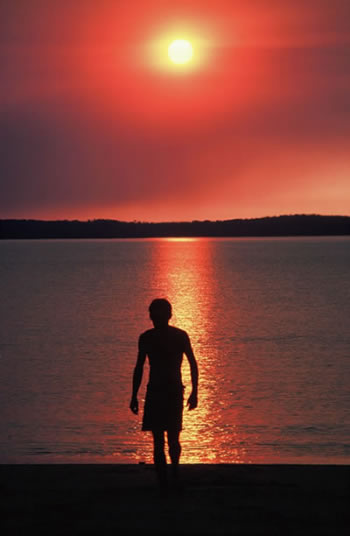
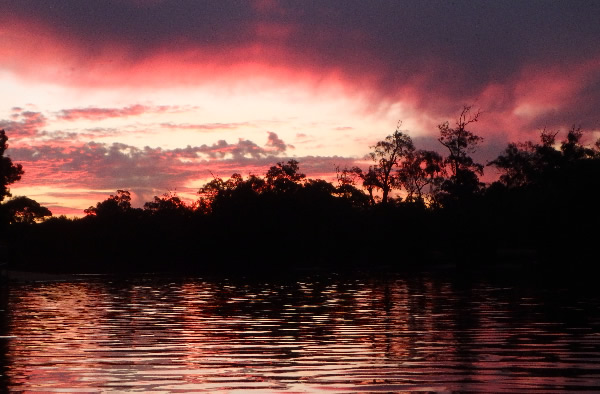
- Sun Sets Over Ron Courtney Island
- IOP Down Wind Race
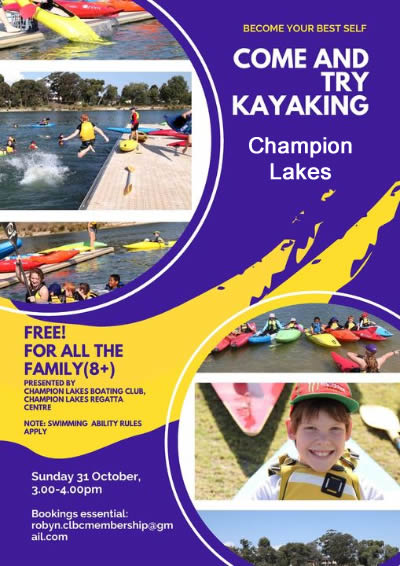
- Come & Try - Champion Lakes
- Mandurah Duel
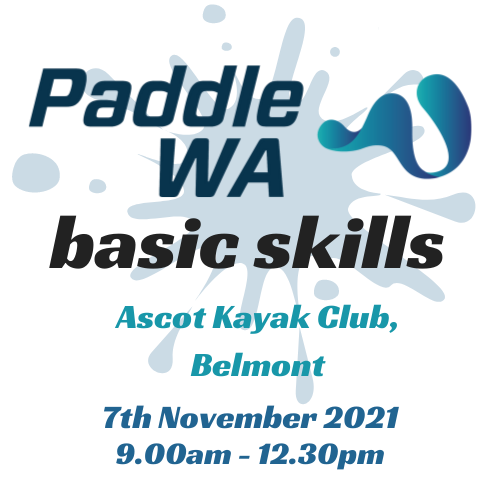
- Paddle WA Basic Skills Course
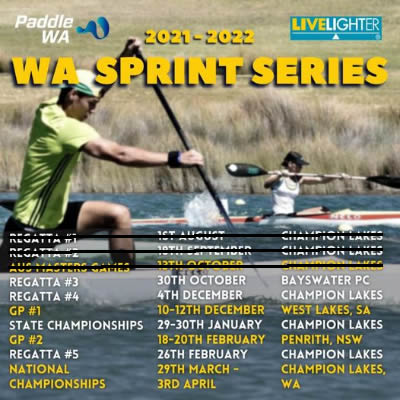
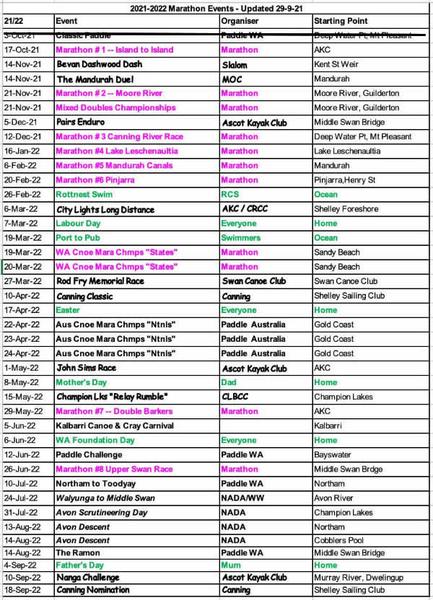
- Coming Events.
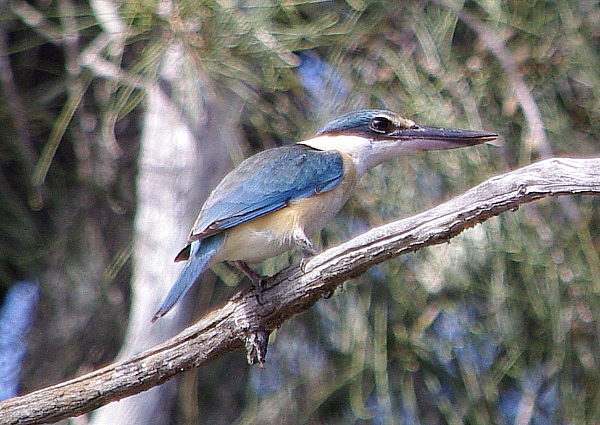
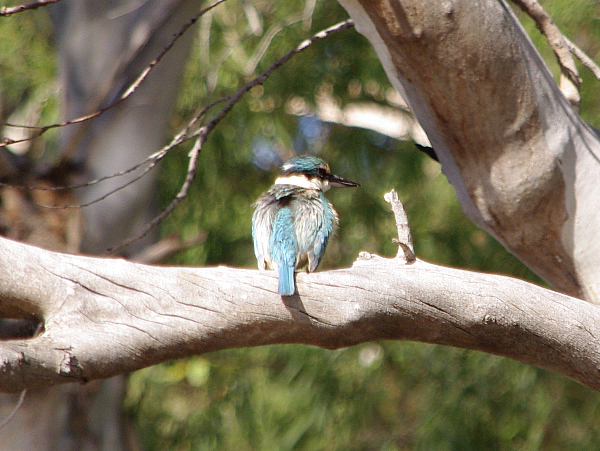
You can see lots of these kingfishers on the river at the moment.
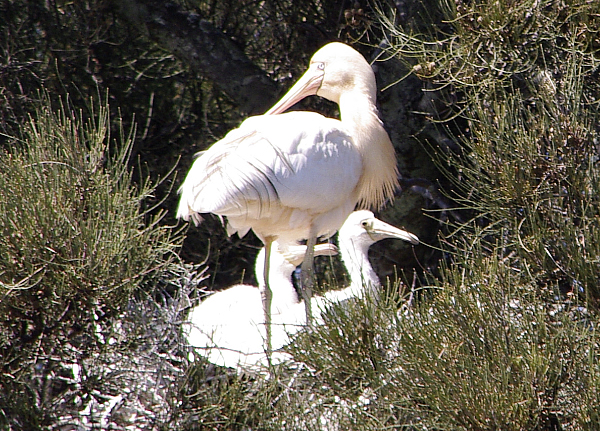
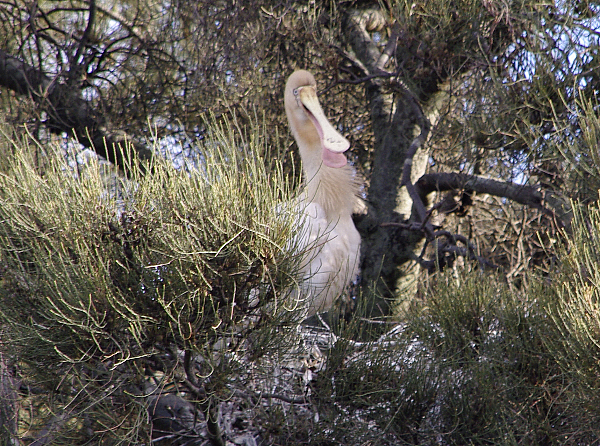
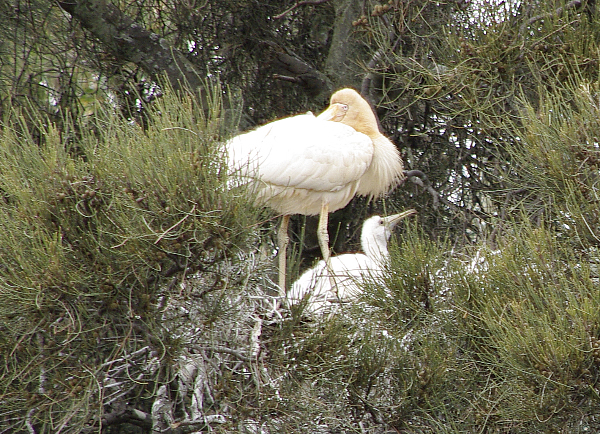
The young Spoonbills are getting bigger everyday.
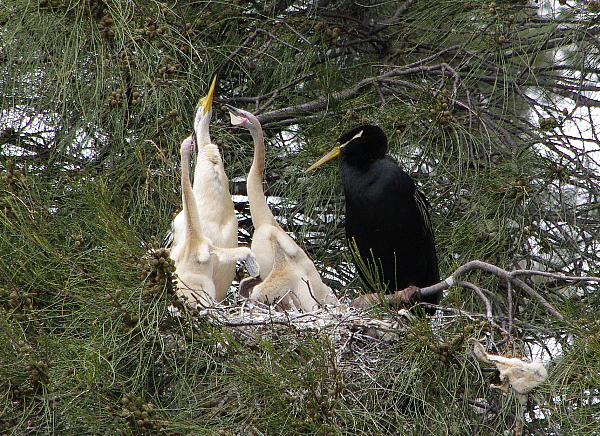
WARNING: If you see a nest with young Darters, Cormorants or Spoonbills please keep well away so they don't fret. They have been known to leap out of their nest and into the water. If that happens they won't survive.
I'm using a telephoto lens so I'm well away from them.
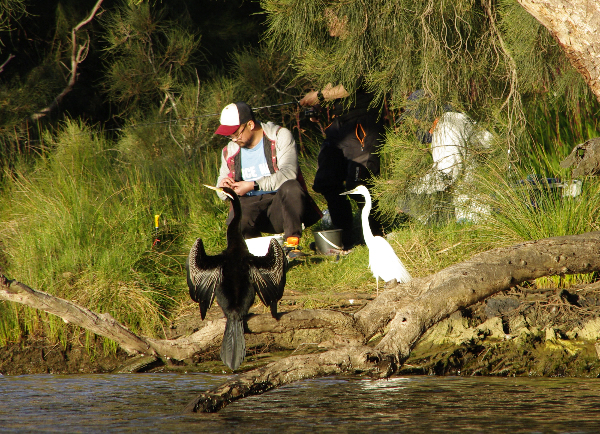
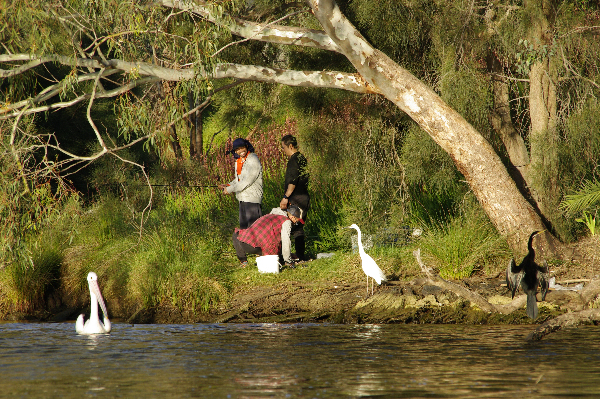
An Egret and a Darter are not afraid of these fishermen.
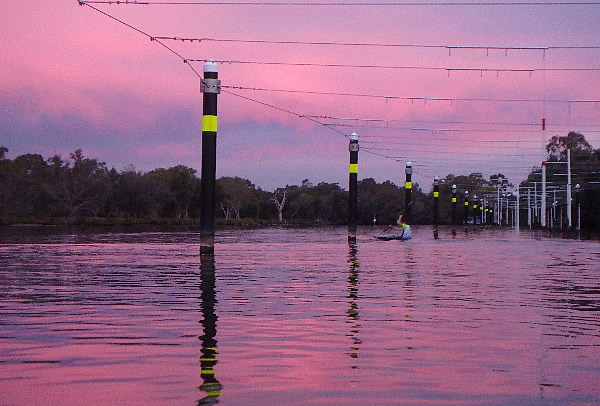
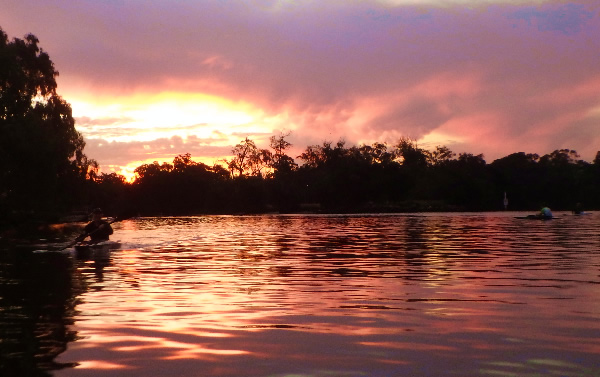
Cody Pope practising on the slalom course as the sun goes down.
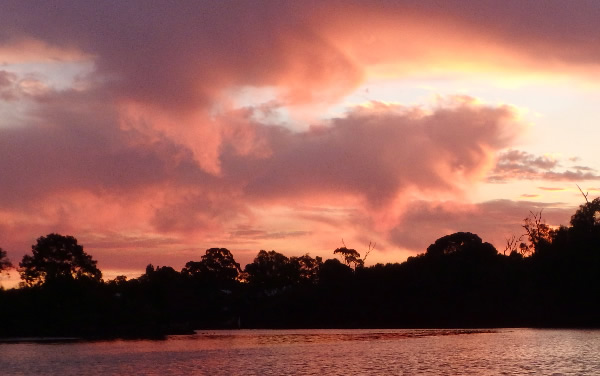
The sun reflects off the eastern clouds.
Tad is one of the Ascot Kayak Club instructors who teaches beginners how to paddle.
Tad is also a volunteer leader for the Avon Descent. Without Tad and his big band of volunteers the Avon Descent wouldn't be able to function properly.
DEAN GARDINER WINS
THE 2021 JOE GLICKMAN AWARD
Dean Gardiner has been named the winner of the 2021 Joe Glickman Award.
The Australian surfski pioneer edged out Billy Harker and Greg Kitto to become the second recipient of the accolade, which recognises those who have made profound contributions to downwind paddling.
For the first time, the Joe Glickman Award was decided by the surfski public, with more than 3,000 paddlers casting their vote.
Gardiner was told of the honour in a video conference with the award’s committee members.
Who We Are
Our Purpose:
To introduce and promote paddling in West Australia through participation in the activity of paddling: for health, enjoyment, friendship, challenge and achievement.
Our Vision:
To be a thriving cohesive paddling community in Western Australia that embraces the dimension of paddling as a sport: adventure, recreation and competition.
Our Community:
• Paddle WA a non-profit organisation affiliated with Paddle Australia.
• Our community is made up of many constituents including but not limited to clubs, disciplines, committees, volunteers, coaches, the Paddle Academy, the Board and the staff.
• We represent the interests of a range of disciplines including marathon, slalom, sprint, sea kayaking, ocean racing, wild water, outriggers and work collaboratively with other paddling organisations.
• Our membership includes over 2408 active club members of all ages, abilities and interests across the dimensions of adventure, competition and recreation.
• The 12 clubs are located across Perth and the South West of W.A.
*********************************************************
Why not join a club
or
If you wish to purchase a direct membership with Paddle WA for just $85 to get 24/7 insurance coverage, visit paddlewa.asn.au/direct-membership or contact develop@paddlewa.asn.au
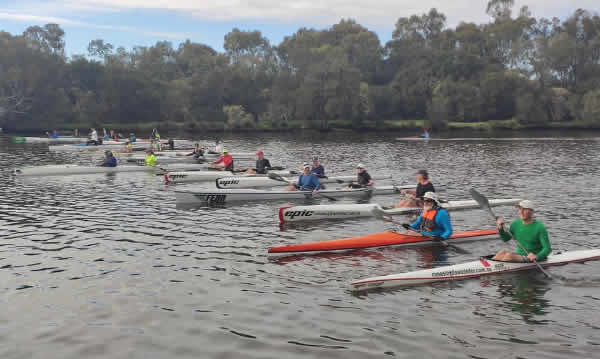
The time trial is suitable for all levels of paddlers from the beginner to the more experienced.
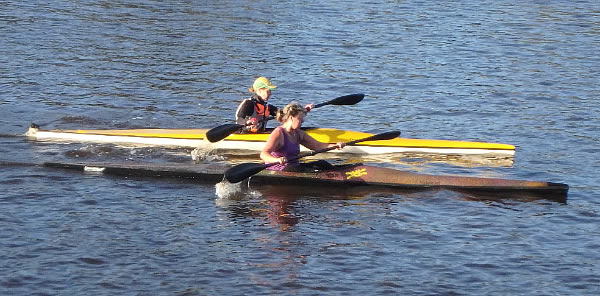
Maureen and Jeanette go head to head.
The Saturday morning 4km race is back.
Photo Sharon Cobley.
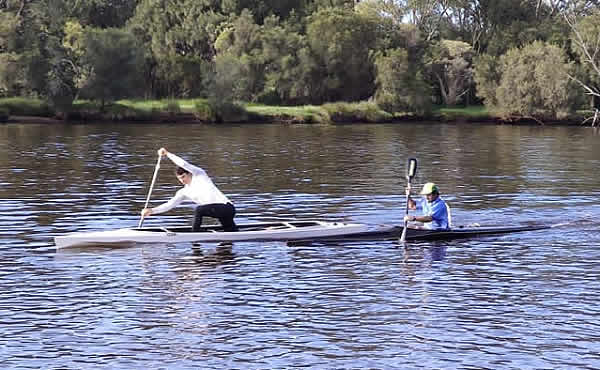
Gergely Balázs Nagy leads Peter Tomczak.
Photo Sharon Cobley.
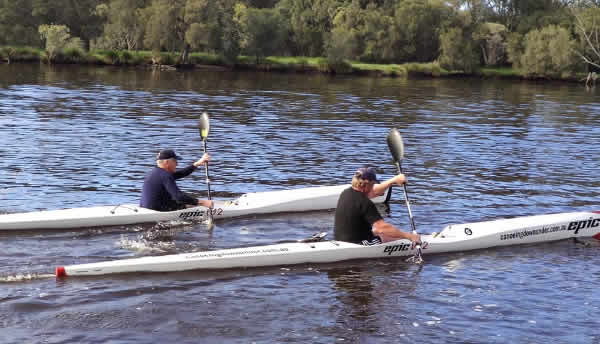
Best mates Warren Southwell and Bruce McWhirter going head to head.
Photo Sharon Cobley.
I'm trying to pass Anne and Ray but without success.
Photo Sharon Cobley.
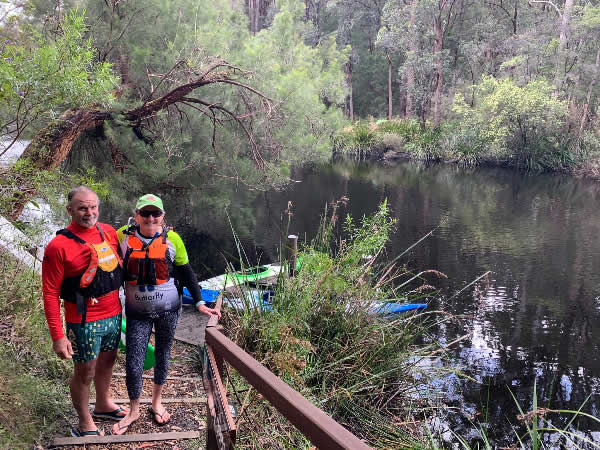
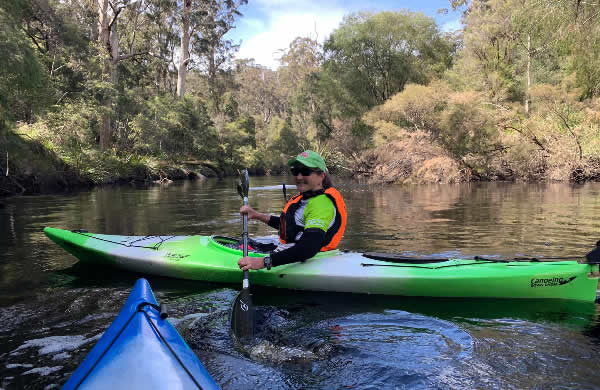
Peter and Jane Liddle
down south
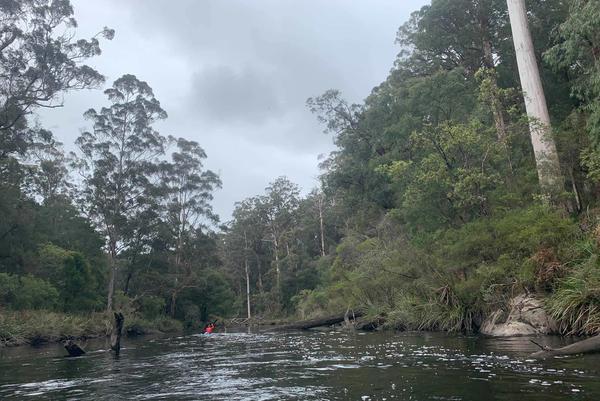
They had hoped to be competing in the Masters Games but after it got cancelled they decided to go south instead.
Jane on the Frankland River
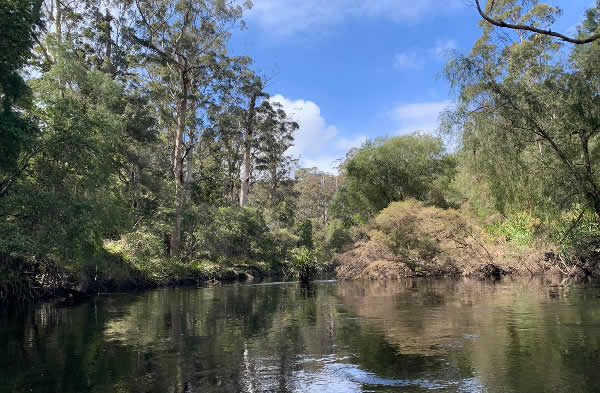
The Frankland River.
Length: 162 km
The Frankland River is a river in the Great Southern region of Western Australia. The Frankland River is the largest river by volume in the region and the eighth largest in the state. The traditional owners of the area are the Noongar people who know the river as Kwakoorillup.
Frankland River was named by the surgeon Thomas Braidwood Wilson in 1829. Wilson, who was on his way to Sydney, left Albany to explore the hinterland while his ship, Governor Phillip, was being repaired. He named Frankland River and Mount Frankland after George Frankland (1800–38), who was the surveyor-general in Van Diemen's Land in 1829.
The area was settled in 1857.
Kimberley Kayak Expedition #5
Monday 20th June
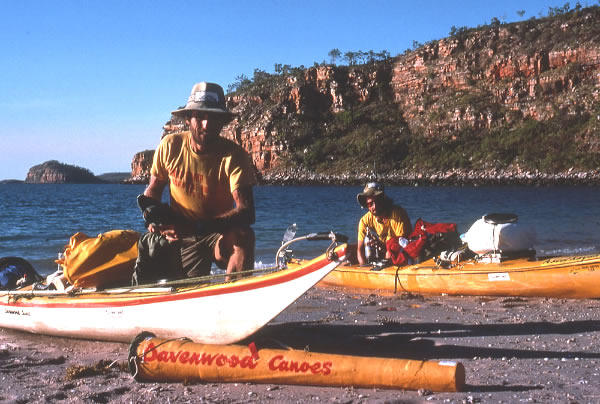
It was a 4.45am start of a new day but we had to move about with our torches as it was still dark. The tide was going out fast so we had to hurry to catch it before it went out too far and miss the
opportunity of getting a ride to Red Bluff.
There was a haze when it became light but it turned out being smoke from a bush fire to the east. We got that ride to Red Bluff but then we had little shelter from the wind and the ocean became pretty
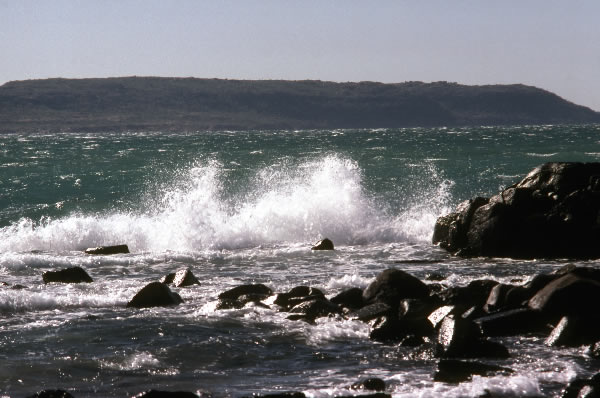
choppy giving us a rough ride for 20kms. The tide was now against us and the last few kilometres from Cape Wellington where we camped was even tougher going.
We had a radio sked and found out the Dennis and Duncan our support team would arrive at Crystal Creek, our finish point on the 24th June about 4 days before we would get there. We later talked
to Mike and Sue on the radio and told them of our progress.
At sunset the sky glowed red because of the bush fire.
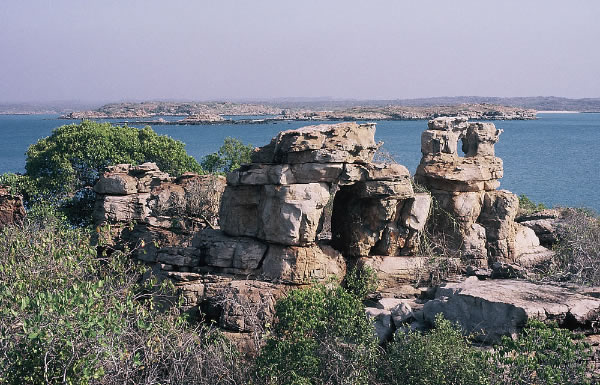
A great camping site, sandy beach and surrounded by cliffs.
Tuesday 21st June
It was another 4.45am rise for a 6.35am start. It’s hard to believe after all the practise we’ve had it stills take us nearly two hours to get going.
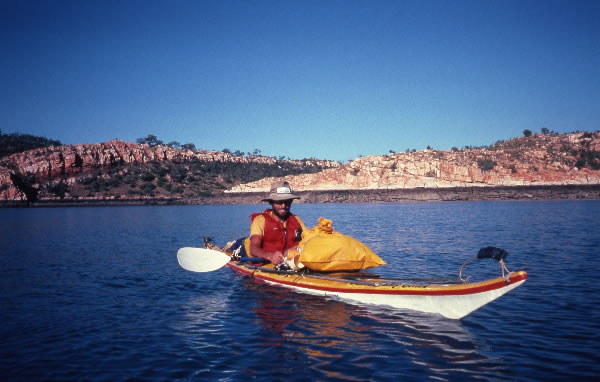
Although we were helped a little by the tide the wind was a pain and we knew it would get worse when we rounded Bat Island and it did, the sea was full of white caps running directly towards us. Our kayaks pounded up and
down and were tossed around in the fairly short chop showering us with sea water. We were extremely pleased we had only to paddle 24kms that day to get to Careening Bay. Coronation Islands were to our north but they gave no shelter from the easterly winds.
We paddled for hours before we had the opportunity to grab a short break behind a rocky island. We were so cold from the water spray we didn’t need to drink much water. With only 5kms left to our sandy beach at Careening
Bay we were happy to endure a little more discomfort.
When we landed on a beautiful sandy beach and took refuge from the rough conditions happiness was bliss, but there was no time to hang around as the tide was coming in so we needed to get out kayaks unloaded. Ewen in his
hastiness didn’t pull his boat far enough up the beach so the tide took it and it started floating away. At first he stood there watching it because he had seen a small shark, he also had the idea that the waves would bring it back but the wind was more powerful and it just kept drifting. When he realised it wasn’t going to return he jumped in the water and stopped it from blowing to Indonesia.
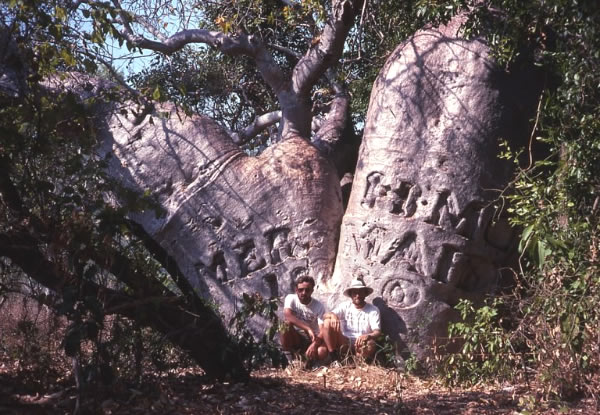
After all the excitement we moved under the famous ‘Mermaid’ boab tree to rest our weary bodies and to have lunch.
In 1820 Philip Parker King careened HMC Mermaid on the beach to do repairs. His crew inscribed the date and name of the Cutter on a large boab tree which is situated approximately 60 metres from the ocean. Parker King and his crew camped here for 17 days in 1820. Water was obtained from a creek 150
metres ESE of the boab tree (approximately 300 metres upstream from the beach).
Lieutenant King's expeditions along the Western Australia north west coastline were extremely important, as it was on his information that a number of further expeditions were based.
A sea eagle landed in the water just off our beach and started washing itself, first one wing then the other, then a flutter of feathers and then a big dip, all but its head. This went on for some time but with my camera at
the kayak I couldn’t capture the moment. Then with a shake of its wings to dry off, it was away.
After our break it was time to look for a fry pan lid and some rice that I had buried under the tree on an expedition in 1982. Although I had a vague idea where I buried it I wasn’t totally sure, but a dig with my paddle I
hit the spot straight away. Out came the fry pan, plastic bags that the rice had been in, and a staminade jar. We took the fry pan and plastic and buried the jar with a note in it. I wonder if anyone will find it? Or will I have to go back myself?
It became time to take some photos of us at the famous boab tree. As we took the photos a snake about a 30cm long, brown with black head and gold stripes came slithering from under the tree. Luckily it slithered with haste away from us.
The sunset, because of the fire was just amazing.
Philip Parker Kings famous boab tree with the inscription HMC Mermaid 1820.
It was the second time I had been there.
Ewen taking in the beauty.
A bushfire created a spectacular sunset.
Wednesday 22nd June
I had dreamt about snakes in the night. I was being chased down some narrow streets with snakes all over the
place.
Our paddle up to Hardy Point was a much more pleasant paddle than the day before, but we knew the conditions would change once around the point which it did,
all shit broke lose, the wind gusting fearlessly whipping up the sea creating breaking waves that pounded us. The wind was that strong it was difficult to hold onto our paddles. Our hats that were encrusted in sea water and as stiff as a board were tied tight.
The conditions were hairy and making headway was questionable, as we didn’t seem to move far at all apart from being tossed up and down. Ewen’s sleeping
bag that was in a dry bag tied on his kayak deck came loose and became a real problem in the rough conditions. For a while he had it in his lap but it became a hazard and needed securing so I rafted up with him which gave him the stability to tie it back on. It wasn’t easy though.
Our battle was far from over as we still had 14kms to paddle before reaching calmer, safer water around the Anderdon Islands. To paddle 5kms it was taking us
1-1/2 hours which wasn’t good. Ewen’s bag came off again but we had no choice to get beyond some big waves before attempting to tie it back on. Every so often some fluky waves or much larger waves would come through. It was at these times we needed to head our kayaks straight into the big waves to limit the risk of capsize.
Our ride was wild and even wilder when the waves started to hit us side on and it got more exciting when we skirted a two metre sea snake. Relief came when we
sighted our camping beach and that sighting made Ewen the happiest man in the world. I was pretty happy myself. Ewen’s hand was swollen, which had been giving him pain on the crossing so emergency first aid was adopted. Ewen was a very good slalom paddler but he wasn’t used to long distance paddling so he was suffering a little more than I was.
When we did our daily radio sked we heard that there had been a gale warning issued for the area. As the sun was setting dolphins glided through the water,
their fins acting as reflectors when they surfaced and the sun hit them . What a hard day.
We had several days of rough weather.
Finally in the shelter of islands.
Monitoring Stations
on the Swan
The Parks and Wildlife service is responsible for the waterways and has joint responsibility for the Riverpark shoreline in conjunction with the local or State government land managers under which the adjacent land is vested.
DBCA's (Department of Biodiversity, Conservation and Attractions) Parks and Wildlife is committed to ensure waterways continue to be a sustainable healthy ecosystem. The department works closely with other State Government agencies, local government authorities, community groups and research institutions to manage the health of the ecosystem.
Areas of focus include:
Nutrient and organic loading
Nutrient and organic loading to the Swan Canning river system is a priority issue for the waterway that has impacts on water quality, ecological health and community benefit.
Nutrients are elements or compounds including nitrogen, phosphorus and organic carbon. They enter the rivers from the catchments through drains, surface runoff and groundwater. The most common sources of nutrients entering our rivers include fertilisers, plant matter (e.g. grass clippings, leaves), detergents, sewage and animal waste.
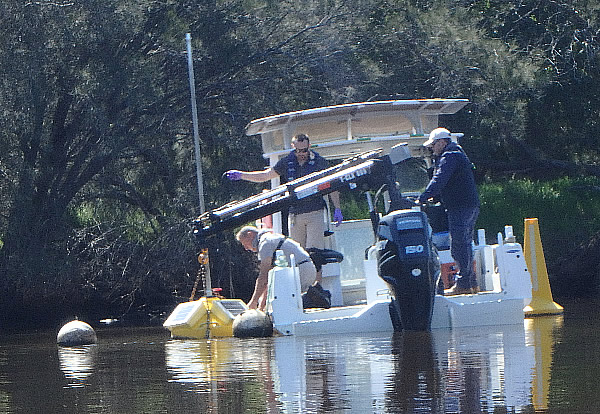
One of two Monitoring Stations at Caversham.
When there is low oxygen levels in the river, pumps are started.
Oxygenation works by supersaturating river water with oxygen. Water is taken from the oxygen-depleted bottom waters of the river and mixed under pressure with oxygen gas in the plants. The highly oxygenated water is then piped back into the bottom waters of the river where it mixes, distributing dissolved oxygen throughout the water column. The effectiveness of the oxygenation program is monitored every week, to help inform the operational management of the
plants.
Low oxygen conditions
Adequate dissolved oxygen in the water is crucial for aquatic life. When levels of oxygen in the water become less than ideal, many organisms can become stressed and in extreme cases, where oxygen levels drop to or near zero, this can result in fish deaths. Very low levels of
oxygen in the rivers over prolonged periods can also cause unpleasant odours and result in excessive nutrient release from sediments, which encourages algal blooms.
Low oxygen conditions in the rivers are exacerbated by the decomposition of excess organic matter (e.g. algae blooms, leaves, debris, pet/livestock waste, wastewater overflows), through microbial action and low water movement.
When organic material enters the river system, naturally occurring microbes break it down. These microbes need oxygen to metabolise, so the more active they are, the more oxygen they remove from the water. Historical river and catchment management practices, combined with a harsh climate of droughts and flooding rains, result in large amounts of organic matter being periodically deposited into the river. When this happens, microbial activity can increase rapidly
to break down the new load of organic matter and oxygen levels in the water often drop quickly as a result.
Stratification occurs when water at the surface of a lake or river does not mix with the bottom waters. This also affects oxygen levels in the Swan Canning river system. A salt wedge gradually moves upstream from the estuary mouth in Fremantle during summer when rains have ceased and freshwater flows diminish. Because salt water is heavier than fresh water, it sinks to the bottom of the estuary and does not mix with the fresher surface waters, which are oxygenated
through diffusion at the air-water interface. As a result, this salty bottom water can become hypoxic or anoxic.
Tackling low oxygen
In the shorter-term, Parks and Wildlife works in partnership with the Department of Water to deliver oxygen relief to targeted areas of the Swan Canning Riverpark. The oxygenation program began in 1998 in response to low oxygen conditions and severe algae blooms in the Canning River, upstream of the Kent Street Weir. There are now three plants oxygenating a 5km stretch of the Canning River above the weir via a piped distribution network. There are also two
oxygenation plants located at Caversham and Guildford in the Swan River that can provide oxygen to a 10km zone, depending on tidal movement.
The oxygenation program aims to maintain a concentration of 4mg/L of oxygen or higher in the water column within each of the oxygenation zones. This threshold concentration is set at a level that supports a wide range of aquatic life. Many organisms can survive in or will move away from environments where oxygen drops below 4 mg/L, but can become stressed if low oxygen conditions continue for prolonged periods.
Oxygenation works by supersaturating river water with oxygen. Water is taken from the oxygen-depleted bottom waters of the river and mixed under pressure with oxygen gas in the plants. The highly oxygenated water is then piped back into the bottom waters of the river where it mixes, distributing dissolved oxygen throughout the water column. The effectiveness of the oxygenation program is monitored every week, to help inform the operational management of the
plants.
Parks and Rivers checking one of the Monitoring Stations at Guildford.
Algal blooms
What are algae?
Algae range from microscopic (microalgae) to large seaweeds (macroalgae). They are usually thought of as simple aquatic plants which do not have roots, stems or leaves and have primitive methods of reproduction. Algae are a natural part of the rivers and estuary and an important part of the ecosystem. They provide habitat and a primary source of food to complex food webs, and oxygenate the water during daylight hours. Algae may attach to a substrate (e.g. rocks,
shells, seagrass) or be free floating. Different types of algae occur in different parts of the system and at different times. Macroalgae tend to be most abundant in the shallows of the lower parts of the estuary where there is more light throughout the water column.
Algal blooms
Like most plants, algae need warmth, light and nutrients to grow, but when increased nutrients or other factors alter the balance of the ecosystem, algae can become abundant and algal blooms occur. Phytoplankton blooms can be seen as discoloured water, including the possible formation of surface scums.
Most algal blooms are harmless, but they can cause problems. Macroalgae tend to accumulate in thick mats in shallow water and wash up on to beaches where they rot and give off hydrogen sulphide, or rotten-egg gas, which has an unpleasant odour. Decomposition of micro or macro-algae in the water, or night-time respiration of dense accumulations, can cause low oxygen conditions which can result in nutrient release from the river sediments. These conditions may
favour harmful algal blooms.
For more information; Go to:
https://www.dpaw.wa.gov.au/management/swan-canning-riverpark/rivers-and-estuaries-science/monitoring-evaluation-and-reporting?showall=1
Birds Along My Way
A
Kingfisher
that smartens up
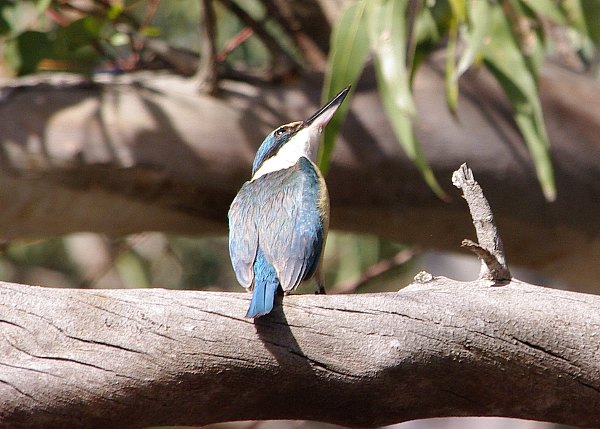
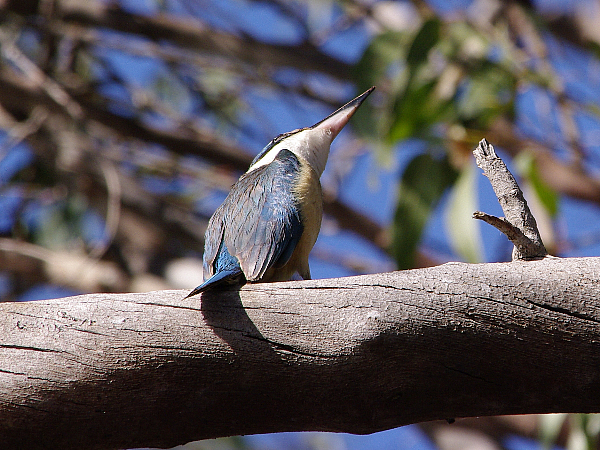
Can you believe that this little fellow is the same as the the one below 2 seconds later.
Look how its feathers have ironed out.
Kingfishers tend to fly off, but I was able to get very close to this little fellow.
This Spoonbill lives about 5 metres from his Darter neighbors below.
Although it is rearing its own young it thinks its funny watching the Darters at dinner time.
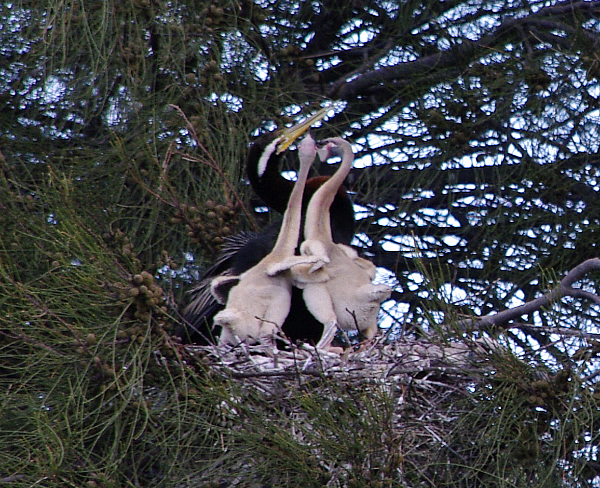
These young Darters are hungry.
WARNING: If you see a nest with young Darters, Cormorants or Spoonbills please keep well away so they don't fret. They have been known to leap out of their nest and into the water. If that happens they won't survive.
I'm using a telephoto lens and I'm well away from them when taking photos of the young.
Come on dad give us some food.
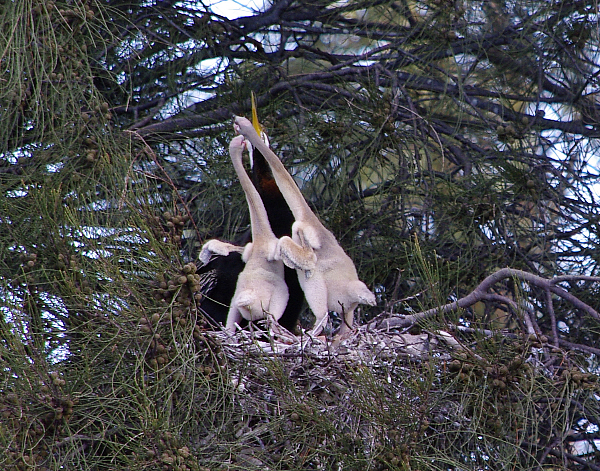
The same chicks as above but a few days later.
See the difference in their coat.
Come on mum give us some food.
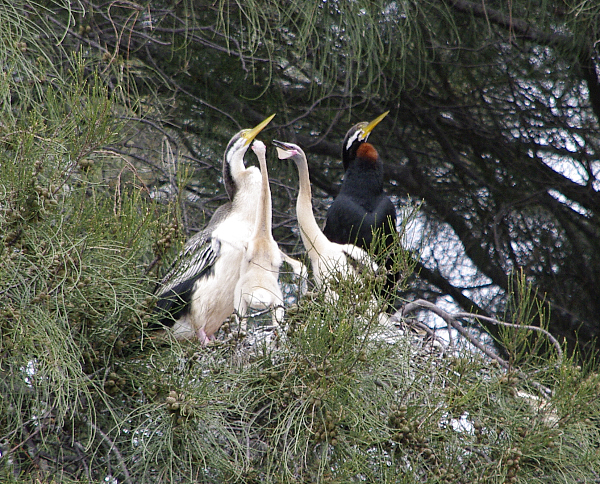
Dad looks a bit fed up with his kids already.
The Spoonbill chicks don't seem to be as demanding.
A pelican, darter and an egret are not afraid of the fisherman.
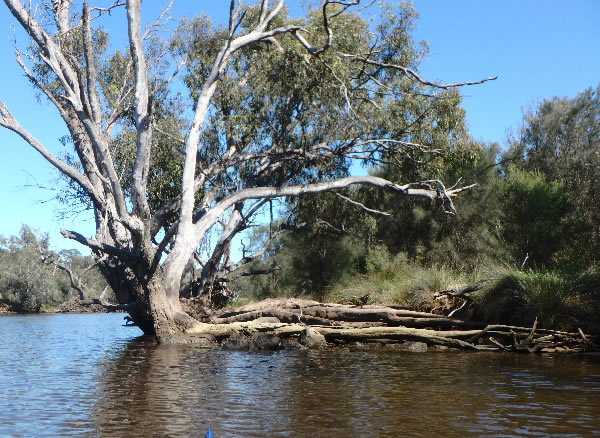
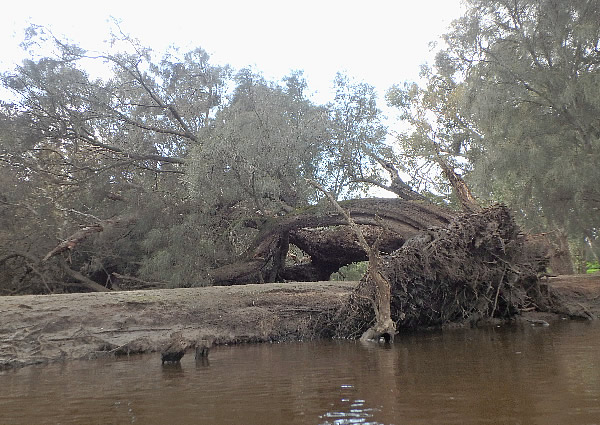
Look at the root system difference between these two large trees.
Sun Sets Over Ron Courtney Island
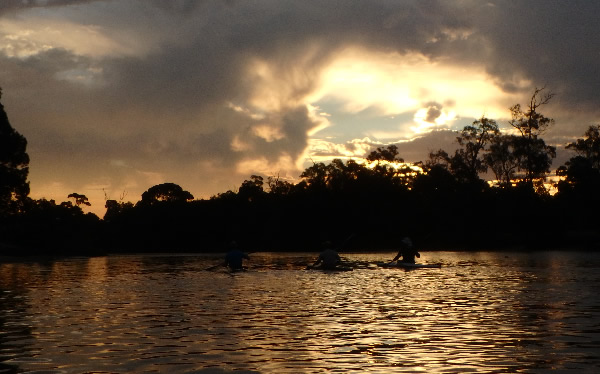
Peter, Bernard and Brett at the finish of their session.
A few minutes later.
Cody, Andrew and Nicky Pope at the end of their slalom session.
The sun set changes as the sun goes down.
IOP Summer Series #2
Down Wind Race
October 16th
Port Beach
North Fremantle,
Mandurah Duel
Date: November 14, 2021
SPECIAL FEATURES
- Electronically timed
- Ocean ski VS Outrigger VS SUPs VS Kayaks for line honours
- Close to shore
ENTRY FEES
- Single Craft – $60*
- Double Craft – $100*
- OC6 – $300*
* Fees include Mandurah Duel cap
The Mandurah Duel is a 12.5km multi-class ocean event on one of Australia's best downwinder runs. All classes of craft battle it out for line honours as they follow the coast from the Dawesville Cut to the Mandurah Ocean Club (which hosts the event) at Halls Head.
Enter here:
https://secure.onreg.com/onreg2/front/step1.php?sessionname=fc5aff7d400b794e35f5f76f0be93963&id=5433
COURSE OVERVIEW
The Basic Skills Course is delivered by our Paddle Academy instructors, and is designed for anybody wanting to learn the essential paddling strokes and safety skills to go paddling in WA. Individuals of any paddling ability will benefit from this course, and all participants will receive a certificate following completion of the course. A variety of paddling
skills, safety and rescue techniques will be taught in the program, including
- Preparation of paddle craft and equipment
- Launching and landing your craft
- Correct paddling posture
- Paddling strokes and the correct technique
- ‘Rafting up’
- Assisting with deep water rescues
Cost: $120 (adults) or $80 (under 18)
All equipment is provided (kayak, paddle, life jacket), but please feel free to use your own craft if you wish.
Note: the minimum age is 12
INSURANCE
All participants will be covered under the Paddle Australia Insurance for the duration of the basic skills course only.
If you wish to purchase a direct membership with Paddle WA for just $85 to get 24/7 insurance coverage, visit paddlewa.asn.au/direct-membership or contact develop@paddlewa.asn.au
|
|
|
|
|
|
|
|
|
|