|
|
|
|
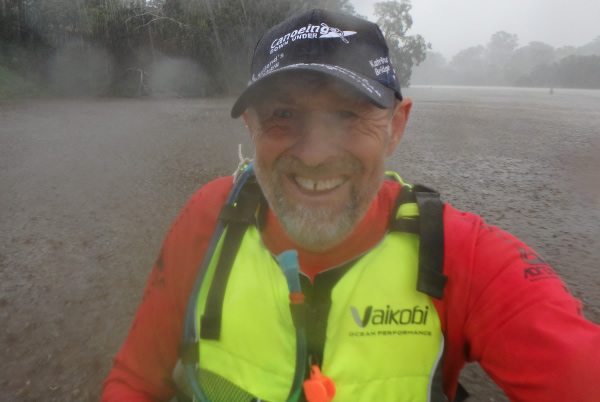
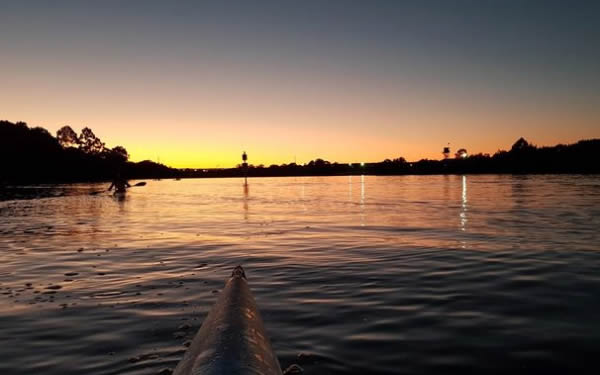
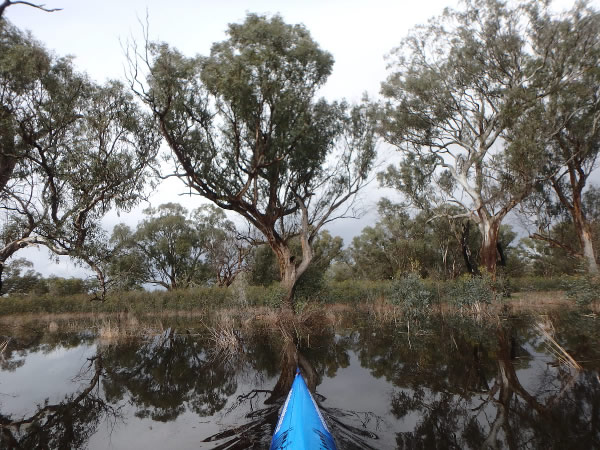
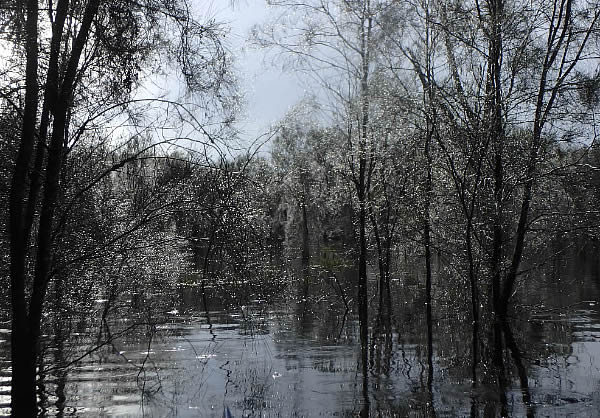
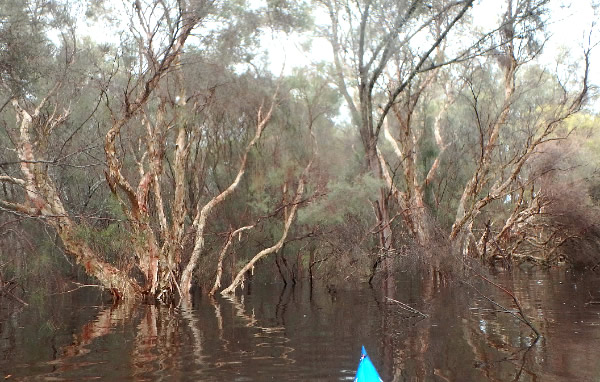
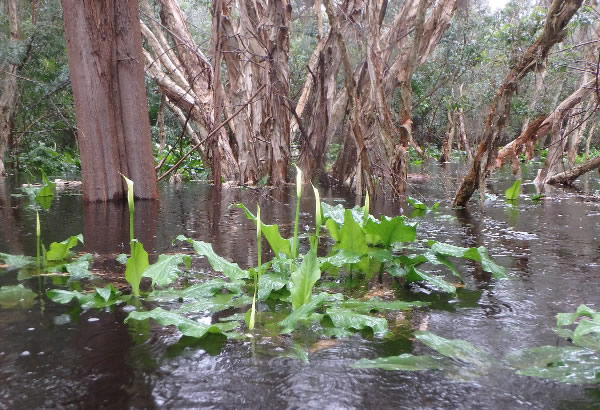
It has now been 2 months since I started my 7000 km birthday year challenge on June 3rd. Five of those weeks I have paddled over 200 kms each week. In those near 9 weeks I have paddled from 20 to 33 kms every day except for 4 lockdown days when I paddled 11 kms a day. I have now paddled 1628 kms in some hostile weather with rain virtually every day being the wettest winter for many years, but I have found some beautiful country on flood plains of Guildford and Bennett Brook.
Checking out the wildlife and the vegetation and trees makes my paddles a lot more interesting.
Only 10 more months to go!
Paddle for Prostate Cancer - Do yourself a favour – Get Checked
---------------------------------------------
The Avon Descent
14 -15 August
- Sunday Storm Paddle
- K2 Gold
- Saturday Slalom & Sunday Wild Water Race
- The Lower Murray
- Meanwhile in Melbourne
- Tone River Trip
- Kimberley Kayak Expedition #6
- Birds and Trees in a Bassendean Wetland
- Coming Events
Sunday Storm Paddle
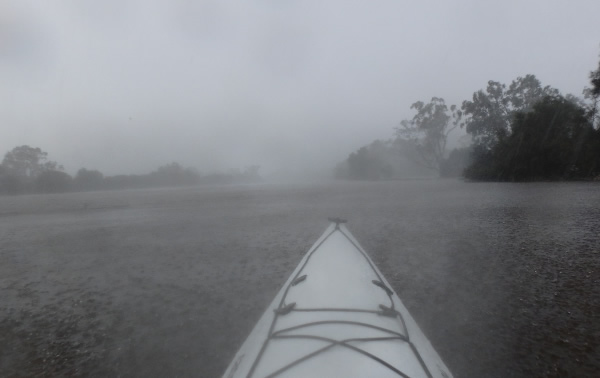
I have never paddled the straight stretch from Guildford Bridge to Sandy Beach as rough as it was on Sunday. Waves, which were close together were pretty big which pushed against the fast current. I tried to take a photo but I was spun around and was just blown all over the place. I just put my camera in my teeth and hung on and made for the sheltered river edge. I was in my Epic 18 sea kayak so at least I was stable. It would have been near suicidal in a K1. Hell knows what the exposed
wide river or the ocean was like, but it did remind me of some of the days paddling in Canada on a rough day. Then I had a heavy kayak which didn’t get thrown about so much.
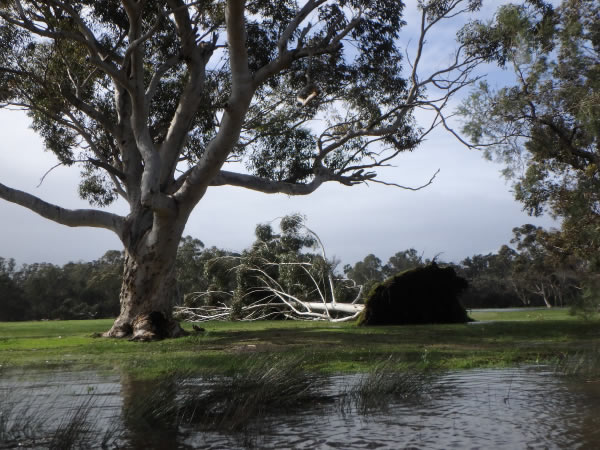
I had headed upstream from home on a 20km paddle and once I got to Guildford I took refuge along the flooded flats, Bennett Brook flooded flats and Helena River to get away from the fast current and the strong wind. There were lots of trees or huge tree branches blown down. It was so sad to see. What a day.
Sunday was a good day to stay home but I had to paddle at least 20 kilometres.
The rain was the good part it was the strong wind that blew down some of the straights that created really rough conditions.
Several huge trees were up-rooted. It was amazing what little root system they had.
K2 Gold
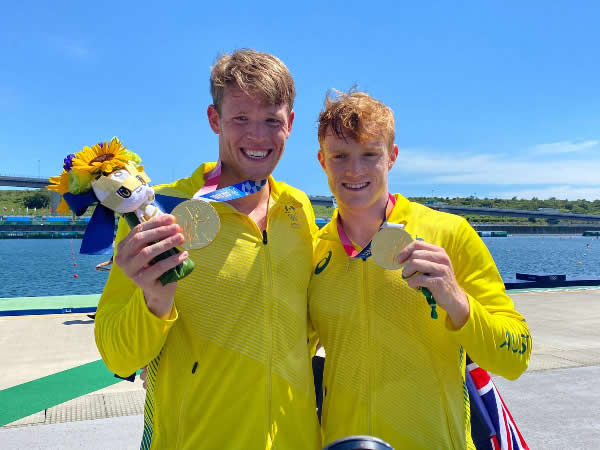
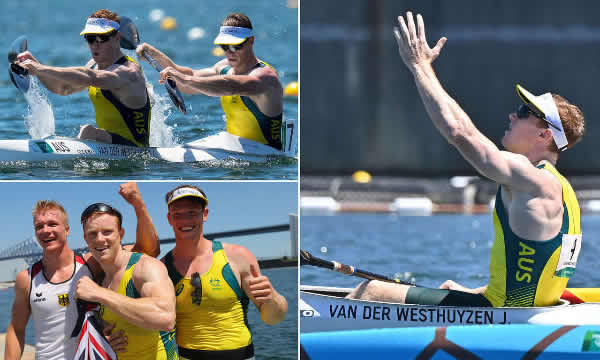
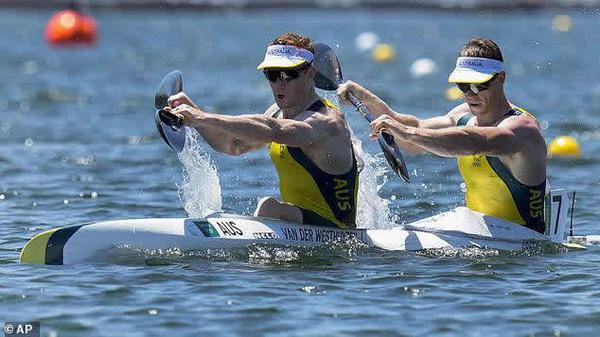
Jean van der Westhuyzen and Tom Green
Paddlers Jean van der Westhuyzen and Tom Green emerged triumphant in the K2 1000m final on Thursday, by the narrowest of margins.
The 22-year-olds, who never competed internationally together before the race, stunned the Tokyo Games final field, knocking off German world champions Max Hoff and Jacob Schopf.
Green and van der Westhuyzen held a narrow lead for the entire race and managed to cross the line less than a second before the Germans.
The Aussie due finished with a time of 3:15.28 - just three tenths of a second ahead of the Germans.
Trailing just behind Germany was the Czech Republic who will take home bronze.
Green and van der Westhuyzen jumped into the water after the event to celebrate their new title as gold medallists.
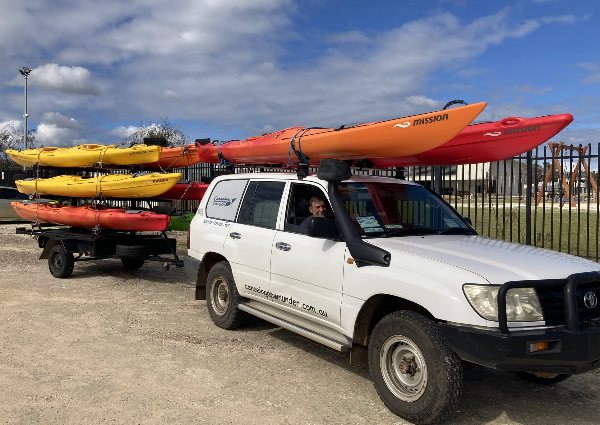
Delivering 8 new double sea kayaks to Carey Baptist College.
Photo Dave Boldy.
Marie Andersson training on Thursday morning.
Photo Marie.
Slalom Saturday - Wildwater Sunday
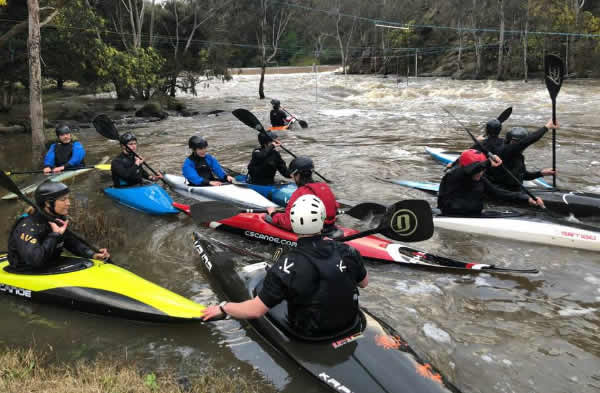
Don't forget to register for the Slalom WA Winter Series Race #2 - Saturday 7th August.
Wildwater Race.
Walyunga or Bells on Sunday
The Lower Murray
Kieran Simpson
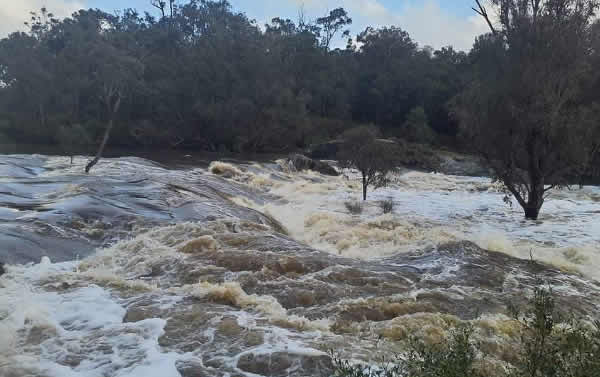
A handful of paddlers, paddled from Baden Powell Rapid to the Steps on the Murray River on Sunday.
Here are some pic of just how big it was.
Photos are of Time Warp and the Steps.
Meanwhile In Melbourne
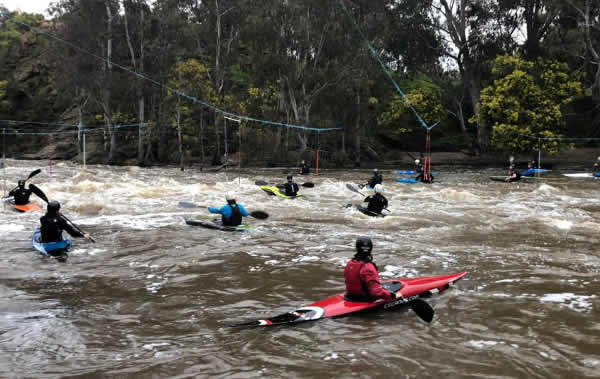
Last training session before lockdown.
Melbourne slalom paddlers.
Last training session for 7 days after a snap Lockdown called on Thursday from 8pm. Water was up and another fun slalom session. Looks like home for the next 7 days.
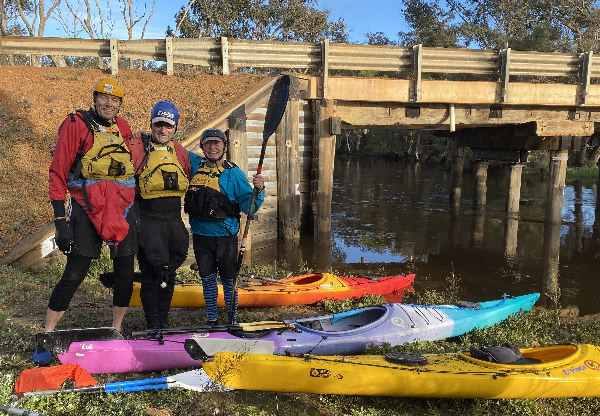
Alan Morbey, Richard Molek, Steve Coffey, & Richard Swindale photographer take on the Tone River. More next week.
Kimberley Kimberley Kayak Expedition #6
Friday
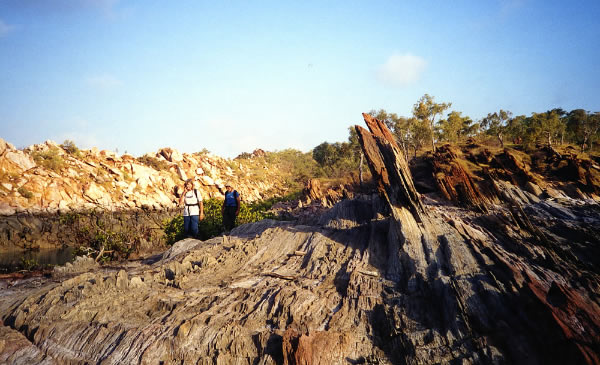
We decided to go and find a rock waterhole that I have been to three times before on other trips. A quick breakfast and a cup of coffee and we started our great trek towards the rock waterhole. After a short steep section it flattened and then I took the team to see the colourful sloping rocks.
The sloping rocks at Whirlpool Pass.
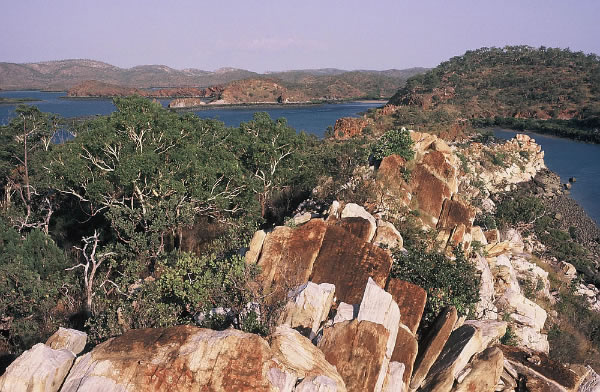
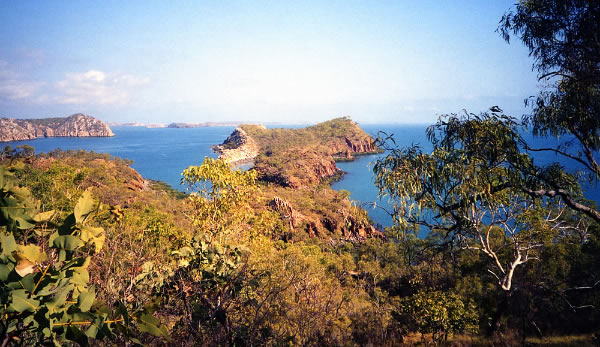
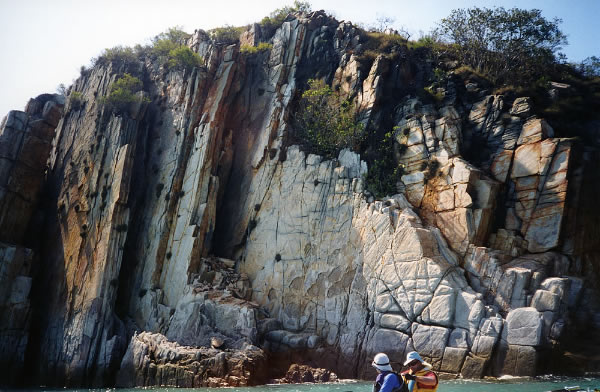
We then moved off through the scrub dodging trees, spinifex and rocks. Within a kilometre I could see the team were a bit frazzled. We pushed on over a narrow peninsular, water on both sides with tall slate looking rocks towering west. After another scramble over another high point we crossed another narrow neck.
The slate sloping rock at Whirlpool Pass.
We climbed another ridge, this time the walking was easier. When we reached the top we could see the rapids created by the incoming tide going through a narrow gap. The guys were too hot, too tired, and not so interested to see the rock hole anymore so I went on alone. I followed my instincts towards the gulley. The trees, like fir trees were thick. Eventually I came out and followed the ridge to
the gulley. A few mangroves were scattered around the entry to the gulley and the tide was well out. I found the rock hole but there was no water in it, just a couple of very small black fresh water crays chasing a bit of moisture. I returned to the guys passing the tidal rapid, climbing the hill and disturbing some parrots with blue wings.
Looking back to our camp at the end of the peninsular.
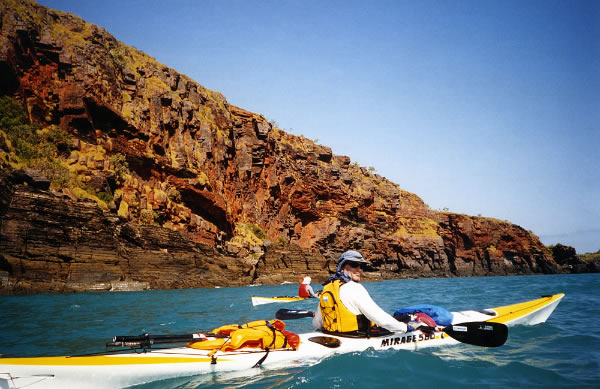
Back at camp we started loading our kayaks and then headed across a bay for a gap between two islands. The going was slow. The islands were so different, darker, less trees but more spinifex. We pushed on, the island on our left had some magnificent colours and when we reached the next point we beached had lunch and a pee.
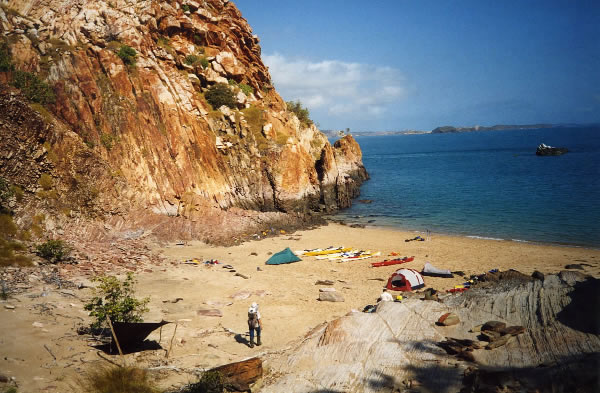
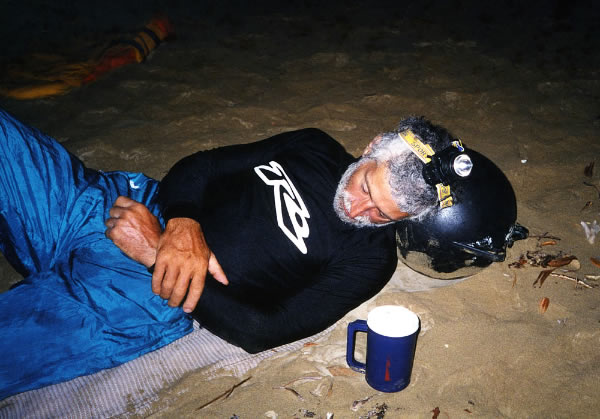
We moved on into Coppermine Creek and found a nice beach but there were shacks and a shed so we decided to keep going and found a beach at the south end of Margaret Island. John went for a walk and brought back two black buoys. He later fell to sleep using one of the buoys as a pillow.
John having a good sleep.
Saturday
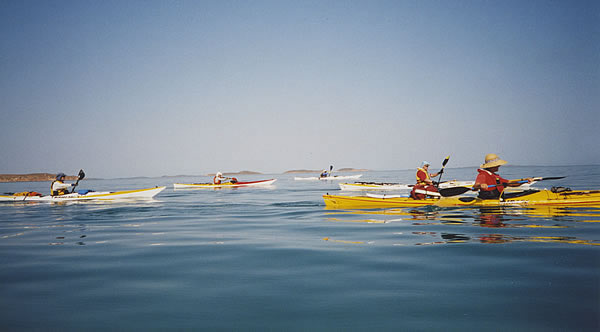
We moved away from camp by 8.30am. We passed through the gap between Margaret Island and the mainland which was wider than it looked and once through it we could see Cockatoo Island. On our right though there were huge cliffs lining a gully which were spectacular.
As we got closer to Cockatoo Island we could make out big diggers and haul packs working in the mine. My attention though soon turned to the rear of my kayak when a 2-3 metre shark started following me. It was swimming near the surface so we could see its dorsal fin and it kept following for quite a long time and then disappeared and then followed again. Why it liked me I didn’t know as there were 5 other kayaks across from me or did it like the colour red of my
kayak?
Calm conditions crossing over to Cockatoo Island.
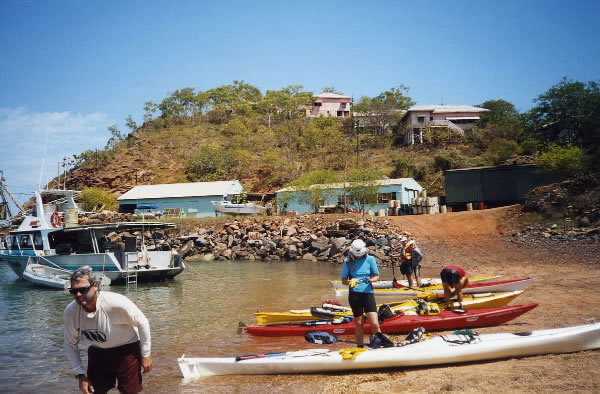
A few fishing boats and barges were anchored near Cockatoo Island. The mine was a big eyesore with machines busy in the mine. When we pulled up at the rocky beach a fishing boat Utobia was anchored in shallow water. I asked the skipper where we could get some fresh water and he pointed to a fire hydrant. A store was over the ridge, he said. Our first priority was collecting fresh water before finding the shop which had no-one there, but the skipper phoned a worker
to open up.
There was a bar area which was petty grubby. We thought it was the resort but it was where the workers hung out. A girl came and I bought two beers and two snickers bars and they tasted great. The bar didn’t have much else apart from a cask wine which I bought for our nights around the campfire.
It was so hot Pam and Gary jumped into the swimming pool fully clothed and the young girls using it soon jumped out. Before leaving I had a quick dip myself.
The tide had gone out a few metres so we carried the kayaks to the water watching backpackers on the wharf catching fish. The wind made paddling a little difficult so we kept close to the vertical shores to get shade from the wind but we became truly exposed to the wind when we crossed over to Irvine Island. There was a nice beach on the east side of the island but we decided to go around to the west side.
The wind petered out when we moved through the gap between Irvine and Bathurst Islands. Tel and Don started fishing and Tel hooked a decent sized fish. Once through the gap we paddled on the western side of Irvine Island and the cliffs were really impressive.
A lighthouse appeared on an island on the south-west side but we were more interested in finding a beach. As we turned into the shelter of a bay two beaches stood in front of us so we picked the best one and landed.
There was little room on the beach when the tide came up, but we managed. There was however plenty of drift wood scattered on the beach for the fire, we had shade from the western rocks and with the fish caught by Tel cooked chunky and fried in garlic which tasted great, we really had it good.
We had wine and oysters for entrée and watched an eagle swoop down to pick up some fish remains.
Birds and Trees in a Bassendean Wetland
At the entrance of Bennett Brook.
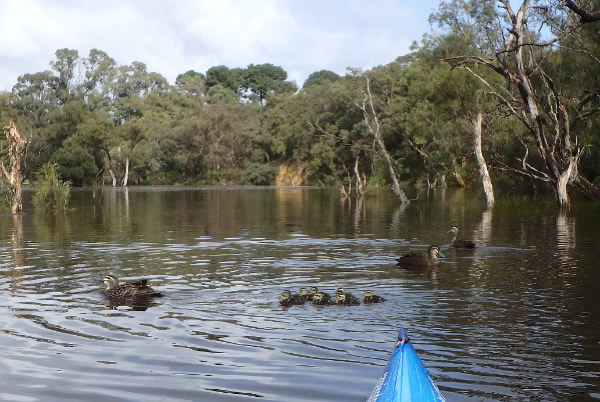
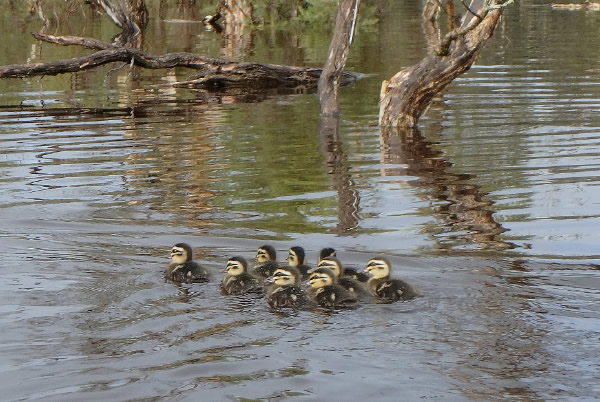
Mating in Pacific Black Ducks coincides with availability of sufficient food and water, and often with the onset of heavy rains or when waterways are at their peaks. Courtship is accompanied by ritualised displays including preening, bobbing and wing-flapping. This behaviour is often initiated by the female, and, other than copulation, the male helps little in the breeding
process. Often, two broods will be raised in a year. The number of offspring produced may seem quite high, but only 20% of these will survive past two years of age.
The Pacific Black Duck is mainly vegetarian, feeding on seeds of aquatic plants. This diet is supplemented with small crustaceans, molluscs and aquatic insects. Food is obtained by 'dabbling', where the bird plunges its head and neck underwater and upends, raising its rear end vertically out of the water. Occasionally, food is sought on land in damp grassy areas.
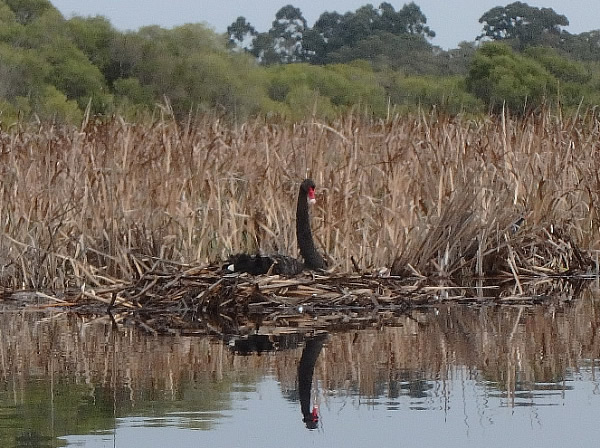
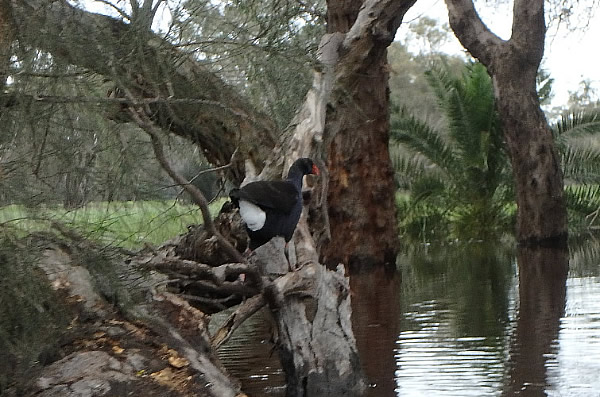
Black Swans form isolated pairs or small colonies in shallow wetlands. Birds pair for life, with both adults raising one brood per season. The eggs are laid in an untidy nest made of reeds and grasses. The nest is placed either on a small island or floated in deeper water. The chicks are covered in grey down, and are able to swim and feed themselves as soon as they
hatch.
The Black Swan is a vegetarian. Food consists of algae and weeds, which the bird obtains by plunging its long neck into water up to 1 m deep. Occasionally birds will graze on land, but they are clumsy walkers.
A Swamphen patrolling the Bennett Brook wetlands
The Purple Swamphen is a large waterhen with a distinctive heavy red bill and forehead shield. They have red eyes and a deep blue head and breast, with black upper parts and wings. In bright sunlight the plumage shines with an intense blue sheen.
Oooppps
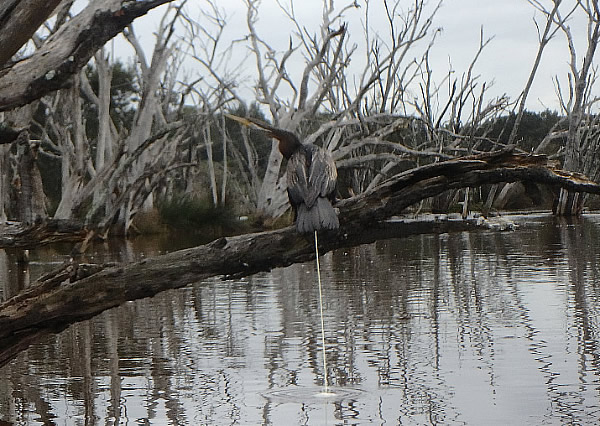
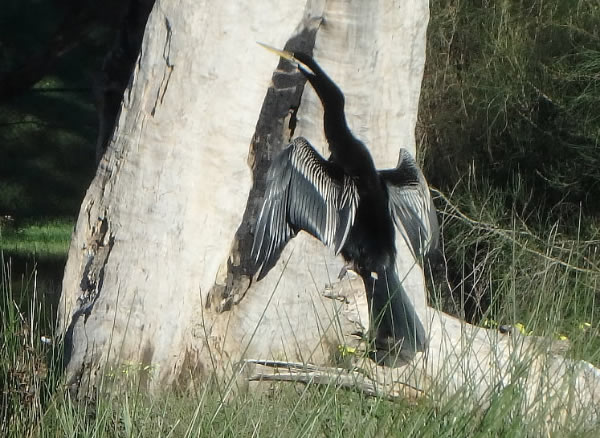
The Darter catches fish with its sharp bill partly open while diving in water deeper than 60 cm. The fish is pierced from underneath, flicked onto the water's surface and then swallowed head first. Smaller items are eaten underwater and large items may be carried to a convenient perch and then swallowed. Insects and other aquatic animals, including tortoises, may also be eaten, as well as some vegetable matter. In hot weather, adult birds may pour water from their bills into the gullets of their
young chicks when they are still in the nest.
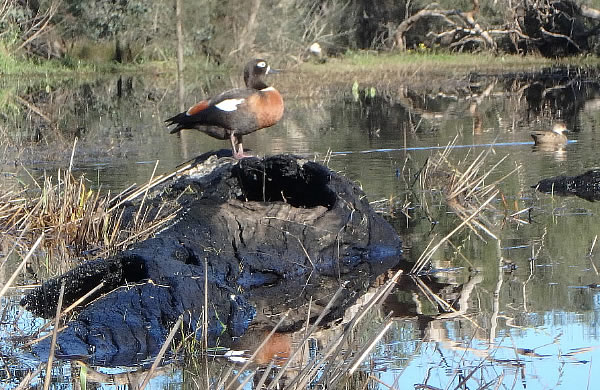
A Shelduck in the Bennett Brook wetlands.
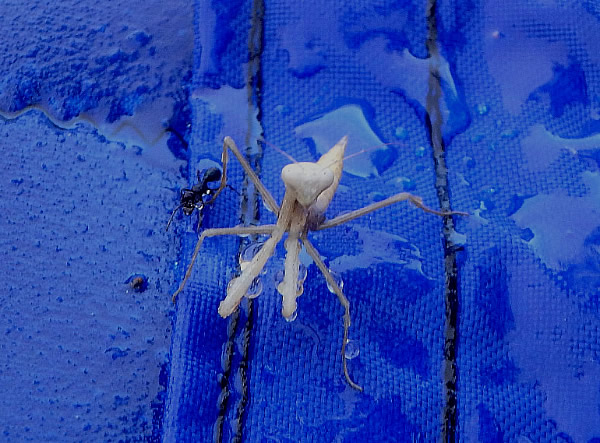
An ant and
Is it a White Praying Mantis?
On my spraydeck?
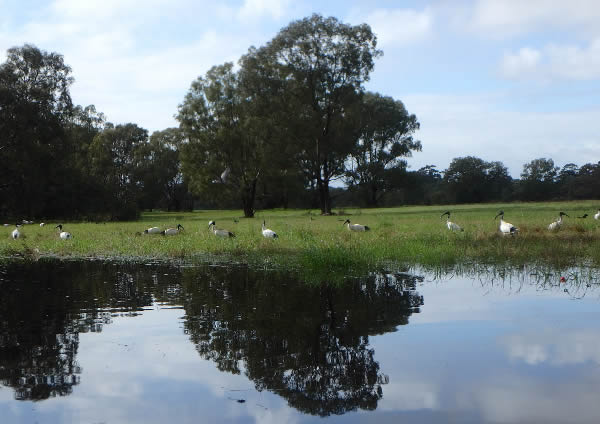
The Australian White Ibis' range of food includes both terrestrial and aquatic invertebrates and human scraps. The most favoured foods are crayfish and mussels, which the bird obtains by digging with its long bill. Mussels are opened by hammering them on a hard surface to reveal the soft body inside.
Females differ from males by being slightly smaller, with shorter bills. Young birds are similar to adults, but have the neck covered with black feathers.
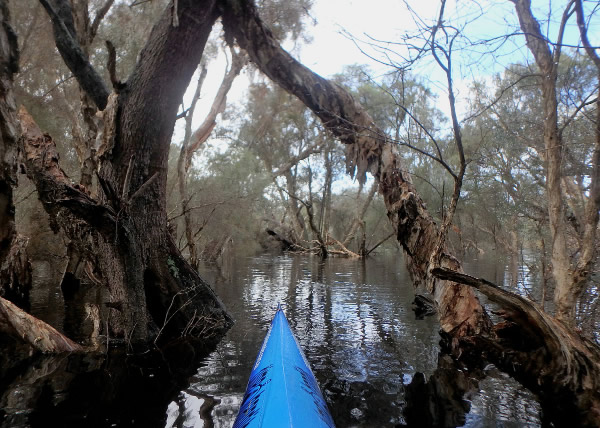
Bennett Brook is a mingled mass of tight trees.
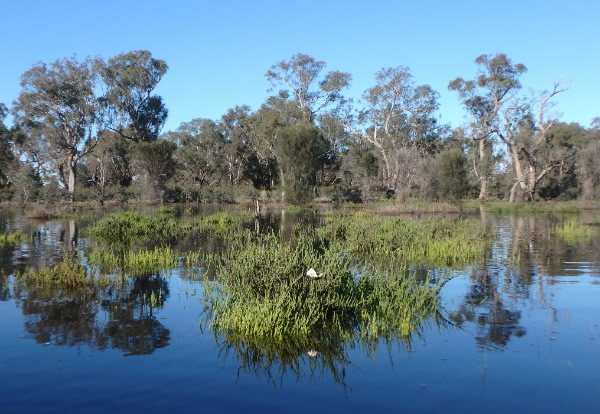
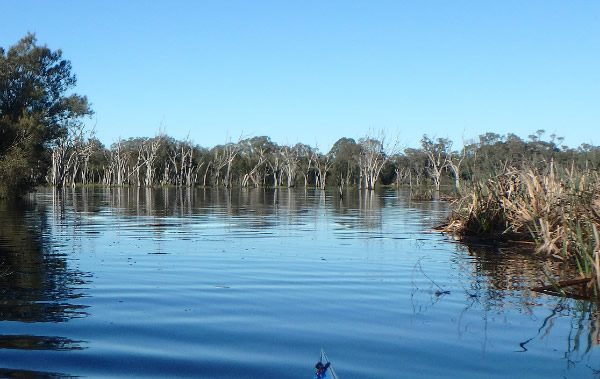
When in floods it opens up into a lake.
Marsh samphire has vibrant green stalks, similar to baby asparagus, with a distinctively crisp and salty taste.
When the flood and high tide subside much of the wetland will have more samphire appear.
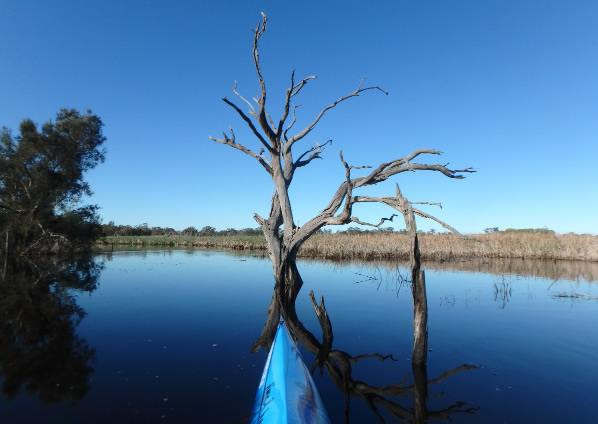
Dead trees are common and large patches of bulrushes.
Raindrops cover the trees.
Paperbarks are common along the waterway.
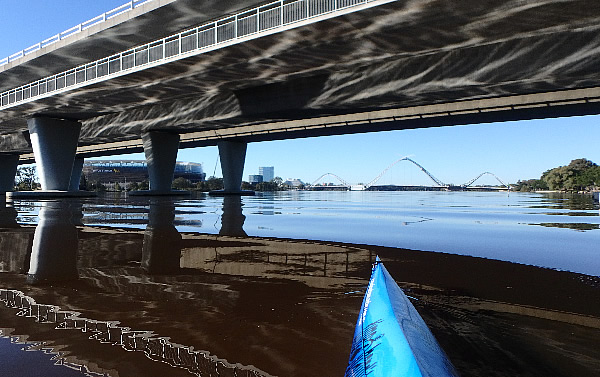
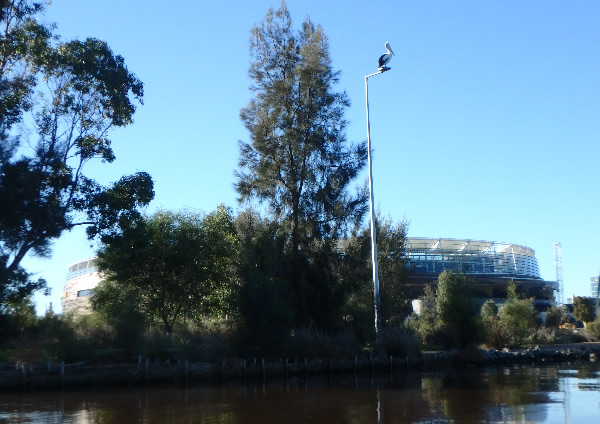
This morning my 21km paddle took me beyond the stadium.
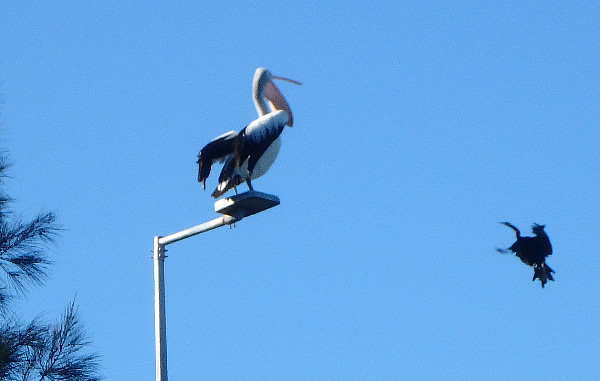
A pelican was having a quiet time sitting on a lamp post.
But then a cormorant decided it wanted the post but the pelican stood its ground.
Live Lighter
The Ramon
Sunday 15th August | Middle Swan Bridge to AP Hinds Reserve
Entries for the LiveLighter The Ramon are now open!
|
|
|
|
|
|
|
|
|
|