|
|
|
|
4 Weeks On The River = 660 kms
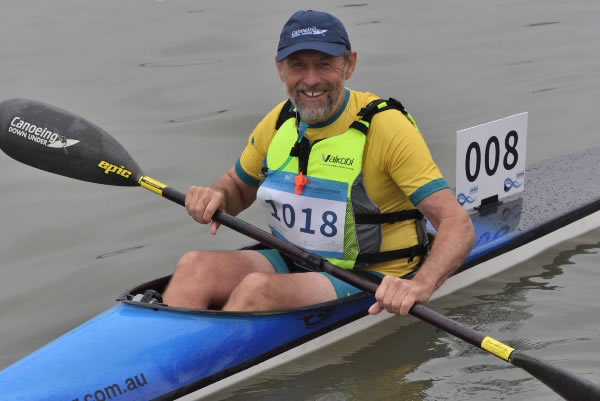
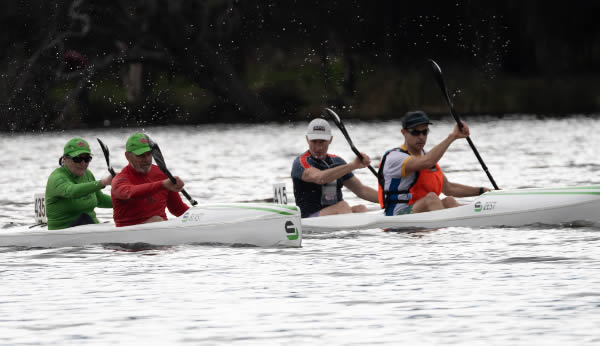
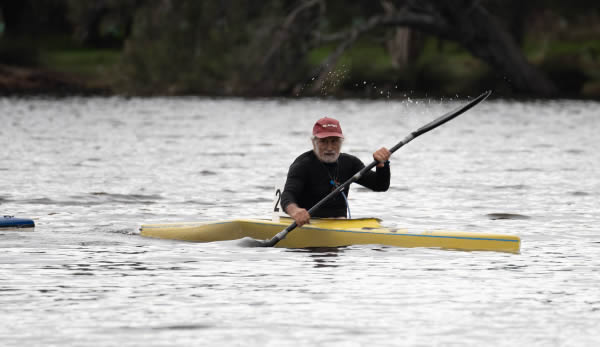
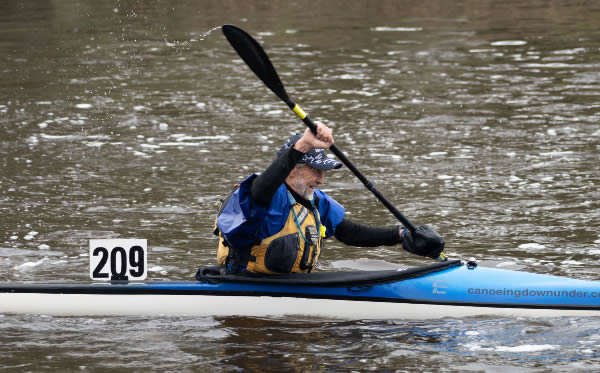
It’s now been 4 weeks since I started my 7000km Challenge on my 70th birthday year. I have rescued a couple of birds from fishing lines, paddled in an 18km and a 26 km race, as well as a white water race, Jenny has fractured her arm, and for 26 days I have paddled over 20 kms every day.
Everything was going well then on Monday the lockdown came. Now we are only allowed to exercise for an hour each day. Of course in that hour I can’t paddle 20 kms, only 11kms, so for the last few days I have been a few kilometres short. However because I have paddled more than 20 kms on several previous days it means I’m still ahead of my target.
So in the last 4 weeks (28 days) I have paddled 660 kms. That’s not a lot but it is a challenge, especially as I am racing on the some nights and at the weekend and I have to be careful not to get injured. I’m also coaching, going to meetings and living a life. Oh I forgot to say, I'm doing some of the housework!
When I paddled the Mississippi River I paddled 4000 kms in 35 days, I paddled the Mighty Murray River 2500 kms in 21 days and several other rivers much quicker but on those trips I was paddling all day and most had a current to assist me, although I did have a much heavier kayak as I was camping along the way.
So in theory, - going on what I have done in the past, paddling 20 kms every day should be a walk in the park. Oh I forgot to say I was a bit younger then.
With one month behind me and with only 6340 kms to go I should soon find out if my challenge is achievable.
Some good news:
With lockdown over I can now paddle longer and continue my challenge.
- Moon Rise
- Opening State Slalom Course Cancelled
- To Wear or Not to Wear
- Paddle Australia CEO
- Upper Swan Marathon
- Kimberley Kayak Expedition 2
- River Speed Cameras
- Swan Rescue
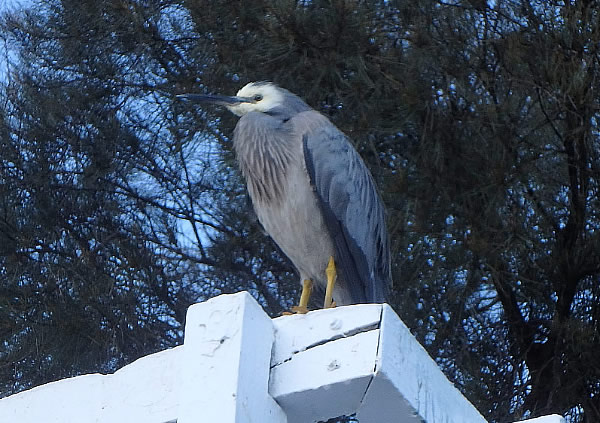
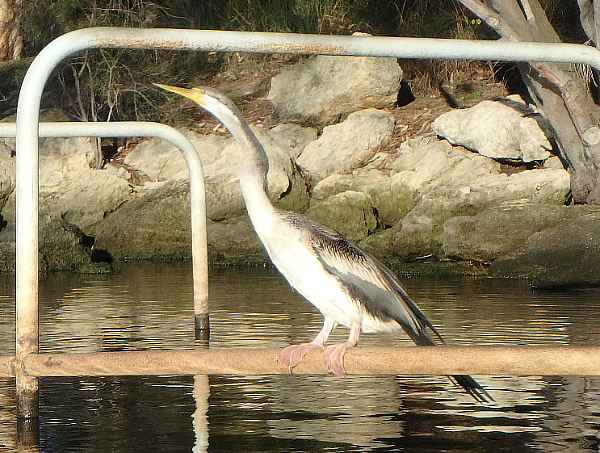
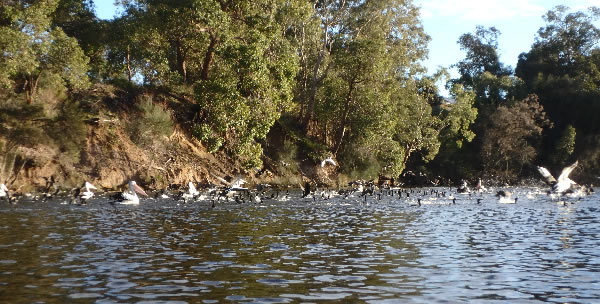
- Birds of Bassendean & Belmont
- Sandy Beach Jetty
- Avon Descent Competency Assessments
- Coming Events
- Products
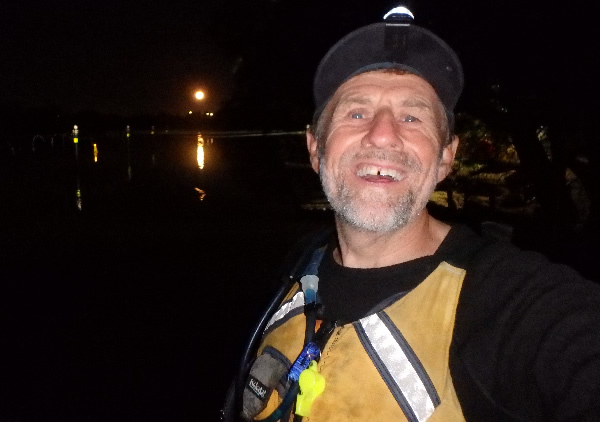
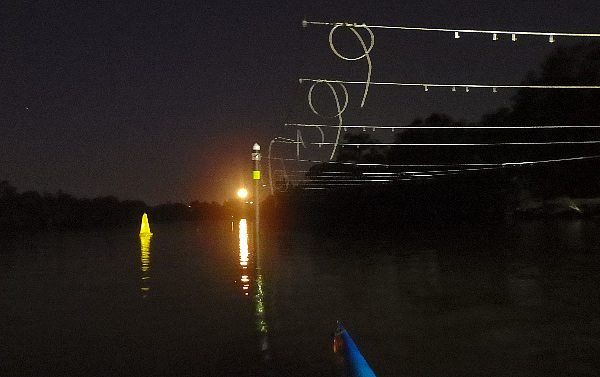
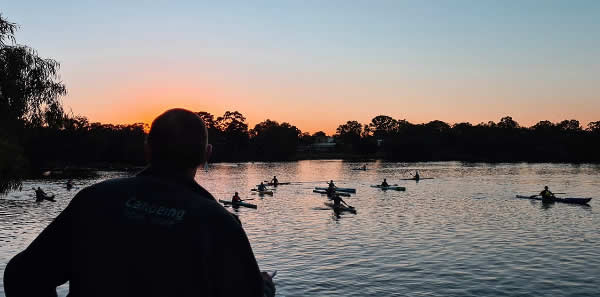
Josh Richards and I paddled up and down the Ascot KC straight last week to make sure we were heading the right way to watch the full moon rise from our kayaks and it was quite amazing, although the photos don't do it justice.
I love seeing the moon rise. It reminds of all the great places I have been in the world wilderness camping.
I have paddled in many places watching the moon rise on the water. It's just something special.
I remember writing my diary in the Kimberley by the light of the moon. Admittedly my hand writing wasn't that good afterwards. When I am out there in the wilderness there is nothing much better to witness.
Full moon looking down the Ascot KC straight.
At the new slalom course.
The moon was more spectacular than my little camera pictured it.
The opening of the State Slalom Course
has been cancelled
until
|
Saturday, October 2nd at 10:00 AM
|
|
Garvey Park Fauntleroy Ave, Ascot, WA
|
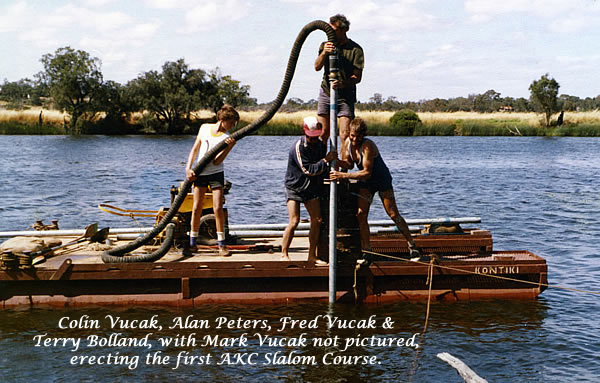
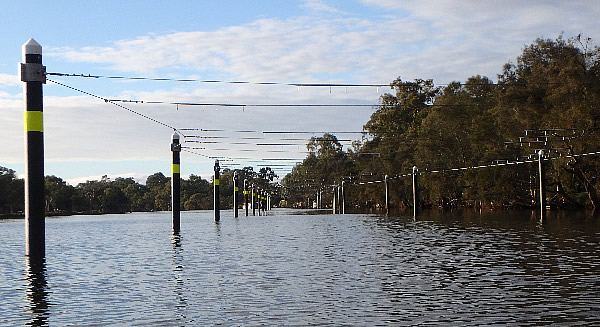
The posts in 1979 - below the posts now.
A little more substantial but a lot more expensive.
200m long course
22 piles each driven 6m minimum into the river bed
52 cross wires with capacity for 104 gate configurations
Full electronic timing system thanks to technology partner Intelex
To Wear or Not To Wear
a PFD
It was brought up at a recent Club & Disciplines meeting that we need to have a First Aider at all our organised events - but the question is - what can a First Aider do if a paddler had a health episode away from
where the First Aider is stationed. Most likely little…
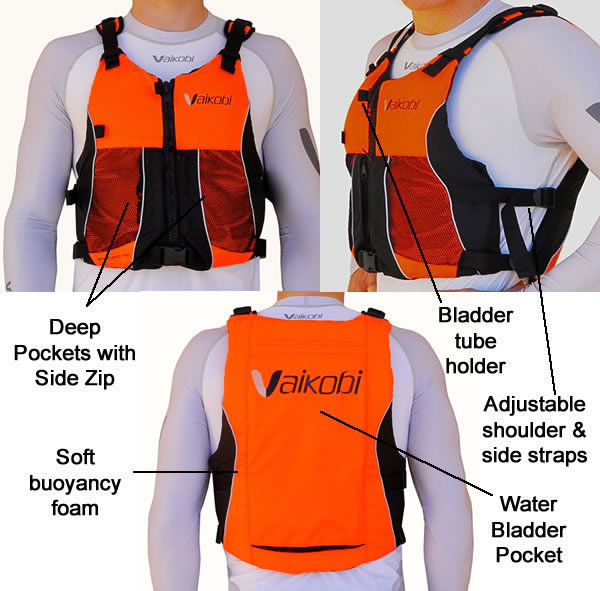
One way to reduce the likelihood of someone dying is to wear a PFD. Of course it's not the thing to do, it's not cool and a PFD might not help if a paddler had a serious heart attack some might say, but at least a PFD
would give the person a chance and give another paddler or witness a better chance of helping.
Although I have always worn a PFD in whitewater and the ocean it was when I turned 60 that I decided to wear a PFD every time I went paddling which is virtually every day, and for 4-6 days a week I’m on the water twice a
day. So in the last 10 years I have worn my PFD over 3,000 times and on my expeditions I’m wearing it for 5 to 9 hours a day. So a PFD has become part of my paddling gear which carries my water, my camera, (my car keys,) my small knife, some money and my whistle.
I suppose to some I do look strange and I expect that most people think I can’t swim or something. Admittedly I might look the odd one out on the river but I am prepared to stay that way as it might save my life one
day.
At 70 I feel fit and my body has never missed a beat and even when I’m paddling at my hardest I have never felt any inkling that I might have a black-out, get dizzy or have a medical problem which may affect my
balance whilst on the water. (I have seen other younger paddlers with such a condition and should have been wearing a PFD.)
However it’s impossible for me to know if something is going to happen to me one day to trigger a blackout or a capsize that threatens my life so I would rather be prepared.
Paddlers should not only think about themselves, they should also think about their love ones and if being coached they should think how traumatic it would be for the coach if they drown whilst in their
care.
In WA we train in the dark a lot. Many of the training and coaching programs are held in the dark but what if something did happen and someone capsized because of a medical issue – who would know, it’s
dark!!
I find it very strange that older paddlers or paddlers with known health issues don’t wear PFDs. I also can’t understand why the family of those older paddlers don’t encourage them to wear a
PFD.
Some paddlers have died because they weren’t wearing a PFD after a capsize, although there has been a lot more paddlers who could have died, but didn’t only because luck was on their
side.
So PFDs can be warm in hot weather, they can also be annoying, but you get used to them especially the newer lighter ones.
In some cases they might not even save your life after a capsize, but the chances in doing so are much better and at least you will float rather than sinking underwater to float up after bloating several days
later.
Don't you be the one that people say – he/she died doing what they loved to do!
Why not Wear a PFD
At the recent World Marathon Championships I was the only one wearing a PFD and that included paddlers older than 70 years. At first I did feel the odd one out, but when I remembered the reason why I was wearing
it, that feeling soon past because I was probably the most sensible one there. And it didn't hinder my performance, in fact having water within sipping distance kept me hydrated.
Paddle Australia CEO
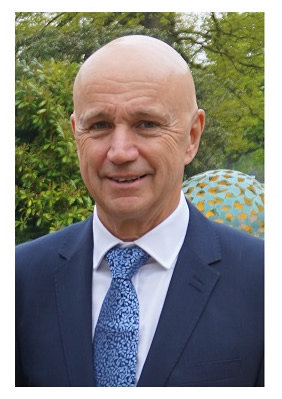
On Thursday night Paddle Australia CEO spoke at the Club and Disciplines meeting.
August 9, 2017
Australian Canoeing is pleased to announce the appointment of experienced sports administrator Phil Jones as their new CEO.
Phil comes to Australian Canoeing having successfully led two of Australia’s leading National Sporting Organisations, spending 17 years at Yachting Australia (now Australian Sailing) and running Athletics Australia since November 2014 until the beginning of July this year.
After commuting almost every week to Melbourne for nearly three years for the athletics role, Phil took the decision to resign to spend more time with his family in Sydney. ‘Australian Canoeing is the beneficiary of Phil’s decision to base himself back in New South Wales,’ explains Australian Canoeing President, Andrea McQuitty. ‘The timing is perfect for us and we are delighted that Phil is coming on board.’
‘Obviously the role as CEO of Australian Canoeing is a leading role in sport and the position was highly sought after. We went through a very thorough process with the support of both the ASC and an external agency. We had some outstanding candidates but made the offer to Phil not only based on his obvious experience and track record but his ‘fit’ for our organisation and his commitment to the direction in which we want to take the sport.’
Paddler Australia CEO Phil Jones
AKC Progressive Racing Group
Just because it's cold it doesn't mean the Progressive Racing Group stay at home.
Come join us. Ascot Kayak Club on Tuesday evenings.
For anyone who can paddle and look after themselves.
Staggered time trial. Which means I send you off depending how fast you are.
Upper Swan Marathon
26 kms
This was the last marathon organised by the WA Marathon Committee this season.
Committee Chairman: Doug Hodson.
Committee members: Peter Douglass, Jo Dowse, John Hilton, Bronwyn Martin, Warren Southwell, Ray Smith jnr and Terry Bolland.
Volunteers: There were many of them.
By the weather report we were expecting rain but as morning dawned the report indicated that the rain was to come a little later than originally estimated so with a bit of luck we just might get through the race before the front came in.
Alaine Davin was up from Augusta visiting her dad and she offered to run me to the Middle Swan Bridge so I didn’t have to leave my car there and she had the opportunity to meet paddlers she hadn’t seen for a long time.
For the first time I entered Division 2 as many of my opposition were in that division. I’m usually in div 3. The paddlers in the long course had to paddle upstream for about 5kms to a turn buoy hanging from the Maali Footbridge. The short course went straight downstream to Ascot.
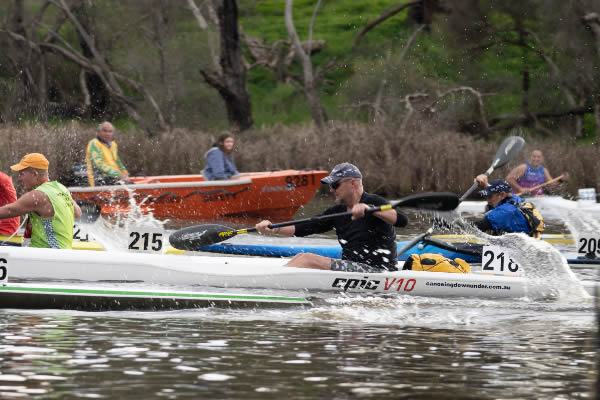
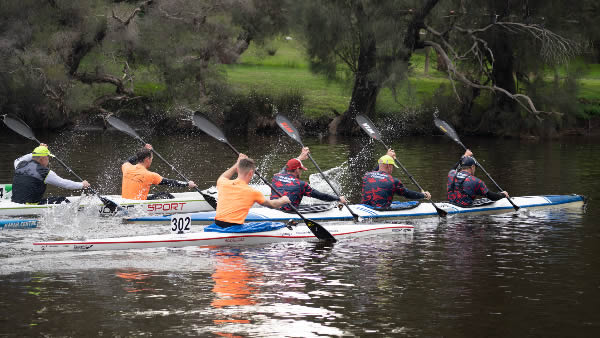
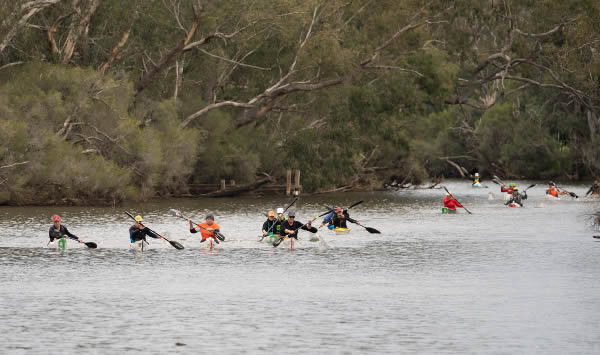
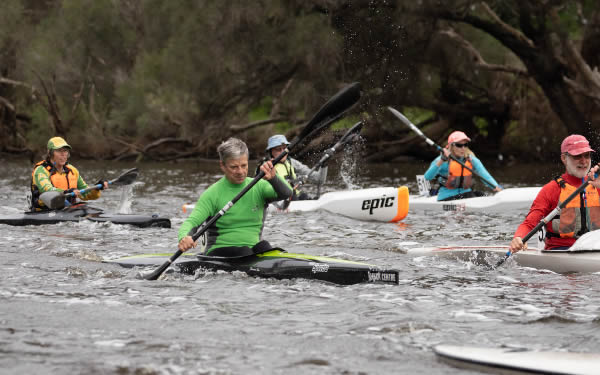
Division 3 & 4 went off together and my div 2 were next. All the paddlers on my grid could sprint faster off the line than me so they left John Dinucci and I behind. With the river being narrow there was a lot of wash which didn’t help us at all. I tried to keep as close as I could with Chris Watson in his Epic ski and Sharon Cobley in her new second hand
Vadja kayak but that was proving hard.
A couple of kilometres up, at a corner where there is usually some snags I heard a bang come from Chris’s ski. He had hit an underwater snag but it didn’t appear to hurt his ski. A little later I manage to pass Sharon and get on Chris’s wash but when some of the paddlers from the grid behind caught up Chris took off leaving me to fight the mess of wash.
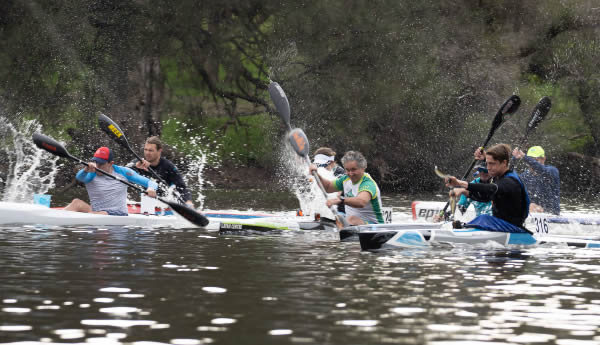
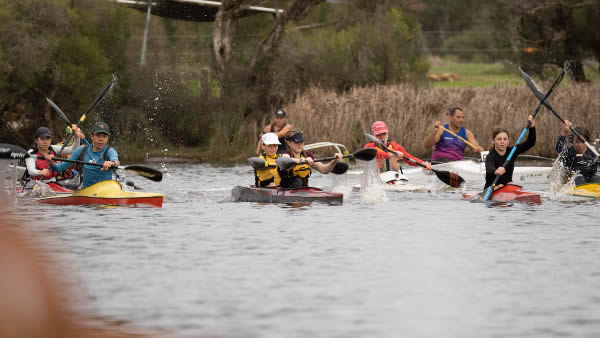
Division 2 starting off and I'm already behind.
Photo Nick & Sharon Cobley.
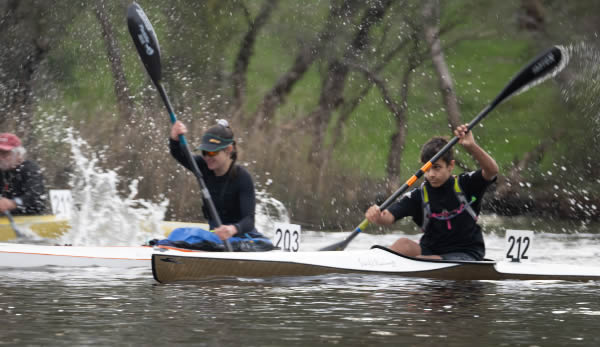
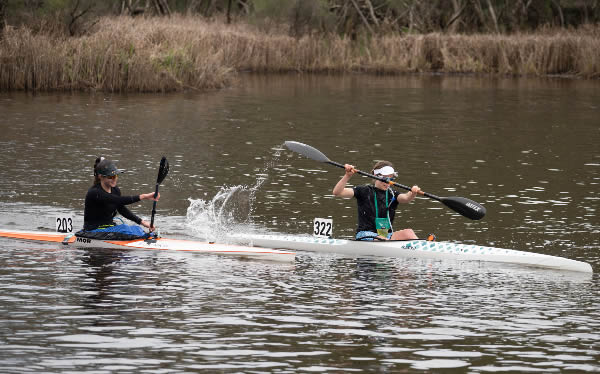
Nina and Connor. I beat them at the last race but they beat me in this race.
Photo Nick & Sharon Cobley.
Division 1 taking off.
Photo Nick & Sharon Cobley.
I noticed John Dinucci creeping up along the bank seemingly out of the main wash and I expect having less current to deal with. We were soon paddling next to each other, then the fast guys who had already turned came steaming towards us. I moved to the right and John went left and when they had gone by he was several metres ahead. All along we were also passing
the paddlers who took off before us, and being passed by faster paddlers who started behind us so the river was really messy and quite horrible to paddle.
As I came up to the turn I got caught on the wrong side of a slower paddler which slowed me, but the turn worked out okay for me unlike some of the other paddlers who hit the buoy or got capsized after tangling with other paddlers. However I was now the last paddler in my grid.
John was now metres ahead, but I managed to catch him within a kilometre and started wash riding him. My other competitors who I beat in the last race, Simon O’Sullivan, Nina Mueller, and Connor Jacob were no-where to be seen. They had a much cleaner start, however I could see Chris Watson paddling ahead with a few other skis and we were gaining on them. We
started passing a few slower paddlers before reaching Kate and Wendy. They were with us for a short time and then dropped off. When another boat was passing, John managed to get a few metres in front of me and a little further at the place where the hidden snags were I suddenly hit an object with my paddle and nearly went over.
Wendy Burdette and Kate
Photo Nick & Sharon Cobley.
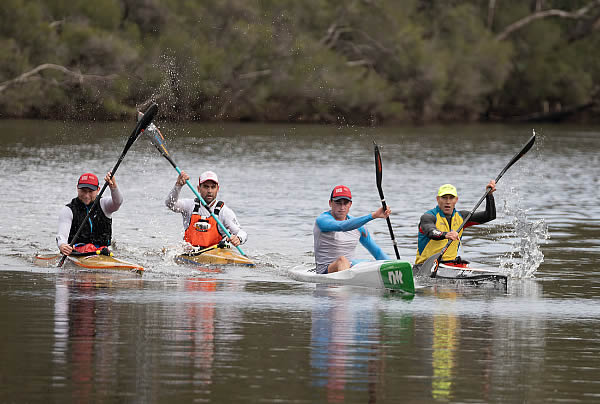
The top four paddlers. Matthew Dean, Travis England, Harry Hewitt and William Lee.
Will was first, Travis second, Harry third and Matthew forth.
Photo Nick & Sharon Cobley.
Precision paddling.
Photo Nick & Sharon Cobley.
Nina Mueller and Jane Pankhurst.
Jane (first female) passing Nina.
Photo Nick & Sharon Cobley.
A group of paddlers return to Middle Swan with John and I chasing.
Photo Nick & Sharon Cobley.
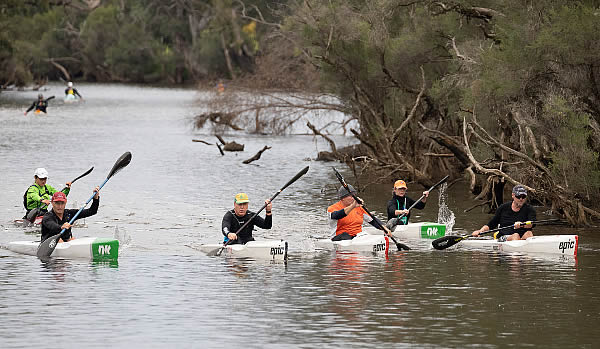
As we paddled the last kilometre to Middle Swan Bridge we were getting close to about 6 skis. I was surprised to see Sharon on the bank with her husband Nick and child Zoe. Looks as if she had withdrawn but she took some good photos. John started to overtake some of the skis as we passed under the bridge and I went with him. It was hard to shake them. Amongst the
group were Chris Watson, Chris Hollier, Alastair Fox, Sal Weyers, Genevieve Stanley and Karen O’Connor.
John kept sprinting to try to get rid of them but for a while they just hung on. Eventually only Alastair Fox could keep up and then Chris and Chris caught us again. After a few more sprints we lost them again but it took longer to leave Alastair. Once they were all off our tail we could settled down. John was paddling the best I have seen him this year and
I knew that trying to get away from him would be impossible so I sat on his wash as much as I could considering how much effort and energy I wanted to put into the race. For over 3 weeks I had paddled more than 20 kms each day and tomorrow I had to paddle 20kms so I had to be a little careful not to injure or stress my body too much in this race as I had a lot more paddling to do.
The doubles of Grant Pepper and Joel Tate and Peter and Jane Liddle came along side. Grant shouted to John to get on their wash so he could lose me which he did. I wasn’t happy to see John get ahead and see him fly away from me on their wash. Luckily for me he could only keep up with them for a short time, but when he eventually dropped off he left quite a gap
between us, so I had to give it my all to close that gap and catch him again, and I did.
As we passed this group they were hard to shake.
Photo Nick & Sharon Cobley.
Jane & Peter Liddle and Grant Pepper & Joel Tate.
Photo Nick & Sharon Cobley.
Just after Barkers Bridge Tim Cornish caught us up. He had holed his ski not long after the start so he had to stop. Now he was on a mission to catch up with his opposition. As he went by John chased his wash and lost me yet again. I was dreading him getting too far away but as luck should have it John couldn’t keep up the speed and dropped off, so again I
had to work hard and catch him up once more.
By the time we reached Ascot Kayak Club and 4kms to go the top guys had finished. I was still trailing John wishing he would slow down. We headed to the turn point near the International Hotel meeting paddlers who were faster than us heading home. At the spit post turn I managed to get beside John to sit on his side wash. My left bum cheek was hurting and
my muscles were stressing but we were still going a good pace, passing young Hunter Florisson who looked extremely tired and with a final sprint home I finished beside John with him being a second ahead.
Ron Clark another 70 year old paddling a V10 ski finished 1 minute 20 seconds ahead of us. When he is paddling a kayak I usually have a chance of beating him but he is a machine on a ski and I never seem to beat him paddling a ski.
It was really cold when we finished and most people were keen to get changed and have a burger.
Thanks to the volunteers who stood out in the cold or worked hard to feed us all.
This race Simon, Nina and Connor were 3 to 6 minutes ahead so different from the last race.
John DiNucci paddled really well. I just hung on to him.
Photo Nick & Sharon Cobley.
Chasing John.
Photo Nick & Sharon Cobley.
Isabel Combe and young Beau Connor.
Photo Nick & Sharon Cobley.
The paddlers in the short course head off.
Photo Nick & Sharon Cobley.
Short course paddlers, Judy Darbyshire, Lawrence Greed, Ray Smith, Jo Ward and Peter Martin.
Photo Nick & Sharon Cobley.
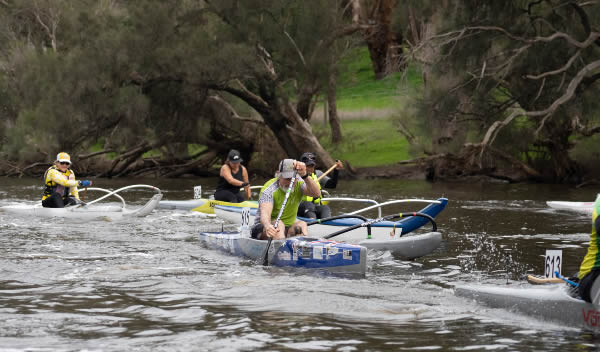
The outriggers head off.
Photo Nick & Sharon Cobley.
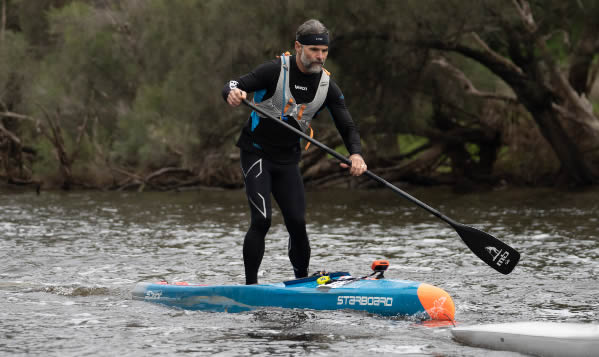
Andrew Budge the only paddler on a SUP.
Photo Nick & Sharon Cobley.
This was the last marathon organised by the WA Marathon Committee this season.
Committee Chairman: Doug Hodson.
Committee members: Peter Douglass, Jo Dowse, John Hilton, Bronwyn Martin, Warren Southwell, Ray Smith jnr and Terry Bolland.
Volunteers: There were many of them.
Kimberley Kayak Expedition 2
Lake Argyle to Mitchell Plateau
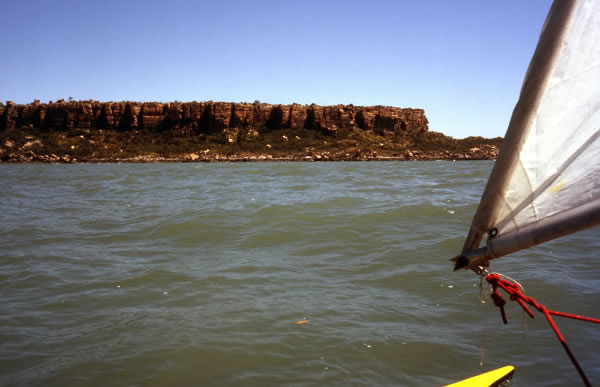
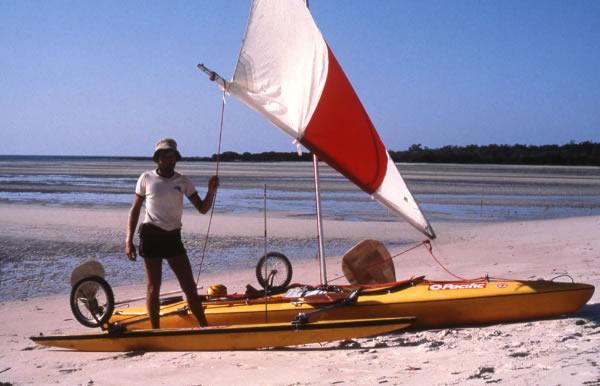
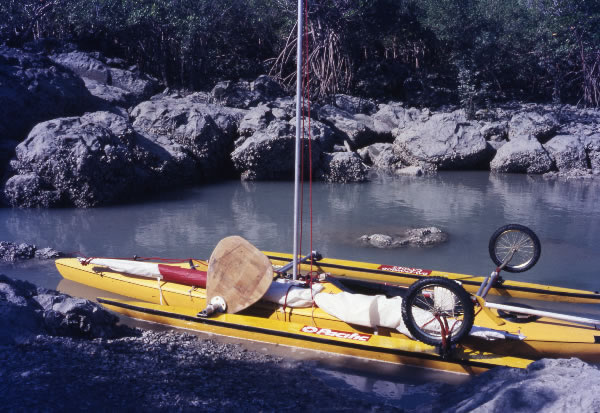
From King George River my next important landmark was Cape Londonderry, where 25 kilometres of reef followed the coastline and extended up to 12 kilometres out to sea. After just experiencing very rough conditions along the coast around the previous set of reefs, I was hoping that this longer section of reef would not be as horrendous as the last one. To my surprise the sea was very calm as I rounded Cape Londonderry, so calm I was unable to use the sail. After
seven hours of paddling I was relieved to have cleared the dangerous reefs. At Cape Talbot a crocodile, a dingo, flocks of white Torres Straight pigeons and a north-westerly breeze (which signalled the change in weather pattern) greeted me.
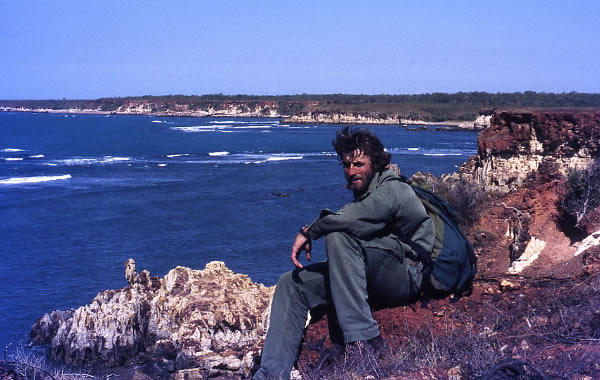
Passing a line of cliffs.
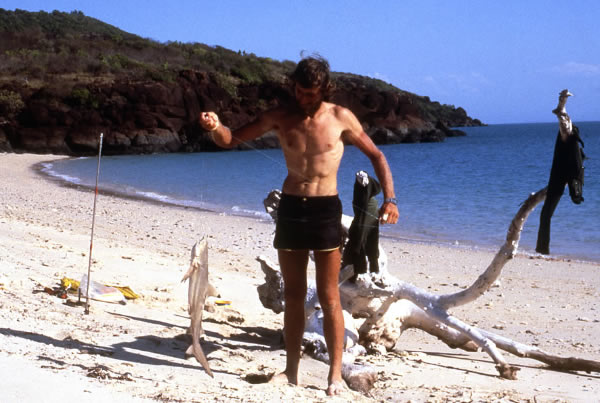
Chased by sharks, I took three days to reach Kalumburu Mission, which was at the south end of Napier Broome Bay and 15 kilometres up the King Edward River. Here I arranged to collect my food parcels from the local schoolteachers, John and Marie Brailey who invited me to stay a few days.
Kalumburu..
It was in 1908 when the Benedictine church founded a mission at Drysdale River and transferred definitely to Kalumburu in 1936. In 1982 the Benedictine church sold the mission land to the government. Now the church runs the small mission grounds, which includes the church, mission quarters, store, kindergarden, radio communications room, office and bakery.
Kalumburu April 1944..
This month of April was the busiest yet, 367 movements taking place on this aerodrome. Approximately 250 operational hours were flown from Drysdale resulting in approximately 60,000lbs of bombs being dropped on enemy territory and the morale of the Unit was greatly enhanced by the increased activity.D.S. Askew, Flight Lieutenant, Commanding No 58 Operational Base Unit.
June 1944..
Operations from this strip were greatly curtailed during the past month owing to the intended transfer of the Unit from Drysdale to Truscott. The completion of the move from Drysdale to Truscott is eagerly awaited by all. Total aircraft movements on the strip for the month were 180 S.S. Evans, Squadron Leader.
Even after the transfer of the Unit from Kalumburu to Truscott the mission and the Aboriginal workers carried on playing an important role during the remainder of the war.
After four days I left Kalumburu and the hospitality of John, Marie and the Aboriginal community and headed north towards Sir Graham Moore Island. At Kalumburu the Aboriginal elders warned me not to eat fish or eat seafood inbetween Louis Islands and Mary Island which was on the Western side of the Anjo Pennisular. Apparently a long time ago, one of their people had been poisoned after eating fish from the region. I’m not superstitious but I decided to take their
advice just in case.
Low tide on a beach opposite Mary Island. It was a long walk from the water’s edge.
Low tide on a beach opposite Mary Island
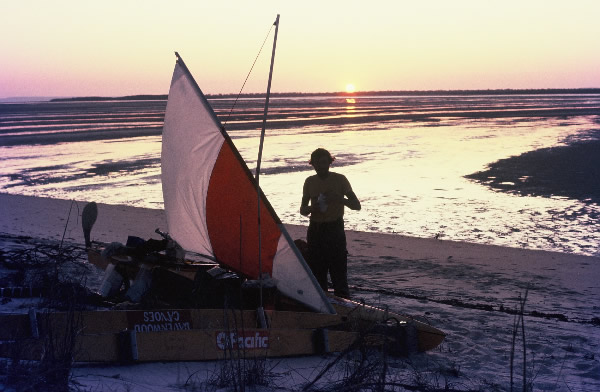
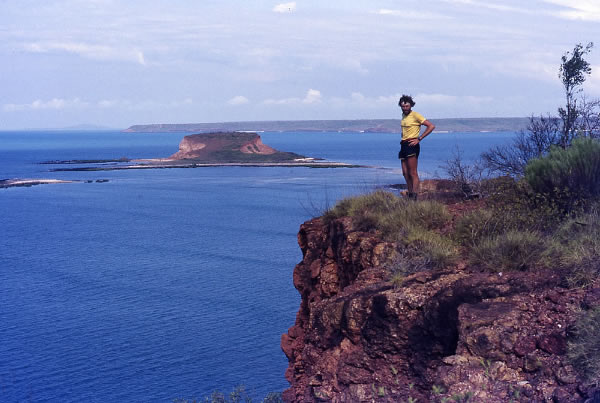
I camped for the night near Elbow Point overlooking the Sir Graham Moore Islands, but there were no trees in which to tie my hammock. In the war there were two units stationed on Sir Graham Moore Islands, one American (Lourain) and the other Australian (Radar). The only evidence that remained of their visit were a few drums, some other discarded equipment and several wild pigs.
At midnight I awoke with violent pains in my stomach, feeling sick and a need to rush to the loo. I had diarrhoea so my backside was exposed to the sand flies for ages. They were cruel, they took advantage of my ill health and viciously attacked without mercy every part of my exposed flesh.
Throughout the night I vomited and had diarrhoea and as daylight broke I felt dizzy and distressed. No matter how bad I felt I knew I had to move away from the millions of sand flies that ravaged me the previous night.
I paddled on with a hammering head and churning stomach, wanting to pass Mary Island by nightfall, but the falling tide left a huge expanse of sand flats high and dry between the island and the mainland so I didn’t quite make it.
Luckily my diarrhoea had stopped, as it wouldn’t have been pleasant going to the toilet from the kayak. To help restrict my bowel movements I ate a large portion of damper.
By the time I reached a beach on the west side of Anjo Peninsular a few kilometres from the abandoned Truscott Airbase I felt fine. What made me sick is still a mystery but I am glad it only lasted one day.
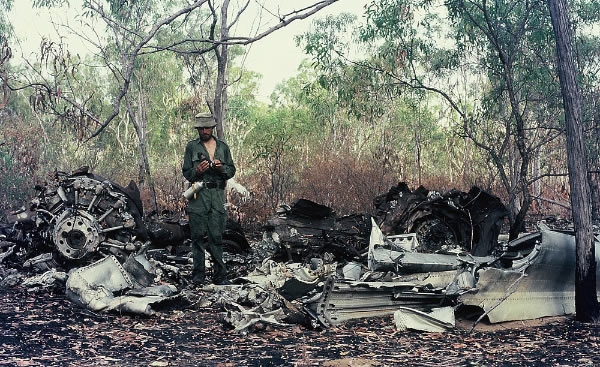
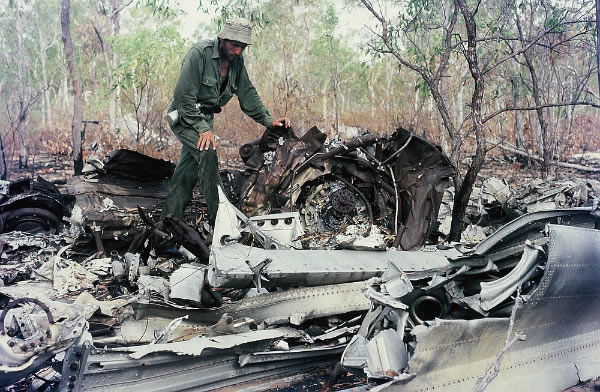
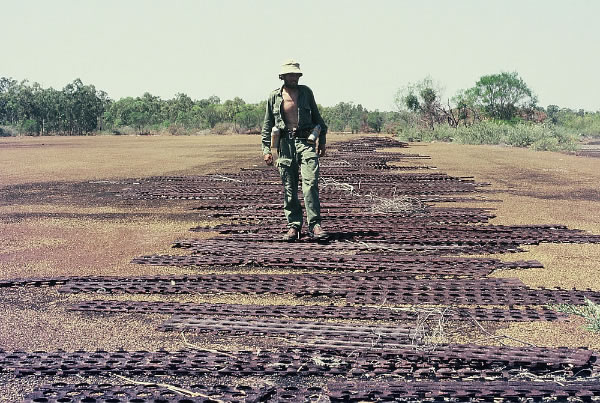
To reach the airbase I had to walk several kilometres inland through the bush. When I reached the airfield parts of the airstrip was in good condition, but much of it was overgrown by wattle trees. A crashed B24 Liberator aircraft, a communication tower and other derelict equipment lay near the runway. Hundreds of steel mats littered the airstrip and 44 gallon drums were scattered about.
Exploring Truscott abandoned air base
The runway was littered with steel mats.
When I finished exploring and with replenished water supplies I left Truscott deserted air base and crossed Vansittart Bay to the rugged coastline of Cape Bougainville, which has several bays and points that looked like a rugged 10 leaf clover. I was very lonely paddling towards the cape but a shark woke me up from my trance with splashes and attacks on my rudder.
The Eclipse Islands lay at the entrance of Vansittart in a northerly direction. They were so named by Captain King in consequence of an eclipse of the moon in the evening of October 21st 1819.
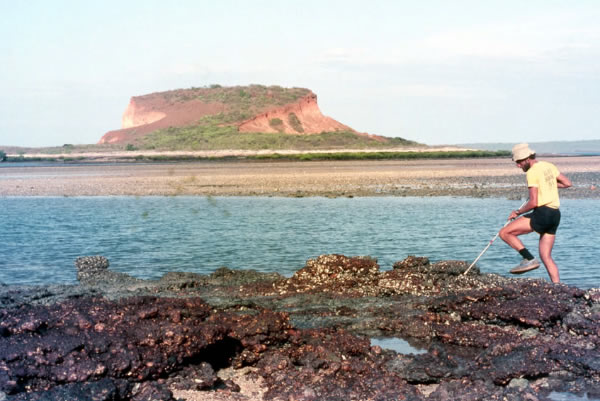
At Cape Bougainville I explored a gully that I was told might contain water. Because of the extreme heat I needed to replenish my water supplies as often as possible. The creek below the gully was a picture of death. The dry bed, encrusted with salt, lacked even the smallest living creatures and the un-healthy-looking mangroves only gave refuge to debris brought up on a high tide. I found a shallow pool of water in the gully which turned out being kangaroo urine.
Unsuccessful in finding water I returned to Cape Bougainville.
Hat Point used to be a very important landmark for the missionaries at Kalumburu. Here they used to tranship food and goods from small ships to the Kalumburu Mission lugger, which then took supplies to Kalumburu. It was too dangerous for the ships to go past Cape Bougainville because of the many dangerous reefs.
At Hat Point, south of Cape Bougainville, my water supplies were low, so I started producing my own water from four of my salt-water stills. Water is a sparse commodity at this time of the year. The rains had passed several months earlier and the fiery heat soon evaporated what lay in pools or small creeks. The weather conditions were becoming unbearable, it was very
hot and humid. To add to the tropical heat, the dew made things very uncomfortable. As soon as the sun dropped everything became damp. No matter what I did my clothes were never dry, when walking they were soaked in sweat, at night they were drenched in dew.
River Speed Cameras
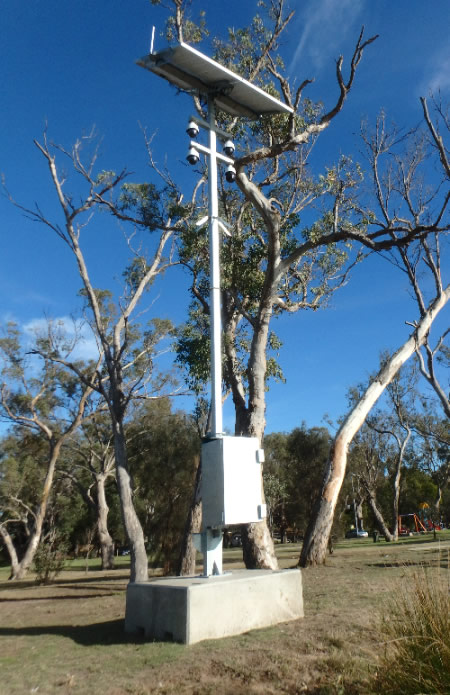
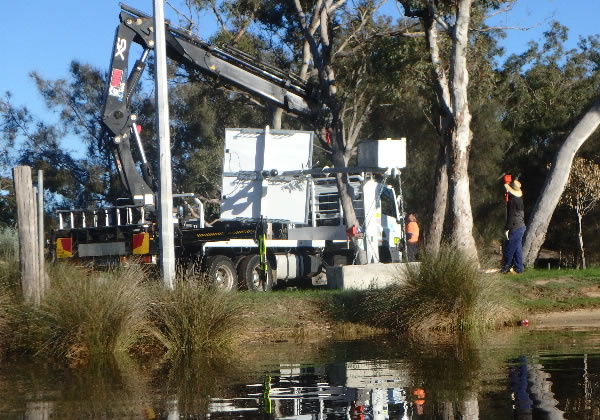
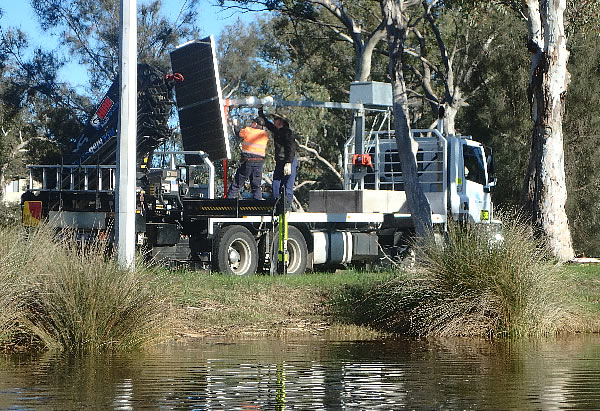
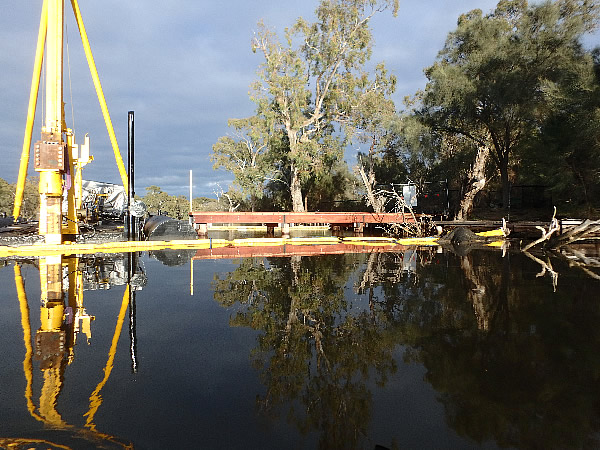
Have you thought how the river speed cameras get moved.
The speed cameras are fixed to a concrete block and can be moved from one location to another.
The mast is hinged so it can be loaded on a truck.
The trucks crane lifts the concrete block and camera mast onto the truck and will take it to another location which happened to be next to Ascot Kayak Club.
Don't disturb. Lockdown is on.
It's been a quiet few days. It's been great.
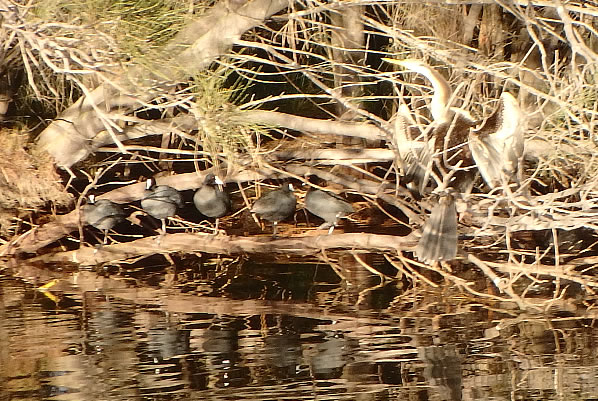
The Coot family stay at home because of Lockdown
Yippee lockdown about to be lifted
A Swan Rescue
John Hilton
We had a wildlife encounter yesterday. Jane Hilton and I took the double kayak out, from Rossmoyne to Kent St weir and back. As we left Kent St we noticed a pair of swans in front. Beautiful, but something was wrong - one had a fishing line around its neck and was looking agitated. On the bank, the fisherman was pulling on the line. It was soon apparent that things weren't going well, the swan diving and turning . It was clear that more needed doing. We turned and pulled into the bank
and I climbed out of the boat.
The fisherman had pulled the swan most of the way in, so I knew I wouldn't have to swim out to catch it. As soon as it was close enough I lunged and managed to get my arms around the whole bird, keeping the wings down. This seemed to calm it and the fisherman was able to untangle his line and hook from the bird. I was able to release it and it departed, seemingly not too injured- a lucky escape.
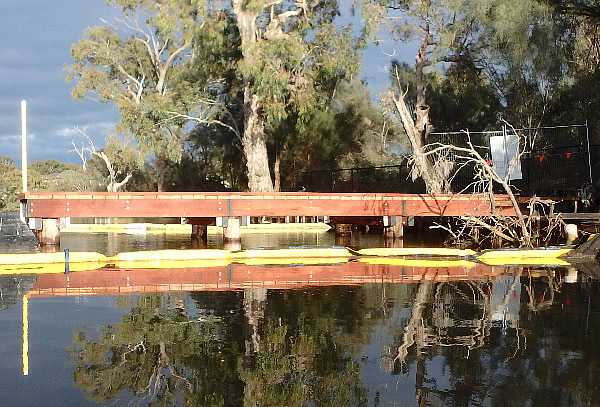
The new Sandy Beach Jetty nearly finished.
LiveLighter Slalom Winter Series #2
Ascot Kayak Club
Avon Descent Safety & Competency Assessments
Due to the lockdown some of the dates have been cancelled but some other dates may be included.
Saturday 3rd July 1.00pm - 4.00pm
Sunday 11th July 1.00pm - 4.00pm
Saturday 17th July 9.00am - 12 noon
Saturday 17th July 1.00pm - 4.00pm
Saturday 13th August 9.00am - 12.00 noon
Please note the sessions are subject to water levels at Walyunga. If there are any changes we will advise 24 hours prior.
$60.00 club members
$120.00 non club members
Need to bring own kayak and gear: includes PFD, Helmet, Warm clothing, Footwear and spraydeck if in a kayak.
Walyunga Park Fees apply https://parks.dpaw.wa.gov.au/know/park-entry-fees
Any queries email akcadministration@gmail.com
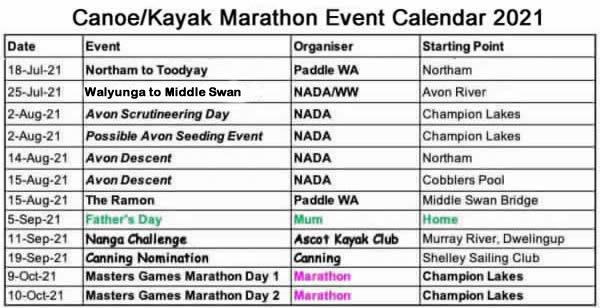
The Northam to Toodyay Race
18th July 2021
This is a 30km fastwater race starting in Northam and covering the first 30km of the Avon Descent course, finishing up at Duidgee Park in Toodyay. A perfect introduction into the Avon Descent, paddlers must wear a helmet and life jacket to participate and must be 16 years or older.
- Email: develop@paddlewa.asn.au
NANGA CHALLENGE 2021
Saturday September 11th
Adventure Race at Chuditch Campsite, Lane Pool Reserve, Nanga,
Nr Dwellingup WA,
Ascot Kayak Club’s multisport event in the Jarrah forest surrounding Dwellingup is on again. This year’s event is to be held on Saturday 11th September, and there is a new entry class for the LESS EXPERIENCED PADDLER, the Adventure Pairs category. There is also a new two-leg category: Paddle and Bike.
Early-bird entries will open from July 1, beat the August the price rise ! Camping at Chuditch for the Saturday night post event is included for all entries completed in JULY, or until the campsite is
full. Be quick, sites are limited, first in, best... camp spot!
Enter: https://www.webscorer.com/register?raceid=245426
Questions: Emailnangachallenge@gmail.com and grant@alarmswa.com.au or call 0417 945 577
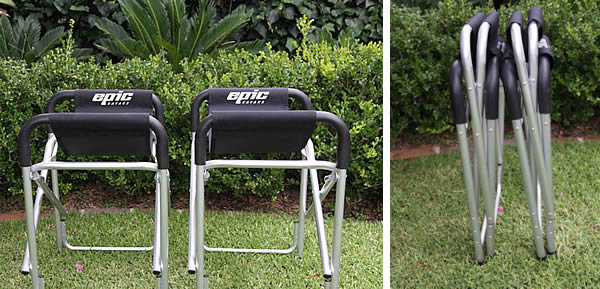
Extremely stable. $180.00 pair.
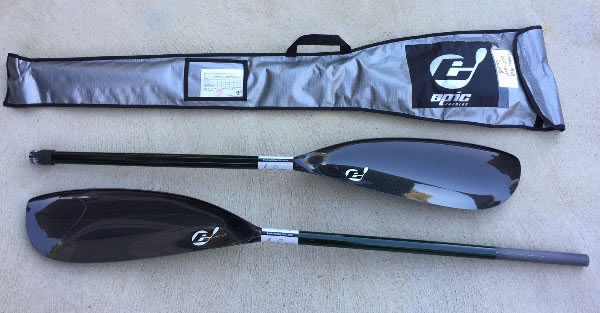
Club Carbon $460.00
Midwing Club Carbon construction - 737 grams; comes standard with Epic’s Length-Lock 2™ adjustable ferrule technology.
Carbon fibre blade, Green oval fibreglass shaft.
Fully adjustable length & feather.
Includes paddle bag.
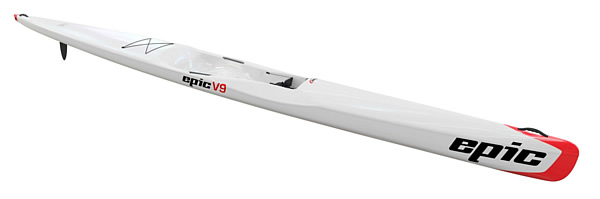
Like the Gen 3 V10, the V9 has been optimized for downwind surfing, with increased rocker, and stability. Flatwater speed is a step up from the V8 Pro due to the slightly narrower beam. This is the boat many paddlers have been waiting their whole lives for – the one that launches you onto the swells, glides
efficiently across the water, and keeps you in the “zone”.
Length: 5.79 m (19'0")
Width: 49 cm
Depth: 32 cm
Capacity: 120 kg
Ultra 12kgs
$4900.00
|
|
|
|
|
|
|
|
|
|