|
|
|
|
- Avon River at a high level
- Saturday AM Dash
- WA State Marathon Championships
- Australian Marathon Championships Cancelled
- Rod Fry Race
- City Lights Race
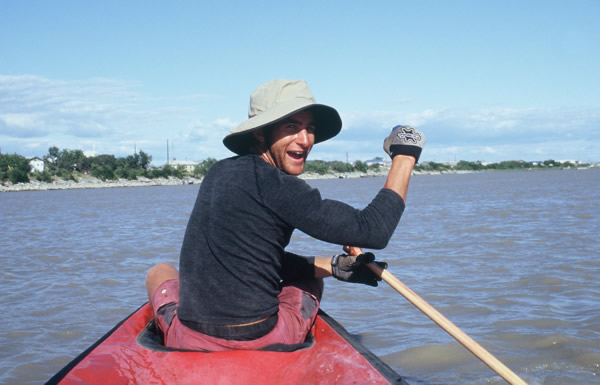
- The Yukon River with Ed VanEer
- Rod Fry Memorial Race 202
- Women of the Avon
- Champion Lakes Come & Try
- Products
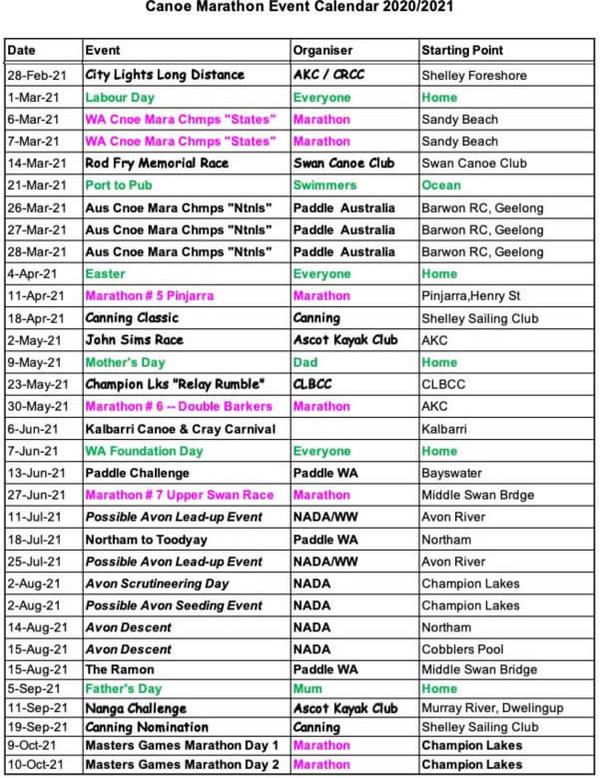
- Coming Events
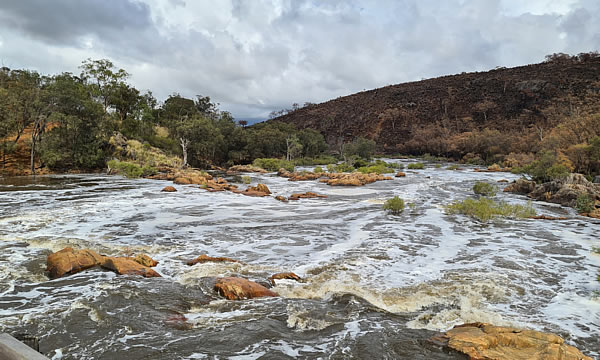
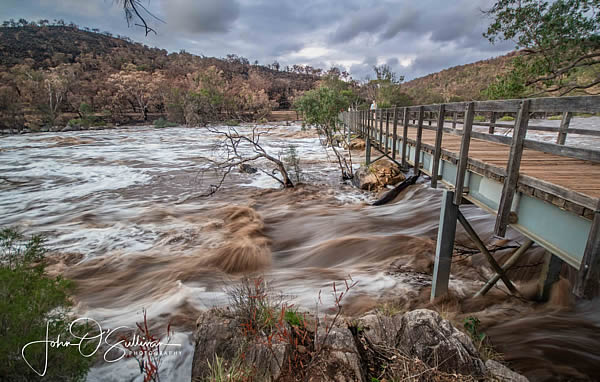
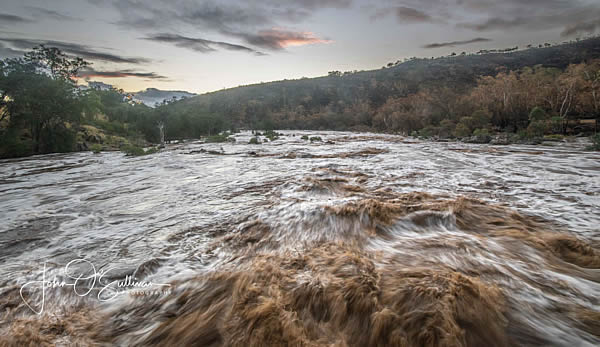
The Avon River is Flowing
The water is coming down Bells Rapid at a rapid pace, but it got higher later in the day yesterday. Many paddlers are rejoicing, but with the high water it will be dangerous in places and some low lying vineyards may be flooded.
Let's hope it doesn't get that big that the State Marathon Champs have to be cancelled?
Photo Kris Smith.
The Avon River a few hours after Kris had taken his photo.
Photo John O'Sullivan.
Another great shot from John O'Sullivan.
WA State Marathon Championships
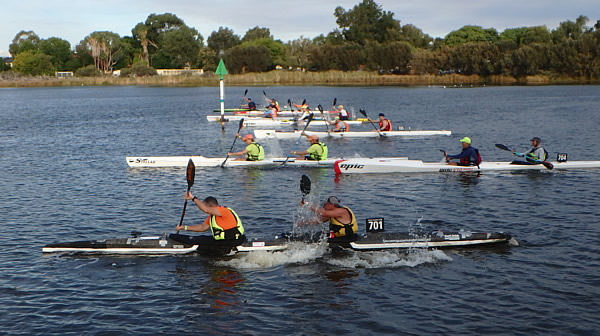
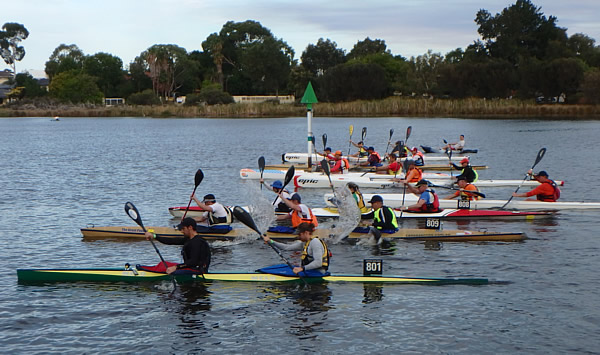
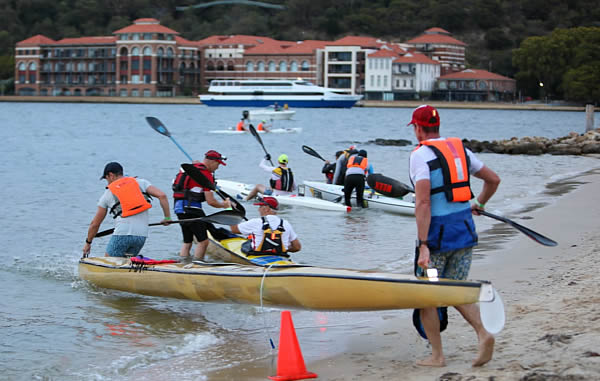
This Saturday we have the WA State Marathon Championships at Sandy Beach.
Saturday and Sunday mornings from 8.30am.
Singles on Saturday and doubles on Sunday.
2021 Australian Canoe Marathon Championships
Cancelled
Paddle Australia have a principal which dictates a national event cannot be held unless all states are able to attend with a reasonable period of notice before the event. Their rule is 6 weeks.
Paddle Victoria will host a competition for those able to participate. Further information on the competition will be provided on the Paddle Victoria and PA website. This is, understandably, mainly, with the States nearer-by in mind.
City Lights Race
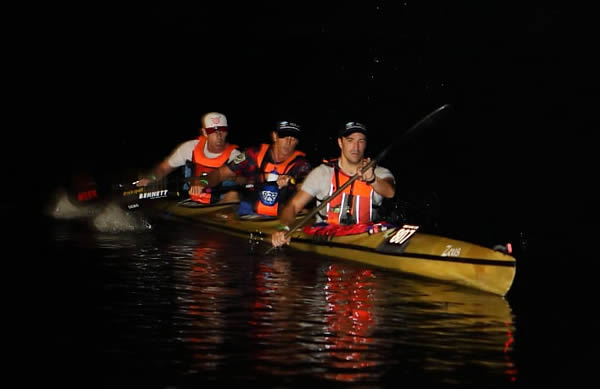
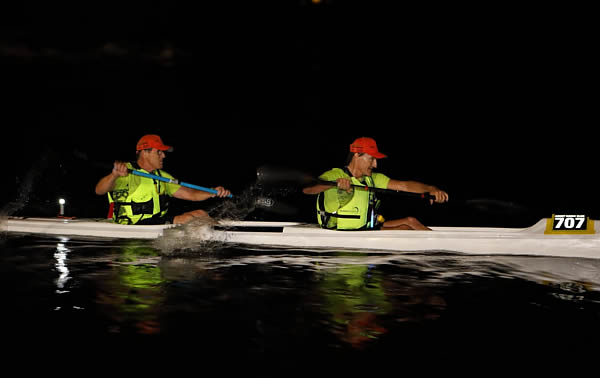
The City Lights Race is an unique race which takes you from the calm waters of the Canning River, near Riverton Bridge, across some shallows, a boating/skiing area, down along the freeway where some years it is quite rough to a portage point near the Narrows Bridge. From the Narrows paddlers paddle into the near darkness and across Perth Waters, which can be rough. The city skyscrapers are passed. From the Causeway it gets calm but it is a hard paddle for those doing the whole
race to Ascot Kayak Club.
It was again challenging for some paddlers going across Perth Water where one team had a capsize.
In 2007 the first race there were 23 teams taking part, in 2012 there were 56 teams, in 2014 there were 42 teams, and this year there were only 27 teams.
In the first years there were no teams and no portage which meant a slightly longer course as we had to paddle around the jet ski practise area.
Unfortunately this year after paddling all 13 other races I had to be on the side lines so I volunteered instead, to allow my varicose vein operation to heal.
The overall organiser of the race was Chris Hollier who always does a good job. This year there were a few more safety requirements, PFDs and extra lights had to be worn. Boats were also scrutineered. Other years it has been voluntary to wear a PFD. Two paddlers who capsized in the middle of Perth water this year were extremely happy that they were wearing them.
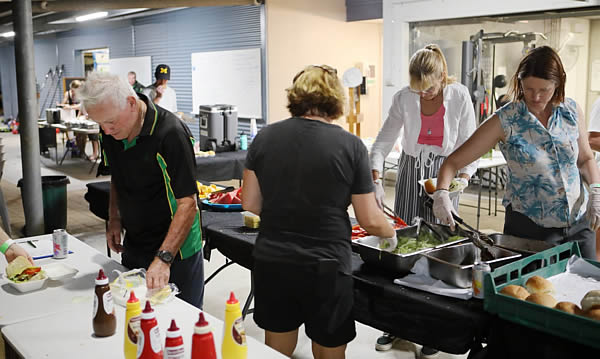
There were many volunteers needed to run this race, with volunteers at the start, 4 checkpoints, 3 safety boats, two jet skis and the timers at the end. Not forgetting the volunteers who put all the food together.
The first grid and the less fast paddlers take off.
The second grid and the faster paddlers take off.
The third grid and the fastest paddlers take off.
Although Warren seems to fiddling with something.
Stephen Coward asks John Breed at the portage point -
Do we really have to go on?
Yes Stephen we must, what would Terry think if we gave in now!!!
Photo Kris Smith.
It takes four baby.
The team of M Jones & K Martin and Ross & Wendy Burdett sort out an issue at the portage point.
Photo Kris Smith.
Paddlers hurry around the portage buoys.
Photo Kris Smith.
Tom Canavan and Steph Beddan looked relaxed after paddling the first leg of the relay team and giving the baton to David and Brendan to do the second leg.
Photo Kris Smith
Ben Carrick, Andy Heartcliffe and Garth Civil first over the line in 2.06.34.
What a cracking pace.
Photo Kris Smith.
Wayne Martin and Alan Ribbons 7th 2:26:00.5.
Photo Kris Smith.
Food volunteers Julie MacDonald, Marie Andersson, Kate Crossing and others dish the food out to paddlers and volunteers.
Photo Kris Smith.
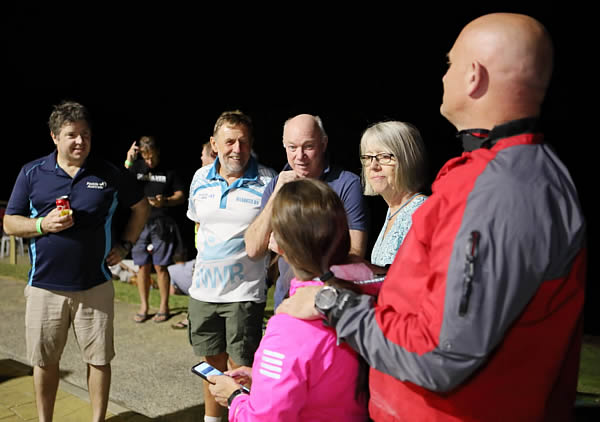
Brendan Welker, Me, David Brown, David's wife Marion and the dynamic duo Isabel Combe and Geraint Maddison chat about the race after a good feed.
Isabel and Geraint were in a rescue boat, whilst I did the registrations and was at a checkpoint.
Paddlers David and Brendan said it was pretty rough paddling across Perth Water.
Photo Kris Smith.
The Yukon River
With Ed VanEer
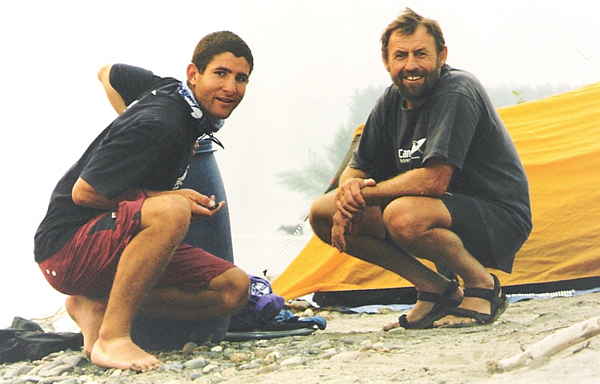
As we were so busy before the expedition we only got to paddle a canoe together about 4 times.
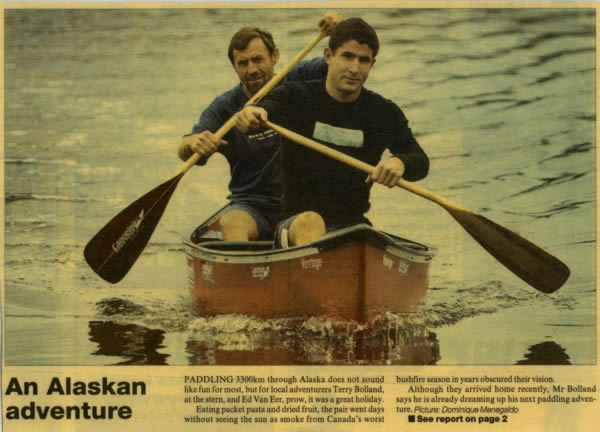
I had always thought that I would be taking on this Yukon Expedition alone, as I have done on many other expeditions, but Ed Van Eer, a twenty year old, decided to be my paddling partner. I first met Ed at the Bassendean Boat Ramp when he was about 15 years
old. I had seen him paddling an heavy 4.5m plastic fishing type sit-on kayak several times, before catching up with him. His mum used to drop him off around Perth/Maylands area and he would paddle upstream and take out at the boat ramp in Bassendean. Not many 15 year olds would go solo and paddle so far. He also enjoyed fishing.
Not long after he approached me to do work experience while he was still in school. He was a great worker and easy to get along with and he also got on well with the people I was teaching paddling to.
After meeting him it didn’t take me long to get him into competition paddling. First a Down River Kayak, then a K1 then whitewater playing and trips. Before long he was racing and paddling in the Avon Descent which he did twice before the trip. Ed also
helped out as a white water instructor when I took paddlers down the Avon Valley and was very well liked especially by the young females!
He had always been interested in doing a camping trip, so when I asked him on the Yukon journey he leapt at the idea.
It was a big ask for a 20 year old to paddle 3300 kms in the wilderness and it was impossible for him to comprehend what that was going to feel like physically and mentally here in Perth.
Did young Ed really understand what he had taken on! With his determination and resilience and youth on his side, I felt
confident that he would do well and he did.
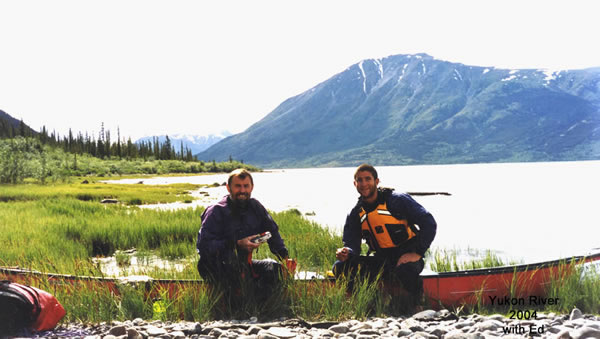
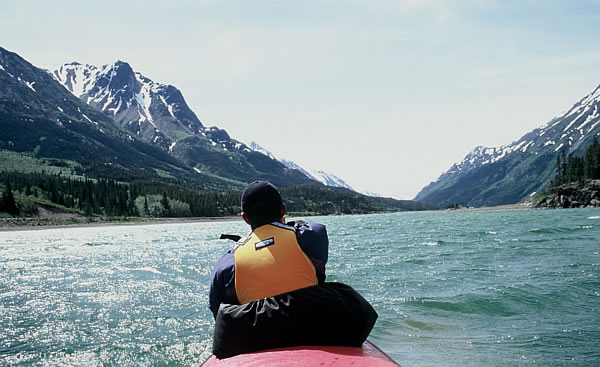
The start of the expedition at Carcross, Canada. First we would head upstream into the mountains as far as we could and then turn around and head 3300 kms downstream.
Tuesday 8th June 2004.
After a short stay in Vancouver, it was time to leave and head to Bellingham by bus. Oddly, we had to go south into the USA to catch the ferry to go North! After clearing the city suburbs we arrived at the Canadian/U.S. border, which was situated in the middle
of a market garden area.
As I went through the first part of the customs an officer asked me “how did your cycle trip go across America?” Crikey how did he know that I’d cycled across the U.S.? Then it dawned on me, obviously they kept a record of my entry into the U.S. from my last trip, in the computer. On that trip I cycled 10,700kms, backpacked 1,200kms and kayaked 4,300kms which included paddling the entire 4000km Mississippi River. That awesome journey took me through thirty states. I started in New York and
zig-zagged up, down and across the U.S.A. finishing in Los Angeles, California.
From Bellingham in the US we took a 5 day ferry trip north to Skagway in Alaska experiencing some very unique and beautiful scenery along the way. At Skagway we took a train across the mountain range into Canada where we caught a bus to Whitehorse to
collect our used canoe that we had bought.
Tuesday 14th June. Day 1
As I wanted to start our journey as far up into the mountains as possible we hired a truck to take us to Carcross which was 120km from Whitehorse and 40 kms from our intended start point. Once at Carcross we paddled upstream right into the mountain range where
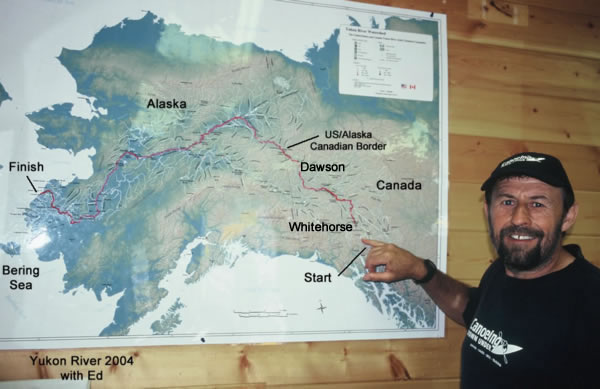
the wind blew that strong we could only manage 11kms in 5 ½ hours on our first full day. It was truly heart breaking and the slowest 11kms I have paddled in my life. The following day was even worse but we manage to get to the British Columbian / Yukon Border before turning and heading downstream to paddle 3300kms to the ocean. However once we reached Whitehorse we were
going to take part in a 750km race to Dawson City before carrying on 2430kms to the end.
Heading into the mountain range and our turn-around point.
Although Ed became a little tired at first and a little home sick a few weeks into our trip he pushed on through thick and thin and came out achieving an amazing goal.
Ed is now married with a child. At his wedding he said, it was the best thing he ever did - apart from getting married that was.
We started in the mountains paddled down to Whitehorse where the red line starts and then raced 750kms to Dawson - then just paddled to the ocean.
Read the full account here:
RACE DAY: Wed 23rd June. WHITEHORSE – The Yukon River Quest. Day 8
By joining the race did mean that our whole journey had to be structured around race day.
‘The Yukon River Quest, at a distance of 740kms is the longest endurance marathon canoe & kayak race in the world’!! They now have a longer one on the same river.
This race was five and half times longer than Western Australia’s Avon Descent and with only two compulsory stops, one of 7 hours and another of 3 hours. It was truly an endurance race. Here was a place that didn’t get dark and could be paddled for 24 hours, and here was a river that was running through some amazingly stunning wilderness areas.
Race day
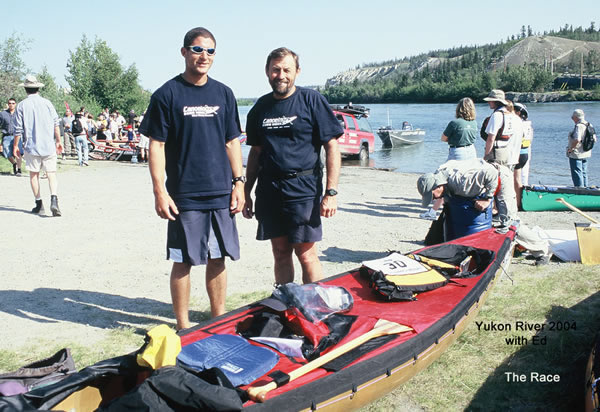
Unlike most of the other competitors, we didn’t have a support team so we had to be prepared to get through the 740km race self-supported, although we were able to give some of our unwanted gear to the organisers. As this was our first time in the event we really didn’t know what to expect, but we had to make sure that we had all the relevant gear to survive the journey whilst keeping it to a minimum too. Like taking a tent, clothes and cooking gear just in case we had to camp out. All canoes
had to be fitted with spray decks due to the potential rough crossing of the 50km Lake Laberge.
Race start was at 12.30pm in the town centre on Main Street, a good 600 metres away from the boats. It was a ‘Le Mans’ start, which meant that we had to run (that’s if we had the energy) from the town centre to our boat, jump in and paddle away.
The countdown began 5, 4, 3, 2, 1, GO. We were off and running along the main street, across a railway line and along a gravel path that ran parallel to the river. The competitors started to spread just a little. I knew I wasn’t that fit, and my rapid heart beat was telling me so, but I couldn’t slow down. The intense heat burnt relentlessly and my
breathing quickened. Ed was 15 metres in front and looking like a true athlete. I was clipping at other runners heels and feeling far from comfortable, but I kept running hoping that I wouldn’t collapse before reaching the canoe.
Fifty metres from our canoe, some of the front runners darted down the bank and jumped into their boat and took off. That didn’t seem fair. The boats were laid out from one to fifty five, so if you were number one it meant that you didn’t have to run or paddle as far as the higher numbers and therefore had a distinct advantage. We were number
thirty, I suspect that competitors knowing the system probably entered early to get low numbers.
We were off but we didn’t know where we would sit amongst the pack of paddlers although after 100kms we were in the top 10. As the night got cooler I couldn’t understand how Ed was keeping warm wearing only a cotton T shirt. He said he was okay, but not long afterward exhaustion began
to set in and he started to feel sleepy. He kept stopping trying to fight fatigue. Eventually he couldn’t take it any longer and said he wanted to stop. We paddled on trying to find the right place. As we turned a corner two tents were erected on a flat gravel beach. It looked the perfect place. The current was swift, so it took some effort to ferry to shore. We landed next to the campers’ food drums left 120 metres from their tents as a precautionary measure against
bears.
Once on dry land Ed instantly hit the pebbly ground. He lay with his hands and arms by his side, dead to the world, totally exhausted. I walked around the gravel bar, which was part of an island, filling in time and trying to keep warm in the chilled air. The
hills on shore were steep and high and a landslide was taking place opposite us. Every few minutes rocks would tumble and splash into the water.
The valley was silent except for the rumbling and tumbling of the landslide and with the dim light, it felt an eerie place. I soon became tired of standing there getting chillier with every passing moment and watching Ed turn into an icicle perhaps never to
wake up again, so I prodded him with my foot. He gave a moan, moved a limb or two and then mumbled the words, “I’m freezing”. Not surprising given that he was still in his T shirt. He stood up and shivered as he put on more clothes and to my relief he was willing to get back in the canoe and paddle on.
We hadn’t been resting for too long, but long enough for the British pair to pass by. I was raring to go to catch up with them. However Ed was so shattered he had to keep lying back in the canoe for a short sleep.
Mostly it was only a couple of minutes at a time, but I was getting a little concerned especially after he said, that it was the hardest thing he had ever done in his life, and he didn’t want to do another marathon race ever again! He was tired, stiff and
exhausted. I could feel his pain; this was the first time he had paddled for 14 hours straight. Though I encouraged Ed to rest, I continued to paddle to keep the boat moving with my competitive nature urging me on.
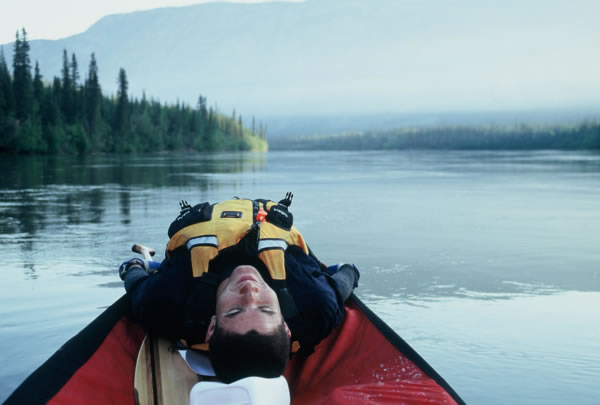
Ed started paddling again and then stopped. He just couldn’t keep his eyes open and began hallucinating. Once more I encouraged him to rest, and although he didn’t want to let me down, he had no choice, his body needed rest, so he lay back with his paddle
across his body and under his arm. He woke a few minutes later and continued paddling but soon lay back again and slipped into sleep. This routine went on for a while. He urged me to have a turn at resting, but I just couldn’t and strangely enough my body didn’t need it.
The river divided several times and not knowing which was the fastest route we often got caught out, which allowed a local boat to pass us, but we would always catch up with them again.
Eventually we reached our first stopping point. We had been on the water for twenty three hours and had paddled 304kms. I checked the leader board and to my surprise we were in 8th position overall and 6th in the canoe section.
At the first stop after 23 hours of paddling and 304kms
we were in 8th position overall and 6th in the canoe section.
The seven hour break had slipped by pretty quickly but it was 38 degrees and impossible to sleep. So with no sleep and another 275kms to paddle before our next 3 hour rest, I could sense that
the next leg wasn’t going to be fun!
Though Ed was still suffering from aches and pains on this leg of the race, he was paddling particularly well. He had no rests, no quick naps. This was the biggest challenge that he had ever taken in his young life and he had now grasped it with heart and soul. We were moving and being 8th we didn’t want to lose our spot but in fact we gained a couple of spots over that 275kms to our last 3
hour stop.
The last leg we truly went like a rocket, we were flying. It was such an amazing feeling, to experience the speed of our canoe rapidly accelerate down the river. No one would pass us now. But to our alarm Joe in a kayak somehow found the strength to catch us, keep up and ride our wash. He knew though that if he stopped paddling we would get away from him forever, so he just hung on.
We were on fire and I was certainly enjoying the wild ride, I just hope Ed was. We checked the time and realised that if we increased our pace even further we could make it to Dawson before midnight. We dug in deep. It was as if I was floating, the adrenalin must have been pumping as no matter how hard I paddled I felt no pain, just a desire to paddle even harder. If there was any time in my canoeing
career that I felt that I could go on forever, this was the time. To think that we have only had one hour of disturbed sleep in 60 hours, we had been paddling for 49 hours and were nearing our 740km goal.
Joe was now struggling to keep up, but to our dismay he did. There was still a dense smoke haze in the valley, it was silent and the light was dim as we pushed on. Towards 11.45pm we approached the outskirts of Dawson and civilisation, although there was no one to be seen. One last burst and we would be there. Feeling proud of our achievement we approached the last corner with such speed and energy it was
alarming. Our enthusiasm was beyond belief and Ed, who was now carrying an injury, was beating an incredible rhythm. I thought of the song, “We are one, we are Australian” and nearly burst into tears with pride and happiness. It was a moving moment and one that I will never forget.
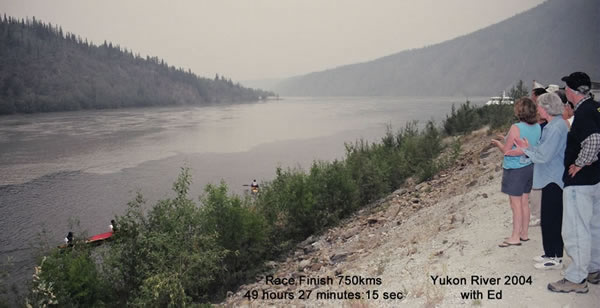
Joe was still on our wash and had managed to wash ride us for kilometres, but as we gave it one last surge, he peeled off and moved over towards the right side of the river. Somehow he had found his own power surge and started to pull away from us. We turned a corner and all of a sudden we entered a section of incredibly clean water. It had drained from the Klondike River into the silty waters of the
Yukon River. A perfect separating line down the middle between the two waters had been created. The amazing sight momentarily slowed us, but cheering from people on the bank spurred us on, this encouragement gave us the inspiration to power over the line.
Just before midnight and in 49 hours 27 minutes and 15 seconds we crossed the finish line but Joe had crossed the line 20 seconds before us.
The next day the prizes were given out in an overall position – canoe, kayak or double kayak, it didn’t matter what class you were in. Our fourth canoe position didn’t receive a prize but for our sixth overall position we received $700.00 between us which just paid for our entry fee. It was good to have been the second fastest canoe on the last leg, which meant that we were either getting better the
further we went on or the other crews were tiring.
Bruce Barton (the brother of Olympic medal winner Greg Barton) and Steve Landick, receive their winner’s cheque of three thousand dollars.
Bruce has been in canoe and kayak racing for thirty five years and in 1976 and 1980 was in the US Olympic Team. He is also a kayak winner of Le Classique race in Quebec. Steven paddled 28,000 miles in a canoe in 1980-3, what a feat! He is also the Unlimited and Solo record holder of Texas Water Safari. They are both the record holders of the Yukon River Quest.
So you see we had some competition.
Read the full story of the race and the race here:
https://terrybolland.wordpress.com/yukon-river-quest
The finish of the race just before midnight.
Our fourth canoe position didn’t receive a prize but for our sixth overall position we received $700.00.
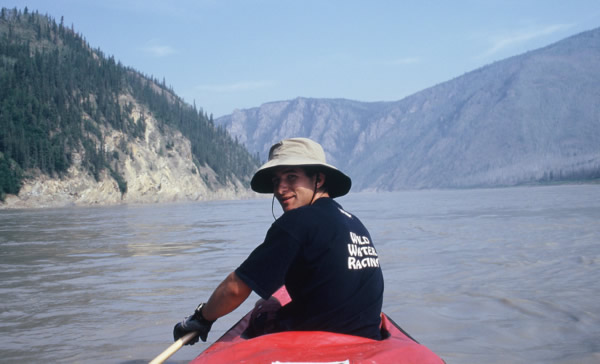
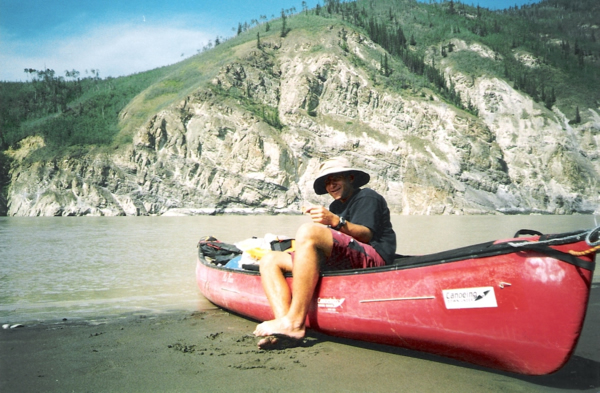
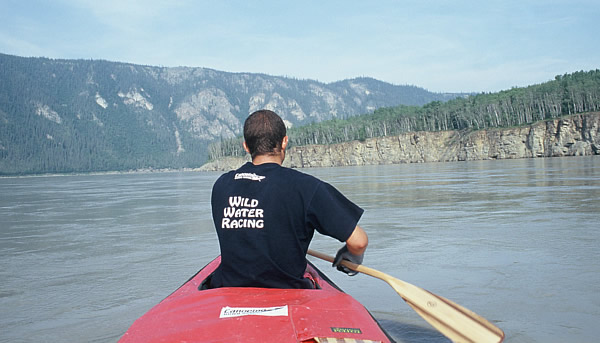
With a slower pace after the race we could enjoy the scenery.
The rewards of paddling long distances usually means passing through some spectacular scenery.
A moose enters the water behind our camp.
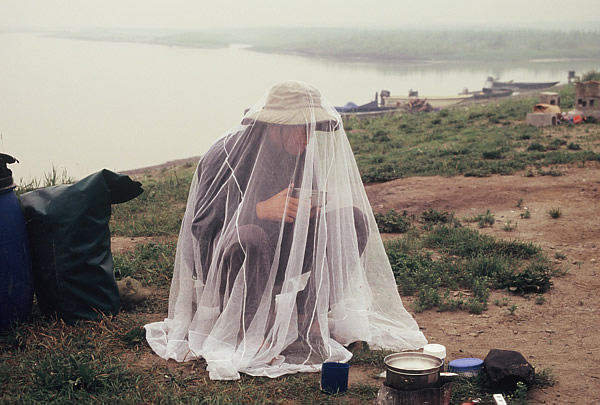
Ed having his breakfast and trying to keep away from the mosquitoes.
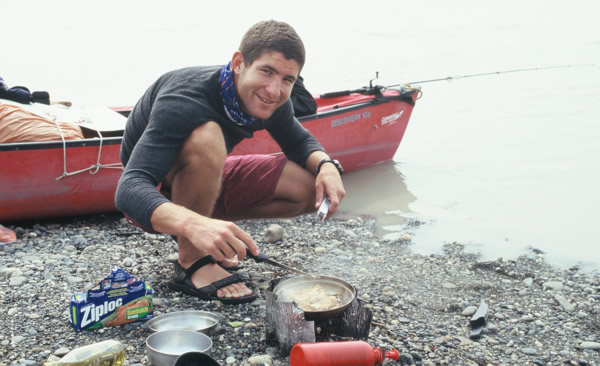
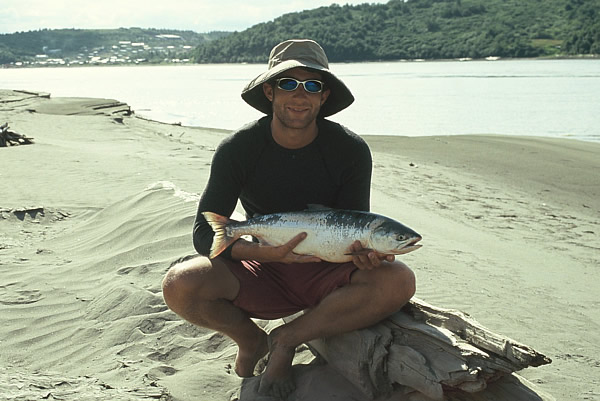
Ed was a fisherman but he didn't have too much luck. Here he is cooking fish given to us which were captured in a fish wheel trap.
The Yukon was very milky away from the mountains. It's the rivers that carve through the mountains that bring the particles down and cloud the river if it doesn't get filtered by a lake.
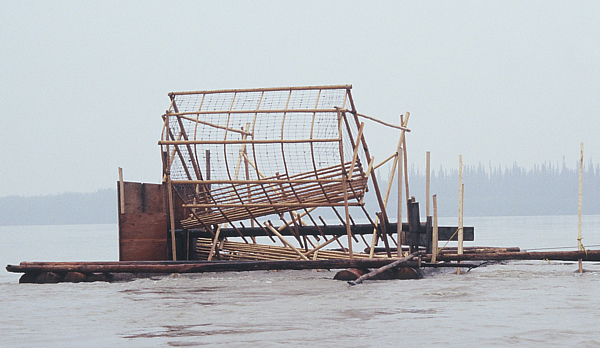
A fish trap made of local timbers.
Two catching wheels spin around going under the water, scooping out the fish into a wooded tilted slide that slid them into a holding pen. These two big scoops were driven by the current and were catching fish that were headed upstream to spawn.
We were given another fish caught in a net. Dinner was good that night.
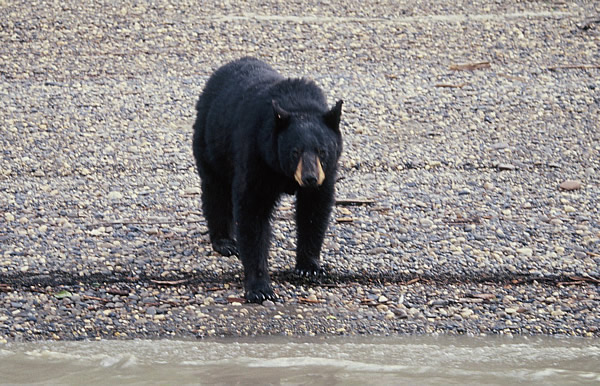
We were only metres from daddy bear, just drifting down the river watching a family of five scooting along the bank. Two cubs were climbing a tree.
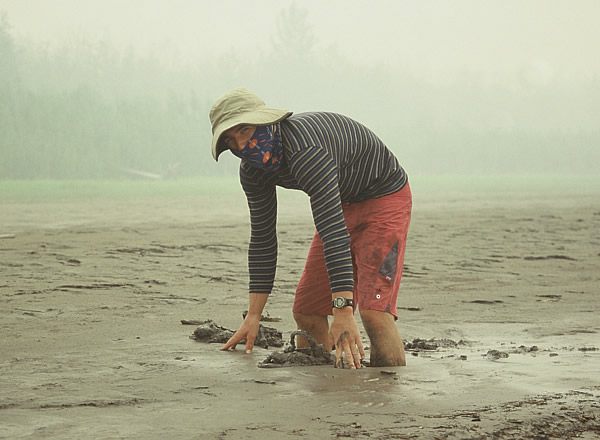
Not all beaches were firm sand.
Ed wanted a pee but it was a bit of a struggle trying to get to shore.
We reach the ocean.
Now we had to paddle 18kms back against the current to the community of Emmonak where we would give our canoe away and fly out.
We chatted, bringing up a few memories of the last few days. It was so nice to be able to share them with Ed, who at only 20 years old had seen so much, experienced so much and learnt so much about himself on the journey. He had experienced some hard times, some emotional times, some lonely times but to his credit he never gave up.
Within the hour we had enjoyed hot noodles and coffee and were ready to take on the hardest part of our journey paddling 18kms back to Emmonak against the current. I climbed the bank for my last look of this flat, desolate and harsh delta country finding beauty in its barren appearance. It was like standing in an Australian desert looking at absolutely nothing but ground cover.
Russia was only 420kms away.
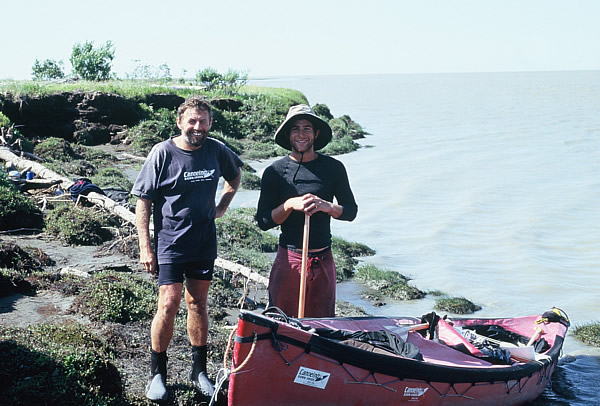
Back at Emmonak Ed raises his fist in the air. He is elated to have finished the trip.
We had been on the river for 40 days and paddled 3300kms an average of 82.5kms a day.
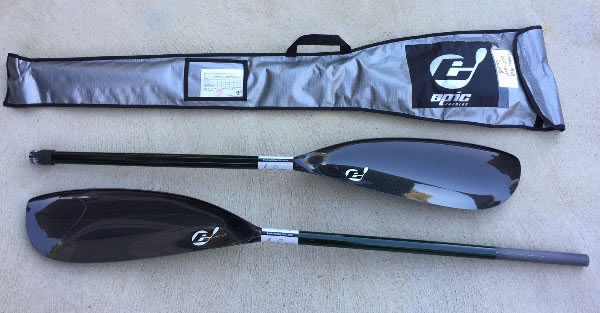
Epic Paddles
Lightweight and a treat to paddle with
Club Carbon $460.00
Midwing Club Carbon construction - 737 grams; comes standard with Epic’s Length-Lock 2™ adjustable ferrule technology.
Carbon fibre blade, Green oval fibreglass shaft.
Fully adjustable length & feather.
Includes paddle bag.
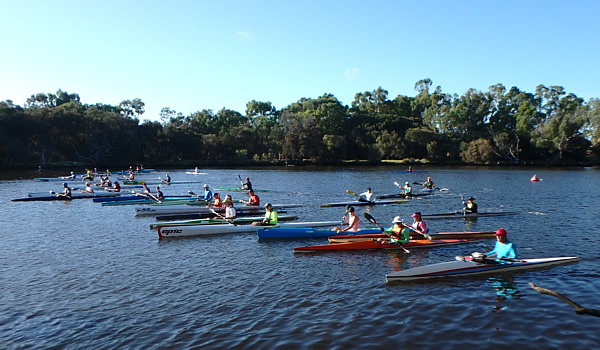
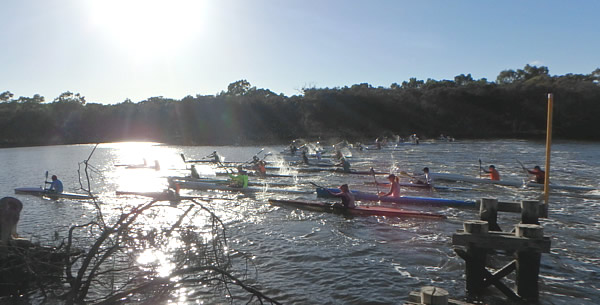
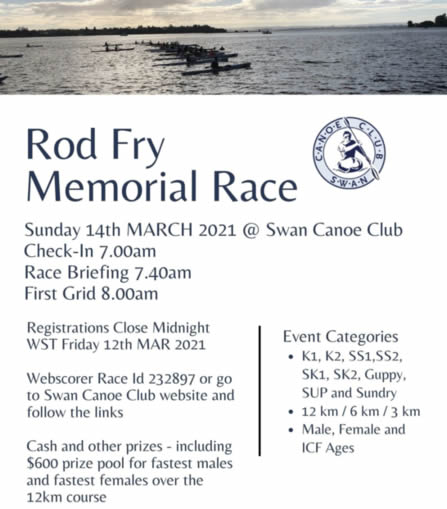
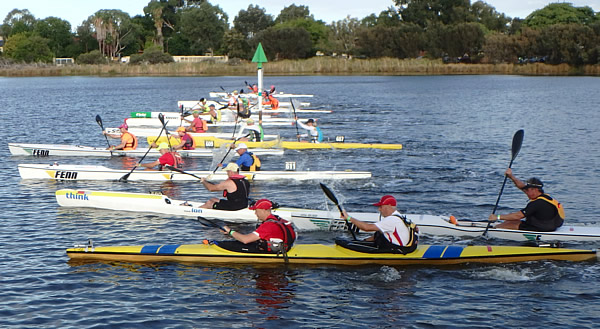
Rod Fry Memorial Race 2021
March 14th
REGISTRATION
Registrations close midnight Friday 12th March 2021
Enquiries: admin@swancanoeclub.org.au
General updates: SCC facebook.
THE EVENT
When: Sunday 14th March 2021
Where: Swan Canoe Club, Johnson Parade, Mosman Park
Check-in: 7:00am
Race Briefing: 7.40am
First Grid: 8.00am
Women of the Avon
13th, 20th, 27th March| Ascot Kayak Club
The LiveLighter Women of the Avon program is back for 2021, following on from the highly-successful Masters Womens Sprint Squad! This program is a ladies-only paddling course for anybody who would love the challenge of competing in the 2021 Avon Descent!
Details
Saturday's 13th March, 20th March, 27th March
Ascot Kayak Club, Garvey Park
9.00am-12:30pm, each Saturday
Cost: $150.05
What you will get
- 10 hours tuition from WA’s top paddlers
- All equipment provided for the program
- Specific training program by well-known coach, Andrew Budge
- Seminar with Sports Physiotherapist and Kayak Coach, Andrew Hayden
- A feeling that you’re ready to hit the water whenever you like!
Registrations close on Thursday 11th March 2021.
https://www.webscorer.com/register?raceid=232551
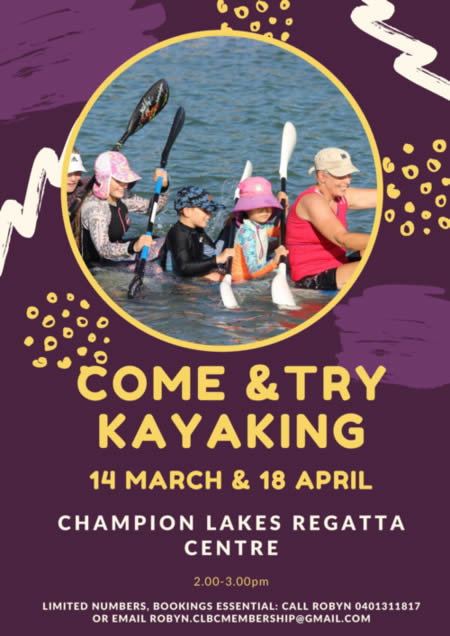
Champion Lakes Boating Club
are hosting a Come & Try Day
for anybody thinking about joining the club!
All kayaks, paddles and life jackets will be provided, as well as a Paddle Australia qualified coach. Participants must be able to swim 50 metres.
To book a place or find out more, get in touch with Robyn on 0401311817 or email robyn@clbcmembership@gmail.com
|
|
|
|
|
|
|
|
|
|