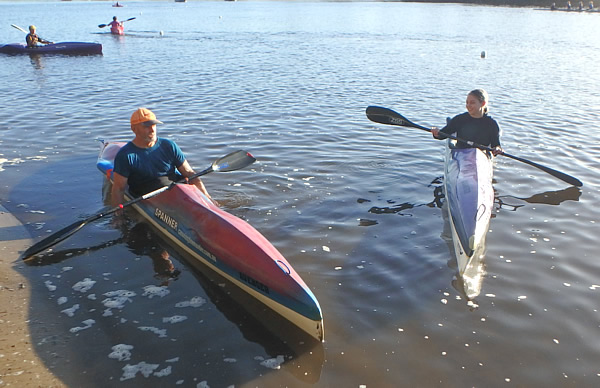
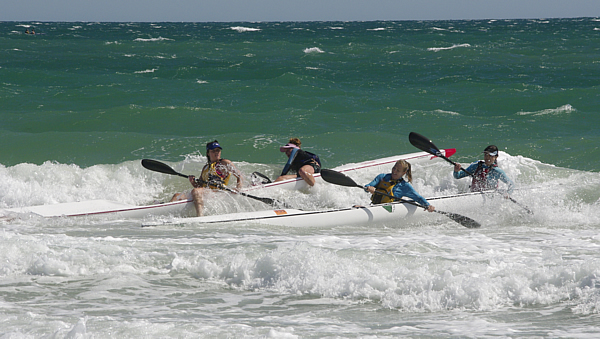
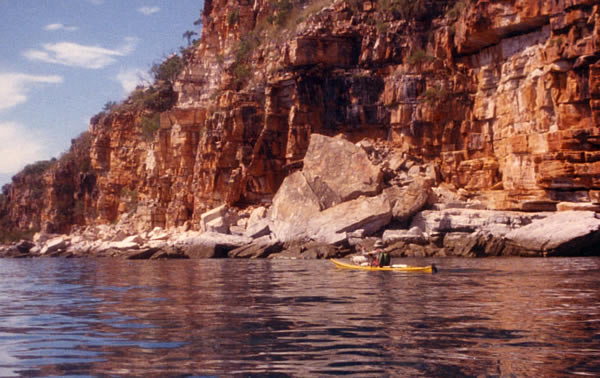
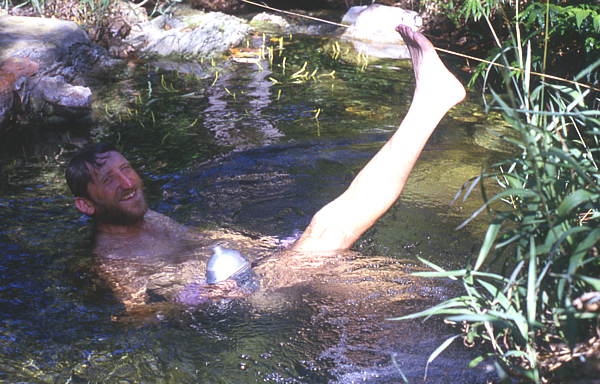
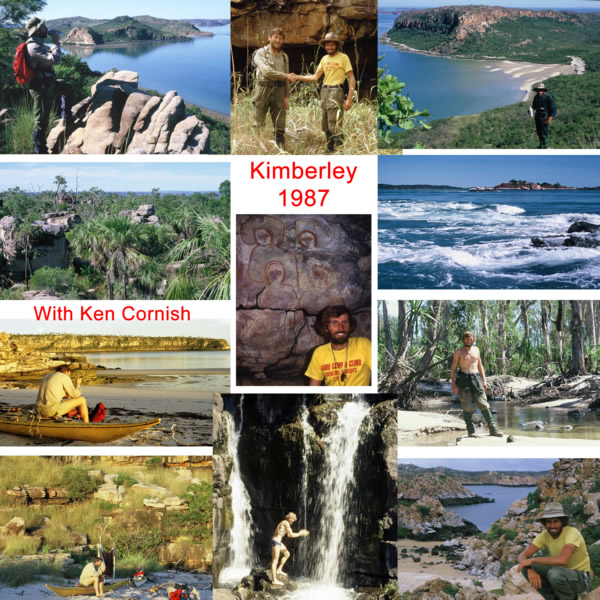
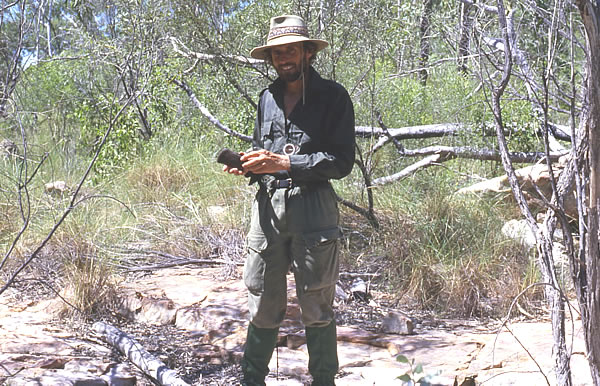
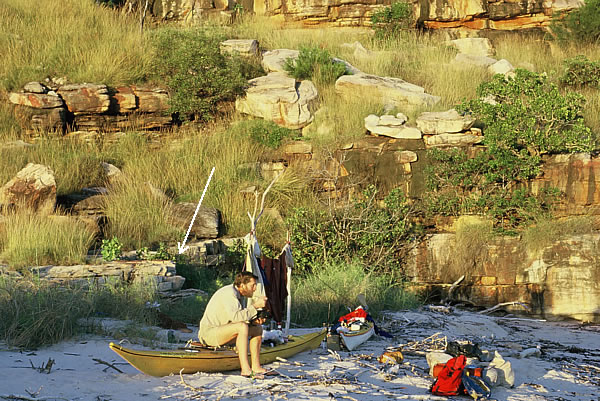
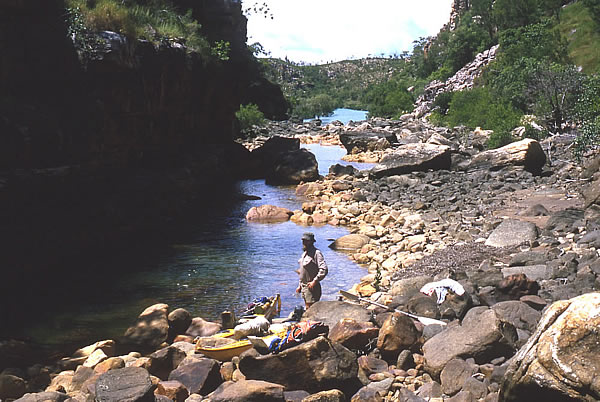
Further up the coast near our destination.....
We were getting closer to Walkers Valley where we would start to retrace the footsteps of George Grey’s 1838 journey. We had faced crocodiles, been hit by sharks and pushed around by tides and tidal rapids, escaped whirlpools but it was all worth it when we rounded High Bluff and recognised the land features that Grey described in his diary.
Paddling into Walkers Valley, and within 30 minutes of our destination we passed a small pocket of tropical rainforest that was being fed by a cascading stream of water from the cliff top. It was quite a beautiful surprise.
Huge cliffs narrowed our passage where a welcoming crocodile leapt off a nearby ledge. To escape the narrow channel it swam under our kayaks to a forest of mangroves that we had just passed further downstream. The water then became wildly alive with dozens of large mullet milling around the shallows not far from where we were getting out in Walkers Valley. Within minutes of landing the tide had receded, leaving our landing spot devoid of water, for another 6 hours
at least.
The light soon faded, and as we prepared dinner a thunderstorm struck, sending us scurrying for cover. I threw my tent fly over our gear and squatted in a small cavity of the cliff as streams of water drenched me as it ran down the rock face. It was pitch black, except when spectacular streaks of lightning exploded above the gully. My left leg became entangled in a thick spider’s web as I tried to squeeze further into the crevice. Luckily I wasn’t afraid of
spiders, but I soon became very cold which encouraged me to retreat under my tent fly for extra warmth.
Ken was nowhere to be seen. He had disappeared along the valley when the storm started. In between the noise of thunder, the spectacular streaks of lightening, a weird and mysterious howling cry echoed from the cliff top which carried on most of the night. When the rain stopped Ken appeared and we settled in for the night.
By the time we were fully packed for the overland trek the morning sun was beating down and the fresh smell of the evening storm had faded with the heat. Our packs were heavy. As well as having backpacks we also had heavy day packs strapped to our front, which made seeing very difficult. We calculated them weighing around 40 kilograms and I only weighed 60 odd kilograms. Leaving the mullet to advance with the rising tide we stumbled away from camp and along the
valley of huge paperbarks trees, lush vegetation, big boulders, and vines and spinifex hiding potholes full of water that we trampled in.
Already weary and tempers frayed from our ¾ kilometre trek, we were faced with the difficult task of spiralling our way up the rocky slopes of the cliff. Rests were frequent. Ken wheeled his machete around, trying to slash the tangling vines, but with little effect. We had achieved little by nightfall, the terrain, heavy packs and the heat made us stop regularly.
We rose early in the morning but the terrain still forced us to stop every 200 metres. Ken had his first brush with green ants which gave him an insight to what was to come. Their attack was deadly, as their nippers pieced into his skin, causing severe jabs of pain. He angrily threw his pack to the ground and we rested again, our packs were just too heavy.
We turned on the Flying Doctor Radio for the morning schedule to hear some distressing news. An American women, Ginger Meadows had been taken by a crocodile only a few kilometres away from us in the Prince Regent River. A search was on to find her body, but no other details were released. We wondered how the news would affect our wives. The police wanted us to return as they said it was too dangerous for us to be out there. I don’t know if they realised how far we
were away from civilisation.
After struggling a few more kilometres we decided that something drastic had to be done with our heavy packs. The radio, battery, solar panel and safety gear had to stay. So we decided to half our 22 days of food to lighten our packs and help us keep on schedule. We each hid 11 days (11 kilos) of rations under a big boulder hoping it would still be there and not taken by animals when we returned. Losing so much weight helped us to walk faster. By 2.15pm we
were in the Lushington Valley at a spot where three small streams merged. Beneath my shadow I noticed a rusty, worn axe head blending in with the coppery coloured rock. It was difficult to believe that we could find a piece of civilisation in this vast wilderness where very few people have ever trod. Did it belong to Grey’s expedition or was it used by Aboriginals that could have once been in this area? It was a mystery.