|
|
|
|
- Birds on Ron Courtney Island
- Down River Training (flatwater)
- Join the AKC Paracanoe Program
- Parallel Slalom Race
- Slalom WASPS
- Mandurah Duel (Downwind)
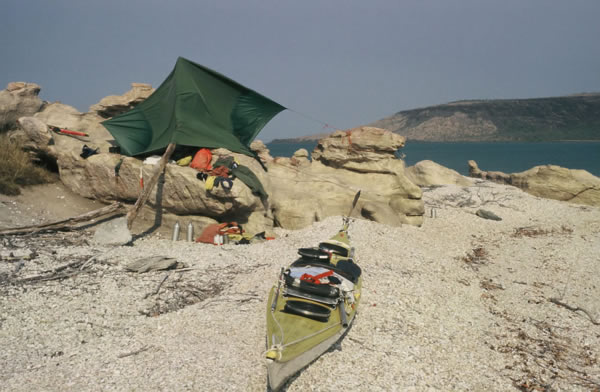
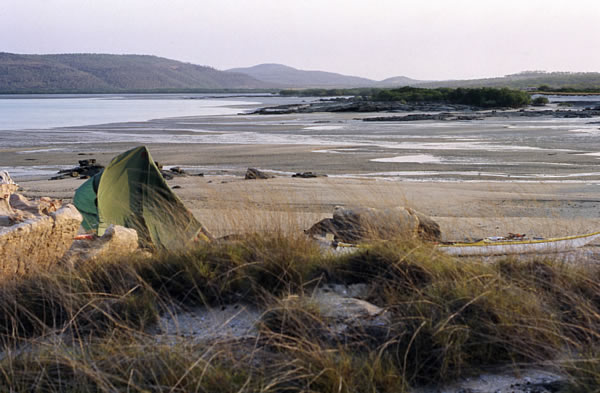
- Kimberley Expedition - 100 days solo - part 20
- More bird photos
- Used Time Traveller
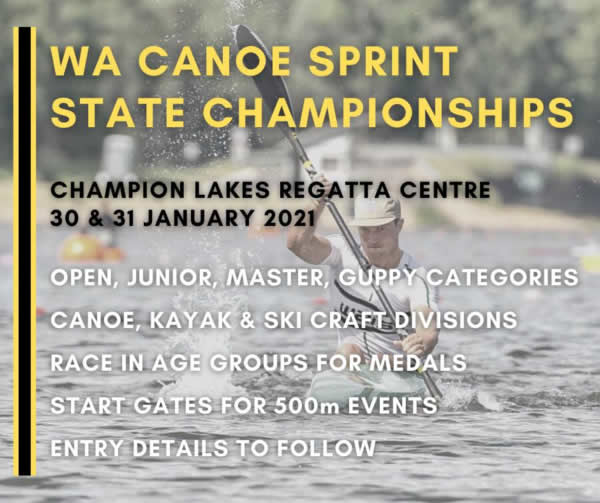
- WA Canoe Sprint Championships
- Paddle WA Direct Membership (Insurance Plus $85.00)
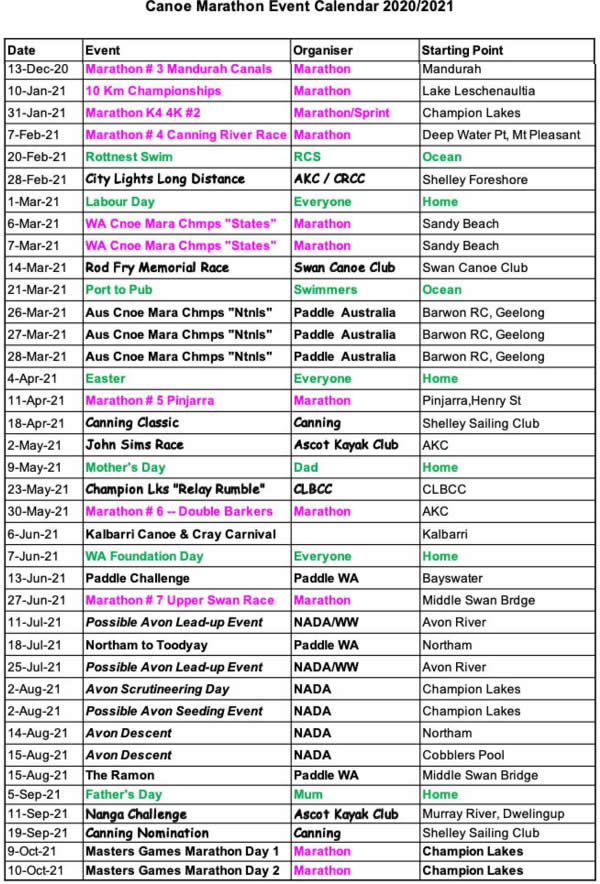
- Up-coming Races
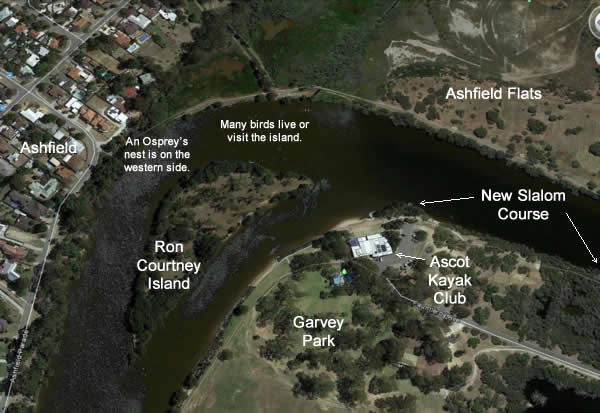
Birds on Ron Courtney Island
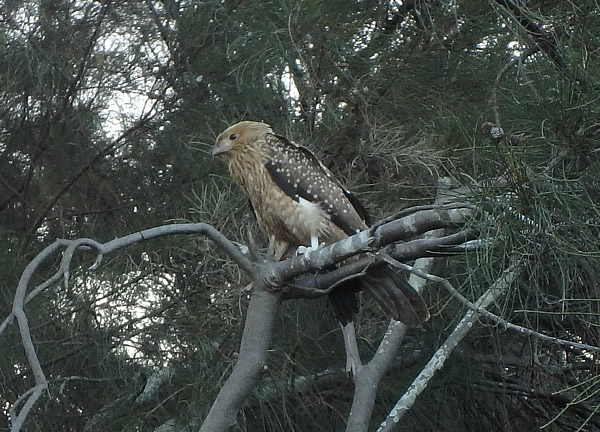
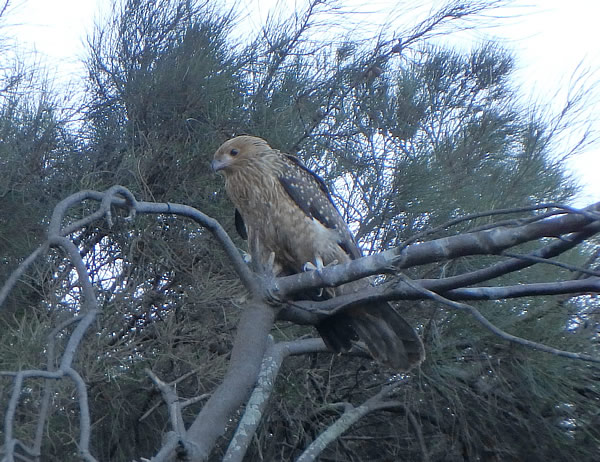
A Whistling Kite perched on the north end of Ron Courtney Island Wednesday.
On my Tuesday morning paddle to Barkers Bridge from home near Ascot Kayak Club I observed 5 birds of prey, one on Ron Courtney Island, near home, one 1km downstream of Guildford bridge and three 500 metres downstream of Barkers Bridge. The first one was a Whistling Kite (I now believe), the next one was an Osprey but the ones close to Barkers Bridge could have been
Whistling Kites or Ospreys as they were too far away for me to tell. They were singing so that’s how I knew they were around.
On Wednesday evening doing a social paddle with Alaine (as she didn’t want to race at Ascot) (what is wrong with her) we came across what we believe was a juvenile Whistling Kite at the north end of Ron Courtney Island. It was just sitting there on a branch not much higher than 3 metres up. We were underneath it yet it didn’t move. I took several photos with my point and press camera
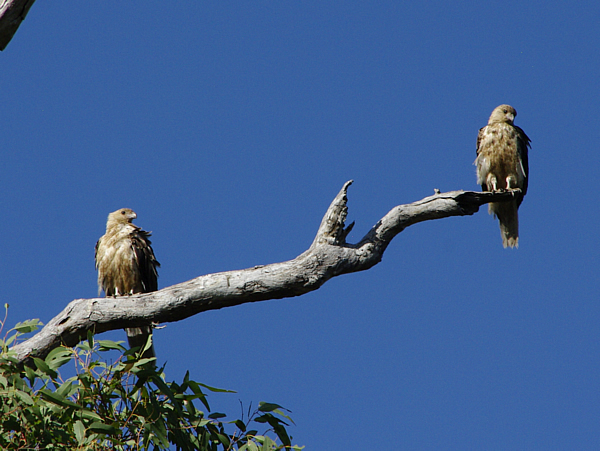
and no matter how long we stayed it didn’t move. It was gone from the tree the next morning but I saw it or a similar one in a taller tree Thursday evening. Friday morning there were two Whistling Kites on the north end of the island. They have a beautiful sound so I usually hear them before I see them.
When I met Laurent this morning he told me that he had seen a bird of prey swoop down to get a duckling and then a second one swooped down and scooped the duckling up. We now believe they must have been these kites.
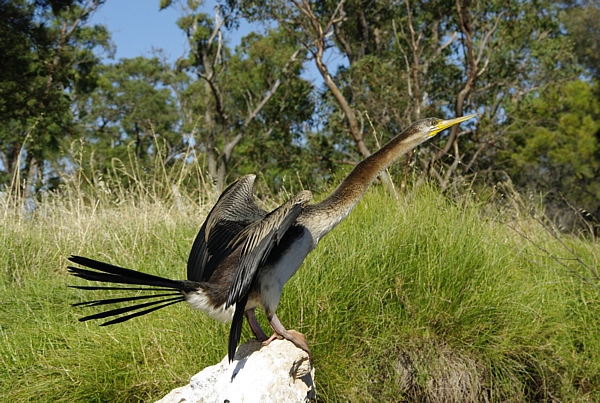
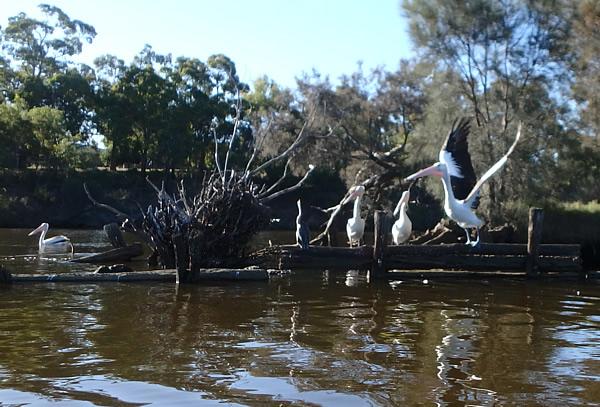
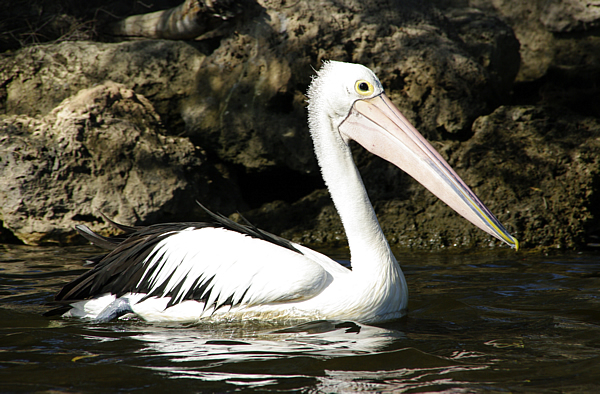
Kingfishers are around Bayswater/Bassendean area at the moment, there are even young ducklings still being born and young darters in nests and being quite noisy. Pelicans are based on the opposite side of the river from Claughton Reserve, Bayswater on a sandbar where a creek comes out, and sometimes at the south end of Ron Courtney Island. There are usually Pelicans on the corner
just upstream of Pickering Park, Bassendean. Parts of the day they are wandering up and down the river so I always see a few every time I go out.
Whistling Kites on Ron Courtney Island this morning (Friday).
A Darter on the north end of Ron Courtney Island this morning.
Pelicans at the south end of Ron Courtney Island.
More photos further down.
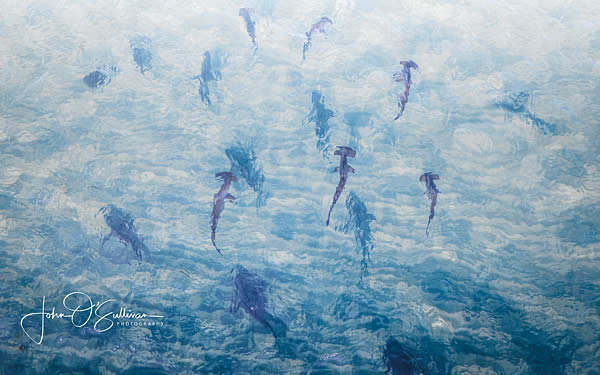
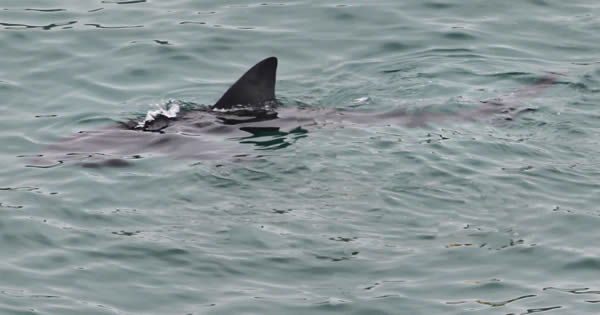
John O'Sullivan captured this photo.
I had a very chilled morning in the early hours of the day (Shoalwater Marine Park) capturing my first shark images for this summer. There was a variety of Bronze whaler, Hammerhead and Shovel Nose sharks. Speaking to some of the divers, there were also tiger sharks so a bit of caution was required. Condition were not the best for drone photography (wind chop) but diving clarity was perfect.
No the sharks were not near Ron Courtney Island but at the Shoalwater Marine Park, Rockingham. Great photo.
Photo John O'Sullivan
Down River Training
Down River Skills Training around the buoys will be starting again on Friday morning January 15th for 6 weeks. If you are keen to give Down River Training a go and haven't tried it before best to have a few practise paddles in a Wavehopper kayak beforehand to get used to it.
I will be happy to organise a couple of practise sessions before Christmas if you are interested. Call me 0417977330 or terry@canoeingdownunder.com.au
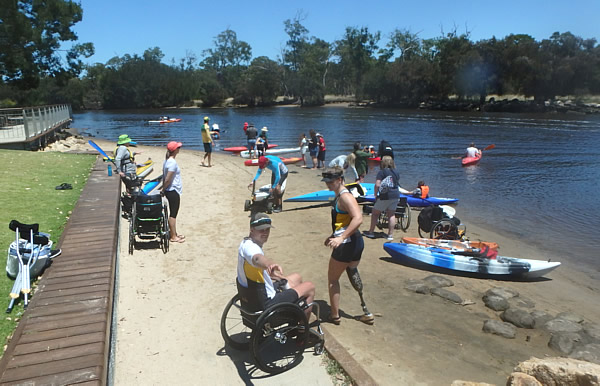
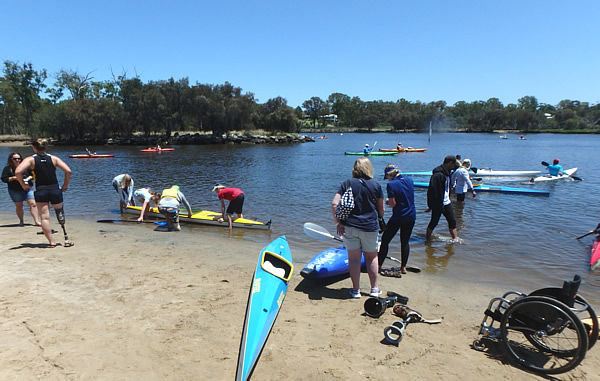
Paracanoe Come and Try.
at Ascot Kayak Club.
There were 15 athletes who had never held a paddle before from 8 years old!
Thanks to DLGSCI and Healthway for seed funding to kick this program
off through a Targeted Participation Program grant. If you’d like to join in or find out what is planned email Helke on paracanoeWA@outlook.com
Parallel Slalom Race
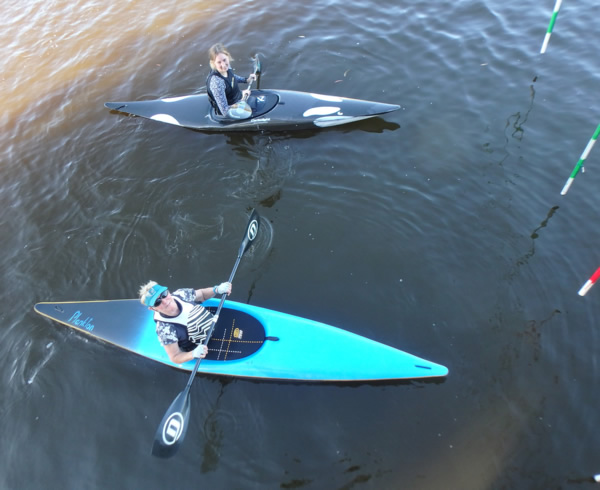
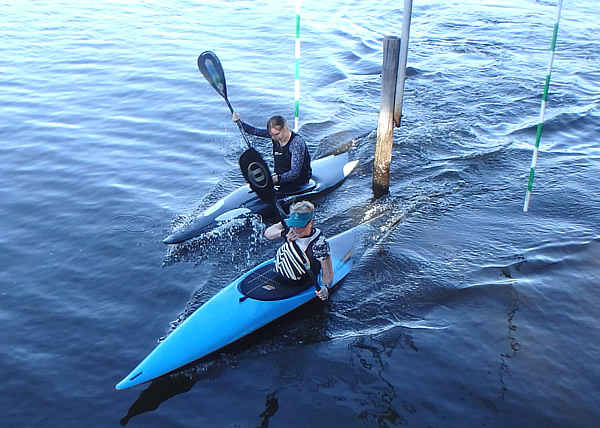
Two paddlers race against each other.
Same course, same manoeuvres, but with handicap starts.
Margie Jeffery and Alex Vogel ready for the race.
Margie get several seconds lead.
Margie and Alex fight for the line.
The winner was Hunter Florisson who won ($100), second Mike Liddle ($50.00) and third Alex Vogel (25.00).
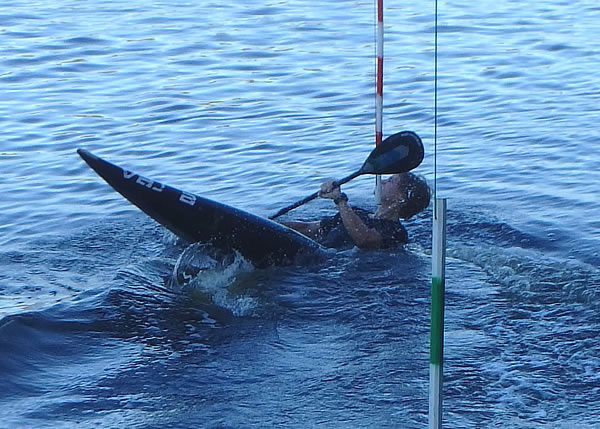
Jordan Fleming doing a quick, technical turn.
WA Slalom WASPS
The Western Australian Slalom Pathways Squad (WASPS) selection criteria aligns with the basic principles contained in the National Athletes’ Pathway Framework (NAPF) which is a “roadmap” to guide all stakeholders in the development of the athlete from Foundation to Mastery. Paddle Australia(PA) has used the Australian Institute of Sports’ (AIS) model for the development of its athletes’ pathways using the FTEM framework as its Guide.
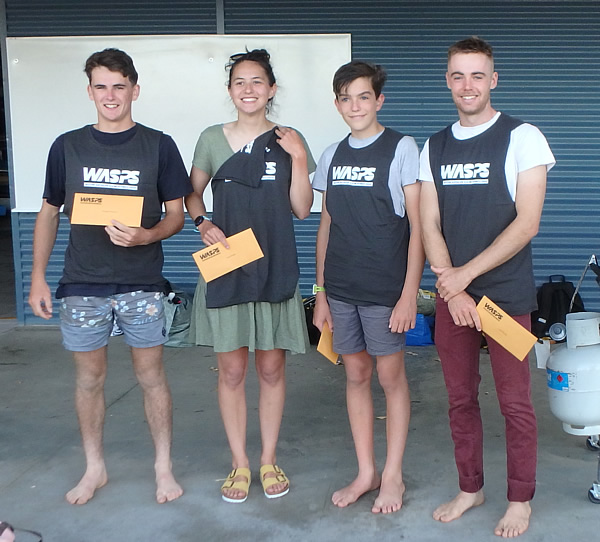
George Pankhurst, Nina Mueller, Hunter Florisson and Luke Dooley.
Jordan Fleming was also selected.
WASPS Benefits
●WASPS athletes will receive free servicing by Strength and Conditioning
Coach, Brock Fleay.
●Coaching sessions by WASPS Coach (or other allocated coach).
●Bi-annual lab testing conducted by WAIS.
●Bi-annual WASPS apparel.
●WASPS team building activities.
Mandurah Duel
Results Here:
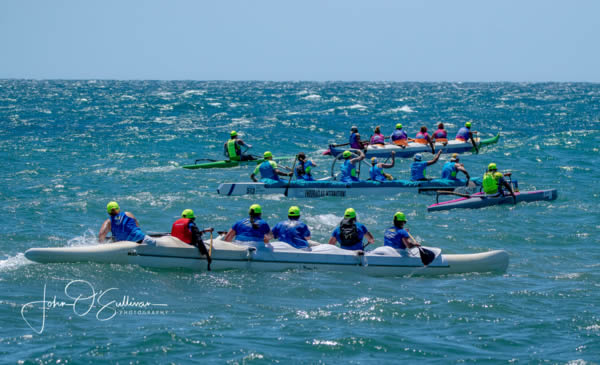
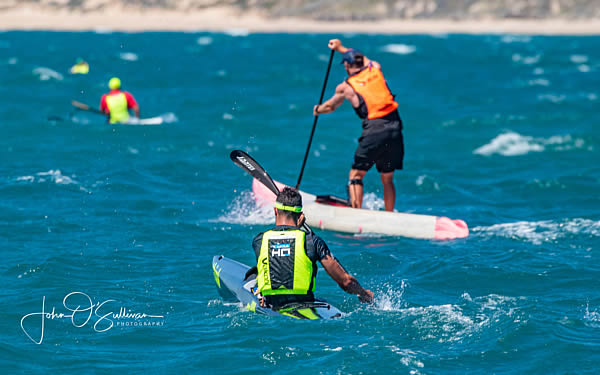
The outriggers are off and away.
Photo John O'Sullivan.
https://www.webscorer.com/racedetails?raceid=229216
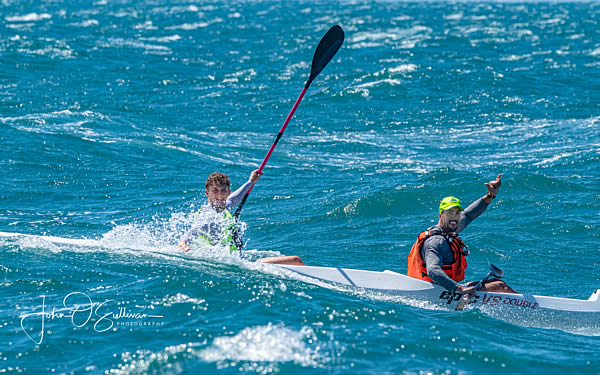
Andrew Crothers and Pat, 1st double, third overall.
Photo John O'Sullivan.
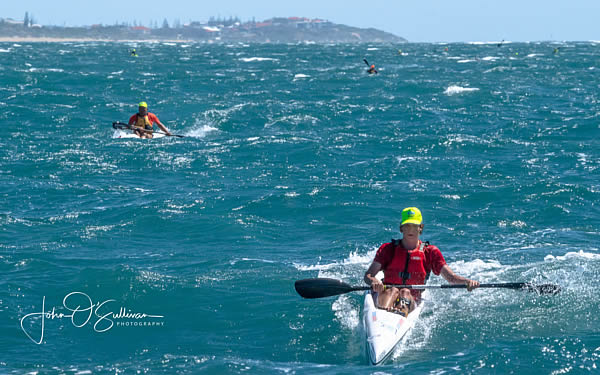
Noah Boldy having fun with the good conditions.
Photo John O'Sullivan.
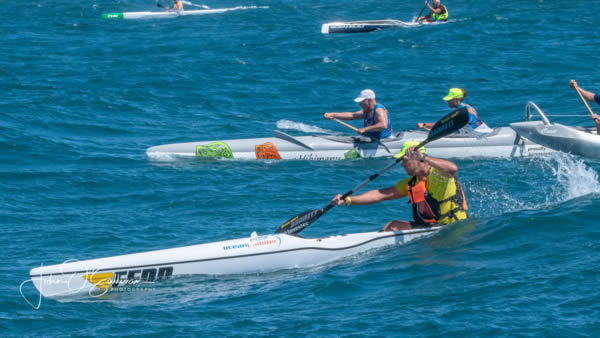
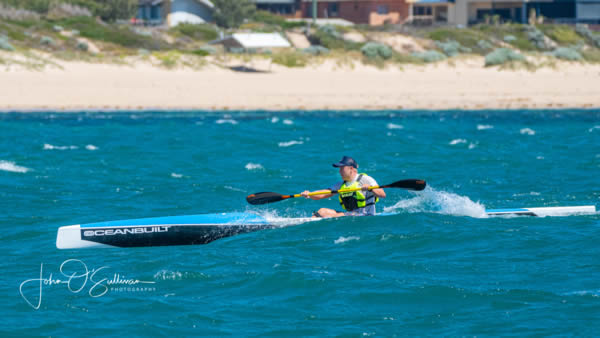
Andrew Mowlem second place.
Photo John O'Sullivan.
Brendan Rice wins again.
Photo John O'Sullivan.
Kimberley Kayaking 1982
part 21
100 Days Solo
In the most isolated part of Australia -
More Sharks - No fresh Water -
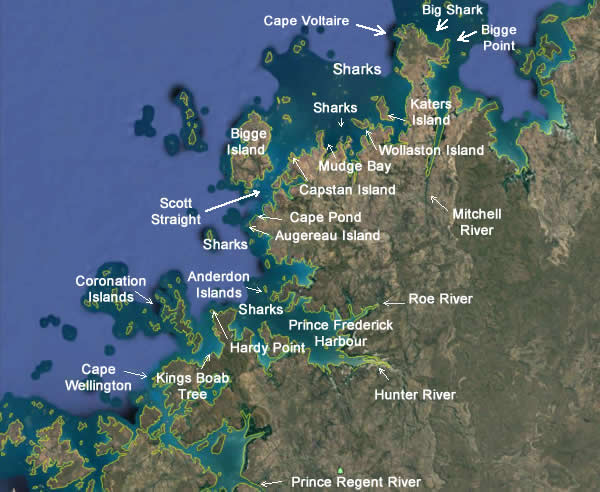
I was awoke to find a calm sea and today I expected to reach Cape Voltaire which was about 44kms away in about 7-8 hours. It was Wednesday 13th October rather the Friday the 13th so things should go well. I spoke too soon. Within ten minutes of leaving the beach, gurgling sounds and splashes from two 3 – 4 metre sharks started to tail me. They continually criss-crossed my stern like it was some sort of new game, but I couldn’t share their
enthusiasm. I was feeling uneasy and waiting for the kill, and although I was now becoming more used to them and less afraid who’s to say they wouldn’t strike. I just needed eyes in the back of my head so I could watch what they were doing. I was truly in suspense and waiting for the guillotine to fall, well more so a bump that would capsize me. My hands skimmed the water with each paddle stroke, my body sat only inches above the water, so the only real place to be safe was to be on
land.
Passing Wollaston Island with its high range and steep cliffs I lost sight of them. My relief didn’t last long once I hit deeper water again, another smaller 2 – 3 metre shark started following but I was much less concerned. Then a little later another big splash from a larger shark had me wanting for a pee. I pulled onto a beach on an island just off Katers Island with a small shark following. I had a quick leak, a jump around to wake me up and I was off again
wasting little time.
The sea became sloppy with waves hitting me broadside. My mind was focused on Cape Voltaire and the need to get around it that afternoon. Waves started hitting my rear deck which startled me, as each crash I imagined them being sharks. But a bigger splash turned out being a 3 metre shark which was tailing me. I turned my head repeatedly checking for the shape shimmering just under the ruffled blue sea. The sun was in the perfect position to see it. Then I
thought my mind was playing tricks when I saw two, another 3 metre shark had joined its friend and now they were both tailing me and crisscrossing behind my rudder like it was some sort of new game. Again I couldn’t share their enthusiasm.
As soon as I slowed down to a near stop they disappeared, but they appeared again when I paddled at full speed. I was bursting for a pee, but I think it was the frustration, the hard yakka and the psychological effect of the sharks and ocean conditions that were making me want to go so badly.
I had no alternative to stop and have a leak. I couldn’t do it inside the kayak and let it trickle down my leg so I had to use my cup. With the sloppy seas however that was going to be a test of my co-ordination, my balance and a slice of good luck. I first had to take off my spray deck, untie the cup, take out my penis and hope the cup is squarely placed and then try to pee. It was often not easy to pee sitting in a seat with pressure on your bladder. You must
try it one day. It made it worse in these rough conditions as I had to hope that water didn’t get into the cockpit or the waves didn’t capsize me before I was able to put the spray deck back on, which was quite a tricky procedure. I managed it okay.
The sharks didn’t give up their game, they continued to chase me and test my patience. For 6½ hours today sharks followed as I fought the rough seas. My concentration started to fade as the hard yakka took its toll. Nothing was easy in the Kimberley’s hostile environment and this was just one more of those days. To lift my enthusiasm I ate some dried fruits which performed a mini miracle. I became energized again.
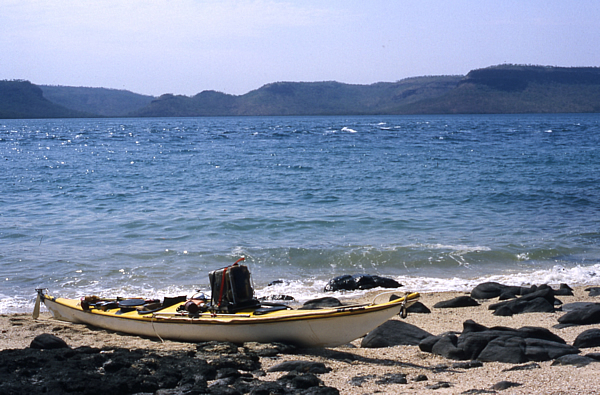
In the far distance I could see a beach which looked very inviting and with my hopes now dashed of paddling around the cape, because of the rough conditions the beach became my focus. I finally reached the safety of the blistering hot beach which was probably the most important beach I have ever landed on. I wrote in my diary that night – ‘I live another day’.
Sharks had become a constant problem.
I was probably in the most remote place in Australia.
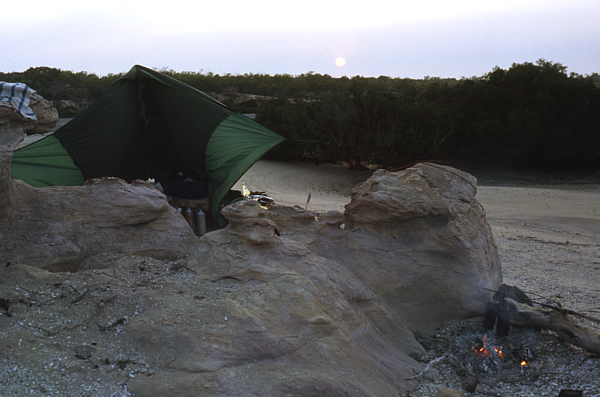
You can’t believe how nice it was to be roasting in the heat on firm ground after such testing day. I thought to myself, today was like Russian Roulette, but at least I was safe. My life saving beach didn’t have the appearance of a paradise beach, as it had been contaminated by a film of oil, but I didn’t care, I was alive. A small oil slick had formed close to the shore
and moving along the beach with the tide.
For an hour after erecting a shade I laid down and relaxed. I can’t remember too many days that I’ve actually sat down and relaxed, usually I’m off walking. I must have been tire but I needed to distill some water so I had to collect plenty of wood. The beach sand scorched my feet as I paced up and down collecting as much wood as possible to keep the still going. It’s hard to imagine how beautiful a cup of coffee tastes after a draining day.
As my stills were in full operation I started sewing some tape to make two water bottle holders that would attach my water bottles to my belt. I will need them when I walk 40kms from my landing spot at Mitchell Plateau to the mining camp. It took time but when my stills produced two cups of water I used them to cook my evening meal. I was having macaroni, peas, chick peas, and soup mix. Believe it or not it tasted delicious.
The weather was extremely hot so I used my swag/hammock as a shade and again had to distill saltwater into fresh water to keep a supply of a few litres.
As I awoke there was a howling wind that had been blowing all night. It was quite a surprise as usually its calm at night giving me a few hours of flat seas in the morning. I was hoping for a calm passage around the cape but it looked as if I didn’t get my wish. Surely though nothing could be as mentally exhausting as yesterday.
Climbing the high rocky mound the wind gusted from the west creating one hell of a messy sea. I was hoping to check the sea conditions north of the point but it was impossible to see the other side. Instead I found an eagle’s nest with one solitary egg sitting in a jumbled heap of branches on a high rock.
With the conditions far from favourable the choice to leave my camp with a thousand ants wasn’t eagerly decided. Fresh from a good nights’ sleep my chances of safely paddling around the wind tossed cape was much higher than yesterday.
The surf dumped every few seconds leaving me with the impossible task of entering the cockpit. My only hope was to walk further out from the breaking surf and try there, but my first attempt failed as a large wave dumped filling the cockpit. What fun I’m having I thought, as I painstakingly bailed out the kayak. The cockpit of a Nordkapp is very small so it is impossible to get into the kayak in deep water without using the paddle for support. That makes entering
a lot more difficult than if the cockpit was larger like kayaks are nowadays.
My second attempt was more successful, only a couple of litres of water entered, which I pumped out at sea and continued my adventure.
Leaving Montague Sound and the sight of the 152m Sharp Peak, I rounded the tricky and unwieldy Cape Voltaire, my last troublesome point before Mitchell Plateau. As I passed Krait Bay and entered Voltaire Passage I was stunned to see the frightening sight of the sea crashing violently onto an extended reef. My passage looked completely blocked. I paddled on finding a passage between the reefs and as I did the water calmed and became magical as I could see the
reefs, coral, sand and weed below through the crystal clear water. Colourful fish excepted me as no threat and fed on the coral and weed below, but a 2 – 3 metre shark had to destroy my tranquil moment with the sensitive environment. It started ramming my rudder. It wasn’t very big, but it was having fun, the cheeky brat nudged it time after time however it was too small to worry about.
The current was running pretty quick and the ocean was a bit rough away from the islands.
Another extremely hot day. The salt water still in action.
Heading south-east I passed Lavoisier Island without the shark. Bigge Point, in the distance looked very uninteresting and flat. I paddled on and then it struck me, with the power of a bull. My kayak was lifted and I was thrown off balance. I quickly regained my composure and turned to see the large shark that had just rammed my rear left side.
I was horrified, the shark was at least 1 – 2 metres across, but I couldn’t determine its great length as it faded under the ocean. Oh no, there were two! A 2 – 3 metre shark looking like a midget compared with the other one was directly behind my rudder. I stopped. The closest land was about 3 kms away. I needed to get there, but dashing off could make my position worse. As I powered forward again a large shape suddenly came into view. The big beast
was leading the field so I braced myself for the worst, maybe another hit, but nothing happened.
The waiting game was nerve wracking. I knew the shark could overturn me like a matchstick and my chances of doing the Eskimo roll before it started chewing at me were pretty slim. I imagined them going into a complete frenzy and tearing my head off as I capsized.
I couldn’t bear it, the thought made me shudder and I immediately stopped to put my helmet on! I attempted fastening the buckle with one shaking hand, my other was firmly grasping on the paddle keeping my kayak stable and ready for any action that might evolve.
My trembling hands failed to do the strap up, so risking a capsize I let go of my paddle and used two hands. I didn’t know what good the helmet was going to do, but somehow it felt safer!
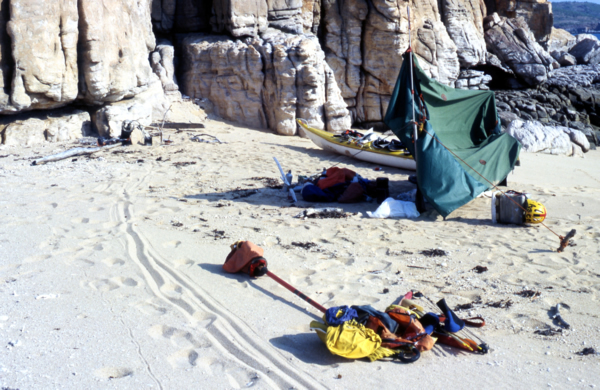
Extending the paddle I slowly pulled it through the water trying to avoid any big splashes. With hands clearing the water the kayak was on the move. I paddled slowly and it seemed to have worked, the sharks were not in sight. I increased my speed, but hell the 2 – 3 metre shark had returned. I stopped again. There were beaches fronted by reefs, but I found a beach a little further at Bigge Point. My shark situation seemed to be getting worse, was it my rudder or
the white hull that was attracting them? Repeatedly I stopped, but the shark always returned when I speeded up. Was it because the rudder was bouncing up and down like a lure? Tomorrow I would try without it.
To erect a shade and distill more water was top priority. From my first boil of the two stills produced a litre of water. Before retiring I had collected 2 ½ litres, but it had taken a lot of sweat.
It was getting to the stage that at the end of each day I would be thankful that I lived another day and again today was no exception.
It had been a disastrous night, the heat made my thirst chronic, but I had to ration what I had. The mosquitoes attacked me like it was their last summer and no tomorrow. I was restless, hot and tired and my mind was full of thoughts. As I laid in my hammock surrounded by mangroves, mosquitoes and night noises I sneaked a sip of water before trying to sleep, but the water from my still tasted like aluminum.
At the start of the new day I was wondering what things were in store for me today. I had been bothered by mosquitoes all night and now I was being attacked by sandflies as I walked my kayak and gear down to the beach in the hazy morning light. To see if it was the rudder that was attracting the sharks I took it off.
I paddled around Bigge Point wondering, watching and hoping that my passage across Walmesly Bay was going to be a safe one. I had been away ninety three days. Only but a handful of those days have I been with people.
Without the rudder to help steer my long, heavy, slightly unstable kayak it became another challenge for my body to cope with. Crossing Walmesly Bay was a painfully frustrating affair. The wind hit broadside making me paddle more on one side to keep the kayak straight. Many of my muscles I didn’t know I had started crying out for mercy. Heading south also made it harder for me to see any sharks that were following as the sun was in the wrong direction.
After conquering my last exposed crossing I beached at Pickering Point stretched my legs and had a leak before starting my next 6km crossing. So far my luck was in, I saw no sharks only a coastwatch plane over in the distance. The appearance of three dolphins broke my spell of loneliness. They gracefully swam parallel to me, their pale grey leader showing scars of previous fights or attacks from sharks.
With the wind blowing harder, my uncontrollable kayak was driving me crazy. I had to sweep and paddle on one side repeatedly to keep the kayak straight. Even leaning the kayak failed to help it track. The increased strain on my body soon buggered me and gave me the willies but when a black tipped shark began to follow I now wish I hadn’t taken off the rudder blade.I had thought it was the rudder attracting the sharks.
I was so frustrated with kayaking without the rudder that I decided to beach and put it back on. Now my steering problems were suddenly over so I could concentrate on paddling. The difference it made was incredible, I made a remarkable recovery and felt much better.
Moving into Crystal Creek Bay I discovered a beach just around the corner in the shelter of the point. I was hoping to paddle up Crystal Creek but the tide was dropping fast and it was surrounded by some unfriendly mangroves. Instead I decided to walk to it after I had unloaded and made camp. At 12.30pm and in the crippling heat I started the 4km walk over the mud flats. For 45 minutes my feet sank deeply into the sand and slippery mud. The flats were dotted with
oyster laden rocks, which took some traversing.
I used my swag/hammock as a shade and again had to distill saltwater into fresh water.
The mud flats leading into Crystal Creek. The tide was too low to paddle up into the creek to find fresh water so I tried to walk but it turned out be impossible in the extreme heat.
The tightly woven mangroves that had tentacles that grew through the mud like spikes and hard to walk through, were backed up by sandstone boulders and outcrops that encouraged thick grass and spinifex to grow. A small mangrove creek created another problem and walking around it was just too much to take in the unbearable heat. With only 3 litres of water left I couldn’t afford to waste any more sweat on what could be a wild goose chase. Should I go on or not?
Energy depleted and light headed, created by the scorching sun I decided that returning to camp to distill water and rest was much more sensible. I had been told of a creek with running water near my landing spot at Walsh Point, a day away, so I took the gamble and returned to camp. I arrived back taking only two sips of water, I really needed more, but I couldn’t spare any. My body was in desperate need to cool off. I’m sure doctors would put my present position and suffering in the first
stages of exhaustion or hyperthermia.
For 10 minutes I dosed myself with salt water and a slight breeze, combined with the water cascading down my body cooled my body a little. I kept a look out as small reef sharks patrolled along the shallows, seemingly waiting for me to go in deeper. The refreshing shower had revived my ailing body, giving me the energy to erect a shade, do some sewing and get the stills boiling. After distilling for several hours my fresh water supplies were increased to 4
litres. Not a good amount of water considering how hot it was and that I didn’t know for definite if the creek at Walsh Point was still running. Due to my water situation I had to sacrifice my usual nightcap.
Juvenile Whistling Kite
on Ron Courtney Island
Whistling Kites are medium-sized birds of prey. Head, neck, breast, belly and vent are scalloped grey-brown. The upperwings are dark-brown, with light-brown feather linings. Bill, legs and feet are grey. The eyes are black. The underwing pattern shows dark-brown outer primaries, a light-brown wing panel on the inner primaries and mid-brown secondaries. The coverts are scalloped grey-brown. In
flight the tail is long and narrow, with a rounded tip. Juvenile Whistling Kites have more pronounced scalloping and wing feather edge linings, giving them a speckled appearance.
Feeding:
Whistling Kites soar above the ground, trees and water to search for prey such as carrion (dead animals) and small live animals such as mammals, birds, fish and insects.
Habitat:
The Whistling Kite is found in woodlands, open country and particularly wetlands. It is also common around farmland, vineyards and anywhere where carrion (dead animals) can be found (e.g. abattoirs, rubbish dumps and roadsides). Prefers tall trees for nesting.
A pelican on the north end of Ron Courtney Island this morning.
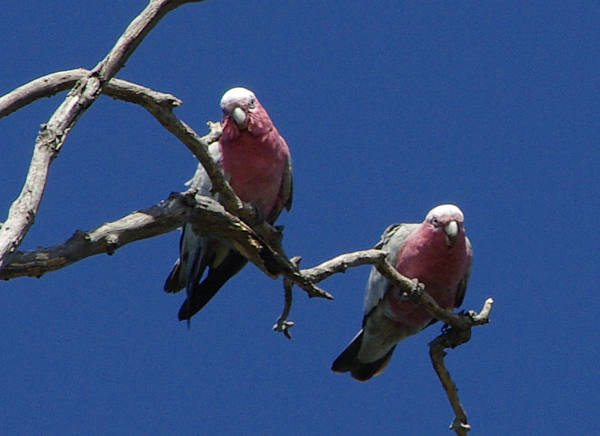
Galahs on Ron Courtney Island.
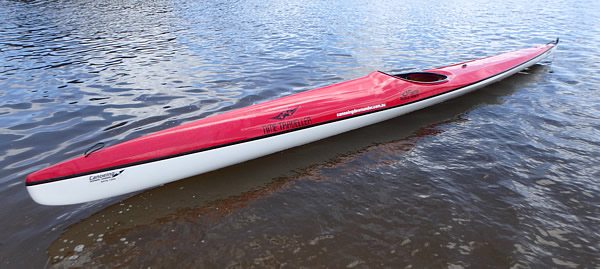
Used Time Traveller
Good condition
Length 6.0 Metres Width 54 cm Cockpit: Keyhole
The Time Traveller is a stable, fast kayak suitable for most levels.
With rudder and pedal steering.
I'm selling it for a friend.
Used. $1500.00
|
|
|
|
|
|
|
|
|
|