23 year old Genie Collin started paddling at 11 years old at Ascot Kayak Club as part of a TID Program. She has had an amazing life, one which I admire and quite envious of. I thought my teenage years had been adventurous but not only has Genie excelled in whitewater paddling and been to several world championships in slalom and wild water, travelled the globe and visited many amazing cities,
met and made friends with lots of incredible people, she has become independent and confident whilst living and studying in a country with a different language.
Genie is now a qualified physiotherapist who lives in Prague where she did her studies. Now she has finished her studies she is taking the time to refocus on her training and racing. Prague has many of the best paddlers in the world so it's a good place to train.
West Australia should be proud of what she has achieved. Read her story below.
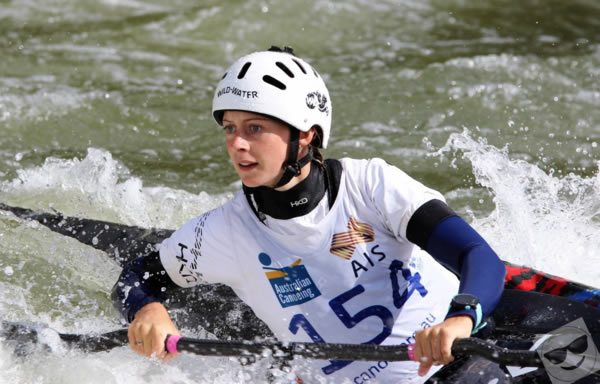
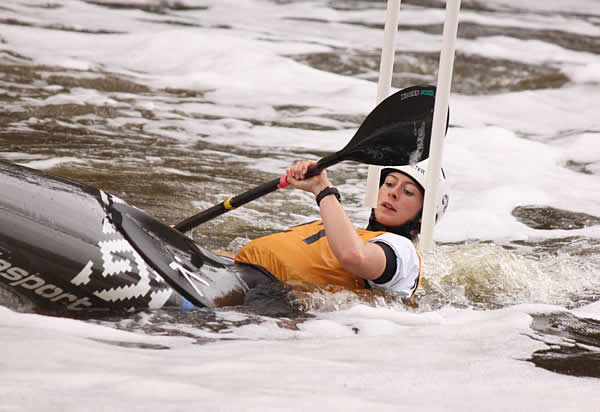
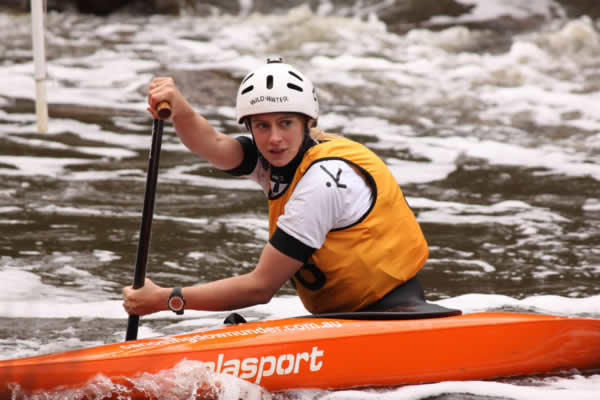
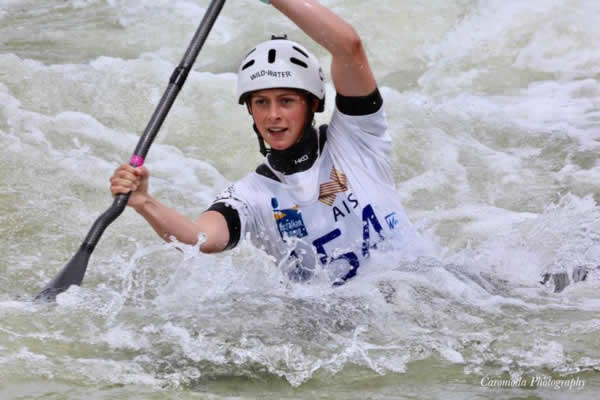
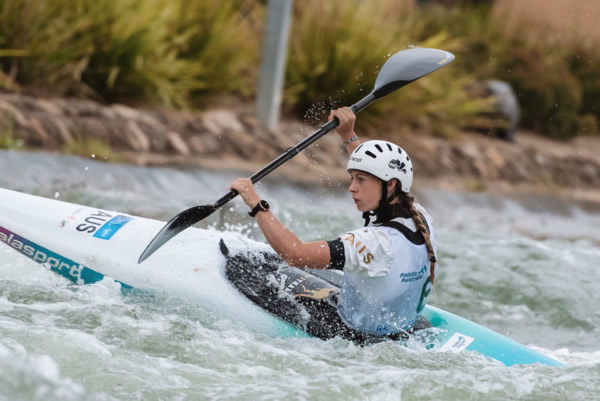
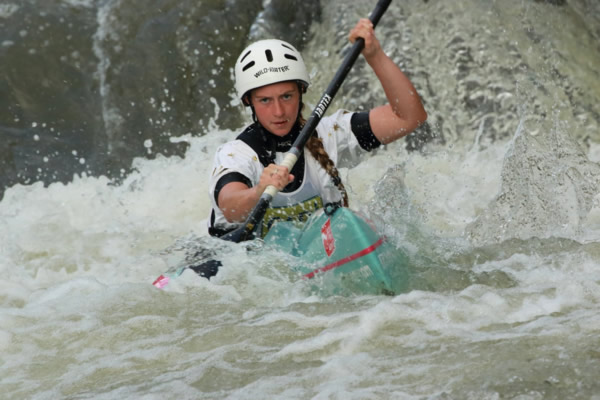
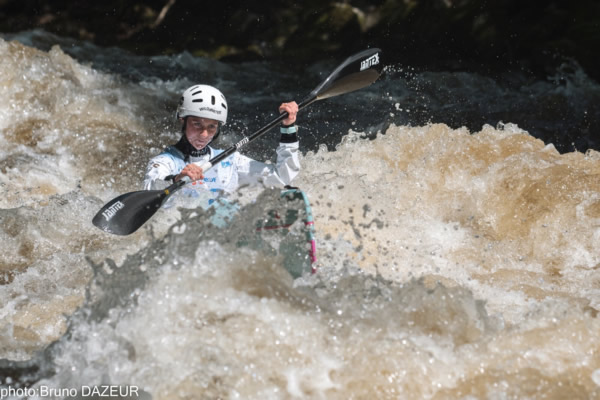
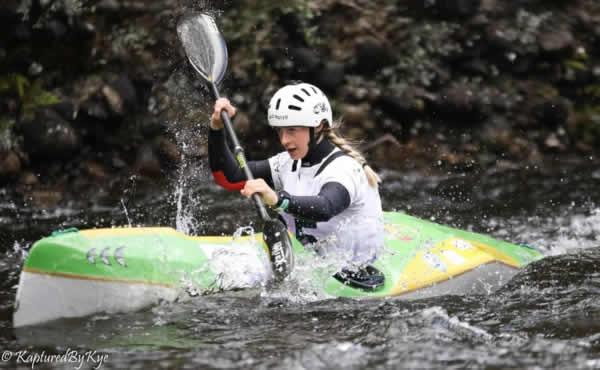
Genie Collin in action.
The K4 Challenge
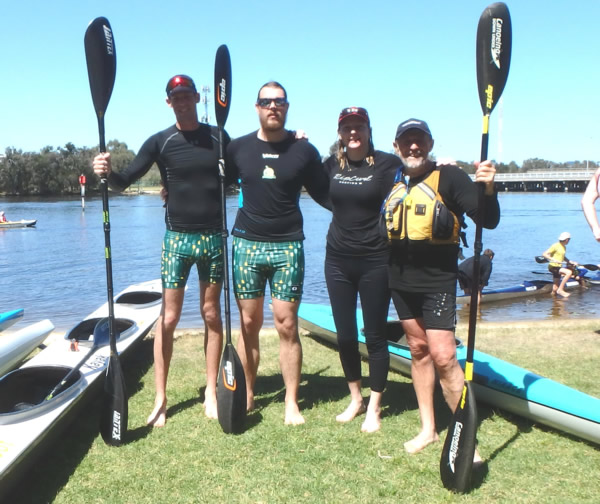
The K4 6km race gave members of the AKC Progressive Racing Group and others the opportunity to race in these amazingly long kayaks. Our team of Anthony Clarke, Josh Richards, Sharon Cobley and I took on the challenge.
In the 550 metre sprint our max speed was 19.1km/h with an average speed of 15.3km/h and a time of 1.58.82, which put us in 3rd place out of 12 boats competing.
In the 6km race we did it in a time of 25.44.80 and came 4th averaging 14.6km/h. There were 12 boats.
The young Ascot team of George Pankhurst, Clare Pankhurst, Jane Pankhurst and Kylan Jegorow gave us a run for our money being only 7 seconds behind us.
It was a great experience and the weather did help.
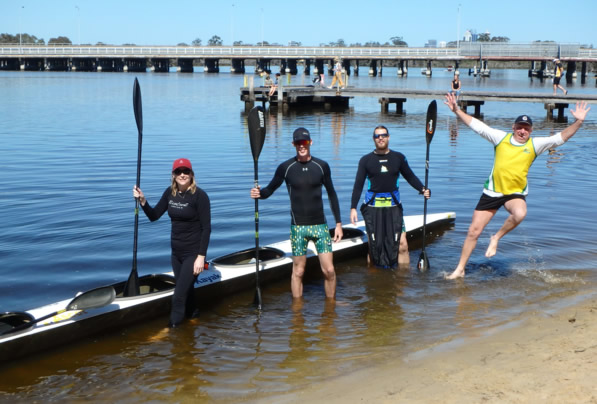
With Sharon Cobley, Anthony Clarke, and Josh Richards and Bruce McWhirter jumping in and doing a photobomb.
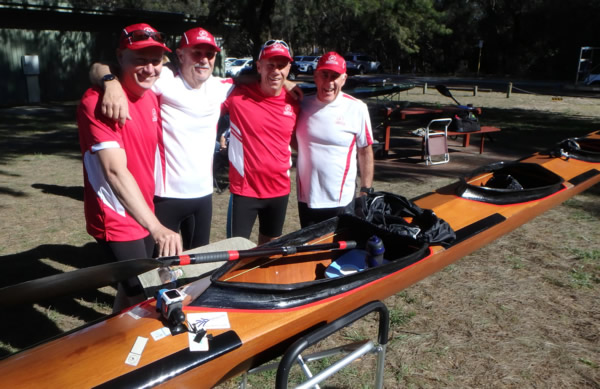
Four members of the AKC Progressive Racing Team.
Canning River Canoe Club Members with their timber
Struer K4 that they rejuvenated.
Alistair Fox, Rod Hale, Lloyd Noel and Joe Wilson
Georgina Collin (Genie)
Slalom & Wildwater K1, C1 & C2 Paddler
I’m not a religious person, sorry, but I’ll always be grateful for the chaotic way I got into canoe slalom. And I believe something, whatever it is, was pushing me in the perfect direction for my life.
I saw an ad for it in the school newsletter, forgot about it and woke up early the day the trials were on and asked mum if I could go. It was extremely impromptu. And when I look back at it I can’t believe that waking up early on a Sunday had the capacity to change my
life.
Anyway, I learnt canoe slalom for a year when I was 11 years old. If I’m honest, I wasn’t very inspired. But I soon injured my knees, and I remember sitting in a surgeons office at 12 years old asking myself what now;
“netball?” Head shake
“Javelin?” “Probably not”
And as a last ditch effort, “ kayaking?” “You can do that.”
I always dreamt of the Commonwealth Games or the Olympics for javelin, but maybe canoe slalom would be ok. So I tried. I trained for a year, and 15 months later I was national champion in my age group. So I stuck with it.
And slowly I fell in love with this sport. I got an amazing coach who inspired my love, and I travelled Australia and New Zealand, paddling rivers and loving that every, yes; every, session is different.
I think I have always been surrounded by people who give me perspective and drive, and because of this I always wanted a balance; training and life. I want to do well in school, University, work, life and at the same time train.
Sport is not life, life is bigger. And this is the perspective; that was given to me by my parents, coaches, teachers and various others.
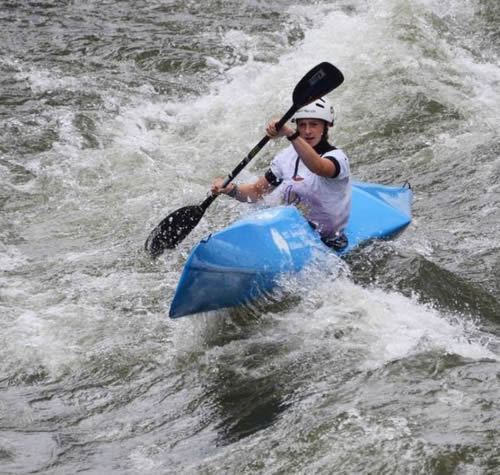
It didn't take long for Genie to become a good slalom paddler.
Genie paddled K1 and C1 at Walyunga National Park.
I finished 2014 with high school results getting me a place in physiotherapy. And three months later I qualified for my first junior team.
Yes, it was late to qualify for junior worlds. I think a combination of me not performing well under pressure and what I can only describe as ‘unequal distribution of resources’ contributed to this.
But 2015 was my ‘kayak year’. I raced at canoe slalom worlds in April, where I came 20th in the individual race and won a bronze medal in teams. Then I completed in the wildwater worlds in North Carolina, I’ll be honest. I don’t know my results, top 20, nothing I’m particularly proud
of.
In-between these two races I travelled Europe and raced. I visited Prague, with the kiwis, and luckily a Czech coach; Martin who said;
“There’s a physiotherapy course here in Prague. Charles University?”
“That’s a good University, go check it out” So I did.
“I think I like it here. But I don’t know. Penrith? Auckland? Prague?”
“Prague is the centre of canoe slalom”
“ I’ll think about it”
And I did. For 6 months and I decided to move the Prague. Then I stopped paddling for a year.
At the end of 2017 I came back to Perth, trained with my coach Zlatan.
And I realised, I missed paddling and my coach. I missed his support, his contact. This man has influenced my life more than anyone else, when I doubted my decisions he supported me. When I didn’t know what to do he told me his opinion.
People say “my coach has been the biggest influence on my career”.
Honestly.
My coach has been the biggest influence on my life.
So I started canoe slalom again at the end of 2017.
So that's the story about why I got into top level canoe slalom.
Genie with coach, Zlatan Ibrahimbegovic.
Zlatan represented Yugoslavia in the 1972 Munich Olympic Games, finishing 29th in K1 slalom.
Has competed in five Slalom World Championships and three Wildwater World Championships.
He has coached slalom in Slovenia and Australia and he is WAs head slalom coach.
Name: Georgina Collin DOB: 17/02/1997 National team: Senior Hometown: Perth, Western Australia Current place of residence: Prague, Czech Republic Club: Ascot Kayak Club Nickname: Genie School: Perth College
How did you get into paddling: I saw an ad for it in the school newsletter and decided to try it out, around the
same time I start the have problems with my knees in my athletics and I decided paddling was the best sport for me. What has been your biggest accomplishment in the sport so far: Bronze medal in U23 K1W teams 2019, 11th place world cup 3 2017 What keeps you busy outside of paddling? I’m in my last year studying physiotherapy and I also compete in canoe slalom. Physiotherapy course now completed. Who has been the greatest influence on your career? My coach, Zlatan Ibrahimbegovic, who has coached me since I was 12. How would your best friend describe you? Stubborn, dedicated and very good at baking. Do you have any superstitions before a race? I always braid my hair and talk with my coach (whether in person or over the phone). What is your favourite course to paddle on? Augsburg and Moutathal. Previous National Teams: Junior Team; 2013, 2015. U23 Team; 2017, 2019. Senior Team; 2016, 2017, 2018, 2019.
Genie at Penrith.
Penrith 2020 Nationals.
Genie at La Seu d'Urgell, Catalonia, Spain,
The 2019 ICF Wildwater Junior and U23 Wildwater World Championships will commence in Banja Luka, Bosnia and Herzogovina today with Paddle Australia’s 14-strong wildwater team ready to take on paddlers from around the
globe. The best young wildwater canoe paddlers from 18 countries will compete over four days in canoe and kayak events, including C1, C2, K1 and team events, on the Vrbas River in Bosnia and Herzogovina. There will be sprint and classic races with racing scheduled to start today (European
time). It is the second U23 World Championship in a row for Western Australian Genie Collin who joined the wildwater team after contesting last week’s 2019 ICF Canoe Slalom U23 World Championships in Krakow, Poland. After finishing 24thin the women’s U23 K1 slalom event in
Krakow, the 22-year old is excited to contest her last U23 world championships on the wildwater course. “I’m excited to be back in my wildwater boat after a long time focusing on slalom. I’m getting my feeling back quite fast which has been nice. I have been to this course twice before so I’m comfortable here and I have a lot time to adjust,” Collin said. “Coming straight from Krakow I’m maybe not as fresh as everyone else, but I’m feeling confident in my ability to peak for racing after just doing it in slalom. “This is my last U23 wildwater world championships so I’m hoping to have my best results yet. I feel good in sprints after so much speed training in my slalom,” Collin added about the benefits of doing both whitewater disciplines.
Genie competing on the Mur River,Murau,
Austria
Genie competing on the Vezere River, Treignac, France
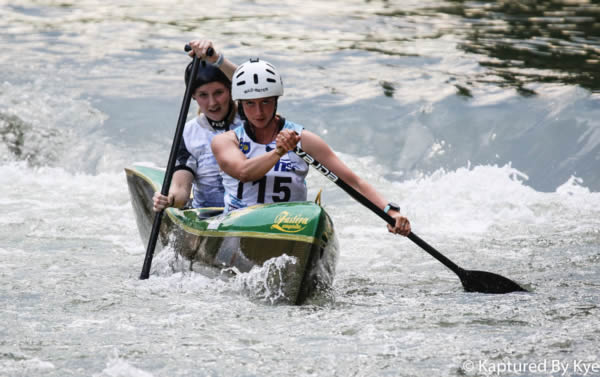
Genie and Madison Wilson competing in C2 in the Slovenian town of Celje.
ICF Wildwater World Cup wrapped up over the weekend in Slovenia.
The women’s C classes have only recently been introduced and continue to grow across all canoeing events. Paddle Australia’s female wildwater athletes Madison Wilsön and Genie Collin made the most of the new and exciting opportunities in this class and raced a strong race.
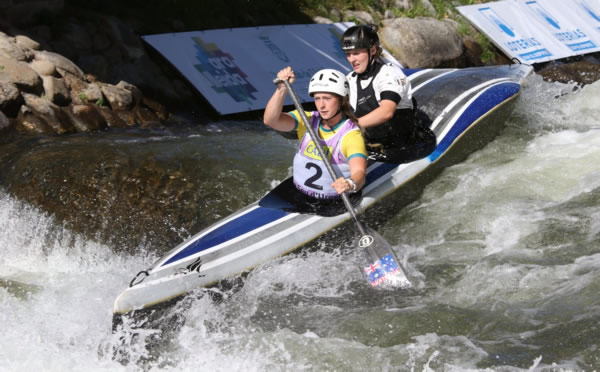
Genie and Madison competing at La Seu in Spain.
It was the home of canoe slalom at the 1992 Barcelona Olympics. It was at these games that slalom returned to the Olympic program, and it's been there ever since.
Genie Collin (AKC) came over from Europe to qualify for the 2019 Senior Wildwater teams, and was crowned National Wildwater Champion in Tasmania after winning gold in the Classic and Sprint events, both senior and U23.
ICF Wildwater World Championships in Switzerland
In the woman’s K1, Australia was represented with two competitors Dita Pahl and Genie Collin in the field of 26 starters. Genie had a solid performance in the first run finishing 12th, while Dita finished in 19th place.
In the second run Genie placed 13th to finish 18th overall. In the second run Dita finished 17th and 22nd overall.
Already on Saturday, the classic races took place with Madison Wilson finishing eleventh in the women’s C1, while Georgina Collin came 19th in the WK1.
Moving to Prague has been the best decision I have made.
I recently graduated from physiotherapy with the highest results in my class for the practical examination. I can now work a little bit (in between training) and gain a bit more financial independence. I’m now taking the time to refocus on my training and racing.
I love it here in Prague and despite always thinking I would return home when I finished University I have decided to stay here for another 4 years.
The exposure to amazing paddlers and all the people I have the opportunity to train with is amazing.
I have begun to focus more on slalom and less on wildwater recently.
Luckily here with coronavirus I have been able to have good access to training, it’s a little scary now, heading into winter. But everything is manageable and I’m on the course every day. I’m still waiting for my ‘great international result’ but I trust the process and I’m enjoy working towards it every day. I placed 4th overall in the canoe slalom open Australian Selections and I’m working hard to move up a place and get the opportunity to represent Australia at the senior world championships. The results I’m most proud of are; 9th Prague Canoe Slalom ranking race 2018. Wild Water Australian national
champion, classic and sprint, U23 and senior categories. 13th Wildwater U23 World Championships 2019. 3rd Wildwater ECA Cup 2019. 3rd Australian Canoe Slalom National Championships.
I've been great watching a young Osprey that has made it's home on Ron Courtney Island. It's been swooping down and landing on different trees some quite low to the water. Its been eating fish but on Thursday evening it was perched high on a dead tree eating something that was covered in feathers. Every time it had a bite feathers would flutter down to the ground.
There are many ducklings around at the moment. One duck had 14 young a week ago, now it only has 4.
I haven't seen the Osprey swoop down yet to get a duckling but I wouldn't be surprised if it hasn't as they are an easy meal at the moment.
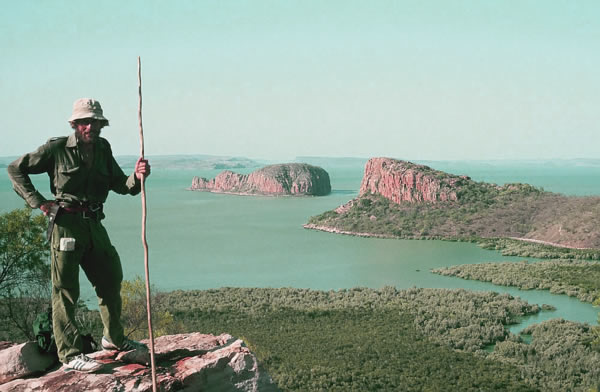
Kimberley Kayaking 1982
part 13
100 Days Solo
I tried to keep cool by washing my body regularly as I couldn’t swim in the ocean in fear of crocs, so I filled my cooking pot with water and poured water over me instead. It certainly wasn’t quite the same as taking a dip, but it was safer. It was also important to wash my clothes regularly especially my socks, underpants, and canoeing gear because if I didn’t they would become crusty with salt. With salt encrusted
clothes, chafing was more likely to happen, causing rashes and sores. If I got a sores or scratches they would be very hard to heal in this tropical heat and become infected. Hospitals were too far away to be careless so to help prevent cuts, scratches and bites I always wore my shirt and long pants when walking.
The boys from Koolan Island told me that the weather was approaching the suicide season, that is the time before the wet, when the clouds and humidity buildup and it gets steamy, but the clouds don’t give any rain. Last night, when the clouds blocked out the moon and the temperature was far too hot to sleep, I counted 18 droplets of rain that fell on my overheated body. For several days now the clouds have been trying to
open up, but as yet no rain. I watched an electrical storm to my south-west but it didn’t develop into anything.
Since I started using my hammock my sleep has been solid apart from a night or two. I thought about my younger travelling days when it was common for me to sleep in the silo bins, in uncompleted houses, on building sites, in bus shelters, in fact anywhere that was dry and safe. But back then I only had people to worry about not the crocs.
A slight breeze blew through the mangroves which gave a little relief from the heat. It was too hot to have a sheet on so I had no protection from mosquitoes. I read through a letter from Jenny again that Ivan had brought from my Koolan contact. It amused me to hear that Chris Young from Channel Seven had used some of my film footage, edited it and when signing off, said, this is Chris Young reporting from Broome, but he
had never left the studio.
For some reason I started thinking about my wedding night and the contrast in temperature, it was so cold then. Everybody at our wedding must have thought that we were going to a hotel somewhere luxurious, but what a surprise when they found out that we had camped on the sea marsh on a cold late October night, only 3 kms from the church. I wasn’t one for luxuries, I had been camping and cheap travelling for the last few
years and somehow I managed to convince Jenny that we should have our wedding night in a tent.
When we arrived and walked to the top of the sea bank it was pitch black, and the only light we had to put our tent up was from the car headlights. There was no moon because of the clouds. We were both dressed in our wedding clothes, Jenny in a wedding dress, me in my suit. The small tent was rolled out on the wet grass and with hammer in hand I hit the pegs into the ground. We spread the thin mattress on the floor of the
tent, threw down our sleeping bags and crawled inside. We were at last snuggled into our sleeping bags, which were full of rice, courteous of my best man Fred. It was cold, so sleeping was difficult. A pumping station nearby, which pumped water from the dykes over the sea bank automatically started up several times in the night also waking us. Well that was back in 1977. (It's our 43rd wedding anniversary in 2 weeks). My thoughts were then disturbed by a creature rustling in the grass. It was
another quoll.
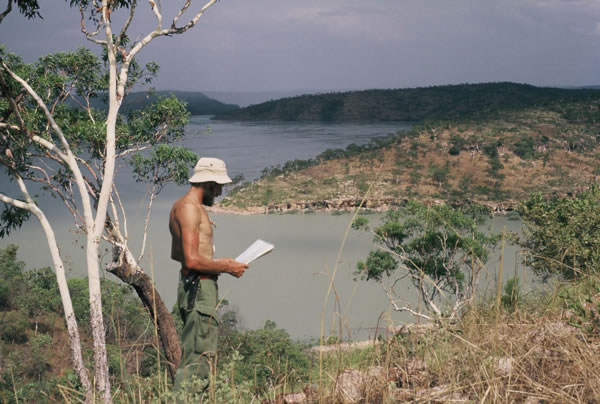
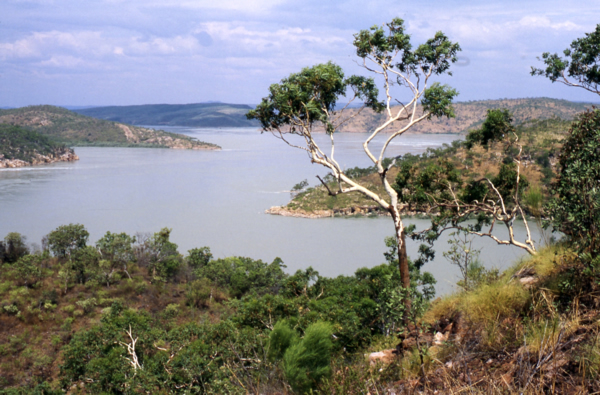
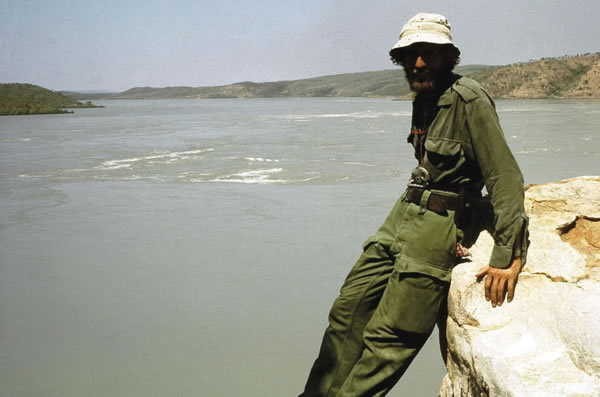
After my very near miss with the whirlpools it was exciting to have the chance to see the whirlpools and strong tidal movements from the safety of shore, so I soon donned my pack and climbed the hill behind my camp and walked to the inlet. Within minutes I was walking over some difficult terrain, long dry grass, hidden rocks, vines, overhanging branches, spiderwebs, gullies, holes, you name it, it was there. I followed the
coast around and moved along the cliff line watching the tide coming in. I was gripped with the awe-inspiring sight and the enormous power of the water which changed with each five minutes that past.
Checking out sections of Walcott Inlet.
Checking out sections of Walcott Inlet.
Logs with no ability to get out the current were swept away. Occasionally I would notice a couple of dolphins in the water, and rock wallabies that fled from the ridges when I neared. My binoculars brought me closer to the eagles that soared overhead, closer to the honey eaters, swallows and the far distant wilderness, but more importantly I was able to get closer to the whirlpools.
I approached a rock cliff face amphitheatre made up of vibrant ochre colours facing towards a clearing and a creek beyond. With the rapids, the cliffs and steep inlet the view was just stunning. More-so because I was alone in this unforgiving wilderness. I left the amphitheatre, descended the ridge, followed the mangroves and crossed over a salt water creek. Doves hidden behind the mangroves fluttered off beneath my feet.
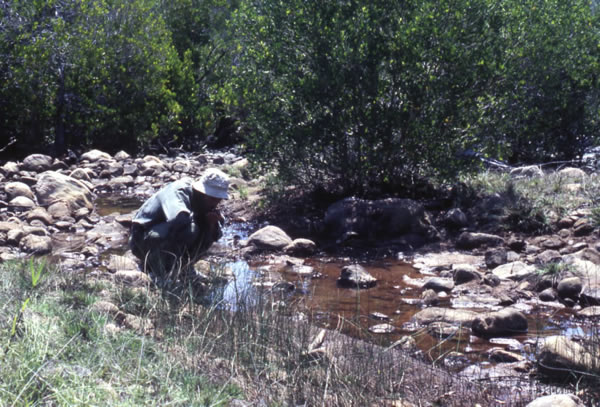
I was surprised by their flight and for a moment I failed to recognize that they were drinking fresh water between the slimy weed. The grass around the gully was green, the soil was moist and a stagnant pool of water circled by mangroves, which I thought was salt, was actually fresh. The water became cleaner upstream and a faint trace of flowing water was moving small particles of algae along. I tasted the water and my lips were quenched by the sweet warm freshwater.
Daring doves swooped down beside me, filling their stomachs for the evening flight to roost somewhere. Butterflies hovered above my head and displayed their delicate patterns of colour. Water was life and like the doves, I cannot live without it. If only I had known that this precious creek was here, it would have saved Ivan and his friends the 140 km boat trip. I filled my water bags carefully trying to keep the slime and
algae out. Once all my bags were full, I moved away from the mangroves and headed home. (I checked the stream on later expeditions to find the creek dry on two other occasions.)
Finding fresh water was extremely important and hard to find.
I didn’t bother following the coast back to camp I took the direct route and climbed the ridge, wrestling with my weighty pack. It is often a big effort to find water in this country but I had to collect it whenever I could. Water is life. As I struggled up the ridge perspiration was pouring off me, it was as if I was in a sauna bath. To make matters worse there were cobwebs stretching from the trees which stuck to my
clammy flesh like chewing gum on the sole of a shoe. As if walking wasn’t hard enough, there were holes in the ground that unexpectedly caved in under my weight and jarred my legs. I soon had a slight strain develop in my right leg, which encouraged me to take more care. I could just imagine the headlines in the West Australian newspaper, saying a kayaker who has been chased by crocs and sharks, breaks his leg after falling down a rat hole. Nothing is easy in the Kimberley!
Due to the fact that I might have an accident I always left a note on my kayak with my plans and which direction I was headed. It still might have taken weeks for people to realise I was missing but I felt it was a necessary precaution. As another precaution I sometimes left pieces of driftwood on my beach pointing in the direction that I was headed. With no communication with the outside world I had to devise and
improvise for the unexpected.
At the top of the ridge I had an amazing view of the inlet but more importantly a view of the whirlpools. They had now increased in size and it was interesting to see them grow. It was equally interesting to be able to see the route I had taken when I paddled into the inlet and how I avoided the centre of the whirlpools and possible death. I also noted that if I would have paddled well over to the right hand side after the
first set of rapids I could have paddled safely in the calmer waters of the south-west shoreline. For next time now I know what to do, but it was fun the way I did it. I returned to camp to reflect on the last few days. It had been a real adventure.
I walk to get a good view of the whirlpools.
After two days of walking and studying the inlet it was time to move on. A departure on high tide was necessary but because I took too long to load the kayak the tide had gone out about 50 metres by the time I was ready. I now had to drag the kayak down the boulders and on to the slippery mudflats by using driftwood. Thirty five kilos of the weight in the kayak was made up with water.
I knew the tide was going to fight my progress along the coast for the next two hours but I needed to move before the water disappeared altogether. With the tide moving in 6 hour cycles it was guaranteed I would be paddling against the current for some part of my day. Whenever possible I tried to work with the tide but because I always wanted to explore the country in the afternoon when the winds were stronger, I was often working
against the tides in the calmer waters of the morning.
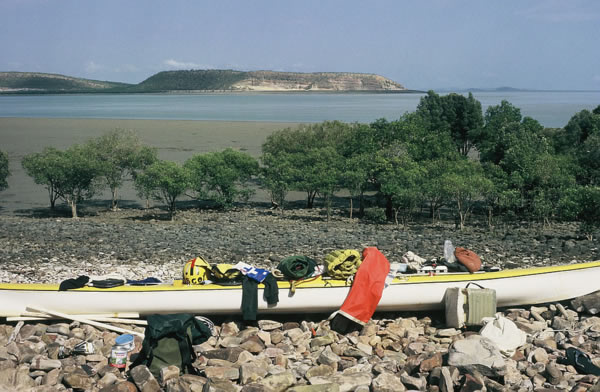
A view from my Walcott Inlet campsite.
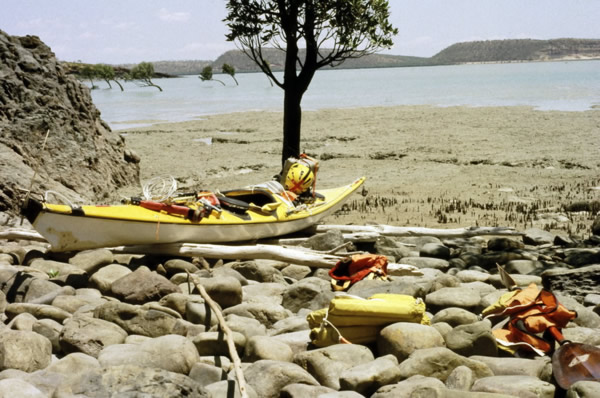
Using timbers to drag my laden kayak down the rocks.
The timbers save the kayak from getting scratched and was easier to move.
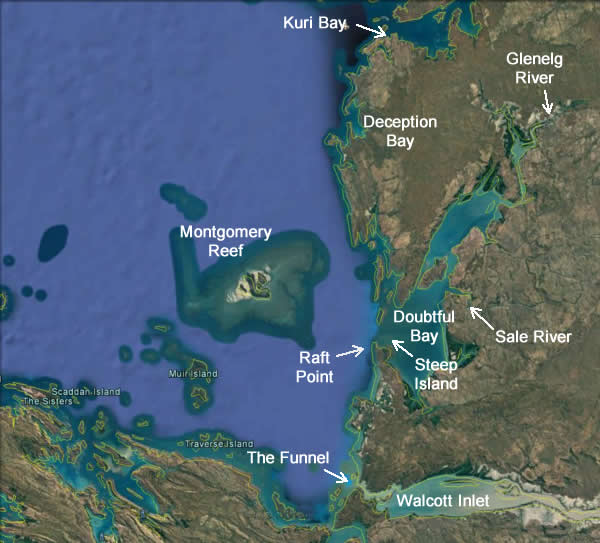
I moved over the wide stretch of currents entering Walcott Inlet without too much drama, passed Rankin Island and the spectacular headland of High Bluff. (On another trip with Ken Cornish the current was coming out of the inlet and whirlpools created swirling sinkholes that we narrowly avoided being dragged into.)
With the coastline supporting a magnitude from mangroves I expected to meet at least one crocodile, instead I only met drifting branches that looked like them. A large turtle floated effortlessly in my path, I made no diversion as I wanted to see how close I could get to it. Only when I crept within a paddles length did the turtle notice me. Its eyes were glazed with a gooey matter excreting from the corners. It looked
sad.
At Eagle Point much of my energy was sapped. I needed a boost so I beached among some shallow reefs and ate rice pudding that I prepared the evening before. The short rest and food strengthen me for my last 11 km to Raft Point. The last couple of kilometres, paddling along the picturesque rock shore was a joy as the current aided my passage and I was flying. This was the benefits of working with the tide. The ocean was
also a flurry of activity as shoals of mackerel leapt clean out of the water before me. As I glided around Raft Point I felt a sense of disappointment, as I had to leave the fast current and make camp. For once I had been helped along by the tide and it was great but it was only short.
Foam Passage, a 4 km entrance into Doubtful Bay boiled with kilometres of standing waves. The Bay extended north-east for about 40 kms before it narrowed and formed the Glenelg River. The Glenelg River was an important find for Lieutenant Grey who explored the area in 1838. Kingston Smith, one of Australia’s famous aviators made an emergency landing in his plane on the mudflats at the entrance of the Glenelg River. (I
retraced Grey's exploration of the area on a later trip in 1987.)
The entrance to the beautiful Sale River was also in Doubtful Bay and within 20 kms from Raft Point. I had thoughts about visiting it because it was supposed to have one of the most beautiful gorges in the area. To reach the gorge however I was told that I would need to paddle up the river on a really high tide. I was also told that there were some big crocodiles up there and there were few places to land. Thinking about
my safety and the extra days and the effort needed to do the trip, I decided to give it a miss.
About 26 kms north west of Raft Point and out to sea lay the Montgomery Islands which were surrounded by the huge Montgomery reef. The shredding of water cascading off the reef was supposed to be one of the most spectacular sights to see, but again it was much too far out to sea and sounded too dangerous to visit in a kayak so I decided not to go. (In 1987 I met an Aboriginal women who lived in the area when she was
younger and she told me that the Aboriginals used to paddle out to the reefs in their dug-out canoes. That made me feel like a real wimp.)
From one special area to another.
The beach at Raft Point.
As soon as I beached at Raft Point there was a reminder of the human invention and a disregard for the wilderness which saddened me. The point was a stopping off place for boats from Koolan and Cockatoo Islands on their way to the Sale River, so rubbish was left at one end of the beach. There was a heap of beer bottles and even
such things as big barbeque plates and cutlery stamped with a mining companies name. My isolated wilderness camp was ruined by the rubbish, but there was a smaller beach only metres away, wedged between two rocky headlands, so I camped on it and I didn’t have to look at the rubbish.
The mangrove areas around Raft Point.
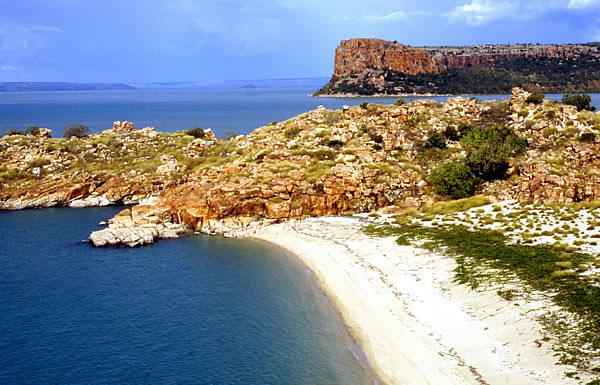
Steep Island centre.
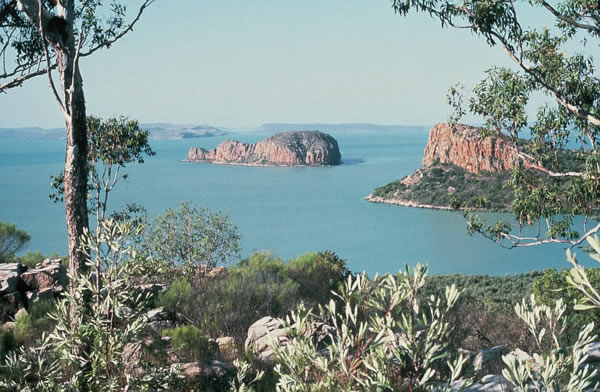
My camp had a magnificent and stunning view of the steep red vertical cliffs of Steep Island in the Bay. With the excitement of so much beauty around me I just had to go for walk. Walking conditions though never ceased to amaze me. When I had thought that I’d walked in the worst conditions I found places even worse. To walk 4 kms
near the point took me nearly 4 hours in 38° heat, as I was climbing up and down crevasses, stumbling through spinifex, tripping over boulders and ducking under tree branches. You can’t believe how hard, but how enjoyable it was to be out here. It is so special to think I was one of very few people in the world to have walked here.
Bouncing from one rock to another a wallaby with the last foot of his tail being brown, shot off like world-class gymnast. I urged myself on wanting to see over the next ridge, around the next corner, over the next gully, until time had run out and it was time to return to camp. Below me was a large area of mangroves. I could hear life sing in a chorus of different tunes. A little bit closer a multitude of birds had
gathered around the cliff top and in a deep green forest just below it. On the horizon, across Doubtful Bay I could see the high shores of the mainland and the way to the Glenelg River. About 2.5 kms separated me from Steep Island. Way below me a high tide was flooding through kilometres of mangroves some pale green others deep green.
From my mineral stained rock perch I had a 360° panorama of the stunning area but my camera could only capture parts of it is. When I realised that I had forgotten my distress beacon I suddenly felt a little vulnerable. My hurried departure and my keenness to explore the area caused me to leave it behind. Thankfully I returned without incident.
View from the top of the range near Raft Point.
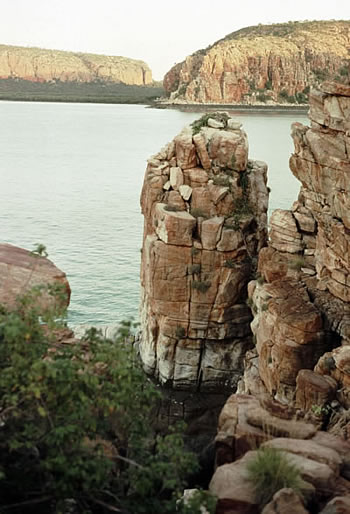
An eagles nest on a rock pillar at Raft Point.
Stingray
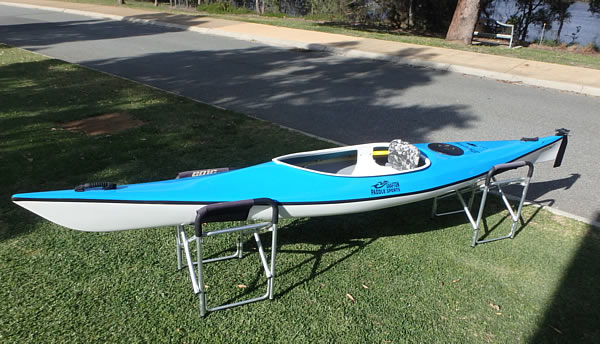
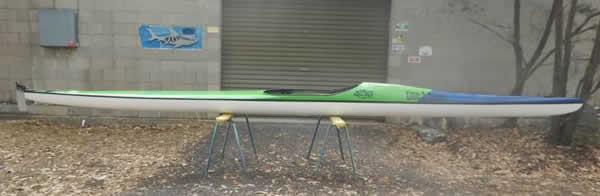
It’s 4 metres long by 65 cms wide. With rear storage area and rudder.
If you don't want a long kayak the Stingray might be the kayak for you. Being 4 metres long and around the 12 to 14kgs in weight it is a great little touring kayak.
Much easier to lift on your car than a heavy plastic kayak.
It can come basic with no storage area and no rudder, which would make it a cheaper kayak.
From $2000.00
Now the
Time Bandit
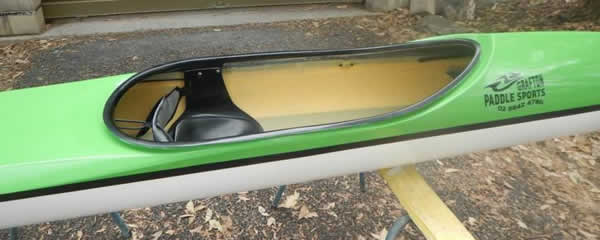
comes with a K1 cockpit
with K1 cockpit.
Length 6.2 Metres Width 42 cm
Cockpit size : Standard, Keyhole or K1.
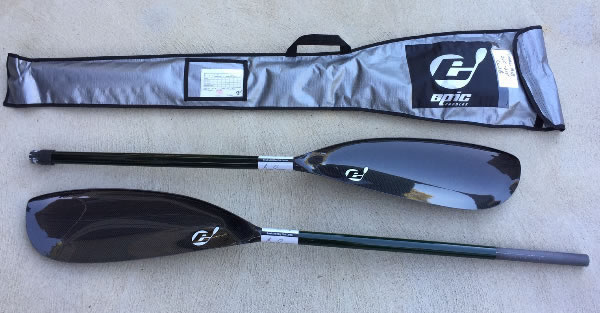
Epic Club Paddle
Epic Club Carbon Paddle $455.00
Midwing Club Carbon construction - 737 grams; comes standard with Epic’s Length-Lock 2™ adjustable ferrule technology.
Carbon fibre blade, Green oval fibreglass shaft.
Fully adjustable length & feather.
Includes paddle bag.
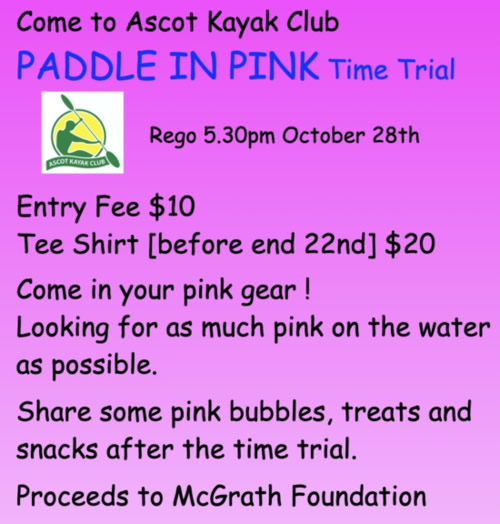
We have organised some really cool shirts and Graeme from Hypersports is supporting the event by printing our shirts at cost for us. (Thanks Graeme :) Register here - http:// https://www.webscorer.com/register?pid=1&raceid=225071
Must register by 22nd if you want a shirt.
Junior K4 Procurement Program
WA has the opportunity to be the first Australian state to bring in four-person kayaks built specifically for paddlers below the age of 15. The Junior K4's have the benefit of accommodating smaller adults facilitating an ideal learn-to-paddle craft.
Thanks to Steve & Michelle Fisher, Ray E Smith and the WA Sprint & Marathon Technical Committees, we currently have enough to purchase four K4 craft, but a minimum order of 5 must be made for this program to happen. Paddle WA would appreciate the help from our community to fulfil our goal of providing high-quality team boats to our aspiring junior athletes so that they can further develop their teamwork and individual paddling
skills.
Through our fundraising partnership with the Australian Sports Foundation, donations of $2 or more to this campaign are tax deductible. So please show your support by donating today!
Indian Ocean Paddlers
Races
Summer Series dates are now locked in. We are also very pleased to announce that Brad and Kate Hardingham Realmark have agreed to stay on board as our seasons sponsor. This support for IOP is massively appreciated. Race dates: 24th October
7th November
21st November / WCD
28th November / Doctor
12th December Xmas paddle
9th Jan 2021
30th Jan
20th Feb
13th March