|
|
|
|
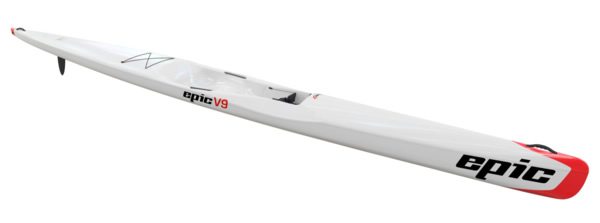
If you would like to try an Epic Ski
I will be at Ascot Kayak Club
on Saturday morning (tomorrow 3rd Oct) from 7.15am to 10.00am
Come and Try an Epic Ski.
The new V9 has become very popular.
It was great to go down to Augusta over the weekend for 4 days to visit and stay with Alaine Davin and husband Tom. For those people who don't know, Alaine worked with me at Canoeing Down Under for 15 years. Alaine and Leonie Cockman did two expeditions with me to Canada which she loved.
She hasn't paddled, apart from a few social paddles for about 4 years but on Sunday she will be racing with me at the Classic Paddle.
I did tell her we would take it easy but I think I might find it hard to do that.
She could be tired by the end of the race.
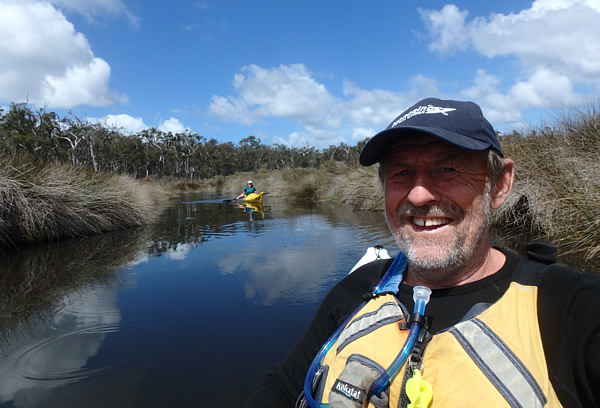
At the Augusta river mouth.
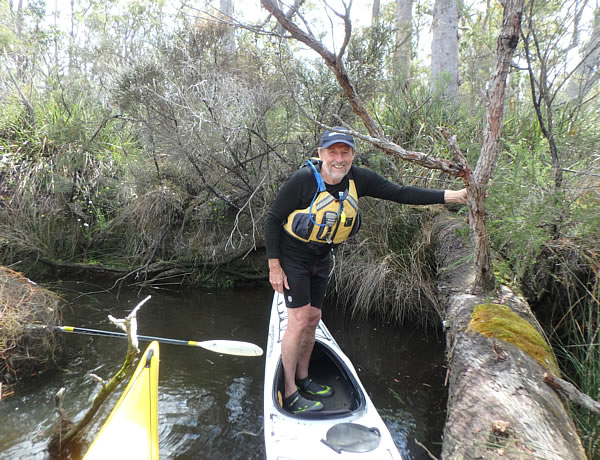
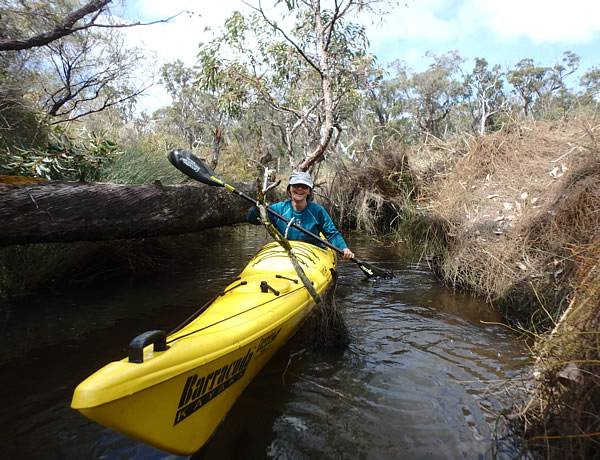
Alaine Davin and I exploring an off-shoot channel of the Blackwood River.
Oh dear it's got so narrow we have to try and turn our kayaks or reverse 400 metres of a very narrow channel and tight turns.
It was jump on the log and turn the kayaks to face the right way.
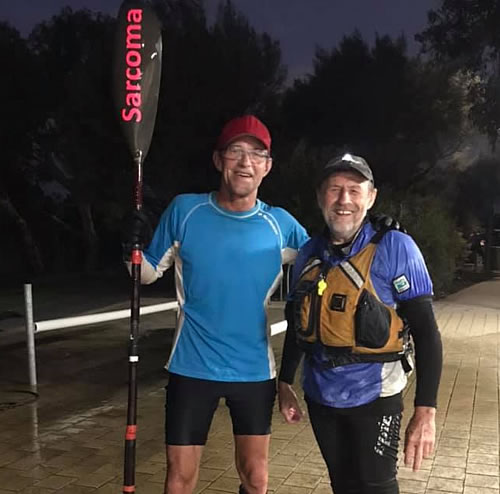
So.....after 8 years and about 400 races - (not that Doug is counting) Doug beat me at the AKC Time Trial Wednesday night for the first time.
He didn't allow me to be sneaky and paddle my usual tactical race. But saying that he is paddling like a steam train and I can feel the power coming from his rippling muscles and that trim body.
I'm now concerned that he will continue to improve and have many more wins.
Next year he moves up into my class, the 65 to 75 category. Luckily at the Australian Championships the categories are in five year segments so I will be in the 70 plus without him.
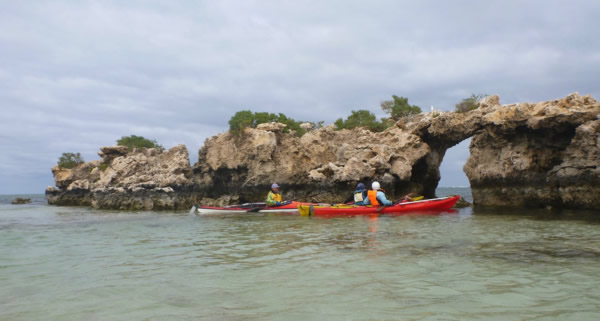
Robyn Korshid and friends checking out Milligan Island, one of a series of rocky outcrops just metres from the shore, north of Green Head.
Photo Robyn Korshid
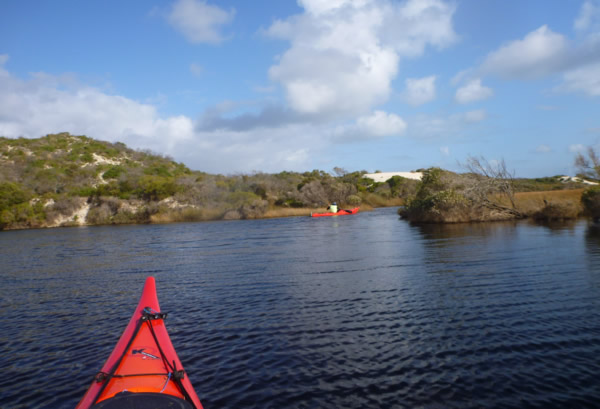
Robyn Korshid and friends paddle the Hill River. They said it can be paddled for about 2.6kms.
It is 86kms long and is 8.7kms south of Jurien Bay.
The headwaters of the Hill River rise near Dinner Hill, approximately 8 kilometres east of Badgingarra.
The river mouth is usually closed to the ocean by a sandbar, which opens up in periods of high river flow.
The river was seen and named by the explorer George Grey on 14 April 1839 during his second disastrous expedition along the Western Australian coast.
Photo Robyn Korshid.
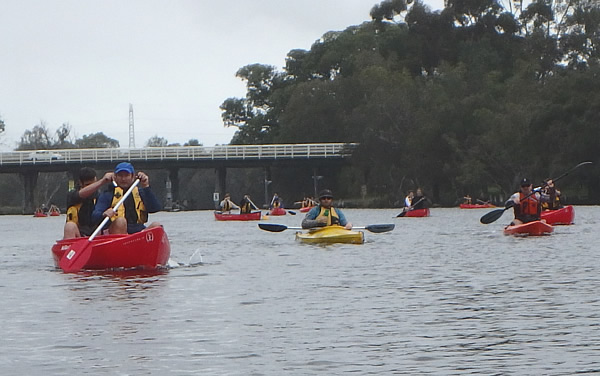
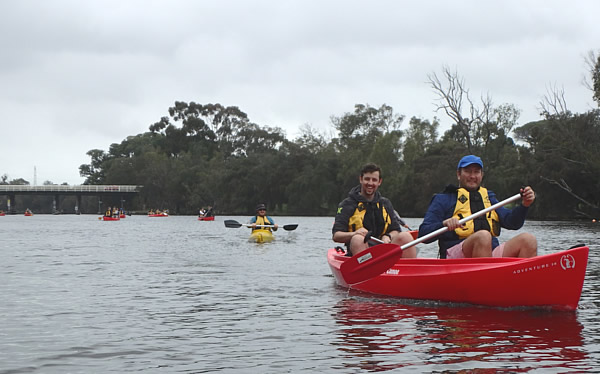
A training day for ECU students.
Family Fun
or could one of the young Florisson's be our next Slalom Olympian
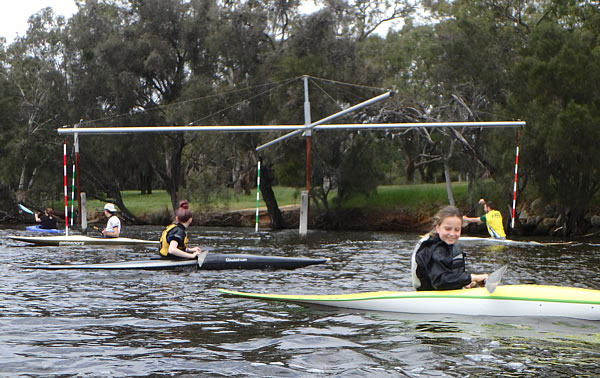
On Thursday morning the entire Florisson family were practising on the AKC slalom course.
Hunter, Scarlett and Izzy were having fun just watching their dad and mum Scott and Beck trying with little success to go around the poles.
Having the new course can only help these young paddlers to develop their skills and keep motivated.
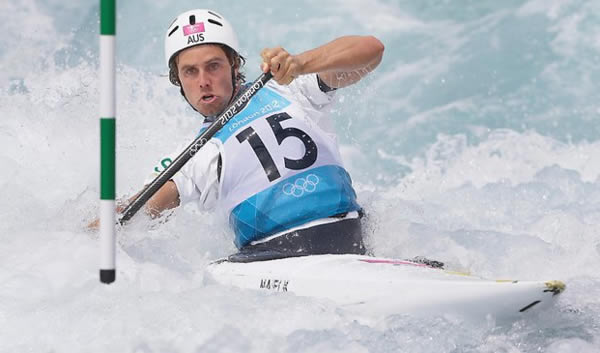
Kynan Maley Olympian C1 & C2 Slalom
(born 13 October 1981 in Fremantle)
Another WA Paddler to be Proud Of.
Kynan said he had an interesting first experience with canoeing at 6 months old, “My parents made a custom buoyancy vest but when they tested it I floated upside down with my legs in the air, so it needed some adjustments!”
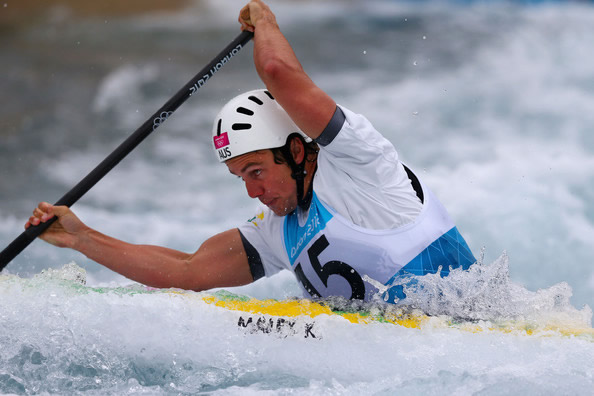
Kynan showing his determination.
Kynan has been a member of Swan Canoe Club since he started paddling but he moved to Sydney so he could train at the Penrith whitewater stadium with the rest of Australia’s elite slalom paddlers. He was the inspiration to a whole new generation of junior slalom paddlers at the Club who have performed wonderfully at National
Championships bringing home medals in many events.
He has attempted to compete at the Olympics since 2000, but Australia's only C-1 slalom canoe position was taken at each games by Robin Bell, who won the bronze medal at the Beijing Olympics.
Kynan is focused to do well.
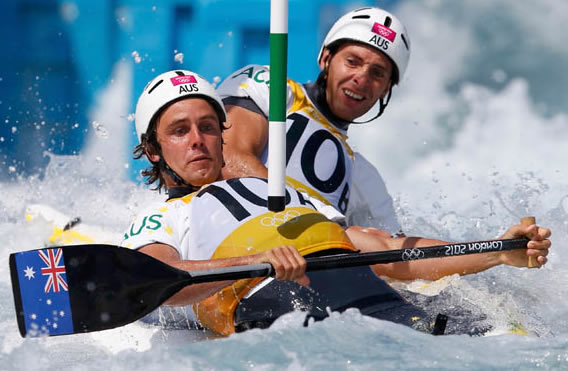
He came 6th in the London Olympics in C1 and 10th in C2.
Now that's amazing.
AFTER waiting 12 years for the chance to compete for Australia at an Olympic Games, Kynan's moment had arrived.
For years the 30-year-old was overshadowed by Robin Bell, who took the sole canoe slalom spot on the Australian Olympic team three Games running.
But after winning bronze at the Beijing Games, Robin retired, allowing Kynan to finally realise his dream.
Kynan said a spot on the Olympic team was something he had always wanted.
"Trying to beat Rob was always going to be a big challenge," he said.
"At the end of the day, I'm stoked that he managed to do what he did but it left me with a fair bit of desire."
Kynan will compete in the individual C1 and doubles C2 canoe slalom event with fellow Games debutant Robin Jeffery at the 2012 Summer Olympics in London.
In the 2012 Olympics Kynan reached the C1 final where he finished in 6th place and Kynan and Robbie came 10th place in C-2.
What a great fete.
Kynan and Robbie came 10th at the London Olympics in C2.
In a field jammed with Olympic and World Champions, Australian slalom paddler Kynan Maley finished in eighth place in the C1 semi-final and secured his place in the race for an Olympic medal later on day four.
In wet and windy conditions at the Lee Valley White Water Centre, Kynan was the first athlete on the course, with the 12 competitors racing in reverse order of their qualification. With just one run in the semi-final, and needing a top eight finish to qualify for the final, it was do or die.
Racing on a newly set course, the 30-year-old paddler made an early mistake, clipping the first gate and copping a two-second penalty, but determined not to let this early error stand in his way at a shot at a finals berth, Kynan recovered his composure and put together a strong and fast race.
I'm happy with most of it," Kynan said after his race. "I'm really regretting the first touch, I can't really explain it - I'm not sure why I touched it, maybe just slight nerves at the start. But I kicked it in pretty well for most of the run. I just went a little bit too aggressively, wasn't quite in position on the spin just below the first drop so I dropped another couple of few seconds there. But the rest of the run was pretty good. I was hurting by the
end."
Kynan finished in a total time of 105.49 including the two second penalty, and then endured a nervous wait to see how the athletes after him finished.
Teng Zhiqiang of China and Aleksandr Lipatov of Russia followed Kynan, both finishing below the Aussie. Grzegorz Kiljanek of Poland was the next athlete to drop below Kynan and then it was just a matter of one more athlete - and with the world's top ranked paddlers still to come, the outlook wasn't certain.
World Number 1 David Florence of Great Britain, by far the crowd favourite and with the added benefit of having trained at the Lee Valley White Water Centre for over a year, was out of the gates eighth. Despite producing a great start to his run to the rapturous applause of the crowd, Florence made a crucial error at a gate and wasn't able to recover, finishing in 104.16 ensuring that Kynan would remain top eight.
Kynan will now regroup and take to the same course just after 3pm (London time) to contest the final where it will come down to one run - one chance.
"Every run I want to improve and try and build through," Kynan said. "Obviously I won't hit gate 1! I think I'll get the boat running a little bit more through the top. I was a little bit jerky on the rhythms, a little bit guarded. I think I'll just chase it that little bit harder because I'm going for the win."
German paddler Sideris Tasiadis goes in as the top ranked athlete after a blistering 98.94 clean run. Dual Olympic Champions Michal Martikan of Slovakia (1996, 2008) and Tony Estanguet of France (2000, 2004) will also both be vying for the top of the podium.
In the finals Kynan finished in 6th place.
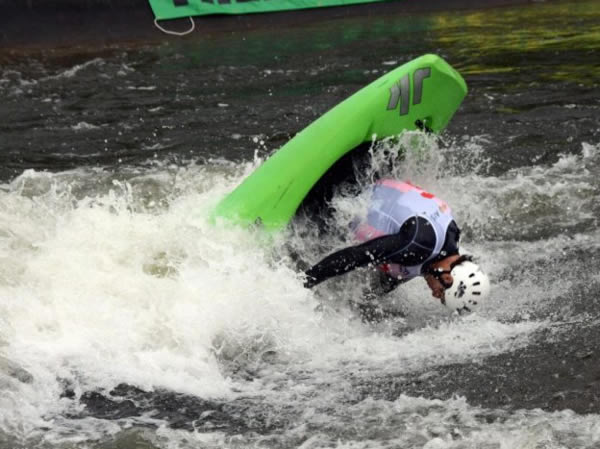
Kynan Maley in C1 Freestyle (Scott Moorhen Photography)
Kynan is an Australian C1 Slalom Champion, an Olympian in C1 and C2
and he came third in the World Freestyle Championships.
LONDON, UK (PRWEB UK) 24 JULY 2012
July 29 and 30,CD-adapco's engineer, Kynan Maley will race in the Canoe Slalom at the London Olympic Games for Australia. Canoe/Kayak Slalom is an intense sport involving racing down a whitewater rapid while negotiating a sequence of gates, similar to Slalom Skiing.
Kynan had an interesting first experience with canoeing at 6 months old, “My parents made a custom buoyancy vest but when they tested it I floated upside down with my legs in the air, so it needed some adjustments!” (His dad is Ian Maley – Wilderness Equipment founder who makes packs, tents and outdoor equipment. 30 years later, Kynan is right-side up in his canoe training 10 - 16 sessions in a typical week. .
When asked what he loves about the sport, Kynan replied, “I love it for so many reasons! There is so much power in the water and the feeling when you are in control and harnessing that power is hard to beat. The competitive side is also a great way to push yourself to your limits and finding ways to improve is incredibly rewarding.” Crossing the finish line and winning Olympic selection was an incredible moment for Kynan as he had missed out on Beijing, “There
was so much pressure so I felt a lot of relief and pure elation realizing I'd booked my ticket to London. It still feels a bit unbelievable looking up at the empty stands when we are training.”
Kynan’s not only an Olympic athlete, but an intelligent CAE engineer. He began working as a CD-adapco support engineer in 2009 and currently supports and trains STAR-CCM+ users in South East Asia and Australia.
Kynan has run STAR-CCM+ kayak simulations using the DFBI and Overset Mesh features. He recently added fins to aid the tracking and help transfer momentum through turns. He plans to use STAR-CCM+ to optimize the fin position and profile then Overset Meshing to model the hull and paddle within a single DFBI simulation to see how they interact.
“Between CD-adapco and whitewater paddling it is fair to say I am a little obsessed with fluids, and I have found there is a lot of common ground between the two. CD-adapco is already revolutionizing sports like F1, Cycling and the Americas Cup, and with the new generation of features I expect to see more sports looking to CFD to optimize time and motion dependent technique and interactions between athletes, equipment and the environment.”
A proud WA Olympic paddler Kynan Maley.
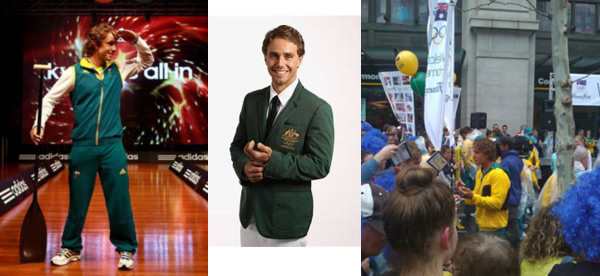
The model, the man, the hero.
Kimberley Kayaking 1982
part 10
100 Days Solo
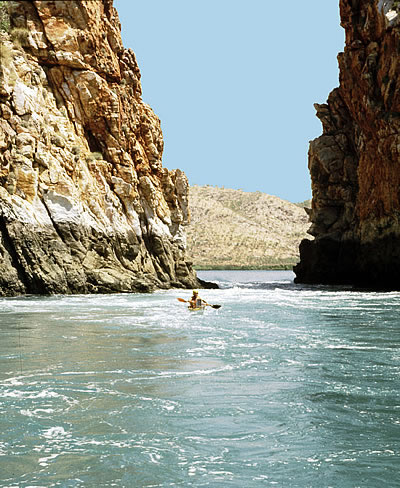
I left the amazing Horizontal Falls and headed to a campsite about 4kms away on an island but as the wind funelled down Talbot Bay the water spray shot over my bows drenching my body and leaving me salt encrusted. I arrived at the rocky shale beach as a burst
of activity was happening in the water nearby. Mantarays leapt out of the water creating a heavy slap when it landed. Dolphins cruised the bay and turtles gasped for air as they surfaced.
As the light faded the glow of red eyes were captured in my torch light. A croc was close to my beach and kept a continual watch over my movements. I too was watching it, its presence encouraged me to heighten my hammock. Behind me a bird started to flap in
the trees and the crescendo of crickets became louder and my fire became bigger and crackled as I stoked it up.
Those red piecing eyes staring at me presented less concern than my encounter with multitude of rats the previous evening, but I couldn’t be too complacent and there was no way I was going down to wash or wash my dishes at the water’s edge
tonight.
Leaving Horizontal Falls.
I survived the night without a croc biting my bum through my hammock. As I dragged the kayak to the water’s edge I used driftwood placed under my kayak to prevent the hull from being ripped apart by the rock shale. I hadn’t forgotten about the crocodile so I
kept my spear and bow close by, although they would do little to stop a hungry crocodile and once in the water I would be at the mercy of the Gods.
As I paddled on towards Turtle Reef in Talbot Bay it was calm and hot and the morning was still young. Turtle Reef, named by the local Aboriginals was a large reef on the eastern side of the bay and at low tide it came exposed. I dipped my hat into the water
to let it drip over me to cool me off. With temperatures in the high 30s, my hope of cooler weather in the weeks to come was very slim. For the next 2 ½ hours I paddled in a north-westerly direction but eventually after reaching the open ocean, I left Talbot Bay and headed in a south-easterly direction towards Walcot Inlet. As I didn’t have much information about the rocky steep coastline ahead of me, I decided to stop when I found a beach a few kilometres along the
coastline.
I stopped early in the day so the afternoon gave me time to clean my cameras, sew my cloths, do my washing, do small repairs and check out the maps and the terrain ahead of me. With crocodiles being sighted on a near daily basis I decided to sleep on a rock
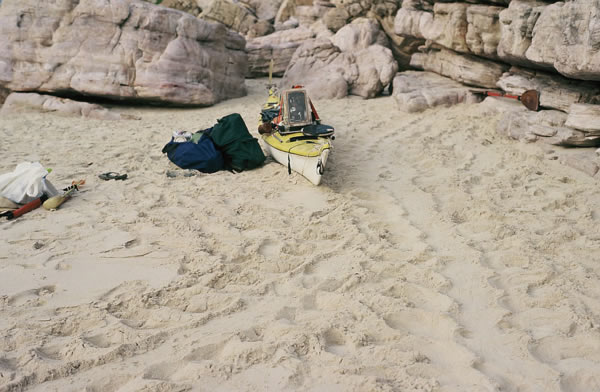
ledge a few metres above sea level, in the hope that crocs couldn’t climb! My sleep was disturbed by a squealing noise near my kayak. I shone my torch to find a native cat checking out my equipment that was lying over the kayak. As long as it didn’t want to share my bed I didn’t mind. Thirty minutes later I started hearing faint sounds in the night. I panned the area with my torch expecting to see red eyes emerging from the deep but then noticed a set of armored vehicle tracks. In fact they were
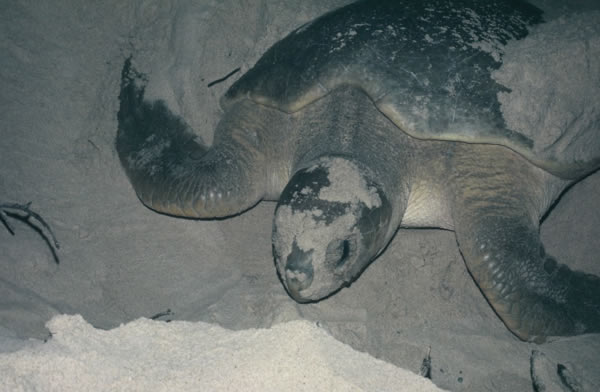
fresh turtle tracks. I jumped out of my swag and followed them up the beach to find a turtle had just finished laying her eggs and was busily hurling sand in a large area around her with her flippers to cover them up. It reminded me of my four nights in Malaysia watching massive leatherback turtles lay dozens of eggs on the beach each night. Poachers often raided their nests using steel rods to stab the sand and find the eggs. Government workers were also employed to collect the eggs but they
were taken to hatcheries in the hope of increasing the population. I watched the turtle return to the water.
The night was warm and the mosquitoes annoyed me. I awoke to find several fresh turtle tracks. One turtle had circled my kayak, walked passed my paddle, realised the rock had formed a barrier, turned and crawled back towards the water. Two other sets of tracks
also led to the beach. It had been a busy night. Next to me were fresh animal droppings from the native cat that must have checked me out during the night and was starting to dry in the morning heat.
A turtle starting to lay her eggs.
Extracting myself from the safety of my sheet, sandflies were really bad forcing me to wear long pants and it wasn’t until I was ready to leave that I could quickly slip into my shorts. The rush to load the kayak and get away quickly had caused me to place too
much weighty gear to one side of the kayak and making it have a permanent tilt. Once in the choppy conditions, the kayak became awkward and unmanageable so at the first suitable site I decided to restructure the weight. I landed on a rocky beach with small lapping surf. I didn’t think it was going to be a problem however, trying to rearrange gear when the surf continually pushed a fully loaded kayak against the rocks was much more of a nuisance than you can imagine. By the time I was ready
to leave, my cockpit was half full of water. My best chance to prevent the kayak from being holed by the rocks was to enter the kayak and pump the water out with my foot pump away from the surf zone. It didn’t take me long.
With the tide in my favour I enjoyed the extra speed that I was doing along the coast. The coast was indented with several small coves and points. Near a string of small islands, spread in a line for about 4 km, I rounded a point that gave me a view along the
coast for about 11 kms. Twenty metres away I noticed an object close to the point moving up and down with each swell of the wave. For a moment I imagined it as a log, but suddenly it started moving towards me. Oh shit, a crocodile. Cold shivers ran through my body as the croc closed in. I had no chance to beach along the rocky shoreline and knowing that the crocodile could easily tear me to pieces before I could get out of the kayak, I had to make sure it didn’t catch me. Crocodiles can also run
fast, so even if I did beach, my chances of escaping was probably more remote.
Talk about remote. I was now kilometres away from Koolan Island and with hardly anyone ever coming this way I couldn’t expect any help or person to come along. If I was attacked by a crocodile just the remoteness shattered all chances of being helped. I could
only rely on my own resources to keep myself alive.
I decided to veer off out to sea in the hope that the croc wouldn’t follow. It did. The speed with which the crocodile reacted closed the gap very quickly. I paddled like hell changing direction but the crocodile followed and gained on me. The extra speed I
manage to find from somewhere was no match as it came within 5 metres. I was praying that it wouldn’t dive as I had seen their incredible speed underwater at Whirlpool Pass. As I paddled further out it began to slow down but it still kept a steady pace behind me. As my heart and arms pumped at an enormous rate it started to lose interest enabling me to pull away. I didn’t stop until I was a safe distance away.
After about half a kilometre I had to have drink, as my thirst overpowered my will to get away from the crocodile. My heart was still pounding. My mind was full of thoughts. I now decided to keep further out from the coastline in the hope there would be less
crocodiles out there. I would rather have sharks than crocodiles. It seemed that the crocodile was just seeing me out of its territory, well that was my theory. For the next 45 minutes or more by mind was focused on the crocodile chase, and no matter what other thoughts I had, the chase always came back to mind.
After stopping again, a large splash behind me attracted my attention. Within six metres of my stern a shark was moving away so I powered off looking in all directions over my shoulders. I could feel it was going to be one of those days. As I looked over to
Traverse Island three fins broke the surface. I immediately became tense but my fear was soon dispelled as dolphins leapt out of the water.
Passing between Helipad Islands and the mainland the wind picked up causing some horrible wave patterns that buffeted me from all directions. Still a little on edge I had 8kms of sloppy seas to negotiate before reaching the safety of an island north of shoal
bay. I had paddled 33 km in 5 1/2 hours. The tide was now going out which allowed me to leave the kayak on the beach without the fear of it being swamped or swept away. I brewed coffee & sat watching a turtle float around my cove. Suddenly a shadow blocked out the sun. My heart missed a beat as I expected something to happen. I looked up and saw a large eagle soaring over head.
My camp was close to 2 pockets of mangroves. The South part of the island was virtually surrounded by several hundred metres of thick mangroves and across on the mainland the mangroves stretched about 20 km along the indented coastline. I just knew, after
being chased by a crocodile on a rocky coastline there were bound to be many more around the mangroves in their favourite habitat. By 12.30pm my longing to explore the island had begun. My first attempt to go overland was soon shattered as the bush was too thick for me to penetrate. I retreated along the coastline passing boulder holes that were shaped like a funnel and looked as if they were man made. For a moment my spirits lifted when I found pools of water high above the rocks on a ledge.
The water however was salty, so my hopes soon faded.
The rock gave way to muddy mangroves that prevented my progress. Below me five large angel fish cruised slowly in the shallows. At a quicker pace mullet passed them by several times. Back at camp I change into my canoeing booties and shorts so as to walk
across the mud flats to a cave on the other side of the cove. It was interesting watching large mud skippers shuffling over the mud. I walked towards them sinking down to my knees and I soon decided that their progress was quicker than mine.
I tried adding a small amount of salt water to my macaroni as I was cooking it, but it still tasted too salty so I gave up the idea. I was trying to save my fresh water, but it was destroying my evening meals so I couldn’t wait to find fresh water again. I was
told there was fresh water about 7 kms across from my camp on the mainland, but it was 5 kms up a long and narrow creek lined with mangroves. It meant that I would have to paddle up the creek on high tide to reach the water, but after my brush with the crocodile, I thought it more sensible to forget about it.
I relaxed staring into the sky admiring those millions of stars making up the universe. I had my own names for all the star patterns around me, the hockey stick, the dragon, blah blah
My father came to mind. He had been dead for three years and being 12,000kms away at the time I was unable to attend his funeral. I remember the good times when we owned a farm and we as kids had so much fun and freedom. At the age of seven I used to help him
in the fields, drive tractors, many times with my dad steering an implement at the rear of it. I earned two shillings an hour and I soon saved enough money to buy my own pony. I felt sad. It had been a long time since I really thought about him.
My parents split when I was 10 years old and reunited again when I was 13. This was probably the saddest part of my life as my mum, who wanted to start a new life elsewhere, convinced dad to sell the farm in Lincolnshire and buy a grocery shop in Shirebrook, a
small coalmining village in the midlands. This devastated me as I had so much freedom and enjoyment on the farm, now we were townies.
Within a month my mum left us again leaving my older sister Janet to manage the shop. Dad couldn’t read or write so it was hard for him to manage it. My brother was back and forth from mum and dad. Two years later with falling sales, the shop went bankrupt and
all the money we had from the sale of the farm was lost. As you can imagine my sister and I were not very pleased with my mum for dragging us away from the farm. When I was 15 I returned to the country and lived with my aunty. Four years later I was hitch hiking to Australia.
Camped on Wulalam Island.
The morning greeted me with a sky full of birds. Noisy white cockatoos flew overhead as well as honey eaters and an array of other birds including one with a red breast and black wings. A coucal pheasant also took off from out of the dry grass. For there to be
so many birds there must have been water close by unless they got it from the heavy dew that saturated everything in the early morning. I started putting plastic bags over my cockpit to collect condensation. My kayak also collected condensation but I had to remember to wipe the salt off the kayak the night before. I only collected a few spoons full that way.
The two and half hour trip across to the ‘Funnel’ at the head of Secure Bay was uneventful, no sharks, no crocodiles, nothing. It was one of my small ambitions on this trip to paddle through the entrance of Secure Bay and the Walcott Inlet. The ‘Funnel’ was
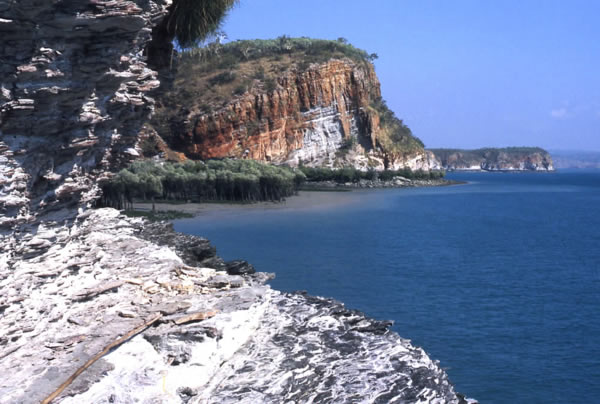
roughly 50 metres across and a kilometre or so long before it opened out into Secure Bay where it widened considerable. Arriving at Secure Bay close to high tide meant the water movements would be slower as I paddled through the channel. As I moved through and into the bay it was lined for kilometers and kilometers with mangroves. Being really in crocodile country and having so many mangroves around me I didn’t fancy staying inside the bay for too long so I turned and made a fast exit with the
out-going tide.
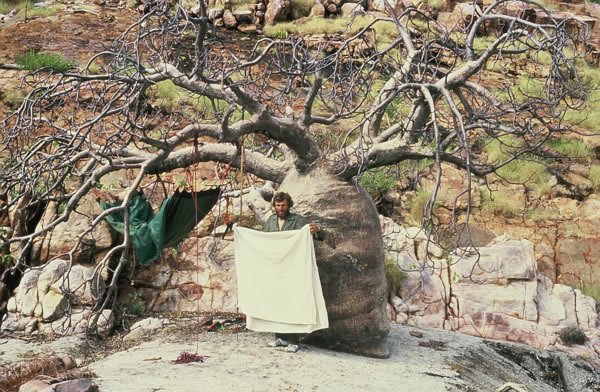
Three hundred metres from the entrance I found a nice beach, where there was plenty of firewood, a small boab tree to hang my hammock and a great view of the entrance and the tidal currents.
The current entering The Funnel, Secure Bay.
Camped in my hammock at the entrance to Secure Bay.
With several day light hours left in the day I headed out on a walk to a creek a couple of kilometers away. I took my survival kit, cameras and water bottles. As usual the terrain was difficult. Boulders were hidden under the spinifex and grasses which were one of the best defenses for
intruders on foot. The Kimberley terrain was like no other in WA. Sandstone boulders, deep spinifex, gullies, ravines and waist deep grasses with boulders underfoot made walking extremely difficult. Walking boots that are made to last for years in normal conditions, only last for weeks here in the Kimberley.
I could see the creek in sight, but even with an increased walking speed it would still take me an hour to reach it. Then as I stepped on a boulder I slipped and in a split second I was on my back looking up at the cloudy skies. I fell on my back and bum but
luckily my pack cushioned the fall so I was okay. At this point in time the creek looked too far away, so I retreated back to camp.
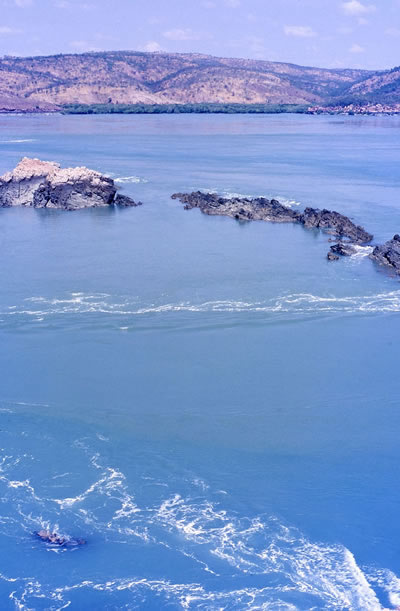
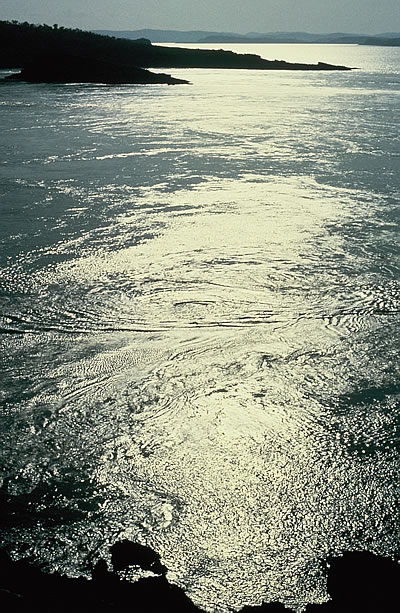
The tide was now racing out of the ‘Funnel’ creating some amazing and fascinating
water movements, including big whirlpools. I headed to a high point on the cliff 300 metres away to get a better view and some film footage before darkness crept in. It was a special scene.
The tide streaming out of Secure Bay.
Indian Ocean Paddlers
Races
Summer Series dates are now locked in. We are also very pleased to announce that Brad and Kate Hardingham Realmark have agreed to stay on board as our seasons sponsor. This support for IOP is massively appreciated.
Race dates:
10th October
24th October
7th November
21st November / WCD
28th November / Doctor
12th December Xmas paddle
9th Jan 2021
30th Jan
20th Feb
13th March
ENTRIES ARE NOW OPEN for the
Sunset Surfski Series at
. To enter visit https://www.webscorer.com/registerseries?pid=1...
The Duel is Back
“The Duel”organised by MOC is being held on Sunday 6th December 2020. The course is unchanged running from The Cut to Doddies beach.
John Reynolds
0418 750 332
|
|
|
|
|
|
|
|
|
|