|
|
|
|
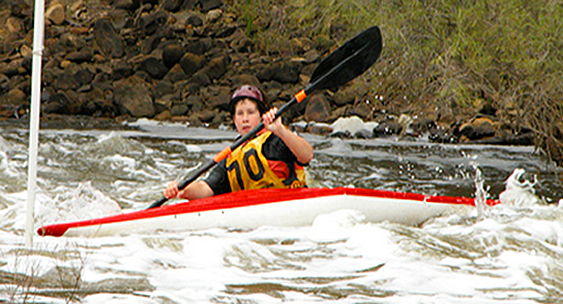
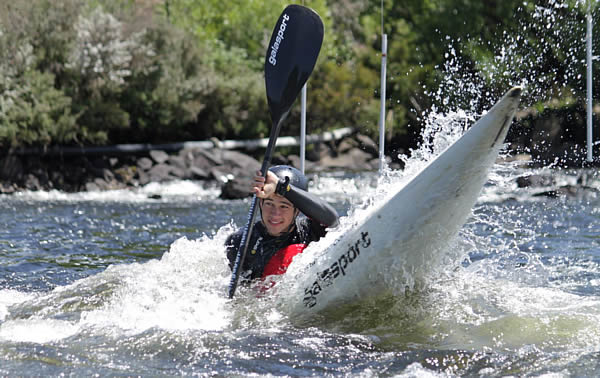
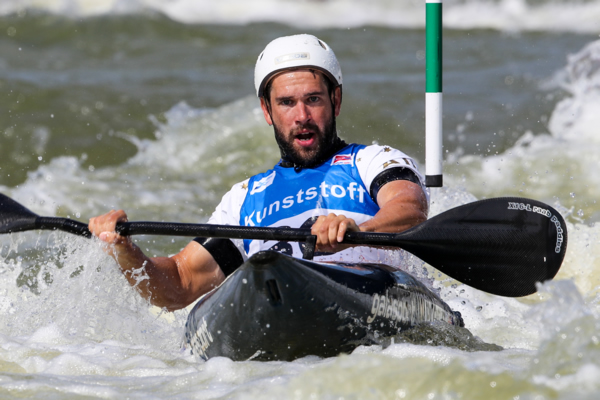
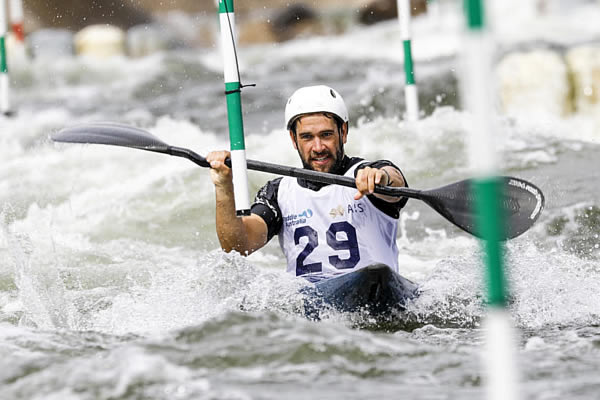
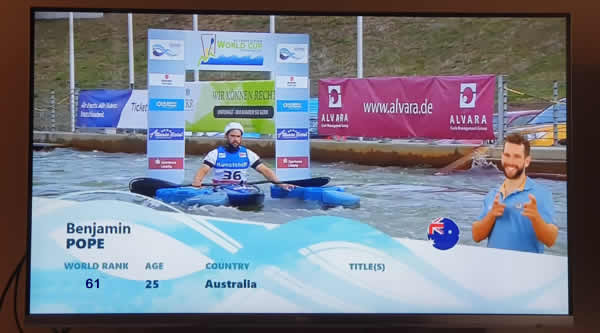
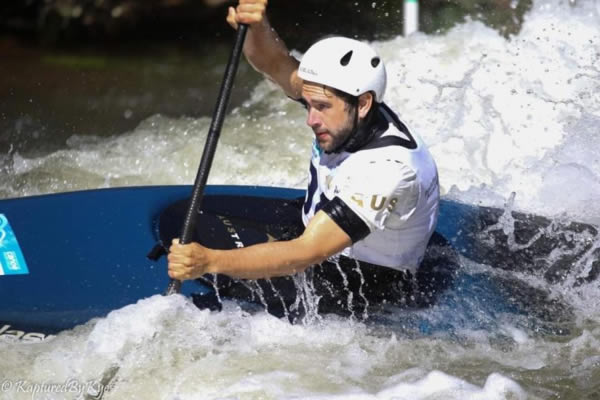
Western Australian Ben Pope is on the World Cup team and will be contesting the first two, as well as the last two World Cups, this
year.
Ben Pope reflected on the last few weeks of selection racing.
“The last few years, I’ve always been the fourth boat, the reserve boat for the senior team and this year I cracked the senior team, the world cup team of the top three boats, so that’s a really good start for the lead up to Paris,” the 26-year old added with his eyes already set on the next Olympic Games at Paris 2024.
The team to contest World Cup one and two were meant to head over to Europe at the end of May. Unfortunately Covid has disrupted this schedule.
Also part of the 2020 Canoe Slalom Championships were the inaugural Extreme Slalom event which Ben
won.
Ben is currently ranked 61 in the world.
International Results
2020
4th MK1 Oceania Canoe Slalom Championships, Auckland, NZL
2019
27th MK1 ICF Canoe Slalom World Cup 4, Markklenberg, GER
2018
44th K1 – ICF Canoe Slalom World Cup 1 (Liptovsky Mikulas, SVK)
49th K1 – ICF Canoe Slalom World Cup 3 (Augsburg, GER)
52nd K1 – ICF Canoe Slalom World Cup 4 (Tacen, SLO)
2017
10th K1 Teams – ICF Canoe Slalom U23 World Championships (Bratislava, SVK)
19th K1 – ICF Canoe Slalom U23 World Championships (Bratislava, SVK)
12th K1 – ICF Canoe Slalom World Cup 1 (Prague, CZE)
48th K1 – ICF Canoe Slalom World Cup 3 (Markkleeberg, GER)
2016
47th K1 – ICF Canoe Slalom World Cup Final (Tacen, SLO)
34th K1 – ICF Canoe Slalom World Cup 4 (Prague, CZE)
30th K1 – ICF Canoe Slalom U23 World Championships (Krakow, POL)
5th K1 Teams – ICF Canoe Slalom U23 World Championships (Krakow, POL)
23rd K1 – Oceania Championships (Penrith, NSW)
2015
28th K1 – ICF Canoe Slalom U23 World Championships (Foz do Iguassu, BRA)
33rd C1 – ICF Canoe Slalom U23 World Championships (Foz do Iguassu, BRA)
Ben is currently paddling at Penrith with two other Ascot members
Brody Crawford and Steven Lowther.
|
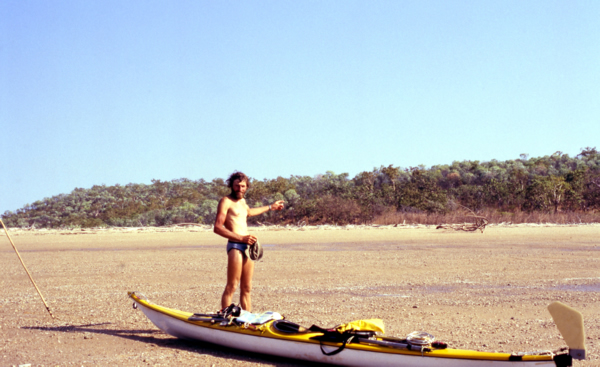
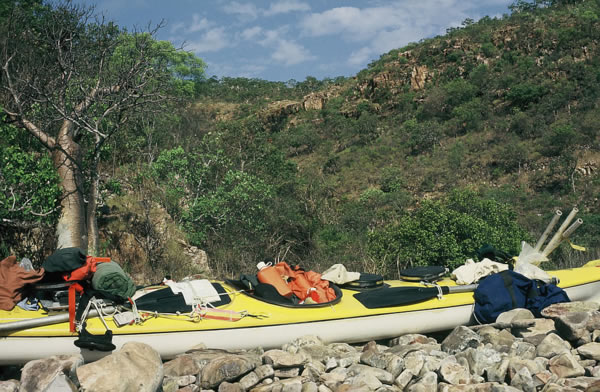
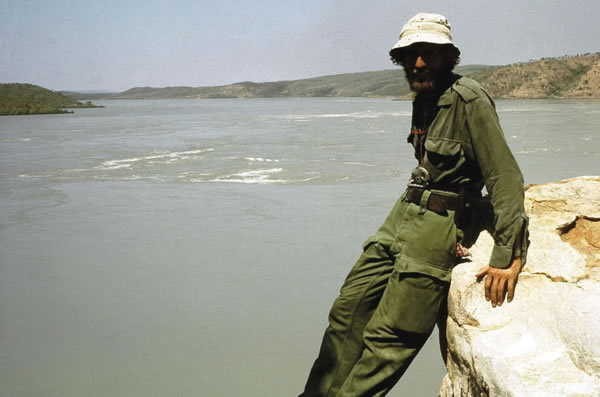
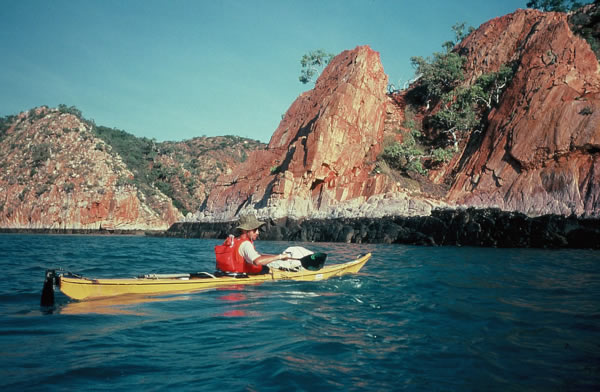
Kimberley Kayaking 1982
part 12
100 Days Solo
I left Secure Bay and made my way towards my next stop the dangerous Yule Entrance, which was an entrance 10kms further along the coast that opened up into Walcott Entrance. I was told that there were big boils and large whirlpools in the entrance capable of spinning large boats in circles and sucking down smaller ones. It didn’t seem believable, so I knew I had to find out for myself. It was important though to go through the entrance as close to the high tide
as possible, when there was less water movement just in case.
My route along the cliff took me between Fletcher Island and Beer’s Ridge which was on the mainland. Driftwood that was being moved by the tidal currents was thick in the milky brown water of the channel. It made crocodile spotting difficult because every piece of driftwood looked like a crocodile. Mangroves were only 500 metres away at the best of times and the thought of crocodiles lurking certainly quickened my progress.
I arrived at Yule Entrance an hour or so before the turn of the tide as it was still streaming into the entrance at a terrific speed. For a while I waited several hundred metres away, but I felt vulnerable sitting there waiting in crocodile country for the slack tide to arrive, so I eased myself towards the 600 metre wide entrance. Suddenly the current started whisking me away, but I felt in no immediate danger so I moved in a little further. I could now see
rapids ahead so I paddled over to my left and further into the centre of the channel to try to clear of them.
Suddenly I was being swept into the entrance and beyond and there was no turning back. My eyes focused on the cliffs, which gauged my speed. I started to accelerate to a great speed and I wasn’t even paddling, and then I realised I had been caught in a large tidal water slide. It didn’t matter, I would just ferry glide across to the slack water behind the north wall entrance. Well that’s what I thought, but another rapid and a whirlpool prevented any chance of
that.
I was now committed to go right through the entrance as my paddling skills and strength couldn’t help me to back track against the current, it was too powerful. The current was now running much faster than I could imagine and although I noticed the spectacular high cliffs to my right I had no time to take in their true beauty. Drops and rapids were also being created by rocky islands and reefs close to the cliffs which were being smothered by the rapid rising
tide. I avoided them but suddenly I saw whirlpools, boils and whitewater spread across the channel a few hundred metres ahead.
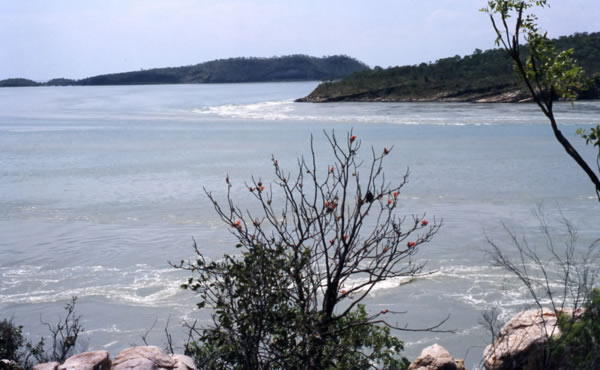
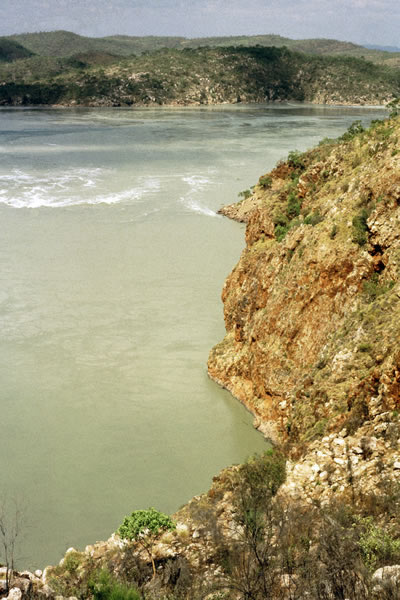
The entrance (Yule) to Walcott Inlet.
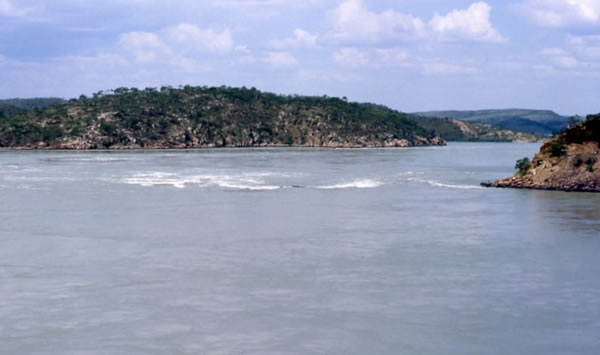
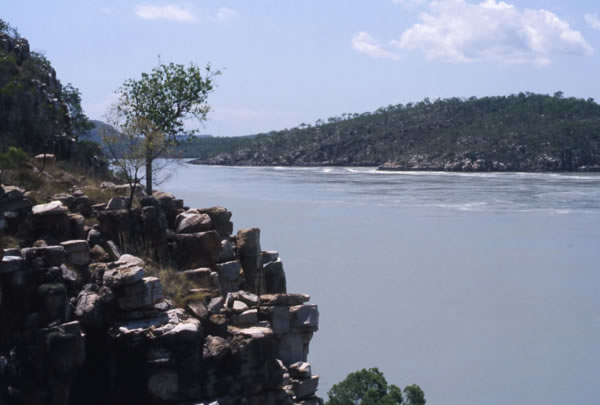
The current is running fairly fast through the narrow gap.
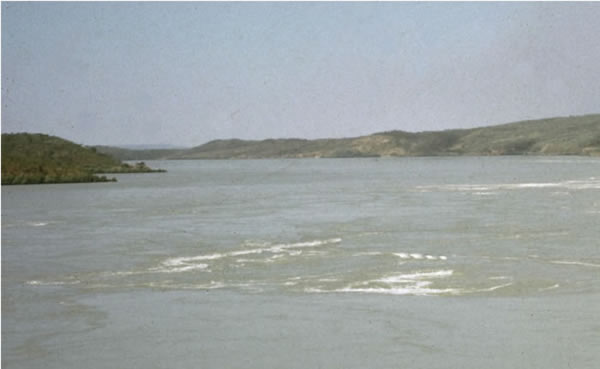
Rapids start to form a little further into the entrance.
As the channel narrowed, my kayak slid sideways and increased its speed. I was at mercy of the swift current and as I desperately tried to avoid the rapids and the biggest of the boils and whirlpools I could do nothing but dodge them and go with the flow.
Although I could see the big whirlpools well ahead I felt at that moment I was sliding in safer waters as the channel widened and was less disturbed so I tried to get some film footage with my 16mm camera which was mounted on my front deck. I drifted, but then I realized I was going faster than I normally paddled. A 16mm camera had to be wound up to take film so I had to reach forward to wind it up which compromised my stability. My camera was certainly different
from todays’ technology. As I concentrated in getting the camera going I drifted towards a developing whirlpool over to my right. I then desperately tried moving over to the left, but because the water was being deflected from the rocky shoreline it pushed me back towards it again. I avoided it and some rapid water, but then I noticed the whirlpools ahead were huge and full of boils that erupted a metre or more upwards like miniature volcanos. The whirlpools were certainly alive with whitewater,
boils and smaller whirlpools. It was something that I had never seen before and it looked terrifying. Although I was nearly pooing my pants I was calm, I had to be. I paddled hard to gather extra speed so to sneak to the right of the big turbulences to avoid possible disaster.
A fast current continues to race into the inlet causing a lot of white water closer to the shoreline.
About 3 kilometres from the entrance the coastline abruptly turned east and having enough of a wild ride and seeing a good opportunity to get out of the current and to safety I turned and tried desperately to paddle towards a massive eddy behind the corner cliff wall, but as I tried the swift current being deflected from the wall pushed me back into the main current.
Now drifting backwards, I shuddered with fear as I heard an almighty roar behind me. As I glanced over my shoulder I couldn’t believe my eyes, the giant whirlpool several hundred metres wide, was swirling, boiling, erupting and forming several different water levels.
Like a scared rabbit I paddled furiously towards the eddy but it was no good, I was being sucked backwards towards the whirlpool. It was a terrifying feeling, especially after knowing that my whitewater experience didn’t seem to be helping me get away from the metre turbulent surges and spiraling water forces.
Large whirlpools and boils form at the bend in the inlet.
The thunder of the eruptions became louder as the boiling volcano of whitewater closed in. I strained to turn my heavy kayak to face forward and confront the whirlpool head on. With several almighty forward and reverse sweep strokes I managed to get the kayak turned. Now facing forward again I could see what I was up against. This was not like the smaller whirlpools
like I had just passed, it was a giant that spun around converging with smaller ones that just popped up from nowhere. My only hope was to try and paddle around it, using the outer whirl. I had read about whirlpools and the best way to avoid them so I was feeling confident.
I was ready to go for it when I noticed another huge, but smaller whirlpool to the left of it. Its raging currents looked less severe and seemingly swirling in the opposite direction of that of the big one. I paddled towards it and somehow managed to keep upright and use its current to get away from the big one. I somehow managed to cross over its raging turbulence, at times using my paddle as support to stop me from capsizing. Using all my strength
and whitewater skills I finally paddled out of its powerful hold and into calmer waters.
It was hard to believe, but I was safe. My mouth was dry and I was nearly choking with thirst. I ferry glided to the safety of the eddy, to wait nervously next to a near rock wall for the tide to ease. I was in crocodile country but I was happy to sit there for several minutes watching the swirls, the huge whirlpools that were erupting like a boiling volcano. Now I believed all those stories I had been told.
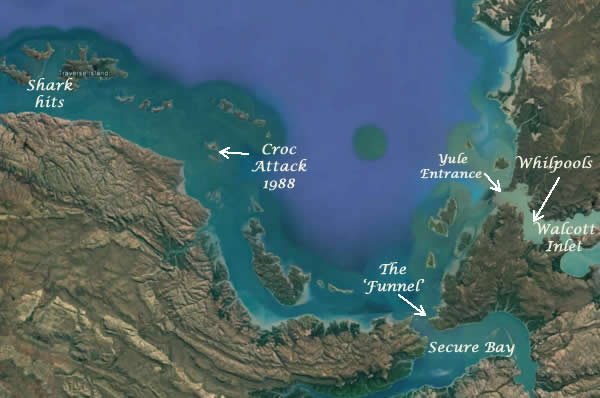
The huge 10 metre tides, which rise and fall every 6 hours, is forced through the narrow gaps of The Funnel of Secure Bay and Yule Entrance of Walcott Inlet creating fast currents, rapids, whirlpools and boils.
Six years after my 100 day solo expedition on another expedition with Ewen McGregor his kayak got attacked by a crocodile.
I remember Steve, who worked on the customs boat tell me that if I paddled into Walcot Inlet I would never get out. Again I didn’t believe such a tale, if the current takes you in, it must take you out, but seeing a gradient in the water level with my own eyes and the current still running in at an amazing speed, when the tide had supposed to have turned, I started to
think that he could be right. Shit, now I was starting to doubt myself?
I had paddled into the inlet on the highest of the spring tides, which in turn produces the fastest water currents in the year. Now I was waiting in an eddy over 3 kilometres from the open sea, surrounded by mangrove forests and suicidal currents, and you could say it was a little unsettling. I started paddling back towards the entrance close to the cliffs, but it was still a struggle. A boil, come whirlpool 30 metres on was in my way of escape, but I had a slim
possibility of paddling between it and the cliff so I had to give it ago. In between the eruptions and whirls it became calm, giving me enough time to clear it and position myself behind a boulder before it started erupting again. When it erupted the current moved out from the centre and started pushing me towards the rock face. I fended myself from the wall with my paddle and hands. The current then pushed me backwards jamming my rudder under a rock ledge and as the boil rose my rudder crunched
and it sank my stern in the water compromising my balance. Time after time I was at the mercy of the upsurges until my rudder was free.
The water was too powerful to paddle against and a whirlpool was still to my right. Hell knows what I would have done if a crocodile came. I waited. I was eager to get to the inlet entrance as soon as I could, but it was impossible to paddle against the current, I really needed to wait for the tide to turn. Eventually the current eased to a manageable speed so I fought my way along the edge of the shoreline trying to use the slack water behind the rocks and
boulders. I passed over many small whirlpools and boils and climbed several fast running chutes, skirted mangroves and continually scanned the water for crocodiles. There were 3 big bays that were well laced with mangroves so even though I was getting closer to the entrance I still had the thought of crocodiles in my mind.
With one kilometre to go, although a tidal current was still coming in, an outgoing current helped me out of the entrance, but the meeting of the current and the wind waves blowing against it made for an exploding ocean. I had thought that all my fighting had ceased for the day, but now I was paddling against an ocean of steep high waves which were angered by the swift out flowing current. The steep waves slapped against my bow and I had no time to recover
before the next one hit. At times I was feeling a little unstable when the bow was caught on one wave and my stern was on the top of another and I had no water underneath me. Then as the wave passed over my whole cockpit disappeared under water. I had 5 ½ kms of this slop before I was safe on Fletcher Island.
Waves of saltwater smacked me in the face increasing my unbearable thirst. As I turned to the west side of Fletcher Island the waves hit me broadside, making paddling really uncomfortable so I was pleased when I landed on the beach and was welcomed by two ducks and two oyster catchers. It felt good to have survived such a harrowing and dangerous ordeal especially after experiencing it on one of the biggest tides (10.1m) of the year with the fastest tidal
currents.
The two ducks flew off to the other end of the beach leaving their large chick under a driftwood pile that stretched the full length of the beach. The 300m beach was littered with numerous turtle tracks. I managed to get rid of the salt water taste in my mouth after making a beautiful cup of coffee. The simple things in life, like a cup of coffee and some dried fruits were heavenly. I tied my hammock between two gum trees up on the ridge over-looking my beach,
the mainland and its outlying islands. I relaxed next to my kayak and when I returned to my hammock for the night I heard a hissing noise coming from near my feet, but I couldn’t see anything. Shit, a snake, I thought. I stepped back and it continued to hiss so without delay I jumped in my hammock to get off the ground and sleep.
The beach on Fletcher Island.
I woke to a day more important than Christmas. Santa Clause, alias Ivan Brown from Koolan Island planned to visit me on the island and bring water to top up my dwindling supplies. He said, if he wasn’t able to reach me on Sunday, because of a storm or something he would try again on Monday night after work.
Two boats, one yellow, one white came screaming through the heat haze towards my beach. Ivan had arrived. With the tide out I trudged into knee deep mud and into the water walking towards his boat. A cold beer and a soda water were waiting for me. Although I didn’t usually drink, I chose a cold beer instead of a soda water as it was celebration time. I had been dreaming of a cold drink all week.
Six men, Ivan and a dog made up the team. The second boat was given the job of making breakfast so I had bacon, eggs sausages and chops. I didn’t even have that at home.
A 3 metre crocodile noticed our presence and dropped in for breakfast. With all the chops eaten one man threw a hunk of bread over the side and instantly the croc leapt forward opening his mouth wide and grasped it in his jaws. For several minutes the croc made no attempt to eat it and then finally let it float away. As it was circling the boat with 7 men on board, it probably had a different meal in mind! With the rising tide now covering the sand, Ivan powered
his boat up the beach. This gave everyone a chance to stretch their legs and look with amazement at my slender kayak. In the rush to get to me, Ivan had forgotten the main reason he was here and that was to bring drinking water to top up my supplies. That was a bit of a blow but instead I used the melting ice water that was keeping the beer cold in the esky.
By 11.00am, lunch time was declared so we all climbed back aboard Ivan’s boat to eat some chicken, tomatoes, cucumber, asparagus, cheese, bread, and all the nice things in life.
The men were in fine spirits after drinking since arriving and they talked about the mishaps that they have had along the coast and when their power boat was nearly sucked down by the whirlpools in Walcott Inlet. I could now relate to their stories.
After lunch it was time for them to slice back through the choppy waters to Koolan Island 70 kms away. All the food not eaten, mainly chips and biscuits were left with me so I finished up feeling very queasy by the end of the day. I was very grateful for their visit and hospitality. It was strange and very quiet when they left.
I wanted to go back to Walcot Inlet and look at the whirlpools, but this time from the land. I needed to see them from another perspective and see how dangerous they really were, so I left my beach on Fletcher Island and paddled over to the mainland. I had noticed a rocky landing when I passed by two days previously so I headed for that.
It was hot and humid and I could hear the coast-watch plane in the far distance, but as usual it never spotted me. My choice of landing spots between the mangroves didn’t seem at all wise, but some would say that doing this trip in a kayak wasn’t wise, although I always took as many precautions as I could. I came across a prehistoric looking piece of driftwood along my route and there is nothing more sinister and chilling than paddling towards logs that look like
crocodiles. However time and experience had now conditioned me to the sudden daily dangers that I faced.
Camp near the entrance to Walcott Inlet. From here I walked around the area.
Ahead of me were rocky shores and mangrove fields, some being two and half kilometres long. The low tide mud had recently been covered leaving driftwood, branches and logs languishing. One log looked real and it wasn’t a mirage as it was moving. I still had 500 metres to go before landing on the boulders so I quickened my pace keeping a watchful eye on the crocodile’s position. I soon passed between the mangroves and hit the large boulders and jumped out. I had
lost sight of the croc when I entered the mangroves so I didn’t know where it was. They say a crocodile you can see is of no danger, when you can’t see it, start worrying. I started worrying!
My front compartment was unloaded first, to reduce the weight of the kayak and for me to be-able to pull it ashore and out of the water. With the rising tide I couldn’t leave the kayak to be pounded against the rocks so I had to unload it quickly. Being close to the water’s edge and knowing a croc was out there, was pretty traumatic though.
Safe in camp I now planned to spend two days exploring the country behind me and watch the whirlpools form from the shoreline. The whirlpools were one of my own natural wonders of the world and I just needed to watch them develop.
Trying to hang my hammock from a boab tree full of green ants wasn’t easy, but it was either that or sleep on the rocks and closer to the crocs. My main concern was the ants tight rope walking ability, I could imagine them crawling along the ropes and attack me in the night.
Checking the whirlpools a day after I paddled into the entrance.
Kimberley Croc Attack
6 years later in 1988 near the area I had just paddled Ewen McGregor and I got a big surprise.
Ewen a few hours before the croc attacked.
Kimberley Croc Attack
On June 8th 1988 and with 200kms of our trip behind us Ewen McGregor and I toiled against large relentless waves, south-east of Koolan Island.
It was a pleasure to be close to an island after being rammed by a shark and battling the elements for 3 1/2 hours. Exhausted we paddled in silence 2 kms off the rocky shoreline, slowly creeping towards a semi-circular pebbly beach on the island, both eager to step ashore to have lunch and rest.
Suddenly with no warning there was an enormous splash close to Ewen’s kayak. I glanced over and was confronted by the most chilling sight. The open jaws of a crocodile were gripping the stern of his kayak. I immediately shouted “Croc, paddle”. Ewen let out a shout of terror and accelerated at a rapid pace.
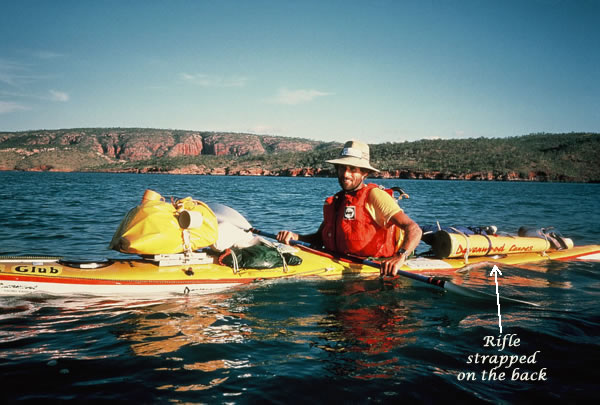
After several seconds the croc released it’s grip but the respite was short lived as seconds later it exploded from the water and struck again, it’s open jaws bent on crushing the kayak. My rifle was strapped on the back deck in a watertight case, but if I turned around in the cockpit, I would most likely capsize trying as my kayak was fairly
unstable.
It was quite terrifying and I was helpless to assist my friend. The predator’s jaws were locked around his kayak’s stern only millimetres from the rudder wires. It lifted its head high out of the water and with a tilt, tried desperately to put the kayak into a death roll. Fear was shaking my body, I was icy cold and my heart raced just watching. My mind tried to
refute what my eyes were seeing, but this was no Crocodile Dundee movie, it was real.
Ewen never looked back to glimpse the predator but he felt its strength. His arms pumped like windmills and his kayak, although heavily laden, ran swiftly through the water. The croc eventually lost its grip again and disappeared under the murky water. If it had caught the rudder wires in its teeth I’m sure it would have capsized Ewen’s kayak.
Several frightening seconds now ticked by. It disappeared and I was wondering when it would attack again and would it go for me as I was now closer to it. By now Ewen was several metres away and as I sliced past the crocs foaming waters I paddled hard to reach the waves breaking over a sandbar ahead. I continually scanned the water expecting the croc to
attack! Minutes felt like hours as Ewen still paddling hard was getting further away from me.
I felt quite vulnerable being closer to the attack sight and I must admit I was thinking come back Ewen this is your croc.
After paddling 2 kilometres out into the open sea we stopped and with Ewen truly shaken I tried to turn the frightening experience into a light hearted joke, as we still had 3 weeks of paddling ahead.
I had spent over 225 days at that stage paddling around the Kimberley and had been chased by crocodiles on several occasions, but this was the first time that one had attacked, although the year before in 1987 when I was paddling in the Prince River area with Ken Cornish, a crocodile had taken Ginger Meadows at the falls on the Prince Regent
River.
The coastline a few kilometres where the croc attack took place and where we were hit by sharks.
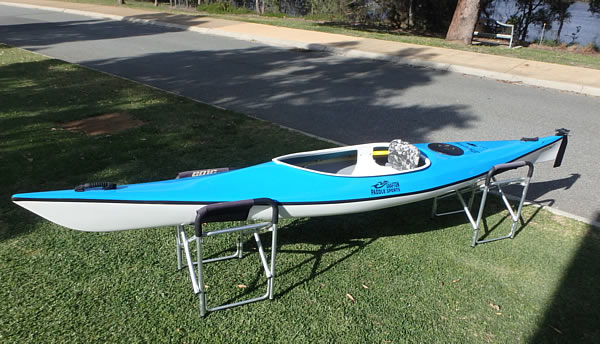
It’s 4 metres long by 65 cms wide. With rear storage area and rudder.
If you don't want a long kayak the Stingray might be the kayak for you. Being 4 metres long and around the 12 to 14kgs in weight it is a great little touring kayak.
Much easier to lift on your car than a heavy plastic kayak.
It can come basic with no storage area and no rudder, which would make it a cheaper kayak.
From $2000.00
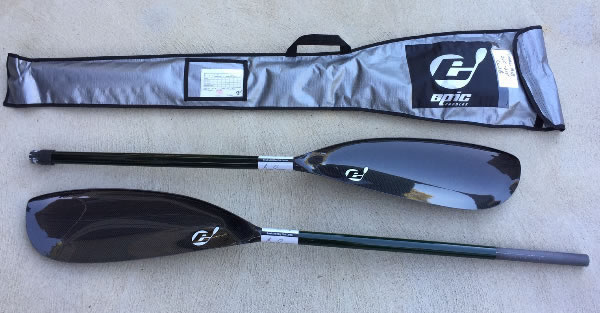
Epic Club Carbon Paddle
$455.00
Midwing Club Carbon construction - 737 grams; comes standard with Epic’s Length-Lock 2™ adjustable ferrule technology.
Carbon fibre blade, Green oval fibreglass shaft.
Fully adjustable length & feather.
Includes paddle bag.
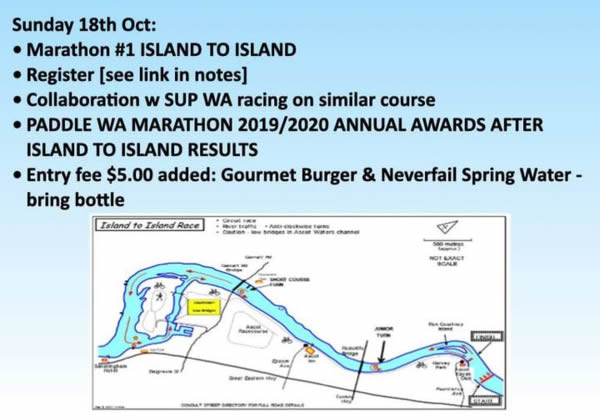
Island to Island Registration 18th Oct:
Indian Ocean Paddlers
Races
Summer Series dates are now locked in. We are also very pleased to announce that Brad and Kate Hardingham Realmark have agreed to stay on board as our seasons sponsor. This support for IOP is massively appreciated.
Race dates:
10th October
24th October
7th November
21st November / WCD
28th November / Doctor
12th December Xmas paddle
9th Jan 2021
30th Jan
20th Feb
13th March
|
|
|
|
|
|
|
|
|
|