|
|
|
|
After paddling in the slalom event on Saturday morning and trying to build my skills in a K1, C1 and C2 I lacked a little bit of distance training for the day. So Saturday afternoon about 5.30pm I thought I had better go and paddle at least 5kms.
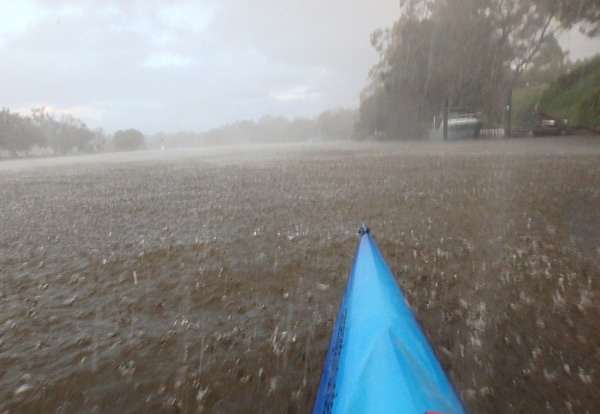
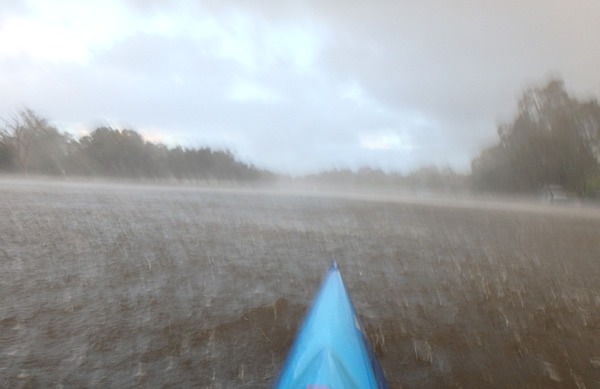
The wind was howling and about 5 minutes into my paddle lightning, then thunder, then a hail storm bore down. I had my camera with me so I started to take it out my pocket and the sound of a steam train came from behind. It was the wind which was wild taking my cap off which I just managed to catch without dropping my camera and being blown over.
As the hail came down, the wind tried desperately to tip me in as I was trying to take photos in my K1 without my paddle in my hand. I was balancing on a knife edge and being blown sideways and into the waves. I had thoughts that I was either going to get some decent photos or I was going to capsize. I was really teetering on disaster but luckily I didn't capsize.
When the hail blew over I continued my paddle for 5kms which was extremely refreshing.
I'm so lucky to be able to walk across the road and put my kayak in the river and paddle away at any time and experience not just the beautiful calm days but the wild ones as well. I really felt as if I was alive.
Saturday Flatwater Slalom
Bring on the New $300,000 Slalom Course
Michael Liddle gives slalom a go and waits his turn.
He was ready to give me a run for my money.
He did and beat me by a second. I will get him next time.
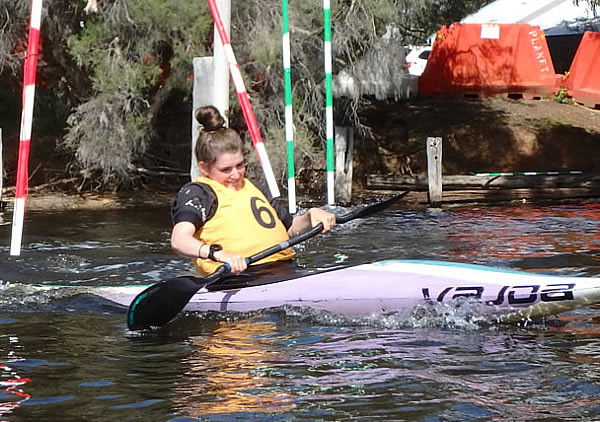
Clare Pankhurst was meant to miss the poles!! But it's much more fun hitting them.
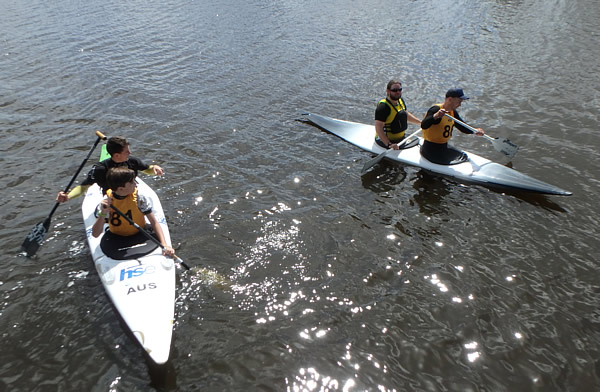
Two of the C2 teams ready to go. George and Hunter, Cody and Michael.
I paired up with Nina and we came second behind George and Hunter.
Robin Bell
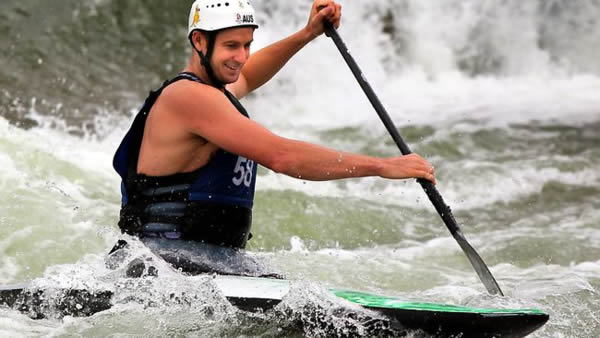
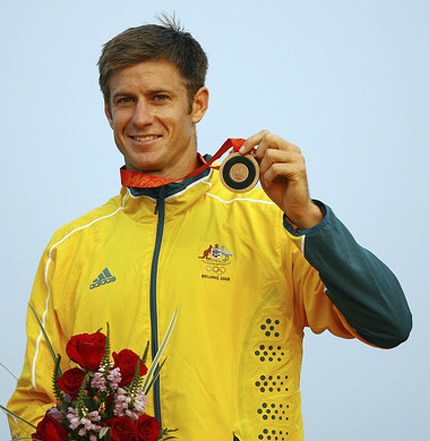
Olympic C1 Slalom Medallist
& who has paddled in 3 Olympic Games
Robin began paddling in Australia at the age of 15. He is a member of Swan Canoe Club. I remember him and his dad taking part in a Board of Canoe Education Whitewater Course at Walyunga. The BCE was a discipline of the Amateur Canoe Association (Paddle WA) as it was called back then. On his first white water venture he was doing manoeuvres far advanced of a beginner to white water.
He was lucky enough to paddle on the Harvey White Water Course before it was closed which I'm sure accelerated his skills, determination and passion for the sport.
Robin is one of WA’s most successful slalom kayakers of all time, specialising in the C1 event.
Robin started his impressive Olympic journey at Sydney 2000, finishing 9th in C1.
He then went on to compete in C1 at Athens 2004 where he came 4th by 0.7 seconds. Despite completing one of his more technically proficient performances, Bell was bumped to fourth.
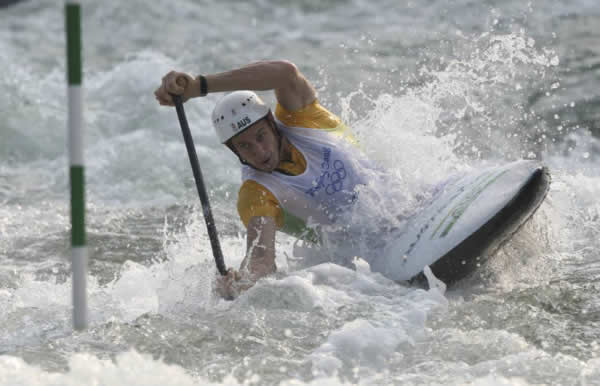
Finally at the Beijing 2008 games, Robin finished 3rd in the C1 and claimed his long-awaited Olympic medal.
Robin also won a complete set of medals in the C1 event at the ICF Canoe World Slalom Championships with a gold in 2005, a silver in 1999 and a bronze in 2007.
He received 13 slalom World Cup medals from 2001-2008.
He won the overall World Cup title in C1 in 2005 and 2008.
He also won a silver medal in C1 at the 2001 Freestyle World Championships in Spain.
In Beijing, as in Athens, Robin was made to sweat for his medal. After qualifying fifth fastest for the final, Robin watched through barely splayed fingers as four paddlers attempted to deny him a medal.
The competitor immediately following him, Britain's David Florence, promptly displaced him from gold medal contention, but his prospects of silver rose dramatically as the next two competitors - Poland's Krzysztof Bieryt and Stanislav Jezek of the Czech Republic - struggled with the tight turns and upstream currents
of gates three and four.
With one paddler remaining, Robin clung tenuously to second place.
But bronze it would be. Michael Martikan, Slovakia's six-time world champion, clocked 176.65 seconds to claim the gold - a result assisted by the stunning exit of pre-race favourite and two-time Olympic gold medallist, Tony Estanguet, in the semi-final.
After winning a bronze medal in Beijing Robin said, "There were shades of Athens in Beijing. "Getting knocked down to fourth place was pretty painful in Athens and I was really gutted. Even though bronze is the lesser of all medals, it's still a medal, and I'm proud as punch."
Robin was cheered by a huge Australian contingent at the Shunyi course which included friends and family from far and wide. One friend, an old school buddy from Perth, travelled from as far away as the Cayman Islands to watch him compete.
Beijing MEN'S C1
GOLD Michal Martikan Svk 176.65
SILVER David Florence GB 178.61
BRONZE Robin Bell Aus 180.59
Robin also paddled C2 with Swan Canoe Club member Kynan Maley who paddled with Robbie Jeffery at the London Olympics.
Robin has been awarded; Australian Institute of Sport athlete of the year, Australian canoeist of the year, and the WA sports star of the year in 2005.
Robin now lives in Sydney with his wife and two sons.
**********************
Check out these two videos.
Focusing on Forward Stroke and Staggers.
https://www.youtube.com/watch?v=7gMJXlkerYY
Australia's first male Olympic Canoe Slalom medallist Robin Bell led Sports Minister Kate Ellis in her whitewater initiation at the Penrith Whitewater Stadium to encourage a new wave of young athletes to the sport.
https://www.youtube.com/watch?v=9Xa8wa4cYR0
Not only has Robin been to three Olympics he has had many successes in World Cup performances
World Cup individual podiums
Robin also helped to design the Galasport El Scorcho C1.
During the designing Robin tried to keep his idea of a playful boat and to keep the feature of fast reaction of the canoe to the movement of the paddler.
The El Scorcho C1 is dedicated to taller and heavier competitors with the weight over 90kg. They added some volume especially in the part around the paddler. Although the boat was made for big boys this model lost nothing from its speed and
manoeuvrability.
I haven't listed all the great things Robin has achieved but I hope you get the idea how good he was.
The Duel is Back
“The Duel”organised by MOC is being held on Sunday 6th December 2020. The course is unchanged running from The Cut to Doddies beach.
John Reynolds
0418 750 332
Kimberley Kayaking 1982
part 10
100 Days Solo
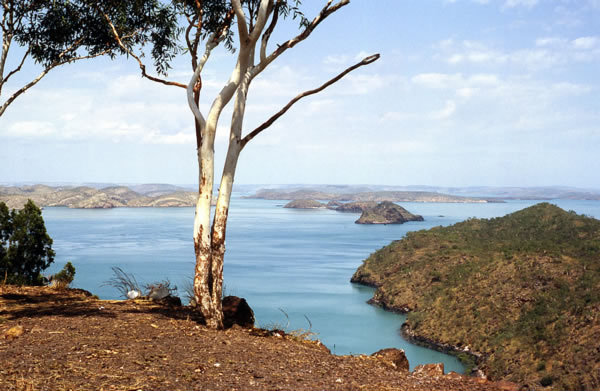
At 6.40am in the quiet of the morning and when most people on Cockatoo Island were getting ready to go to work I moved off kayaking parallel to the open cut mine and the whole length of the island. There was low tide and a slight wind as I paddled
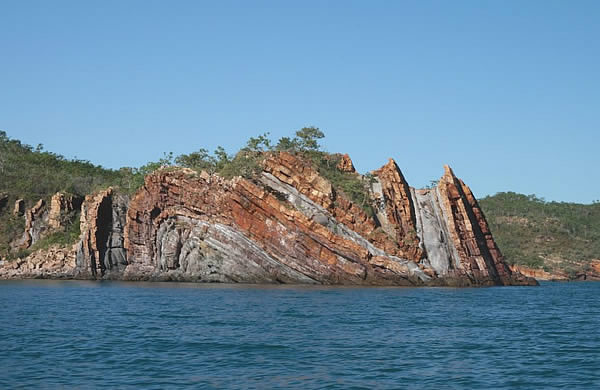
towards Koolan Island passing the amazing geological art form and layered rock that created a wave pattern at Nares Point.
There are some amazing rock formations in the Kimberley.
As I paddled through the ‘Canal’ and then the ‘Drain’ and came closer to Koolan Island mine site, iron ore dust clouded the skies and the noise of haul packs and machinery echoed down the channel. With the tide in my favour I passed the wharf, a couple of tug boats and other assorted
boats. A large mountain of iron ore tailings formed an unnatural hillside which was slowly taking over the mangroves. At that point I couldn’t imagine what it was like to have a 7 to 4 job. My life now consisted of all Sundays.
I was pleased that the current heading towards the ‘Gutter,’ a narrow entrance separating the mainland from Koolan Island, was going my way. The closer I got to the ‘Gap’ the more turbulence, small whirlpools and boils were created. I flew through the ‘Gap’
and then the current eased as I followed the shoreline around to the landing area on the east end of the island where I could land. A local offered me a lift up to the settlement where I called on Bart Northam my main contact on Koolan Island. He was a mate of my friend Bill Grogan. I had never met Bart or his wife Marie before, but it didn’t seem to matter as they were very friendly and opened up their house, their larder and their hearts to me.
During the next two days my aim was to collect as much information about my route ahead. At the main site office I met Mr’s Brown who invited me home for tea and meet her husband Ivan, who knew a lot about the area. When I arrived Ivan’s friend was also
there, so they both studied my maps, writing snippets of information over them. They only listed one waterhole along the next section of coastline and that would take me two weeks to reach. It was also way up a mangrove lined river and too dangerous for me to go up. So my prospects of finding water looked grim, however I still felt confident that I would find water in one of the other notable creeks on my map.
Ivan soon solved my water problem for a week or more at least by saying he had planned to go boating to Walcot Inlet the following Sunday and said he would meet me on a beach on the west side of Fletcher Island, near the entrance to Walcot Inlet and bring me
water. When we sat down for the meal I savoured the delicious roast lamb and drinks.
From the open shutters of Bart and Marie’s house there was a magnificent view of the Indian Ocean and the wilderness islands of the Buccaneer Archipelago. Their garden also attracted snakes some harmless, many deadly, lizards, and birds. The minor birds were encouraged into the house,
through the open shutters, by the temptation of feeding on honey off a spoon. The island was a haven for naturalists and wilderness lovers.
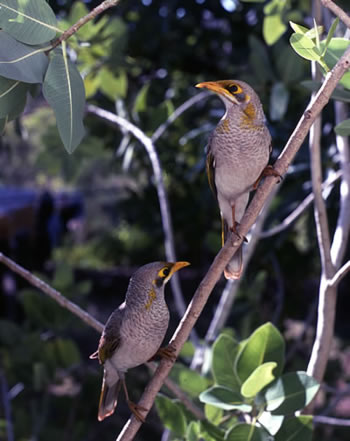
Beneath our window, as the heat scorched the dry grass, a miner bird suddenly played dead as a pigeon swooped down towards it. The miner bird rolled on its back, spread its wings flat on the ground and laid perfectly still. The pigeon touched down, walked
around the area of the miner bird, but the miner bird stayed frozen. Another miner bird flew down and tackled the pigeon but the frozen miner bird still didn’t move. The pigeon took off and the miner bird suddenly came alive, ruffled its wings and flew off in the opposite direction.
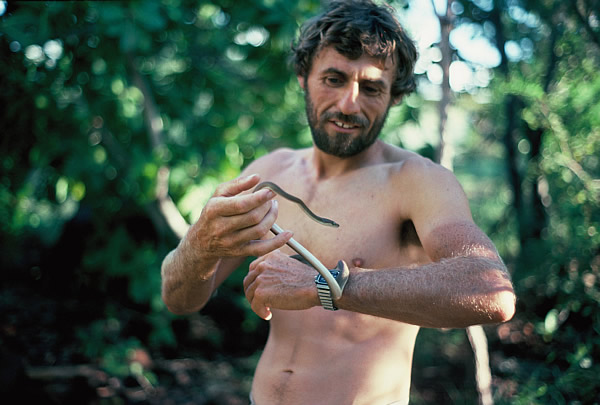
Mixing with an Olive Python.
The view from Koolan Island rubbish dump.
The wildlife around here was pretty friendly and that included a tick that had attached to my left testicle. Although it was funny, it wasn’t funny and the local remedies of getting it off didn’t appeal. You can burn it off with a cigarette, or pour
mentholated spirits over it, or prise it out with a knife, they said. At 31 and for someone who hasn’t yet produced a child, these options seemed a little too severe for my tender loving very necessary parts.
I telephoned the medical centre and asked the lady if she knew the best way to remove a tick from ones testicle. She advised me to come into the medical centre to get it removed, so I did. The receptionist asked me what was wrong and I was a little embarrassed
to say, so I said it in a soft voice as not to alarm other patience’s. I had a tick on my testicle. Luckily a male nurse attended to me. When he managed to get it off, he said the tick wasn’t as dangerous or infectious as if it had been a kangaroo tick. My mind wasn’t truly convinced, what if it does get infected as I’m paddling along the remote coast.
Rob Sherwood was another keen boater who also invited me to dinner. He had a half finished yacht in his back yard. Rob kindly agreed to make me a tripod for my 16mm movie camera so I could take footage of myself as I found it was difficult to do that without
one.
Rob talked about the ‘Gaps’, the Horizontal Waterfalls which I was going to visit and he said he was taking his friends there in two days time and he would probably see me there.
Bart and Marie had been tremendous hosts, but were at school when I departed the township with my supplies on my back. I had a 20 minute walk down the steep hill back to my kayak. It was extremely hot and my pack was really too heavy, so I took it easy along
the gravelly slope. I had over 20 days of food and 26 litres of water and all the rest of my gear that I somehow packed into my craft.
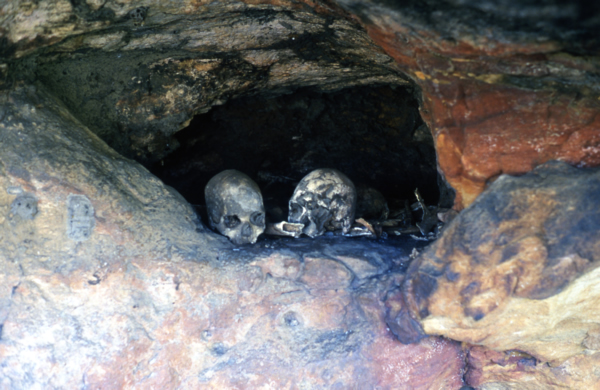
I was disappointed to leave my new friends, but it had to be done. As I paddled away I was alone again. I was told of a skeleton and skull on the nearby Iron Island, a short distance away, so I stopped to have a look. I climbed a rock ledge to where the human
skeleton lay. I took a photo of the bones, the flashed dazzled the poor fellow and I saw him blink. I said sorry and good bye and chased the tide southwards into Talbot Bay.
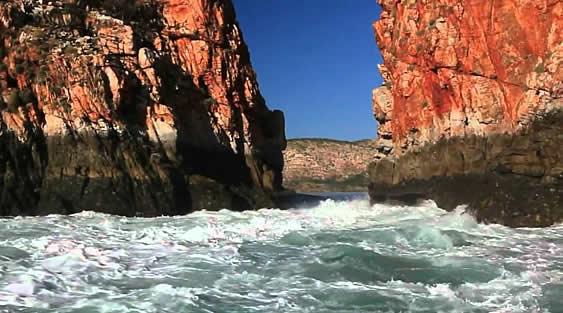
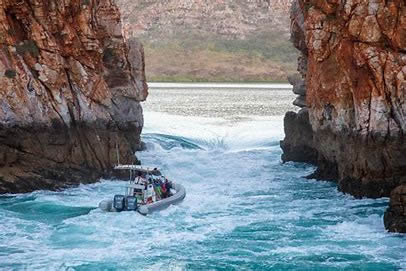
At the extreme south end of Talbot Bay are two narrow gaps, which open into two smaller bays. The tide rushes through the gaps with such force that it creates a spectacular waterfall and giant rapids. It’s now called the Horizontal Waterfalls. The area was
once the site for a proposed tidal power station, plans for which have since been shelved. My aim was to kayak through the gaps.
Talbot and Dugong bays have excellent reefs, and Aborigines once used this area as a major hunting ground for dugong and turtles. The local mangrove timber was also used for making their traditional rafts which Lou told me about at One Arm Point. I reached a
dot on my map that Rod Sherwood had placed on my map. It was a beach but it wasn’t as I imagined, so I paddled further to make sure it was the right one. There were no others so the dot must have been in the right place. The beach was stony and a boat’s engine was scattered near the mangroves and beer bottles in their hundreds were scattered all over the place. Pieces of steel, a bed with a foam mattress were further up. Another camp to the right contained a bbq plate, more beer bottles and
turtle shells. I checked the trees to see if my hammock would swing between them but they seemed to be too spindly and a sanitary towel on the ground soon chased me away. I couldn’t believe I was in the wilderness and people actually came picnicking at this dump, but I suppose that is why it is a dump. It was depressing to have to unload at such a rubbish tip but I was told there wasn’t another beach for miles.
Because I was unsure with my water supplies ahead I decided to try cooking in salt water, but not only did my meal taste salty, flavourless, I hadn’t cooked my soya beans long enough so they were still crunchy. I was unhappy with my campsite, now I was unhappy
with my meal, so I didn’t bother making damper.
With my hammock erected between two trees and away from the sanitary towel I relaxed as darkness moved in. I started to hear rustling in the undergrowth and it turned out being rats foraging in the rubbish a few metres away undercover of a moonless night.
Within minutes they were all around my camp.
Rats are one animal I don’t particularly like, although the older I get the more tolerant I have become. I had issues with them whilst growing up on a farm. Snakes and spiders are much nicer. I heard a larger animal running in the bush a few metres a way. I
thought it might be a dingo or a wallaby but no matter how much I shone my torch I couldn’t see it. My fires flickering flames soon ceased to glow leaving me with pitch black darkness and rustles and noises of rats and other critters running around me in circles. I kept cursing the place and shining my torch whenever I heard one come near. It was really one of the worst campsites I have ever had.
I managed to sleep and had nightmares that couldn’t be forgotten. I dreamt that someone had bought a front end loader, dug a hole and buried my kayak but my next dream was much worse. I dreamt the tide had risen and my kayak was floating away. Two crocodiles
came onto the scene and I run beside them and then run out into the water to retrieve the kayak, but another croc started chasing me. I stabbed it with my spear but it was like jelly, I stabbed it again and although it was like jelly my spear bent and the croc changed into a bull nosed ape with four legs. I then awoke thank God. What a night.
I laid in my hammock day dreaming and then I noticed that my kayak was still there. I was packing up when I heard a roar of an engine. It was Rob who was on his way to the gaps to show his two friends Trevor and Clair how spectacular they were. Rob suggested
throwing my kayak on to his boat and ride the few kilometres to the gaps. I was happy to leave the rat heaven. It didn’t take us long to reach the gaps.
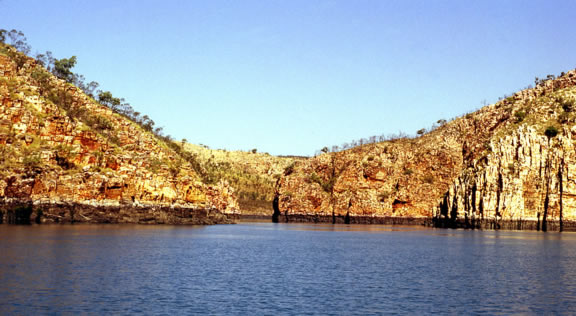
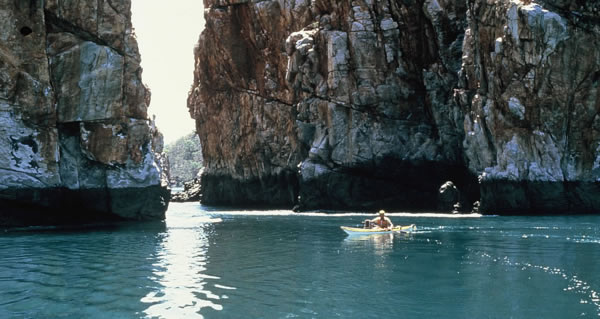
The entrance to the Gaps.
Now called the Horizontal Falls.
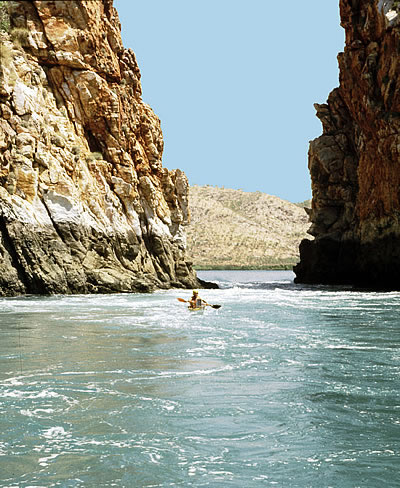
I know of no other kayaker who has paddled through the Gaps.
These are now famous and have tourists flock to the region by float plane or on cruises to go through the gaps in power boats.
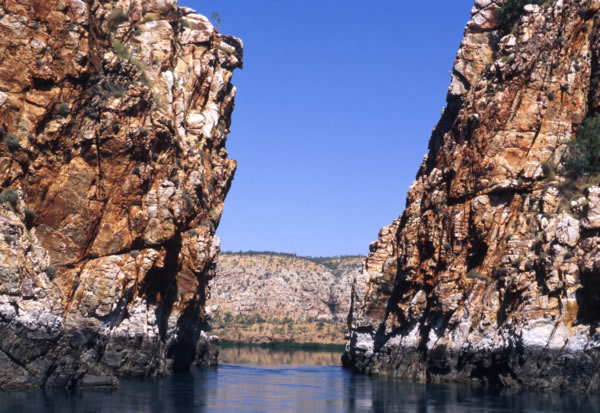
The second Gap is the narrowest.
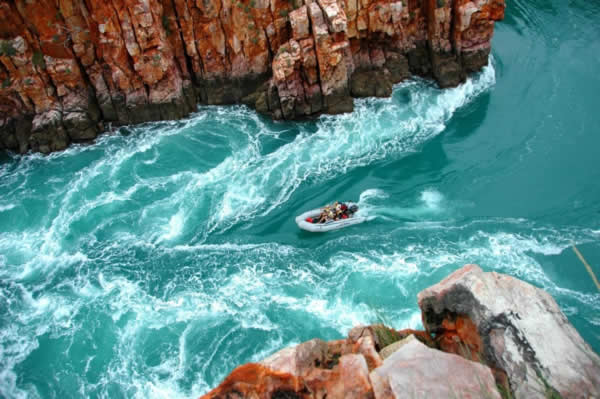
The tide turns and the water forces through the narrow gap creating a drop and a lot of turbulence.
In the Kimberley there are two tides a day changing every six hours.
The tides are up to 10 metres high.
The first gap was the widest, the second was only about 9 metres wide both with sheer vertical cliffs. It was a magical place to be. We motored through the second gap and Rob cut the boat’s engine out in the deep water. Here I slid the kayak in over the stern
of the boat, crawled in and sat in an eddy close to the second gap and under the high cliff, whilst Rob and friends fished. I went for a paddle through the two gaps as the tide was on the turn and there wasn’t much water movement. It was magic.
When I arrived back the water was starting to move into the bay and was squeezing through the last gap and starting to create turbulence. I returned to the eddy. The boys had caught a couple of garfish to use as bait to catch a bigger fish. Rob soon latched
onto a large turum which nearly dragged him over the side of the boat. As the fish swam in all directions and around the boat it was giving Rob a fantastic fight only his leather gloves prevented his hands from being sliced open by the hand line. The strength of the fish dragged the boat towards the shore and the crafty fish tangled the line around the oyster laden mangroves and snapped the line.
My spraydeck had created a sauna inside my cockpit and being sheltered by the high cliffs it was extremely hot. Rob suggested I did an Eskimo roll to cool down. I wasn’t at all keen, with all the crocodiles and sharks around, but I didn’t want to be a chicken
either. Over I went. As the daylight faded I was hoping that I wouldn’t mess up the roll. I came up relieved and went down again. After doing a few rolls, I quit whilst I was ahead. Cool and with clear nasal passages my stage show came to an abrupt halt when a shark started to mill around.
With the tide filling the bay and now racing out it was the time to give the rapids a go. I knew I had to approach the first section of the drop perfectly because the water was being deflected from the canyon walls with great force, making the sides of the
canyon a dangerous area. The excitement started as soon as my fully laden Nordkapp kayak slid down the drop through the large stopper, standing waves and then into the whirlpools and boils, which pushed me from side to side like a cork. I found myself bracing, trying to remain upright and facing the right way. My rudder helped me to keep a straighter course and to avoid being spun 360 degrees.
It was impossible for me to paddle back up the rapid, but I wanted more film of paddling in the turbulence so I started creeping along the cliff walls using the eddies where possible to creep higher. After several attempts to canoe up the rapid and having fun
ferry gliding, a boil suddenly took control of the kayak and spun me around and towards the rock face, narrowly missing it. The boils and whirlpools moved all over the place, with many of the whirlpools opening up and creating a hole, over a metre across.
With the current starting to ramp up I was getting ready to paddle through the Gaps when the white water got bigger.
The drop was about a metre high when I paddled through the Gap.
Even Rob’s power boat with the big engine found it too hard and too dangerous to get back up the rapid so we moved down to the easier gap. With it being a lot less turbulent Rob and his friends were eager to power back up it. I watched on. His boat was pushed from side to side and his
bow sank deep causing a wave of water to flow over the deck into his cockpit. He continued with full power up the chute at a crawling pace finally managing to win the struggle to the top. The rate of flow started to ease as low tide approached.
It was time to say goodbye to Rob and his friends and carry on with my journey. I only had about 4kms to go to a campsite on an island but as the wind funelled down Talbot Bay the water spray shot over my bows drenching my body and leaving me salt encrusted. I
arrived at the rocky shale beach as a burst of activity was happening in the water nearby. Mantarays leapt out of the water creating a heavy slap when it landed. Dolphins cruised the bay and turtles gasped for air as they surfaced.
As the light faded the glow of red eyes were captured in my torch light. A croc was close to my beach and kept a continual watch over my movements. I too was watching it, its presence encouraged me to heighten my hammock. Behind me a bird started to flap in
the trees and the crescendo of crickets became louder and my fire became bigger and crackled as I stoked it up.
Those red piecing eyes staring at me presented less concern than my encounter with multitude of rats the previous evening, but I couldn’t be too complacent and there was no way I was going down to wash or wash my dishes at the water’s edge
tonight.
The Gaps or Horizontal Waterfalls
have now become a big tourist attraction with a floating accommodation block anchored in the bay and tourists brought in by float planes.
Power boats thrill tourists.
Check out the video to see what is happening now:
Described by David Attenborough as “one of the greatest natural wonders of the world”, Horizontal Falls is a natural phenomenon that is as intriguing as it is stunning.
Check out the video:
Snakes Are on the Move
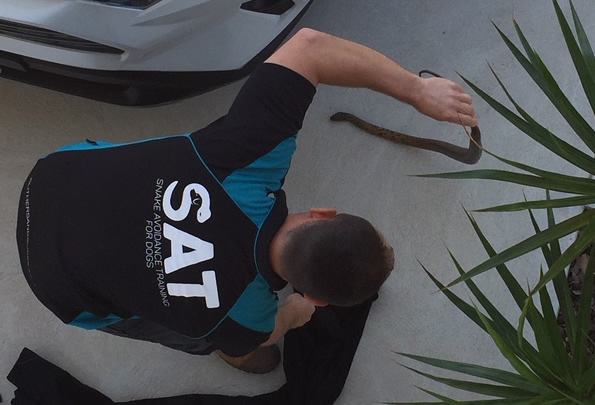
A 1.5 metre Dugite snake slithered from the river area up a nearby driveway then into next doors back garden before coming into our back garden and down the side of our house. The people nearby called the Snake Catcher and he was here to grab it when it slithered past our front door.
The Snake Catcher catching the Dugite
The dugite is an egg-laying (oviparous) snake, and typically deposits around 30 eggs and abandons them to self-incubate. The eggs hatch after about 65 days. Under optimal environmental conditions, the dugite has been known to lay two clutches during the same season.
The dugite is a venomous snake, considered dangerous. It is coloured grey, green, or brown. The colours vary widely between individuals and are an unreliable means of identifying the species. Black scales can be scattered over the body; their scales are relatively large with a semi-glossy appearance.
Dugite. Diet: Dugites are carnivores. Before human settlement they mostly ate other reptiles, such as lizards and snakes. Since then they have adapted well to eating mice and rats. In the wild: They may be found sheltering beneath logs or rocks or living in abandoned burrows or hollow logs.
What is the legal definition of dugite?
Dugite. They are protected under the Australia’s Wildlife Conservation Act 1950. This means if someone tries to injure or kill a dugite, they can be fined up to AUD$4000. Dugites are diurnal, meaning that they aer most active during the day. This is quite common with other brown snakes.
Perth Zoo.
The Duel is Back
“The Duel”organised by MOC is being held on Sunday 6th December 2020. The course is unchanged running from The Cut to Doddies beach.
John Reynolds
0418 750 332
Indian Ocean Paddlers
Races
Summer Series dates are now locked in. We are also very pleased to announce that Brad and Kate Hardingham Realmark have agreed to stay on board as our seasons sponsor. This support for IOP is massively appreciated.
Race dates:
10th October
24th October
7th November
21st November / WCD
28th November / Doctor
12th December Xmas paddle
9th Jan 2021
30th Jan
20th Feb
13th March
|
|
|
|
|
|
|
|
|
|