|
|
|
|
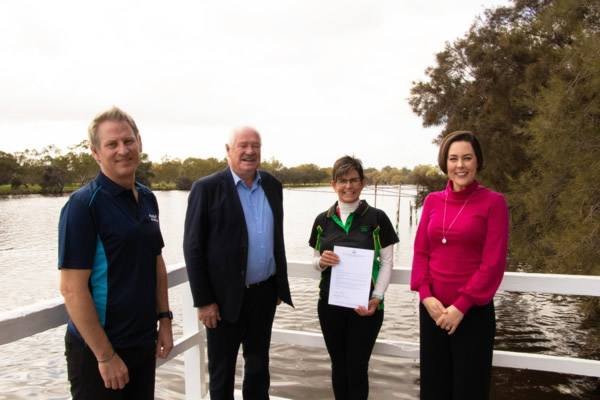
$300.00 for a new Flatwater Slalom Course at Ascot
The McGowan Government will provide $300.000 to help establish a slalom training course at the Ascot Kayak Club. Sue McDougall (AKC) was there to except it.
Ascot Kayak Club members are grateful to Cassie Rowe MLA for her ongoing support and the McGowan Govt - Hon Mick Murray MLA.
We thank you.
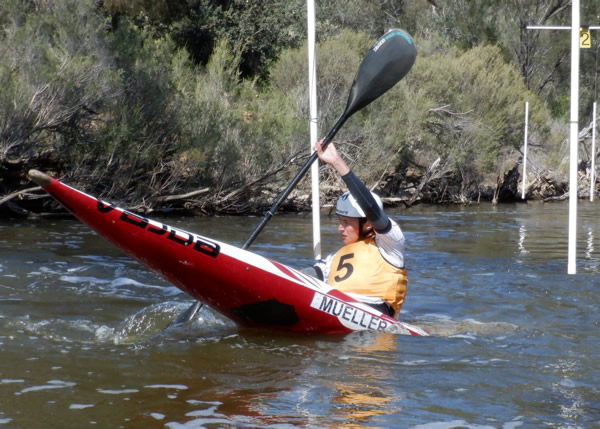
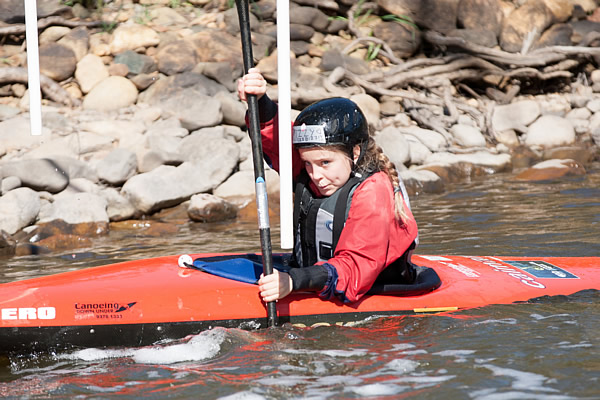
Nina Mueller lifting her game.
Photo Luke Dooley.
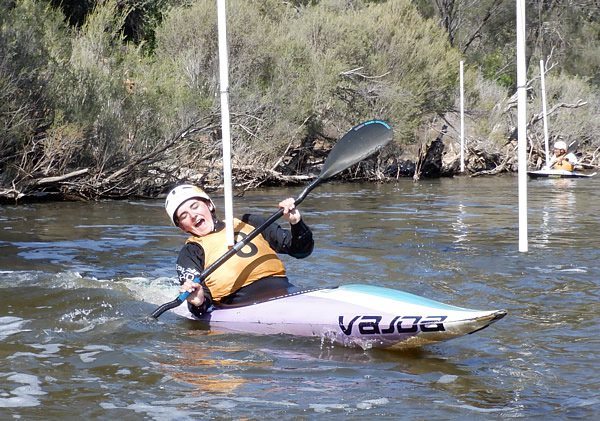
Clare Pankhurst having fun.
Photo Luke Dooley.
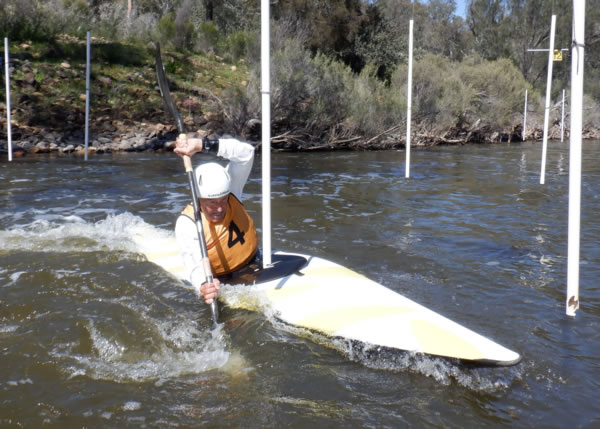
The WA coach Zlatan Ibrahimbegovic in full concentration.
Photo Luke Dooley.
Rhys McRae so happy to be paddling slalom.
Photo Beck Florisson
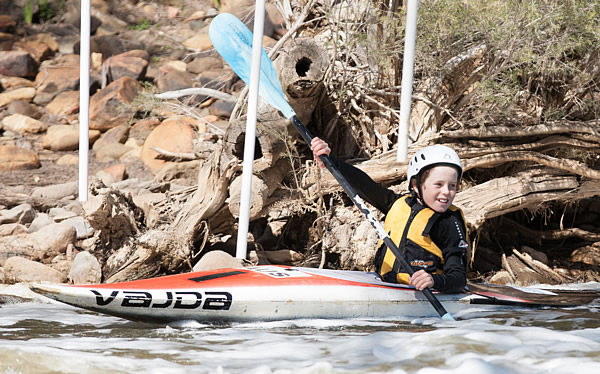
Isabella Florisson determined to do well.
Photo Beck Florisson
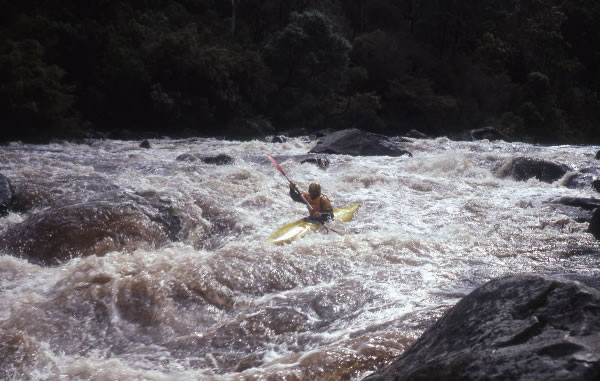
On my 24,000km kayak, walk and cycle around Australia I paddled the entire 2500km length of the Murray River. Although 99.9 percent of the river is flat water the upper reaches were white water.
A week before I arrived to paddle the upper section the river was summer dry. Three days before arriving it had risen to being a high level. I hadn't paddled whitewater for over 16 months so I had to face grade 3 and 4 rapids in a rented kayak.
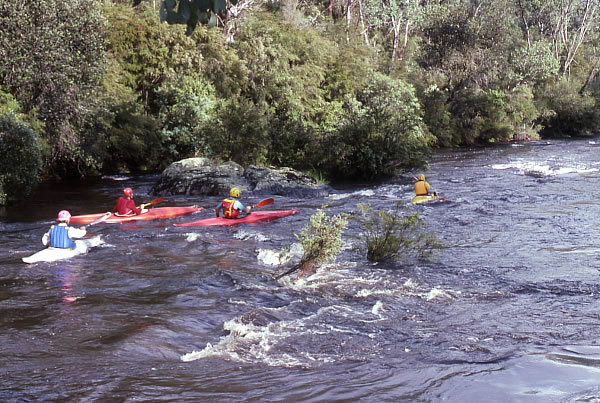
I lead my escorts down the first part of the upper Murray River.
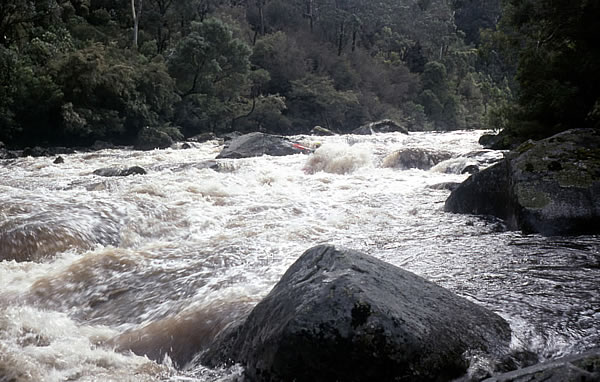
We arrive at one of the major rapids.
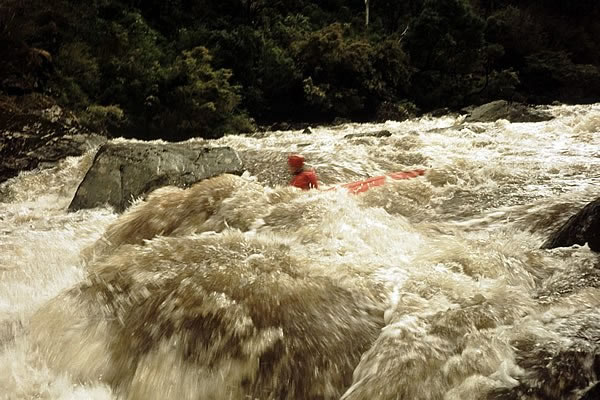
I remember breaking down the rapids and thinking of the drops, the holes, the rocks as a slalom course. I just had to weave myself down and imagine I was paddling through slalom gates that were put in difficult positions rather than paddling these big frightening rapids with no end to them.
I weave myself down drop after drop. Once you gain the skills you never forget them so I sailed through the rapids with no problems.
Frank sliding down another meaty rapid.
I believe that developing skills is the most important part of kayaking. It helps you to gain so much confidence that you can virtually give anything a go.
A Picture I Will Never Forget
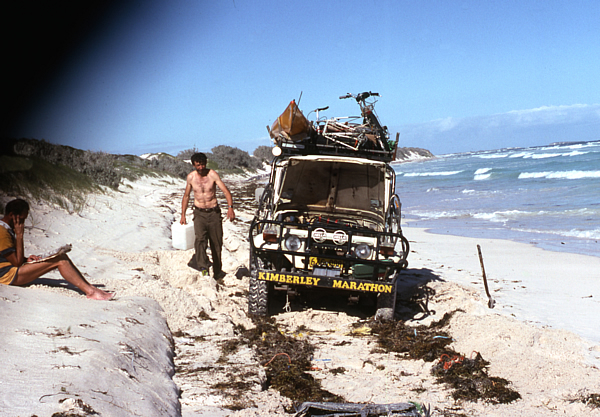
My support team on a section of my 24000km Around Australia Journey
Whilst John works hard to get my vehicle out of a bog, Tim relaxes and reads the paper.
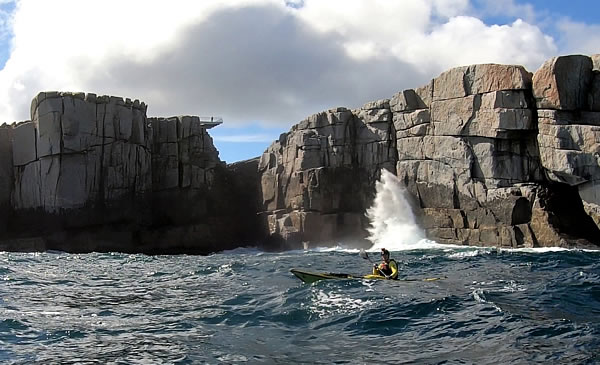
The Gap - Albany
Photo Chris Fry
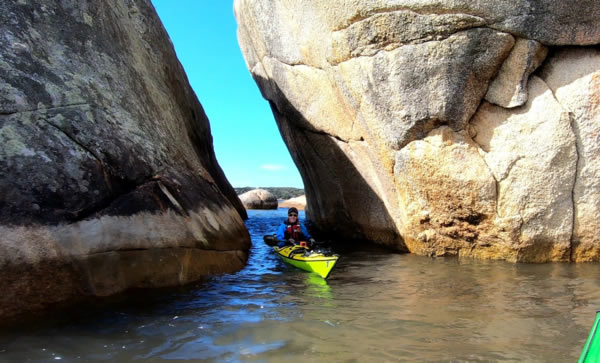
Brodie paddling The Gap or at least a gap. Albany Sea Kayak Club.
Photo Chris Fry
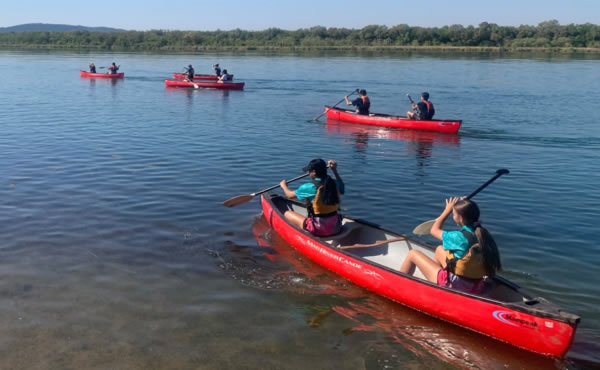
Rosie Evans and Leonie Cockman flew to Kununurra to run a canoeing program on the Ord River.
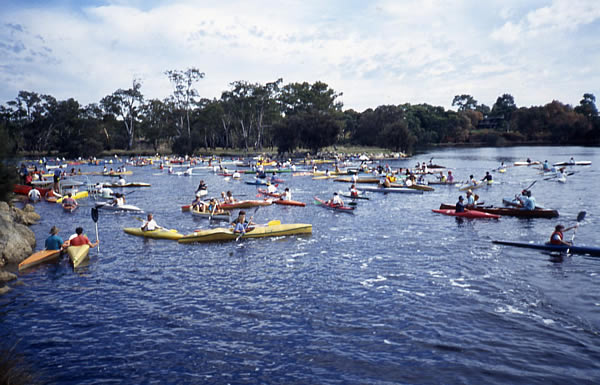
Outside Ascot Kayak Club in the 1980s.
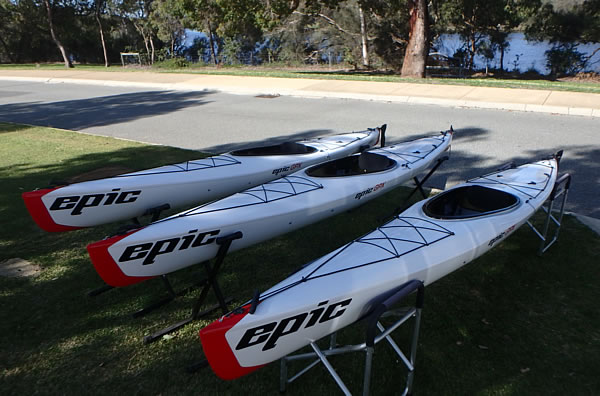
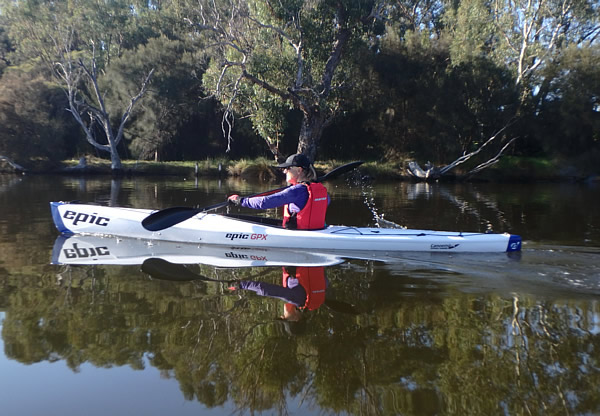
The Epic GPX appeals to a broad range of kayakers with its perfect blend of stability, light weight, and optimal tracking. Available in three construction types weighing in at 17.5kg (the Club), 15kg (the Performance) and 12kg (the Ultra). With these weights carrying a GPX to and from the water is a joy.
The GPX is outfitted with two bulkheads, front deck cutaways, a large rear storage hatch, heavy-duty full deck lines and outfitting, and an adjustable backrest designed to fit any paddler.
The GPX is the ideal choice for anyone looking for a comfortable, responsive day-touring kayak that is as easy to manage on land as it is in water.
SPECIFICATIONS
Length: 3.94m (12' 11")
Width: 63.5 cm
Depth: 28 cm
Capacity: 125 kg
Although they are easy to paddle without a rudder, a rudder version is also available.
Epic Paddles
The award winning Epic Mid Wing paddle has become the top choice for fitness and racing paddlers, and increasingly, touring
kayakers who want to maximize the potential of their forward stroke.
Stable, smooth and powerful, the Epic Mid Wing will have you paddling farther and faster; at home in the hands of champion
racers, world class expedition paddlers and your local paddling club.
Also in Small Mid
The Epic Small Mid Wing paddle is based on our award winning Mid Wing paddle, with a 2% reduced blade surface area. This slightly trimmed-down design has broadened the appeal of the wing paddle, making it ideal for smaller paddlers, cruisers and racers paddling long
distances, and those who simply seek a smaller option to maximize their efficiency.
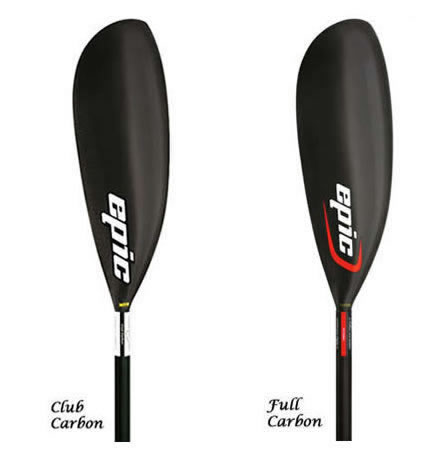
Club Carbon 702 gms. Full Carbon 652 gms.
If you would like to try one I have demo paddles
Club Carbon $455.00
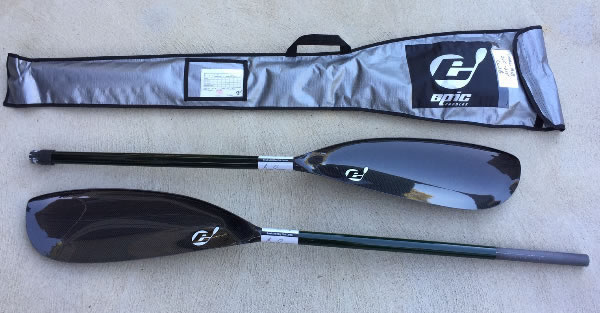
Midwing Club Carbon construction - 737 grams; comes standard with Epic’s Length-Lock 2™ adjustable ferrule technology.
Carbon fibre blade, Green oval fibreglass shaft.
Fully adjustable length & feather.
Includes paddle bag.
Full Carbon $585.00
Full Carbon construction - 680 grams;
Comes standard with Epic’s Length-Lock 2™ adjustable ferrule technology.
Carbon fibre blade, Black 3K carbon oval shaft.
Fully adjustable length & feather.
Includes paddle bag.
Indian Ocean Paddlers
Summer Series dates are now locked in. We are also very pleased to announce that Brad and Kate Hardingham Realmark have agreed to stay on board as our seasons sponsor. This support for IOP is massively appreciated.
Race dates:
19th September
10th October
24th October
7th November
21st November / WCD
28th November / Doctor
12th December Xmas paddle
9th Jan 2021
30th Jan
20th Feb
13th March
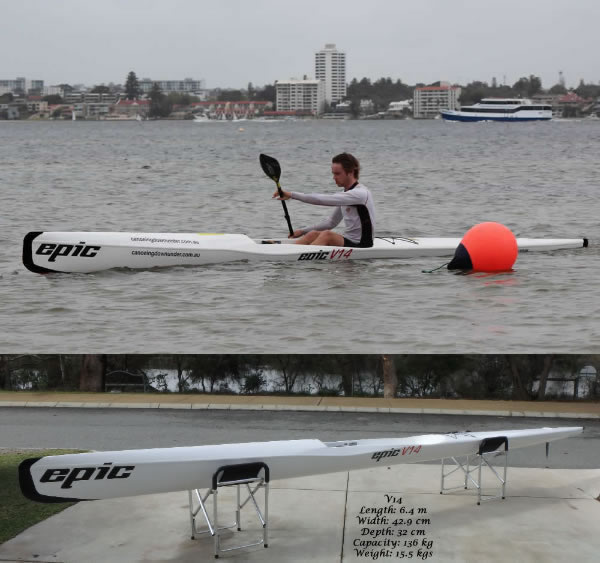
New Epic V14
Performance 15.5kgs
Suitable for Intermediate and experienced paddlers.
Length: 6.4 m
Width: 42.9 cm
Depth: 32 cm
Capacity: 136 kgs
Weight 15.5 kg
Special Price New $1800.00. One only
Normal Price $4000.00
|
Kimberley Kayaking 1982
part 7
100 Days Solo
It was now time to move off, get away from people, become independent and fend for myself and find a true wilderness and be alone. Frightening as it may seem I was looking forward to it. Martin and Francis were up with the birds and left well before I started
to pack up my camp and load my kayak for my journey across the King Sound. Although the crossing was perceived to be treacherous I wasn’t expecting it to give me a lot of trouble as the tides were on neap which is when there is the least water movement.
As soon as I left the East Sunday Island shores and the lee of the island there was a brisk current but I was able to make headway as I headed for Mermaid Island 15 kilometres away. The ocean was calm so I was able to focus on Mermaid Island which I could just
see the outline of in the distant haze. The water currents seemed to ease the further I paddled away from shore but then by the half way mark it started to move again. I knew it would only get faster, so I didn’t dawdle.
This was my first big crossing in such a formidable place and although I knew that there was a community of One Arm Point only 25 kilometres away it still felt very remote. Swirls started to appear, running by me as if they were on a mission to get somewhere.
Then as I looked towards the trees on Mermaid Island I could see that the current was causing me to drift and I could no longer head straight towards the island without crabbing along. It was time to make haste. Within 5 kilometres of the island I felt more secure as I now knew, if the currents were to liven, I would still be able to ferry glide to one of the islands around Mermaid. The ocean then started to ruffle further and sea birds dived out of the sky and into the water in the hope of
getting a fish feed. Within minutes the birds went into a frenzy, but a few minutes later they moved away following the large school of fish that was creating a great feast.
I could now see beaches on Mermaid Island which I believe was named after Captain King’s ship. King explored this area in 1820 and on my way north I would retrace much of his journey. The current had now become quite fast but it didn’t matter I could see my
landing spot, although I did nearly get swept passed it. I pulled ashore on a nice sandy beach quite proud of myself. I had done my first big crossing. It had been much easier than I had imagined, only because I crossed over when the tide was on neaps and at it slackest. With neap tides there is less vertical rise and fall in the tide creating less water movement but with spring tides there is a greater rise and fall up to 10 metres. Tides change every six hours. (Since then I have crossed the
King Sound 5 times, 3 times on Spring Tides and with much stronger currents.)
I was now safe on an island in the middle of King Sound but there wasn’t any one close by to help if a snake or crocodile decided to have a go at me. I had no communications with the outside world either, only a few flares and a New Zealand distress beacon
that was said not to be fully reliable. When activated it locked on to radio frequencies of a passing aircraft. The trouble was there appeared to be few aircraft that came over this region, but I wasn’t too concerned as I didn’t expect to get into trouble.
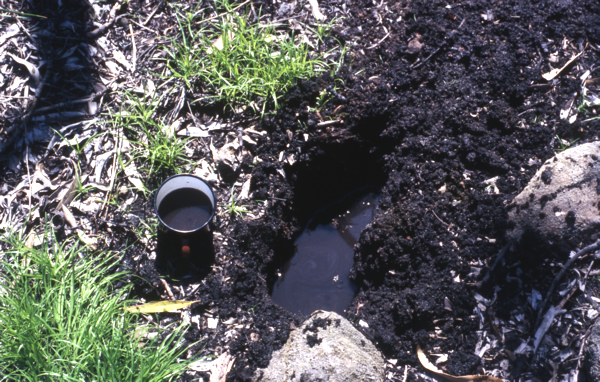
I was now enjoying my own company so when I had all my gear ashore I was keen to continue my crusade to find water under pandanas palms and in creek beds. I took off and soon found a gully with palms which had freshly experienced a bush fire. I dug down beside
a palm and within less than a metre I found water. I was pretty proud, but unfortunately the water was black from the fire and although fresh, I didn’t bother taking any, but I was happy with my find.
After successfully crossing the treacherous Sunday Strait I felt more relaxed about what lay ahead. Although I knew the currents were getting faster as the spring tides and full moon approached, it was a relief to know the islands were much closer together and
I didn’t have another long crossing for a few days.
Collecting fresh water. Well no so fresh!
Leaving Mermaid Island I started to feel the full force of the current pushing through Fantome Passage. Although the tide was coming in and I was riding a current deeper into King Sound, I couldn’t believe it when there was another current only metres away,
running out and in the opposite direction to which I was going. I concluded that it must have been the tail end of the out-going tide. It was a strange experience.
The fast current helped me through the gap between Pascoe and Long Islands but hours later, close to my destination I approached a beautiful cliff line. Soon after I started to lose the brilliant blue ocean to find some receding murky water of the low
tide in Cascade Bay my camp for the night. Overhead a flurry of chestnut feathers drifted down to the sand flat as two magnificent Brahminy Kites flying above me pursued a third one. It was quite a display.
My heavy kayak came to a halt in the shallows several metres before the tidal sand flat. In the distance I could see a small beach fronted by a few pandanus palms. It looked inviting but I didn’t relish the long walk, so I decided to paddle along the shallows
in the hope of finding a closer spot to get out. The sand and mud was interspersed with patches of sharp coral, which at times scraped my hull. A shark patrolling the shallows moved across my path, it looked quite small so I decided to give it a scare and accelerated towards it. Unexpectedly the shallow water forced the shark to the surface and I suddenly became aware of its frightening size. A moment of panic struck me as the 2-3 metre shark turned my way. My heart pumped as I thought an attack
was inevitable but as it powered past my paddle I could see it was as panic-stricken as I was.
Stingrays darted off in all directions as I shuffled my feet apprehensively through the murky shallows trying not to stand on one. With a few reef sharks skirting the shallows it was a very active piece of water. The light was fading quickly and on my first
journey towards camp I counted 800 paces. My luggage weighed heavily on my shoulders and my feet sank deep in the soft sand and patches of mud. I was oblivious of the spectacular scenery and setting sun.
My back was at breaking point as I staggered on my fourth and final run with my 35 kilogram kayak on my shoulder. I hadn’t taken every bit of gear out so it was so heavy. After nearly 5 kilometres of walking my strength eventually faded dropping the kayak to
the ground only 20 metres from my campsite. I was buggered and I could do nothing but to drag the kayak those last few metres. It was only now I was able to look at the spectacular scenery and setting sun.
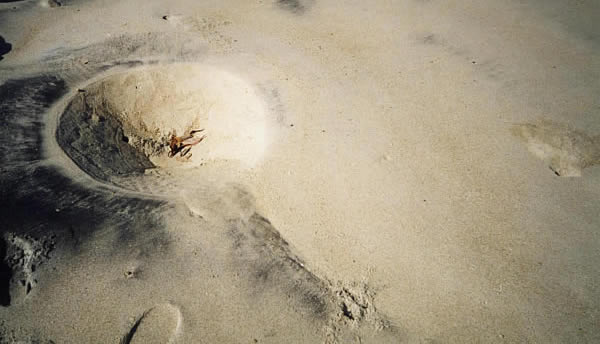
A stingray leaves a pattern in the sand.
I grouped all my gear on the beach and by now it was virtually dark and only thirty metres away there was a mangrove lined creek that lurked in the shadows. It looked a good crocodile habitat so my priority was to light a fire, a big one, to ensure they didn’t
come into my camp!
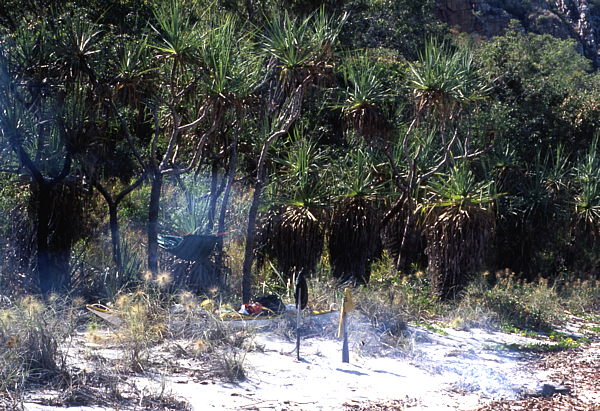
With the fire blazing I tied my hammock between two pandanas palms and started cooking my evening meal. Sweat ran down my face as the fire radiated its heat on an already hot night. Noises in the bush surrounding me started to develop and increase. There was
something out there scurrying in the dry vegetation and I imagined it being snakes. I lit two more small fires to protect me from all sides. I needed more wood so I moved out of my fire zone and dragged a large log back to fuel my fire. A spark drifted into the air and dropped in the nearby dry grass and unexpectedly set the grass alight which then lit up the leaves on the pandanus palms. Giving me no time to rescue my hammock from the blazing inferno, I desperately grabbed my spare paddle and
started to shovel sand onto the fire. The dry palm fronds on the two palm trees holding my hammock flashed in flames, lighting up the sky like two beacons. The fire had soon got out of hand and all I could think about was being responsible for lighting a fire that would probably destroy half of the Kimberley.
Although I had a way out, the fire was burning from three sides but my efforts to control the fire were fruitless, as it grew bigger and I became overheated among the circle of flames. Helped by a barrage of green bushes the flames started to fade and I was
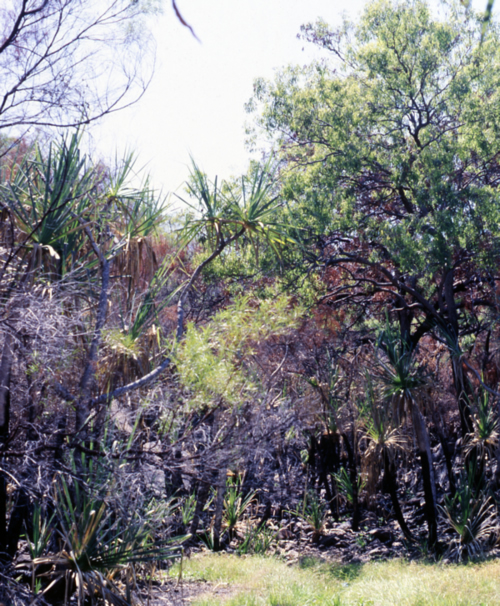
finally able to smoother them as the dry vegetation had virtually dried up. Exhausted and with an overwhelming thirst I sat beside my gear and stared into the charred undergrowth. As the wind spiralled into a little whirlwind, small burnt particles were sucked up into the air and then fell down like confetti. I was amazed to find my hammock still hanging and had somehow been miraculously spared.
I was relived that the nightmare was over, but the rustle in the bush was nearly as loud as it was before. Being brave, and with my torch in hand I tiptoed to the burnt vegetation to find an army of hermit crabs advancing towards the ocean. I watched them
march through my camp. My imaginary snakes were hermit crabs!!!
My hammock is strung up between the pandanas palms before the fire.
The hammock sting strung up after the fire.
At 6.00am I slid out of my hammock and had breakfast with the smell of fire and the blackened surrounds. Last night’s drama just showed me how things can easily get out of hand. My camp was nestled between two high ridges and cliffs so I just had to take the
opportunity to explore the area and see what was around. This just wasn’t a kayaking trip, it was also a trip for exploration. Not far from my charred camp I found water dripping from a rock crevice with a shallow pool of fresh water beneath it. It was only a slow drip but I decided to put a water bottle under it to at least catch a little water while I was away.
I was intrigued to see if there were any monster crocodiles hiding in the mangrove creek nearby but there didn’t appear to be, however there were several large fish. The tide was out so the fish were trapped in the pools. It presented easy fishing but I was
more interested in exploring the area so I left them to swim free.
To get to the top of the cliff at that point meant pushing through a jungle of vegetation which I felt too hard to attempt so I moved along the coast trying desperately to find an easier way to the top. As soon as I started my zig-zagging climb it was hard,
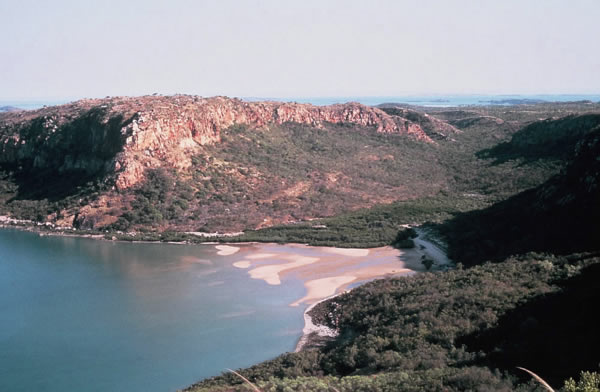
hot and steep but upon reaching the top I was blessed to find a magnificent panorama. I could see for miles over the ocean and the land. The blue ocean of the King Sound was dotted with large and small islands and had a coastline that zig-zagged in all directions. I hopped from rock to rock following the cliff top stopping in the shade of a boab tree on the cliff edge that overlooked the finest of views.
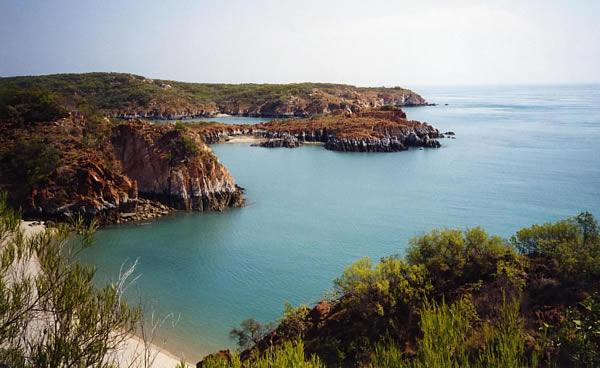
A view of Cascade Bay from the cliff top.
There were no traces of water in the gullies at the top of the ridge and as the undergrowth became thicker and harder to walk, I quenched my thirst regularly. One hour exploring on top was all I could spare as I needed to leave with the high tide at 11.30am. I descended a lot quicker than I went up and when I reached my water bottle under the drip of water, it was overflowing, so I soon changed it for another. To help replenish all my empty water bottles I
started filling them from the shallow pool beneath it. There were a lot of particles and algae in the pool so I filtered it through a cloth, which soon became thick with dirt. Water was precious so I had to take the opportunity to collect it whenever possible.
It took me 1 ½ hours to completely pack my kayak and in that time I continued to change my water bottles and ended up with more water than I anticipated. The tide was high and was on the turn so unlike the previous day I had much less walking to do to get to the water’s edge. Sharks and fish patrolled the beach shallows and I thought they would be easy targets for my spear, but when I did throw it, I always missed. It turned out that I wasn’t as good at spearing
as I thought I was!
My busy tasks in the mid-day sun created such thirst and perspiration that a lot of the water I collected I had been drunk by the time I left. By 12.40pm I was floating away amongst the sharks that still occupied the shallows. The mud-sand flats hidden by the high tide certainly changed the un-hospitable and fearful appearance of the previous night as it now looked quite beautiful. I looked back at the charred pandanas palms and undergrowth and left my
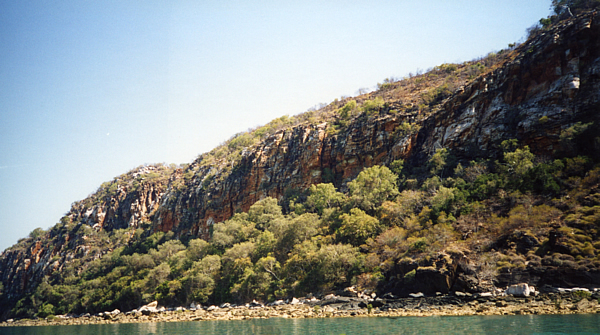
unforgettable camp with the outgoing tide, which enabled me to make a swift exit. I was soon passing steep cliffs on my right, which were so impressive, even Albany with all its beauty couldn’t compare with them.
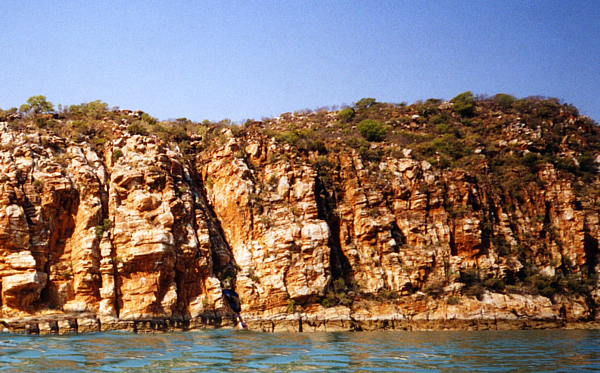
The cliffs to the west of Cascade Bay.
The speed of the water increased as I moved between Pecked and Pack Islands where boils and cross currents had formed. It wasn’t long before I was nearing a patch of serious white water and unbeknown to me I was heading into an area the locals of Derby called ‘Hells Gate’! Fast, furious currents, standing waves, small whirlpools and boils were being forced through the narrow channel. The walls and rocks closed in as the boils swirled me in all directions. It
reminded me of our wild water championship course at Harvey, although there, I paddled a 13 kilogram slalom kayak that is designed to turn, unlike my fully laden 140kg, 17 foot sea kayak.
The sound of the tidal rapids were loud but I managed to take an easier chicken route around them closer to shore. At last I cleared the racing tide of Hells Gate and moved around a point where I made camp and where I could still hear the rumble of the Hell’s Gate rapids. My beach was littered with firewood so I eagerly boiled the billy, washed and tended my cuts and grazes, whilst tuna fish were leaping crazily in the bay. I wondered if sharks were after them or
were they after smaller fish!
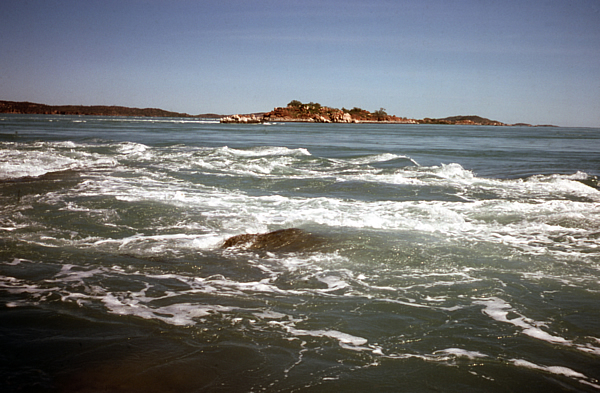
Huge tidal rapids at Hells Gate.
|
|
|
|
|
|
|
|
|
|