|
|
|
|
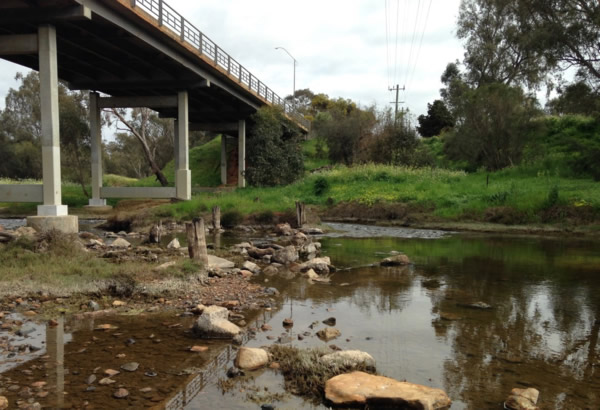
Why is it when I don't go overseas the Avon River seems to struggle to get to a high level. This year must have been the worst year ever. The highest I visited it was when it was 0.7 at Walyunga Park and it didn't last long at that height.
Little water flowing under Toodyay Bridge this week. Photo Robyn Khorshid.
When I did the trip in Canada (below,) the Avon was in flood, like when I did several other trips to North America, so it looks as if I need to go away every year so WA paddlers get a good season.
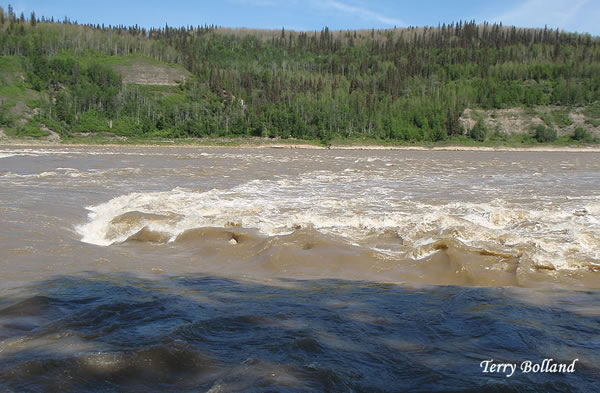
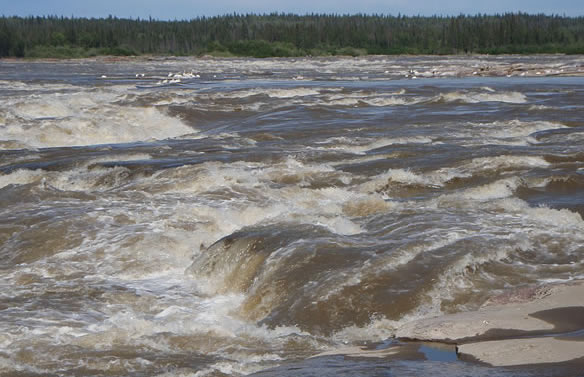
When you paddle 4000kms on three different rivers it's hard to get away with not paddling some white water. The most difficult sections can often be portaged but other sections have to be run. On our 4000km paddle from Jasper, in the Canadian Mountains to the Arctic Ocean there were several rapids that we had to paddle.
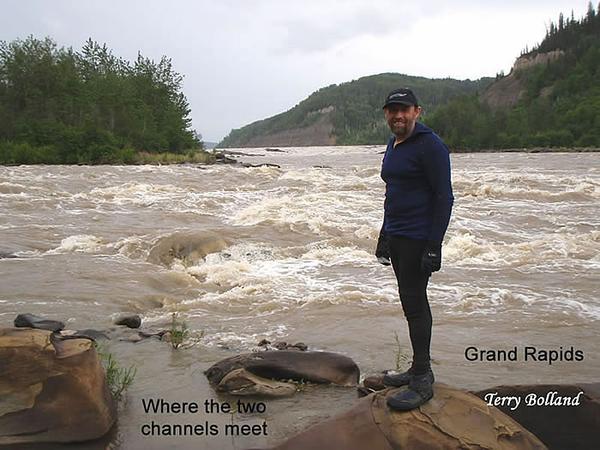
Grand Rapids on the Athabasca River, Canada.
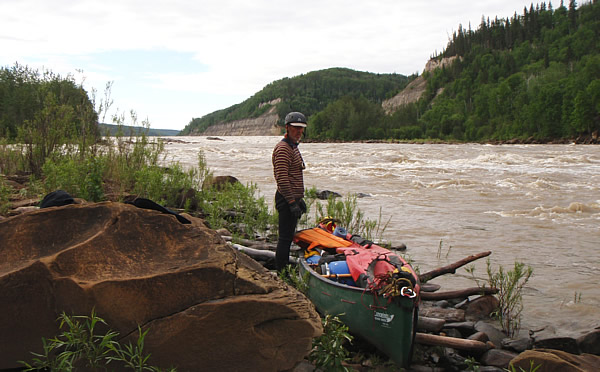
This Class VI set of rapids drops over 60 feet. Most of this rapid we could portage but it was amazingly difficult and hard work so to paddle as much white water as we dare was much more pleasing.
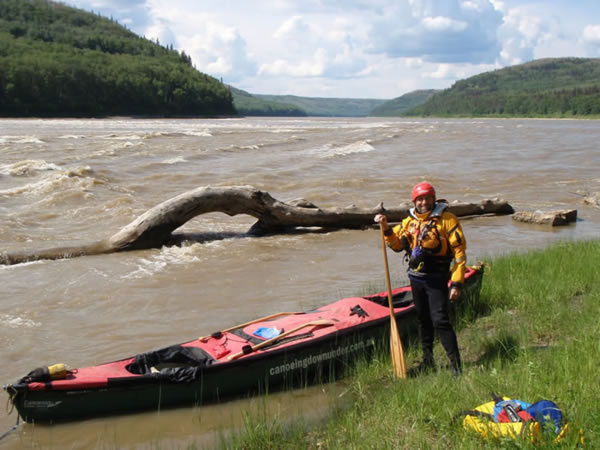
Ready to paddle the last part of the Grand Rapid. With Tony Chounding.
Stopping for a break at Cascade Rapid.
The major rapids on the Slave River had to be portaged.
AKC Progressive Racing Group
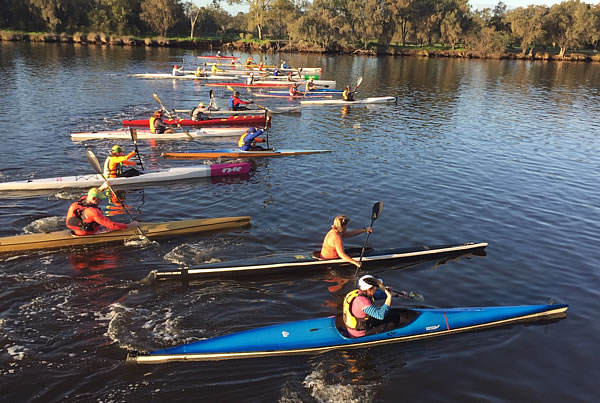
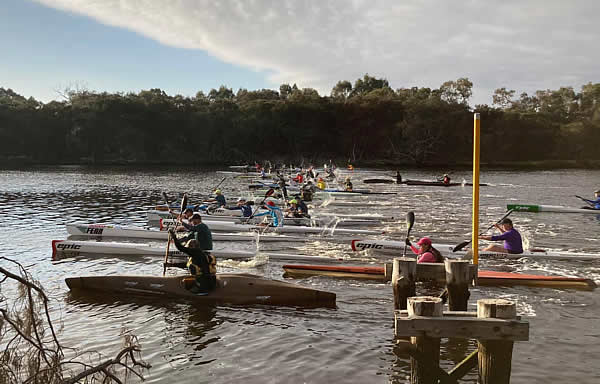
25 paddlers of the Progressive Racing Group were racing Tuesday evening.
After a warm up lap we have a 3.8km race which is handicapped so the slower paddlers go off first and the faster paddlers go later depending how fast they are. All paddlers tend to finish within a minute of each other. This means no one is left behind and they can all get off the water at the same time and chatter about their race together.
Why don't you join our group.
Two weeks ago the Epic container arrived which pleased a lot of my customers.
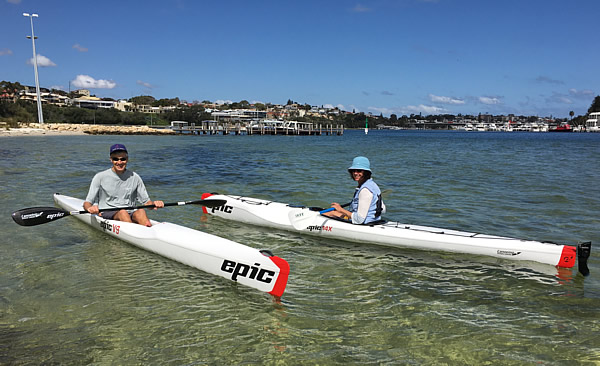
Jerome and Wendy's first paddle in their new boats.
We loved our maiden voyage Terry. They’re fantastic! We had a great paddle to Zephyr café and meandered back along the North Freo/Mosman Park Cliffs.
I love the contour of the kayak that allows the stroke of the paddle to clear the hull so naturally. Jerome’s happy with his choice too.
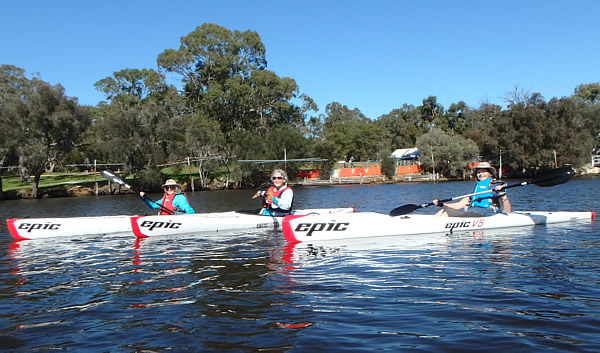
Lynne, Miira and Jane enjoying their new boats - 2 GPX kayaks and a V5.
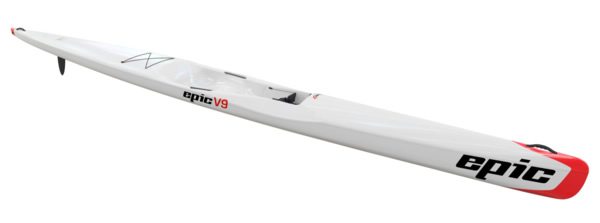
The V9 I believe is going to become the most popular ski in the Epic range.
It is not the fastest ski in the Epic range but it is the most versatile and will suit a lot of paddlers.
Epic V9
SPECIFICATIONS
Length: 5.79 m (19'0")
Width: 49 cm (19.3")
Depth: 32 cm (12.6")
Capacity: 120 kg
Paddler Fit: 4'11" to 6'6" (1.5m to 1.99m)
Saturday Sandy Beach Race
It's back.
Photo Jane Liddle.
We are back. The Saturday morning 4km bash closes down for a few weeks in winter as paddlers take on the white water but now we are back.
It was the first day back after the winter recess but we still had 36 paddlers on the start line.
All paddlers are welcome to take part and you don't have to be a club member.
I paddled my WW C1 so I was slower than usual.
As you can see from the photo I have to lean the canoe to help to keep it straight as well as using a J stroke, which is a forward stroke that converts into a J action at the end.
When you paddle a C1 you are virtually sitting on your legs which can be quite uncomfortable especially when you are older.
Although some paddlers will change sides I always paddle on my right side.
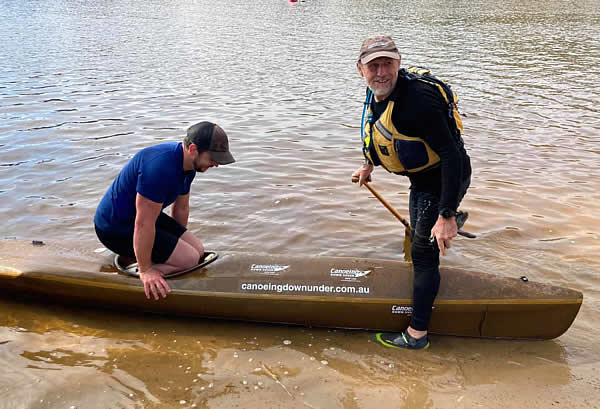
Michael Liddle tried out my WW C1 after he squeezed inside it and managed to kneel down.
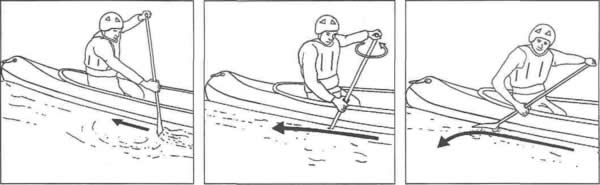
J STROKE
The J stroke can be quite difficult to master and frustrating for the beginner. Nevertheless, it is very important for the solo or stern paddler in double to persist and perfect the stroke, as it is essential to overcome the turning effect of the canoe.
To execute a J stroke, the blade face must be rotated and pushed away from the boat.
- Reach forward with extended lower arm (as for the forward stroke) and pull the paddle through the water close to the boat.
- Keep the paddle as vertical as it is possible.
- As the blade comes level with your knees, rotate the top hand so that the thumb points forward/down (the top hand controls the blade angle). A twist of your top hand will angle the drive face of the blade outwards.
- As the stroke is continued beyond your knees, turn the angle of the drive face of the blade by approximately 45 degrees, and pry or push the paddle blade away from the canoe. As the blade grips the water, it will result in the stern of the canoe being pushed away from the blade and bring the canoe on course
again.
- If minimal steering is required, it is only necessary to angle the drive face of the blade outwards and momentarily hold it close to your hip, while your top hand remains at eye level. (This stroke works
well with increased boat speed.)
- Two other strokes will help with steering - the Stern Pry or the Stern Rudder but these strokes although steer the canoe, slow forward motion.
Ascot Kayak Club Slalom Course
Last week we learnt that the McGowan government has given $300.000 for a new slalom training course at the Ascot Kayak Club.
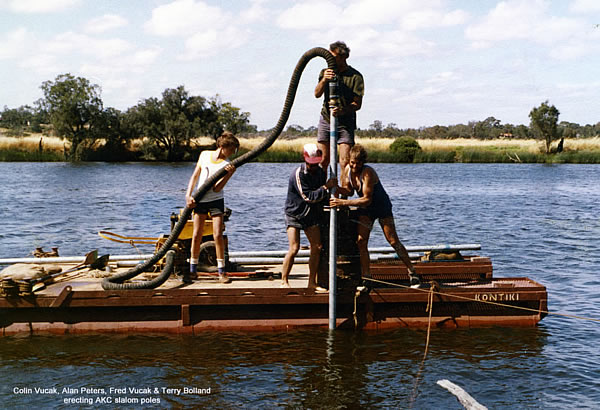
Back in 1979 when the first slalom course was erected it was much cheaper because Ascot members erected it, but the new course is going to be a lot better.
Fred Vucak, his sons Mark, David and Colin, Alan Peters and I erected the first course. Some years later after the poles eroded Lawrence Greed and team replaced them.
They have been used for 41 years and have aided many paddlers to become great paddlers, several have represented Australia.
The poles have been in decline for some years so it's great to hear a new much better course is going to be professionally built.
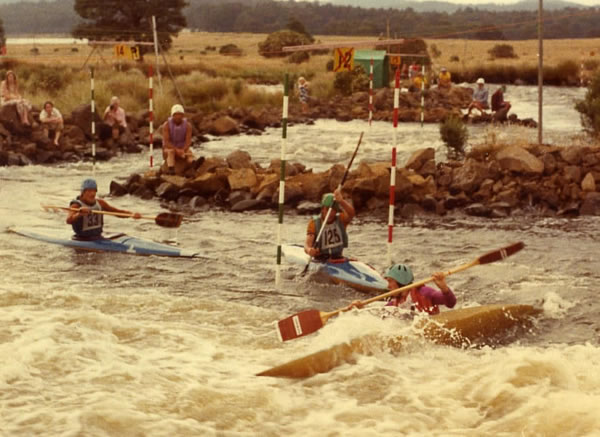
Colin Vucak, Alan Peters, Fred Vucak and Terry Bolland erecting the first slalom course.
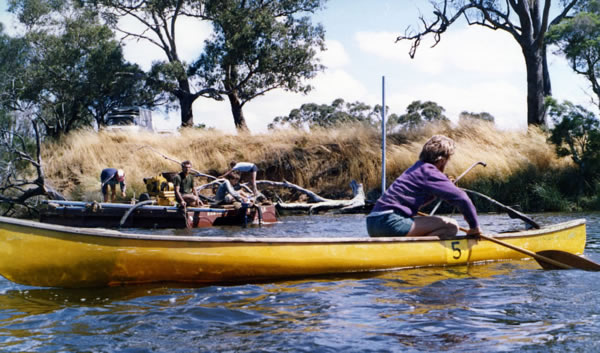
Mark Vucak in the canoe was one of Ascots great slalom paddlers back in the late 1970s and early 80s. Before the course was built Mark hung poles from trees near his home in South Guildford to train on.
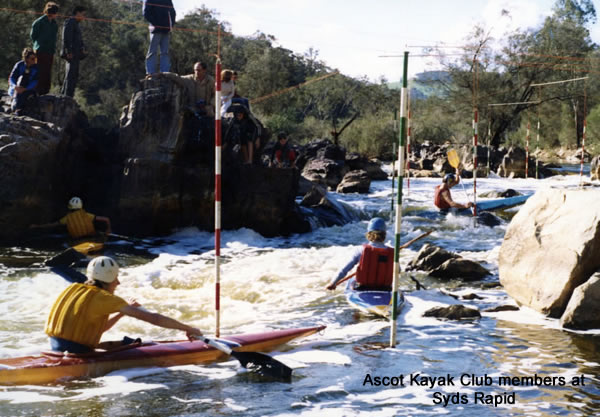
Syds Rapid.
Erecting a slalom course at Syds Rapid took a lot of effort. It was later moved to the Walyunga Chute and again moved to where it is today at the Viper's Tongue at Walyunga.
Lindsay Binning (Ascot) leading, Ian Vincent (Darling Range Canoe Club) and Mark Vucak (Ascot) competing in a team event in the 1979 Slalom Championships, at Brady's Lake in Tasmania.
Ascot Kayak Club Lindsay Binning was the Australian Slalom Champion in 1985-86-87 and 1988 and represented Australia at World Championships several times.
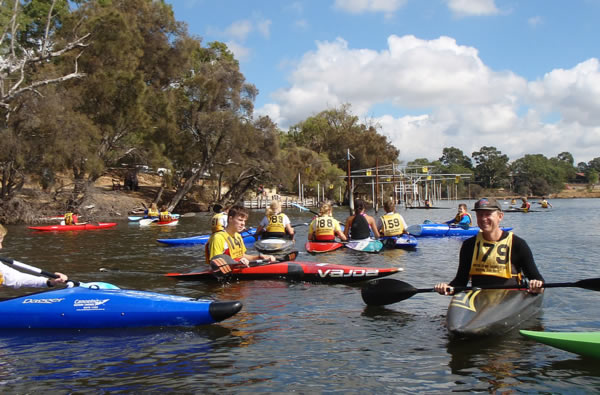
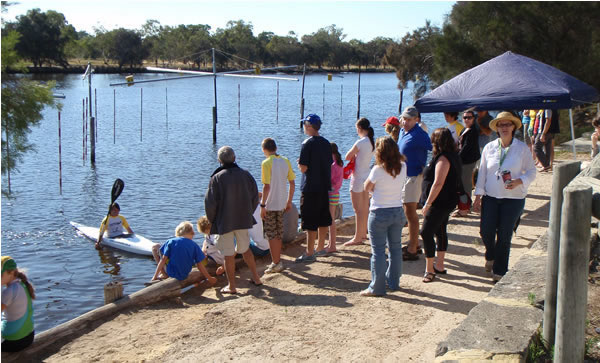
Paddlers waiting for their turn in the flatwater race.
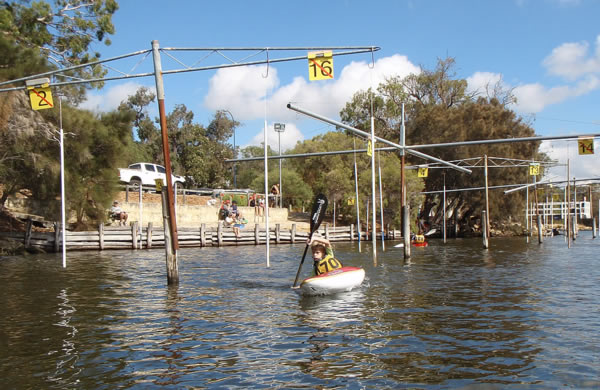
A young paddler showing his skills.
A flatwater course especially in Western Australia in a very important resource for developing skills.
A crowd gathers to watch.
Kimberley Kayaking 1982
part 8
100 Days Solo
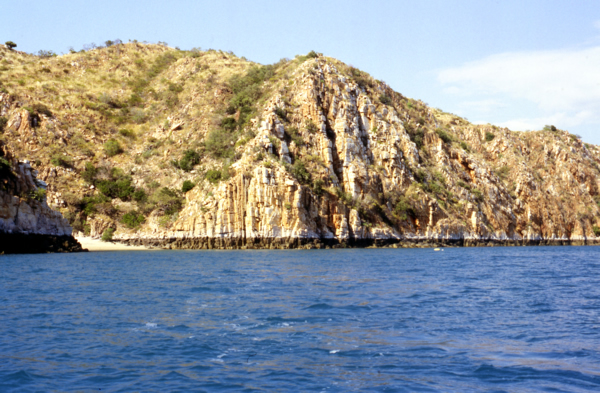
As came ashore on the low tide many prickly black chitons were tightly suckered onto the rocks. That wasn’t unusual but I actually saw them move, which I think it must have been the first time I had seen them do that. My camp was also surrounded by wallaby and several other animal tracks.
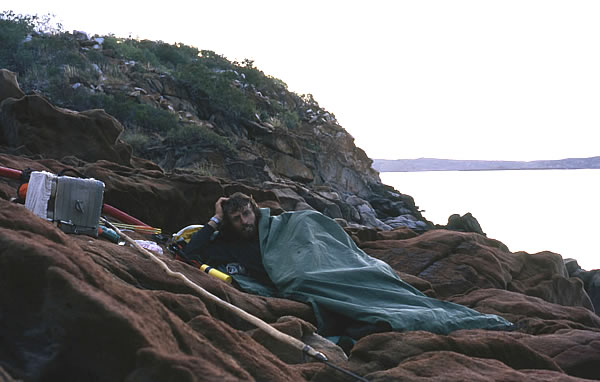
Because the beach was going to be inundated with the rising tide it wasn't safe to camp on it so I made my camp high up on the uneven rock. Surprisingly I had one hell of a good night’s sleep.
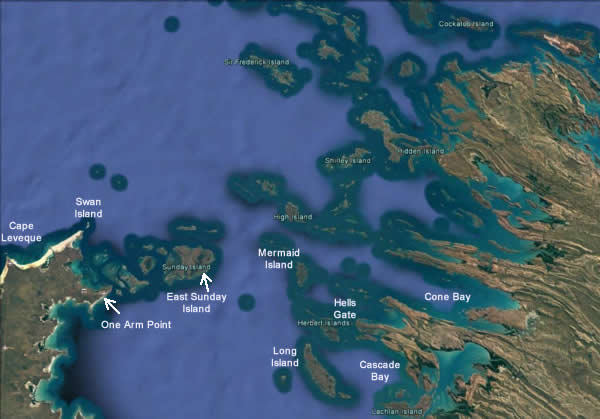
As I left my swag I could see a crocodile swimming lazily up and down, one hundred metres from my beach. It was pretty creepy. By the time I was ready to leave the croc was two hundred metres away and my eyes were peeled on it as I cautiously paddled across the still, hot and beautiful Crawford Bay towards Cone Bay. A big splash slapped behind me. I presumed it was a large fish or it could have been a shark rather than the crocodile but whatever it was it was
close.
Camped on uneven rock and safer from the crocodiles.
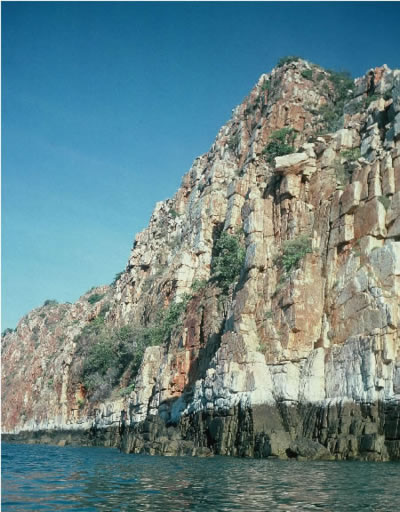
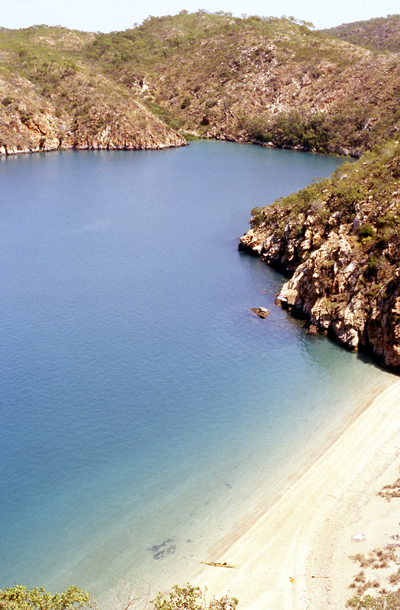
I was helped into the beautiful, peaceful, cliff lined Cone Bay by an obliging current and my objective here was to find the camp of a hermit called Xenex, who has lived in the bay for a number of years. As I paddled along the cliffs the bay came alive. A light aircraft flew over, heading towards Koolan or Cockatoo Islands and then the Coastal Surveillance plane buzzed over me. Minutes later I noticed a power boat anchored. Eager to find out where Xenex’s camp
was I merrily pulled into this little oasis that had a fresh water stream cascading from the cliffs. Two boys and a girl were playing near the boat and a couple who were on the beach could hardly believe their eyes when they saw me paddle towards them. Kevin Johnson introduced himself, his wife Robin, sons David and Nigel and his daughter Stephanie. They were holidaying there. They’d come by boat from Derby, 110 kms away and this had been their paradise holiday destination for several years.
They had even made a toilet, had fresh running water, shade of the trees and their own bathing pool. Apart from knowing that crocs were around, it was a paradise.
As soon as I had unloaded Kevin asked if I wanted to go with them fishing, crabbing and sight seeing at the bottom of the bay. I jumped at the idea. When everyone was aboard Kevin opened up the throttle and powered towards the bottom of the bay. Within 600 metres we passed Xenex’s camp and cove, his green boat was anchored away from the rocky shore. He had no beach so landing looked difficult.
It was beautiful to sit back admiring the spectacular scenery, the hot wind blowing in my face, a cold can of Coke in my hand and Kevin giving me a personal sight seeing tour. As the bay narrowed we were joined by another family, camping on the other side of the bay. The contrast between the northern and southern sides of the bay was quite impressive. On one side, there were large boulders with many boab trees growing in the darker soil and on the other side, a
redder soil and rocks with a fairly barren landscape and no boabs at all.
The bay turned into a creek which meandered upstream protected by a fortress of mangroves lining its shores where we spotted a crocodile that looked some-what bigger than my kayak. It was enough to send shivers along my spine. Eventually the muddy shallow water halted our progress and forced us to turn around and head back towards deeper water where both boats stopped to fish. Catfish and shark seemed to be the only fish biting and a momentarily a lack of
concentration from one of the guys on the other boat saw a shark take off, with his rod, line, hook and sinker.
Although the adults failed to catch anything worth while the kids were having a ball virtually hand feeding the garfish. Two kilometres from our fishing spot we passed a huge set of crocodile tracks that climbed up a very steep muddy bank and were lost among the mangroves. My stomach fluttered once again as this crocodile must have been extremely large. We hadn’t spotted the tracks on the way down.
Our ride home was much less enjoyable as the wind had whipped up in the bay creating choppy waves that the boat continually slammed into. Back at the cove I was given the honor of having the first bath in the crystal clear rocky pool. The water temperature was perfect and soon my salty, sweaty body and my hair was rejuvenated. I laid back content with my guest bathroom surrounded by lush vegetation of a small pocket of rainforest.
Our friends across the bay had invited us to join them for an evening meal, so later Kevin powered us 10kms across the bay to our bush restaurant in no time. We passed the incredibly thin and sharp spectacular Razor Island as the sun was setting. With the tide out, Kevin had no alternative but to leave the boat several hundred metres from the shore, which meant that we had to slip in the mud and walk to it. As we headed towards our host’s camp we met Rick from
Derby Toyota.
No sooner had we arrived, cheese and pickles were handed out, followed a few minutes later by some huge cooked oysters in batter or garlic sauce. The camp and BBQ overlooked the whole bay. I was surprised to see what went on way out here as we were 110 kilometres by boat from Derby and I really expected to see no one in this vast unspoiled wilderness. To be invited out to a meal unequalled in the city was just a fantasy, but it wasn’t. We cooked our fresh fish in
the cool breeze under a canopy of bright stars and drank beer and cool drinks. Inside the room of tarps, our forth course was being served. Cream cakes, fruit salad, whole paw-paw in wine juice followed by chocolate and sweet coffee. This was certainly a demanding trip!
Dressing up for such an occasion in the Kimberley when transported by a boat is not very practicable. With no jetties to anchor to, the craft can only wait in deeper water for its occupants to walk over the mud flats and reefs often up to their backsides in water. So as we clambered aboard to go home we shouted thank you and zoomed into a brisk wind and choppy waves back to our own piece of paradise.
Toast and honey, baked beans, jaffles and some weetbix brought a civilized touch to my breakfast. The short rest here allowed me to wash my clothes in freshwater and fiberglass the rear section of the hull, where after dragging the kayak had started to wear away. When it was dry David and Nigel had a paddle in my kayak.
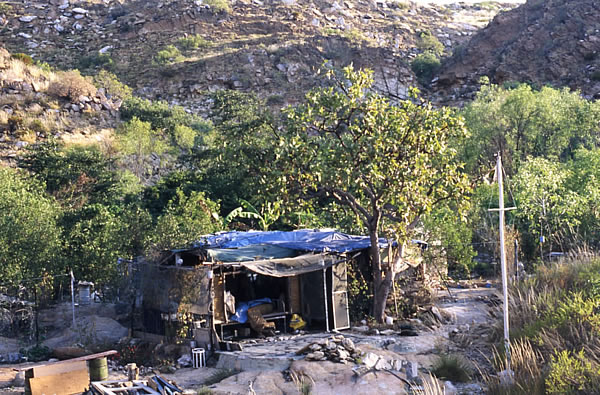
After digesting my fish lunch I climbed up the thick undergrowth of the gulley to the cliff top where the scenery was absolutely beautiful. I was making my way to Xenex’s hide out in a rainforest gully about 600 metres away. As I reached his cove and descended a gully through the thick foliage I was greeted by a growling dog. I stopped in my tracks, not wanting to become an enemy of the dog and admired the make shift home that was made of corrugated iron, wood,
concrete, tarps, stone, bottles and was surrounded by a wire fence.
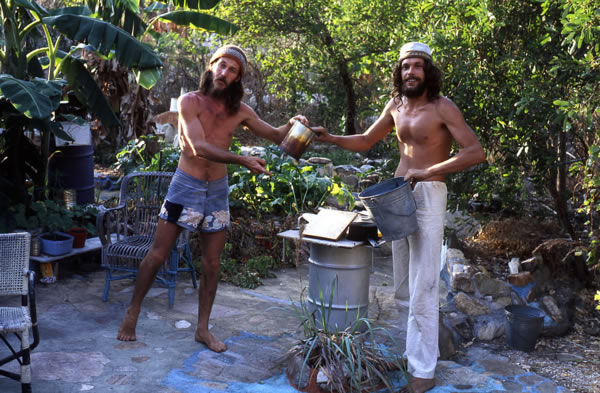
I called out and a guy called John answered. I asked if he had seen a white elephant running this way. Sure have, he replied, it went that way. Xenex wasn’t there but two of his friends were. John asked me in. You are just in time for coffee he said. His shelves were stocked full of foods, herbs and spices. Eujene, John’s friend, also sporting long hair and a beard
came in from the garden. I wasn’t expecting to see two people, in fact I was only expecting Xenex who apparently was in Derby at that moment. John had been living there for four years but Eujene was a new-comer only living there for a few months. They were both from NSW, although Eujene was born in Croyden, England.
John and Eujene. Living in the wilds.
Apparently a number of crocodiles and snakes lived in and around their camp. John said that two crocodiles were living close to their cove and a few months ago it managed to climb the rocky gully and made its temporary home in their back garden. They often get a deadly venomous snake that lived under their fridge and had two harmless pet pythons that visited them regularly. They had a kitten once but it didn’t last long, the snakes saw to that.
A few metres away there was an uncompleted shack that they were building of local stone and it had bottles cemented between the stones and into the walls. They wanted a building that was more substantial and would stand up to a cyclone. It wasn’t the best place to be in a cyclone, they said.
Paw-paw, bananas trees, veges and other fruits were growing in-between and around the terraced gardens. A lovely sweet clear running stream cascaded over small rock ledges through the middle of their small estate. Steps made from flat rocks led to a flat slab area towards the stream. The water was 2 – 3 feet deep and 8 to 9 feet long and a perfect bathroom if you don’t mind sharing it with snakes, lizards and frogs.
About twice a year they make a trip to Derby in their small dingy to buy supplies. John said, “it was a dangerous task motoring their overweight small dingy back over the unpredictable and often rough King Sound.” I was a little disappointed that I hadn’t met the famous Xenex but maybe next time as I knew there would be a next time. I left the contented pair to live what seemed like an idyllic life. Their oasis was certainly an isolated paradise.
Back at the Johnson camp I was hot and sweaty so I slipped into the amazing bathing pool for my last wash before heading out the following day. For my last meal in this civilized world, Kevin and Robin cooked giant oysters, fish, baked potatoes and damper and of course that was complimented with a beautiful cold beer. I didn’t really drink, but sometimes one has to go with the flow. It was a shame I had to leave!
I left my friends at 10.00am aiming to cross Cone Bay and paddle through the passage of Sir Richard Island and the mainland at high tide as Kevin said there was reef in the passage that could be a problem. He also said that the currents around Datum Bay before the passage get very nasty. Before going through the islands I took no chances, I stopped on a beach and climbed the ridge to check out the tidal movements. It was worth the climb just to see the scenery
from the top although the currents didn’t look too bad.
It was always a pleasure to climb high to see the surrounding area.
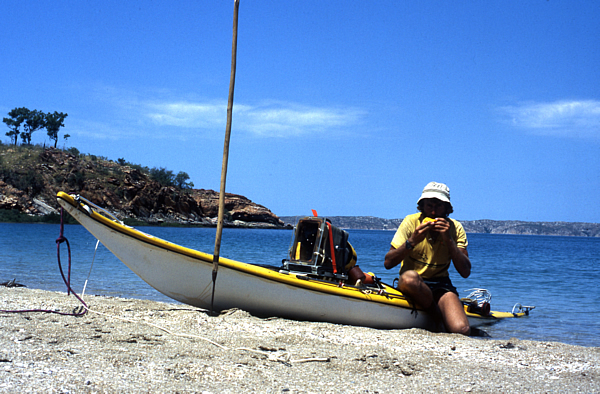
Eating a paw paw given to me by the Johnson family.
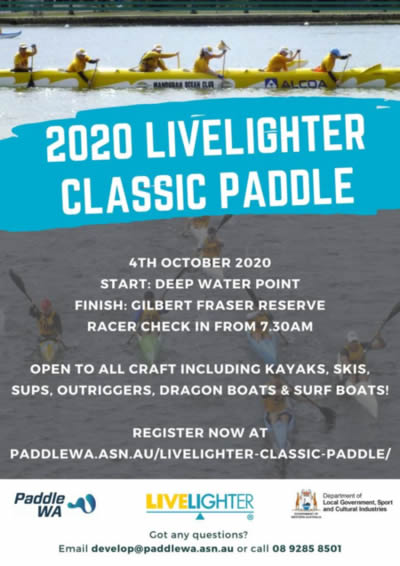
Classic Paddle
Sunday 4th October 2020
Start: Deep Water Point Reserve
Finish: Gilbert Fraser Reserve
Distance: 13km
As always, this race is open to all kayaks, canoes, skis, SUPs, outriggers, dragon boats and surf boats!
More information is soon to come...
Enter now using the link below 👇 registrations close 11.59pm on Thursday 1st October
https://www.webscorer.com/register?raceid=221488
Indian Ocean Paddlers
Summer Series dates are now locked in. We are also very pleased to announce that Brad and Kate Hardingham Realmark have agreed to stay on board as our seasons sponsor. This support for IOP is massively appreciated.
Race dates:
19th September
10th October
24th October
7th November
21st November / WCD
28th November / Doctor
12th December Xmas paddle
9th Jan 2021
30th Jan
20th Feb
13th March
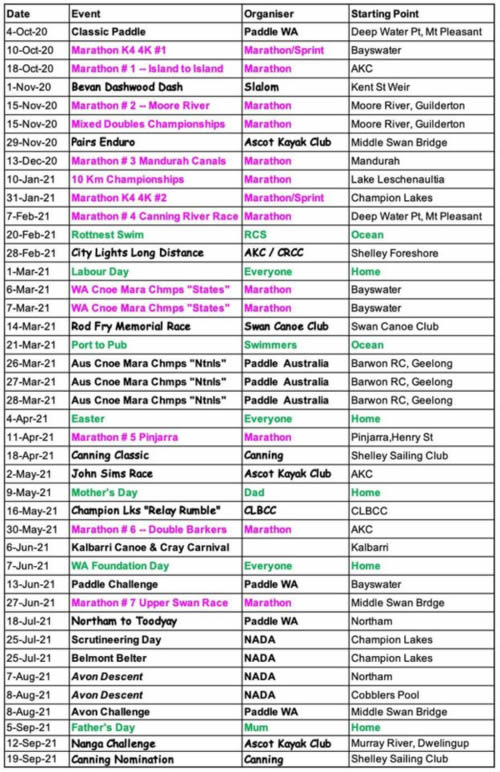
Draft Marathon Calendar & Upcoming Events:
See the Draft Marathon Calendar for 20/21. Yet to be approved by Dept Transpt.
Couple of Events Coming Up:
Sprints Bayswater Sun 20th Sept
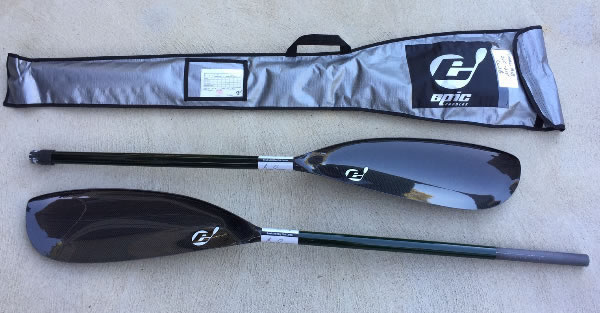
Epic Club Carbon Paddle $455.00
Midwing Club Carbon construction - 737 grams; comes standard with Epic’s Length-Lock 2™ adjustable ferrule technology.
Carbon fibre blade, Green oval shaft.
Fully adjustable length & feather.
Includes paddle bag.
|
|
|
|
|
|
|
|
|
|