|
|
|
|
7th August 2020 CDU Newsletter 663
Well it's been another dry week so the river is still low but on Saturday the Wild Water Race at Walyunga N/P has been changed to the Upper Swan T Trees.
With the low water the Upper Swan T Trees should still be a good race. There are no portages and some of the sections are trickier than when it's a higher level.
The Wild Water State Championships at Bridgetown are on the 22nd and 23rd August.
The Slalom Race has been cancelled but next week looks better for rain.
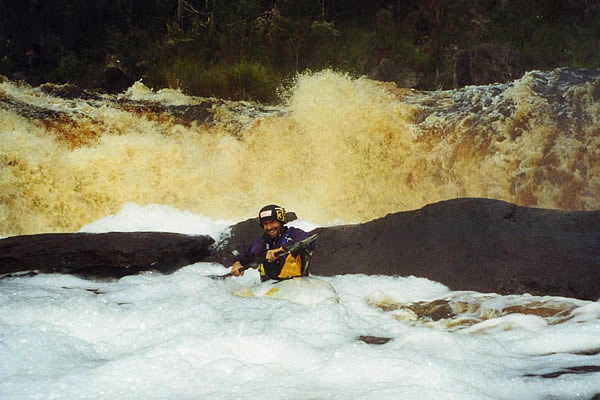
On the Deep River a few years ago.
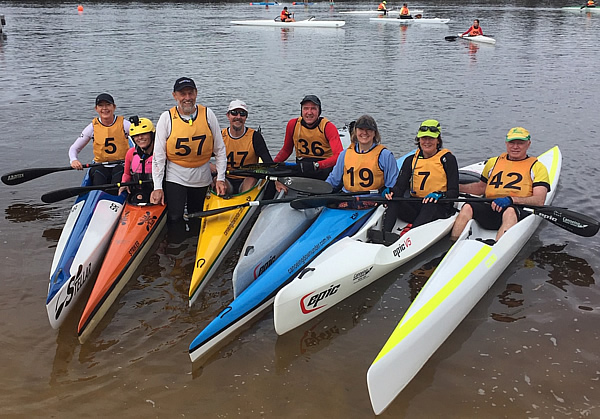
Seven of the 14 paddlers from the AKC Progressive Racing Group who took part in the Ramon Race.
Sally Harris, Isabel Combe, me John Liso, Tony Power, Jane Dooley, Sue Thomas and David Brown
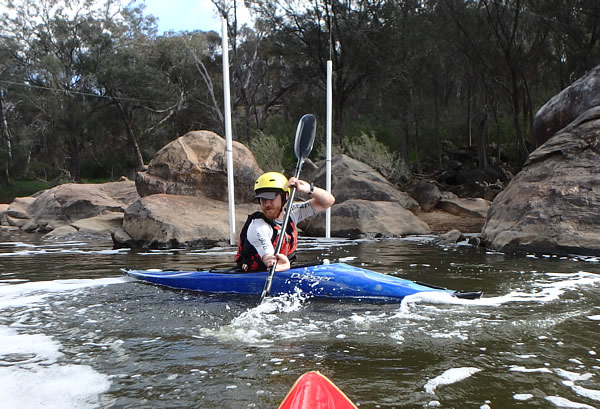
I gave Nathan Jamieson a few tips last Saturday on the slalom course. He will soon be surfing like in the Youtube video below.
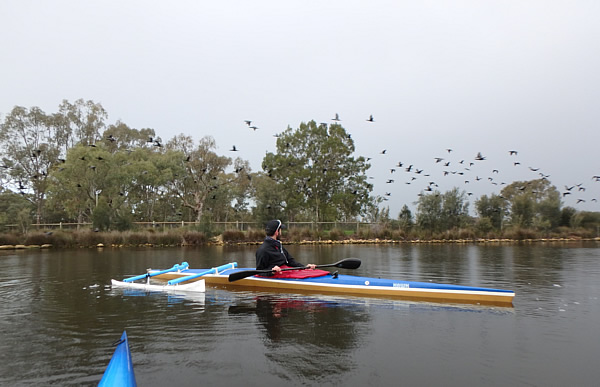
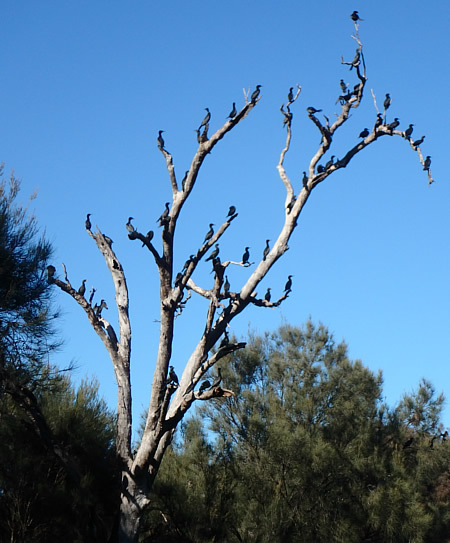
I met Clinton Etheridge on the river just as thousands of cormorants were passing by.
The Ramon Race
What a great race it turned out to be. With the Avon Descent cancelled it meant that we had an easier weekend. The 15.2km was just the right distance.
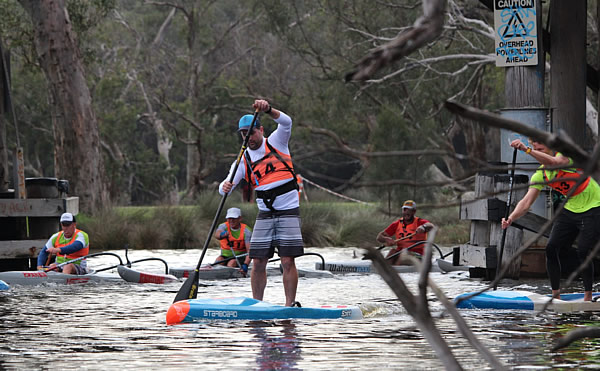
There were 124 kayak and ski paddlers, 52 outriggers paddlers (which includes the 4 x 6 person teams) and 8 SUPs.
The weather was great, the water was calm and the race was well organised so it couldn't get better than that.
Travis England was the fastest time overall and won the single ski. Luke Egger was the fastest kayak and Jane Pankhurst was the fastest female in a kayak and Jade Lane was the fastest female on a ski. Dave Burgland and Brett McDonald were the fastest double ski and Lily Farrell and Coran Longwood were the fastest double kayak. Darren Pratt who used to be a champion kayak paddler won the single SUP.
Race results here:
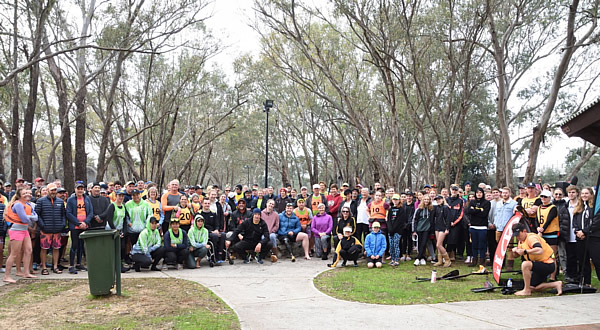
The paddlers after the briefing.
Photo Lawrence Greed.
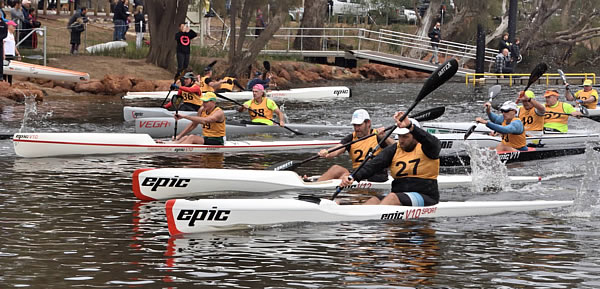
The start of the master ski paddlers.
Photo Lawrence Greed.
Taking off.
Photo Lawrence Greed.
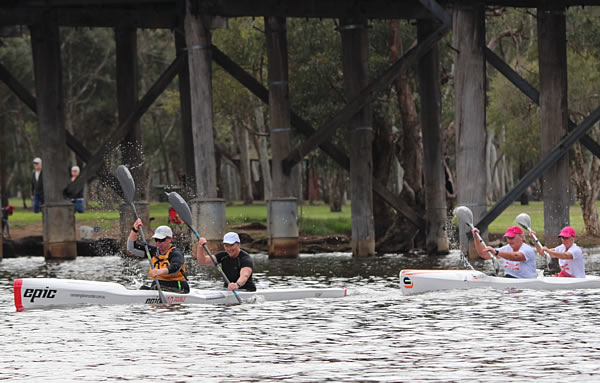
Anne Harris and Erica McKnight trying to keep in front of Wendy Burdett and Nikki Taylor.
Photo Luke Dooley.
As well as many outriggers there were several SUPs take part.
Photo Luke Dooley.
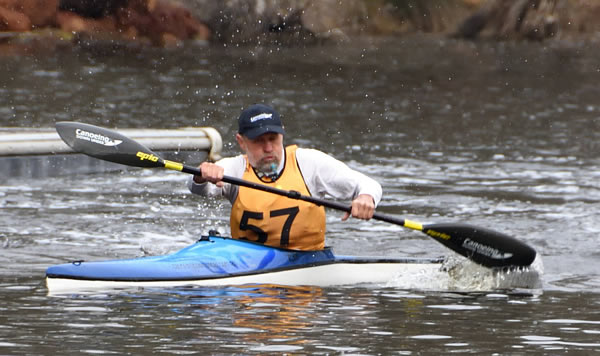
Connor Jacob.
Photo Lawrence Greed.
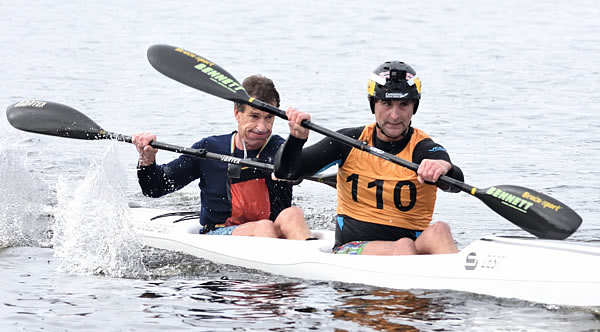
Dave Berglund and Brett McDonald.
Photo Lawrence Greed.
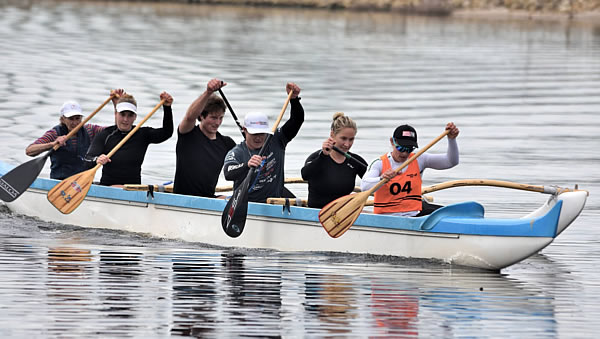
A six person outrigger with top SUP and Ski paddler Michael Booth in the 3rd seat. There were several outriggers taking place.
Photo Lawrence Greed.
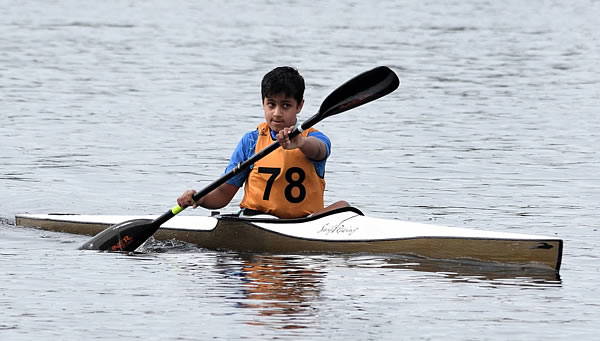
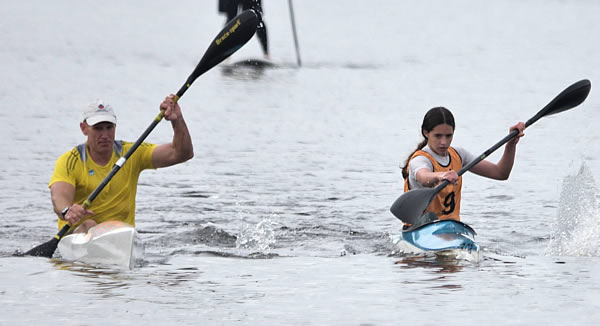
Ramon Andersson and a junior paddler near the finish line.
The race is named after Ramon.
Photo Lawrence Greed.
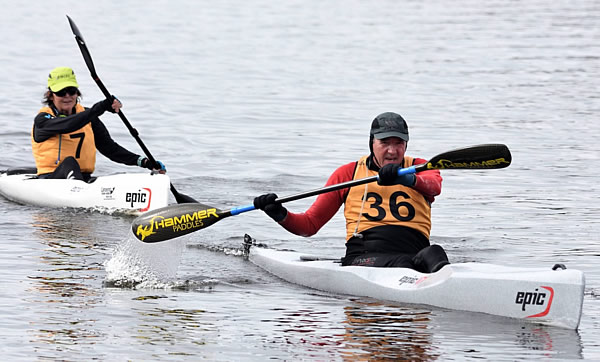
Tony and Sue paddling plastic skis don't mind paddling a heavier slower ski than all the top guys. To finish is a great challenge for them.
Tony Power is paddling a V7 Sue is paddling a 4.25 metre Epic V5.
Photo Lawrence Greed.
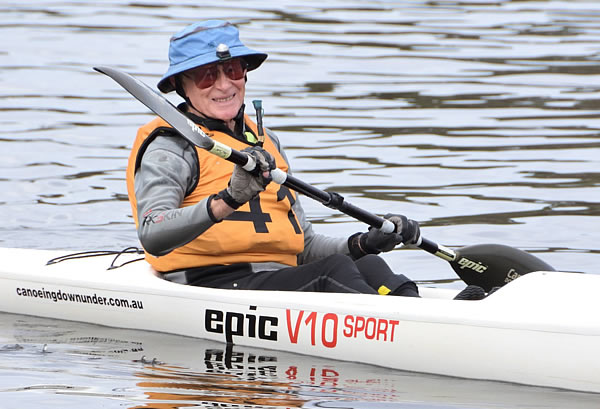
All smiles.
80 year old Ray Smith still enjoys a good 15km race.
Photo Lawrence Greed.
Kimberley Kayaking 1982
part 3
Spectacular clouds of birds circled overhead and a pelican became agitated as a bank of water, created by the swift tidal current upsurge, raced towards it. Eventually I lost the mangroves and the creek narrowed to a 1 – 2 metre wide ditch that cut through the bare mud flats which crawled with crabs. A large flock of
black cockatoos, oblivious of my presence, squabbled and screeched in the trees on the edge of the salt pan a few hundred metres away.
The creek eventually became too shallow to paddle so I had no alternative but get out onto the mud. I then dragged the kayak through the mud and over to the trees where the cockatoos were and where I was to share the night with hoards of mosquitoes before walking into Beagle Bay.
After a pancake breakfast I headed across the salt pan and found a track leading towards the mission. The 4km track was firm and great walking but the sun was hot although trees started to appear and gave some shade. Amongst the trees several different birds
were whistling, crowing and cooing and the sky was noisy with screeching black cockatoos.
Cattle and dingo tracks were spread across the sand patches and when the track turned into thick bulldust, walking suddenly became a little more difficult, but luckily it didn’t last long. The country was becoming more and more beautiful as the gum trees and
pandanas palms thickened.
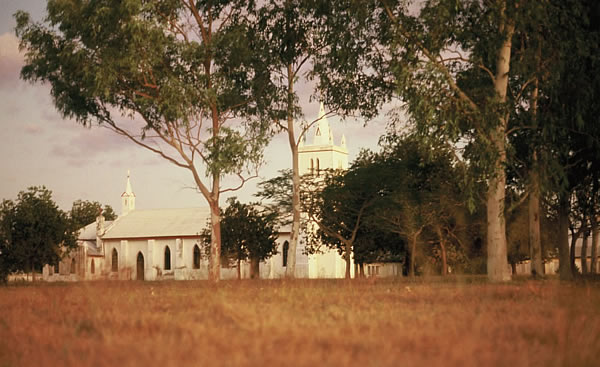
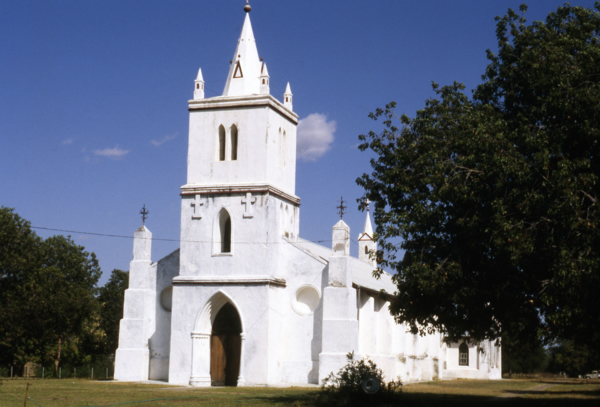
At last I sighted the church. Cattle charged across the track in front of me and horses grazed inside a paddock contained by a buckled wire fence. They fled when I approached. As the church bells tolled midday, I met Mathew Cox, the community’s headman, who I
had earlier obtained permission from to visit the community. I took refuge in the shade of a cool white wall and ate nuts and sultanas. I was approached by father Francis, who was 79 years old and had been in the Kimberley for 52 years. A few minutes later brother Joseph, another pioneer of the Kimberley came across and invited me over for lunch. This kind 80 plus year old clergy man said he had been kicked out of Germany many years ago. Then, as we were preparing to eat, younger brother William
walked in and joined us for lunch.
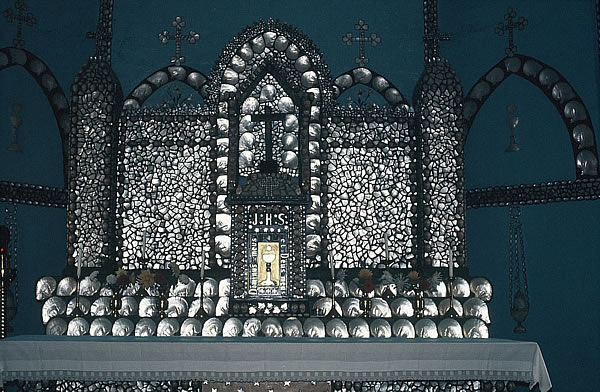
They have mass here on a Saturday rather on a Sunday because most of the Aboriginals go fishing on Sunday. Father Francis had a busy afternoon as he had to conduct a funeral, so I moved over to the church to take some pictures before it started. The church was built with local materials in 1916-18 and is decorated throughout with pearl shells. The Pearl Shell altar was extremely
stunning.
As I was changing film an Aboriginal man came up to me and introduced himself as Butcher Joe. He was an artist and writer and his works have appeared in several books. He was very sad and lonely, as his wife had just died and it was her funeral. A few minutes
later a ute drew up to the church and the coffin was unloaded as Butcher Joe walked silently across to the father’s house.
At 3.45pm the church bells rang out. People had come from miles around and although I didn’t know if it was my place to be there, I followed and sat at the back of the church. The church soon echoed with noises as kids, dogs and adults screamed and talked. A
dogfight broke out in the doorway and the loser came yelping into the church, but after receiving a swift slap on the backside from a sister it soon darted out again.
Like myself many people didn’t know the prayers or hymns so stood in silence. I was surprised to hear the Aboriginals sing and pray in Latin. They had a beautiful tone. Butcher Joe's grand daughter, who was about 30 read out a piece and the emotion of the
whole affair made her breakdown in tears.
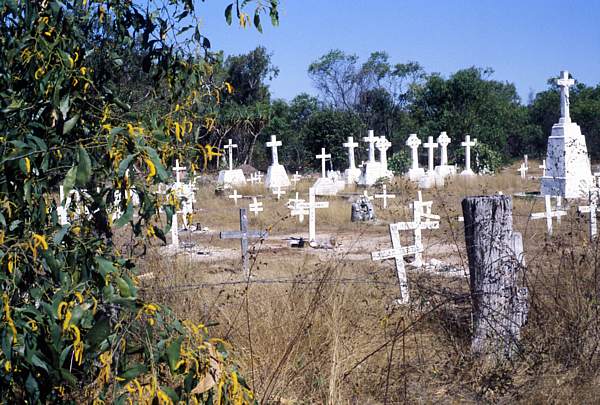
When the service was over the ute returned for the coffin and the crowd grew larger as the procession moved through the township. The sun was going down behind the pandanus palms and gum trees and the white crosses shone brilliantly behind the large crowd that
had gathered. As four men lowered the coffin, children and relatives threw handfuls of dirt onto it. As the father prayed and the coffin was buried, Butcher Joe, who was embracing a friend, broke down.
I hadn’t been to a funeral before and what a moving experience it was. I had to rub a few tears from my eyes and try to hide my own emotions. When the prayers were over, Father Francis hugged Butcher Joe and as people began to filter away a dog approached one
of the crosses and urinated on it. As I moved back towards the church the beautiful red westward skies, associated with the massive dark clouds, turned the brilliant white church a tinge of pink.
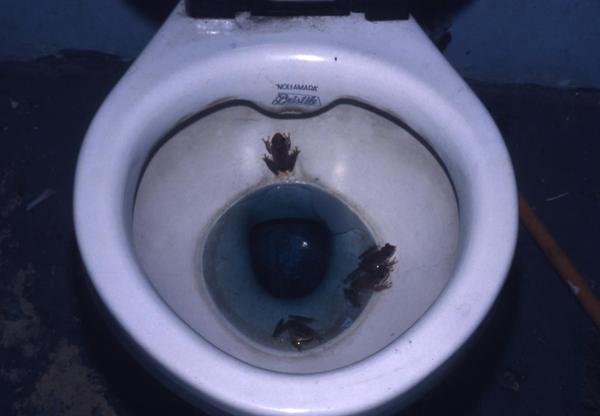
Father Francis invited me to stay in their guestroom for the night and join them for meals, and use a toilet that three friendly frogs had made their home. It had been such an interesting but sad day and I had learnt so much about the Catholic Church and the
Aboriginal community. I slept extremely well with my head cushioned in a soft pillow.
The church bells rang out at 6.00am. I didn’t really want to get out of bed as I was so comfortable but I promised myself that I would go to church. It was before sunrise and mist lingered over the nearby fields and apart from a crow squawking the mission was
still and quiet. I walked over to the white church that contrasted with the darker skies. Inside Father Francis, brother Joseph and William were meditating. After 3 sisters entered, mass was conducted and concluded in 30 minutes.
To share the toilet with frogs.
I left the still and silent mission grounds and walked briskly back to my kayak hoping the sun would rise to warm my icy hands. After 40 minutes I could see my kayak under the shade of a tree on the edge of the mud flat. There was no water in the creek that I
came up so to get back to the water I had to drag the kayak along it for some 500 metres before I found water coming out of another creek. It wasn’t enough water to float the kayak so I tried dragging my kayak across the creek. The mud was deep and it was like a big suction pad making it impossible to move. To add frustration my feet wouldn’t grip so I had to unload the kayak before being able to cross two other small creeks.
I should have waited for the tide, but I was too impatience to get going. It was extremely hard work to reach deep enough water to float the kayak and by that time I was panting and my heart was beating like I had done a 20 kilometre sprint. I returned for my
gear and by the time I was ready to load the kayak my whole body was muddied. I loaded and slipped off the muddy bank and into the channel and immediately barged through a bush in my way. I paddled for several kilometers but then the channel widened and became shallow with sand bars which made me exit the kayak again and drag it across them.
The birds that had greeted me on the way up were now silent. They just watched me glide passed them heading towards the creek entrance and into the deeper bay. As I left the creek and started my journey across the bay I rigged up a lure and although there were
several jumping fish, none of them fancied my lure. A large manta ray joined in and leapt through the air beside me and slapped down on the water putting on a great show. I was now feeling much better in the deeper water after such a hard portage.
When I reached Steve’s Camp it was deserted so I prepared myself to leave on the morning tide. At sunset I walked over to a bunch of pandanas palms as I had been told that if I dug down beside a pandanas palm I would find water. I dug down with a shovel for
over a metre and didn’t even find a damp patch. Close by I noticed that Steve had dug down about 2 metres and had lined it with two 44 gallon drums and still no water. Although I lost a lot of sweat by digging, I gained a beautiful picture of the sun setting through the palms.
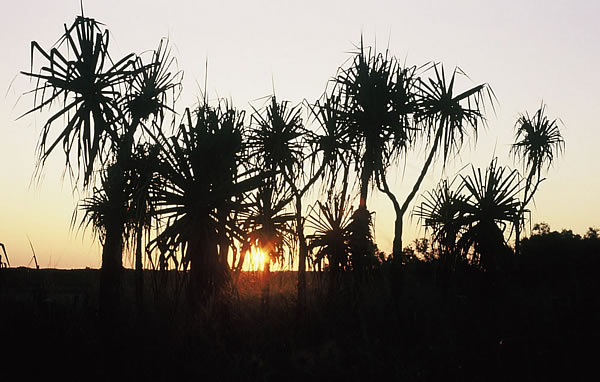
Sunset behind the pandanas palms.
With the morning came the wind howled across the 10km wide bay so I wasn’t looking forward to the paddle ahead. I had been spoiled over the last few days and now I had to face the elements again. On the other side of the bay I landed on a lovely sheltered
beach surrounded by pandanas palms and healthy looking trees. I dived into my hatch and retrieved some rice pudding that I had cooked up the previous night. It was beautiful. I strolled along the beach eating it and thought about my friend Steve Pilton who would be racing in the Avon Descent today. We had paddled the Avon as pairs twice and had come second and third.
I wanted a photo of my beach, but for some reason my expensive Nikonos V underwater camera wouldn’t work. I had no one to share my trip so photos were a big part of recording it but I still had my trusty Minolta SRT 101 that I generally used on land. It had
been stolen once when I was in Senegal, West Africa, but I managed to get it back after the thief was caught.
Once around Emerian Point and Chimney Rocks the fight against the wind was more strained but the coastline became very scenic, sandstone cliffs that had formed strange shapes and figures in the rock. As I landed close to Perpendicular Head a sea eagle took off
from a nearby tree and hovered over me. Joined by a number of hawks they peered down upon the impressive crumbling cliffs that I was walking beneath on my afternoon stroll. Crabs and cockroaches by their thousands darted around the reefs. Added to the fascination of the sandstone shapes and figures there were caves with assorted sizes of chimneys that were eroded in their roofs, which you would expect to be featured in fantasy books.
I returned to camp by the cliff top, being aware of the unstable edges and gathering burrs on my trousers as I pushed through the bush. Once I had collected firewood I stripped off to air my body and have a good wash.
Before leaving Broome, Bob Kirby had given me a large chunk of salted meat and after having a portion of it every day for two weeks it was getting low. I will miss it when it’s gone.
|
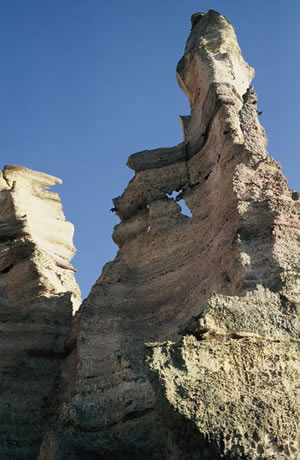
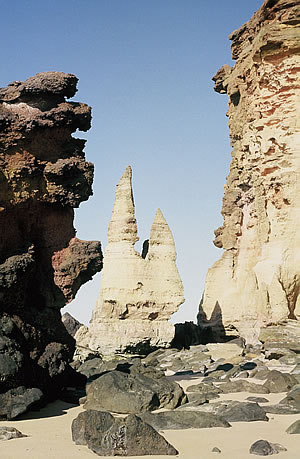
Spectacular rock formations.
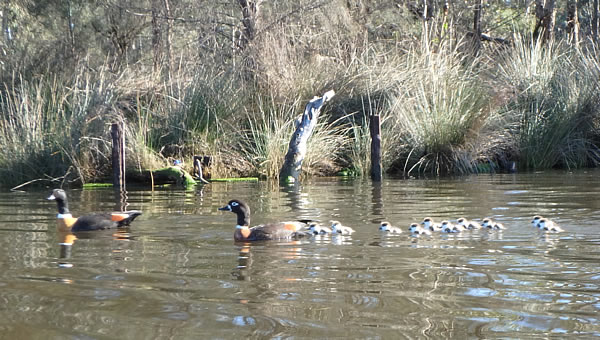
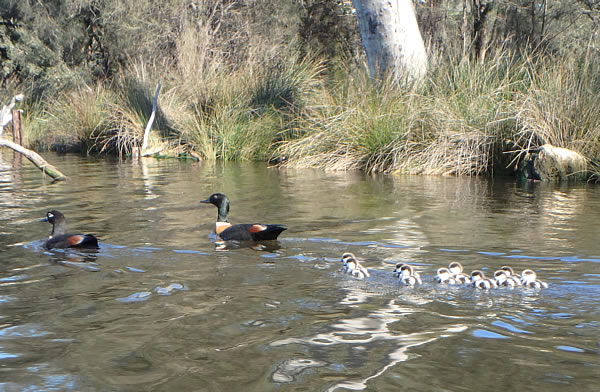
Australian Shelducks with their new ducklings.
There was also a pair of Wood ducks with their young a kilometre upstream.
Thousands of cormorants continue to fly and feed up and down the upper Swan River.
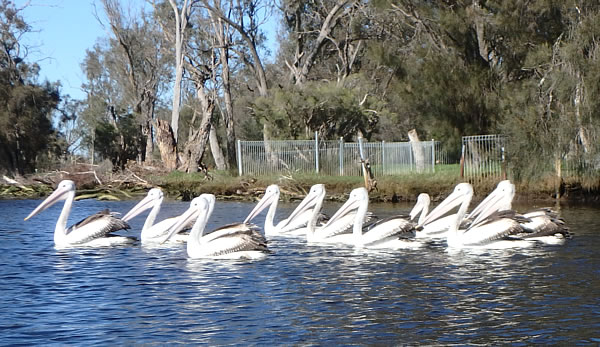
Pelicans usually follow the cormorants when they are feeding. Today they were alone.
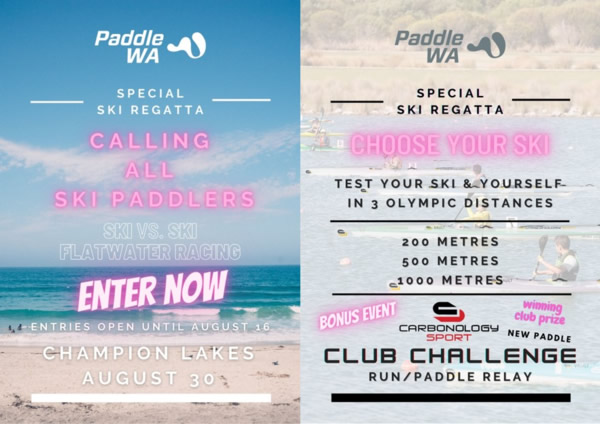
Ski Race
at the Champion Lake Kayak/Rowing Course
|
|
|
|
|
|
|
|
|
|