|
|
|
|
24th July 2020 CDU Newsletter
661
On Monday night I watched a program on ABC called Backroads. Each week a country town is focused on. This week the story was about the track and communities along it from Broome to Cape Leveque. I have run the dusty, 220 km corrugated track in 1988, driven along it three times, once in the back of a ute and I have paddled along the coastline twice visiting those
communities in 1982 and 1987. The dusty, jar wrenching track is now going to be sealed so the area will soon be inundated with tourists. It will be interesting to see how the Aboriginal Communities cope with the influx of visitors.
When I did a 100 day solo paddle along the Kimberley Coast in 1982 visiting these communities there were no tourists so I thought I would share my story along this section of coastline. Read the story further down.
One week its Marathon, the next week it's Down River
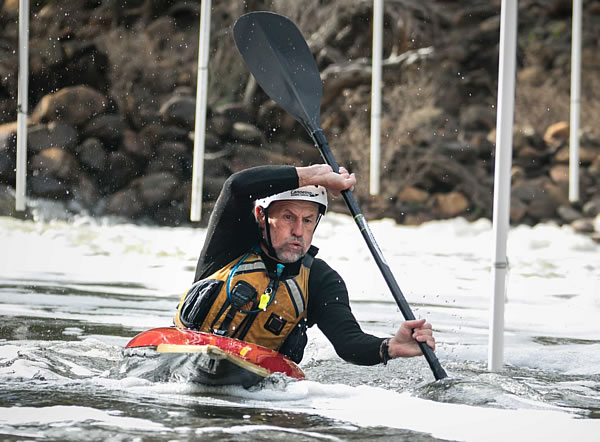
and last week it was Slalom Racing.
Slalom improves your skills. It sharpens your reflexes. It teaches the understanding of water dynamics. It advances boat control and precision. It is fun. And you become a better paddler. Slalom should be a part of every white water paddlers training.
There is another slalom race on Sunday morning at Walyunga N/P
If you use Walyunga National Park a lot get a pass from the RAC if you are a member as there is a huge discount.
Are you interested to give slalom a go?
The great thing about Perth is the close knit paddling community and the fact that we can paddle whatever discipline we like, Sprint, Marathon, Wild Water, Slalom, Canoe Polo, Sea Kayaking, Downwind Paddling or social paddling as they are all right here less than an hour from most Perth paddlers back door.
If you enjoy this newsletter tell others about it.
They may not be your top paddlers just yet,
but they are the keenest.
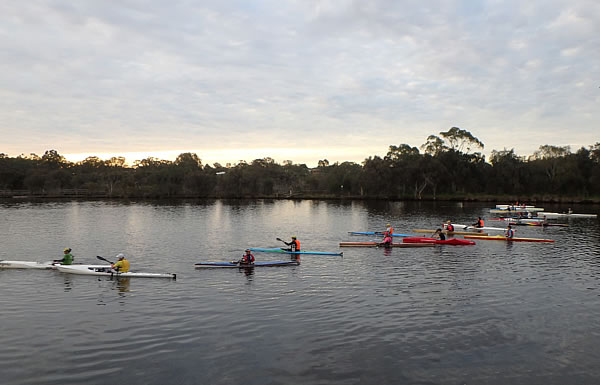
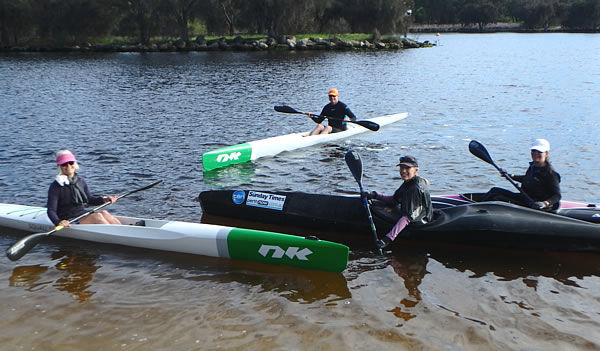
It's mid winter yet the paddlers in the Progressive Racing Group are some of the keenest on the river. Although some members were away on holiday and others working there were 18 paddlers taking part on Tuesday evening.
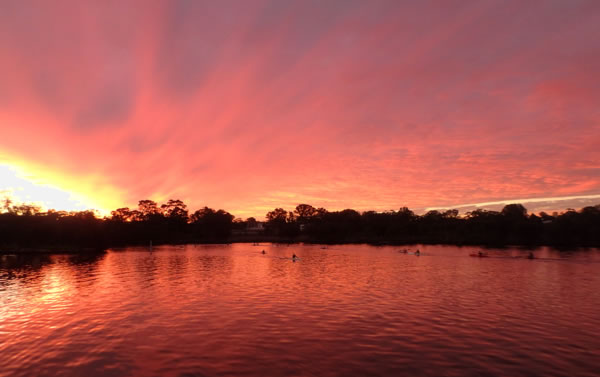
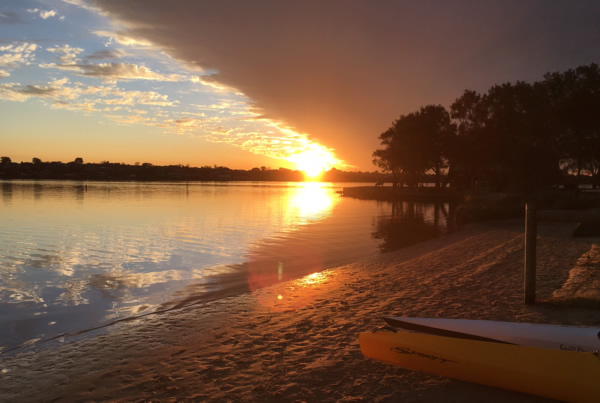
I think most people around Perth witnessed the great sunset on Tuesday night.
At Ascot Kayak Club.
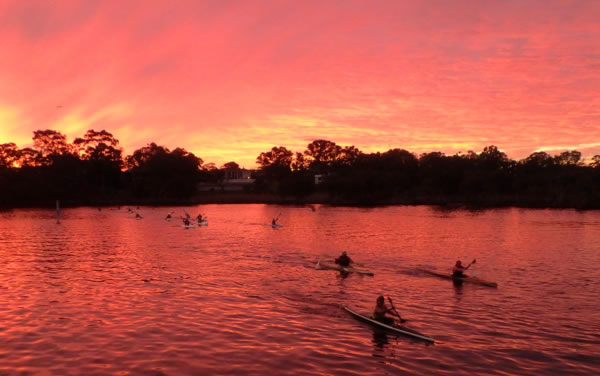
The PRG paddlers not only got a good work out they also had great views of the different stages of the sunset as they did three laps and headed straight towards the sunset three times.
Canning River Canoe Club had a different sun set perspective on Tuesday night. Photo David Gardner.
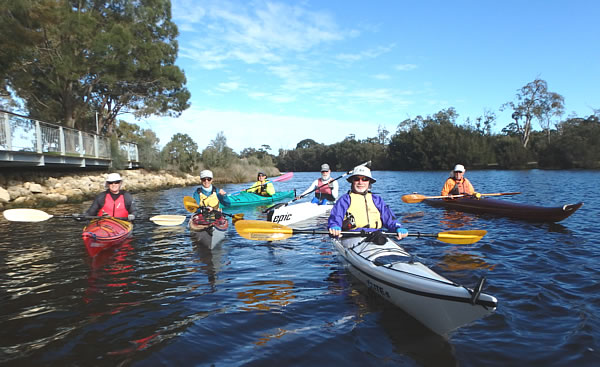
The UWA Friday Club going for a social paddle to Maylands cafe.
It was Tuesday morning.
Charmaine, Mark, Maya and Anne also heading to the Maylands cafe for morning tea.
Mark and Charmaine are going travelling around and about.
Mark was a Qantas pilot and with no work they have itchy feet.
You will be missed. Have a great time.
Slalom Race
There is another slalom race on Sunday at Walyunga N/P
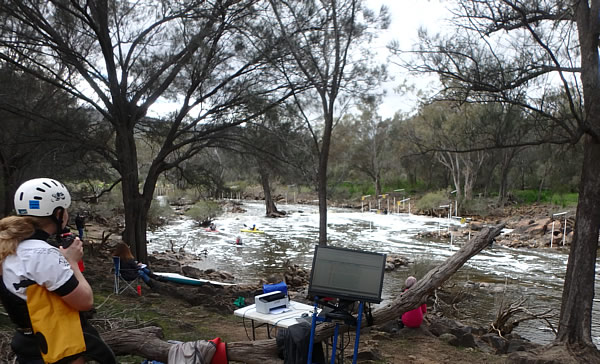
Sophisticated equipment used to time and judge the slalom race.
George Pankhurst winner of the K1 and C1.
Photo Anne Harris.
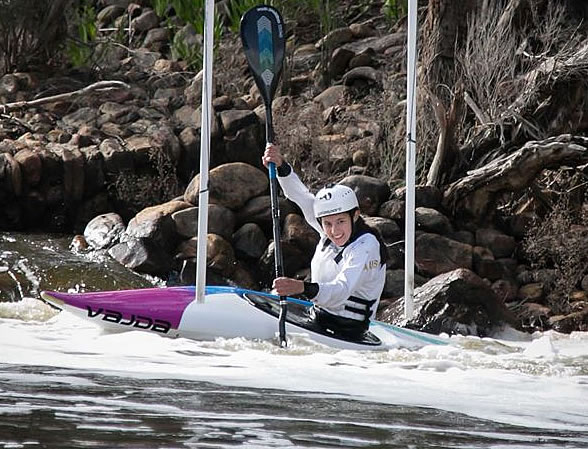
Nina Mueller the winner of the ladies division.
Photo Anne Harris.
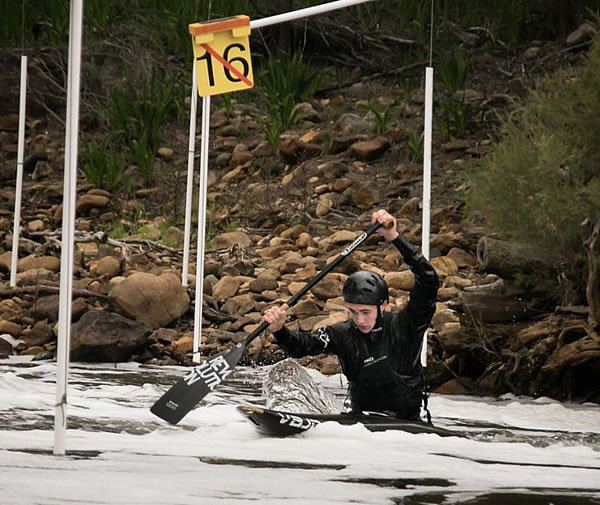
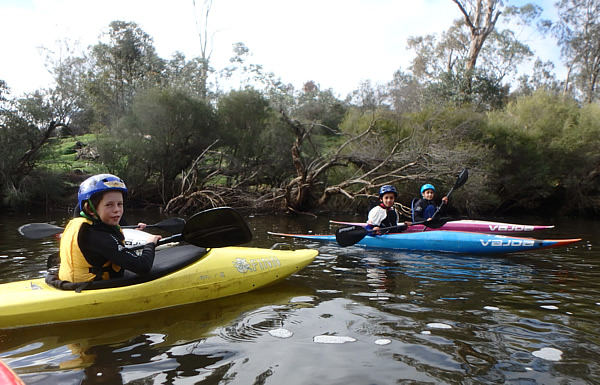
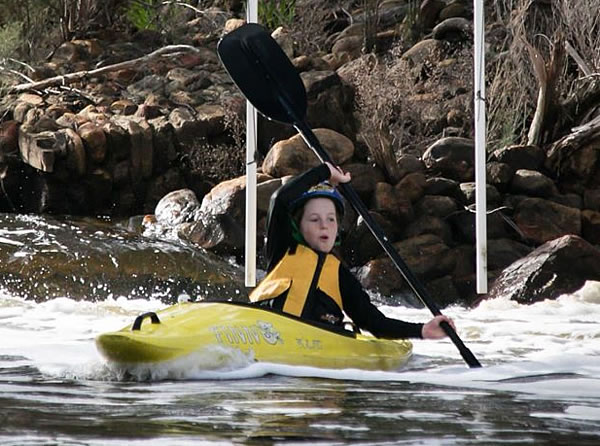
Rhys McRae, Beau Jacob and Connor Jacob three of the juniors.
Yippee this is great.
Rhys McRae paddlers down Viper's Tongue and into an upstream gate.
Photo Anne Harris.
Rhys passing through the gate with great skill.
Photo Anne Harris.
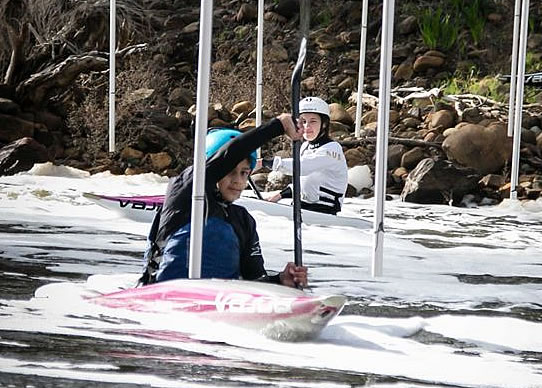
Connor Jacob flying through the course.
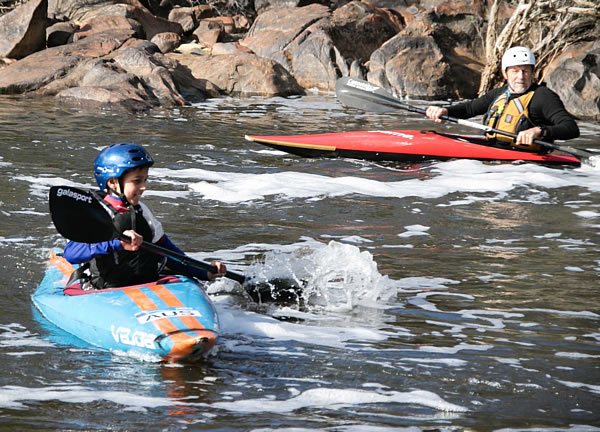
All beginners have an experienced paddler following.
Photo Anne Harris.
I'm giving young Beau Jacob a couple of tips so he can successfully get the next gate.
Photo Anne Harris.
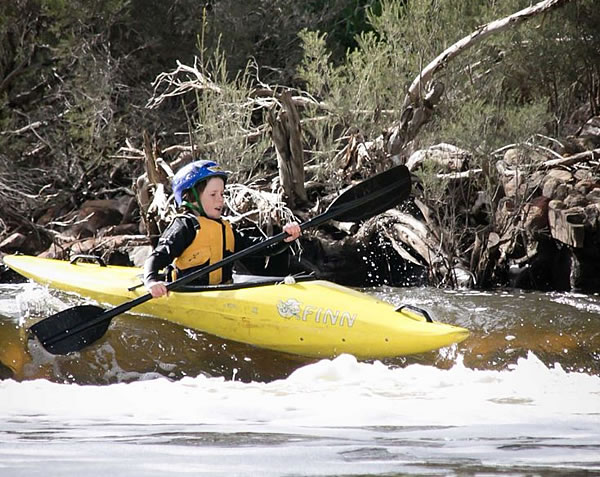
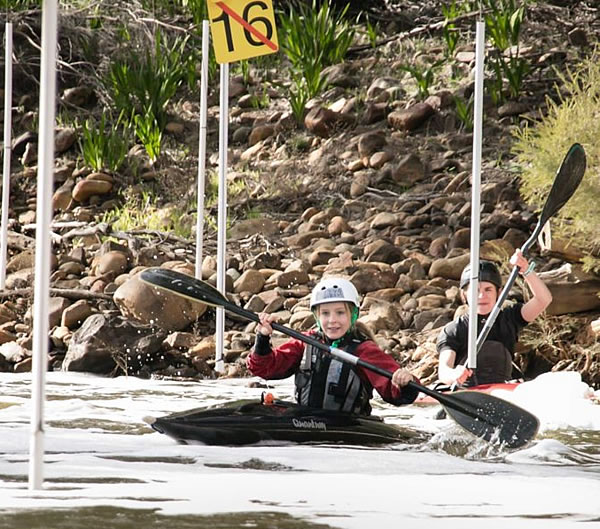
Izzy Florisson having fun.
Photo Anne Harris.
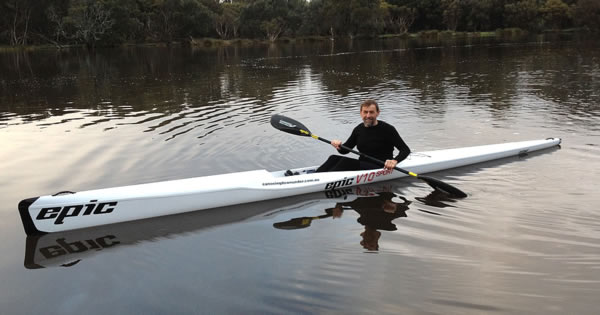
Epic V10 Sport
(My Demo model used a handful of times only)
Length: 20′ 0″ (6.1 m)
Width: 48 cm
Depth: 33 cm
Capacity: 136 kg
Weight 15.5kgs
Suitable for Intermediate and experienced paddlers.
A kayak that a beginner with time in a kayak could easily get used to.
Excellent condition. Demo model used a handful of times.
New $4000.00
Demo model: $1950.00
______________________________
I also have
Epic V14 Performance.
Usual Price $3995.00.
Special Price $1800.00. One only
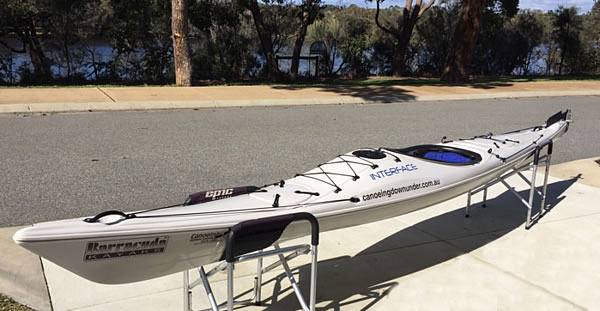
Barracuda Interface
Demo Model (Used a handful of times)
Excellent condition
Length: 5.195 metres
Width: 57.5 cm
Medium volume: 70- 85kg
Weight 19 kgs
Demo Model: Excellent condition. Virtually new: $2300.00
Kimberley Kayaking.
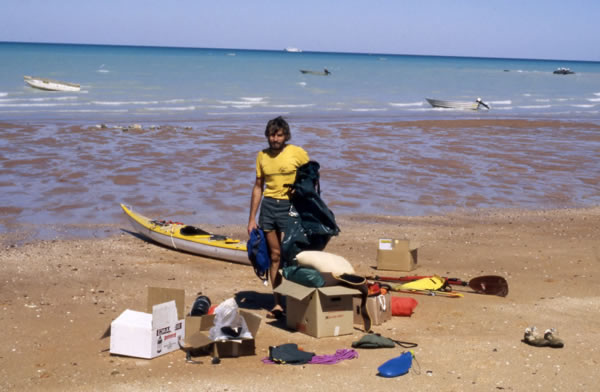
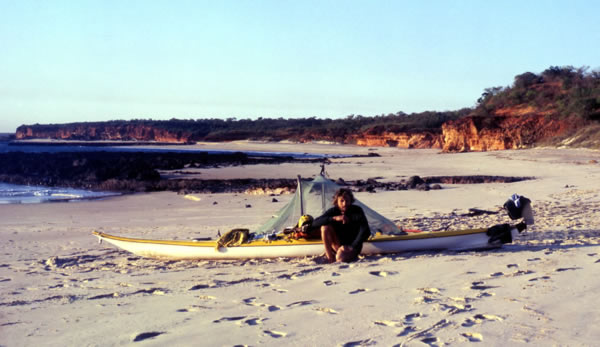
On July 14th 1982, my friend Bill Grogan drove me to the Broome town beach. I had a mountain of gear to pack into the kayak compartments so Bill left me to start the long and tedious job of packing. Every item had its own place but trying to cram in those last minute luxuries that I bought, just wasn’t possible.
My aim was to paddle from Broome to Wyndham following the jagged, isolated and dangerous coastline. I had planned to have a companion but the only person who volunteered to take on this adventurous and dangerous journey was in the army and the army wouldn't allow him to accompany me as they said it was too dangerous, so I had no choice, I went alone.
Other than flares, a signalling mirror and an distress beacon that wasn't reliable back then, I had no way to communicate to the outside world. I had sent food packs to 5 small communities along the way so when I reached those places I could call Jenny.
I continued packing and the tourists walking along the beach asked the inevitable, “what are you doing,” “where are you going?”
Wyndham, I replied. There was a pause, I could see them trying to work out where Wyndham was in relation to Broome and if I was actually being serious.
‘You’re mad,’ the bigger man with the beer gut said. What’s new I thought. Nearly everybody I had mentioned it to thought the same.
Sally Alston from the local paper arrived. We had already talked about my trip, but now she wanted several photos for the article. As I posed for photographs the police sergeant drew up. Over the last week he had been telling me quite forcefully that I couldn't do the trip, so I was expecting him to come over and try to stop me, but instead he just sat there in the comfort of his car and watched me load the kayak.
Trying to get all my gear, food and water into the kayak's bulkheads was difficult.
There were no shops to rely on along the way.
As I finished packing there was a slight wind blowing across the brilliant turquoise water which created small waves that lapped up the beach. At last I dragged my kayak into the water and with a couple of paddle strokes the kayak sliced through the small waves and I was off. A sense of relief came over me. I was away at last and everything I needed was stored in my kayak. Now I could witness for
myself the carpets of sea snakes, the attacking crocodiles, and those wondrous whirlpools that I had heard so much about.
I had been planning this expedition for over two years. It wasn't your normal leisurely two week trip along a tropical coast, this was a serious, life threatening section of coast which had needed serious consideration, preparation and training. I was pretty fit. I had come 2nd and 3rd in the 1979 and 1980 Avon Descents, I had a record for paddling 220kms in 24 hours, I had visited England to paddle in 8 metre tidal areas but most of all I had been paddling solo from Albany to Perth at
weekends. I also learnt to skin sheep at a butchers shop just in case I needed to live of the land and kill an animal. Having been brought up on a farm I didn't mind getting my hands dirty.
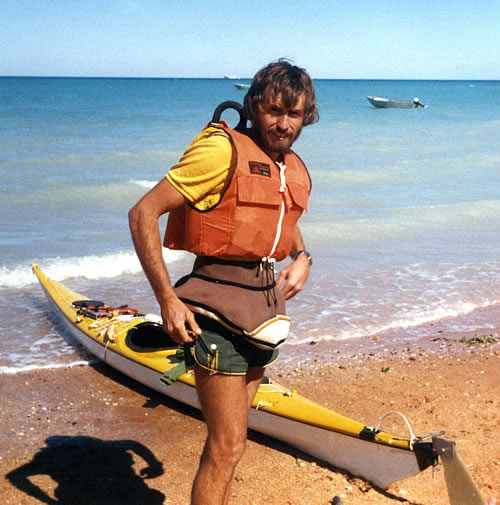
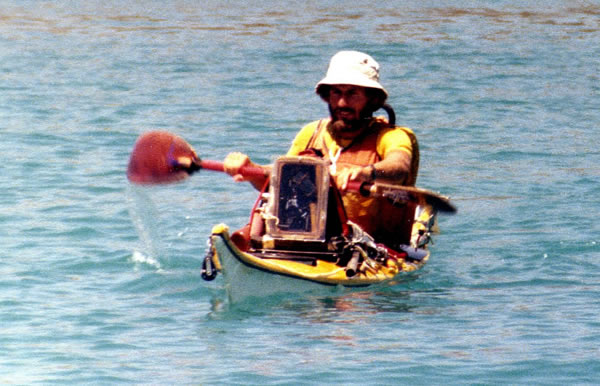
I wore a special rescue jacket over my PFD which had pockets and contained items that I might need if I came separated from my kayak. In the rear pocket I had a mask and snorkel so I could see the crocodiles and sharks swim by!
Waving a final farewell to my well-wishers, I paddled out into Roebuck Bay, named by another Englishman William Dampier in 1699. His explorations certainly out shadowed my own, but as I moved across the bay that once had 300 pearling luggers working out of the nearby Dampier Creek, I felt my own small expedition had similarities.
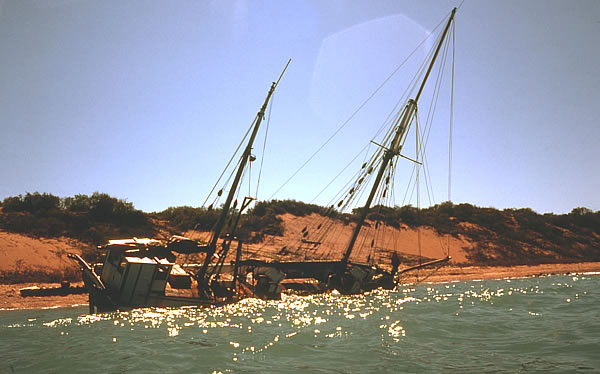
I passed a lugger that was washed up on the beach near the golf course and it brought back memories of my time working in the Kimberley and visiting Broome in 1973-74. It could have been the same lugger that I was aboard when it took part in the annual Shiju Matsuri festival lugger race back then. Today tourists come from miles to experience the festival’s atmosphere.
As I passed under the high stilts of the 882 metre Broome jetty, I dodged several fishing lines before moving around the coast towards Gantheaume Point and the place of the 130 million-year-old dinosaur prints. The dinosaur prints are only visible at low tide, some 30 metres from the high tide mark, but there was a concrete cast of them above the high tide mark. I carried on paddling around the coast to the southern part of the deserted Cable Beach, where I stopped early for my first
night’s camp. I only saw two or three figures on the beach in the far distance.
I carried a 16mm camera on the deck, as well as spare split paddles. I had so much weight in the kayak it sat very low in the water.
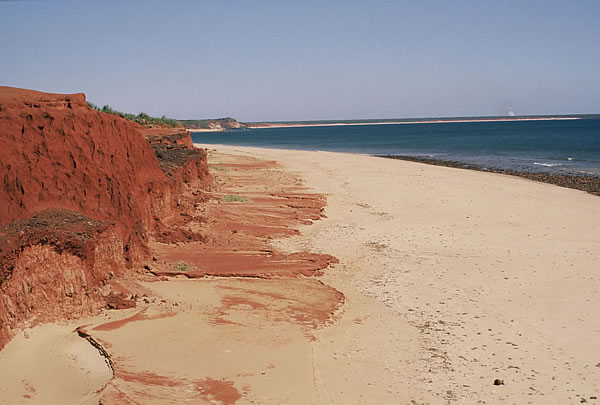
I continued beyond Cable Beach that was still quite deserted at 9.00am in the morning and paddled along the sandy coastline with few features to make an impression on me. This part of the coast up to One Arm Point was the easiest and safest section of coastline along the Kimberley Coast so it was a good introduction before all hell breaks lose at One Arm
Point.
The coastline was still deserted with little to entice me ashore other than a short break at Willie Creek and stopping for the night at Barred Creek after paddling 35kms.
Two days later I actually spotted a lone walker striding it out along the beach. Soon after a landrover roared over the white soft sand but again it was oblivious to me being out alone on the ocean. The isolated beaches just continued to stretch far into the distance and my only companions now were jellyfish and dolphins slicing through the water beside me.
The silence of my lonely paddle was broken by a mysterious noise. I scanned the sky for signs of a plane, but the cloudless sky revealed nothing. Everything was calm; a ship on the horizon, and another turtle and a dugong passed by. The noise became louder, it was eerie, and then I realised that the sound was a small surf wave hitting some rock ledges in the distance.
With the mystery over, I passed the next point and spotted another vehicle but it vanished within minutes. I now entered into an arena of reefs, and all around me the surf kept rearing and breaking. I had to find a way through, but as I challenged the next wave it broke smothering me with whitewater and hurtling me backwards. After the wave subsided, my second attempt was more successful. The excitement was soon over, however my adrenalin was still
pumping.
My camp at Carnet Bay was marked by a large red buoy that had been washed up on the beach. The bay had a bit of history so as I focused on the exposed sand flats. In March 1942, Japanese Zeros, returning from a bombing raid off Broome, chanced upon a DC3 plane piloted by a naturalised Dutchman and former Russian, Ivan Smirnoff. The plane was hit and the engine burst into flames and although wounded Smirnoff made a perfect pancake landing on the sand flats, close
to breaking waves that put out the fire.
Smirnoff had been given a package before leaving Java, which unbeknown to him contained diamonds. Soon after the accident one of the crew members returned for the mail and the mystery package from the plane. In the process a wave knocked him over, scattering the items in the water and for the pearls to be never found! I wondered if any of the $500,000 worth of diamonds was still buried out there.
With the tide being fairly high this morning it covered all the sand bar that I had seen the previous day. I dragged the kayak through several dumping waves and with the use of my paddle as support I hopped into my small cockpit. A few minutes later a dugong, looking like a large sea cow, swam by with no concern of me at all. I had dived with them at Coral Bay several years earlier and at that time it was a beautiful experience. A little further as two dolphins came by I heard a strange noise.
At first I thought I was imagining it, but I kept listening and it was real. I thought it was some strange noise coming from the deep, but it was a coast-watch plane in the distance.
The coast watch plane made frequent visits along the coast but often they passed over without seeing me but this time they turned around and dived towards me. At least if anything happened to me they would know I had passed this position. It circled and then flew off towards the Lacepede Islands, leaving me to my own thoughts.
Having rounded Red Bluff I felt the tidal influences and the wind blowing directly towards me. The boys on the custom vessel had told me that it was all uphill against the tide, after I rounded Red Bluff. They also told me to watch out for the masses of sea snakes that were so thick they formed large carpets in the ocean. I hadn’t seen a snake so far. Halfway across the bay to Low Sandy Point I saw my first crocodile. Those nobly eyes and craggy nostrils gave me the shudders but as I looked
closer it turned out being a stick, which made me much happier. Then I saw two dolphins leap high out of the water. I hadn’t seen them jump so high before so it was a new experience, one of many I expected to witness on my trip north. I caught up with them and there were four, playing about and snorting. They were in no hurry as they mingled and circled me, two of them even slid underneath my kayak.
I eventually came to my resting place and dragged my kayak up above the falling tide. The hard day had taken its toll, I needed to wash and freshen up straight away. With the absence of crocodiles in this area I was able to lay in the magical northern waters, relaxing and soothing away my aches and pains. Being no restriction on nude bathing out here I was naked as a jay bird but my white backside
and the inquisitive flies soon reduced my bodies exposure time in the sun. I didn’t really relish sitting in the kayak for hours with a sore, red bum.
I lifted the kayak on my shoulder and walked towards the beach. The 35-40 kg weight of the kayak was killing me and once I hit the soft sand I dropped it and dragged it the rest of the way. There was no doubt, I needed a lighter boat if I was to carry it or I was going to break my back.
I had built the kayak strong and had reinforced it in certain places to withstand the battering it was going to get on this journey. I didn't want the kayak to break up along the way as it was my life line and with no communication I wouldn't be able to call for help.
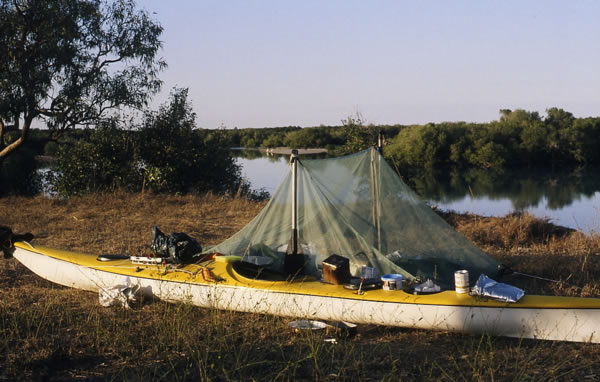
Along this sandy section of coastline I used a mosquito mesh tent but the smoke from my fire was often a real nuisance as it wafted through the mesh. The view from inside though was brilliant. I had a panoramic view of the stars and the lighthouse on Lacepede Island was flickering away. Several bright stars were being lost every few minutes as the earth slowly revolved. I could see bodies of water on the sand flats that had been left behind by the falling tide
and the stars above were being mirrored in them. In the far distance white foaming waves reflected as they broke continually in the shallows.
When I crept out of my mosquito proofed tent two oyster catchers were searching the beach for food and a kestrel was perched on a log on the sand hills. The heavy dew had saturated everything.
The surf was dumping as I waded out with my kayak waiting for the big ones to pass. The backwash was playing havoc, dragging the kayak back and forth up the sand. A rogue wave pushed the kayak sideways. I tried to hold on and straighten it out but another wave smashed into it forcing it sideways and slamming it against my legs. I trotted back quickly but eventually the surf beat me. It bowled me flat on my back with the kayak hurtling towards me. As the wave
subsided the kayak was sucked back into the trough leaving me with bruised legs. After bailing the water out, my second attempt to get into the kayak and leave was more successful.The Nordkapp kayak has a very small cockpit so unlike kayaks of today it's virtually impossible to get into it without using the paddle as a support.
Passing Camp Inlet I focused on the breakers that were slamming into a low point off Beagle Bay 2 kms ahead. Here three dolphins passed me and numerous turtles surfaced gasping for air. I was told of a pearling hut in Beagle Bay where I could obtain water so I headed for it.
The bay was 20kms deep and 8 kms wide and in the distance haze I noticed a shape in the bay which turned out being a yacht. It was anchored opposite a shed on the mainland which turned out being the Pearling Station. I felt excited as I was going to talk to people.
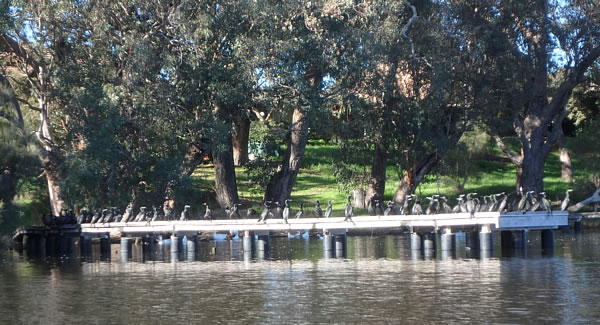
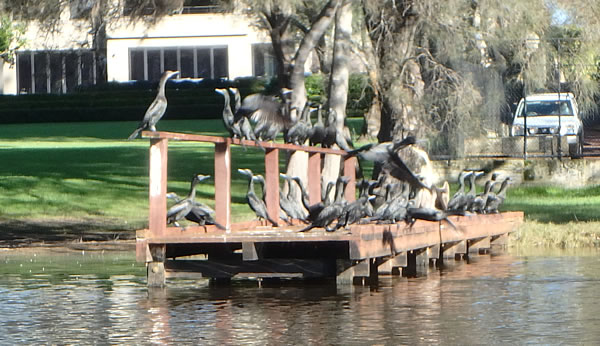
What Are The Cormorants Going To Do Without Jetties!
Not only were the cormorants on the jetties but the trees were full of them.
Paddle WA Avon Descent Forum
Paddle WA is holding a forum for all to give their thoughts about the future of the Avon Descent. We would like to invite all who are interested to attend and share their comments, thoughts, ideas and suggestions.
Ascot Kayak Club, Belmont
7pm, Wednesday 29th July
AKC will also be selling food to fundraise for the purchase of a new coaching boat.
Items discussed will include the format for the future, how to reduce costs, critical success factors and anything else suggested by attendees in the RSVP form. Following this meeting, Paddle WA will meet with NADA and the DLGSC to provide feedback about all that was discussed.
Please RSVP below 👇
https://www.paddlewa.asn.au/…/…/avon-descent-paddlers-forum/
WWR #4 Walyunga Race
and WWR #4 Teams Race.
8th August
Putting in from the top car park, Teams of 3 will race through the slalom section down the Walyunga Chute in a sprint
challenge.
Following the Teams Race, the individual Classic race will be held over a section of the popular Walyunga to Bells run. Competitors follow a winding river consisting of exposed rocks and Ti-trees with the added fun of several rapids and a strong current.
|
|
|
|
|
|
|
|
|
|