|
|
|
|
26th June 2020 CDU Newsletter 657
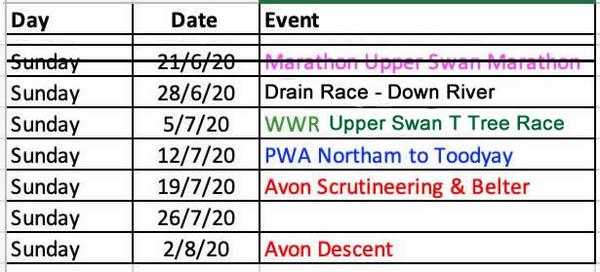
With all the paddling activities back to normal, and with the Avon Descent getting closer all we need now is some water in the Avon River and being officially told that the event is going ahead or not.
A decision was supposed to be announced early this week but I haven't heard anything yet.
It's getting to that stage where it might be better to cancel it and regroup for next year.
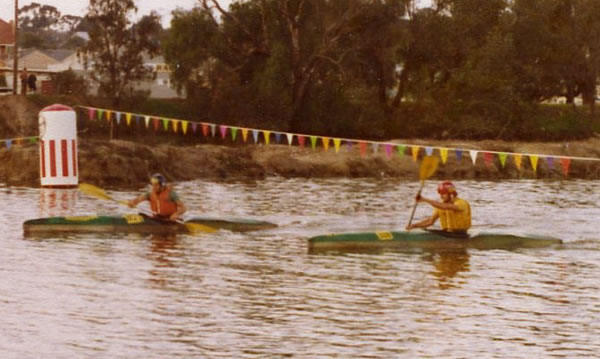
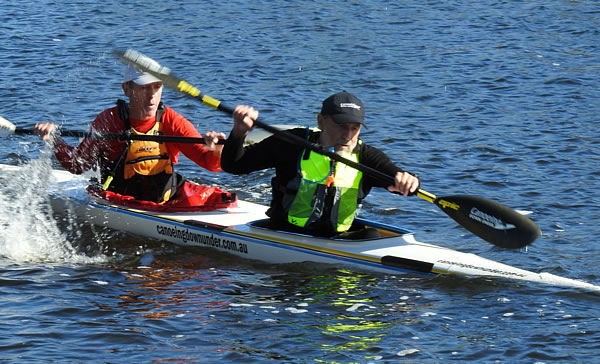
Steve Pilton and I taking off in the 1979 Avon Descent. We were the second paddle craft to finish. We were paddling the Bullet Wild Water kayaks. Back then 99.9 per cent of kayaks were just made of fibreglass. Chris Ward and Lindsay Binning were two of the first paddlers to paddle kevlar kayaks which proved to be so much lighter. They won.
The water level in 1979 was very shallow as you can see here.
I met Austen Mullen on the river this week. I hadn't seen him for a while.
Back in 1980 he came along on a couple of my ocean paddles down along the south coast.
Back in 1979-80 I used to paddle the coastline from Albany to Perth solo at weekends. It was part of my training for a big trip along the Kimberley Coast that I was planning and did in 1982. Jenny would drop me off in the morning and then pick me up at the end of the day. We would camp overnight and then I would paddle the next day and then at the end of the day return to Perth.
Paddling solo helped me to become self reliant and it got me used to facing dangers and over coming them.
To my knowledge I was the first West Australian to seriously take up sea kayaking in WA.
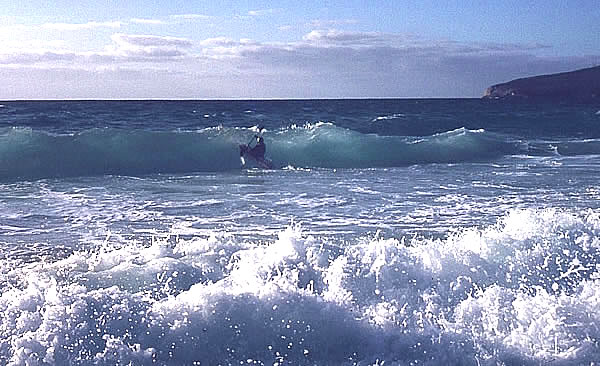
Austen paddling out over the surf at Cable Beach, Albany in my Anas Acuta sea kayak.
This trip we paddled from Cable Beach, not far from the Gap near Albany and headed west towards Denmark.
I always had two or three sea kayaks so I could encourage other paddlers to come with me on a trip if they didn't have one.
In 1987 Ken Cornish used my spare Nordkapp on a Kimberley Expedition and in 1988 Ewen McGregor used my Nordkapp on a Kimberley Expedition.
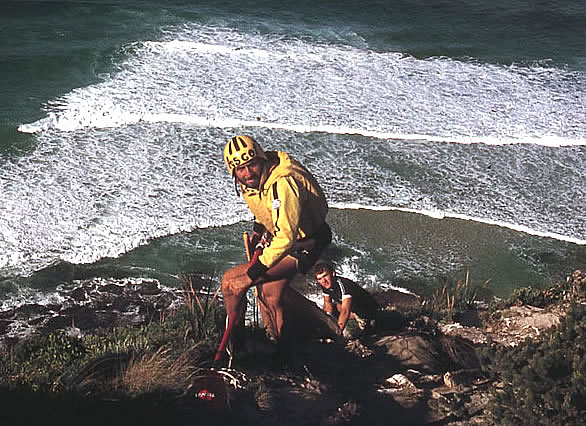
Dragging our kayaks up a very steep sand cliff.
Austen got dead legs along the way so we decided to go ashore to relieve them. As we sat 300 metres out from the beach contemplating to come a shore a King wave suddenly reared up. Austen being sideways got dumped straight away and I managed to surf the huge wave in but I did a complete somersault as the wave hit the beach. With the nose of the kayak spearing into the sand two cracks appeared each side of the kayak where my shins were.
We decided to call it a day but our ordeal wasn't finished as we had to climb a steep cliff which was a very difficult climb.
I repaired my kayak and returned the following day and put in at the same point to continue the trip. The surf was rougher than the day before and I had to roll three times before being able to get through the several sets of surf.
Austen was sensible and decided to stay on shore.
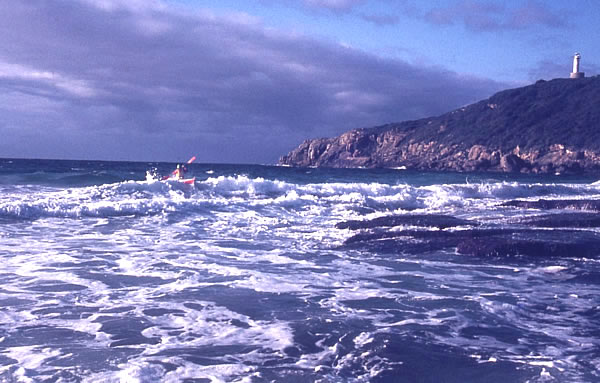
Paddling through the surf on one of my paddles down south.
Canning Canoe Club
New K4s
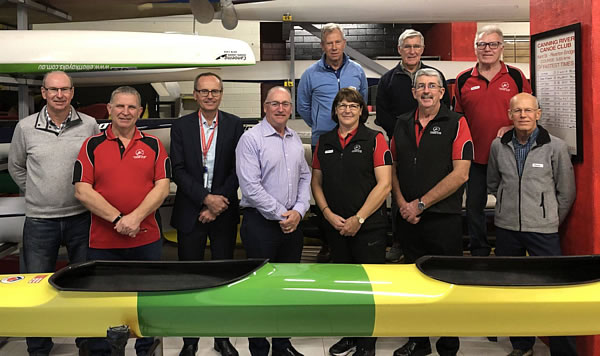
The CRCC held a morning tea at the boat shed for Federal Member for Swan Steve Irons who inspected the two new K4s that we purchased with the grant that Steve provided for us.
Congratulations to a large cast who helped get the Boat shed into tip top shape. The boats are now ready to use and has many members lined up to try out the K4s.
You can book by using the booking system or contacting Dave Griffiths
Walking The Canning Stock Route
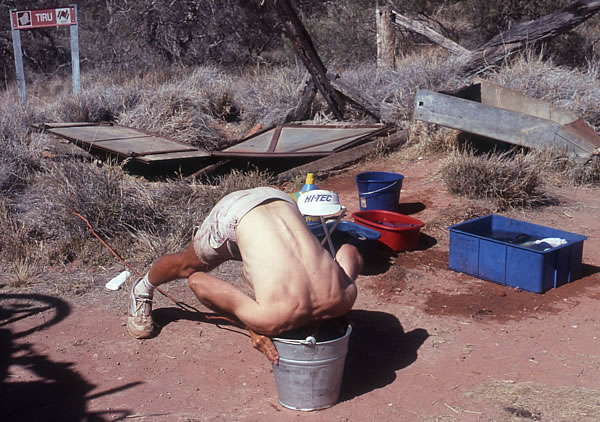
Washing my hair on the Canning Stock Route at Well Tiru.
In 1990 as part of my 24,000km Walk, Cycle and Kayak around Australian I walked the full length, 1600kms of the Canning Stock Route.
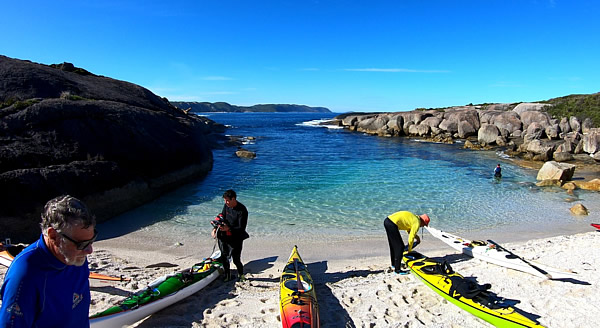
Parry's Beach to Boat Harbour
Albany Sea Kayak Club
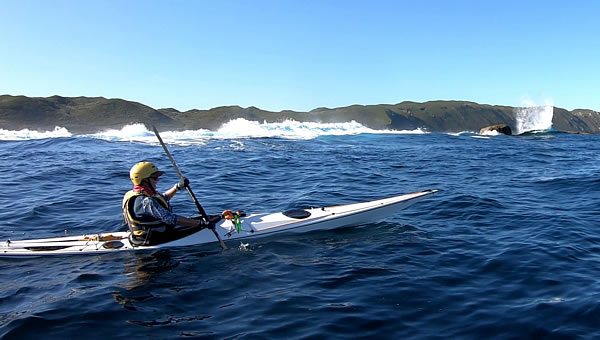
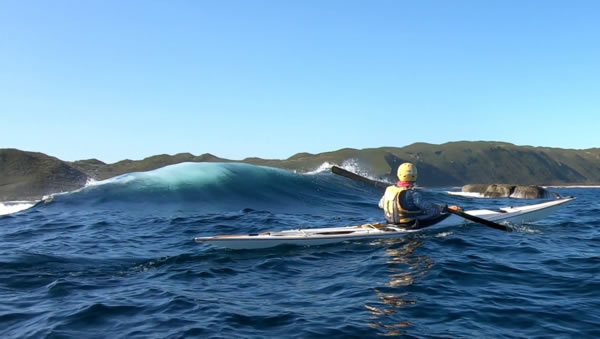
Lunch time at the Boat Harbour. Photo Chris Fry.
Returning to Parry's Beach. Photo Chris Fry.
Nearly not returning to Parry's Beach!! Photo Chris Fry.
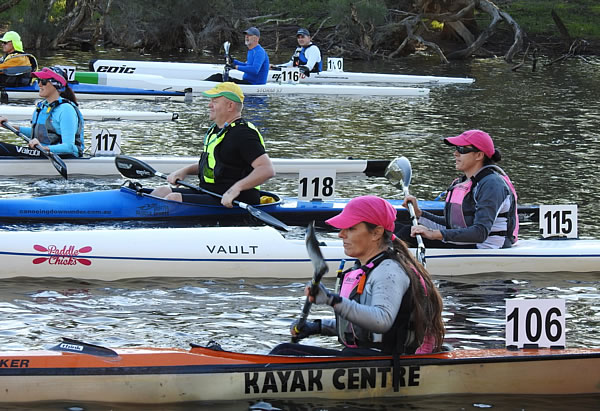
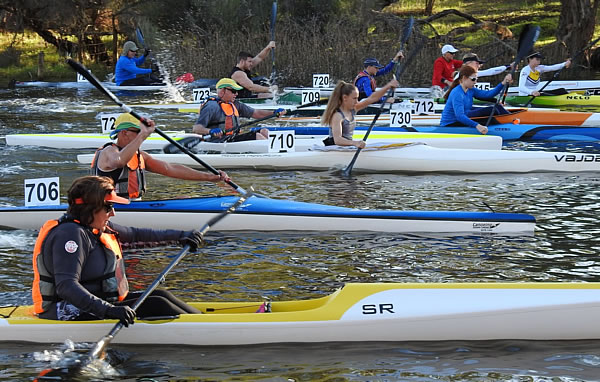
Some of the paddlers in the 26.5km race getting ready to take off.
Photo Bethany McDonald
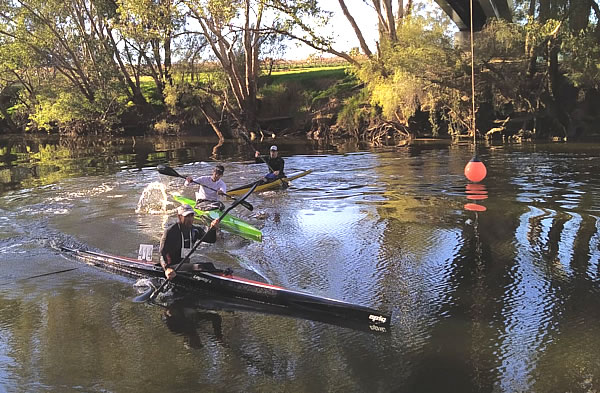
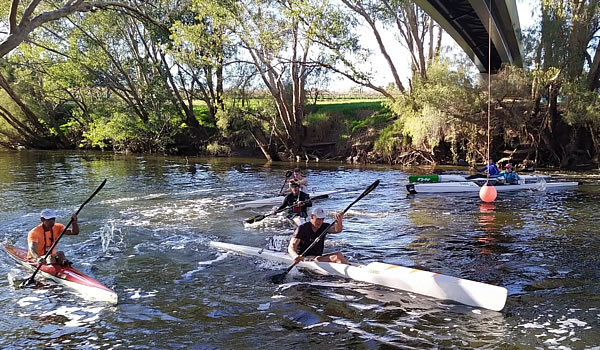
The leaders at the 5km turn, William Lee, Jesse Phillips and Ben Carrick.
Winner William Lee, second Ben Carrick and third Jesse Phillips. Photo Steve Stuz.
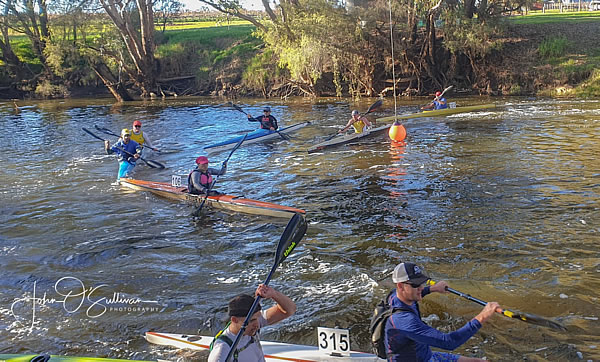
At the 5km turn. Photo Steve Stuz.
At the 5km turn. Photo John O'Sullivan.
Mean while after the paddlers took off doing the 26km race the 13km race started.
Some of the 13km racers taking off.
Photo Bethany McDonald.
With a kayak full of water our kayak nose dives under water for the last 6kms.
Two power boat swamped John and I.
Photo Bethany McDonald.
Race Results
https://www.webscorer.com/race?raceid=215711&fbclid=IwAR0aS1jmdtz0Wg5qeqMgCnN_T7NA22TNQ1211Ne_woeUI1bqygDdCQMKjss
Upcoming Race
WWR #2 Drain Race 28th June.
Starting and finishing at Hester Park, paddlers make their way upstream to the starting point (drain) with the return leg being
the race.
Like the Buoys Race this is a flatwater course, designed to test the paddlers ability to manoeuvre the kayak through narrow
sections of river with low hanging trees and slight current.
With the Avon River levels still too low for any racing this week, the venue for our second race of the season remains unchanged and will proceed as the Drain Race at Hester Park in Langford.
https://mailchi.mp/…/registration-open-for-wwr-2-wwr-124959…
The Mississippi River Expedition continued
Part 15
Wednesday 29th July
I slept on the floor of Joey’s home on cushions from the sofa. We had a fruit breakfast which was really refreshing after having had cereal every morning for the last few months. A little later I washed all my gear as well as the kayak as it was pretty filthy from all the polluted, dirty water of the Mississippi River.
As I cleaned and put away one form of transport, another was taken out of a box as it was time to get back on my bicycle. At lunchtime Joey and I cycled to one of Joey’s favourite local restaurants and had rice, beans and chicken. On the way back home we called in at the bike shop where Joey worked to see if I could find some cycling shoes and meet Joey’s friend, but they didn’t have any shoes that suited my way of cycling. I was cycling in my sand shoes but Joey
convinced me to buy some proper cycling shoes which would give me added power. I didn’t want a pair with cleats as I needed to walk around shops without clanking. I wanted a pair like my running shoes but with a stiff sole which meant I could walk normally.
Back at Joey’s place I packed all the things I didn’t need any more to send home. I had no more paddling planned so all paddling gear could go. All I would need now was my cycling gear and it all had to fit in my bike panniers. After cleaning and packing everything I could now relax. The only thing that was left was my kayak, but Joey was going to store it for me and try to sell it, as I couldn’t really take it home.
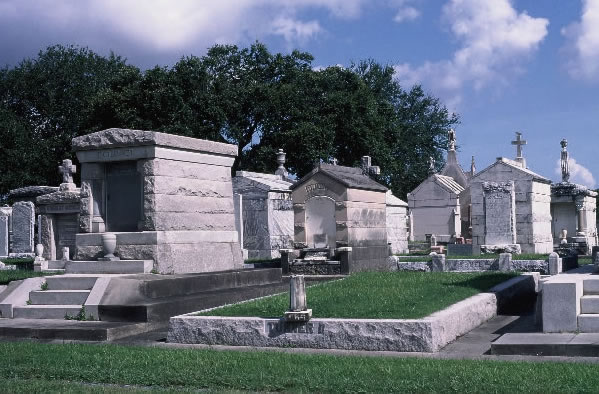
With all jobs done it became time to be a tourist and have a meal out with my hosts Joey and his partner Marianne. On the way to the restaurant they stopped at a cemetery that had raised graves. With the city being below sea level, the water table being high and flooding occurring, the dead have had to be put in tombs or above ground vaults since 1789 because coffins buried below ground before then were often flooded and washed away in heavy rains. Every
year on November 1st (All Saints Day), New Orleanians pay special attention to their graveyards when friends and relatives of the deceased clean and paint the tombs and decorate them with flowers and other mementos.
The dead are now buried in tombs or above ground vaults because most of New Orleans is below sea level and in times of floods coffins were sometimes washed away.
At the restaurant, which had a French cooking influence I met their friend Johnny and we talked over a delightful Cajun meal. I kept hearing about Cajun food and music when I entered the south but it wasn’t until New Orleans that I started to find out a little about them.
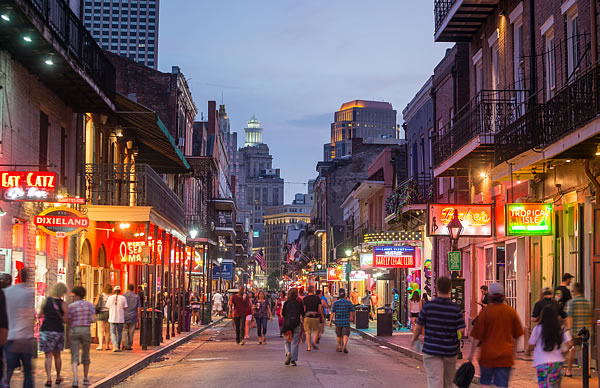
After our spicy Cajun meal and before visiting the well known ‘French Quarter’ in New Orleans, Joey and Marianne drove me into the city via an avenue lined with historic mansions that are still lived in today by the wealthy. We headed for the French Quarter where everything happens. It is the heart and soul of the city, with bars, restaurants and clubs. You name it, and it was there. As we walked around the streets capturing the atmosphere, talking and just
having a good time, there were several mules busily pulling carriages carrying tourists and locals around the area.
The French Quarter is the oldest part of the city, but it is also known as the ‘Vieux Carre’, because although founded by the French in 1718, it also reflects the art and architecture of the Spanish era. In the 1850s and the late nineteenth century the French Quarter fell into disrepair but it was saved in 1850 by Baroness Michaela Pontalba who oversaw the construction of two apartment buildings flanking the main square which still stand today. These are the
oldest apartment buildings in the US. Fortunately there are still people who see the value in old buildings, as historic preservationists saved them going to ruin in later times.
“Before leaving the French Quarter Joey said, "you can’t leave New Orleans without tasting the famous donuts and beignets, they’re an institution in New Orleans". Without any resistance from me, we walked to Café Du Monde which was established in 1862, and was located in Decature St. The name beignet is a French name for fried dough and it is a kind of French donut. We ate, drank coffee and shared conversation and it was such an enjoyable evening.
On the way home we detoured to see the longest causeway bridge in the world, which goes right across Lake Pontchartrain, the second largest saltwater lake in the US, after the Great Salt Lake in Utah. It is roughly 24 miles from south to north, where the causeway bridge crosses, and 40 miles wide. It has an average depth of 12 to 14 feet.
After barely talking to anyone along the Mississippi River I was certainly catching up with some history and trying to reaffirm some of the things that I had been told or read on my way around the U.S. There were so many things I wanted to know. It was so exciting learning about another country and getting to know more about it than the people who live there.
The busy streets of the French Quarter.
Thursday 30th July
After another enjoyable breakfast, it was time to go so Joey led me through the streets, zigzagging around the back streets, passing graveyards, and crossing a railway line and following a track that I’m sure we shouldn’t have been on.
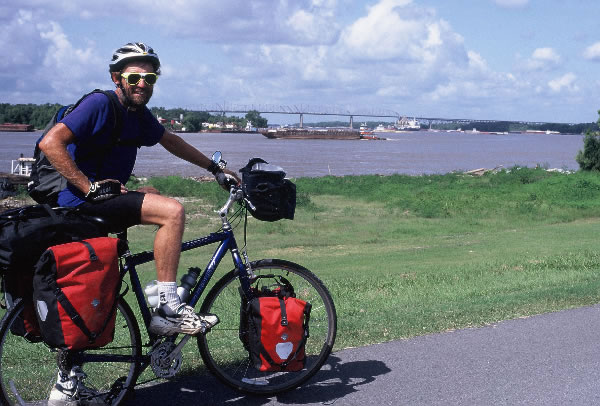
After 35 days on the river I was leaving the city of New Orleans by bike. Joey led me to a cycleway close to the river. I posed for a photograph with the Huey P. Long Bridge (a horseshoe shaped bridge that I had paddled under a few days earlier,) in the background. Barges were still busily motoring up and down the river and under the bridge. Joey and I shook hands and said our goodbyes. We had only spent a brief time together but there was such a sense of
camaraderie between us that I felt that I had known him for a long time. Joey had become a good friend.
It's time to leave New Orleans by bicycle. I still have several thousand kilometres to cycle and a 350km backpack trip ahead of me.
The Mississippi River was just a small part of my 8 month, 14,500km kayak, cycle and backpack around the USA.
I followed the cycleway towards the unique Huey P. Long Bridge. I was still quite amazed at its uncharacteristic half horseshoe shape at one end. Completed in 1935, it is the longest and highest steel rail-road bridge in the United States. To allow trains to climb easily and cross the high bridge, the rail approaches have been built with a very gradual slope and extend 4.35 miles long from abutment to abutment on either side of the bridge. It’s not only a rail
bridge but it also provides a four-lane highway, two one-way lanes on each side of the double rail track.
As I looked across the river it had only been a few days since I paddled past this point and so I remembered it well. I remember being pretty apprehensive because I was told I could get my throat slit if I camped within the city limits or get run over by one of the many boats. Looking back I had nothing to fear, as fortunately everything had worked out like clockwork. I allowed myself time to reflect on my journey down the Mississippi River, rekindling both the
joy and apprehension. For 35 days it had been my life. Now that the paddle was over, I wanted to go back, to do it again, but this time I would do it differently. I would still use a fast boat, but I would stop at more of the local towns and communities on-route to get to know the Mississippi more intimately. I straddled my bike with a sense of pride in having paddled the Mississippi, being one of only a few people who had conquered it from end to end.
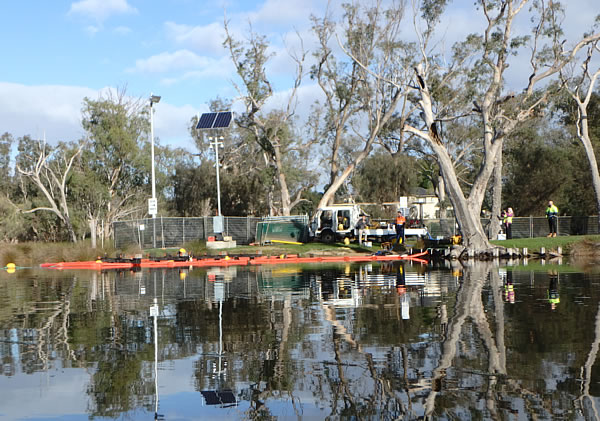
The Bassendean Jetty being taken down.
The council promised to rebuild the jetty but now they have changed their minds and the two jetties are coming down.
|
|
|
|
|
|
|
|
|
|