While we are experiencing the hot weather over here and there isn't a drop of white water in the river, some paddlers are keeping cool over east paddling white water on the Mitta Mitta River.
Paddle Australia Canoe Wildwater Championships
The championships also served as selections to the 2020 Australian Wildwater Team and will be announced in the coming weeks. Selected athletes will compete at the ICF Wildwater World Championships and World Cups in the USA next year.
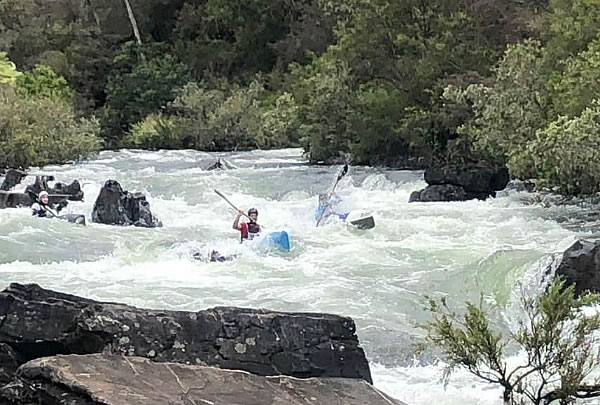
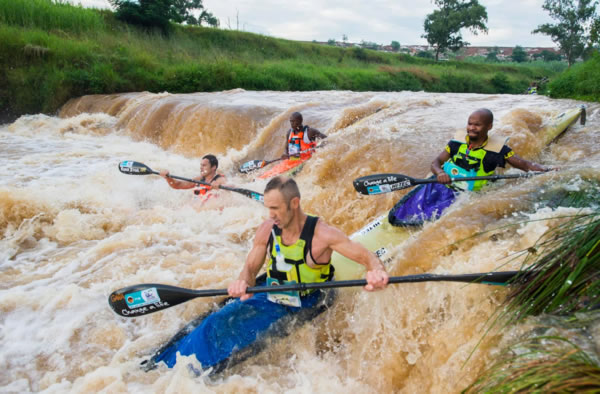
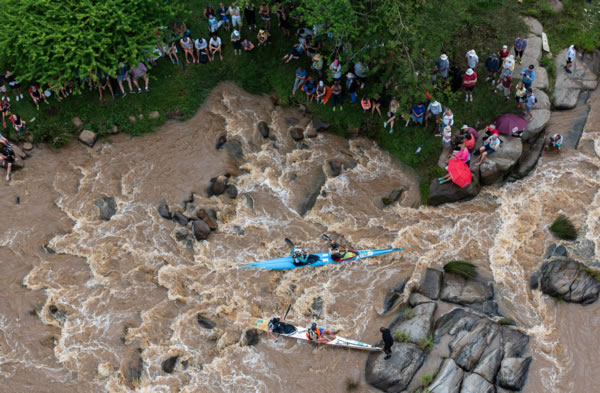
A team of three taking on Shark Tooth on the Mitta Mitta River.
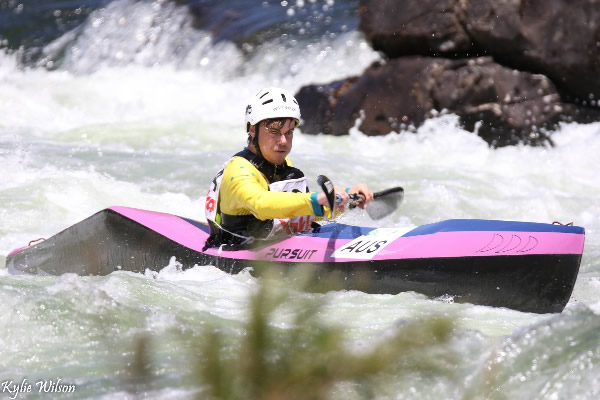
WAs Christopher Greed taking part in 2020 Paddle Australia Canoe Wildwater Championships.
He came 2nd in the U23 category in 4 races.
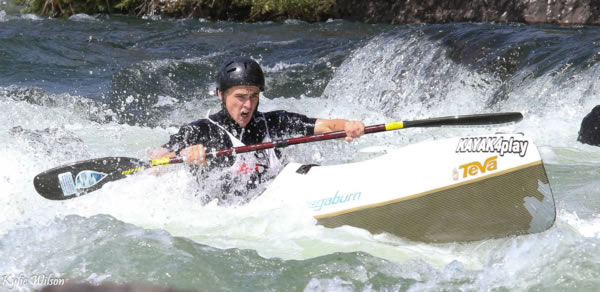
WAs George Pankhust came 1st in his U16 category in 3 races.
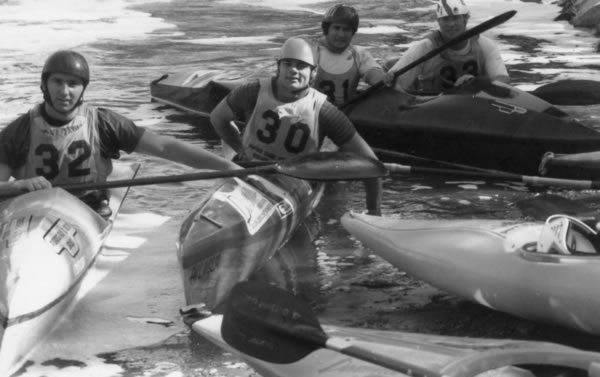
Back in the 1980s & 90s WA had a very strong Wild Water team of paddlers. Four of them pictured here are:
Darryl Long, Piers Goodman, Neil Long and Keron Hepworth.
WAs Kylan Jegorow at the Adelaide GP
Is there anyone interested in learning to paddle a high kneeling C1 or C2?
If so let me know
Dusi Canoe Marathon
South Africa
Dusi 2020 is a K2 year. 27-29 February 2020
3 days - 120 kilometres
several portages
water quality - not so good
------------------------------
About the Dusi
The Dusi Canoe Marathon was founded in 1951, and covers roughly 120km between the cities of Pietermaritzburg and Durban in KwaZulu-Natal on the East Coast of South Africa.
It is the biggest canoeing event on the African continent, and one of the world’s most popular river marathons, attracting between 900 and 1600 paddlers each year. Paddlers can choose between normal marathon K1s, K2s or even K3s (yes a K4 has even finished the Dusi). These boats need to be of robust construction to be able to take the knocks dished out by the rocky river, and must have an overstern rudder. Paddlers must wear a splashcover (spraydecks) and lifejackets (PFDs) and, if very full river conditions occur, will be required to wear helmets. Paddlers traditionally make provision for their own hydration, and carry enough fluids for
each stage of the race. The organisers provide 3 hydration stations each day. For South African paddlers, the race requires each entrant to be AR rated (having passed a basic proficiency test and then the required number of C and B rated river races), as well as successfully completing a number of qualifying races. International entrants are exempt from these requirements, but will be required to prove that they are proficient paddlers with suitable experience on at least Grade 2 rivers, and to prove that they are currently in good physical condition. The race is held in February every year, to take advantage of the summer rainfalls. Temperatures can be extreme, often exceeding 40 degrees Celsius in the valleys.
The race starts on the Msunduzi River that runs through Pietermaritzburg and includes a number of weirs and Grade 1 to Grade 2+ rapids using water released from Henley Dam. At roughly the halfway point of the race the Msunduzi River meets the far larger uMngeni River and the river becomes more challenging, with some rapids rated Grade 3+, and some of the trickier rapids like Island 2 is portaged by most of the field. Most of the large rapids can be portaged if desired. Safety crews and divers are stationed at some of the major obstacles and rapids. The route is not marked and the onus is on the paddlers to learn the route and the safe lines down the more demanding rapids and weirs. The race is unique in that it includes numerous portages where the paddlers carry their craft over hills, either to cut out unrunnable rapids and cataracts, or to eliminate long loops in the river. Most of these portages are through thick bush on steep and undulating terrain, and several of them are around 4km in length. There are several seconding stations on portages during each leg of the race where seconds (friends or family) provide water and sports drinks, and in some cases food as well.
Stage One of the race is 42km long, from Camps Drift in the city of Pietermaritzburg to Dusi Bridge, a remote area outside Cato Ridge close to Nagle dam. Most paddlers exit the valley after their stage and stay in local accommodation or return to either Durban or Pietermaritzburg. It is possible to stay in tents at the overnight stop. Stage Two is the longest and hardest stage, 46km from Dusi Bridge to Msinsi Resort on Inanda dam outside Hillcrest, and ends with 11km of flatwater on the dam. The overnight stop is well suited to camping and also hosts some entertainment in the early evening of Day Two. Hillcrest and Durban are nearby and most paddlers leave the valley after their stage to stay in nearby accommodation.
Stage Three is 36km from Inanda dam to Blue Lagoon in Durban, starting with 4km of flatwater on Inanda dam and ending with 10km of flatwater on the tidal estuary into the finish. Each finisher receives a Dusi medal and a commemorative race garment. The race prize giving takes place at Blue Lagoon after the final stage.
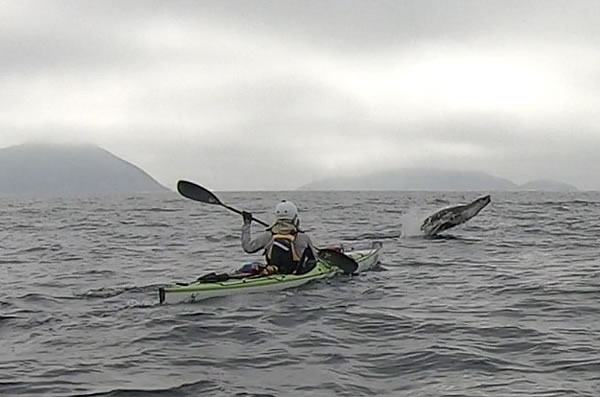
Having a whale of a time in Albany. Photo Chris Fry
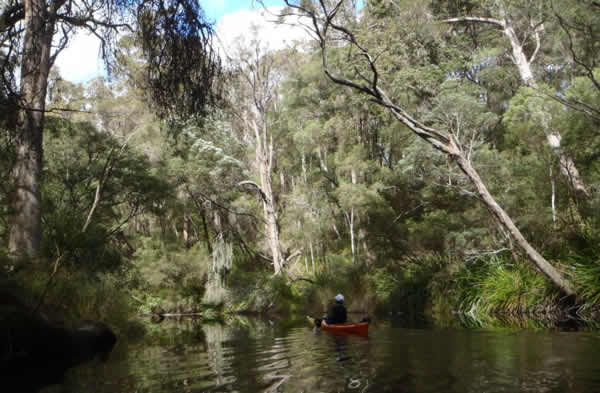
The Denmark River.
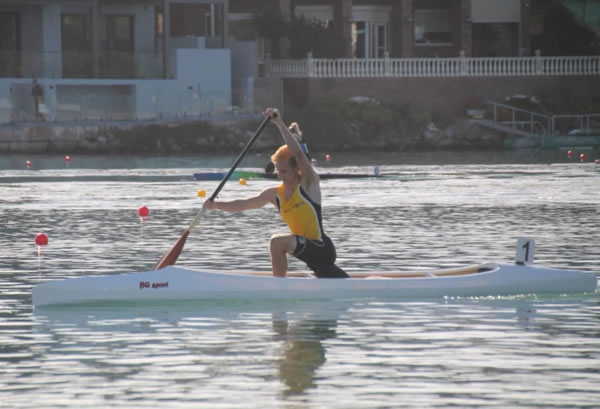
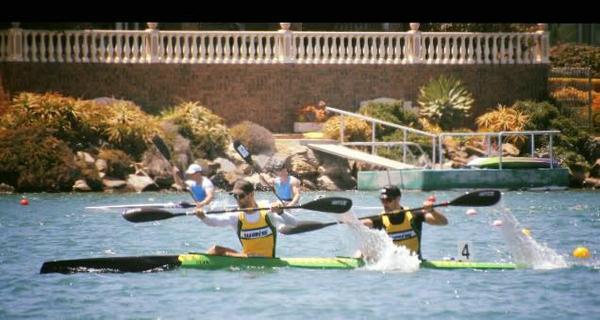
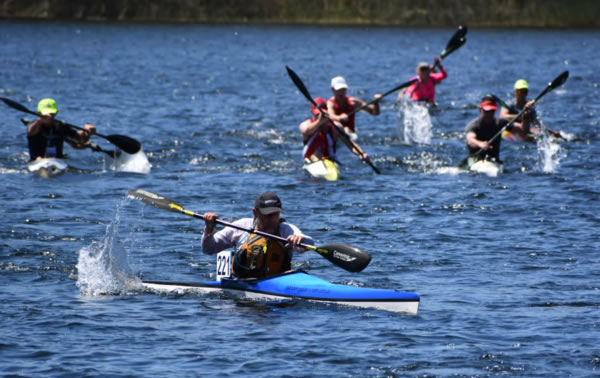
Canoe Sprint Grand Prix #1 West Lakes ADL, 6th-8th December 2019
Draw strokes are important for anyone who paddles - white water - flat water or ocean
I will be doing skill sessions after Christmas for paddlers interested in stroke techniques.
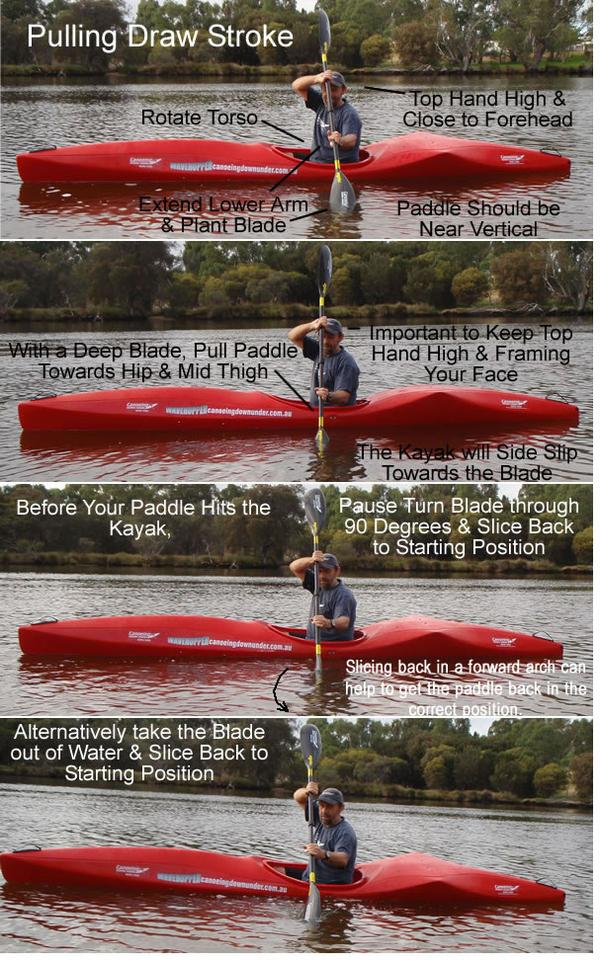
DRAW STROKE (PULLING)
The Draw Stroke (pulling) is used to move the kayak sideways, and are particularly useful for
side-slipping towards the bank. They can also be used to line up the kayak in rapids, to avoid boulders and obstacles or to keep a position on a race start line. when the wind is blowing.
Sit up straight and rotate your body slightly in the direction you wish to side-slip towards.
Raise your top arm (the arm that is furthest away from the direction you intend to draw towards) so that it frames your face. Keep your forearm no lower than your forehead and your top hand should remain steady over the side of the boat you are drawing towards.
Reach away from your hips with your lower arm extended and plant the blade deep into the water.
With the blade face parallel to your kayak, pull the paddle towards your body between your hips and mid-thigh. The kayak will thenside-slip towards the blade as you pull on the paddle.
It is important to keep your top arm high and framing your face until the entire stroke has been completed. Your top hand should remain steady over the side of the boat and only move
on the Recovery Stroke. Ensure the paddle remains as vertical as possible to produce the maximum amount of power.
Before your blade hits the side of the kayak,
pause, turn the blade through 90 degrees by rolling your wrist inwards, and slice the blade away from the boat to its original starting position.
More than likely the blade won’t slice back to its original position in a straight line.
Solution: Slice the blade back in a slightly
forward arc motion, keeping the drive side (face) of the blade facing the stern.
An alternative method of returning the blade, is to slice the blade fully out of the water and replace it
in the starting position.