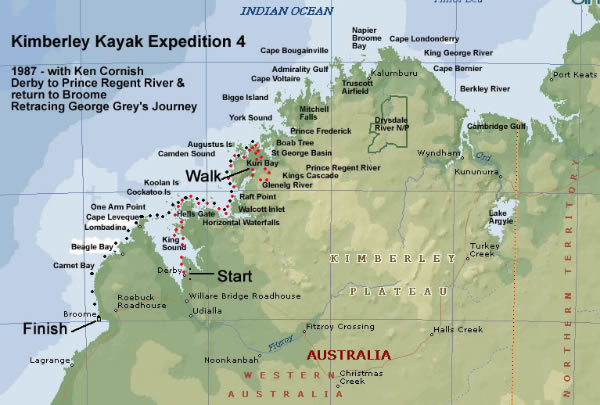
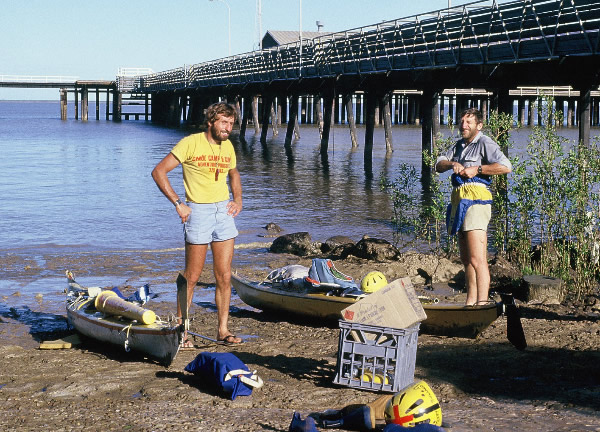
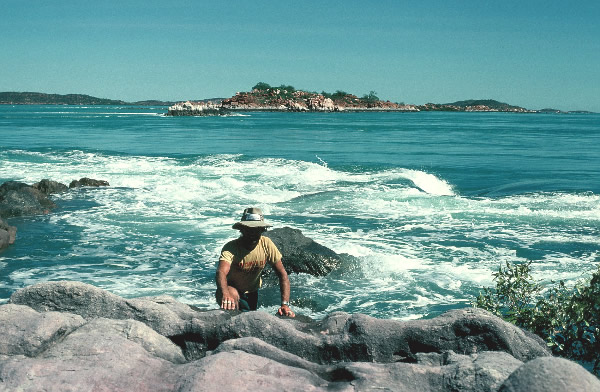
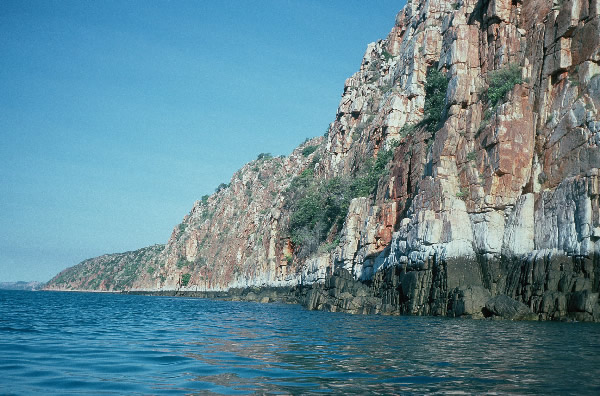
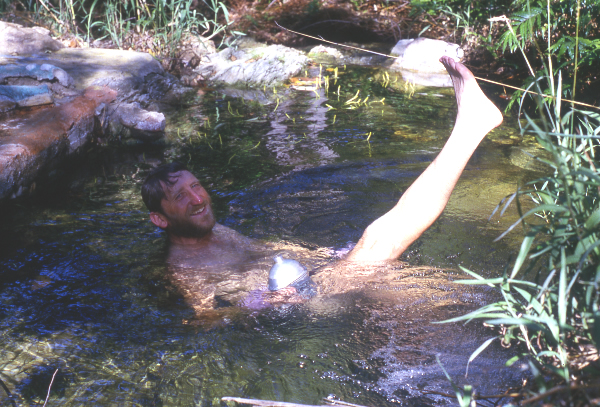
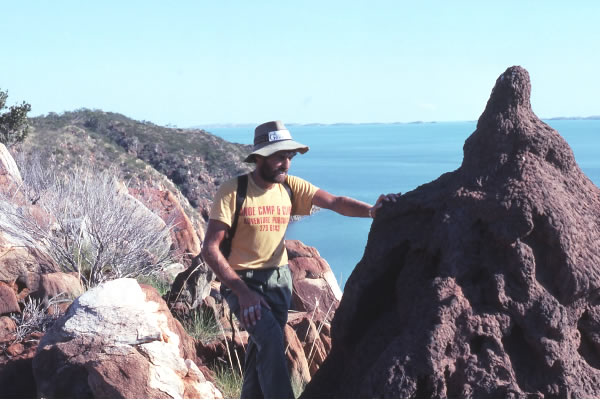
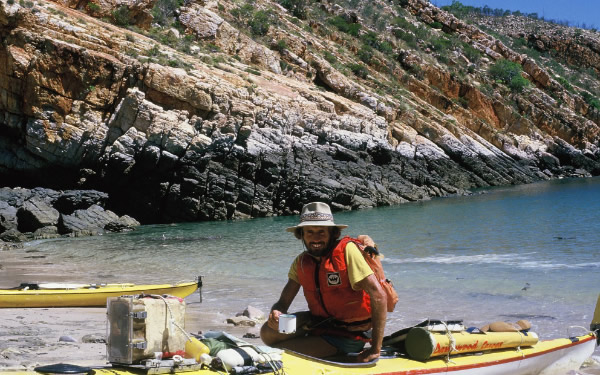
So at 7.30am on Monday 9th March 1987, with perspiration pouring down our faces and mud lathering our legs we entered our small kayak cockpits and paddled away from the Derby wharf. There was no chance of landing to stretch our legs on the first 35 kilometre section of thickly lined mangrove shoreline until we reached Point Torment, so we kept
paddling keeping a close eye out for crocodiles. Despite it being a crocodile habitat, we saw no sign of them but the water was brown as mud so they were probably well camouflaged and watching us. The day was steaming and 35 kilometres is probably not that far to paddle, but after the lack of training in the last two weeks it was far enough on the first day. With aching bodies we entered the shallows of Point Torment as a large fish jumped out of the water near Ken and another hit me on the side
giving me quite a thump and surprize.
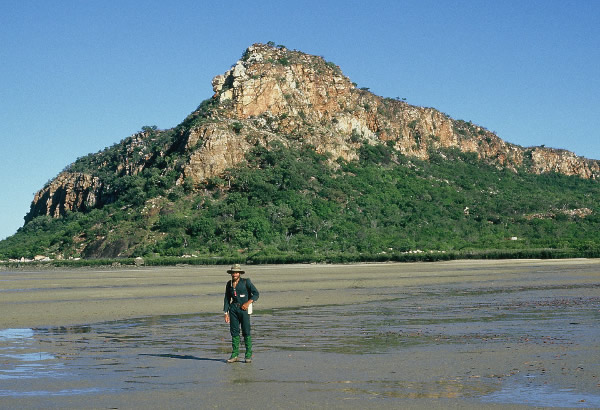
We were well happy to land at Point Torment on the only beach that afforded us safe camping away from the rising tide. The mud flats of the low tide stretched 600 metres from the beach and after landing our daily ritual started. One hundred and forty kilograms had to be carried to the safety of the beach, taking two hours to complete. Menacing
mosquitoes, sand flies and the heat made us very welcome on our first night out. We were in crocodile country surrounded by mud flats and mangroves, not the best place to be camped but Ken’s and my snoring would have kept them away. With crocodiles on our mind, the tent flapping throughout the night, hundreds of hermit crabs crawling over our gear and attacking our cooking pots, sleep was hard to muster. It was so hot that in the middle of the night that we both woke and decided to move the tent
to face it towards the wind, but it didn’t help, and to make matters worse we allowed mosquitoes to get in.
The weather eventually cooled at 5.00am which made sleeping possible but it was time to get up as we had a big day ahead of us. It wasn’t pleasant entering the darkness of a mangrove forest being attacked by squadrons of mosquitoes from all angles. The tide was 200 metres out but
we had no choice but to walk up and down the exposed flats several times to get to the water and load our kayaks.
Being paddle fit from the start of our journey was fairly crucial as on our second day we had to cross a 45 kilometre bay with no landing spots and a huge tidal movement. In such open water the unpredictable tide was a concern as we just might get pushed back to where we
had come. We also didn’t know if crocodiles were lurking beneath the brown water or if the wet season heat would be too much and destroy our dream.
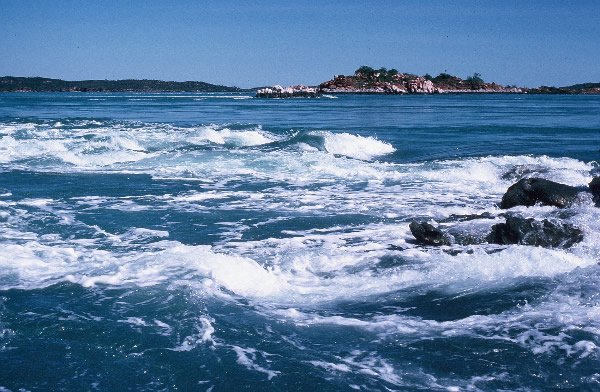
The low Point Torment soon vanished and all we could see behind us was the shimmering heat haze. We were soon lost to the solitude of Stokes Bay and the perilous sea. For 8 hours the mystery and movements of the ocean kept us in suspense
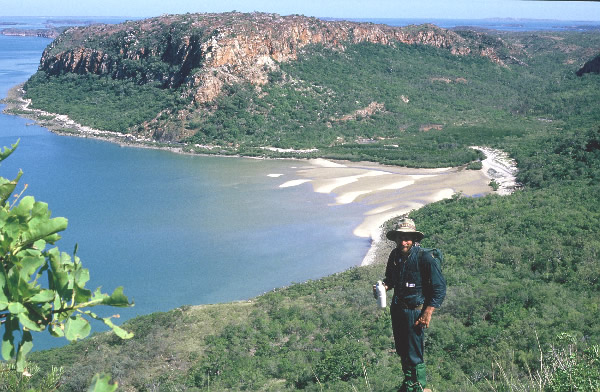
and it was hard to know what the tidal effects were having on us but we were crossing the bay on neap tides, the best time, as there was less rise and fall of the tide. Our fluid intake was high so we had to make sure we had enough water at hand and in 8 hours on the water Ken had consumed 7 litres. The high ridges of the mainland were a welcoming sight and when we finally paddled into bluer waters and scurry up a safe shelly beach we were so happy to have the dirty brown water of the King Sound
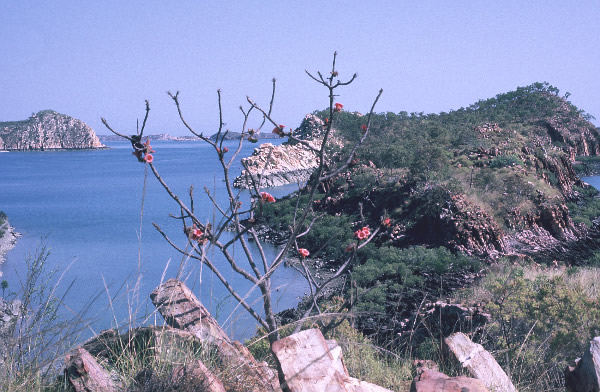
behind us. I walked up the beach and found a small gulley with crystal clear water. We unloaded, settled for a cool refreshing wash and rested near the small stream. We were in a completely different world to last night and a much better one.
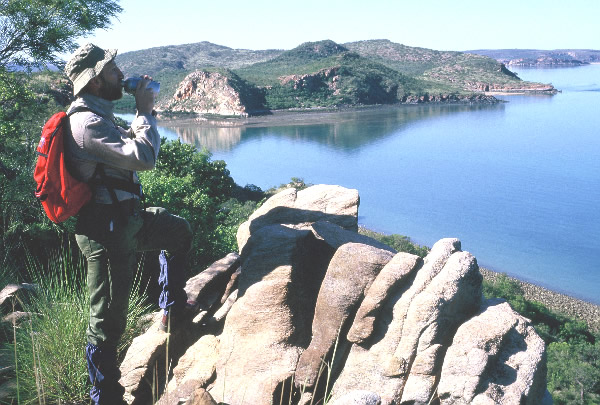
The cliffs behind our camp were too inviting so we changed into our walking gear and went for a stroll and capture some of the beauty from the
high hills. Twenty minutes later we found another gulley with a bigger stream and two wallabies that bounded across the boulders. Exploring around the area of our camping sites was really special as we knew that no other person would have walked or seen the country where we walked.