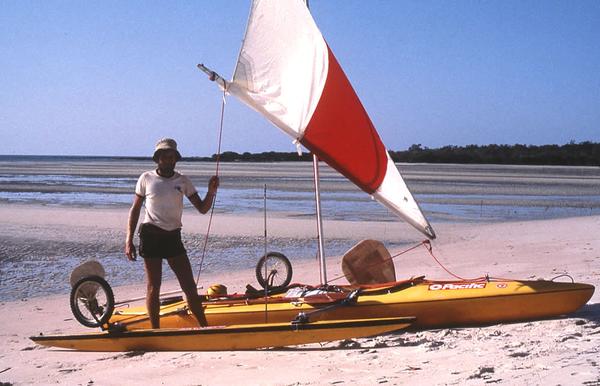
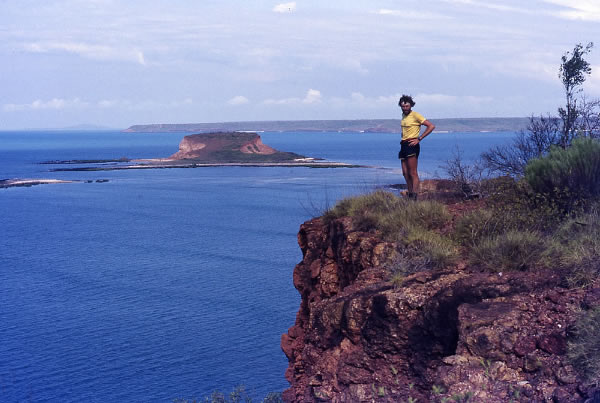
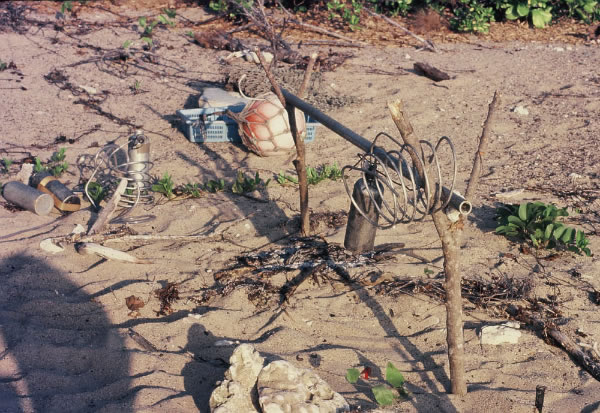
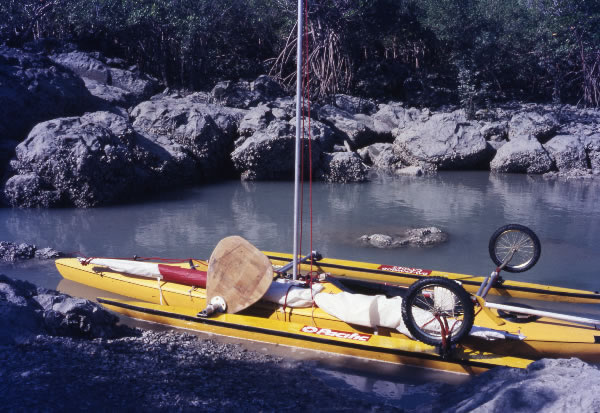
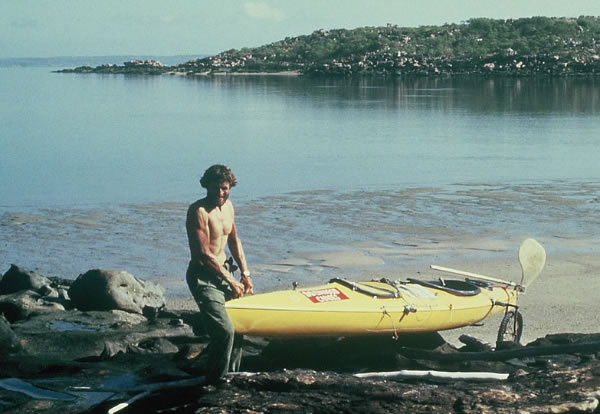
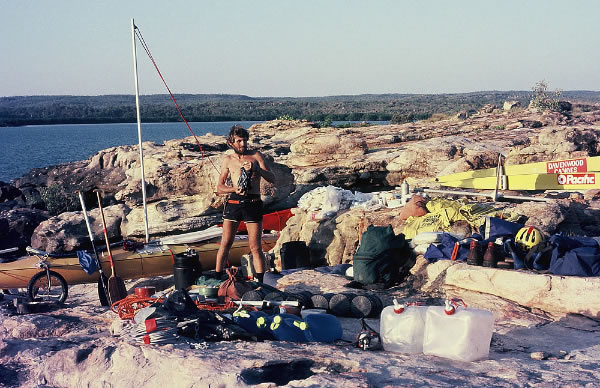
I camped for the night near Elbow Point overlooking the Sir Graham Moore Islands, but there were no trees in which to tie my hammock. In the war there were two units stationed on Sir Graham Moore Islands, one American (Lourain) and the other Australian (Radar). The only evidence that remained of their visit were a few drums, some other discarded
equipment and several wild pigs.
At midnight I awoke with violent pains in my stomach, feeling sick and a need to rush to the loo. I had diarrhoea so my backside was exposed to the sand flies for ages. They were cruel, they took advantage of my ill health and viciously attacked without mercy every part of my exposed flesh.
Throughout the night I vomited and had diarrhoea and as daylight broke I felt dizzy and distressed. No matter how bad I felt I knew I had to move away from the millions of sand flies that ravaged me the previous night.
I paddled on with a hammering head and churning stomach, wanting to pass Mary Island by nightfall, but
the falling tide left a huge expanse of sand flats high and dry between the island and the mainland so I didn’t quite make it.
Luckily my diarrhoea had stopped, as it wouldn’t have been pleasant going to the toilet from the kayak. To help restrict my bowel movements I ate a large portion of damper.
By the time I reached a beach on the west side of Anjo Peninsular a few kilometres from the abandoned Truscott Airbase I felt fine. What made me sick is still a mystery but I am glad it only lasted one day.
To reach the airbase I had to walk several kilometres inland through the bush. When I reached the airfield parts of the airstrip was in good condition,
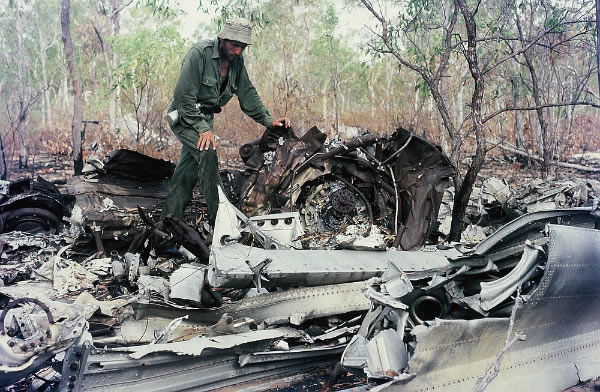
but much of it was overgrown by wattle trees. A crashed B24 Liberator aircraft, a communication tower and other derelict equipment lay near the runway. Hundreds of steel mats littered the airstrip and 44 gallon drums were scattered about.