|
|
|
|
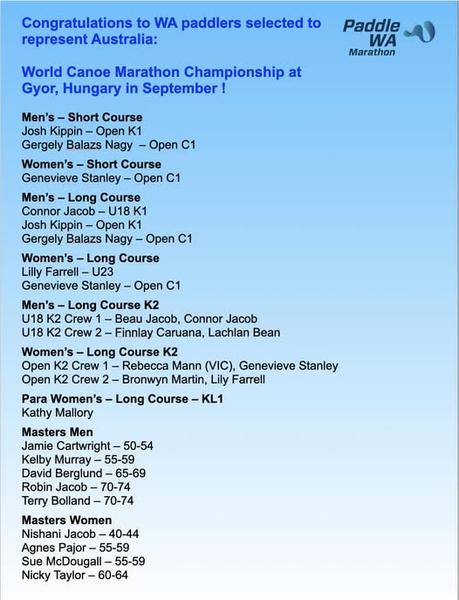
This is my last newsletter for 5 weeks. I am off to Hungary for the Marathon Champs and England to visit family and do some SUP paddling on new waterways. However check my Terry Bolland facebook page as I will be putting up a few photos on it. It's maybe a little late, but I have been paddling my kayak as well as my SUP this last two weeks. So my SUP kilometres this month will be 500+ rather than 700-800. However I need to paddle a few kilometres in my kayak and increase my pace to be ready for the World Masters Canoe Marathon Championships. I have been doing a bit of training with Nicky Taylor, well should I say I have been trying to keep up with Nicky. She is off to Hungary as well so she should do very well. There are 15 West Australians, 8 females and 7 males off to Hungry. See below. When I get on that plane it will be the first time for 10 months that I haven't been on the river.
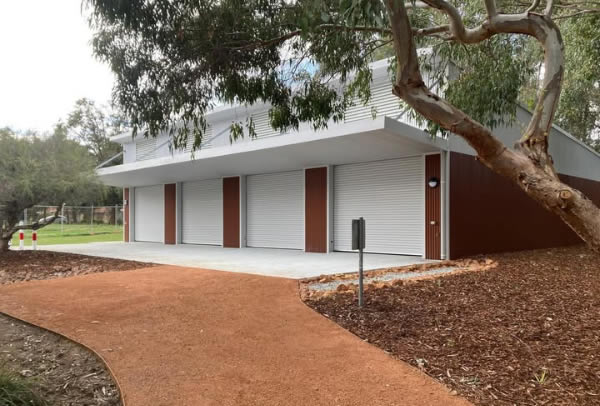
The new Canning River Canoe Club Headquarters. Room for about 80 boats. Unfortunately there are no plumbed facilities inside so no toilets, showers, or sinks.
Paddle WA Schools Course. Location Ascot Kayak Club.
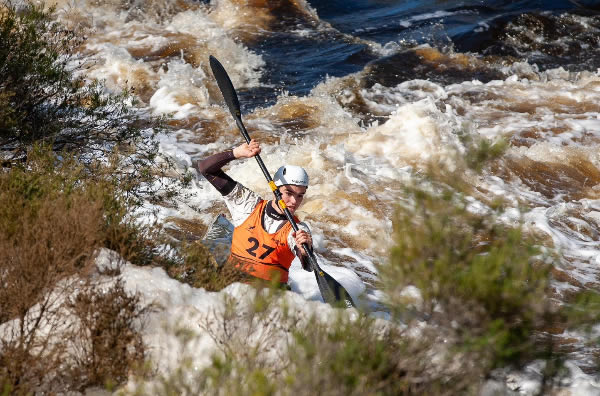
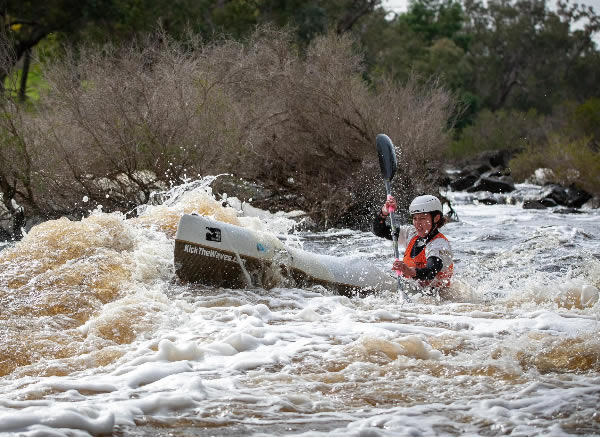
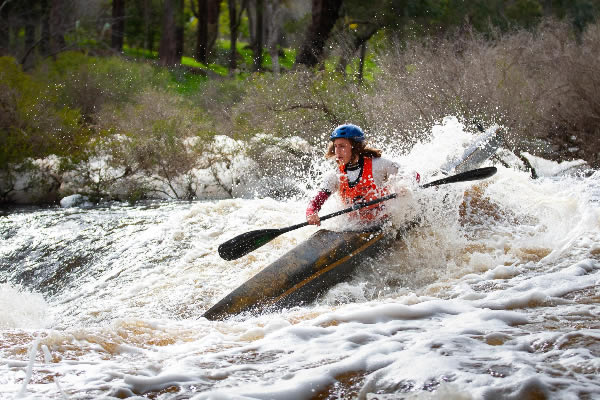
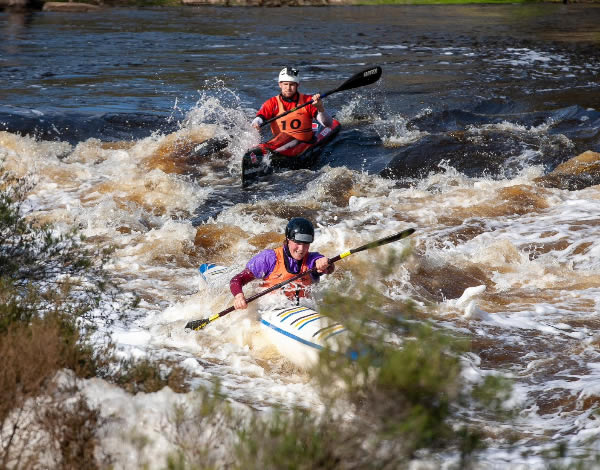
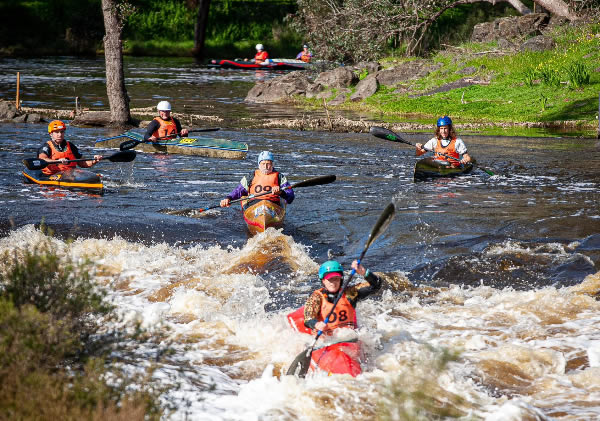
The WA Wild Water Championships Bridgetown The Geegelup CupThe last of six (6) races for the 2015 Wild Water season was contested on the Blackwood River, Bridgetown. Racing in Bridgetown is the highlight of the Wildwater season in WA. We can normally count on good water levels and a great social weekend. A lot of the paddlers make the 3hr trip from Perth on the Friday to start practicing the course and turn it into a 3 day paddling weekend. The water level was really good and
the rapids provided some exciting whitewater action. ‘Haystacks’ rapid always entertains and is one of the most challenging and exciting rapids to paddle and it didn't disappoint. ‘Photographers’ Rapid, was fun, but if you took the track down the right hand side, there was always a chance to run into the ti trees. The other rapids were equally as challenging making sure the Championships Individual and Teams Event were run on some fantastic white water. Bridgetown never
disappoints. With the conclusion of the final event of the season, our State Classic Champions were crowned as well as our Overall Series Winners. It's safe to say that the tight finish
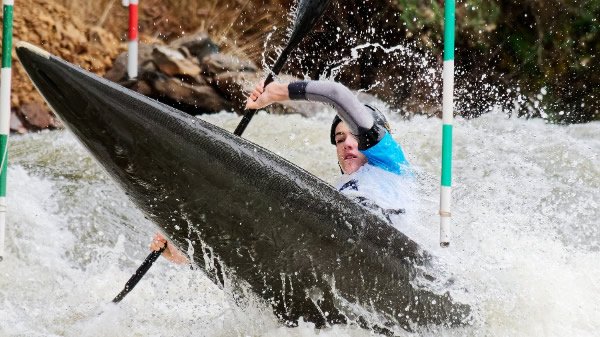
brought some drama to Bridgetown! The young slalom paddlers are doing so well.
Full results:
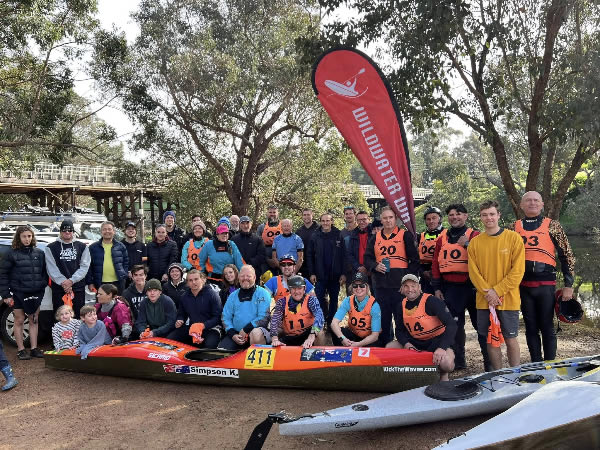
The Wild Water paddlers at Bridgetown.
Hunter Florisson. Championship winner. Photo Scarlett Florisson.
Nina Mueller female championship winner. Photo Scarlett Florisson.
Kai Stafford takes on the Haystack Rapid. Photo Scarlett Florisson.
Izzy Florisson & Harry Langley Photo Scarlett Florisson.
Steph Bedden-Smith leads down Photographers Rapid. Photo Scarlett Florisson.
Kris Smith, Wild Water Chairman. Photo Scarlett Florisson.
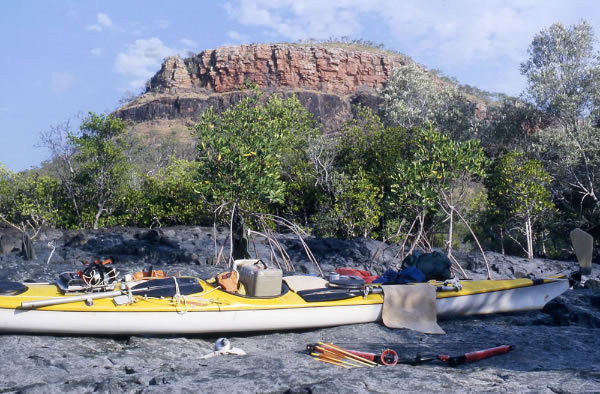
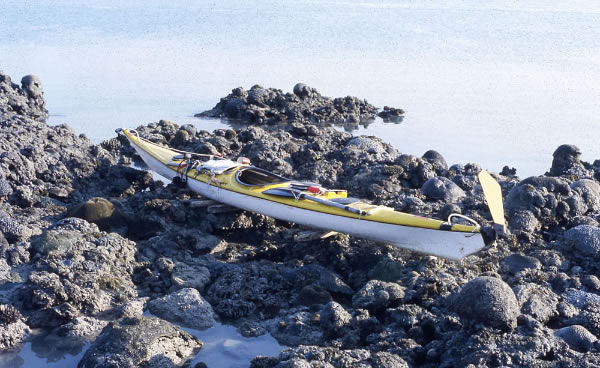
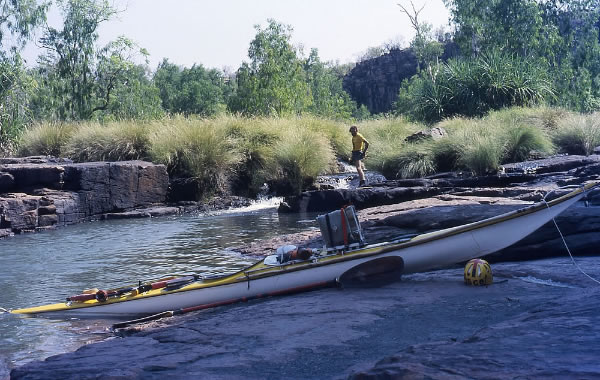
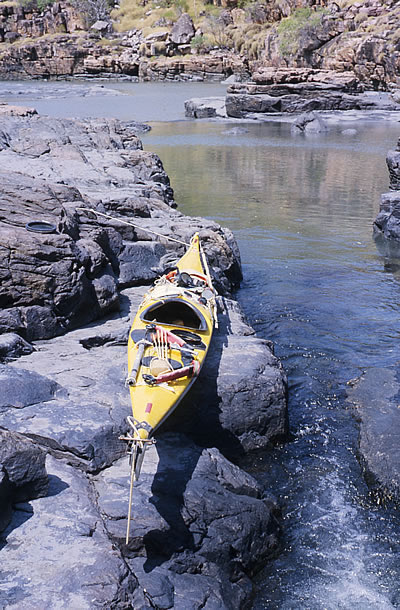
Celebrating 50 Years of Paddling 1982 in the Kimberley Expedition 1
cont.....
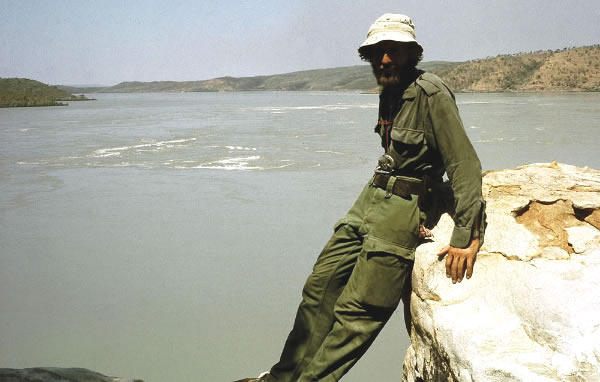
Walcott Inlet. At the top of the ridge I had an amazing view of the inlet but more importantly a view of the whirlpools that gave me great concern.
As I concentrated in getting the camera going I drifted towards a developing whirlpool over to my right. I then desperately tried moving over to the left, but because the water was being deflected from the rocky shoreline it pushed me back towards it again. I avoided it and some rapid water but then I noticed the whirlpools ahead were huge and full
of boils that erupted a metre or more like miniature volcanos. The whirlpools were alive with whitewater, boils and smaller whirlpools. It was something that I had never seen before and it looked terrifying. Although I was nearly pooing my pants I was calm, I had to be. I paddled hard to gather extra speed so to sneak to the right of the big turbulences to avoid possible disaster. About 3 kilometres from the entrance the coastline abruptly turned east and having enough of a wild ride and seeing a good opportunity to get out of the current and to safety I turned and tried desperately to paddle towards a massive eddy behind the corner cliff wall, but as I tried the swift current being deflected from the wall pushed me back into the main current. Now drifting backwards, I shuddered with fear as I heard an almighty roar behind me. As I glanced over my shoulder I couldn’t believe my eyes, the giant whirlpool several hundred metres wide, was swirling, boiling, erupting and forming several different water levels. Like a scared rabbit I paddled furiously towards the eddy but it was no good, I was being
sucked backwards towards the whirlpool. It was a terrifying feeling, especially after knowing that my whitewater experience didn’t seem to be helping me get away from the two metre turbulent surges and spiraling water forces..................................................
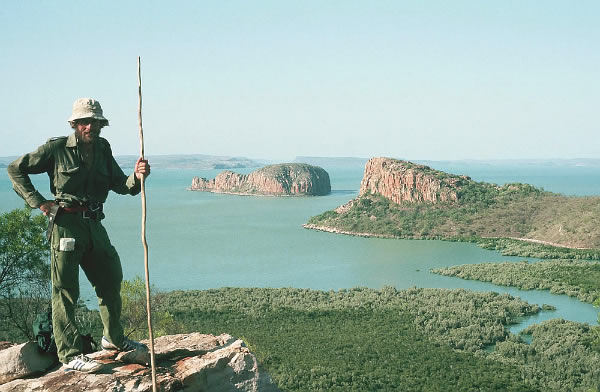
Steep Point. The view was stunning. Bouncing from one rock to another a wallaby with the last foot of his tail being brown, shot off like world-class gymnast. I urged myself on wanting to see over the next ridge,
around the next corner, over the next gully, until time had run out and it was time to return to camp. Below me was a large area of mangroves. I could hear life sing in a chorus of different tunes. A little bit closer a multitude of birds had gathered around the cliff top and in a deep green forest just below it. On the horizon, across Doubtful Bay I could see the high shores of the mainland and the way to the Glenelg River. About 1 km separated me from Steep Island. Way below me a high tide was
flooding through kilometres of mangroves some pale green others deep green.
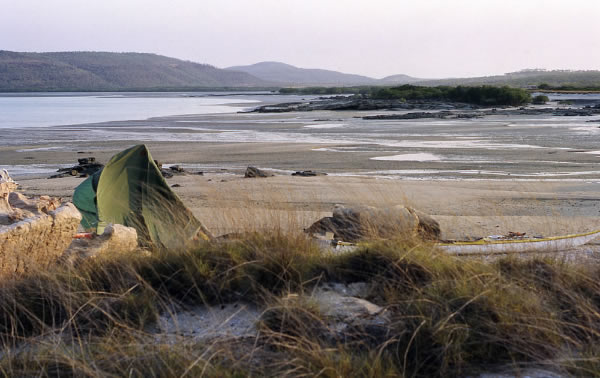
Camped below Kunmunya Hill. I moved up the gully between Kunmunya Hill and another hill to the east, chasing a 2 ½ foot goanna lizard, with the last 6 inches of its tail being white. I can usually walk up the hills
without stopping but this time it was too hot and too steep. Once on top of the ridge I set a compass course to the old airfield. Disturbed by my presence a wallaby with a bushy tail flashed off flying across the rocks and spinifex. I just wished I could run as fast. When I descended the ridge heading towards the old, now very overgrown airstrip a flock of parrots cheered me on. With nothing to see there I followed the mule tracks towards the settlement passing an old aircraft. A corrugated iron
toilet with a large and deep hole formed in concrete was in good condition. Behind that there was an old stockyard with a giant clamshell and two old water tanks, which looked as if they were concreted around steel. A herd of cattle, with a bull that didn’t seem too impressed with my presence stood between me and the other ruins. A big wave with my camera bag and they were off.
After exploring the old Kunmunya Mission site and walking back via a creek I reached the open, less vegetated coastline. I could visually see my camp lying 1 ¼ kms straight across the bay. Unfortunately I had to follow the coast around so it was double the distance. Because it was low tide and with my energy sapping I tried taking short cuts across
the mangroves but the oyster laden rocks and mud won out. I was hot, tired and millions of flies annoyed me and I couldn’t take a footstep without slipping or tripping on the rocks. My legs were now like jelly, a condition I have never experienced before. I started to get out of breath and my ears kept blocking. I was knackered, shattered and possibly on the verge of collapsing. Finally I had to stop as I staggered up the small grade. I relieved my back of the heavy burden of water and camera
and sat for a short time replenishing my water intake. I think I was suffering from the first stages of heat exhaustion? With only half a kilometre to go I knew I had to take it easy but I really had no choice as I was exhausted and feeling giddy.
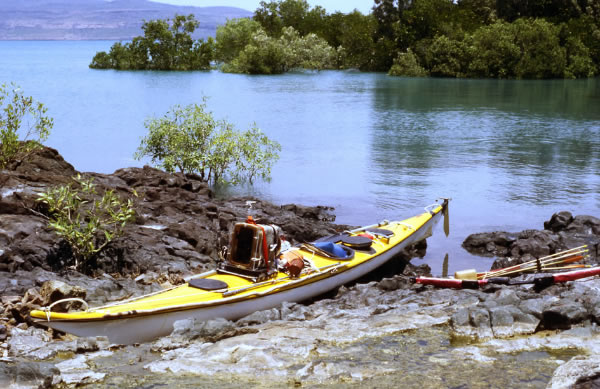
The morning brought a low tide that had exposed a reef and coral which turned out being slippery, difficult and a dangerous job just getting the kayak and gear to the water. I was happy when I was afloat, knowing that I had lugged all my heavy gear across a reef which could have easily cut and carved me up if I had fallen. In the early morning light and assisted by a rising tide, I paddled around the calm waters of Cape Wellington, one of the most remote capes in Australia. Then only 20 metres from the rocky cape something suddenly smashed into the back of my kayak like a raging bull. I gained my balance and composure and in horror I glanced behind expecting to see the ‘Incredible Hulk’, or the sea equivalent. I
could see nothing but rings of disturbed water, but I just knew it had to have been a big shark or less likely a crocodile. I was hoping it wasn’t looking for breakfast?
Camped in Camp Creek. In 6.5 hours I had paddled 70 kilometres. That was my best achievement yet. Needing a rest and the enthusiasm to face the croc and the hostile world out there again I settled
in for a 2 day break.
After kayaking 63 kilometres from Cape Wellington I turned out of the mangrove, cliff lined Prince Regent River to paddle 6.7 kilometres along Camp Creek to find a camping spot at the end. Mangroves lined the junction of the two waterways, with a huge body of lush mangroves, a perfect crocodile habitat, in two wide gullies either side of the creek.
It was perfect crocodile ambush area. I scanned the water for any movement and noticed a log near the mangroves on the left shore, but it moved, it was no log, it was a croc. Trapped inside the narrow creek with two mangrove forests either side of me there was no quick escape. I instantly took a wide berth, moving to my right but the croc swam closer and closer. My heart started to pound like an African drum as I was forced nearer to the thick mangroves lining the right bank. The croc stopped
for a split moment, I sighed with relief but it gave chase again. It’s hard to describe the feeling of being pursued by a very unpredictable animal. I daren’t slacken off my pace as a split second might mean life or death. My ticker now raced much quicker than Big Ben. I was clipping the mangroves and paddling in a wide arch, trying to avoid those ugly looking nostrils bearing down on
me. That nose, which had a slight resemblance to my own, finally started to slow. I began to feel a lot happier, but I couldn’t ease up, it might change its mind. The thought of having to return this way in two days’ time wasn’t a pleasant one. Although this croc had stopped the chase I still faced several kilometres of thick mangroves where there could be more waiting, but I reached
the end of the creek without incident. Here I could see nothing, but mud, mangroves and slimy rocks but just when I felt there was no hope and I may have to turn and go back, I noticed a narrow passage between some cliffs that led me into a pool and paradise. Before me were lush trees, beautiful fresh water streams, polished rock ledges, a cliff face and a waterfall a few hundred metres up stream. What more could a man ask for. Within minutes the tide had turned and the water allowing me to
paddle into the pool was gone. Beyond my pool now downstream of me was just mud.
Getting ready to leave Camp Creek and much more excitement.
Just waiting for the tide to reach my camp which would be about 2.00pm.
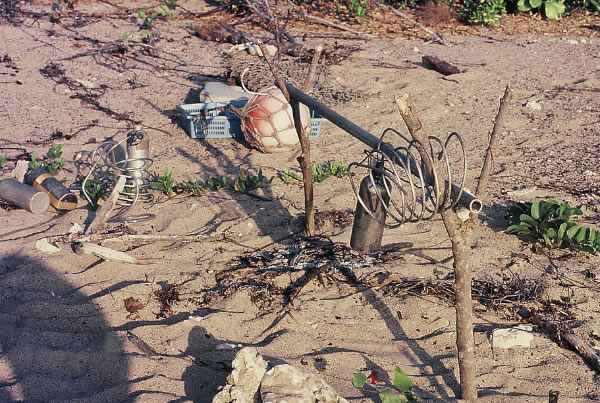
My homemade salt water still.
My water supplies had now dwindled to 15 litres. I expected it would take me four days at least to reach Mitchell Plateau where I was told I could expect to find a water source. I usually used 5 litres a day but the last few days I had been trying to use less. It was time to start distilling my own water. I had been carrying two
home-made stills which were made up of aluminium Sigg bottles, with a three metre aluminium tube that was coiled and tightly sealed to the bottle. The biggest problem was trying to achieve a constant heat as the wood I collected was dry and burnt quickly, which meant I had to tender to the fire constantly. The heat from the fire and the sun made me feel thirstier than usual. I had to be careful how full to have the seawater in the bottle. If the bottle was too full of seawater and the fire burnt
too hot it could cause the seawater to boil over and filter through the pipe which I didn’t want. I needed the sea water to condense and turn into steam producing fresh water. My still wasn’t perfect and I must admit I would build a better one next time I did a trip, but I did produce 3 cups of water in an hour. Unfortunately though it did have a slight taste of aluminium, so it was best used when cooking and not drinking straight. At dark a docile beach curlew came over and enjoyed a piece of
my damper.
Heading south-east I passed Lavoisier Island without the shark. Bigge Point, in the distance looked very uninteresting and flat. I paddled on and then it struck me, with the power of a bull. My kayak was lifted and I was thrown off balance. I quickly regained my composure and turned to see the large shark that had just rammed my rear left
side. I was horrified, the shark was at least 1 – 2 metres across, but I couldn’t determine its great length as it faded under the ocean. Oh no, there were two! A 2 – 3 metre shark looking like a midget compared with the other one was directly behind my rudder. I stopped. The closest land was about 3 kms away. I needed to get there, but dashing off could make my position
worse. As I powered forward again a large shape suddenly came into view. The big beast was leading the field so I braced myself for the worst, maybe another hit, but nothing happened. The waiting game was nerve wracking. I knew the shark could overturn me like a matchstick and my chances of doing the Eskimo roll before it started chewing at me were pretty slim. I imagined them going
into a complete frenzy and tearing my head off as I capsized. I couldn’t bear it, the thought made me shudder and I immediately stopped to put my helmet on! I attempted fastening the buckle with one shaking hand, my other was firmly grasping on the paddle keeping my kayak stable and ready for any action that might evolve. My trembling hands failed to do the strap up, so risking a capsize I let go of my paddle and used two hands. I didn’t know what good the helmet was going to do, but somehow it felt safer!
Walsh Point at Mitchell Plateau. My pull out point which was only a few kilometres away encouraged me to paddle quicker around Crystal Head. At this point I could see Warrender Hill and a bay with several sandy beaches
and further around MacGregor Point, high hills, cliff faces and then a big bay with mangroves took my divided attention. I was just hoping to land without any more shark hits or crocodiles chases. The end didn’t look that far from here. By the time I reached Walsh Point at Mitchell Plateau nearly 100 days had passed since I had left Broome and now it was all over. What an unbelievable,
amazing trip. I pulled ashore to see a trickle of water filtering along the creek. With only 1 litre left I was overjoyed that I was saved. If the creek hadn’t been running I would have been in deep shit. I was pretty happy, although I was sad to be at the end of my journey.
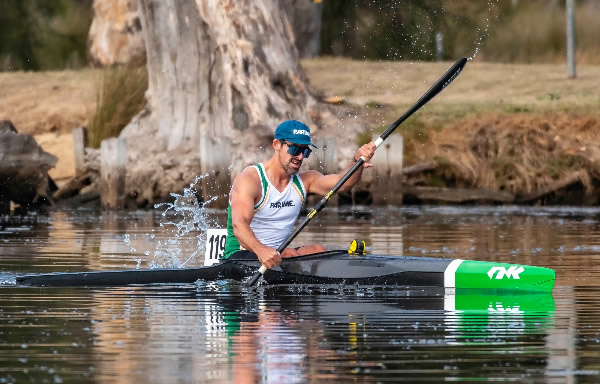
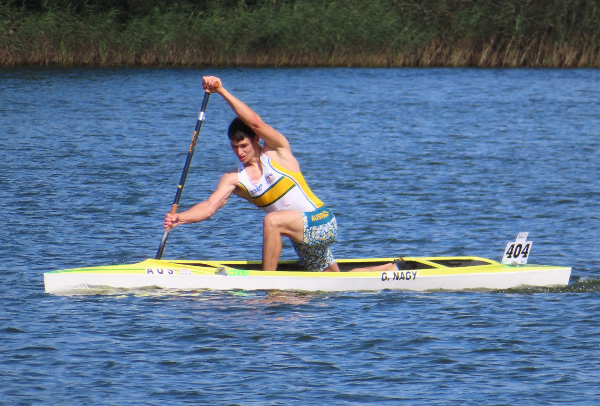
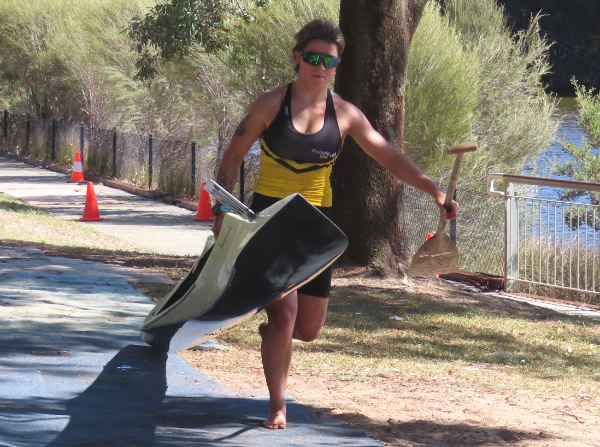
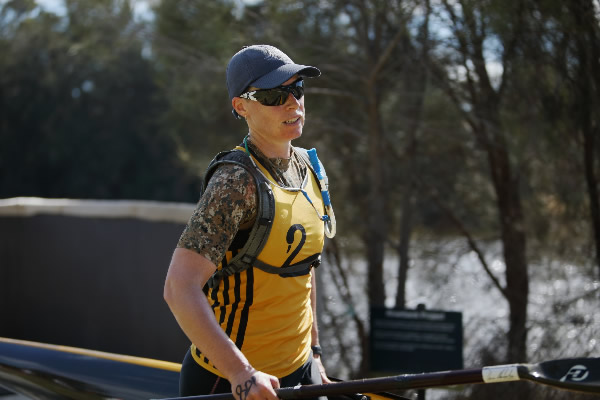
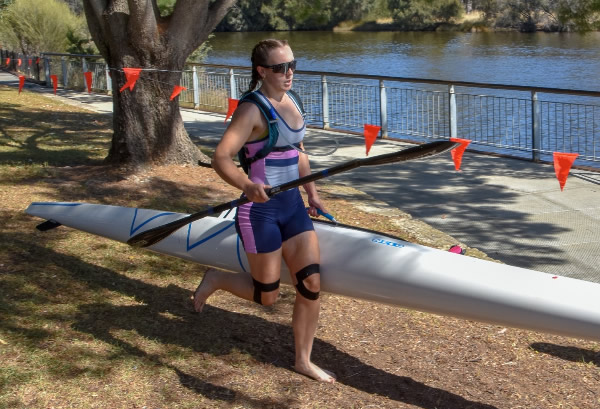
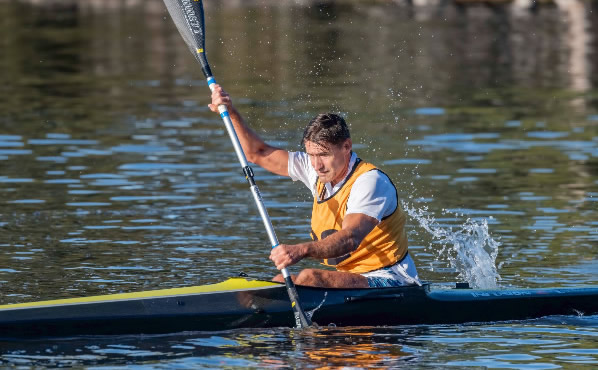
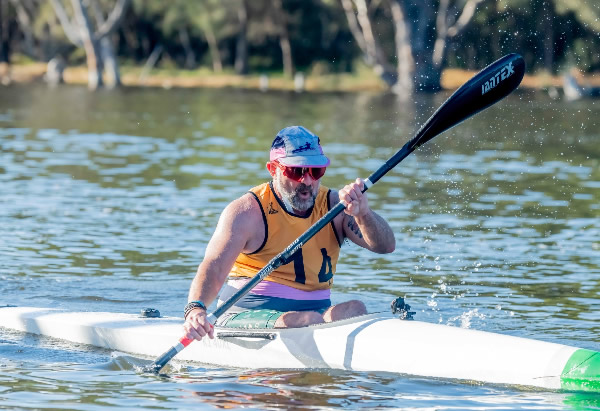
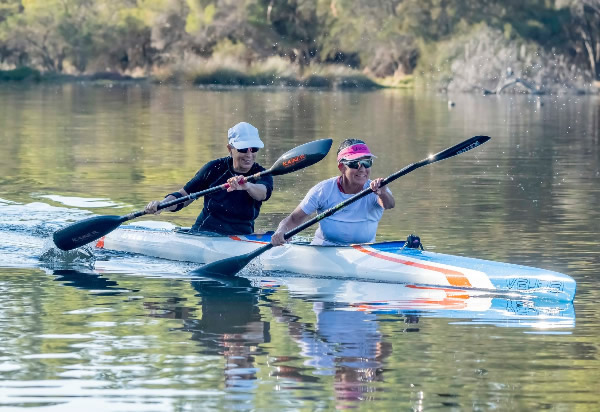
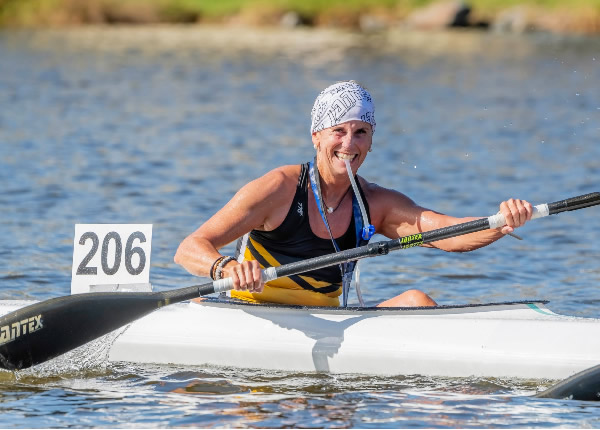
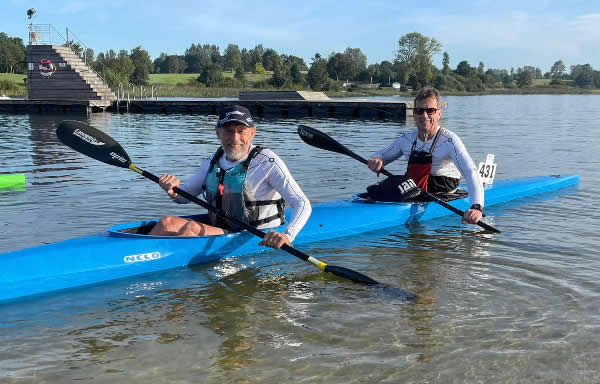
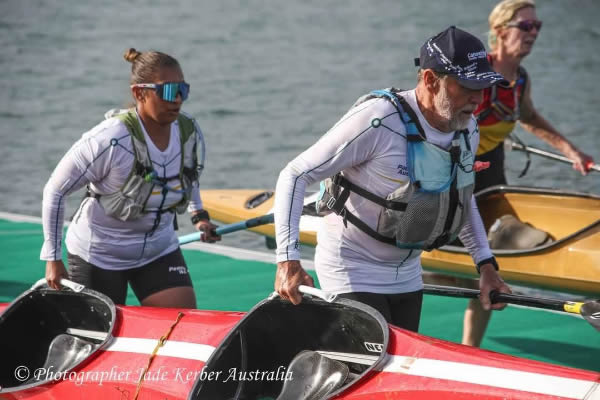
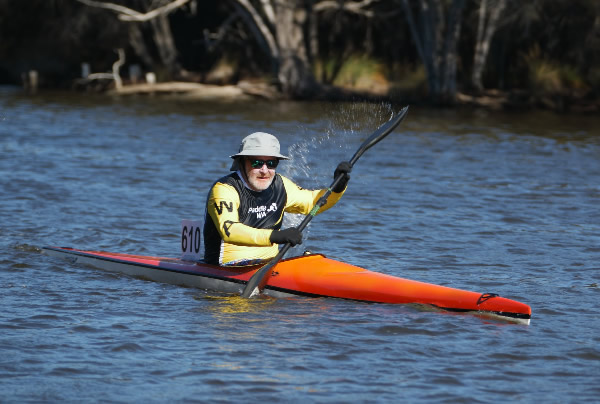
World Canoe Championships Open & Masters 15 West Australians, 8 females and 7 males are off to Hungry.
Gergely Balazs Nagy Open C1
Genevieve Stanley Open C1 & K2
Lily Farrell Under 23 K1 & K2 open
Jamie Cartwright Masters Photo Gordon Inns
Agnes Pajor & Sue McDougal Masters
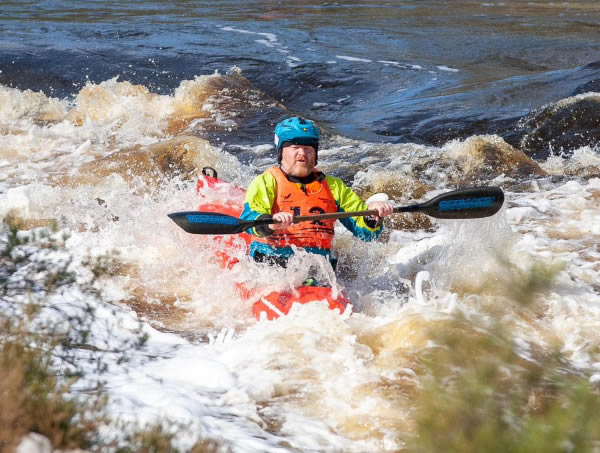
Terry Bolland and David Berglund Masters
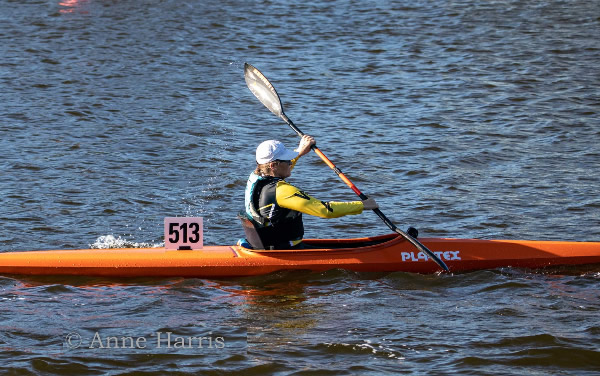
Kathy Mallory Para Photo Anne Harris.
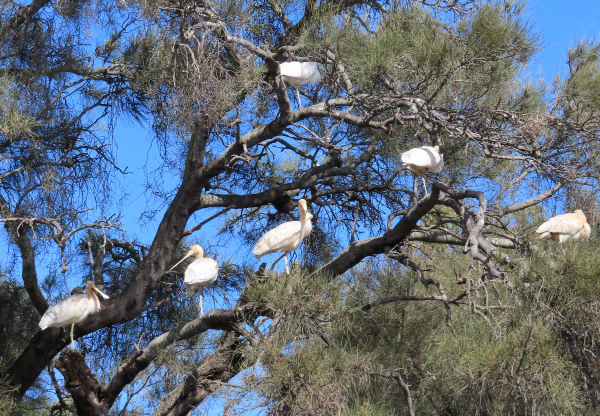
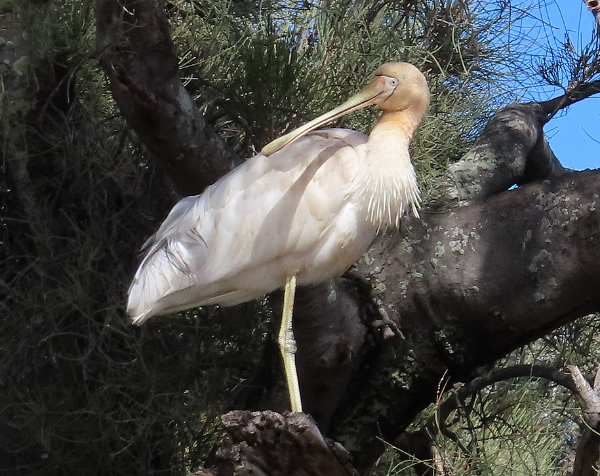
Very rare to see 6 Spoonbills on one tree.
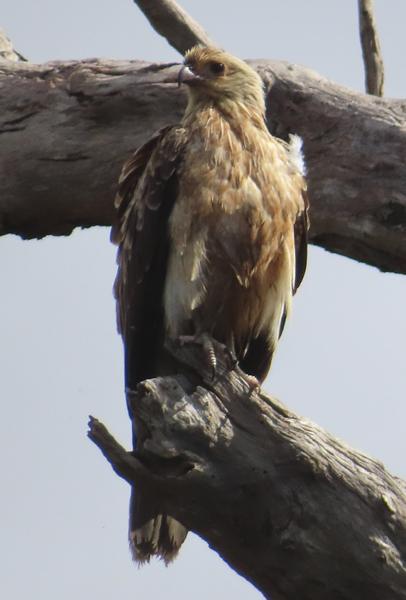
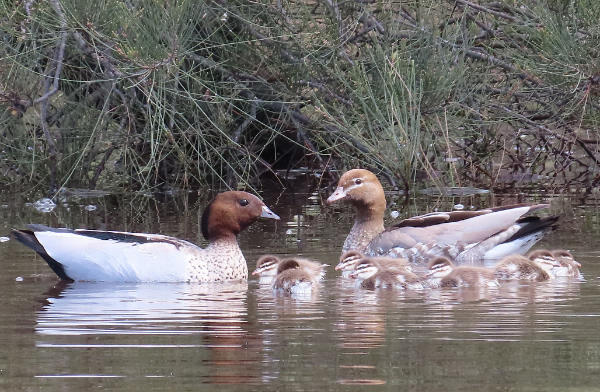
A Whistling Kite got a sharp eye on the ducklings.
|
|
|
|
|
|
|
|
|
|