|
|
|
|
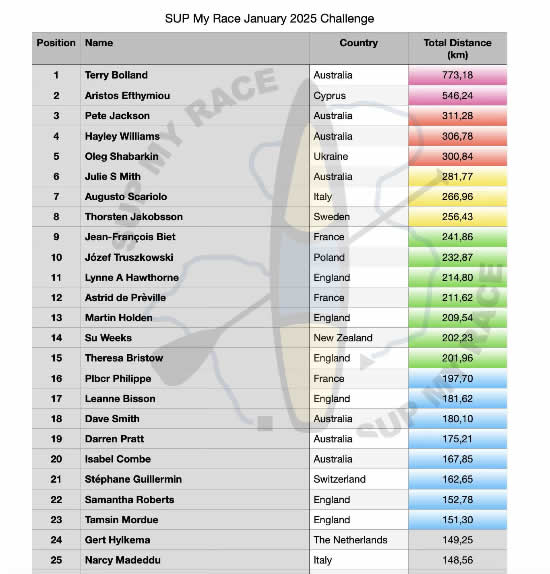
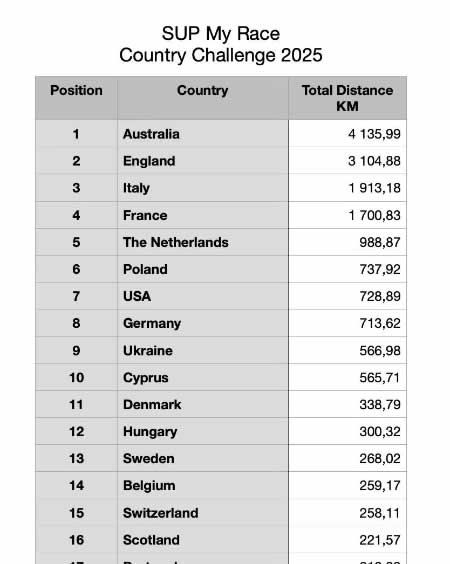
Well I ended the month having paddled 773 kilometres on a SUP in January and a few more on a kayak so that gave me enough kilometres to be on top of the SUP leader board for January and for the third month in a row. 307 paddlers put their kilometres in. That brings my total kilometres paddled on a SUP in 3 months to 2200 kms and it’s been hot and it’s been windy and it has been pretty hard at times but hey life wasn't meant to be easy! Australia is also on top of the country leader board. Local paddler Hayley Williams took out 4th place.
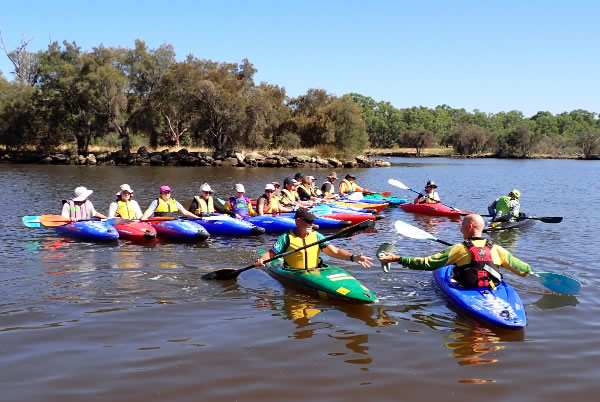
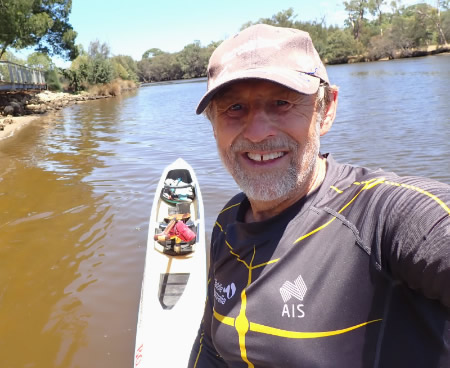
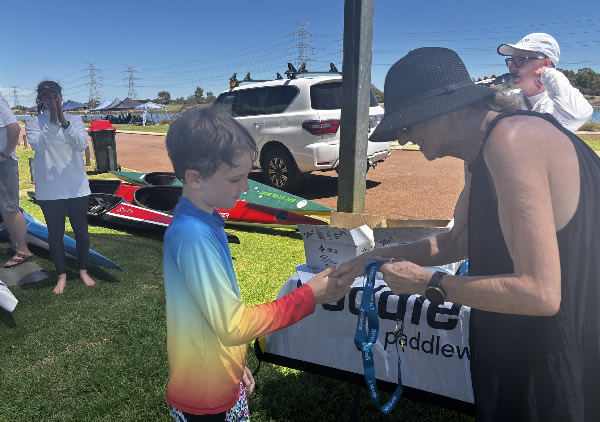
Ascot's beginners course last Saturday. Brian took his cap off to show the group how to do a capsize drill.
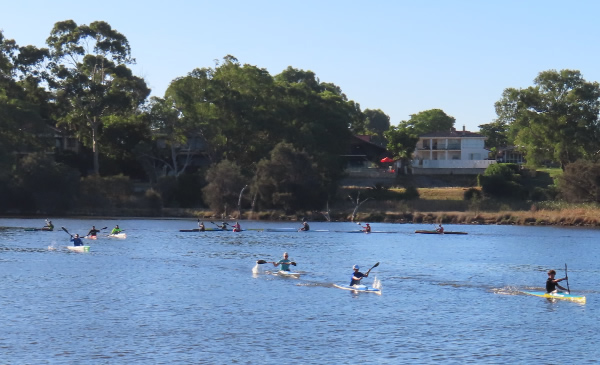
Ascot's Progressive Racing Group Tuesday evening. Does your club have a picture to share of a club activity? If so please send me it.
Register to Volunteer at 2025 Paddle Australia Canoe Marathon & SUP Championships Event dates: 10th to 13th April & preceded by 2025 State Championships on 29th/30th March Need a big team of volunteers ! Both for setting up and running the event. Event hat and tee shirt for all volunteers who help for up to a half day [which is most jobs]. Voucher for drink and food on portage build and race days.
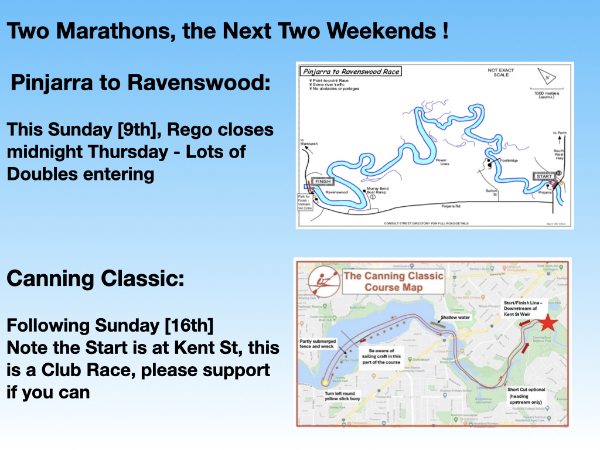
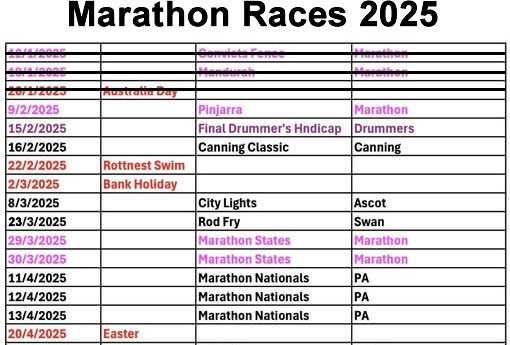
Races Coming Up 9th February - Pinjarra to Ravenswood Race 16th February - Canning Classic 8th March - City Lights 23rd March - Rod Fry Race
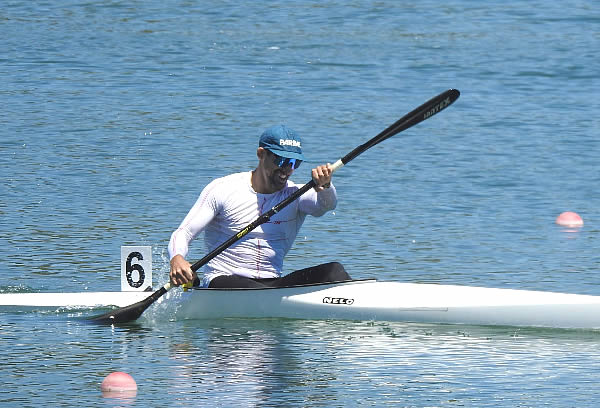
Sprint Championships are Tomorrow I heard that Genevieve Stanley, who has been taking C1 coaching lessons with the great C1 paddler Gary Nagy, was taking part in the WA Sprint
Championships in a C1 so I just had to give her some competition and enter. I was paddling 3 races in a SUP, a race in my kayak and another race in the C1. I couldn't remember the last time I paddled my C1, but it has got to be over a year so I decided to have a 10 minute training run the evening before the race just to make sure I was still capable. I was certainly a little rusty, but
I went home dry and that's the main thing.
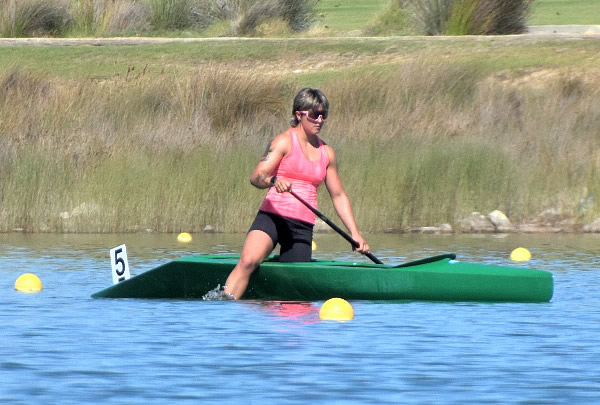
The C1 is not the widest of boats.
Gen is a very accomplished marathon and sprint paddler. She won most of her sprint races in a K1 the day before, but how will she go in a C1? Photo Lawrence Greed.
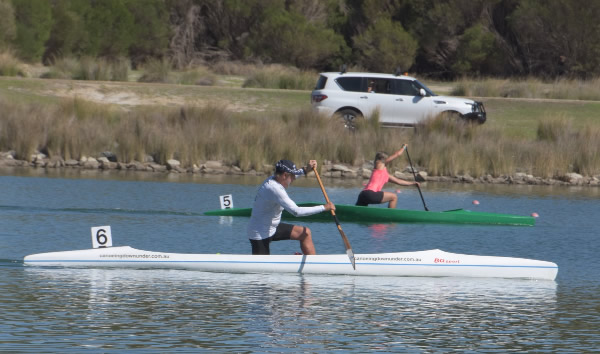
Get ready - go. After a bumpy start I managed to get going and the race was on. It was a close call, Gen was leading but I was catching up and at the finish line only 1 second separated us with Gen taking the win. Photo Lawrence Greed.
WA Sprint Championships For results go to the WA Sprint facebook page.
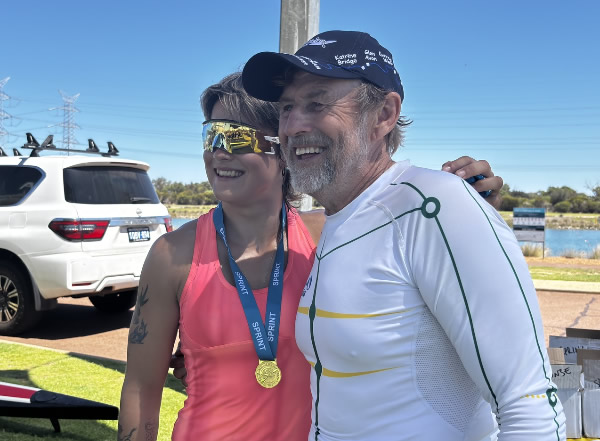
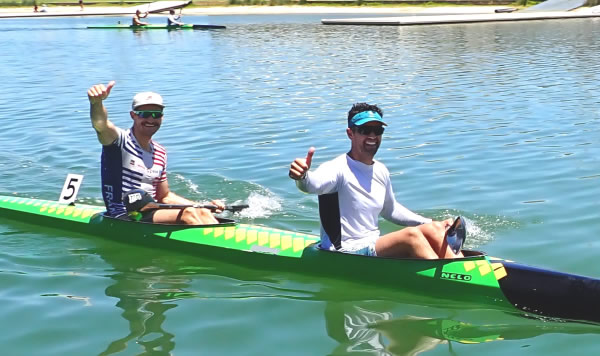
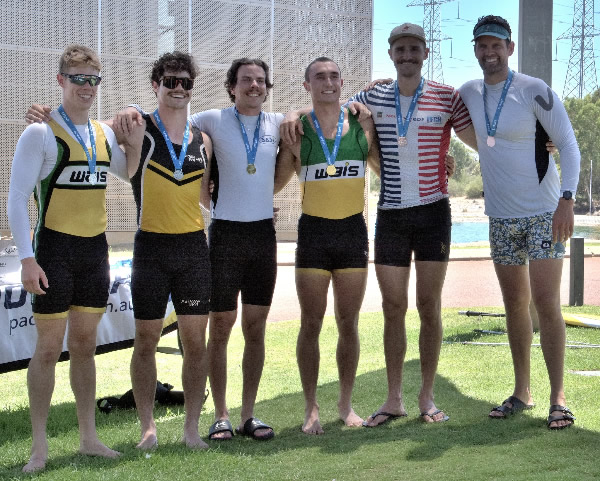
Olympians Steve Bird and Jesse Phillips who took part in the 2012 London Olympic games giving todays top paddlers a run for their money. There were a couple of female Olympians at the champs as well, Lisa Russ (nèe Oldenhof) and
Jamie Roberts.
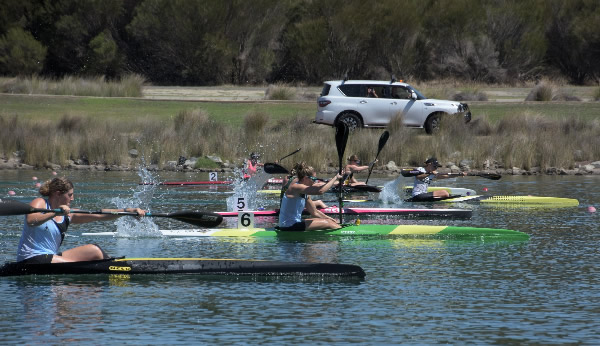
The women are off. Photo Lawrence Greed.
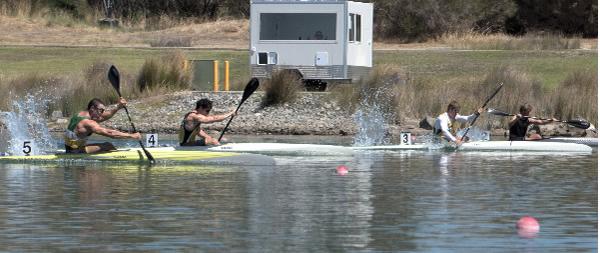
The men are off. Photo Lawrence Greed.
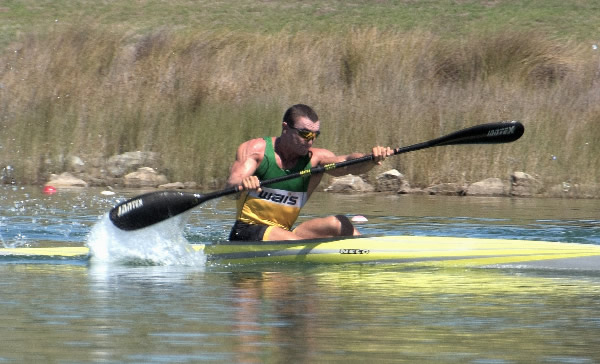
Luke Egger won most of his races and he and several others will be off to Sydney to compete in the GP2. It is an important selection race. Photo Lawrence Greed.
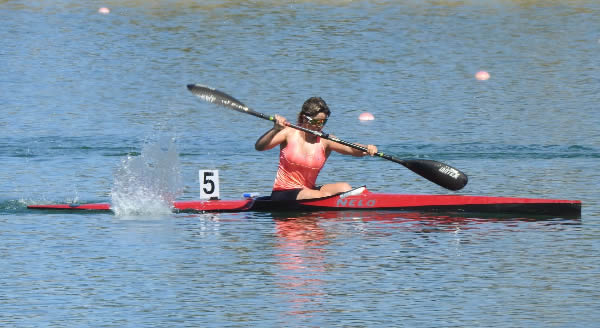
Genevieve Stanley racing her K1.
Louis Vartesi accepts his medal from Rosalie Evans. It was sad to see that there was only one guppy paddler paddling a guppy K1.
The Olympians were beaten, although they are a little older and it's a few years since the 2010 Olympics. But they were good sports in taking part.
PARIME Paddlesport Coaching By Australian Marathon Champion Josh Kippin New Offering for 2025 Aus Nationals Train Smarter, Race Stronger - Your path to Nationals Starts
Now. Designed for those preparing for the 2025 Australian Nationals in Perth. These are programs customised for you, your goals and the time you have available to make sure you're getting the most out of your training. Our tailored
coaching programs are founded on the belief that mindset, discipline, and consistency are core to success in sport, and a structured process is critical to enjoying the journey toward achieving your goals. Don’t miss this chance to get ahead. Visit www.parime.com.au, email on info@parime.com.au or search PARIME Paddlesports on Instagram for more
information. Kind regards, Josh Kippin Head Coach E info@parime.com.au Wwww.parime.com.au
Josh Kippin 2025 WA Open Mens K1 1000m Direct Final Champion. Photo Tony Moore.
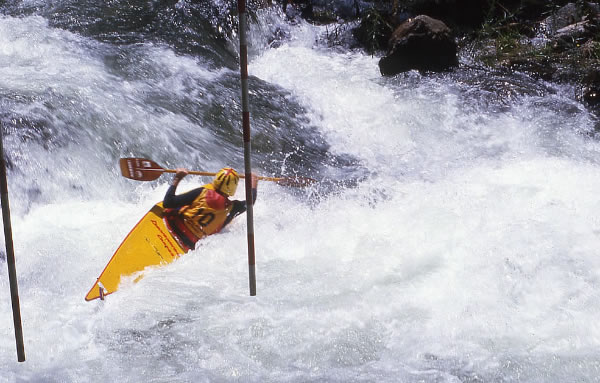
A Blast From The Past Back in the late 1970s, the 80s and part of the 90s WA had a great white water course at Harvey. Nearly every weekend in
summer, slalom and whitewater paddlers would head to it. The Harvey businesses loved the extra cash that came into the town but then it was closed down and WA paddlers lost the greatest white water course in Australia at that time. The course attracted the best slalom paddlers from around the world, paddlers like 10 time world champion Richard
Fox and his wife Miriam who held coaching courses. It also help turn WA paddlers into Australian Champions like 4 times Australian Slalom Champion Lindsay Binning and World Champion and 3 times Olympian Robin Bell. Robin won a bronze medal at the Beijing Olympics. Other local paddlers like Ken Vidler, Dave Worthy, Piers Goodman (twice) and Matt Dalziel became Australian Wild Water Champions. WAs Glenda Pickersgill and Michelle Rodgers were Australian Champions in Ladies Wild Water and Rod Fry was an Australian Champion in C1. Lydia Formentin and Rod Fry were also mixed C2 champions in Wild Water and Barry Forsyth and Craig Atkins were Mens C2 Champions. All these paddlers used
the Harvey White Water Course.
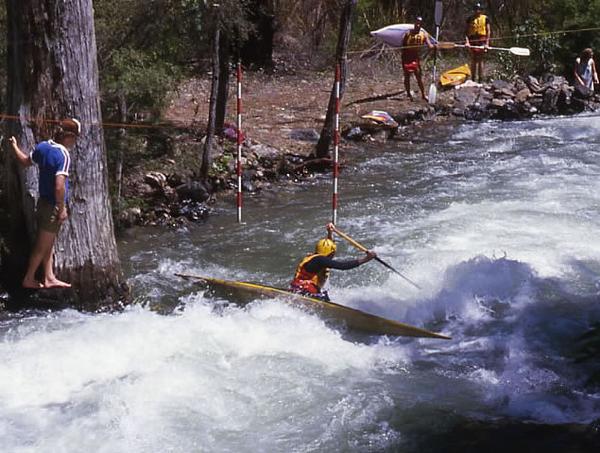
Terry Bolland (me) at the Harvey white water course. I was lucky to have spent several years paddling on this course which helped to refine my white water skills. WA has created
champions before Harvey and after Harvey but Harvey helped create more champions and developed amazing skills of all WA paddlers. Back then WA had a very powerful Wild Water Team and it created many talented medal winning juniors. It was fast and furious and the best training area a paddler could ask for. It had some very demanding rapids and a good stretch of easy water. One slip on the middle section and paddlers were washed down several drops before they could control their craft. I spent a lot of time chasing capsized craft on that section. The Australian Championships were held on the course when it was WAs turn to organise them. It was very popular and paddlers from the east loved coming to WA. The Harvey Shire allowed camping on the Harvey oval, the Water Corporation allowed the White Water Committee easy access to the water and were
great. The pub, the pizza place, the other restaurants and the service stations were all extremely friendly and got a lot of business from paddlers. When we lost the Harvey White Water Course WA paddling lost a treasure.
Terry Bolland (me again) in a C1at the Harvey white water course.
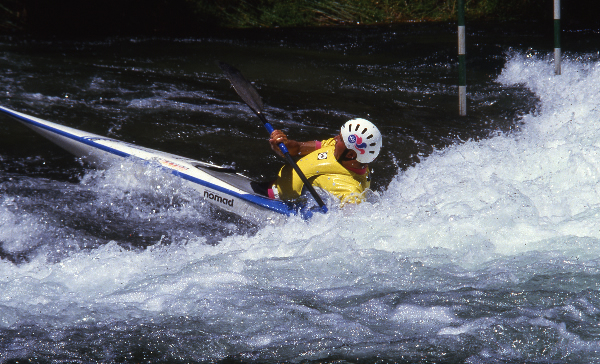
Olympian and World Champion Richard Fox having a good time at Harvey.
The Yukon River Descent Tuesday 20th July. It was a
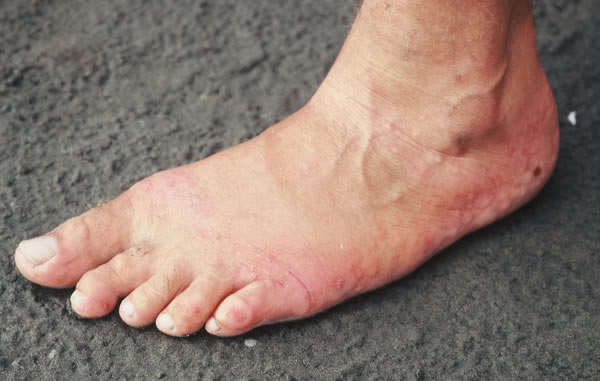
chilly morning but by the time we had left the shores it was T-shirt time. In the last few days my feet were beginning to show signs of wear and tear. Spots, blisters and rashes were appearing where my sandal straps criss-crossed my feet. With the deterioration of my feet I knew I had to keep them dry, but that was almost impossible. I did however start to dry them and rub some fungal cream into them each time I entered the boat, in the hope that they would heal. There was nothing more I could
do, no doctors out here. I suspected that the blisters developed because I had been wearing the same sandals in a wet, muddy environment for so long and bacteria had formed. Ed had suffered with a similar rash at an earlier time, but it had disappeared; now he only had chapped heels and cracks between his toes. We nipped down the Summer Slough to save 4kms, instead of going right
around the island. We followed the Paimuit Hills and found a stream, but as we paddled up into it we were immediately savaged by mosquitoes. We soon backed out, slapping ourselves, hoping to kill them all before their probes managed to delve too deep into our skin. When the river joined we soon passed a few cabins which made up the very small settlement of Paimuit. There was no one
around, only the ragged U.S. flag which was flying high in the small grave yard. According to Ed’s GPS we were doing 11kms an hour down the Paimuit Straight, but we slowed considerably when sandbars and shallows broke our rhythm. Breaking 10kms an hour on this lower stretch was very pleasing, the more assistance we had from the current the less paddling we had to do. Without the current we paddled about 6kms an hour. I spotted a bear 400 metres ahead but I also spotted a stream, and water was more important than chasing a bear. Because of my blistered feet I let Ed collect the water, so I didn’t have to get them wet and muddy. It was a small creek so he took a cup to catch the water, but when he got there, there was a hose poking out of the bank and an old cabin hiding in the trees. He filled the bottles with water from the hose and came back telling me it had a bit of
dirt in it. It didn’t seem too much of a problem at the time but when we checked it that night, it had so much dirt that we had to filter it through several coffee filters before we could attempt to filter it properly. By the time Ed had collected the water the bear had disappeared. We decided to take the left channel at Base and Pearl Islands as it was more direct, but we slowed down
to 7kms an hour. Half way down the channel we stopped for lunch on a muddy sand bar. There was no wind, it was warm, the sky was clear and we had the mountains of Dogfish and Baldhead to gaze at. There was no way I could keep my feet dry here as the mud just sucked through my toes every time I made a step. We moved on and as we passed Tuckers Fish Camp the river widened so we stopped
paddling. We had ‘quiet time’ and drifted, and talked whilst lying back. For some reason I thought about the Thunderbirds and I said, “I’m Captain Virgil from the Thunderbirds”, Ed just cracked up and couldn’t stop laughing. Although there’s a thirty-three year age difference, we could both relate to the Thunderbirds. We started off drifting 4kms per hour, but thirty minutes later this
had slowed to 2kms per hour. The conditions were just perfect for relaxing, a lovely breeze, sunshine and no insects. Yes, that’s right, no insects! Mt Chiniklik was the main focal point. It was a solitary yet quite majestic mountain, bare on the summit like many of the other mountains around these parts. Although the dramatic scenery was behind us there were still smaller ranges, distant hills and lonely mountains such as Mt Chiniklik. I hadn’t expected the river to have this much beauty for so
long as it wound its way to sea. We cut between an island and the mainland to take a more direct route. The wind had started to pick up, but the day was still perfect. We were getting closer to Russian Mission, but we were undecided whether to paddle to it that night or camp before it and get water the following day. After finding a sandbar a few kilometres upstream of the village we
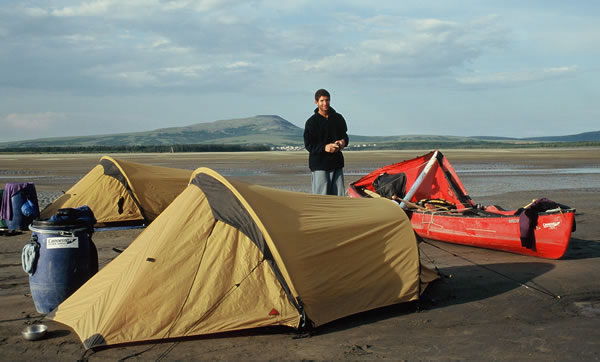
decided to camp. The wind increased as we were erecting our tents and it was a little like being in the Sahara Desert with the sand blowing and wind howling around camp. Ed had a wash in the river but it was far too cold for me, I had a strip wash on the bank instead. Our evening meal was a bit of a mixture: we had two drinks, pasta, fish, dried fruit, egg powder, pop tart and a banana
sweet. Doesn’t sound so good now, but it tasted great that night!
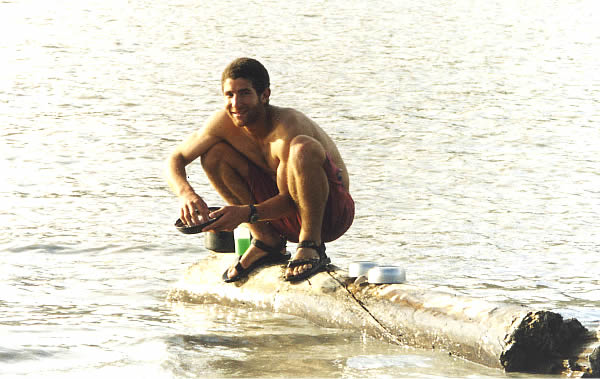
Ed washing pots. Wednesday 21st July. Ed woke me up a little earlier than
usual so that we could go into Russian Mission to get water, and be on our way without losing too much time. I had a disturbed night’s sleep, water was lapping against the beach close by, the tent was flapping and the blisters on my feet were somewhat tender and swollen. Maybe our evening meal had some effect as well! Russian Mission was about 1km away so it didn’t take us long to get
there. We arrived about 8.30am to a deserted community. I put my sandshoes on to help give my feet some more comfort instead of the infected sandals that chafed me. We walked quietly through the village hoping not to start the numerous dogs barking. One creamy coloured mangy dog tried barking but its mouth opened and nothing came out. Like most of the villages along the way tidiness was not a strong point. We carried the mosquito repellent and blasted ourselves several times but the mosquitoes
still ravaged us. They seemed to be immune to the spray. We found a building that looked like a Washeteria but it was closed. Ed waited whilst I walked, with some discomfort, further up the hill. I stopped a pick-up truck that had three canoes loaded sideways on it to enquire about water. One guy, who turned out to be the school’s principal on his way to take kids canoeing, said we
could get some water from the school. I returned for Ed and walked to the school kitchen, and by that time the principal had arrived too. The three of us chatted whilst the water bottles were being filled. I enquired about flights out of Emmonock, the last village on the river, and the principal said there were several flights out so we didn’t really need to book our flight to Anchorage too far in advance. That was good news, as we didn’t exactly know when we would finish the river. He also said
that we might even be able sell our canoe to the school in Emmonock. We walked back to the canoe still being savagely attacked by mosquitoes. They were just unbelievable and there was no let up despite all the spray we had on. Hard as it might be to believe, it was actually nice to get back to the canoe and paddle off and be free of insects. As we got further out in the river I turned
to have a last look at the town and was surprised at the many newer houses higher up the hill. It was yet another village that was bigger than it initially appeared. It was a hot, cloudless and windless day. I stopped to sponge the drips out of the boat to protect my feet from getting wet whilst Ed kept paddling. I then needed a pee, so I stood up and tried peeing in my cut off coke
bottle. Despite the extra drag it caused when I stopped paddling Ed seemed to be in a real hurry and paddled harder. There I was, standing up in the canoe, penis in hand and stuffed into a makeshift pee bottle, trying hard to get the water to flow. Not only did I have to keep balanced, as the canoe rocked from side to side, but we zigzagged down the river too. Ed paddled on one side for a few strokes and then paddled on the other trying to keep the boat straight. Instead of stopping and letting
me finish the task, he powered on and with every change of paddle strokes the canoe continued to wobble. I felt a little vulnerable, to say the least, but I finally emptied my bladder, sat down and paddled away. Ed seemed oblivious to what had gone on, but if anyone had witnessed it, it would have been a very funny sight.
My blistered feet. We paddled past hills on our northern bank and stopped on a sand bar near Elsie Island. By now we were familiar with chicken paste and cheese on our bread. We also ate extremely spicy noodles, bought
at a village, which were so hot they set our mouths on fire. Some time later we saw a stream running out of the hills and took the opportunity to fill our water containers. The weather was hot and the little wind that blew was blowing on our backs. The hot weather encouraged me to doze whilst paddling, a technique I’ve perfected and which I am well used to doing on my long endurance
trips! We took a shortcut after Roundabout Mountain, which saved us several kilometres, and drifted past Round Point where we proceeded to have our quiet time. It was just so blissful lying back. Thirty minutes or so later, as we were still relaxing and lying back, a power boat motored down the channel slowed and came over to us. Our first reaction was to say that we were okay and were
just drifting with the current. They had heard about us up river, and they couldn’t resist a chat. The man and boy were from Nanana, a village upstream, and the women and girl were visiting from Wyoming in the U.S. They were on their way to the sea and then to the town of Nome. After our talk we said our goodbyes and took off leaving them to drift. They attempted to start their engines
but failed, they tried again and failed. We felt a little guilty as they had turned off their engines to talk to us. Within minutes, black clouds had built up on the horizon and headed our way. We could see that this storm was going to be a big one. When the rain came, the drops hit the water so hard they splashed upwards at least two to three centimetres, creating miniature volcanoes which surrounded us as far as the eye could see. It was an awesome sight, the trouble was we were in it and
getting very wet. The other rainstorms that we had experienced had passed over within minutes, but this one just kept going. An approaching black cloud turned into a monster sphere, like a spaceship directly above us, plunging us into semi-darkness and then the rain turned to hail. Our bodies were suddenly subjected to a barrage of ice stones catapulted from the heavens at a rapid
rate. As the hail pelted us it was both painful and intense, almost like being caned. The sky was dark and violent but yet the wind was calm. As the eye of the storm passed over, the wind began to gust and strengthen. Our concerns were now heightened, as the wind gained in intensity and dictated our fate. Our canoe became more difficult to control as the wind whipped us across the
large expanse of water in a crablike fashion and the waves slapped against the canoe. We had to keep our wits about us, as a capsize hundreds of metres from the shoreline would be perilous, and attempting to drag a heavy canoe to shore would be almost impossible. The storm had cut visibility to almost nil, we had no idea where our power boat friends were, and we were in no position to
find out. If their engines hadn’t started they would be drifting and getting wet but at least they would be in no danger of capsizing. The wind lashed us from the south-east and then it stopped for a brief time before swinging around to the south-south-west. The canoe was now even harder to control as the wind buffeted us broadside, we both resorted to paddling on one side but our steering still didn’t get any better. The rain persisted but thankfully the hail stopped. Our canoe was filling up, water was running off the spray deck and pooling into my lap, which in turn seeped through the Velcro flap closing the deck around my waist. I had to stop the water from seeping in so I took the spare paddle and pushed it under the spray deck, which raised it up and took out the hollow. It worked a treat. I was getting cold, the water had penetrated my cag and my cotton T shirt was soaked. I just don’t know how Ed was coping with only a thermal but he said he was okay. We weren’t dressed for a wet cold spell and were relieved when the storm passed over. The wind had shifted again and was now blowing us down the river, which in turn gave back our control. We looked behind again to see if we could see our boatie friends, but the storm was still lashing its
fury in that direction so we could see nothing. We felt even guiltier when we thought that they might be stranded out there. With the main thrust of the storm over we headed to a sandbar to bail out the water, change into warm clothes, and took the opportunity to have a pee. The rain had certainly freshened up the afternoon. We cruised on further, crossing the channel that led into the
village of Marshall. We decided not to visit the village as it was well out of our way plus the fact that we would have to paddle down a long slough (a channel), with little current when leaving the town. We found an island sandbar to camp on, across the channel and in sight of the village, and walked along the bar trying to find a dry spot to erect our tents. Marsh birds were flitting
as the sky turned black and a new thunderstorm brewed on the horizon. We were readying for another pounding, but luckily the storm bypassed us leaving us to erect our tents in the dry. The dying sun’s rays shone on Pitcher Mountain lighting it up like a giant beacon. The mountain, located behind the village, was like a huge stairway with a gradual incline leading to its summit. I was
sorry that we were going to miss climbing it. As we settled into our camp for the night we could see our friends in the boat limp down the channel into Marshall. We were both relieved and pleased to see them, although I imagine their hopes of reaching the ocean now were a lot more fragile than ours.
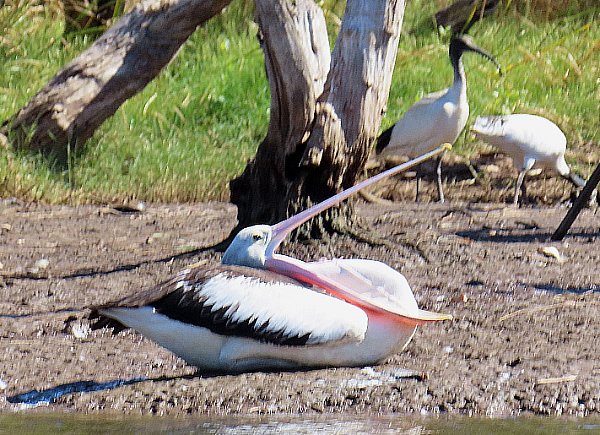
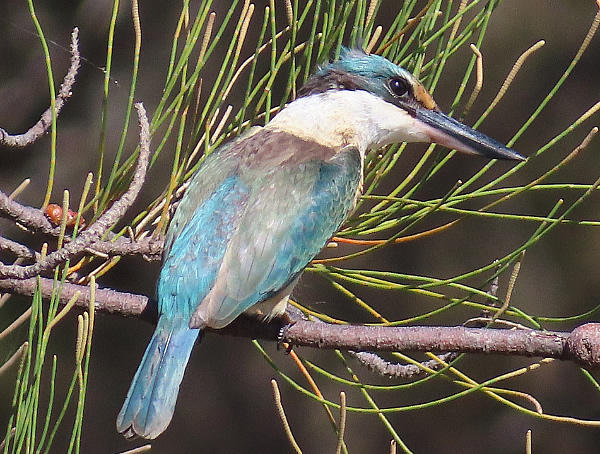
Sacred Kingfisher Photo captured 800 metres downstream of the Tonkin Highway Bridge
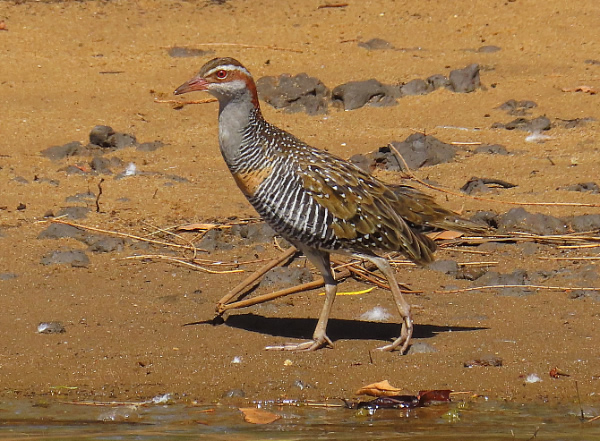
Buff-Banded Rail. Photo captured at near Point Reserve, Bassendean.
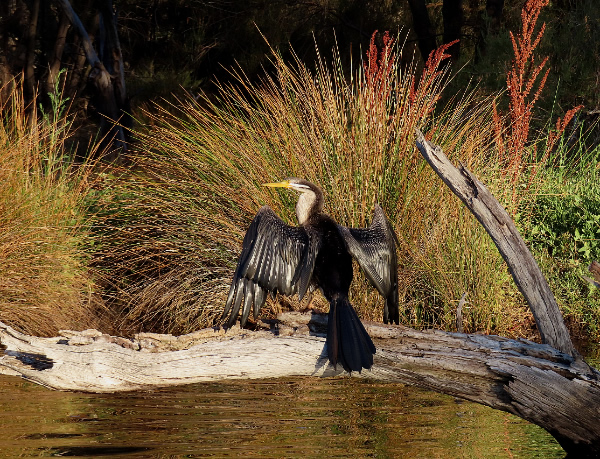
Photo captured 550 metres upstream of Sandy Beach.
Come and Try Kayaking CourseCome and try paddling for FREE! They are generously offering this 4-week course for FREE and includes everything you need to get out on the water! Kids, families, grandparents! Everyone
is welcome. There are limited spots, so get your registration in quick! Starting 16 February 2025 at 3.30pm, the course runs every Sunday for four weeks until 9 March 2025. During this time you will learn everything you need to know to paddle safely and confidently on our beautiful Western Australian waterways. Recommended ages from 8 years to 80, you will learn basic paddling skills and water safety – plus have lots of fun! There is a minimum swimming ability requirement of 50m or Stage 5 Education Department Cert. If you are unsure, please let us know in the registration email.
Races Coming Up 9th February - Pinjarra to Ravenswood Race 16th February - Canning Classic 8th March - City Lights 23rd March - Rod Fry Race
|
|
|
|
|
|
|
|
|
|