|
|
|
|
I was invited to speak about some of my achievements and show a few photos of my bird book, 'Birds Along The Way' at a Talkie Tea Time event run by the Ascension Church in Midland last Saturday afternoon. It was a fundraiser event for Gaza hospitals. The hall was packed with over 60 people and by the audiences response it went
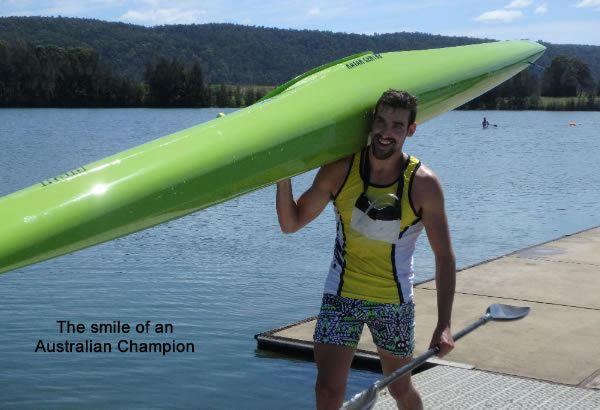
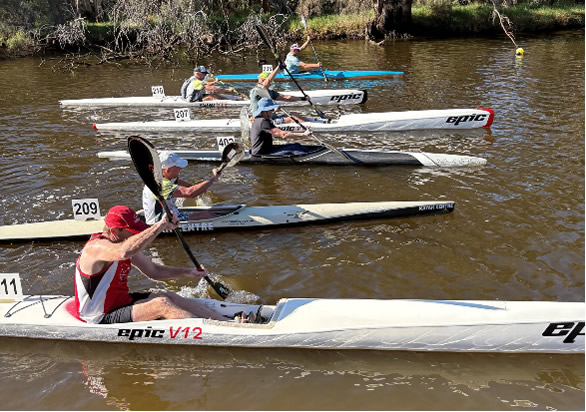
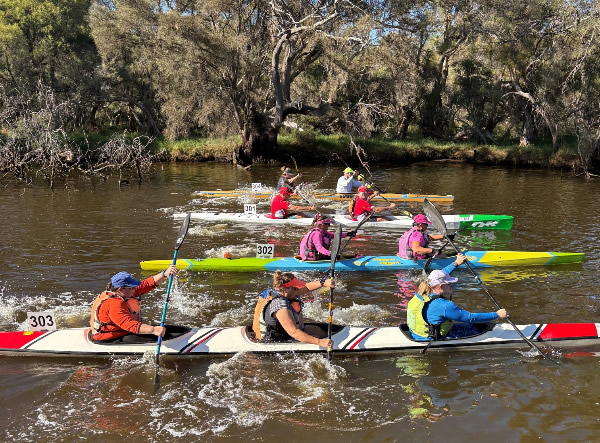
well. Don't forget to enter the early bird Australian Canoe/Kayak & SUP Marathon Championships. There is also a race for less serious paddlers. Check it out.
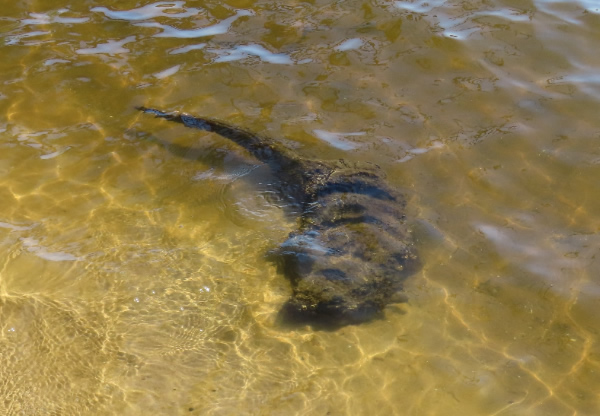
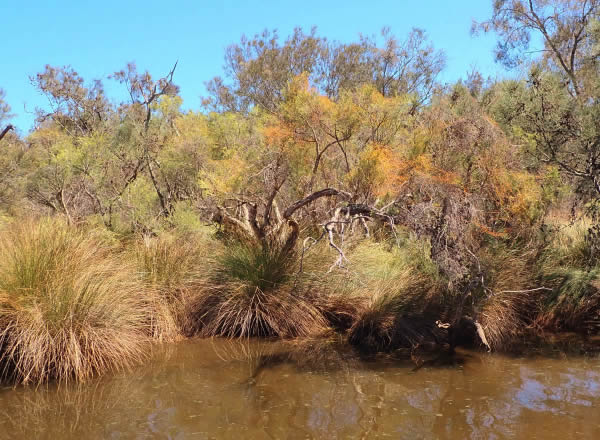
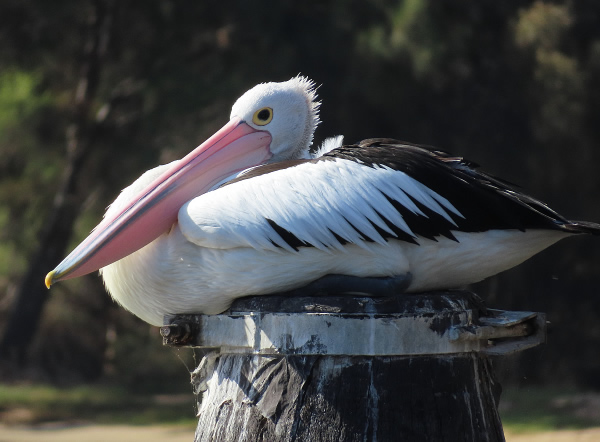
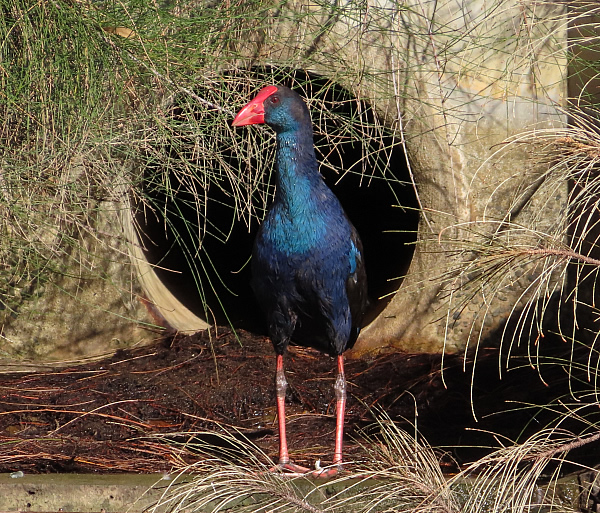
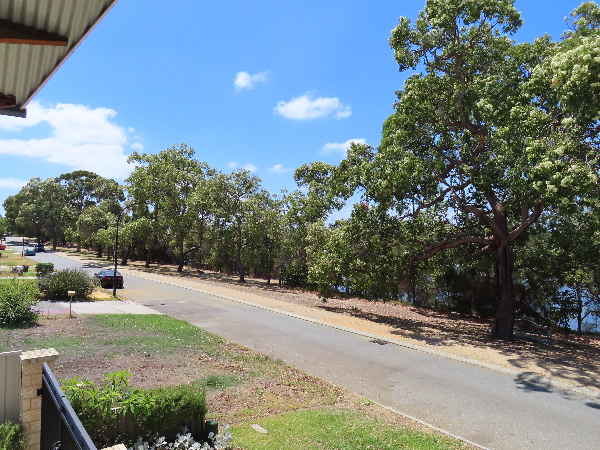
Beware:- Photo taken at the south end of Hessy Park, Maylands.
- WAs Yale Steinepreis
- Register 2025 PA Canoe
Marathon & SUP Championships
- Canning Classic Race
- Castledare Miniature Railway
- Yukon River Descent
- John's Photos -
Avon
- Birds Along The Way
- Marri Trees In Blossom
- Coming Events
- City Lights - New Short Course
- Ron Fry Race - State Marathon Champs
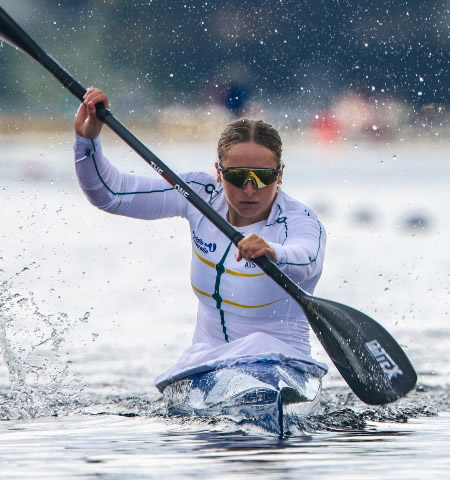
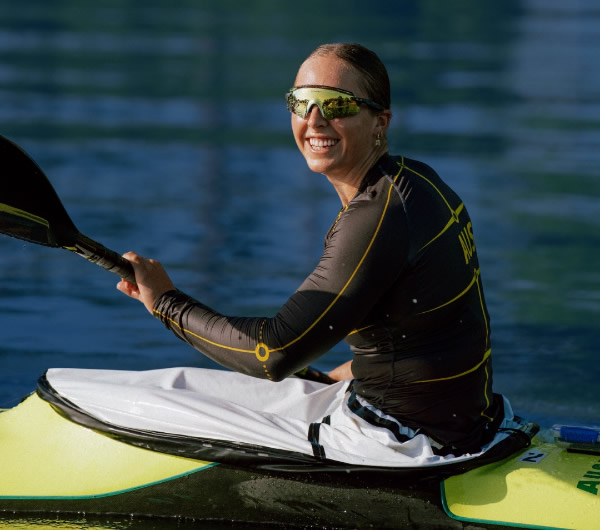
WAs Yale Steinepreis is retiring from top level competition.
2x World Championships medalist and #Paris2024 Olympian Yale Steinepreis has called time on her paddling career.
Yale has given so much to the sport.
Register
2025 PA Canoe Marathon & SUP Championships EARLY BIRD through to 28th Feb! Register here:-
Entry Deadlines: Early Bird Entries available until midnight 28th February 2025 [Perth time]
Standard Entries available : 1st March - 31st March 2025
All entries close at midnight [Perth Time] on 4th April 2025. ************************************ Event Guidebook 2025 Paddle Australia Canoe Marathon & SUP Championships 10-13 April ! Huge thank you to Leanne Hampson, Paddle WA for an excellent design and compilation.
Josh Kippin PARIME Paddlesport Coaching
By Australian Marathon Champion Josh
Kippin
New Offering for 2025 Aus Nationals
Train Smarter, Race Stronger - Your path to Nationals Starts Now.
Designed for those preparing for the 2025 Australian Nationals in Perth. These are programs
customised for you, your goals and the time you have available to make sure you're getting the most out of your training. Visit www.parime.com.au, email on info@parime.com.au or search PARIME Paddlesports on Instagram for more information.
Kind
regards, Josh Kippin Head Coach
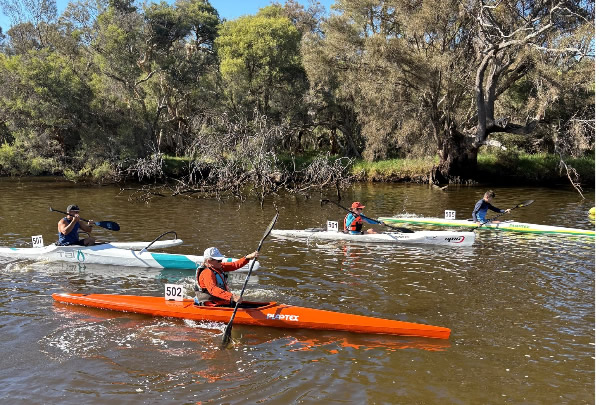
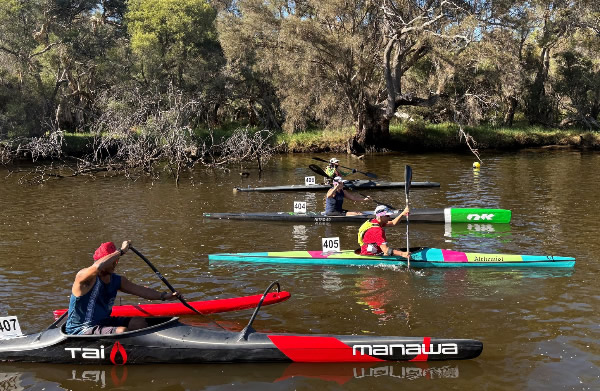
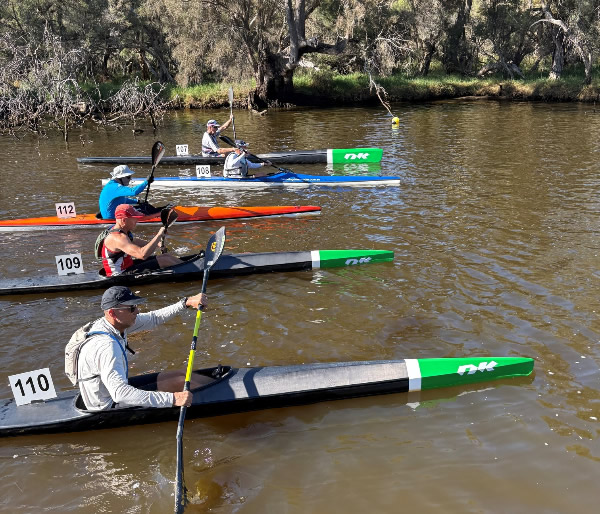
Canning Canoe Club Canning Classic The race this year started at Kent Street Weir instead of the sailing club so there were 10 grids because of the river being so narrow. I was on grid five with Alastair Fox, Robin Jacob, Ron Lachenicht and Andrew Storey. As we took off Andrew instantly went to the lead with Alastair chasing him and with me
chasing Alastair, however Andrew was that fast there was no way that I would keep up but Alastair did for a short time but he eventually dropped off Andrew’s wash. We never saw him again. Alastair did manage to get a good lead on me so I had to work hard to catch back up. Eventually I did so I sat behind him hoping to get a good ride, but it wasn’t that easy in some of the shallower sections.
My main aim was to beat Robin Jacob. He has been getting faster in the last few months and with him now in my 70 class I just needed to beat him. Everything was going okay until we got to the Shelley Bridge and the turn under the pipeline when a big crowd of paddlers descended on us. Paddlers were darting all over the place and crossing our path
and in the wash I was separated from Alastair and he got away as I was fighting to keep on track. The shallows and the frenzy of paddlers passing Alastair meant he got away, well away. My heart sank but I couldn’t give up, I still had Robin and Ron to beat who I had heard talking behind me earlier. I caught up with some slower paddlers just before reaching the first section of posts.
Ahead of me was an outrigger paddled by Ky Walker. I thought he would be easy to pass but when I got within a metre he kept up a good pace and I wasn’t able to. Then I noticed Alastair move over and get on John Hilton’s wash who passed me a little earlier. I knew then I had no hope of beating him now.
My grid. Ky either put on speed or I had slowed as he started pulling away. We did have the wind with us so probably it was perfect conditions for an outrigger. Eventually I reached the turning buoy and started heading
back against a pretty strong wind and waves big enough to occasionally break on my deck and flow into my low cockpit. Luckily it got a little calmer as we forged forward. The wind proved to be a better omen for me than Ky in the outrigger as I was able to pass him, I suppose the headwind had him changing sides with his single paddle more often than heading downwind. Although I was pleased to have passed Ky, Robin had got himself in overdrive and I could see him coming up over on my port side
like a tug boat on steroids. Up until that point I didn’t know how far he was behind, but as he wasn’t directly behind I could now see him and fear that he was paddling faster pace than me.
As I hit the shallows before the pipeline and followed the deeper channel Robin was taking a more direct path and closing up fast. I feared he would catch up so there seemed no point to kill myself and try to out run him. I think I was at 99.9 per cent capacity anyway so in reality there wasn’t too much I could do. I caught up with Chad Sorenson in his ski just before the pipeline and Robin also caught up so we moved under Shelley Bridge together. I thought we would get passed Chad pretty easily, but he was on a roll and now setting the pace. Once under Riverton Bridge and into the shallows and channels of the Riverton Swamp I felt my kayak start to drag. I was hoping Robin was feeling the same, but being a
little lighter in weight he might not. They both surged on either side of me so I sat on their wash hoping that they were going to hit the wall. With the short cut channel coming up, Robin being on my left had the advantage so I had thoughts of taking the long way round however Chad was on my right so I didn’t want to make him do the same so when we came to the short cut channel I moved into the deeper channel and put on the speed to get in front of Robin. I was relieved when I paddled through the narrow channel in front. It would mean that if Robin attempted to pass me in the wider, deeper section of the river I had the opportunity to get on his wash and ride him home. Once out of the channel and with just under 1.5 kilometres to go we started to catch up with Agnes and the double of Izzy and Hayley. Although Robin was a few metres over on my left he had either spent
his cash or he was waiting to put the pressure on closer to the finish line. It was here that I decided to put the pressure on and try to catch up and pass Izzy & Hayley. This spurt kept Robin at bay and once I got onto Izzy’s wash and started fighting for the finish line I was pretty confident that Robin would not be able to beat me. I expected to beat Izzy & Hayley to the line but they put on a great fight and it ended up being a dead heat. Thankfully I beat Robin by 4 seconds but I
can see I’m going to have a tough time beating him in the future. It was another great race and the burgers afterwards were top of the range as always. Many thanks to the volunteers and organisers.
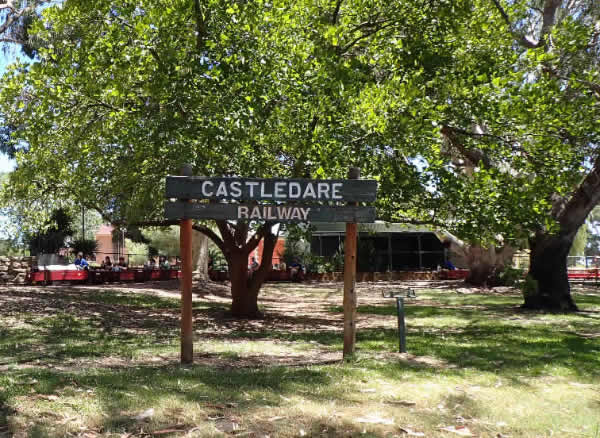
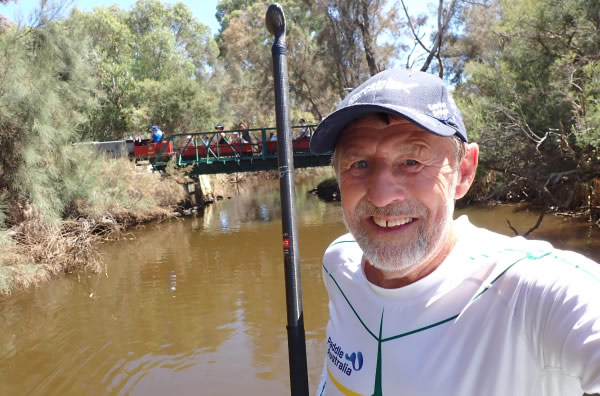
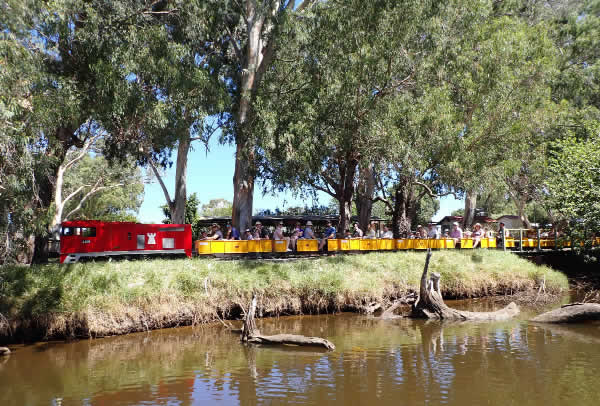
After the results and prize giving I went for a 6 kilometre SUP paddle to check out the channels and dead ends channels of the area. The Castledare Railway was very busy with at least 3 miniature trains taking children and their parents around the scenic track.
The Castledare Miniature Railway in Perth is Australia's longest 7 1/4″ gauge railway, operating through the Canning River Regional Park. It runs on the first and third Sundays of each month from two stations: Niana Station at Castledare Place and Wilson Park Station at the Kent Street weir. The
railway is family-friendly and primarily caters to younger children, although all ages are welcome. For the latest operating times and special events, it's recommended to check their official website.
Castledare Miniature Railway is a 100% volunteer-run organisation located on the banks of the Canning River.
Castledare Miniature Railway has steam and diesel-hauled trains for young and old, with tracks that run through the wetlands. This is an
experience of a bygone era operated in true railway tradition and safety. Picnic facilities and the cafe at Wilson Park are available.
There were 4 trains full of children and their parents steaming around such a beautiful area.
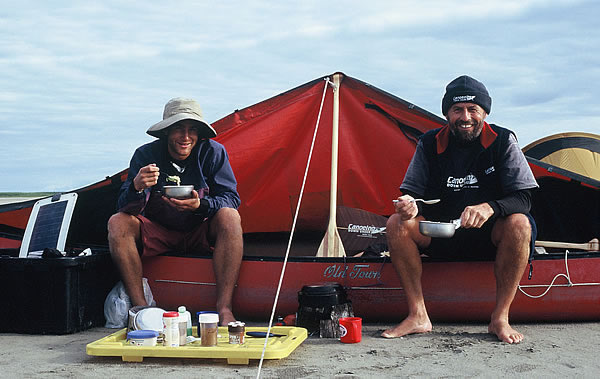
The Yukon River Descent Friday 23rd July. Mountain
Village, our second last village on the river, was 53kms away. We thought it might be too far to go without lunch so at breakfast we saved some cooked fish and put some noodle packets aside. We rounded Hills Island and began paddling down a stretch of the river that would take us to the village of Pitkas Point. As always we both had our own ideas as to which side of the river was going to give us the most assistance. Ed liked to zig-zag across the river in the hope of finding the fastest current
with the aid of the GPS, but I liked to choose a side that looked the most obvious and keep on a more direct line, gradually changing over to the other side if needed. Despite having little left of the river, Ed was still eager for us to zig-zag and use his GPS and the current to go faster: he was pretty buggered, his hands were giving him trouble and he had a sore shoulder and back.
We paddled on and I didn’t say a word. As we rounded a sweeping bend we could see the buildings of St Mary’s along the Andreafsky River on a hill side. It looked an inviting community but it was too far a detour up the channel for us to visit. A sandbar divided the river on the corner before the Pitkas Point village so we stopped on it for a pee. As I didn’t want to get my blistering
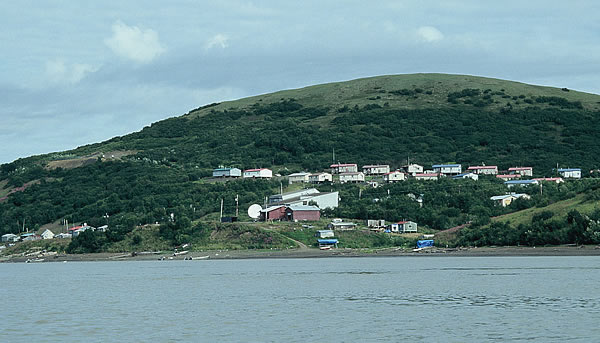
feet wet I didn’t get out of the canoe, instead I stood up and peed in a bottle, a much easier task when the canoe wasn’t moving! As we took off, the river narrowed and quickened. We were all enthused, there was movement in the water and the canoe was picking up the pace. We flew by the picturesque Pitkas Point village which was on the edge of a massive area of barren hills. The
landscape on the right side of the river was so different, and as far as the eye could see there were rocky hills with little vegetation growing on them. The highest point that we could see was 868 feet, but most of the hills, which ran north for hundreds of kilometres, were between 200 to 400 feet high. They were similar to the barren hills in Scotland.
Pitkas Point Village We soon floated beyond Pitkas Point and its airfield and made our way towards Mountain Village, which lay at the south westerly edge of the barren hills and at the end of the long straight that we
were on. On our left side the land form was low, swampy and full of small lakes and channels, a stark contrast to the rocky hills on our right side. Although Ed was tired, I could see by his paddling rate that he really wanted to get to Mountain Village before having lunch. With only two more days of paddling the adrenalin and excitement helped us fly along. Within 5kms of Mountain Village we could see an immense thunderstorm racing towards us from behind. The clouds were heavy with rain, and I
expected that we were going to get exceedingly wet and buffeted by the wind before reaching the village. Despite the danger rushing up behind us, Ed needed to land on a sand bar to have a pee so I took the opportunity to change into my warmer clothes to get ready for the onslaught. The storm looked black and violent as it started to bear down on us. I kept looking behind to see it gaining. A powerboat heading towards us was going straight into it, I didn’t envy them! Just as we were bracing for
the storm, it blew across the river and into the hills a kilometre behind, sparing us a drenching. When we pulled up at Mountain Village the mud was thick and uninviting, so we found a cluster of rocks to land on, but the rocks were too hard on my feet, so we were forced to move back to the mud. At this stage my feet were very tender and walking on them was really
uncomfortable. A local came over to have a chat. I asked him the whereabouts of a phone. Apparently there was no public phone or Washeteria in town, but he did say there were two stores. I asked about water, and he said there was a local spring at the end of the mountain range, which had a pipe coming out of the hill, and it was the best water around. We were really hoping for a Washeteria and a tap so we could fill our water containers without having to filter it. We were also hoping to use a public phone to call the airline, but it was not to be. So far things weren’t looking too good. I had thought about asking about a medical centre to have my feet checked out, but then again it was probably best to utilise our time by getting to the end of the
river. A few young kids came around to check us out; they all looked a little podgy – too much food by the looks of it. When they left us we walked through the mud and onto the gravel road towards the store. I was wearing my sandals and with every step I cringed with pain. The shop had a good selection of foods, I think the best so far (could be the reason for the overweight kids). We
topped up with milk and sugar and bought some extra treats, muesli bars and tinned potatoes as well as bread, cheese and ham paste. I walked the aisles feeling immensely uncomfortable. What a sook. I could almost hear an old timer saying, “Now, when I were a lad I had no shoes and I had to walk on sharp gravel; that’s what you call painful”.
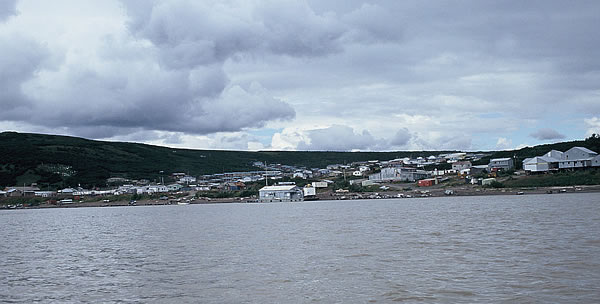
Mountain Village The mud was oozing under our feet as we ate lunch back at the boat. Lunch over, we quickly got on our way, firstly to find the water and secondly, to find the end of the river. We hadn’t paddled far
when we noticed an area with water trickling down the bank. Was this the spring? Then we noticed a pipe literally jutting out of the hill side with a good flow of water coming out of it. With containers in hand; we walked over to the pipe and filled everything we had with the icy cold water. For the next 50 metres the bank was riddled with springs and the locals were right, – it was beautiful water. Within metres, the barren hills disappeared and there was nothing ahead of us but swamps, channels, flood plain and low-lying land. This type of country stretched for kilometres and kilometres until it finally reached the open sea. The map showed an amazing array of channels and waterways; the area is known as the Yukon Delta National Wildlife Refuge. By the
day’s end we had paddled a further 23kms and landed on a sandbar slightly before and across from Tunupokap Channel. It was another good camp spot with views of the distant hills and due to a lagoon next to us, water was on both sides. We ate our dinner in the shelter of our large spray deck that Ed had tied up in the centre of the canoe to stop the cold wind from blowing on us. Just as we finished off the last of the fish, a boat stopped to find out whether we were okay. We had a quick chat and
the guy said he’d never met any Aussies on the river before.
Using the deck cover for a bit of shade from the cold wind.
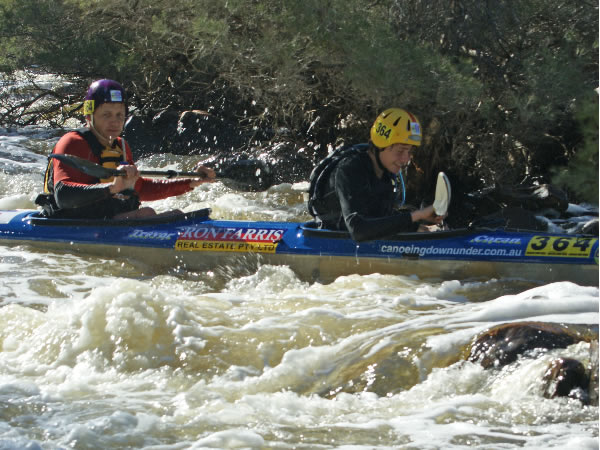
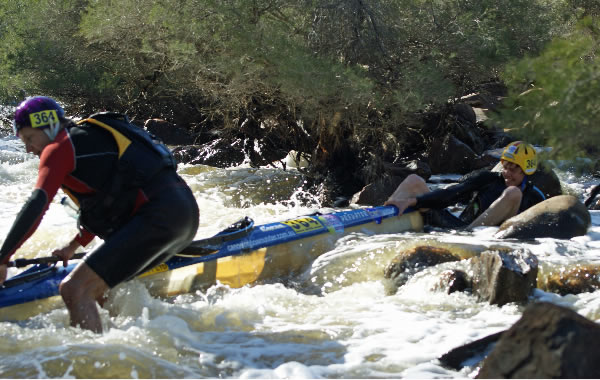
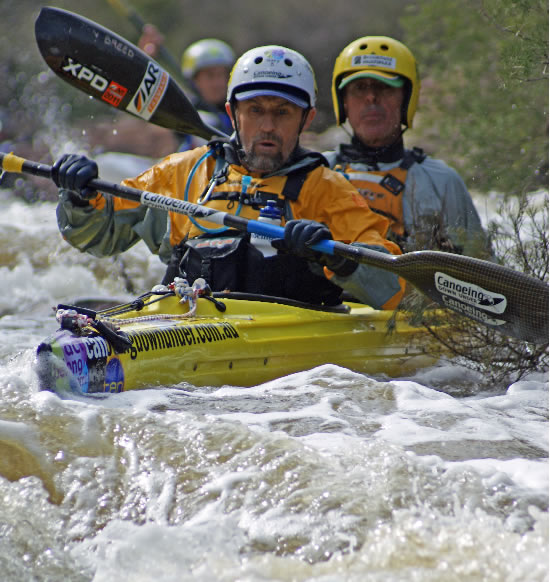
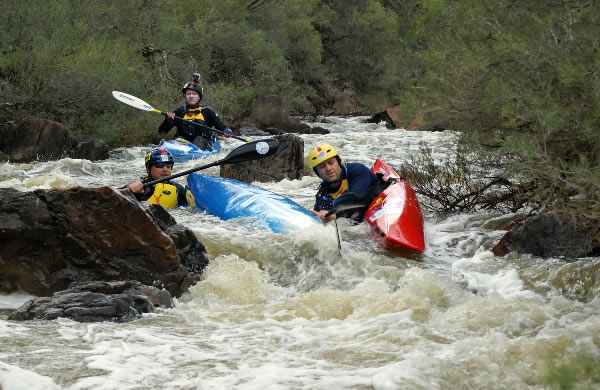
This is John and he took these photos and many more on day two of the Avon Descent at Championships Rapid in 2012.
These two must be experts!
An interesting way to paddle a rapid.
It's Blossom Time THE Marri tree is one of the commonest and best-known of the large trees of South-Western Australia. It has a range of distribution extending from Port Gregory near the
Murchison River, to Cape Riche, westward and southward to the coast, and inland slightly beyond the eastern limits of the jarrah zone. Tinkurrin is probably the most inland of the areas in which it is found. Although one of the largest trees of the jarrah forest, it occurs as a small tree or a shrub in its eastern limits on the south coast, while to the north of the Hill River it suffers considerable reduction in stature. In the forest areas however, it attains a height of well over 100
feet.
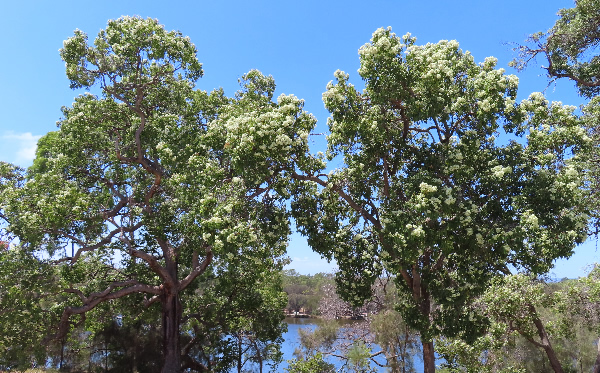
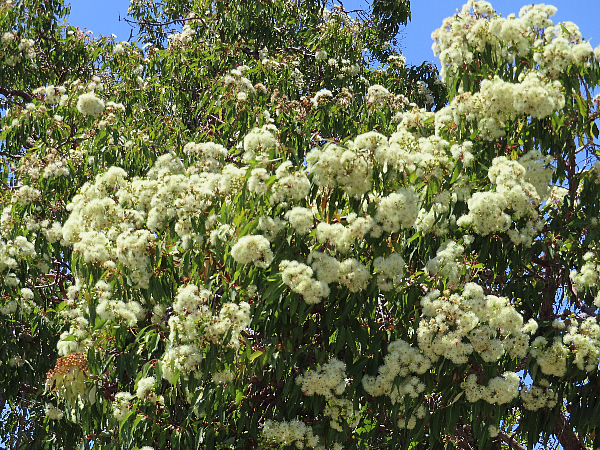
The Marri trees in front of our house in full bloom. The marri blossom is a beautiful flower featuring fine hairs that fan out like a hat. Every year or two the flower blooms. The Marri belongs to the group of Eucalyptus which are called bloodwoods, i.e., trees with a friable bark; leaves with a characteristic parallel lateral nervation of veins close together and spreading from the midrib almost at right angles; flowers which although in umbels have these umbels arranged in larger panicles; woody globular or urn-shaped fruits, and a bud cap or operculum which rarely
falls freely, but shows a tendency to remain hinged to the calyx-tube at the time of flowering (see illustration). A gum-resin or kino is formed in cavities in the wood, or in vessels below the bark, and is sometimes exuded in fair quan tities. This kino has a value as a tanning material, but its collection today for this purpose is uneconomical. Marri timber is straight-grained and pale in colour. Foresters consider it a durable timber, and it may possess a future for use as sleepers. The Marri is also well known to the apiarist, giving a copious supply of nectar in suitable seasons. It flowers in the summer months, usually in February and March, but may continue until April or May. The timber is straight grained and pale in colour. The leaves yield small
quantities of an oil which consists mainly of terpene and is of no commercial value. Marri is usually a large tree to 40 metres but can take mallee form on poor sites. It bursts into prominent cream flowers, held outside the canopy, in mid-summer – despite this being in the middle of a rainless period in the mediterranean climate of its native habitat. The bark is rough (tessellated),
brown to grey-brown, and often has exudations of reddish gum (kino). Its common name “Marri” is from the Nyoongar word for blood – applying to the gum. Marri occurs in a range of habitats. It is an important component of both the Jarrah and Karri forests of Western Australia. It also occurs on the coastal plain on a range of soils. The nuts are large and carry rather large seeds that provide an important food source for some species of parrots including cockatoos. They are commonly called “Honkey nuts” in Western Australia – allegedly a corruption of hockey nuts because of their use in a game.
The Marri timber is honey-coloured. It has numerous faults and gum veins. Consequently it has poor strength and is not used for construction purposes. Recently the character of the timber is being appreciated and it is increasingly used in fine furniture. The light colour of the wood makes it suitable for pulp manufacture and large quantities are
now being used for chipping. Marri is a large tree. It is not suitable for most gardens or street plantings but it is an excellent tree for paddock plantings providing shade for animals. In forest habitats its side branching is restricted but in parkland settings it forms a rounded tree providing excellent shade. The large nuts are somewhat of a hazard if grass under the trees is mown.
The appearance of the tree is characteristic because it tends to repeatedly branch into two, more-or-less equal branches. Propagation is from seed which germinates readily.
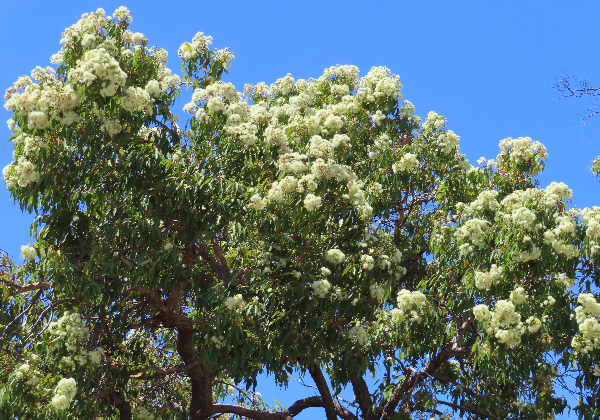
A closer look at a tree in front of our balcony, 2018 - A rare mass blossoming of Western Australia's native marri tree has bees and their keepers jumping for joy as the colourful tree-top display
continues in the state's south-west. It's thought a "perfect combination" of light rain and moderate temperatures throughout summer has resulted in what some are calling a "marri megablossom". Beekeepers in particular are making the most of the phenomenon, with some
travelling up to 500 kilometres to position their hives among the trees on farmland or bushland adjacent to crown land.
Down our street the blossom is nearly on every tree. I think this year is a "marri megablossom".
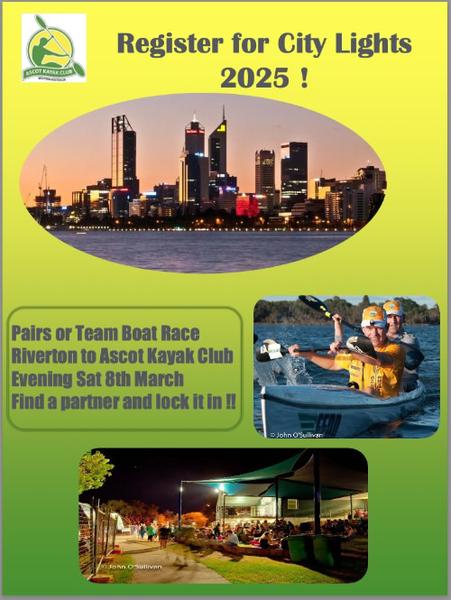
City Lights Race This Year there is a
New Short Course FULL COURSE (CITY LIGHTS) - Start All competitors: Riverton Bridge Park.
- Compulsory portage & light check at Narrows
- Paticipants may make a long portage to the east side of the Narrows bridge to avoid the rough water under the bridge. Must carry your own boat. For relays both boats must be present at the portage
entry.
- Finish: Ascot Kayak Club
SHORT COURSE (CITY LITE) - Start : Point Belches (East side of Narrows bridge)
- Finish: Ascot Kayak Club
RACER NOTES - Must race in pairs or team boats, no solo, double skis/kayaks recommended
- Relay option available (2 teams of 2) change at Narrows (Full course only)
- Car shuffle required between Riverton and Ascot (Narrows and Ascot for the short course
For more information and registration go here:-
https://www.webscorer.com/register?raceid=380145
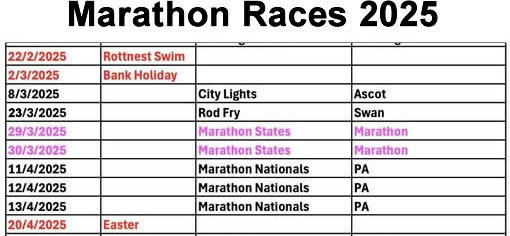
Races Coming Up 8th March - City Lights 23rd March - Rod Fry Race 29th/30th March - WA Marathon Championships 10th-13th April - Australian Canoe Marathon & SUP Championships
|
|
|
|
|
|
|
|
|
|