|
|
|
|
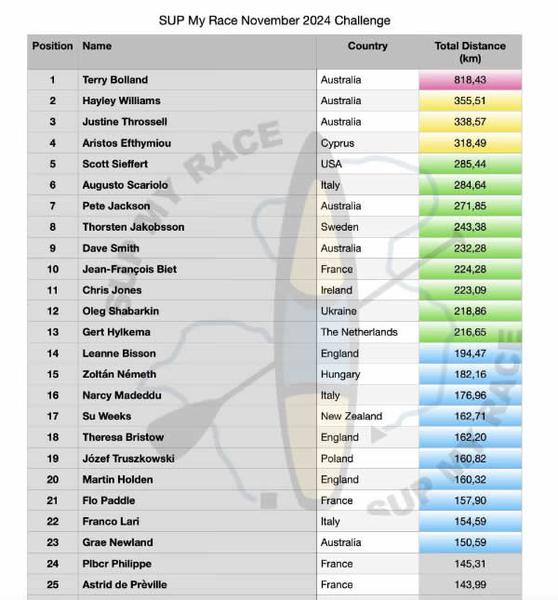
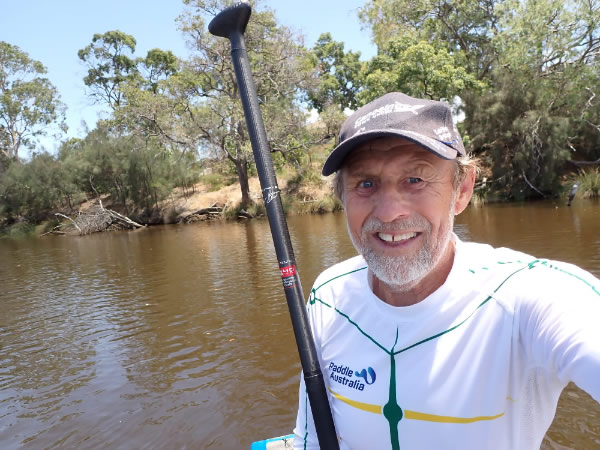
So it looks like it’s now official. I Paddled a SUP more kilometres than anyone in the World this Month. That is the paddlers who took on the ‘SUP MY RACE’ challenge and there were 282 of them. Apparently that was the second biggest total of kilometres this year. (I think the most kilometres paddled was
paddled going down a river with a current on a trip.)
818 Kilometres on a SUP This Month (November) & 40 kms in a Kayak. Hayley Williams from Perth was second with 355.51 kms and Justine Throssell from Perth third with 338.37 kms. They were keeping me on track. On the first week I thought I would just do more than the person last month, which was 587
kms, then I started to get the hang of it and decided to do a lot more. The trouble is there is always someone out there wanting to do better. Distances paddled. Week 1 – 121.68 kms on my
SUP and 25 kms in my kayak. Week 2 – 158 kms on my SUP and 15 kms in my kayak. Week 3 - 225.05 kms on my SUP. Week 4 –239.53 kms on my SUP. In the last two days, to make up a 30 day month I paddled 73.61 kms. So the total on the
SUP was 817.87 kms & in the Kayak 40.00 kms bringing the grand paddling total to 857.87 kms in 30 days. So this month - it’s back to a normal life!
Pairs Enduro Race It's the AKC Pairs Enduro Race this Sunday starting at Middle Swan Bridge and finishing at Ascot Kayak Club. I'm looking for someone who can take a few photos of the event.
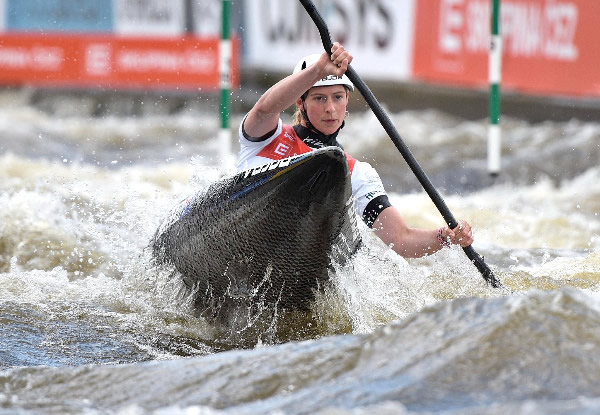
Genie Collin Genie is a Perth girl and an Ascot Kayak Club member. Representing Australia as a youngster gave her the confidence to study and work in Europe. Whilst
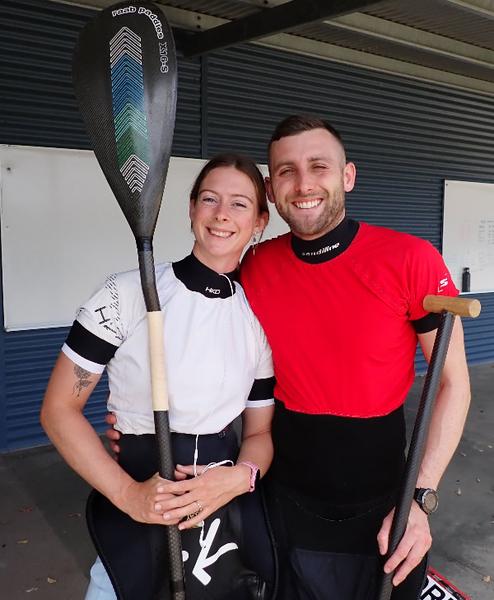
there she never gave up her determination to carry on paddling, so she has represented Australia more times than anybody realises. Not only in Slalom but also in Wildwater. She is back in Perth with her new husband Jake visiting her parents.
WAs Genie Collin 2024 ICF CANOE SLALOM WORLD CUP June 7,
2024 Prague - Troja
Genie & Jake as Ascot Kayak Club this week. She is home for a few weeks. Jake is also a very good slalom paddler and when I had a good chat with them both Jake seemed a very nice man.
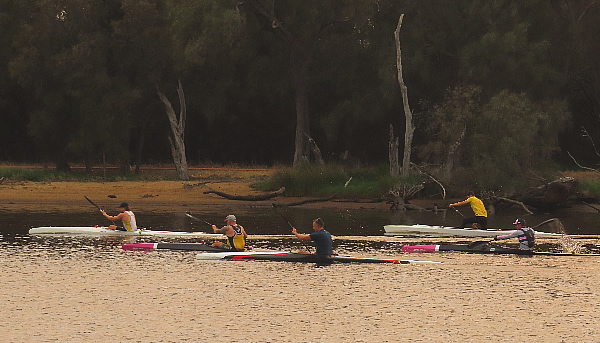
Some of the paddlers training at Ascot early morning.
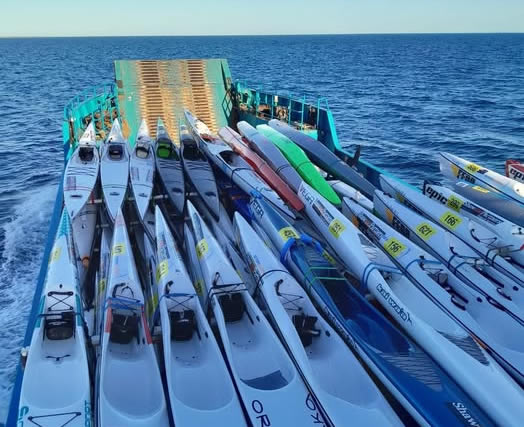
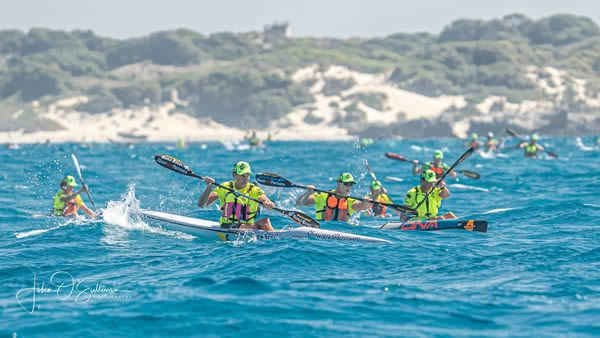
The Doctor Race The Doctor is an ocean paddling event from Rottnest Island (WA) to Sorrento Beach covering 27km.
A barge carrying many of the skis across to Rottnest.
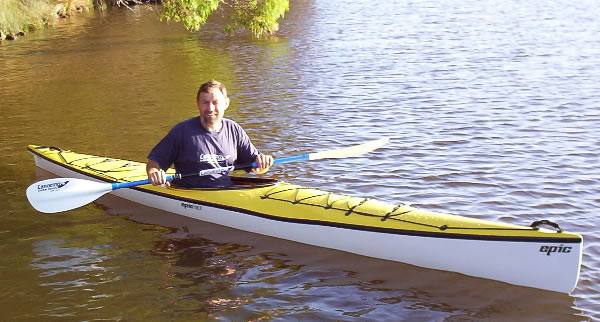
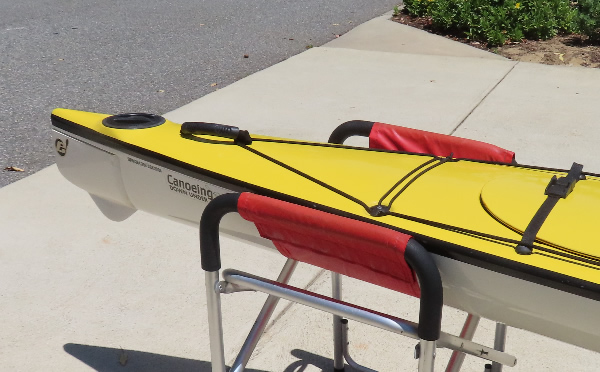
Epic 16 Kayak For Sale $1200.00 Due to having over 50 kayaks I have decided I have to let one or two of them go as I'm getting short of space in my garage and I now own a couple of Stand Up Boards which need a spot.
Epic 16 kayak. 19kgs $1200.00 This is a demo kayak that I have had
tucked away in my garage for a few years. It's been used very little and is in amazing condition. A great river touring kayak. Two hatches and large storage areas. Rudder operated by foot pedals on a nice wide foot support. Self
adjusting foot pedals.
The Epic 16 offers a unique combination of stability, maneuverability, and speed that touring paddlers of all abilities appreciate. Excellent condition.
The Yukon Descent As small mountains closed in, the scenery changed for the better and so did our moods. It felt great to be penned in by mountains again and be able to look on at a
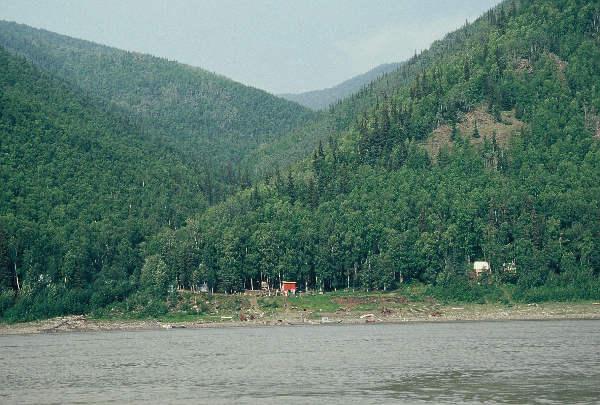
spectacular vista of the Loafing Mountain Range at the end of the straight. The mountain peaks superimposed each other for miles and held me spellbound. It was like paddling into Never-Never Land. The view was both stunning and calming and I just wanted to paddle this stretch forever. We passed a few cabins and a couple of anchored boats and eventually reached the end of the straight
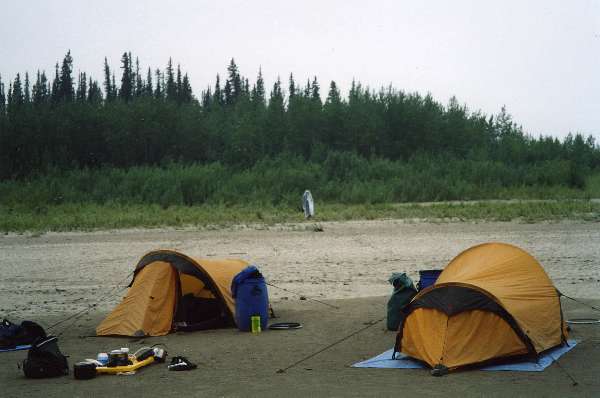
where the river turned. The stunning view and my fanciful thoughts suddenly came to an abrupt end. We were now heading towards a smoke haze that was snaking its way up the valley and about to engulf us, and it was not a pretty sight. At the 85km mark we landed on an island with a power dingy lying abandoned on the shore. We camped on a mud / sand flat that was dotted with stones, with
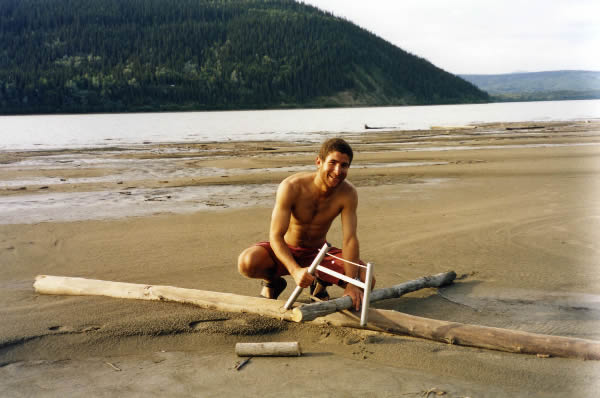
the nearest vegetation and mosquitos some 125 metres away and just how Ed liked his campsites. The tidemark on the island showed us that the water was receding every day at an alarming rate, and to our despair, it meant that the current was slowing daily as well. It was 9.30pm by the time we had pitched our tents and collected wood. We had a collapsible saw tucked away in our box, but
up to now we hadn’t used it, as it was too fiddly to put together, and it seemed easier to snap tree branches with our feet. Ed soon had the saw pieced together, and he sliced through the timber that we had collected like a knife through butter. We were amazed at how sharp it was. Ed soon had a neat pile of wood stacked next to the hole.
Friday 9TH July. The morning was chilly and the sun was hidden by smoke – beautiful one day, smoky the next. Although the smoke wasn’t particularly thick, it did manage to ruin the wonderful scenery, and we could
only see the cliff faces, but no backdrop. After four hours of paddling and a few of kilometres short of the village of Rampart, we moved beneath magnificent sandstone cliffs. Beyond them the river straightened and the strong wind whipped up big waves. A passing powerboat slowed and the two people on board waved. It then stopped on the shores of Rampart, where we berthed shortly
afterward. The powerboat was anchoring when we arrived with Trevor and Cheri on board. They were visiting Rampart and all the villages along the river to vaccinate dogs against rabies. It wasn’t compulsory, so dog owners only participated if they wanted to. We chatted for a while and then walked to the Washeteria. The Washetaria proved to be an impressive building once we’d found it,
but sadly it was locked. We waited and waited in the hope that someone would walk by so that we could find out when it would be open, but no one came. We eventually had to go looking and after a big search we were told that the power house had broken down, resulting in no power to generate the appliances, so unfortunately that meant no wonderful hot shower or water to drink.
As we walked back to the boat, we quizzed a local who told us that he had a lovely clear stream running by his house and that it was the best water in town. This time we really needed fresh water so we checked it out walking about 800 metres along the road. At one home, where we asked directions, the family were busily drying fish. After finding
the stream, we headed a little further upstream to find a suitable spot to fill our containers away from the swampy area. It was sweet clean water but because it ran between houses, we made sure we purified it!
The wind hadn’t abated at all and the straight wide river was bouncing with waves as we boarded the canoe and paddled across the choppy water to where the river made a slight right turn. We landed before the corner and lit a fire at the waters’ edge, sat and had lunch on a mass of rocks and looked on towards Rampart, which was virtually lost in the
smoke haze. The wind chop on the long straights was really giving us a beating. It was heart breaking to think that much of our way to the sea ran west, exactly in the direction that the wind was blowing from. As we moved by the 12 Mile Island we spotted a kayak on the left shore so we pulled alongside and spoke to a lone male. He looked pretty old and his English was virtually
non-existent so our communication was limited, but we managed to understand that he too, didn’t like the wind. We left him to his camp, which was sheltered by the trees and most likely the home for a thousand mosquitoes, and paddled on for another 10kms to Garnet Island. The wind was tortuous. Ed wanted to camp on the right side of the island directly in the face of the wind but I
managed to persuade him to move around to the left side, about 150 metres from the point, to where it was more sheltered. The river had receded at an enormous rate so we had a long walk from the boat to find a dry campsite. The evening was chilly and we both wanted some warmth, so with our amazing little saw we cut up some wood and sat happily around the fire. Saturday
10TH July. Not long after we crawled from our sleeping bags, we saw the kayaker paddling by our island. We were a little taken back – he shouldn’t be passing us. We were younger and fitter than him or so we thought! We didn’t know his name so we named him Klaus; that way we would both know whom we were referring to when we talked about him later. The morning was
relatively calm, so Klaus would have been a happy man and it was probably the reason why he had started paddling early. Ed walked across the sand flat to the toilet wrapped in his white mosquito net, and disappeared into the vegetation. He looked comical and so out of place. Here we were in a tough land where the locals have had to put up with a lot of discomfort and Ed was walking
around with a mosquito net completely over his body. Although it was perhaps the most sensible thing to do, I saw it as more a burden so I chose to put mosquito repellent on. He returned to camp with the small trowel in his hand and a mob of mosquitoes clinging to the outside of the net.
Ed draped in his mosquito net.
After breaking camp, we paddled and pulled our canoe through the shallows back up to the upstream point of the island and then continued our journey on the right side of it as it was a shorter route. The wind hadn’t yet picked up so our paddle to the narrower part of the river, some kilometres away, was made easier. The unravelling scenery was
exceptional but the haze caused by the forest fires spoilt it somewhat. As the mountains moved in, the current became swifter and we were on a roll. Soon after, we passed two cabins situated on the right side of the river and both had floatplanes anchored outside. According to our map, we were getting closer to a place called ‘The Rapids’. We turned a right hand corner and immediately
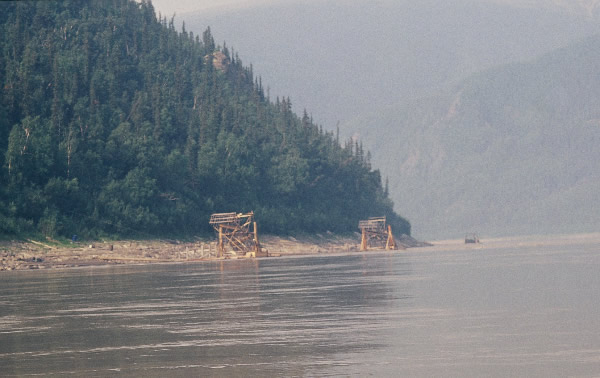
heard the sound of the rapids. There was a very large rock bar strewn across the centre of the river with the water being diverted into channels on either side. We couldn’t see anything serious on the left channel so we took it. The water was swift though but there was nothing to worry about providing we stayed in the main stream. As we drifted I clicked a few photos of three fish wheels tied to the left bank. Only one of them was working. These fish wheels were slightly different to the ones we
had seen upstream, where the current was stronger; these had three small catch arms instead of two larger ones.
We beached for a pee just after the fish wheels and then drifted down with the current, passing a cabin on the left side. Our presence had stirred up a large number of dogs and the barking and howling echoed all the way down the valley, it was an incredible chorus. No chance of burgling that cabin! Leashes, just long enough not to reach the next
dog, tied each dog to a stake and at least thirty dogs were staked along the shores.
A First Nation Camp with a few dogs.
There were four cabins on the other side of the river, situated in a delightful and peaceful place below the Senatis Mountain Range. What a magic place to live. As the current slowed we started paddling again along a stretch of river that looked very much like a Scandinavian fiord. We took photos of fish strips drying in the sun in front of a cabin
which also had numerous dogs lining the shores. Several people were going about their business when we passed and I felt both rude and intrusive as I pointed my camera towards their camp. A few hundred metres further Ed spotted a fresh water stream flowing out of the hills so we pulled over to fill our water bottles.
The Senatis Mountain Range
As I was straddling the stream three teenagers, one girl and two boys about 15 years old, had walked along the rocky shores from the cabin and started talking to us. They told us that they went to school in the town of Tanana, which apparently still had enough students to fill a classroom, so they didn’t have to move away from home. They came here
in summer to stable their dogs and catch enough fish to feed themselves and their dogs through winter. When winter arrives, they move back to Tanana and this is when they use their dogs to pull sleds to take tourists out. Although the government allows some shacks along the river, the land belongs to the government, so they could be bulldozed at any time. The teenagers were very friendly and as we were about to take off they asked us if we wanted to go back to their camp and take photos. Deep
down I wanted to, but I had a feeling that Ed was eager to get on and complete our daily 80kms.
We stopped for lunch at a scenic spot just before a corner at a place on our map called Moosehead Rack. It seemed such a strange name I wondered how it got it. A few minutes before we landed a speeding powerboat stopped and the skipper told us to paddle across to the other side of the river to avoid 6ft waves around the next corner. ”You’ll get
swamped”, he said. As we moved on we weren’t keen to paddle across the wide river and do extra kilometres if we didn’t have to, so we disregarded his advice wanting to check it out for ourselves. Fortunately for us the river had either calmed when we got there or he had exaggerated – a lot! We paddled two long sweeping turns that seemed to take forever to get around. Then, to our
delight, Mission Hill stood before us and behind it was the town of Tanana. We didn’t expect a good camp spot in the village so we decided to stop on Mission Island, which lay across from the cemetery. Ed was really buggered, and our island camp had just come in the nick of time. The Tanana River entered the Yukon just beyond the end of the island and with it being a substantial river we hoped it would have a good flow so as to strengthen the existing current of the Yukon and help push us along
even quicker.
|
|
|
|
|
|
|
|
|
|