|
|
|
|
I have been home for two weeks and I'm right back into Perth life and kayak and SUP training. It's exciting to go on holiday as I always have a fantastic time, but it's comforting to come home. Last Tuesday the 29th October Jenny and I celebrated our 47th wedding anniversary. Our wedding night was camped on a grassed bank overlooking Leverton marsh and the creeks and muddy waters of the wash near Boston England. It was only 3 kilometres from our wedding reception and my friend Fred let me borrow his mini pick-up ute to drive there as I didn't have a car. It was cold when we erected the tent and it was cold all night as it was the end of October. Our sleeping bags, that weren't that warm were filled with rice thanks to Fred, so that didn't make the night any more comfortable. To make things worse a pumping station that pumps water from the dykes over the bank
and into a creek kept starting up. I think we did get some some sleep, but it wasn't the most relaxed or romantic wedding night. But it was an experience!! I love experiences!
At that point I'm not sure if Jenny realised who she was marrying? Our honeymoon however a month later was a little bit better as we travelled across Russia on the Trans-Siberian Railway in mid winter, then a boat to Japan for some hitch hiking around the country, a trip to Taiwan and finishing off with a week in Bali. By the time we returned to Australia I think Jenny had a
better idea what I was all about. Before we married she had known that I spent 5 months hitch hiking around Europe, 6 months hitch hiking overland to Australia, a year travelling around Australia and New Zealand, then travelling through Indonesia, Malaysia, Thailand, Hong Kong, 2 months hitch hiking around Japan, travelling across Russia by rail and plane and buying a bicycle in Finland and cycling in Finland, Sweden and Denmark before heading to England. And then after a few weeks in England I hitch hiked through France and Spain to North Africa, travelling through Morocco, Algeria, Mali, Gambia and Senegal where I was robbed and then returned to England. I suppose she thought my
wandering days were over, which they were for two years and that I would change and settle down, which you must agree - I have just a little!
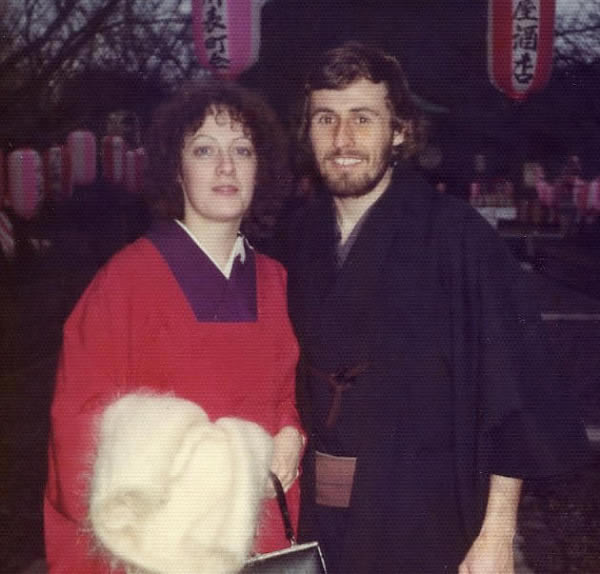
Our Japanese friends dressed us up for a walk around Toykyo.
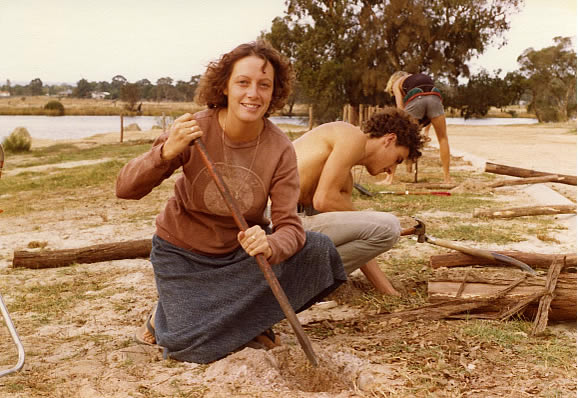
1978 - Jenny hard at work at the Ascot Kayak Club.
Nearly 50 Years of Paddling It was on Thursday 12th June 1975 that I bought my first kayak from Hawke Brothers for $215.00 and $30.00 for a paddle so next June I
would have been paddling for 50 years. My friend Jeff and I put them on the roof rack, towed a trailer and paddled all the different waterways and ocean around Australia. We kayaked in white water rivers way bigger than we should have been on, but we survived.
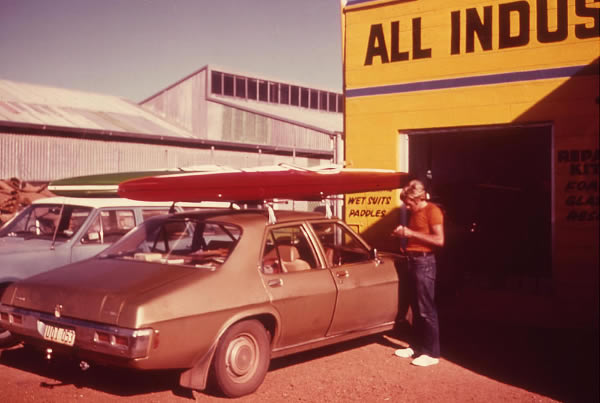
My first kayak. Hawk tourer. It went on rivers, lakes, oceans and white water.
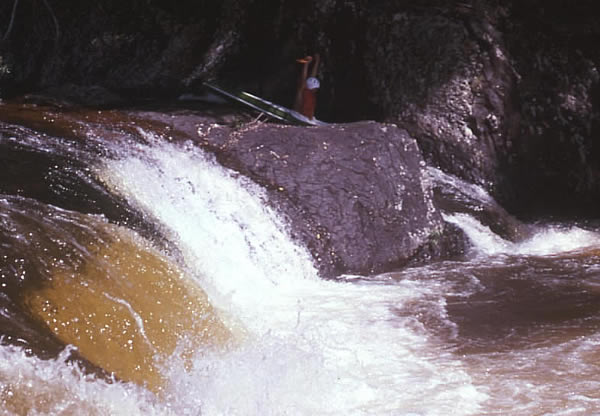
A rapid on the Tully River, North Queensland.
- England - SUP Reflections
- WA Mixed Kayak Championships - Moore River
- Slalom
- Results of the WA Ocean Racing Championships
- Island to Island Race
- Yukon Descent - To the Yukon Flats
- Adur Canoe Club on the River Etive -Scotland
- GT Aero Kayak for Sale
- Coming Events
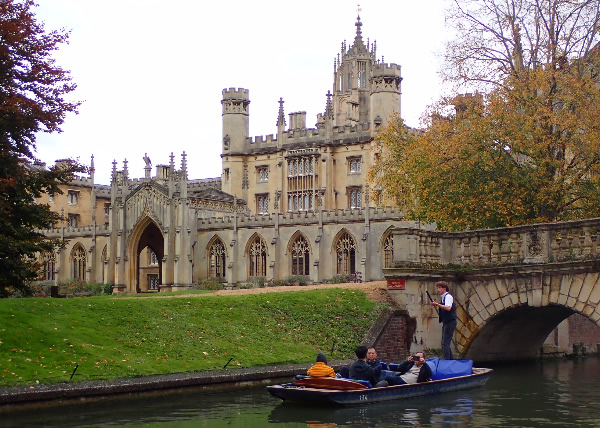
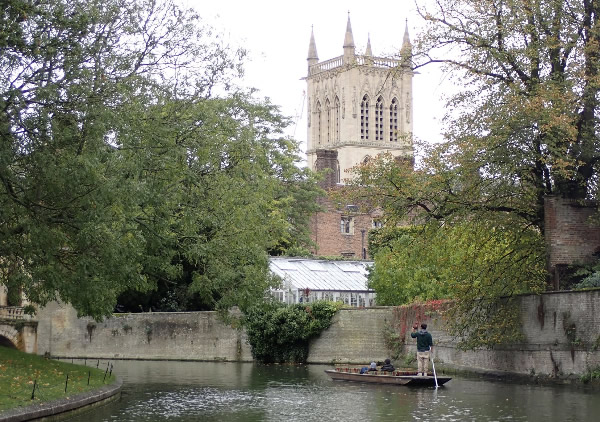
SUP Reflections No matter if I am paddling a kayak, a canoe or a SUP there are always some interesting places to paddle. Cambridge in England was one of those places.
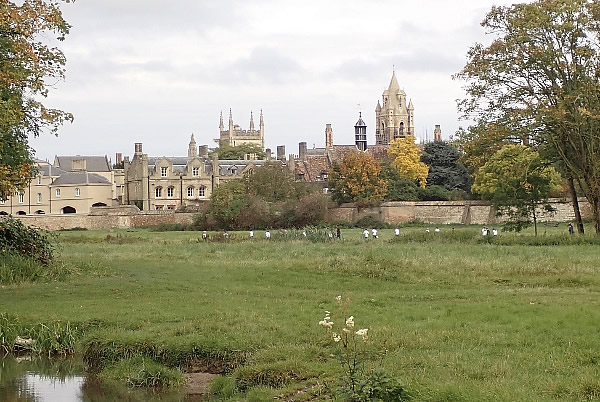
Students on a cross country run in Cambridge. Cambridge like many towns are surrounded by countryside.
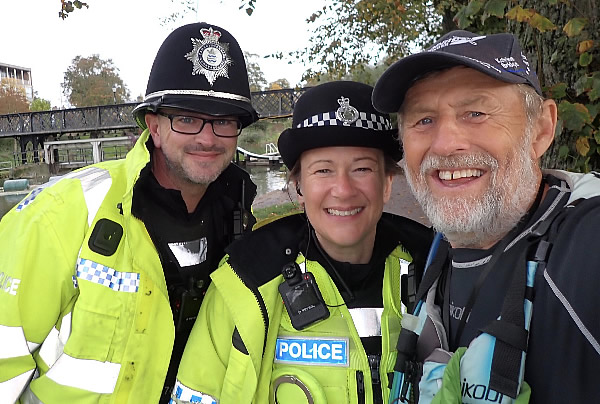
It was good to meet these two kind and interesting police officers on my SUP paddle around Cambridge. They were very interested in what I was doing.
Just one of the views you get when paddling around Cambridge.
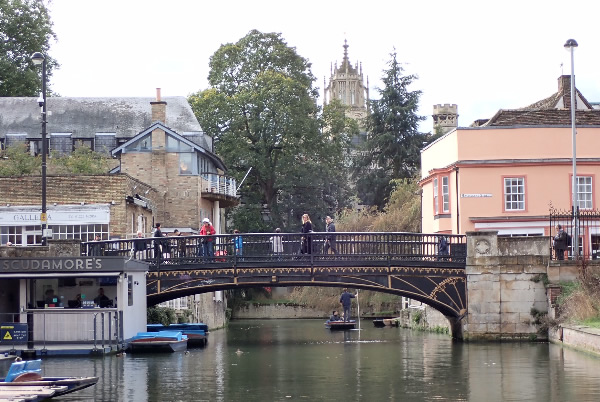
It's just a fascinating and beautiful place to paddle or take a punt.
The punt polers' were telling their customers about the history of all the different colleges.
If you are in Cambridge go for a paddle or punt, it's well worth it.
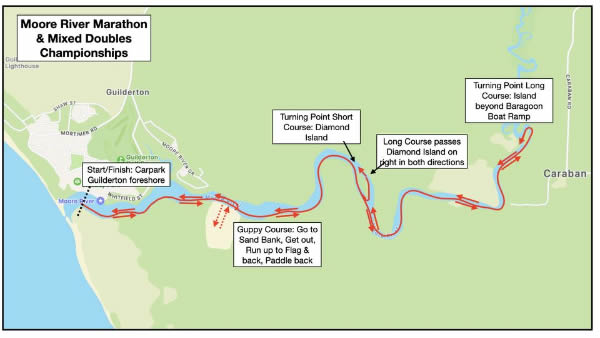
Moore River & Mixed Doubles Championships Sun 10th November Register Medals will be awarded for Mixed Double Championships on the day, note there will be no medal category for Mixed at Marathon States, this is it. Medals will be awarded in three categories: 18 & Under, 19-44 and 45+. If the pairing is mixed age group, the decider is the younger paddler for 19 and above and the older paddler for 18 and under. This race will qualify for Paddler of the Year points for Doubles but NOT
Singles. This registration includes food to be provided by the Café at Guilderton. They like to know numbers plenty of time in advance. Please register as soon as you can.
The CLOSE TIME for registrations is MIDNIGHT THURSDAY 7TH November.
The AKC Pairs Enduro Race is on the 8th December 2024 so start looking for a singles partner to race as a pair. The idea is to start together and finish
together. You can wash ride each other to assist in more speed, but you can't wash ride other teams.
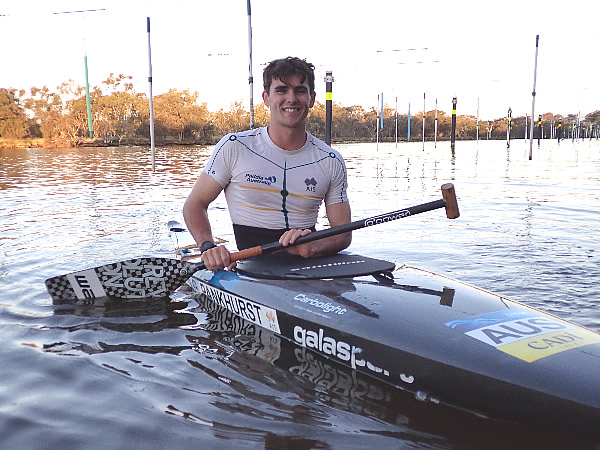
George Pankhurst back in Perth for a short stay and will be returning to Penrith to continue his slalom training very soon. He spent a lot of time this winter training and racing in Europe. We
urgently need a white water slalom course in Perth to prevent all our great slalom paddlers having to move to Sydney.
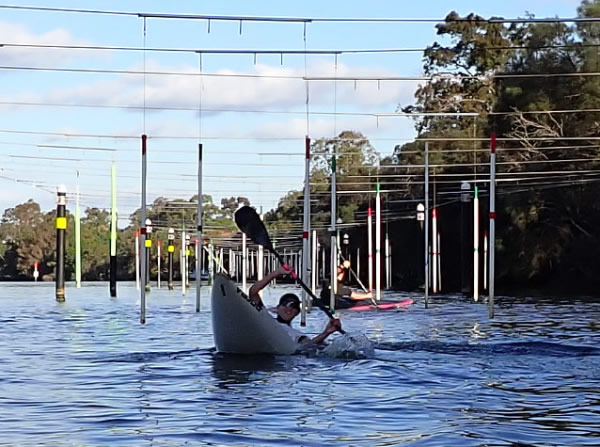
Nina Mueller at slalom training. As we lose our top paddlers to Sydney fewer juniors are coming up through the ranks.
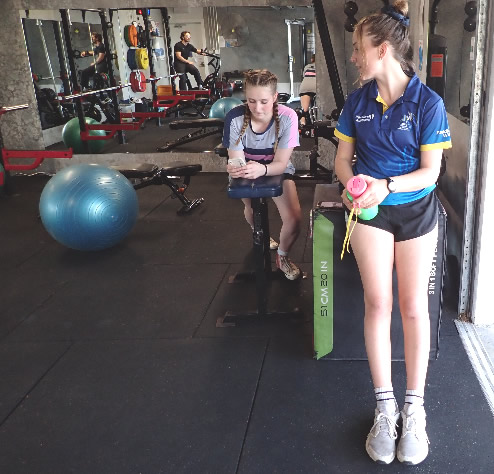
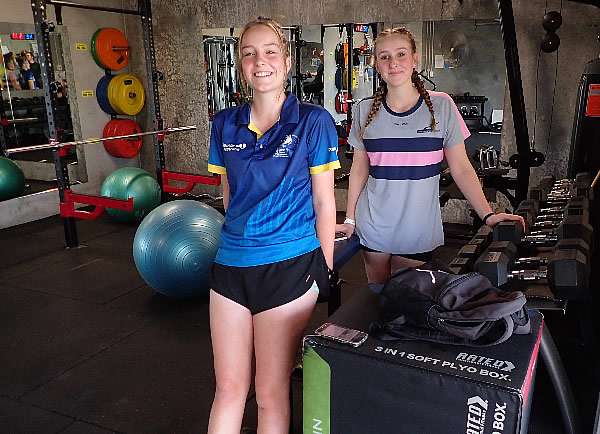
These two champions, Izzy and Scarlett Florisson training hard in the gym. Izzy is a slalom paddler and Scarlett is a marathon paddler.
PWA Ocean Racing State Championships
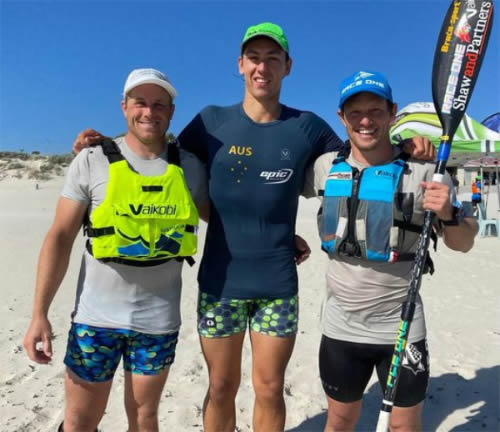
Open male winner Oscar Jones centre with Brendan Rice second and Michael Booth third.
Open female winner Jaime Roberts, with Tash Leaversuch second overall.
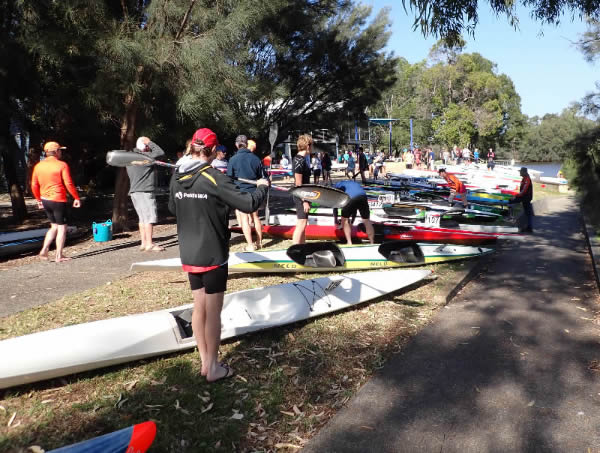
Paddlers getting ready for the Island to Island Race.
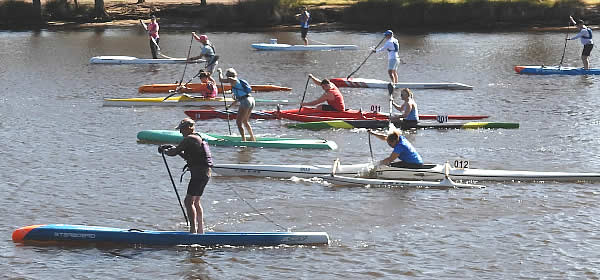
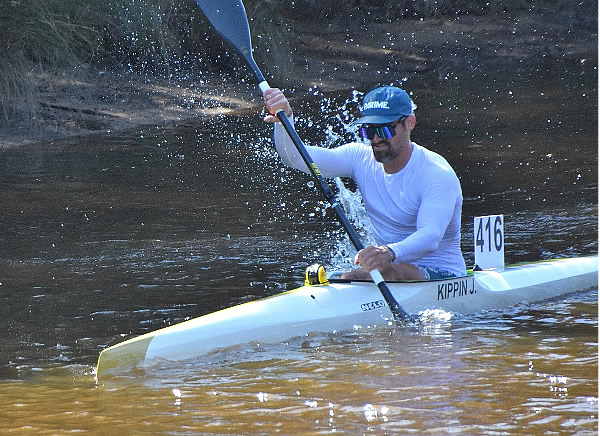
I lost a few seconds fumbling with my watch at the start. Photo Selena Lloyd.
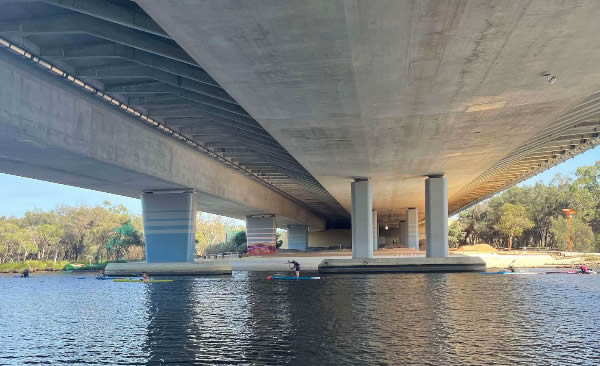
Paddling under the Tonkin Highway Bridge. Photo Helen Murphy
Josh blitzed the field and breaking the record even though the windy conditions. Time 46:48.5 Photo Matthew Greed.
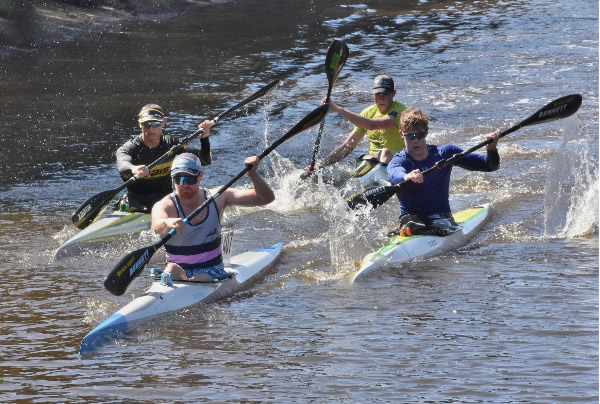
Coran Longwood leading and who came in 2nd place (48:52.6), with Luke Egger (left) Mitchell Tamblin (on right) 4th and Harry Hewitt behind came 3rd. Photo Matthew Greed.
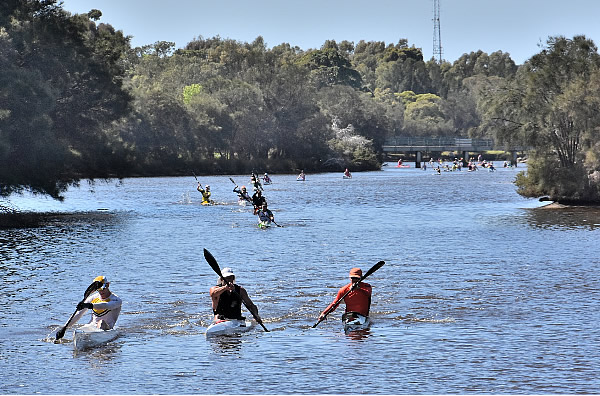
A mass of paddlers coming through Ascot Waters. Photo Matthew Greed.
They are all friends but there is no love lost when racing. Anita Haarmann & Julie McDonald with Barbara Cammel and Veronica Haarmann. Photo Matthew Greed.
Leana Stendell in the Para/Adaptive Long Course. Photo Matthew Greed.
Beau Jacob/ Connor Jacob racing Brett McDonald/ Peter Tomczak. It was a dead heat and a record for both age groups. 48:59.2 Photo Selena Lloyd.
Up until a few months ago Chris Watson (left) was a div 3 paddler. But now after losing some weight and training a little harder he came 2nd in div 2. 14 year old Orlando Fonseca (right) might not
say a lot but by gum he is quick. He won div 2 with a time of 56:12.2. Photo Selena Lloyd.
Winner of the SUPs Darren Pratt in a time of 1:12:01.1 Darren was once a great K1 paddler. Now he is a great SUP paddler.
I'm sure if he got back in a kayak he would still be at the top. Photo Selena Lloyd
I thought I would race a SUP as I was told the conditions were going to be calm. Not sure who that was as it was very windy, nevertheless it was a great challenge and I managed to come 2nd. 1:26:01. Photo Matthew Greed.
At this point, coming out of Ascot Waters Nicki Jones in the far distance was way ahead and in 2nd place. Photo Matthew Greed.
I managed to claw back a good minute and just about catch up with Nicki with 200 metres to go.
After a fight for the line I beat her by 4 seconds.
She was
dilly-dallying a bit in that last 2 kilometres allowing me to catch up. Photo Selena Lloyd
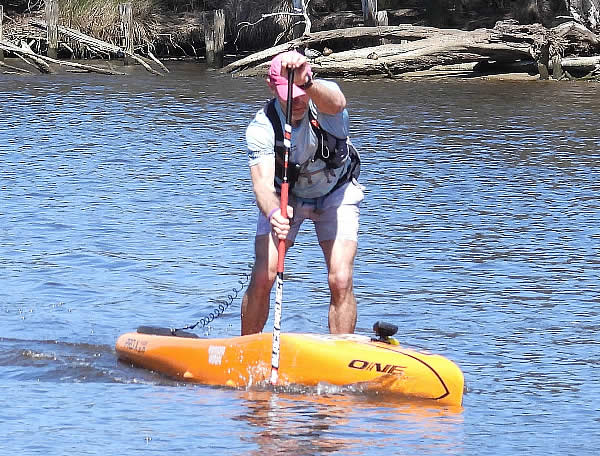
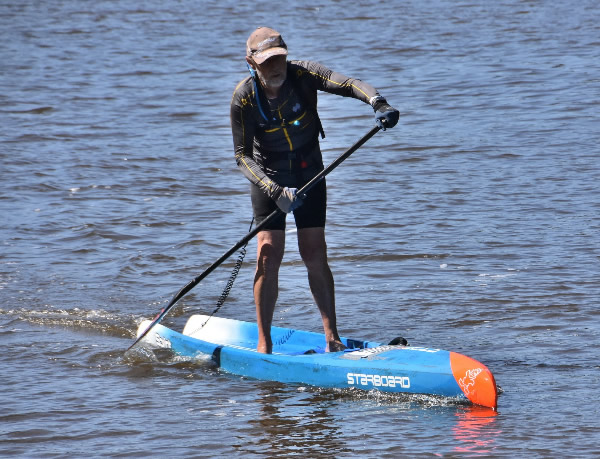
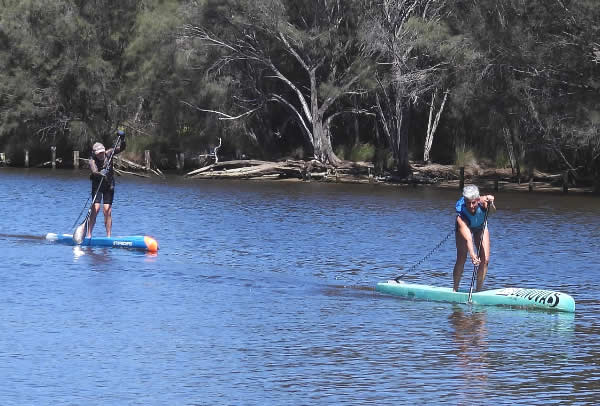
SUP paddlers - Declan Hoare, Darren Pratt and me. 9 SUP paddlers took part and getting ready for the State and Australian Championships in Perth 2025. Results here: https://www.webscorer.com/racedetails?raceid=371038&did=484087
Yukon Descent To the Yukon Flats: Saturday 3rd July 2004 There wasn’t a soul around when we got up at 7.30am, in fact there wasn’t anyone around at 9.00am and by 10.00am there were only two local drunks; it was a ghost town. This was a town of work late, play late and get up late. While we were having breakfast Ed
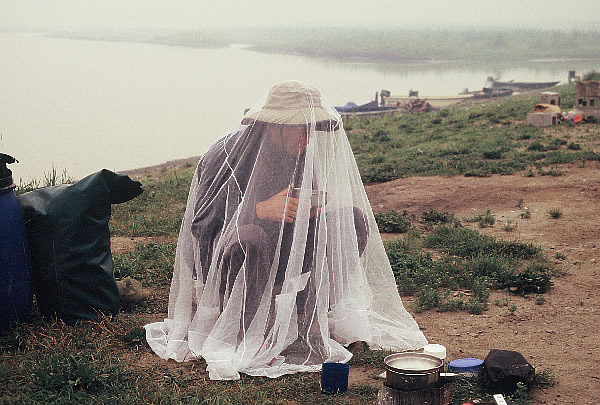
sat on a brick with his mozzie net draped over him in the hope of keeping the insects at bay whilst eating. Circle has a population of about 100 people, of whom 85 percent are native, predominantly Athabascan. Circle was established in 1893 as a supply point for goods shipped up and down the Yukon River which were then taken overland to gold mining camps around the area. Early miners
had believed the town was located on the Arctic Circle and so named it Circle.
Ed has his breakfast under a mossi net to keep away from the mosquitoes. It was an eerie start to the day with the smoke haze giving us little chance of seeing into the distance as we headed downstream. A squeaking
sound near the shore, which we had continually heard since arriving in Circle, was now no mystery; it was a fish wheel turning slowly with the current. Heading downstream into an area called the Yukon Flats we had to work off maps rather than the guidebooks that we had been using as the river down-stream wasn’t popular with canoeists. We now needed thirteen maps to get us to the Bering
Sea all of which had to be laminated. The area of the Yukon Flats was about 340kms long, varied from 3 – 5 kilometres in width and was riddled with islands and dozens of different channels. Picking the right channel was very important; pick the wrong one and we might have to paddle much further on a slower current. With nearly 2000kms still to go, we really didn’t want to paddle
further than we had to. It appeared, after looking at the maps that the entire country for hundreds of kilometres was under water. The Brooks Range lay to the north of the basin and the White Mountains to the south. While researching for this trip, I had read that the basin is underlain by permafrost and included a complex network of lakes, streams, and rivers. Its eleven million acres
of untouched wetlands provided a home for thousands of birds and a huge variety of wildlife. Mammals on the refuge included moose, caribou, wolves, black bears and grizzly bears. I couldn’t wait to see them all. The Yukon Flats are characterised by mixed forests but dominated by spruce, birch, and aspen. It has a continental sub-arctic climate, with huge seasonal extremes in
temperature and daylight. Summer temperatures can reach 100°F (37.7°C), which we were experiencing and winter temperatures can drop to minus 70°F (-21.1°C). It seemed that we were moving into a fascinating and exciting area. Our concern wasn’t for the dangerous animals, but the slower current that would make our paddling harder. We moved into the flats, winding our way along an array
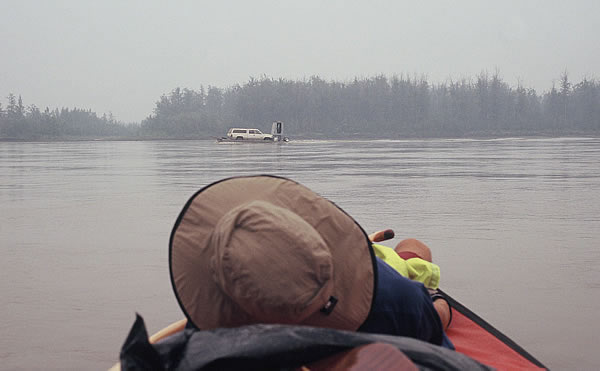
of channels trying to choose the quickest and shortest route deeper into the Yukon heartland. It was often a mystery as to where we were, due to the smoke haze and multitude of islands. In the afternoon just as Ed was laid back having a ‘quiet time’ we heard our first motorboat. I stopped paddling and watched the boat come into sight. It was actually carrying a car and it looked so funny. The driver of the boat had a raised console about two metres high so that he could see over the car to drive
without obstructing his view.
We were having a quite moment and drifting when a car floated by on a small motorboat.
During our afternoon quiet time Ed decided to fish whilst we drifted, but sadly he caught nothing! The current was still pushing us along despite the river breaking up into several channels, so life on the river wasn’t yet as bad as we had feared. We found an island to camp, with not a tree or bear to be seen. It had recently been under water, but fortunately there were a couple of small dry patches to erect our tents and a slight rise where a few terns were circling. I walked over to the rise and had come across some eggs when suddenly the terns dive-bombed me. When I moved away they then chased a large gull instead. The gull had a chick, so they then turned on it. The chick then took refuge in the river to
get away from them, but as soon as it tried flying again they continually harassed it. It was a good campsite; it wasn’t far to walk to the canoe, had a flat area for our tents and no risk of bears. I couldn’t help but think it would have been nice to have seen a bear tho’! I made a clothesline with several pieces of driftwood that I tied together into a frame and then started a
fire to dry our clothes and keep warm. Sunday 4TH July. Throughout the night, when the gull took flight, the terns would dive-bomb it to keep it at bay. The noise made sleeping difficult, and to make matters worse the sound of the nearby bank
eroding away and falling into the river, resulted in an even more disturbed night’s sleep. In the morning the wind was blowing and there was a definite chill in the air, encouraging us to wear several layers of clothes. We could hear thunder, but with the smoke haze it was difficult to know exactly where the storm was coming from. It then started spitting with rain just before we left
at 9.50am but it hardly wet the ground.
We woke up with smoke haze and thunder.
When we were ready to go we paddled against the current for 100 metres to reach the tip of the island where we moved into a quicker channel. From this point we had about 25kms to go before reaching Fort Yukon. What a fantastic name! My imagination cut loose and I had images of David Crocket in a log fort with high walls trying to keep the Indians
out. Thirty minutes later the thunder increased and as invisible clouds moved over head the visibility dropped even further, plunging us into a hazy cocoon. A sprinkling of rain fell, seemingly the first of a good rainstorm. Boom…Boom, the thunder was louder and clearer and it became darker, but within minutes the sky began to lighten up and the thunder faded away into the distance
taking the shower of rain towards the east. I steered us to the right side of the river in the hope of finding Fort Yukon as it would be easy to miss it in the smoke haze. It was hard to know which part of land was the mainland and which part were islands. As we changed direction into another channel we came across a fish wheel. We had seen them earlier but not at such close quarters.
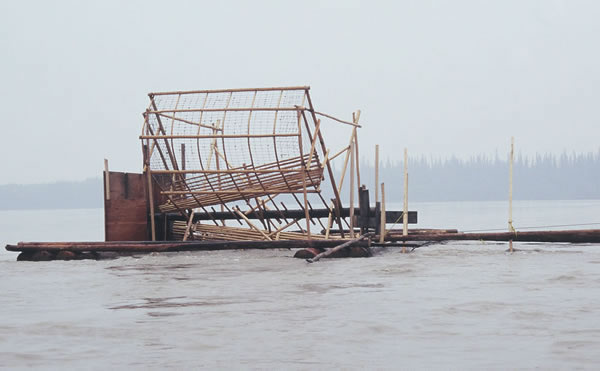
This one was completely made of the local timber, the bark stripped and simply tied together. It looked as if it had nothing mechanical on it, all the materials were from the local trees. It was placed in a fast current and tied to the shore with long tree poles. Two catching wheels spun around and fed under the water, scooping out the fish into a wooded tilted slide that slid them into a holding pen. These two big scoops were driven by the current and were catching fish that were headed
upstream to spawn. It was an amazing type of fish trap, simple but effective. We marvelled at its ingenuity, took photos, and then got on our way crossing the ‘Arctic Circle’ to find Fort Yukon. I had read that Alexander Murray founded Fort Yukon in 1847, it was a Canadian outpost in Russian territory. Fort Yukon became an important trade centre for the Gwich’in Indians, who inhabited
the vast lowlands of the Yukon Flats and River Valleys. Alaska was purchased from Russia by the United States in 1867, and two years later it was determined that Fort Yukon was on American soil. Doesn’t it seem strange that you can buy a country!
An amazing fish wheel. We were told by a man called Paul that he caught 17 good sized fish in the trap that morning.
Even when we knew that we were getting close to the village there was no real indication that Fort Yukon existed. There was nothing to be seen, no houses, no boats, no sky scrapers or fast food outlets and definitely no high walled log fort!! But when we fully rounded a corner we caught glimpses of a large fuel tank hidden behind an island. Pretty
pleased to have arrived, we followed a shallow channel towards a few cabins that were lining the bank. It didn’t look very big and I was surprised to only see three boats tethered to the shore. We pulled up at one of the groynes 100 metres from the large fuel tank, dragged the canoe up the bank and started taking off the canoe’s spray deck. A lady shouted from a small boat docked
nearby and signalled for us to go over. Ed walked around to see and to his delight she handed him a freshly caught salmon that her husband had just gutted. Moments like these are what dreams are made of! Fish for lunch, and best of all we didn’t have to eat noodles! From a distance I could hear Ed’s excited voice quizzing the couple about fishing. Apparently he was being told that
salmon don’t go for lures at this time of year, and they can only be trapped. I think Ed was relieved to have a valid reason for not having caught us a fish yet!!! Ed was now in his element, he could fillet the fish and fry it up in our small pan. But just before he started, police sirens, car horns and music filtered along the road. For a moment I wondered what it was all about but
then I realised it was the Fourth of July, America’s Independence Day. A parade streamed along the narrow lane with an excited crowd. It took me back to my last American Independence Day. I had been paddling the Mississippi River and I had paddled all day and well into the night. I was tired and had planned to set up camp on an island a few kilometres from a town. When I reached it, hundreds of boats had anchored near the island and right across the river. They were waiting for a fireworks
display to start and although I was tired, cold and damp I managed to stay awake to watch. After the display, I camped on the crowded beach with a mass of noisy drunken revellers, not knowing whether I was going to be safe. Too tired to cook myself a hot meal, I just went to bed and slept like a baby whilst loud celebrations continued all around me. Whilst Ed filleted the fish I went
out looking for water. I walked down the track and asked a guy, who was cleaning his gun in his back yard, whether he could spare some. He said, “Yep, just come and get it from the tap.” I walked back to the canoe, picked up the water bladders and returned to fill them at his kitchen sink. His partner arrived as I was filling up and we started talking. As I was leaving the guy gave me a cranberry loaf which he said his wife had made and it was delicious. They were preparing to go to the
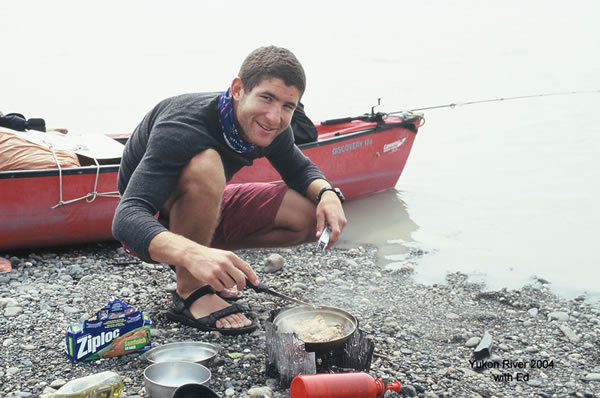
village of Beaver by boat, so I left them to get ready. By the time I returned Ed had sliced the fish into fillets and was about to start cooking. Our improvised frying pan was the lid of our cooking pot. Although a little small and inadequate for this purpose, it did the job. The fish was beautiful and a welcome change from noodles and pasta. We cooked several pieces and finished off
our meal with the cranberry bread, it was equally as delicious as the fish.
We were given a fresh salmon and it didn't take long for Ed to have it in a fry pan.
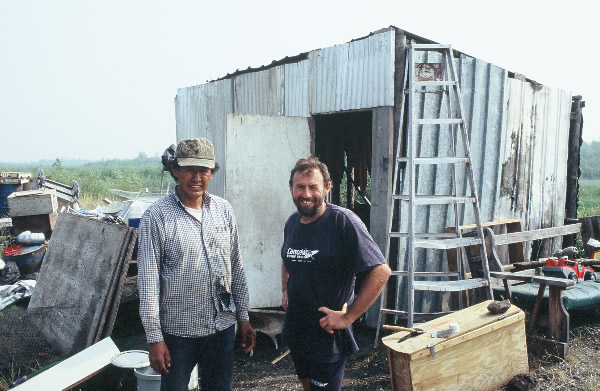
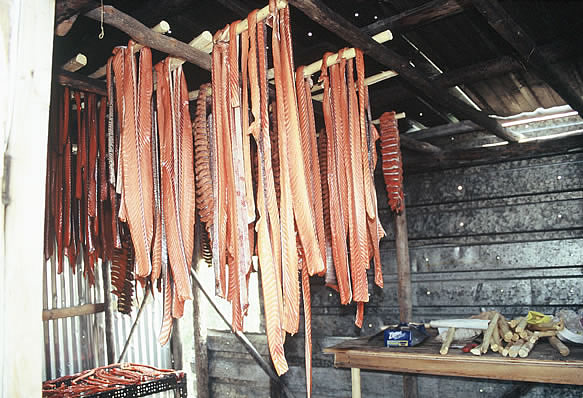
It was only fitting to thank Paul, the guy who gave us the fish, so we walked along the track to his house passing one very unattractive backyard in which there were six dogs tied up. We met Paul next to his drying shed. He had hundreds of fish fillets hanging and dangling in the small shed waiting to be smoked. He also had several long fish
fillets drying outside, although there was little sun at that time to assist in the process. He told us that the fish wheel that we had seen earlier was his and that he had caught seventeen good fish that morning. He would also check it again that evening. The fish they were drying were to feed them through the winter. As we took a photo and thanked him once more, his partner arrived
and said she wanted to give us something else. We were both excited and wondering what it could be. Was it something special, the suspense was killing me! She went into the house and minutes later returned with a jar of pickled salmon. Not quite what I was expecting, but still we were thrilled.
Paul next to his drying shed.
We continued on our walk and met a man who told us there was a 4th July party near the school. “Don’t be shy, there are drinks and food”, he said. We walked on passing more yards containing at least six husky dogs in each yard. There were even dogs tied up in amongst the bushes on vacant blocks. The barking must have been very annoying
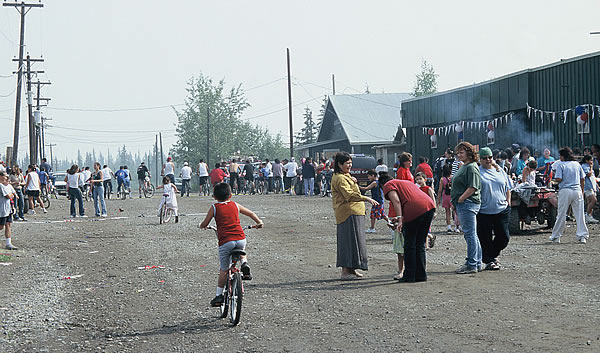
for people trying to sleep at night. The noise was getting louder as we approached the main community consisting of two churches, a school and several other buildings. Everyone had gathered near the school. We stopped just shy of the action and sat on a building boardwalk to watch. All the kids were lined up across the road having bike races, running races and three-legged races. It reminded me of my Sunday School harvest festivals that I took part in as a child. Copious amounts of food was being cooked on the side of the road with queues of people flocked around them. As outsiders we looked on and then left the action and returned to our boat via a different route. Although the man assured us that we would be welcome it was hard to gate crash
the festivities. If I was on my own I would have stayed longer, but with Ed eager to cover more kilometres I was happy with our short but interesting stay. We had also been told in Circle that camping at Fort Yukon was risky as some canoeists before us had their belongings stolen from their tents, so it was probably a wise choice to move on. What a day it had been; thunder, rain, the
thick smoke haze, the amazing fish trap, the crossing of the Arctic Circle, the gift of a freshly caught fish, cranberry loaf, pickled salmon and the Independence Day parade, – what more could we have wished for?
4th July celebrations in Fort Yukon.
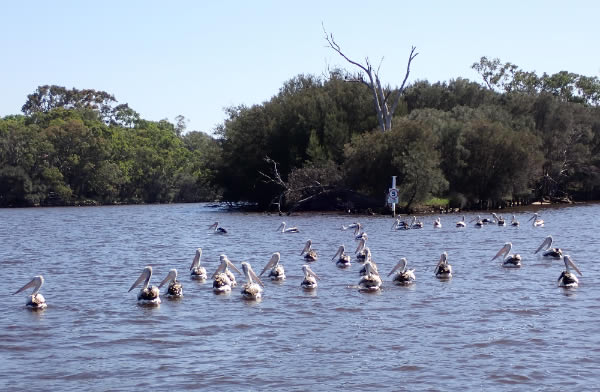
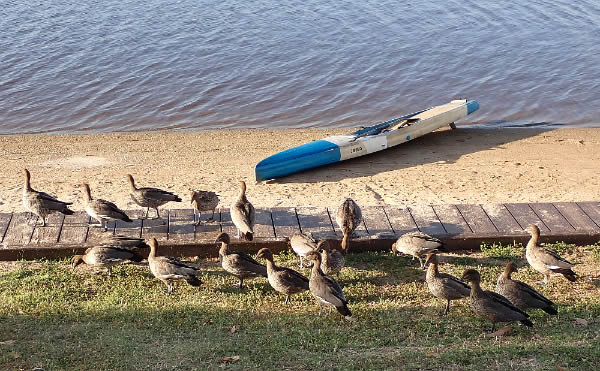
There are some big groups of pelicans and ducks around at the moment.
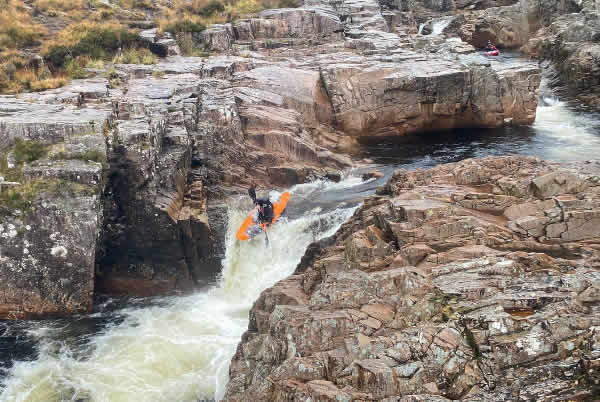
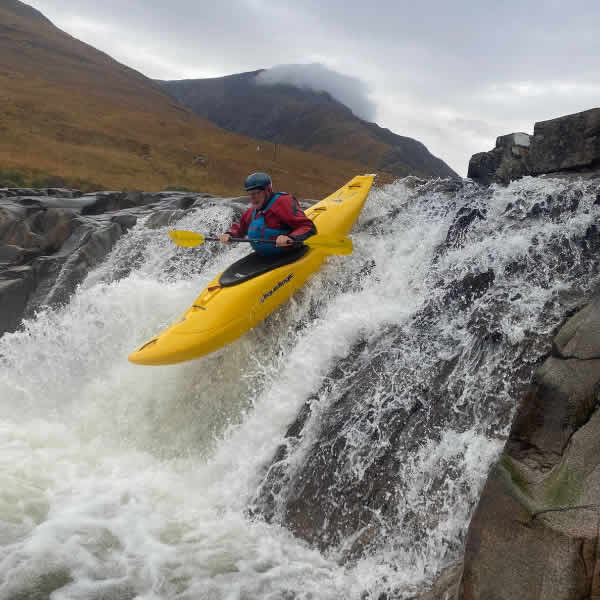
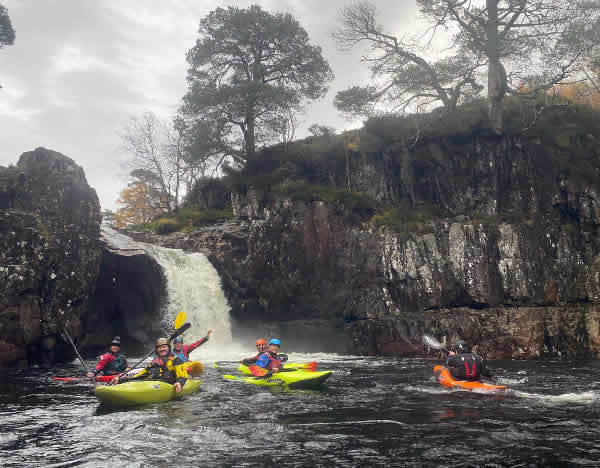
River Etive The final day of Adur Canoe Club Scotland 2024 saw a very successful and very joyful run of the Etive with 6/6 successful descents of right angle falls to
finish a great week of paddling! Adur Canoe Club partake in many paddlesport activities including: Kayaking, Canoeing, Slalom, Freestyle, Surfing, Touring and Stand-Up-Paddleboarding (SUP). They are based in Shoreham-by-Sea at 3rd Shoreham Sea Scouts, next to the Adur River, north of Norfolk Bridge, near Brighton.
Flowing through the beautiful, rugged Glen Etive, under the impressive shadow of Buachaille Etive Mor, one of Scotland’s best known and best known Munros, the River Etive is rightfully considered one of the absolute classic Scottish whitewater kayaking runs. In fact, alongside the Orchy and the Findhorn, it is probably one of the best known whitewater rivers in all of Scotland. With its rapids bearing emotive names like Triple Drop, Ski Jump, The Letter Box, Crack of Doom, Crack of Dawn, Rockslide and Big Man Falls, the Etive’s smooth boulder gardens, tight constrictions and sweet granite bedrock slides it provide a stiff challenge to those braving its crystal clear waters…The Etive itself has three sections
that are regularly paddles, the upper, the middle and the lower, with the majority of the quality whitewater situated in the middle section. It also has a series of ultra-steep tributaries that cascade The Etive itself has three sections that are regularly paddles, the upper, the middle and the lower, with the majority of the quality whitewater situated in the middle section. It also
has a series of ultra-steep tributaries that cascade into it along its length, and these can add a whole head of adventure and adrenaline (and bruises) to a big day out in the glen.
Middle Etive 4 (5) The Middle section will go in nearly all water conditions. In low water, some of it can be a bit scrappy and it high it becomes a fast and furious run with the odd big hole to punch. From the
moment you launch the middle section, the action begins immediately as you line yourself up for the first rapid, Triple Drop. From then on you are contained between the river’s high granite walls as you negotiate your way down its excellent drops. Dynamic paddling will be rewarded and even if it all goes wrong and you find yourself swimming the river is pool drop in nature, so there’s
always a moment of calm at the end of each drop to deal with any carnage. Inspection is easy throughout and the road that runs through the glen is never very far away if you want to pull the plug for any reason. Safety is also easy to set-up and you may want to consider this on a few of the drops. If you can take your eyes off the crashing whitewater action for a minute you’ll be
greeted with a stunning view of the valley full of dark, sombre looking mountains. From start to finish you’ll revel in a thrill-packed rollercoaster ride of a run until you successfully reach the penultimate challenge, a small but tricky dog-leg rapid leads you into a diminutive pool above the lip of Big Man Falls. Or Eas an Fhir Mhóir to give it its true Gaelic name, an impressive 16-foot waterfall, also commonly known as Right Angle Falls. Whatever name you choose to call it, it won’t help dispel the butterflies in your stomach as you wait in the eddy above! The fall itself drops cleanly into a natural amphitheatre, where, as you slide out of the pool and over the sloping lip, you will enjoy a fleeting feeling of freefall, before you crash deep below the churning waters below. Keeping a good control on your edges on re-surfacing is a good idea as many a kayaker has
found themselves pushed over and against the sidewalls below the falls resulting in a swim.
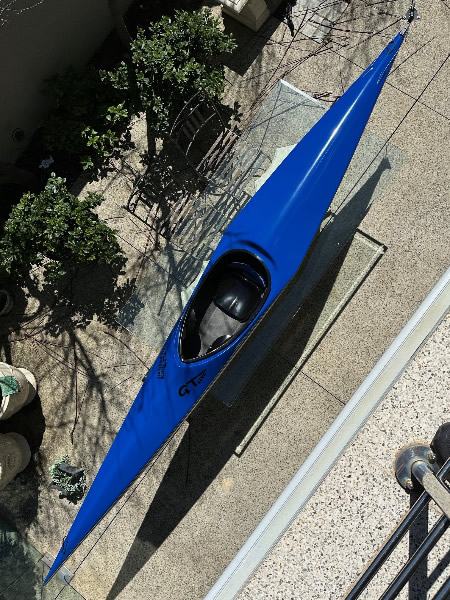
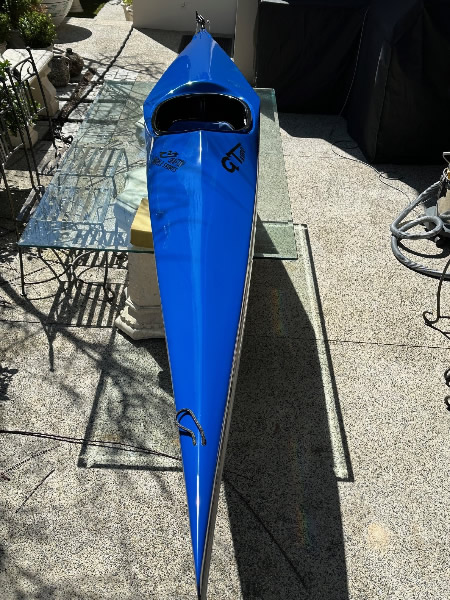
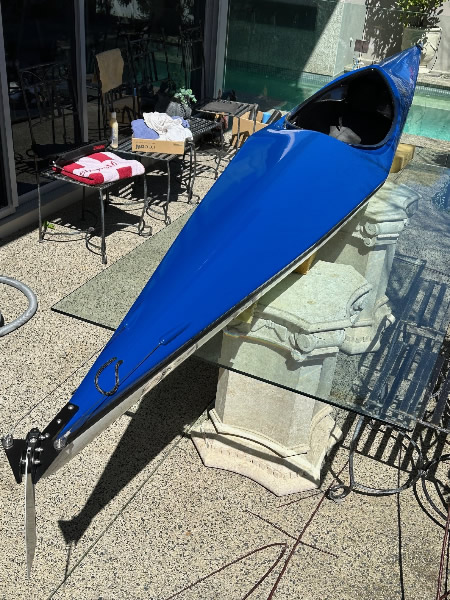
GT Aero Kayak The Kayak is in immaculate, as new condition. Save lots of dollars. Only $1500.00 - Carbon hull (white)
- Carbon
deck (blue)
- Keyhole cockpit with knee bracing
- Hanging seat with backrest
- Reinforcing behind seat
- Trailing rudder
- Footplate pedal system
- Hand loops (bow and stern)
Contact Ross on 0418 920 070. Ross
Hughes
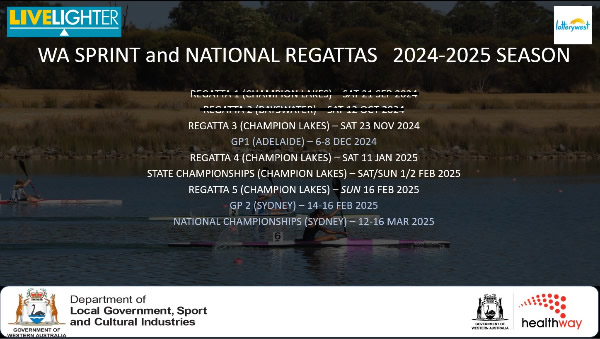
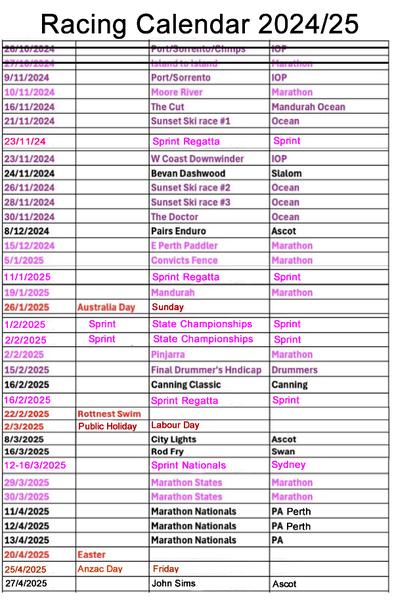
Moore River Race 10th November 2024 Mixed Doubles Championships
Singles welcome to race. Mandurah Cut Run 16th November 2024 Sprint Regatta 23rd November 2024 West Coast Downwinder 23rd November
2024 Bevan Dashwood Race 24th November 2024 The Doctor 30th November 2024 8th December 2024 Pairs Enduro Get a singles partner and race as a pair
|
|
|
|
|
|
|
|
|
|