|
|
|
|
This week I have been trying to organise my trip to Croatia. I have never been one to make quick decisions and I find it difficult to book flights and watch my bank account go
down. But I get there in the end. My ideal holiday is flying to my destination, having two nights in a bnb or cheap hotel to get things ready and then get in my kayak and camp in the wilderness for two months and only have to buy a bit of food. (And what happened to the $60.00 hotel rooms that I once thought were expensive.) On my trip to Croatia I am flying to Dubrovnik and a day or two later heading to Metkovic where the championships are held. It has been a bit hard to find accommodation close to town so I will take my tent and camp. I will be
renting a K1 kayak for my singles race & probably a K2 for paddling mixed doubles with Nishani Jacob. She is a lot younger than me so we will have to portage (paddlers over 65 years don't have to portage) but I am looking forward to racing with Nishani, it should be fun especially trying to get out of a double kayak onto a pontoon. (The old body is not quite what it used to be.) I'm yet to find a mens K2 partner as there are very few masters going. After the championships I will be meeting up with John Breed and renting sea kayaks and paddling along the coast of Croatia for 12 or so days. After the kayaking trip I will be heading to England for 10 days to see family and my mum who
is nearly 98 years old. Then it's back home. *************************************** Don't forget Avon Scrutineering this afternoon. Paddler scrutineering will be held on Friday 2 August at Ascot Kayak Club between 3–7pm.
Pre-Race scrutineering is compulsory for all entries within 200 kilometres of the Perth GPO. Take along boat, helmet and PFD with Whistle.
Don't forget Avon Descent Competency 3rd August
https://education.paddle.org.au/courses.php?register&eventId=3239
- Paddle Up The Avon
- Lindsay Binning - Slalom at the Olympic Games
- Olympic Success
- The Yukon River Quest Race
- Slalom at the Olympics Back in 1996
- The Birds Are Back
- Coming Events
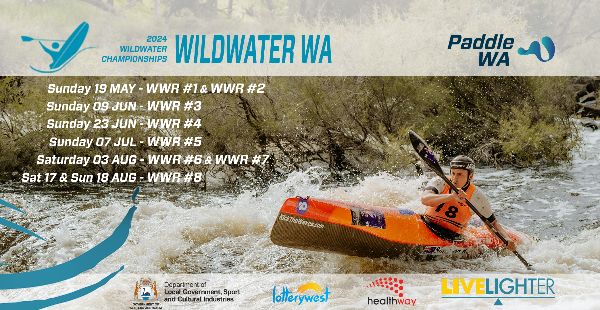
Coming Events - 2nd Aug Friday - Avon Scrutineering afternoon.
- 3rd August 2024 Saturday afternoon
-Wild Water Races #6&7
- Winter Slalom Series Race 3 - Sunday 4th August, 2024
- 10th - 11th August 2024 - Avon Decent
- 17th & 18th August 2024 - WA Wild Water
Championships
- 7th September 2024 - Nanga Challenge
12th October 2024 - WA Ocean Racing Championships
Avon Descent Competency 3rd August
https://education.paddle.org.au/courses.php?register&eventId=3239
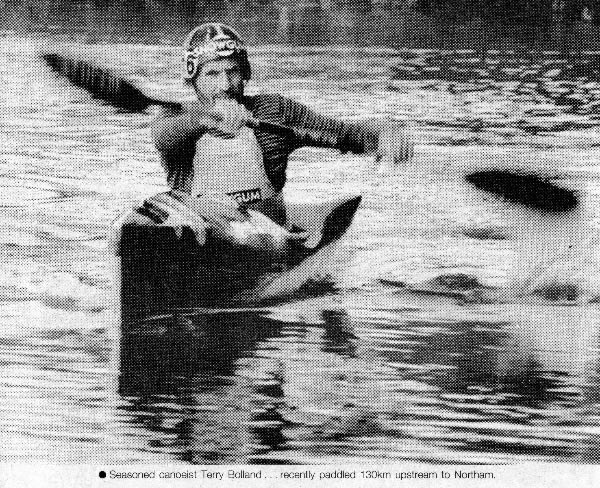
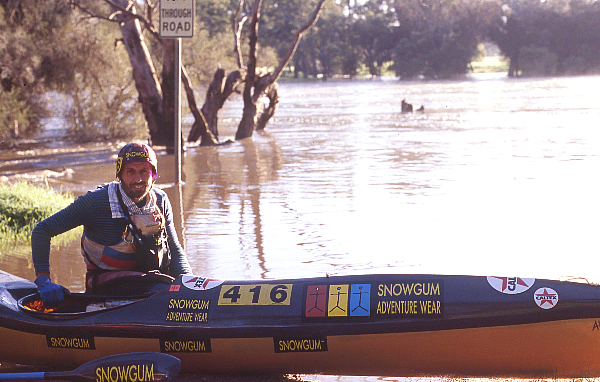
Paddle Up The Avon River to Northam In 1995 Back in the day when I used to challenge myself more than I do now I paddled from Bayswater up the Swan and then the Avon River against the current. The water was high which made it easier and more difficult. Many of the rapids were washed out whilst the big rapids were big. The fast current, the drops and the swirls, eddies and the trees made paddling upstream quite a challenge. I had to use the slower water behind rocks, in the trees and use the eddies to climb the rapid river. I had to do a lot of ferry gliding across some very fast chutes and waves. When I did have to portage one of the big rapids it was often
hard to get out and get back into the river. Trees and bushes were a real problem, one slip and I could have been wrapped around them. I was in my Wild Water kayak with a small cockpit which made it that more difficult when I had to exit the boat amongst the trees and debris along the river bank. I paddled alone with Tim Fry as my support team and meeting me at the top end of the Avon Valley to camp. It took me 26 hours, reaching my destination, Northam at 1.00pm on the 3rd day. Then a day or two later I paddled back to Bayswater in the
Avon Descent.
The paddle up the Avon River against a strong high water current was quite a challenge. It took me 26 hours, reaching my destination, Northam at 1.00pm on the 3rd day. Then a day later I paddled back to Bayswater in the Avon Descent.
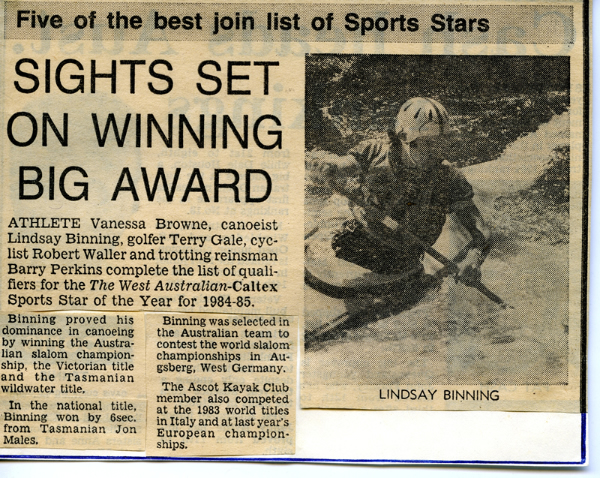
Slalom at the Olympic Games Slalom has not always been at the Olympic Games. Between 1972 and 1992 there were no slalom events in the Olympics. In the 1980s when slalom was not represented at the Olympics West Australian Lindsay Binning was 4 times Australian Slalom Champion so he didn't get the opportunity to represent Australia at an Olympics. Back then the highest level of slalom competition was a World Championship. Lindsay being Australia's top
paddler represented Australia at the World Championships in 1983 at Merano, Italy, 1985 at Augsburg, Germany, and in 1987 at Bourg St Maurice, France. In 1977 and 1978 he was in the Australian Junior Slalom Team. From 1982 to 1987 he was in
Australian Slalom Senior Team.
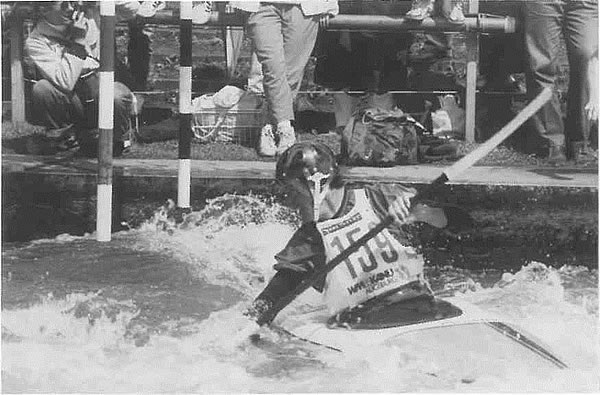
Lindsay at the World Slalom Championships in Augsburg, Germany. In the 1980s when slalom was not represented at the Olympics West Australian Lindsay Binning was 4 times Australian Slalom Champion so
he didn't get the opportunity to represent Australia at an Olympics.
Lindsay won: - 10 Gold medals in National Titles in Slalom canoeing
- 11 Silver medals in National Titles in Slalom canoeing
- 5 Bronze medals in National Titles in Slalom canoeing
- 23 Western Australian State Titles in various disciplines
- 16 silver medals in various disciplines
- 4 bronze medals in
various disciplines
Lindsay has also been a Wild Water Champion and won the Avon Descent in a single kayak and a double kayak. As a junior he was also an amazing paddler.
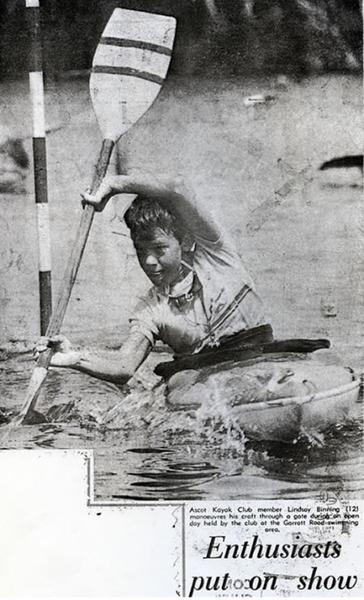
Lindsay as a very talented paddler at 12 years old. You can just see how brilliant he was.
Winter Slalom Series Race 3 -
Sunday 4th August, 2024 at Walyunga National Park.
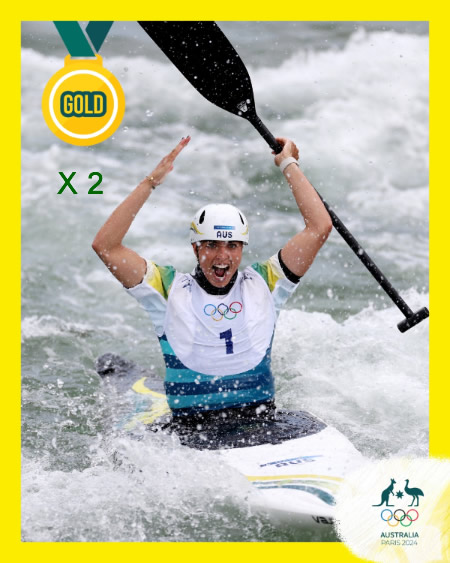
How Amazing Australia's Olympic slalom paddlers have done so well in what is such a tough event. Two Golds, a 7th and a 9th place is a fantastic result. Congratulations Jess, Tristan and Tim. Bring on the Kayak
Cross. We do need a white water course in Perth to keep up the momentum through the ages and allow our paddlers a fairer chance.
Jessica Fox - What can I say? Two gold medals so far. What a champion.
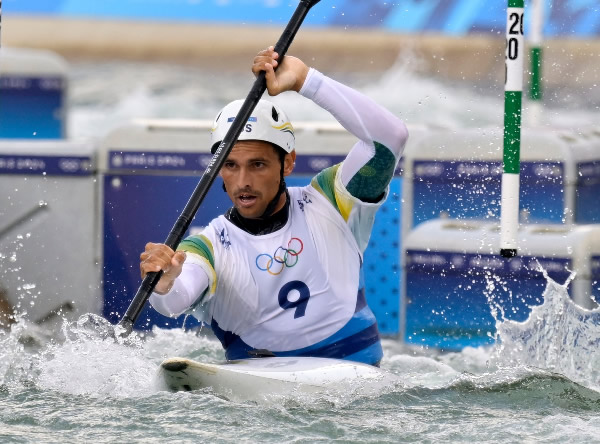
Tristan Carter on Olympic debut came 9th in the C1 event. Photo Garry Bowden ***************************************** Back in 2008 in Beijing WAs Robin Bell won a bronze medal in the C1 event. He went to 3 Olympics. Robin also won a complete set of medals in the C1
event at the ICF Canoe Slalom Championships with a gold in 2005, a silver in 1999 and a bronze in 2007. He won the overall World Cup title in C1 in 2005 and 2008.
Back in 2012 WAs Kynan Maley reached the final where he finished in 6th place. He placed in 10th place in C-2 with Robin Jeffery.
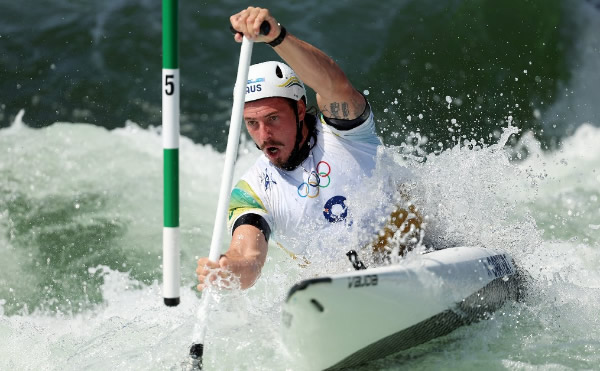
An amazing K1 campaign from Tim Anderson saw him finish 7th on Olympic debut. Photo Garry Bowden
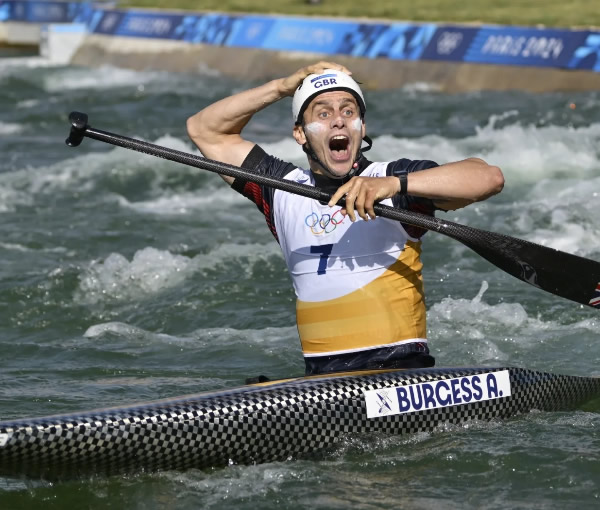
Adam Burgess from Great Britain couldn't believe he won a silver medal.
The Avon is up. Isabel Combe paddling Super Chute. Photo Damien Kelly
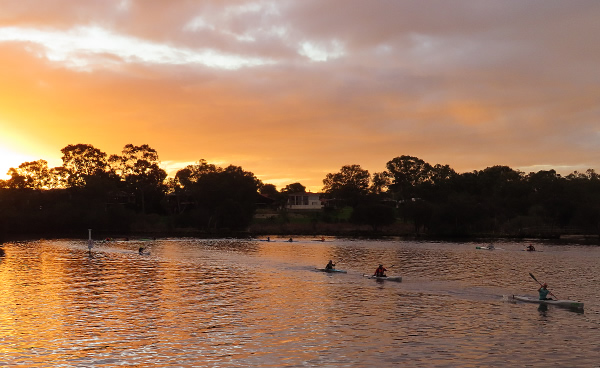
Tuesday evening PRG group time trial. Every week some one gets a PB.
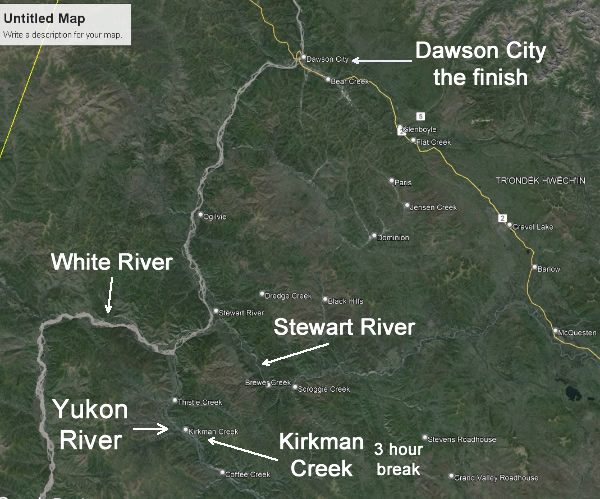
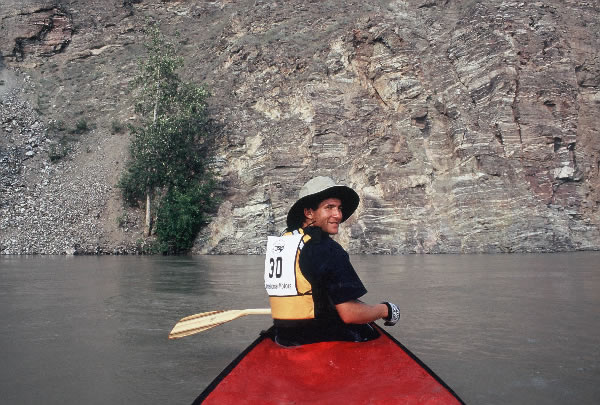
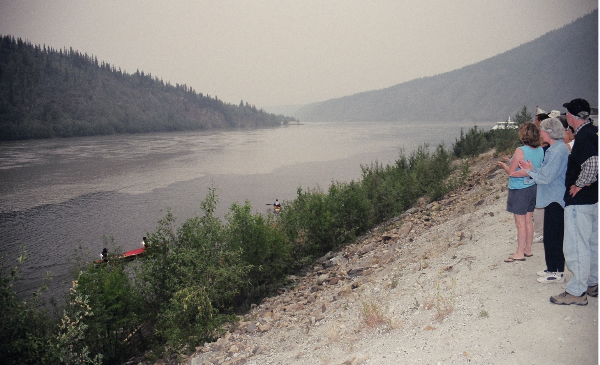
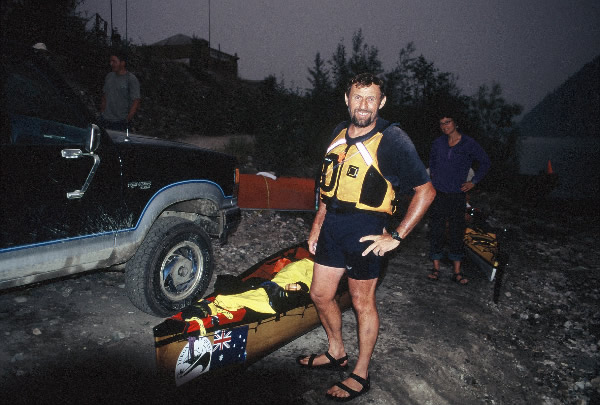
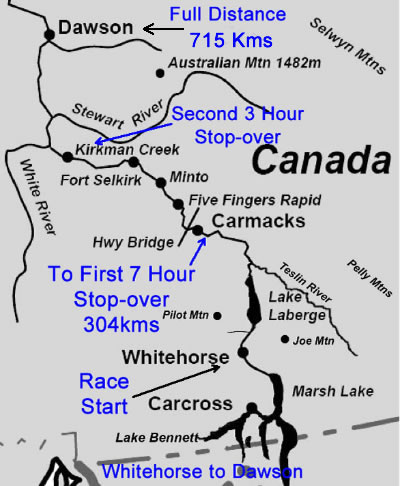
The Yukon River Descent The Yukon River Quest Race I think I managed to grab an hour of disturbed sleep on our 3 hour compulsory stopover. We stood on the shores preparing our boat for our shortest section of 155 kms when an incoming canoe was seen on the far side of the river, the canoeists paddling awkwardly out of the smoke haze. They were obviously confused as to where they were. Shouts from the
officials managed to grab their attention and they frantically paddled across the wide current to cast ashore. They were totally shattered. The expressions on people’s faces of anguish, distress and suffering, showed the immense physical challenge that they had taken on. When we reached Kirkman Creek we had been paddling for nearly 40 hours, with a 7 hour rest period where it had been
impossible to sleep.
I wasn’t physically fit when we arrived in Canada but all my previous challenges held me in good stead for this event. Now I was in my element and I loved it. Seeing paddlers struggle, when I felt relatively good was testament to my own physical and mental well-being. At 53 I was still feeling that life was just beginning. We had over three quarters of the race completed so I was eager to get back on the water. The next stage was just like an encore.
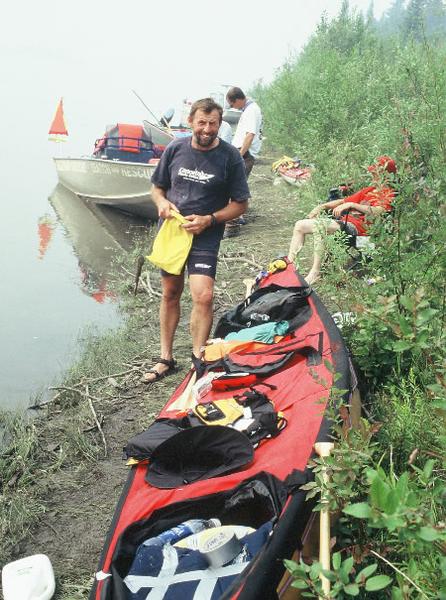
Well ahead of our departure time, Ed and I were readying ourselves for the homeward journey. Our hands were strapped, our water bottles filled, our spray deck secured, it was time to go. We lined up with Joe whose
start time was two minutes ahead of ours. Up to that point we had barely spoken to each other; in fact we hadn’t spoken much to any of our competitors.
Ready to leave on our last leg of the race. Only 155 kms to go.
Kirkman Creek was a 3 hour rest. At 2.14pm on Friday afternoon Joe sped off, fading into the haze and at 2.16pm we were right behind him stroking hard in the hope of catching up and passing him. The river was still
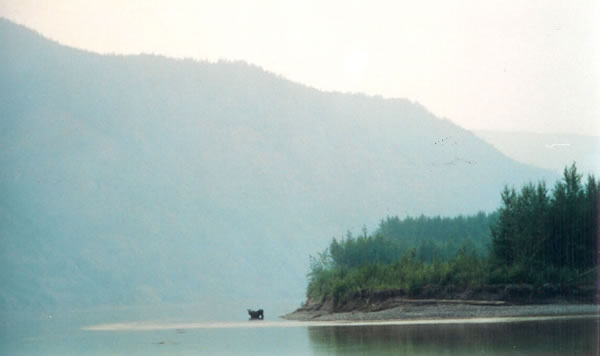
full of islands, although the main route was quite obvious. There were few shortcuts, which actually pleased us after our several failed attempts to take one that benefited us. After only a few kilometres we were 100 metres behind Joe and reeling him in. As he moved to the left of an island, we saw a moose grazing on it. Suddenly it lifted its head and then charged into the water after
Joe. We were stunned, – I mean a moose chasing a kayaker, is that normal? Is that what moose do for fun in Canada? We had no idea! But very soon we realised that this moose was pretty serious in his venture to get Joe. The large head was now the only visible part of the moose. Although it was swimming at a great pace, much faster than Australian swimming superstar Ian Thorpe, he was still no match for our Joe who was slipping away from it pretty quickly. I have experienced crocodiles chase me, I had experienced sharks chase me but I haven’t as yet experienced a moose chase me. Although potentially dangerous, it was amazing to watch, but for Joe it must have been frightening. That’s the fantastic thing about life, – you never know what encounters lie ahead! We were caught up in all the excitement when to our surprise the moose gave up the chase and turned to face us. Oops! The current was swift but it seemed to have little effect on the moose’s upstream swimming ability. This moose looked a serious contender for the Yukon Upstream Swimming Championships. The formidable head with eyes now focused on us looked decidedly threatening, – this powerful animal was like a battleship powering off to war. The water was piling up
around its head and neck as the current came into conflict with the opposing forces of its body. For a moment danger was stalking us and Ed and I quickly discussed tactics. We would head straight towards it and when we got close we’d veer way over to the left quickly and pass it by; well that was the theory anyway! We closed in but then to my disappointment it turned and started
swimming towards shore allowing us to pass without a fight. We were safe and the encounter was over. I wanted to take a photo as we were so close but hesitated and by the time I fumbled to get a camera the current had swept us well beyond it. I then realized I had missed an opportunity of a lifetime as I watched the moose rise from the water and walk back onto the island. A little
further we saw another moose standing in the water. I thought another chase would be on but it was not to be – the moose walked to shore and then hurried into the trees.
A moose is awaiting! With the wildlife encounters now behind us, we heard the sound of the rota blades of a helicopter echoing throughout the river valley. Something about the sound of the chopper excited me and my
adrenalin started to pump, I became strong and powerful and my paddle rating lifted as I just wanted to charge down the river. The noise came closer and suddenly a helicopter appeared out of the smoke haze. The haze had lifted enough to allow us to see smoke and flames rising from several places along the river and to our south on the Dawson Range. The chopper, which was probably
monitoring the fire, was a welcome visitor as we had seen little of civilisation along the way. We were now about sixty kilometres from the nearest road but to get there, there were several mountains to cross. In an emergency the river was still the quickest and safest way out. As we headed straight north we caught up to Joe again. He looked pretty uncomfortable in his kayak. He would
stop and stretch, which helped us to pull away from him. He would then come alive, make a break, catch up and pass us again before fading out once more. He was surely hurting and did we mind? No way, we’d love to leave him behind! A large break in the mountains on our southern side let the mighty White River enter the Yukon. The river mouth was wide and intersected by several islands
that had noticeable amounts of debris of fallen trees stacked on them. The erosion and flood devastation was an astonishing and somewhat disturbing sight. Many channels looked shallow and it wasn’t until after the two rivers merged that we realised that the White River had an enormous amount of water flowing from it. Fed by glacial rivers and streams the colour of the water suddenly changed to a milky appearance. A few minutes later Joe headed across to a left-hand channel, but we could see no reason why he headed over there for our route on the right looked okay. Within minutes he was lost behind islands as the two channels moved hundreds of metres apart. Later, as both channels bled into one, we could see Joe way over to our left flying with a swift current. We could also see a canoe ahead of us, and at first I thought it was one of our competitors, which brought glee to my
heart, but as we closed in we realised it was just social paddlers. What a pity! I would have loved to have passed another team! I could see that our paths would join again where a vertical cliff dropped into the river, however Joe seemed to be accelerating even faster than before and we were hoping that he wouldn’t beat us there. It was extremely frustrating pushing hard and seeing
Joe fly. What we didn’t realise though, was that from Joe’s perspective, we too were travelling at great speed. Joe managed to be 100 metres in front when our paths crossed near the cliff, so in effect the routes were even in time. Our paths then spread again as we took a more direct route and Joe took a longer route following the fastest current way over to the right. Joe’s route
looked quick, but proved no faster. Over the next few kilometres his performance waxed and waned as he fought fatigue. Then as we pulled away from him, he disappeared from the main channel into another on the right side. What’s he up to now we wondered? Joe was hidden by islands for a while, but at the first opportunity we took the next channel and crossed over and joined him. When we met, he was just in front of us again but we soon caught him when his energy ran out. Our battle with Joe was
becoming a game – instead of ‘Where’s Wally’ it was a fascinating game of ‘Where’s Joe’.
This was the biggest challenge that he had ever taken in his young life and he had now grasped it with heart and soul. We didn't take many photos as we were in a hurry. For the next 15kms we followed cliffs on the right side of the river with imposing scenery. Joe’s paddling was erratic; he would slow, stop and then take off again. We stopped paddling when we took the lead so we could take photos of the cliffs. As I bent over to retrieve my camera from inside the spray deck, I heard a strange sizzling sound coming from the hull of our canoe. It was such a strange
phenomenon, apparently caused by glacial silt particles brushing against the canoe. As we levelled with the north end of Dead Man Island Joe took off again, this time moving across to the left side of the wide river. We kept our course and let him go. Small channels on our right were full of stranded trees so we naturally moved over to the main channel. I could see a short cut on our map and Joe was in a very good position to take it, but would he? It looked much quicker, however I was hoping the current would be slow. From afar we saw Joe hesitate but then take the channel. When all seemed lost, God must have been on our side, I saw Joe
exit the short cut channel and join the channel that we were in. Although a few hundred metres apart we were about level. Since the junction of White River, the river had widened significantly, making our route choice a lot more difficult. Should we iron out our line and take the more direct but slower route or follow the long sweeping corners where there is a faster current. For most,
we chose to take the line between the more direct line and the sweeping corners, and judging from Joe’s wide line in the faster current we generally ended up taking the same time. With only 70kms to go, I was feeling exceptionally fit, focused and ready to fly. I felt that it was now time to step it up a gear. The river was wide with sweeping corners and currents that accelerated at
great speeds around them. Islands of all sizes divided the flow into several channels challenging our decisions. The country was forested, isolated and a wilderness of great beauty. Steep rocky cliffs, some which were several kilometres long, intermingled with the wooded shores. Our extra speed had left Joe languishing but he’d probably be back, he was proving resilient. I turned to
see him on the other side of the river taking it wide again. My hope though was that he wouldn’t rebound and that we would power away leaving him to follow our tail. My competitive instinct was at the fore and my enthusiasm running high. We were now in an overall 5th place. A low island stood before us. I guessed the shortest route was to the right and followed my instinct. A
canoeist was camping on the island and as we passed him by the canoe suddenly started dragging deeper into shallow water. We had paddled too far into the shallows to turn back, so we continued on, the canoe slowing with every paddle stroke forward. I quietly cursed, we were losing time and were virtually at a halt, damn, damn, damn, and wondered where the heck was Joe? Fortunately Joe
was still well behind but as we crawled out of the shallows he had taken another route and was catching up. Our speed increased as the water deepened and we were soon back to full power. Though Ed was still suffering from aches and pains on this leg of the race, he was paddling particularly well. No rests, no quick naps. This was the biggest challenge that he had ever taken in his young life and he had now grasped it with heart and soul. In the meantime I had lifted my own pace and with about 25kms to go I felt that I could ask Ed to lift his pace even higher. Ed responded and at that instant I could feel the canoe lift and take off. It was such an amazing feeling, to experience the speed of our canoe rapidly accelerate down the river. No one would pass us now. But to our alarm Joe somehow found the strength to catch us, keep up and ride our wash. He knew though
that if he stopped paddling we would get away from him forever, so he just hung on. We powered and powered, it was absolutely magical to be paddling like the wind. We were on fire and I was enjoying the wild ride. We checked the time and realised that if we increased our pace even further we could make it to Dawson before midnight. We dug in deep. It was as if I was floating, the
adrenalin must have been pumping as no matter how hard I paddled I felt no pain, just a desire to paddle even harder. If there was any time in my canoeing career that I felt that I could go on forever, this was the time. To think that we have only had one hour of disturbed sleep in 60 hours, we had been paddling for 49 hours and were nearing our 715km goal. Joe was now struggling to
keep up, but to our dismay he did. I was sure that we were going to run him into the ground, but we couldn’t. Time was getting on, would we reach the finish before him and before the stroke of midnight? It would be close but we weren’t going to give in. There was still a dense smoke haze in the valley, it was silent and the light was dim as we pushed on. Towards 11.45pm we approached
the outskirts of Dawson and civilisation, although there was no one to be seen. One last burst and we would be there. Feeling proud of our achievement we approached the last corner with such speed and energy it was alarming. Our enthusiasm was beyond belief and Ed, who was carrying an injury, was beating an incredible rhythm. I thought of the song, “We are one, we are Australian” and nearly burst into tears with pride and happiness. It was a moving moment and one that I will never
forget. Joe was still on our wash and had managed to wash ride us for kilometres, but as we gave it one last surge, he peeled off and moved over towards the right side of the river. Somehow he had found his own power surge and started to pull away from us. I must be dreaming, – it’s a nightmare, this can’t be happening. He had been behind us for so long, now he has taken off and I
really thought that we had sapped him dry. Instead he had rested and was about to have the last laugh. Sugar but I really meant Shit! Shit! Shit!
We turned a corner and all of a sudden we entered a section of incredibly clean water. It had drained from the Klondike River into the silty waters of the Yukon River. A perfect separating line down the middle between the two waters had been created. The amazing sight momentarily slowed us, but cheering from people on the bank spurred us on, this
encouragement gave us the inspiration to power over the line. Just before midnight and in 49 hours 27 minutes and 15 seconds we crossed the finish line. Joe crossed the line 20 seconds before us, how close was that! We paddled further to a pull out point next to a jetty where a tourist boat was tied up. With the realisation that this adventure was at an end an overwhelming and deep
sense of melancholy overcame me. I found it hard to stop, I had loved every single minute, every emotion, the sense of power, the enjoyment and an unwavering enthusiasm and now it had all come to an end.
Spectators watched us cross the line taking 49 hours 27 minutes and 15 seconds to paddle 715 kms.
The race was all over and we ended up in 6th place overall and 4th canoe. We still had the rest of the Yukon River to paddle.
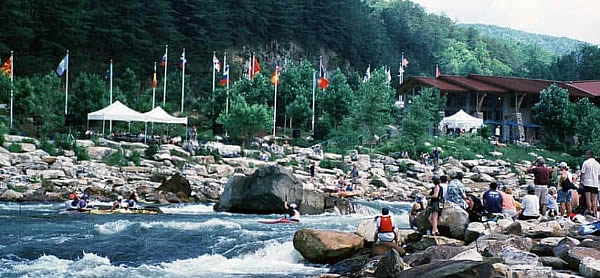
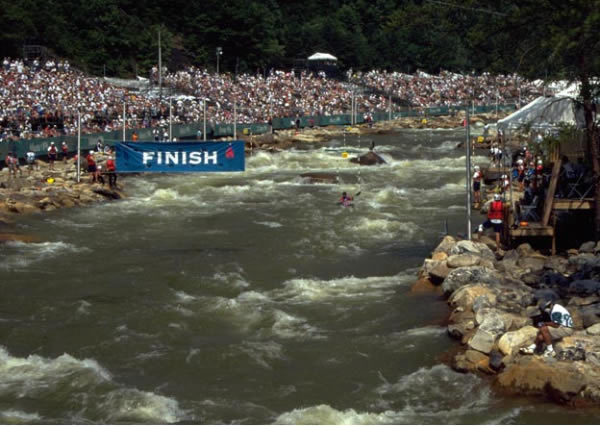
Slalom at the Olympics Back in 1996 In 1996, athletes from 30 nations met enthusiastic fans at the bank of
the Upper Ocoee River, USA as they prepared to navigate the challenging rapids during the canoe and kayak slalom events in pursuit of Olympic gold.
First Natural Olympic
River!What made this majestic waterway catch the eye of Olympic organizers? It wasn’t just the breathtaking vistas or challenging currents. The Ocoee River possesses something unique – an irresistible combination of natural attributes ideally suited for kayak and canoe whitewater slalom
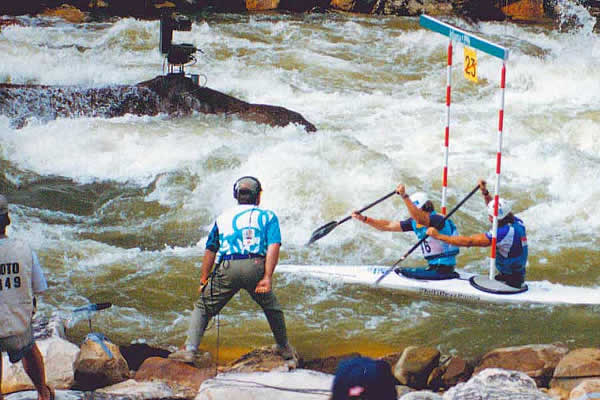
races. Kayak and canoe whitewater slalom is where athletes use two types of boats: canoes or kayaks. In the canoe events, paddlers kneel with a single blade paddle. In the 1996 Olympics, the canoe
events were only open to men. In the kayak events, which in 1996 were open to both men and women, the athlete sits with legs in front and utilizes a double-bladed paddle. Then, athletes in each event must navigate a maximum 25 upstream and downstream gates as quickly as possible. There are double and single canoe events, and single kayak events. The Upper Ocoee River boasts Class
III and IV rapids, which ensured an exhilarating ride for Olympic athletes that demanded precision and agility. Also, accessibility was crucial in selecting this river as the venue for canoe slalom during the 1996 Olympics. Located near Atlanta, the host city of those summer games, it offered easy access for competitors and spectators. Additionally, environmental sustainability was
paramount in choosing the location. The Ocoee River presented a unique opportunity to showcase how sports events coexist harmoniously with nature without leaving behind lasting damage or ecological footprints. Intriguingly intricate yet undeniably picturesque, it was no wonder Olympic officials were captivated by what the Ocoee River had to offer. Its rugged charm combined with
practicality made it an obvious choice for hosting one of history’s most memorable whitewater events. The river only required minor adjustments from the event coordinators for this historic event. The 1996 Olympics cemented the Ocoee River as the only natural river used in an Olympic event in the world. Previously, Olympic river events were 100% man-made.
Europe Dominates, USA Wins Silver, Hometown Athletes InspireGermany dominated the 1996 Olympics kayak and canoe slalom events by winning gold medals in both the men’s K-1 and women’s K-1 categories, thanks to Thomas Schmidt and
Elisabeth Micheler-Jones. The men’s C-1 gold was claimed by Czech paddler Lukáš Pollert, while France’s duo of Frank Adisson and Wilfrid Forgues secured the gold in the men’s C-2 event. The US team made the winner’s podium thanks to Dana Chaldek, who secured the silver medal in the women’s K-1 competition. The US team knew the area well, as most members trained on the Ocoee and nearby
Nantahala rivers. What an incredible accomplishment to compete in the highest level of canoe and kayak slalom racing that whitewater athletes can reach!
What Makes the Ocoee River So Special as an Olympic VenueBefore the Ocoee, every river that hosted these kayak and
canoe slalom events was built from cement and metal. The Ocoee River was the first (and only, as of present) Olympic River that was built entirely within a natural riverbed. Yes, the Ocoee River was updated by constricting the flow in one narrowed section and supporting some rapids features to meet the needs of the Olympic games, but this riverbed is Mother Nature-made! History of Olympic Whitewater Kayak and Canoe Slalom
Since 1972Munich in 1972 was the very
first Olympic games to host canoe and kayak slalom events. However, we had to wait another 20 years (Barcelona in 1992) to see these events in the games again. The US team had a big win with Joe Jacobi and Scott Strausbaugh winning gold in Men’s C-2, while our local Wonder Woman Dana Chladek won bronze in Women’s K-1. Atlanta was the third Olympic Games ever to host Canoe and Kayak
Slalom events on the Ocoee River with the first-ever natural river Olympic course, and the games kept slalom as an event in every summer Olympics since. Slalom canoeing made its Olympic debut in 1972 in Augsburg, West Germany, for the Munich Games. It was not seen again until 1992 in La Seu d'Urgell as part of the 1992 Olympics in Barcelona, Spain. Since then, slalom paddling has been a regular Olympic event in the following locations: - 1972: Augsburg, West Germany
- 1992: La Seu d'Urgell, Spain
- 1996: Ocoee River, United States
- 2000: Penrith, Australia
- 2004: Athens, Greece
- 2008: Shunyi, Beijing, China
- 2012: Lee Valley, UK
- 2016: Rio de Janeiro, Brazil
- 2020: Tokyo,
Japan
- 2024: Vaires-sur-Marne, Paris, France
- 2028: OKC
Riversport, Oklahoma City, United States
- 2032: TBA, Brisbane, Australia
Learn more about our Olympic history here: https://theocoeeriver.com/ocoee-river-olympics/.
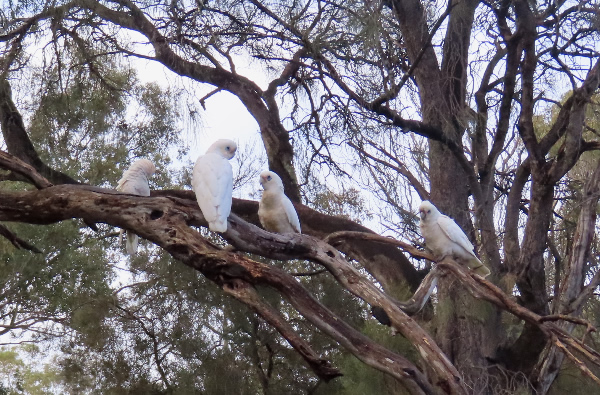
The Birds Are Back I was on the water heading upstream with the scream of Little Corellas above me. I was planning to paddle 15 kms at a solid pace. This is the distance I have to paddle
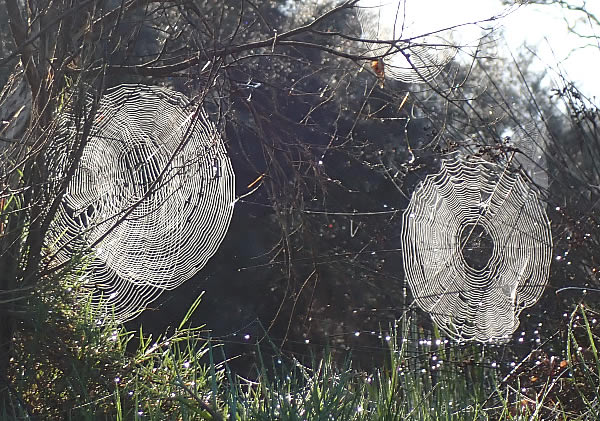
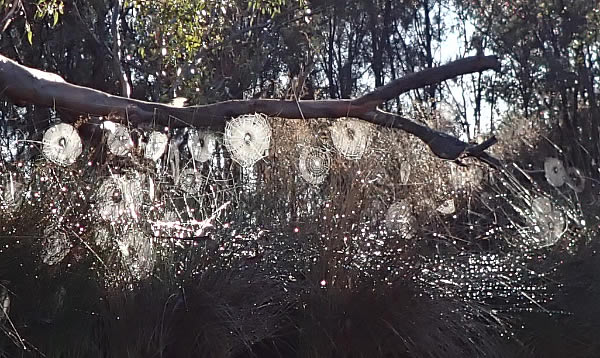
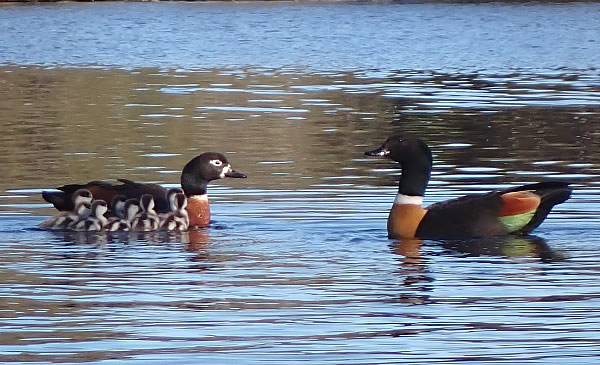
in the World Masters Canoe Marathon coming up. The sun was in my eyes as I headed upstream and at the 3km mark I passed a pair of Australian Shelducks with a bunch of fairly newly born ducklings keeping close to their parents. I kept going as I was on a mission to get to the 7 km mark where I would turn, however about 500 metres before Barkers Bridge I noticed a lot of cobwebs
shining in the bushes. I couldn’t help myself and I just had to get a photo, so I turned around. They were fascinating.
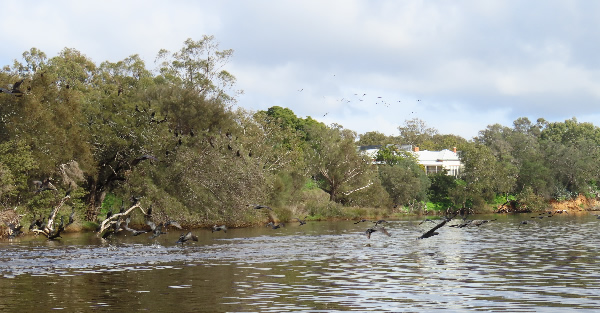
I moved under Barkers Bridge and kept going for a kilometre passing the Guildford Grammar shed before turning and heading home with the tide. Downstream of Barkers Bridge I started to see more birds and as I had ruined my solid training session by stopping to take photos of the cobwebs I decided to take more photos, this time of the
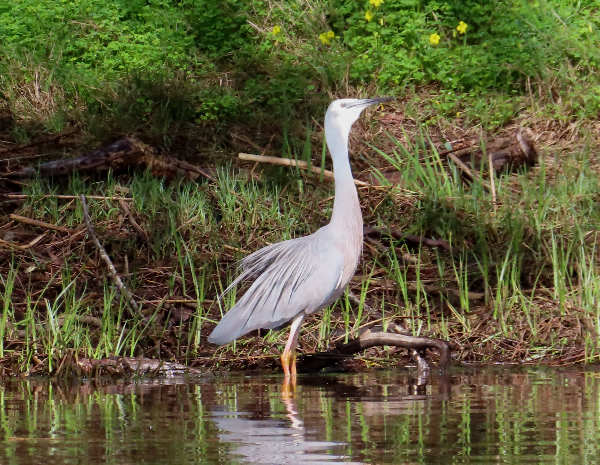
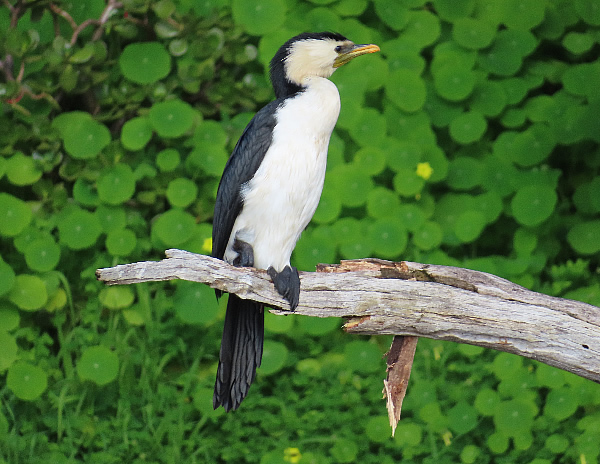
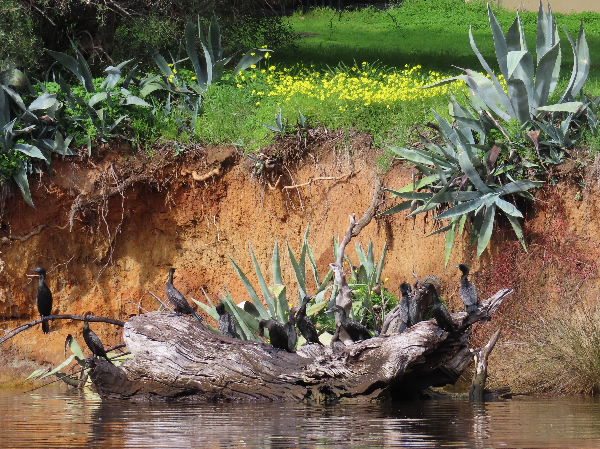
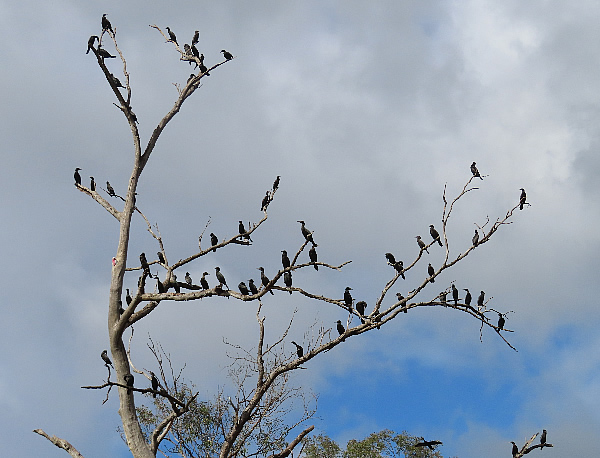
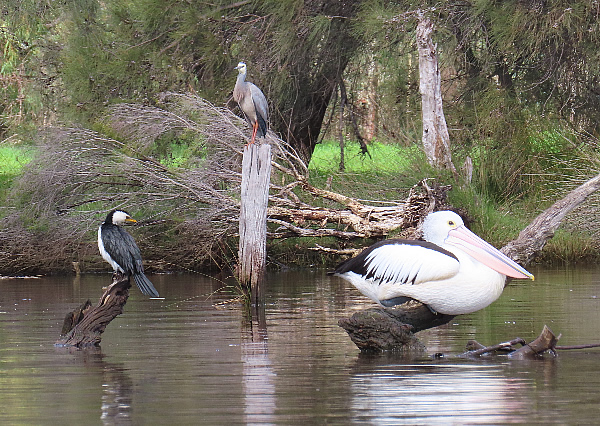
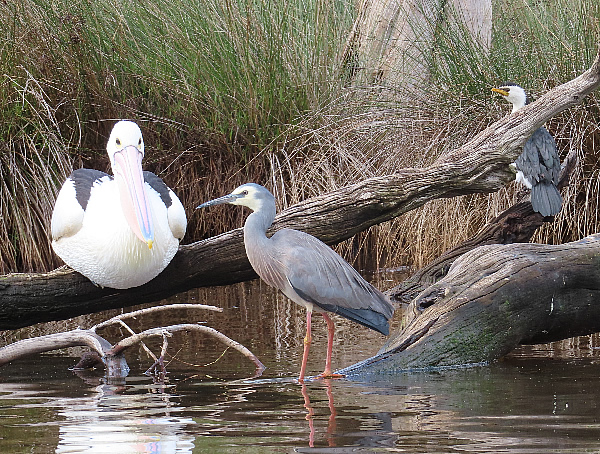
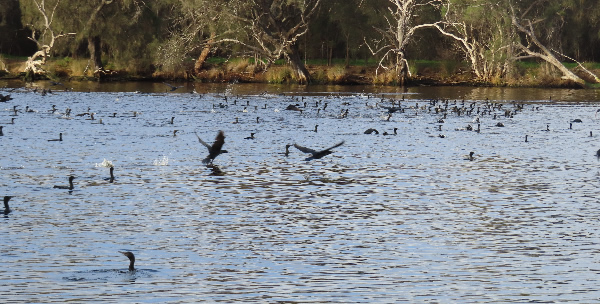
birds. Hundreds of Little Black Cormorants were perched in the trees. Many flew downstream as I passed and landed further down to fly off again. A White Faced Heron and a Pied Cormorant stayed still as I took a photo near the Fishmarket Reserve cliffs. Birds were everywhere. There seemed to be nearly every river bird on the corner of Fishmarket Reserve. Little Black Cormorants
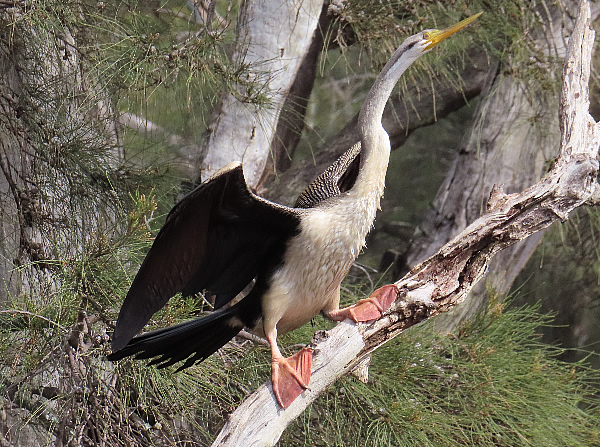
were perched on old logs and branches, a Darter posed for me at the corner and noisy Little Corellas and a few galahs circled the reserve which was buzzing.
Little Black Cormorants were perched in the trees and many flew off as I paddled by.
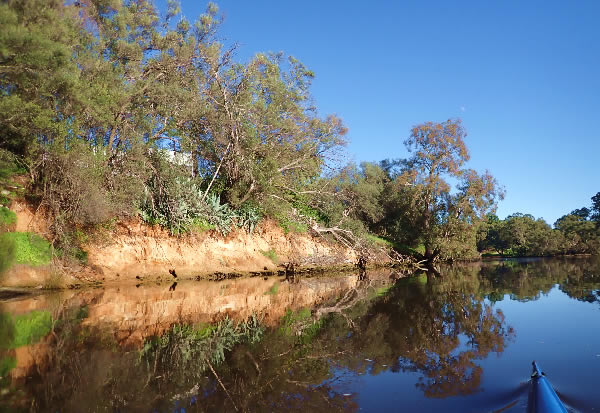
The Fishmarket Reserve Cliffs.
Little Black Cormorants rest on a log.
A Darter. Look at those feet.
The area was screeching with Little Corellas.
Little Black Cormorants. Leaving a tree full of Little Black Cormorants I moved under Guildford Bridge and spotted a Dusky Moorhen but it was too sneaky and swan under some branches so I failed to get a photo. At Point
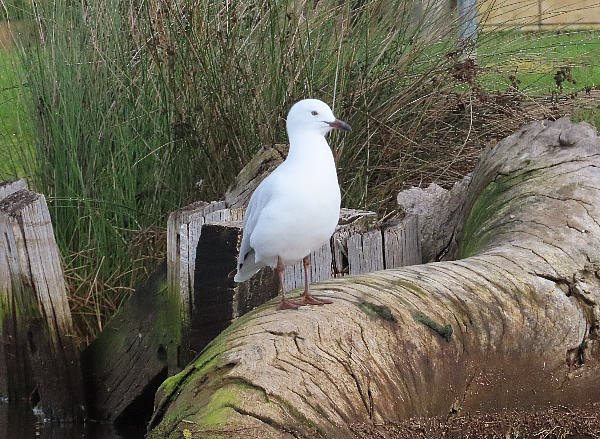
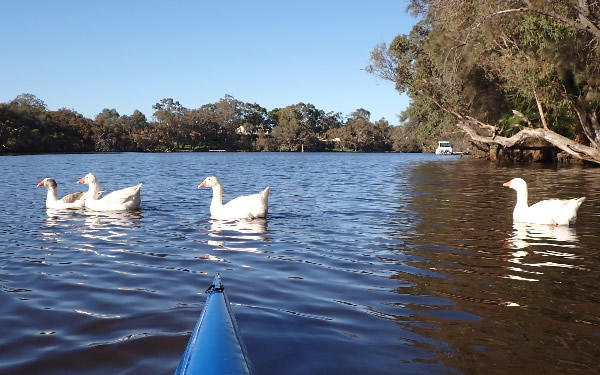
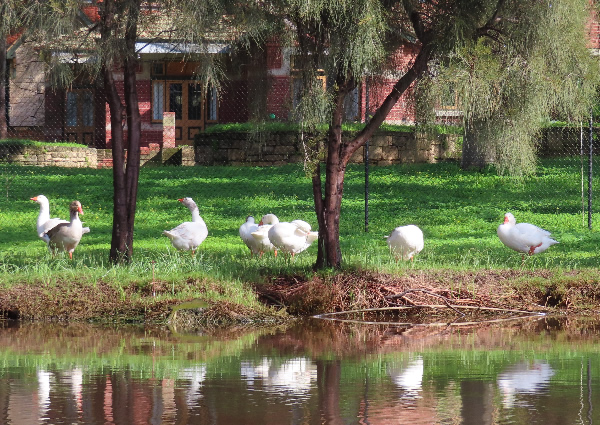
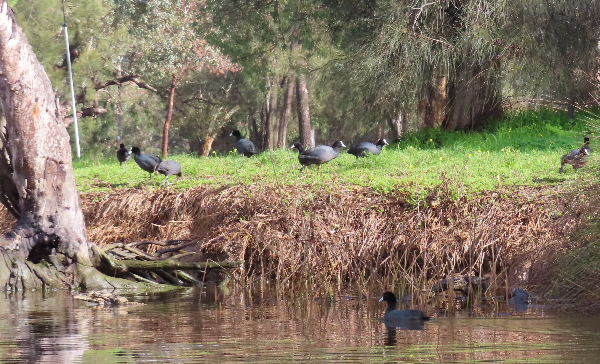
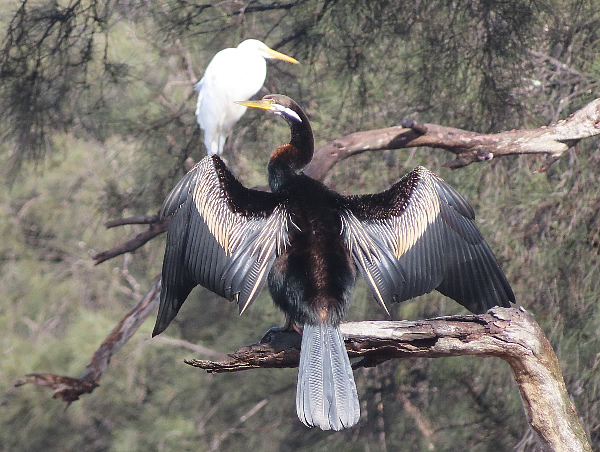
Reserve a Silver Gull was just perched on a log and invited me to take its photo as it didn’t move. 500 metres further a bunch of Geese were less shy than the Moorhen although much noisier. Rounding the next corner several Eurasian Coots were feeding on grasses. Other days I have seen up to 30 of them grazing together. Not far from a fisherman a Darter was perched high in a tree with an Egret a little further looking down at a fisherman and I suspect hoping to get a feed. I just couldn’t believe
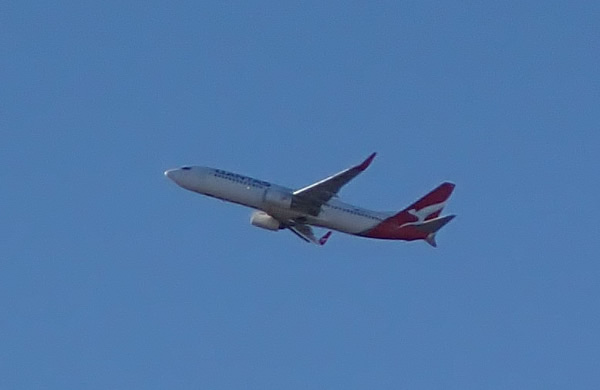
how many birds were around today. A few planes were taking off from the airport reminding me that I will be flying out on the 11th September for the World Canoe Masters.
A Silver Gull having a rest.
There used to be 19 geese but I think someone might have had a few for dinner as there are less than a couple of years ago.
I will be up, up and away on the 11th September.
A Darter and a Great Egret keeping check on a fisherman. The river was buzzing and my solid training session was far from solid although the first five kilometres went well. I was looking out for the Shelducks and
their young and for about a kilometre I saw nothing until I came across a pelican, a Pied Cormorant and 2 White Faced Herons.
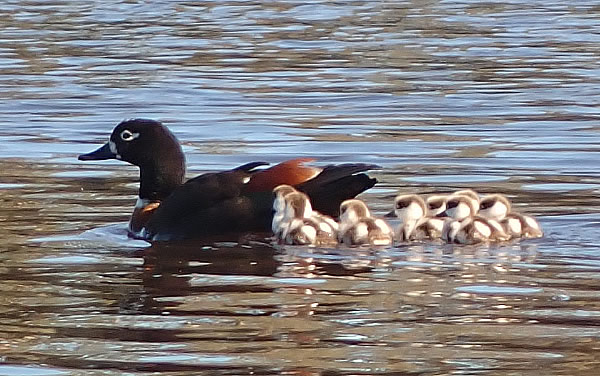
I thought I must have missed the Shelducks but lucky for me I caught up with them near a creek entrance just upstream of Sandy Beach on the east side of the river. They were being harassed by a Raven. Young ducklings like these, the first I had seen this season are in danger of being
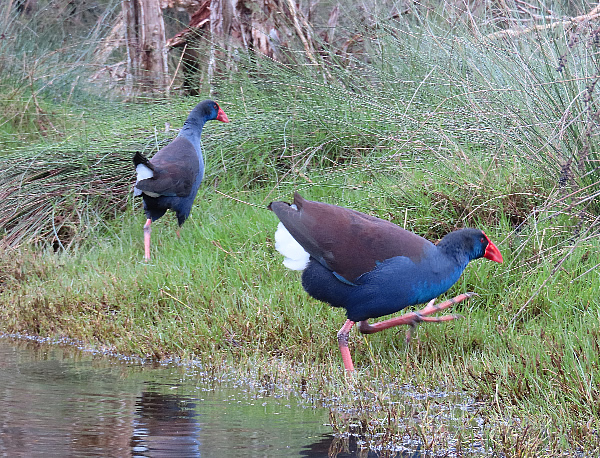
picked off by Ospreys, Kites and Ravens so I am not sure that I would see as many ducklings next time I come across this family. A few metres up the creek 3 Purple Swamphens were mingling amongst the grasses on the side of the creek. I eased into the creek carefully and silently trying not to scare them away, at least not before I took some photos. I sat there camera in hand and at
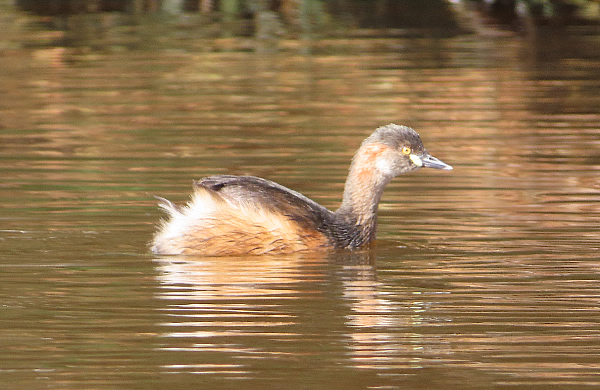
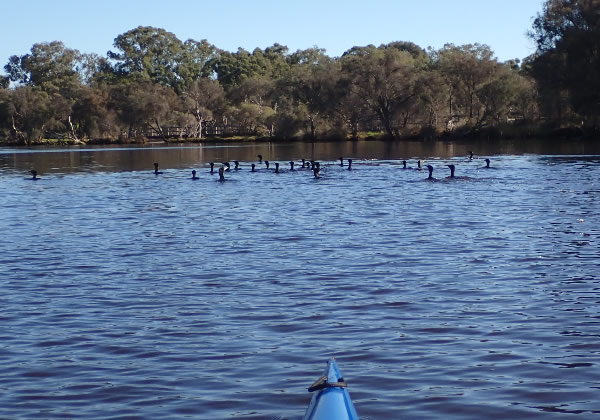
times overbalancing to a point I nearly capsized, but luckily I didn’t. They walked along the bank and in the grasses and one looked as if it was sitting on a nest that didn’t appear to be there. Swamphens are always good to watch. I left them and headed towards Sandy Beach corner coming across a lone Australasian Grebe. Grebes just don’t like being photographs and as soon as I got close it would dive and come up several metres from where it went under water. Although there were more birds along the next kilometre I had taken that many photos I didn’t need to take any more. That was until I reached Ascot Kayak Club where there were a group of Little Black Cormorants feeding. I couldn’t help but take another photo. My 15 km paddle had taken me
twice as long to travel as it should, but I was excited to see the quality of the photos I had taken, as taking photos from my K1 not everyone is a masterpiece. First though I deserved to have a coffee and a muffin at Swan Café next to the club so stopped before heading home. What a morning.
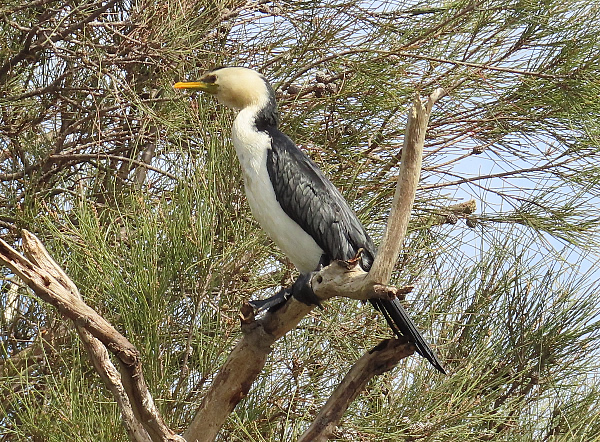
A Little Pied Cormorant, a White Faced Heron and a Pelican.
A Pelican, a White Faced Heron and a Little Pied Cormorant.
A female and male Shelduck guarding their young from a Raven.
These of the first ducklings I had seen this season.
Australasian Grebe always ducking underwater.
More Little Black Cormorants feeding.
Winter Slalom Series Race 3 - Sunday 4th August, 2024 at Walyunga National Park. Setup and registration from 8:00am, Racing starts at 8:30am We need all participants of this race to be members of PA either through a club or direct to ensure that you are insured. If you are a memberof a Kayak Club or PWA Direct Member then the Race Fee is $15 Pay on the day or direct debit to Paddle WA (please make sure that you add .07 cents (either $15.07) to help PWA recognise this as a slalom race payment. if you are not a member you
can join here https://paddlewa.asn.au/our-clubs/memberships/ Helmets and PFDs are compulsory. Look forward to seeing everyone for a great morning of racing!
Coming Events - 2nd Aug Friday - Avon Scrutineering afternoon.
- 3rd August 2024 Saturday afternoon
-Wild Water Races #6&7
- Winter Slalom Series Race 3 - Sunday 4th August, 2024
- 10th - 11th August 2024 - Avon Decent
- 17th & 18th August 2024 - WA Wild Water
Championships
- 7th September 2024 - Nanga Challenge
12th October 2024 - WA Ocean Racing Championships
Avon Descent Competency 3rd August
https://education.paddle.org.au/courses.php?register&eventId=3239
Wild Water Race - This Saturday afternoon.
Don't forget Avon Scrutineering this afternoon. Paddler scrutineering will be held on Friday 2 August at Ascot Kayak Club between 3–7pm.
Pre-Race scrutineering is compulsory for all entries within 200 kilometres of the Perth GPO. Take along boat, helmet and PFD with Whistle.
|
|
|
|
|
|
|
|
|
|