|
|
|
|
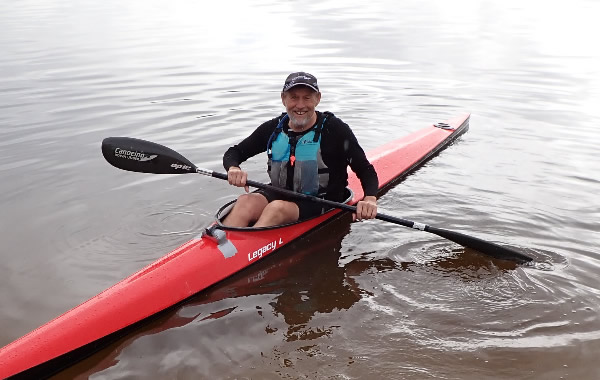
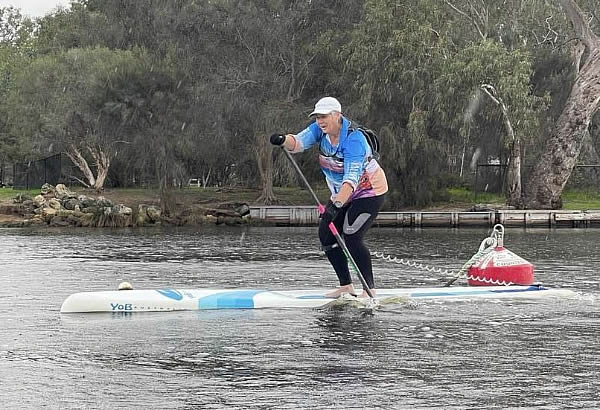
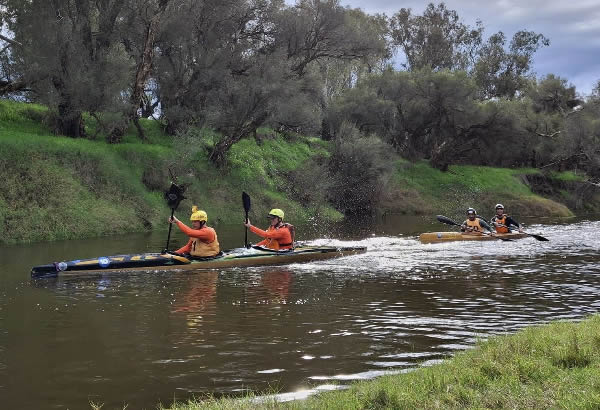
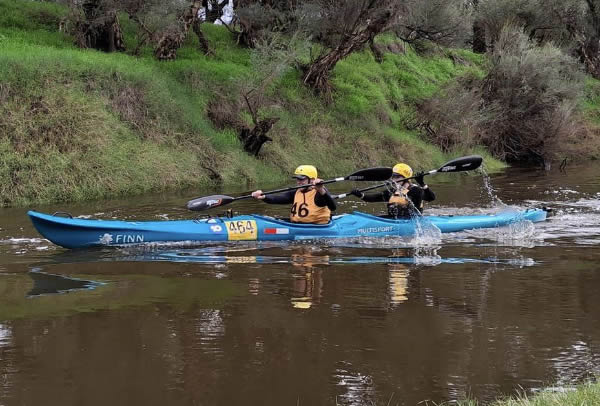
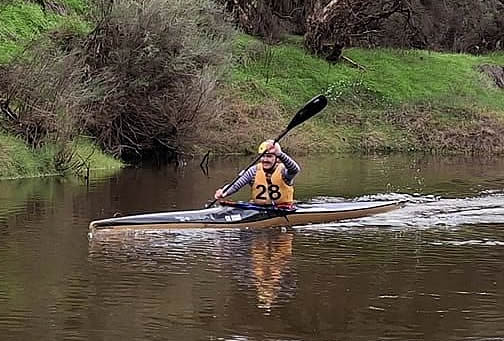
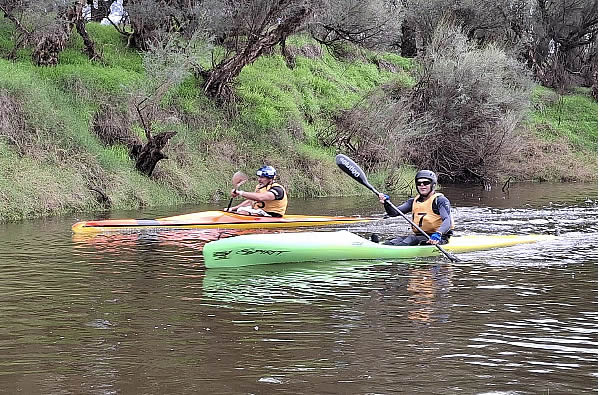
Don’t think life stops at 65 years old. They say getting old can be a little daunting. Most people expect that their health and fitness will be impacted the older they get. It is said
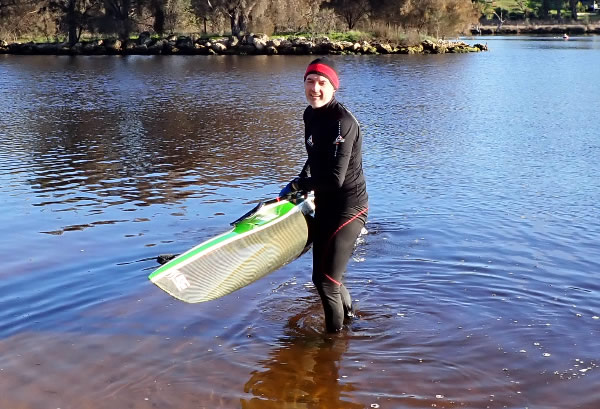
that old age will cause us to lose our balance, lose our speed, our strength and a host of other things. I sometimes use old age as an excuse if I lose a race, but although I’m 73 I feel a lot younger and nothing makes me think that I can’t achieve the physical things I did in my 20s, 30s or 40s. Yes I might have lost a bit of my strength and a bit of my speed. I might not be
quite as flexible, but that hasn’t stopped me from achieving the same things I used to do when I was younger - it just takes me a little longer. I’m happy to be in my 70s as I’m enjoying life as I did in my 50s & 60s and all the years before then so now I’m preparing for a good life in my 80s. To do that I believe fitness will be important. I also need to keep healthy and I need to
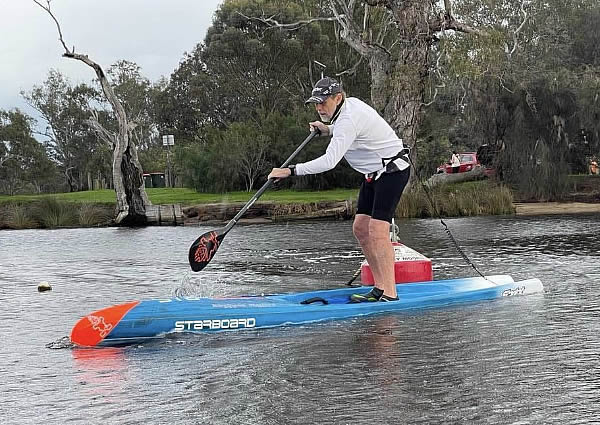
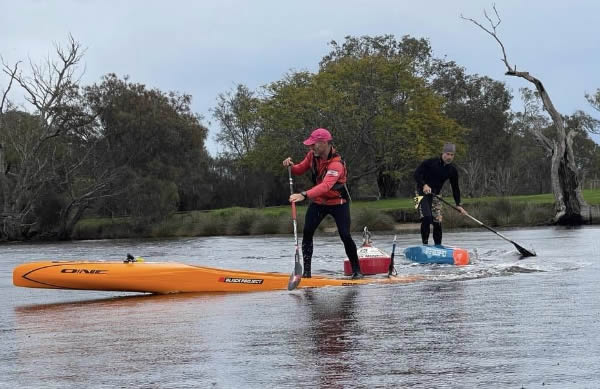
accept that there may be a few obstacles along the way. Balance is said to be important so my idea is to continue to train in an unstable kayak as long as I can, in the hope I can stay upright into my 90s. To give me a better chance of keeping my balance intact I have started paddling a Stand Up Paddle Board. Stand Up Paddling is not only good for my legs, my back and other muscle groups, the narrow boards I paddle are also good for my balance. With this in mind I am hoping that my development
as an older paddler will benefit me when I am paddling after my 100th birthday. Paddling a high kneeling C1 (single canoe) is the ultimate unstable craft and it is certainly the biggest challenge that anyone can take on in paddling. With the sprint season coming up it will be time to bring it out. By paddling a variety of boats, (kayaks, canoes & skis, flatwater, whitewater and
sea) I believe has helped me to keep my skills honed. I don’t feel that I have lost much of my skills I used to have as a younger paddler.
I think that being fit helped me through 33 sessions of radiation last year and another 33 sessions of radiation and hormone treatment this year, which I’m still dealing with. The side effects have been minimal and I have been able to keep up a good paddling pace. So whatever you do don’t think getting old is the end of you. It can be the beginning of something special, you just need to work on it. Since I turned 70 I paddled 14,000kms in my 70th birthday year. At 71 I won a gold medal in the 70+ Australian Canoe Masters Championships. I was awarded Paddle Australia’s prestigious ‘Presidents Award’, and Paddle
Australia ‘Master Marathon Paddler of the Year.’ At 72 I paddled in the World Canoe Masters Marathon Championships in Denmark and came 11th in K1 70+ (out of 30) and 6th in K2 65+. At 73 and being on hormone treatment I came 3rd in the 70+ K1 at the Australian Canoe Marathon Championships and 1st on a SUP. Later this year I will be competing at the World Canoe Masters Marathon Championships in Croatia. Life is what you make it. So don’t think life stops at 65 years old.
- The Legends of Bells to Ascot Race
- Saturday Morning Paddlers
- Albany Sea Kayak Club
- The Yukon River Descent
- Sunday SUP Social Race
- Bells to Ascot Kayak Club
- UK National Canoe Championships.
- The Avon River Guide
- Birds of the Swan River
- Coming
Events
Coming Events - 20th July 2024 - IOP Downwind Winter race #2
- 23rd July 2024 - Avon Descent Standard
Entries Close.
- 28th July 2024 - Walyunga N/P to Middle Swan
- 2nd Aug Friday - Avon Scrutineering afternoon.
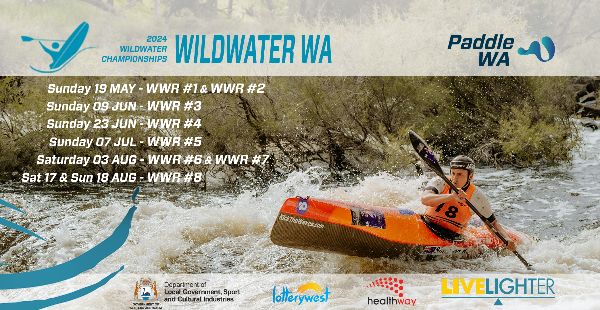
- 3rd August 2024 Saturday afternoon -Wild Water Races
#6&7
- 10th - 11th August 2024 - Avon Decent
- 17th & 18th August 2024 - WA Wild Water Championships
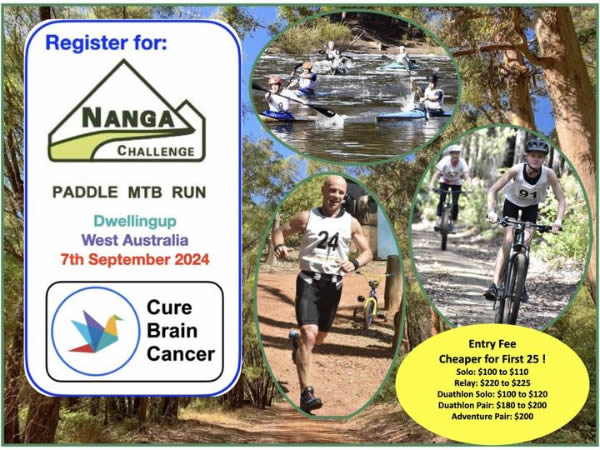
- 7th September 2024 - Nanga Challenge
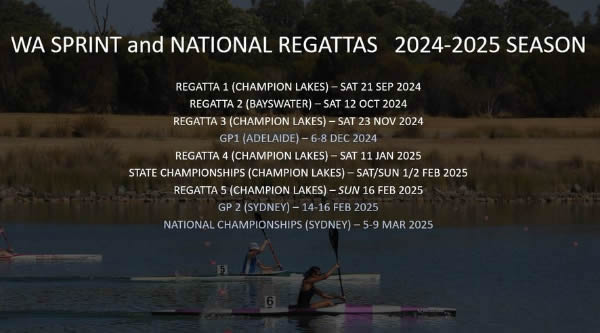
- 12th October 2024 - WA Ocean Racing Championships
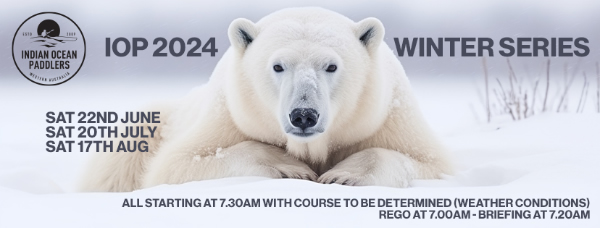
Ocean Racing this weekend! IOP Winter Series Race 2 Saturday 20
July. Get your registrations in via the link below.
Paddle WA White Water Course & Avon Assessment 20th July 2024
This weekend. Details here:- https://education.paddle.org.au/courses.php?register&eventId=3233
Avon Descent Standard Entries Close
Sunday, 23 July 2024, 11.59pm. Entries will re-open on 27 July 2024, and late fees will apply to support additional admin required. Keep a watch out for Avon Descent Changes. Keep checking their website.
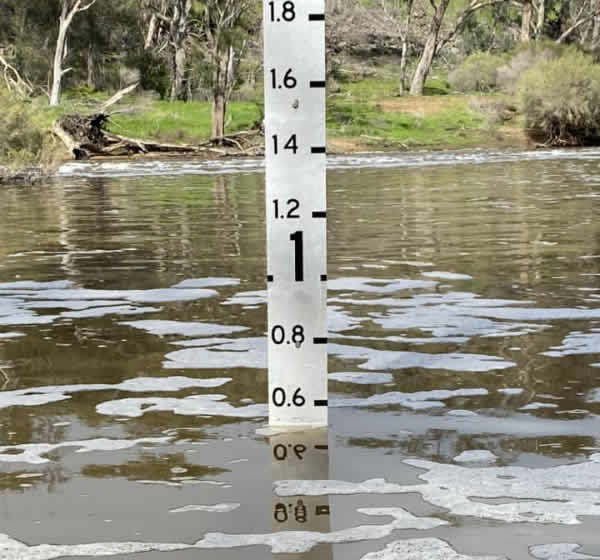
The water is coming up. 11.15am this morning at Walyunga Park. Photo Warren Southwell.
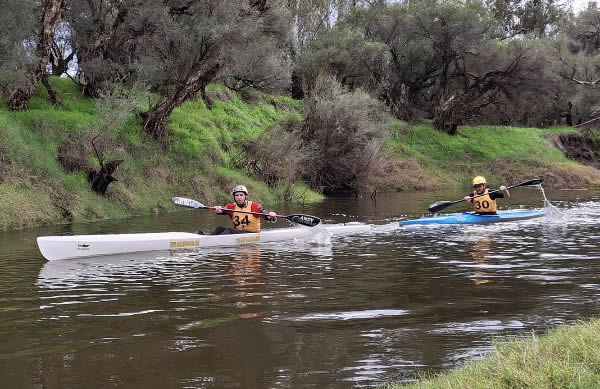
The Northam to Toodyay Race changed venue because of the low river levels. It started below Bells Rapid at Bolland's Bend to Ascot Kayak Club a 30km paddle.
Robin Jacob paddled the 30kms of flat water in a wavehopper. What a legend.
Alan Morbey paddled the 30kms of flat water in a short plastic estuary kayak. Another legend.
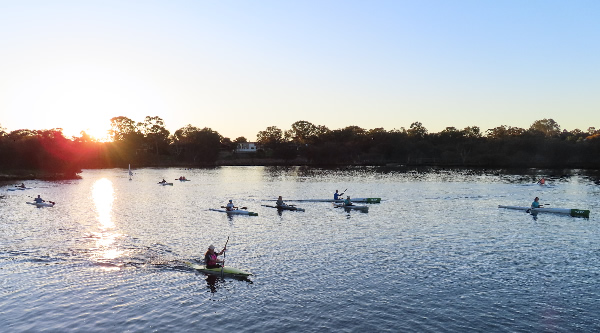
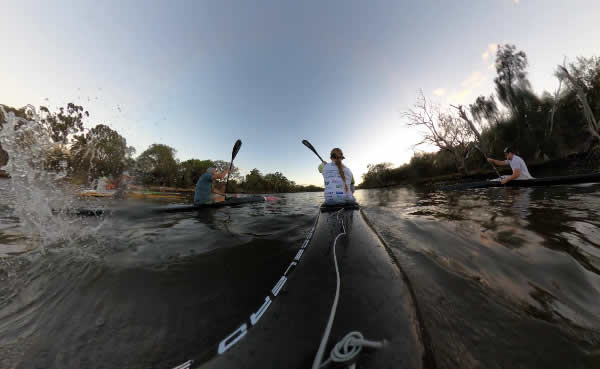
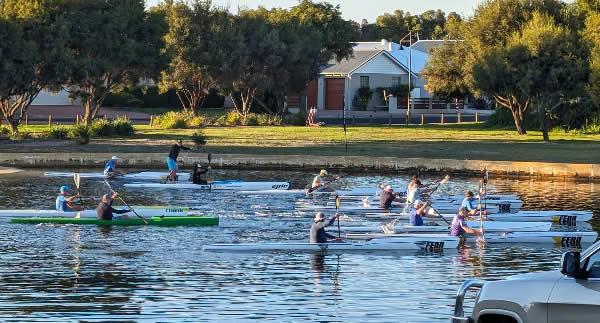
22 paddlers at the Progressive Racing Group training evening on Tuesday.
Saturday Morning Paddlers
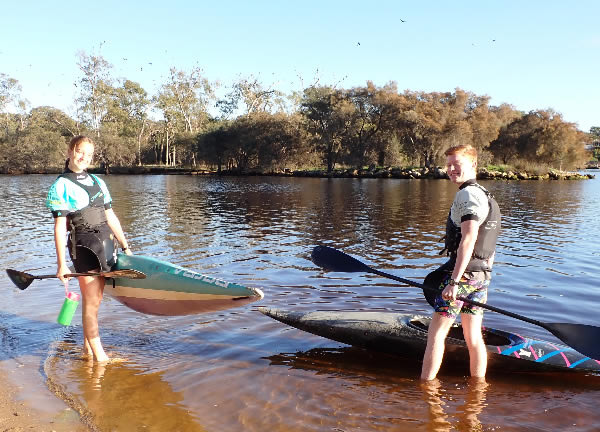
Isabelle Florisson & Grayson Pepi about to launch their kayaks to go slalom paddling at Ascot.
Matt Jones returning to Ascot Kayak Club after an 8 km race at Sandy Beach.
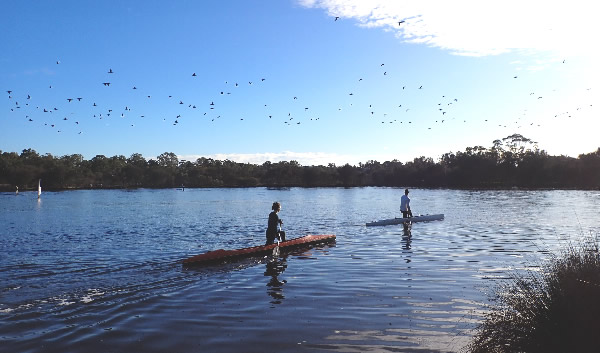
As the Little Black Cormorants do a fly by Gary Nagy and Camilla Barbi paddle off. Gary has a new student and she is learning fast.
Coran Longwood's Endurance Academy training session.
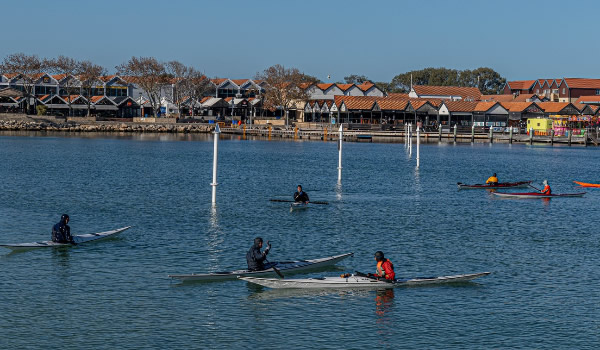
A morning at Geographe Bay Paddling Club, Busselton.
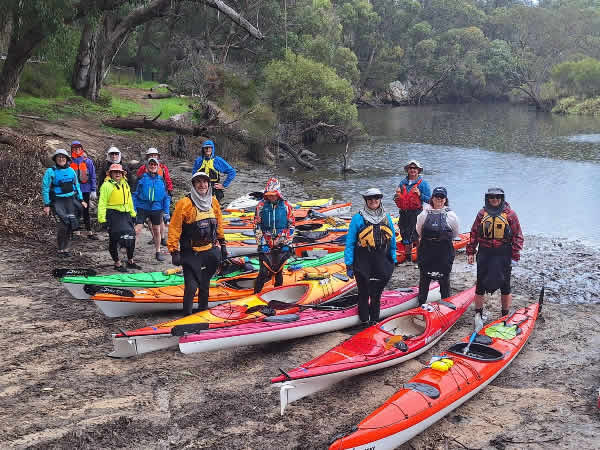
Swan Canoe Club members at Moore River.
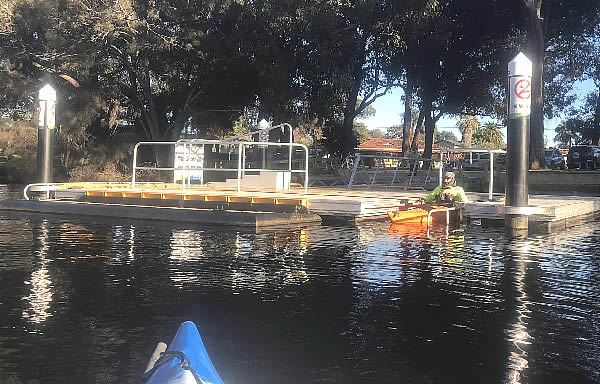
Action Outdoor Association Paddle New Kayak launching floating platform. Abilities Paddle Launch Serpentine River and into the Black Lakes. 15 km paddle Perfect day for a paddle Start and finish at Riverside Gardens Photo Stephen Morup.
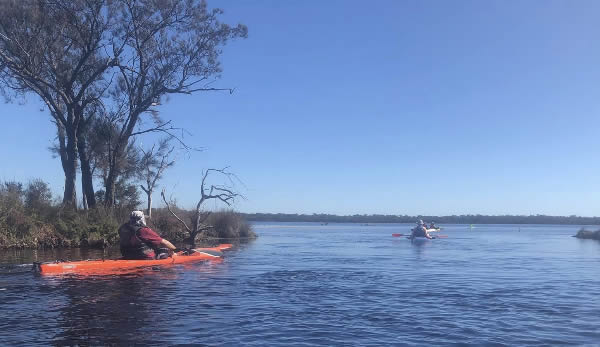
Action Outdoor Association Paddling back into Goegrup lake. Serpentine River. Photo Stephen Morup.
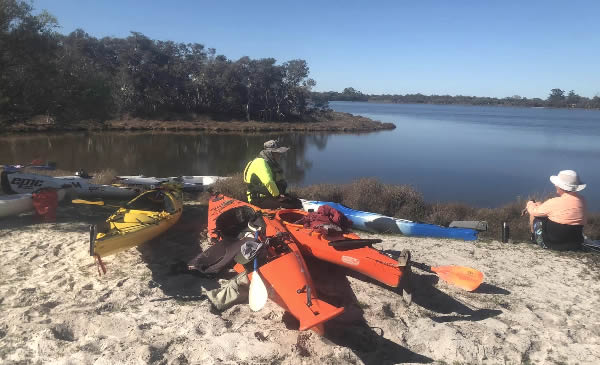
Action Outdoor Association Morning tea. Photo Stephen
Morup.
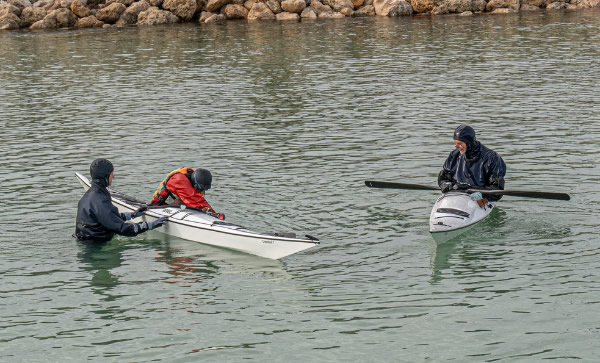
Sea Kayak Club of WA rolling practise. Barry Roberts.
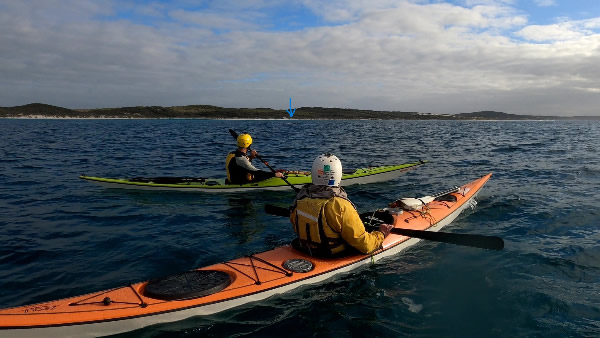
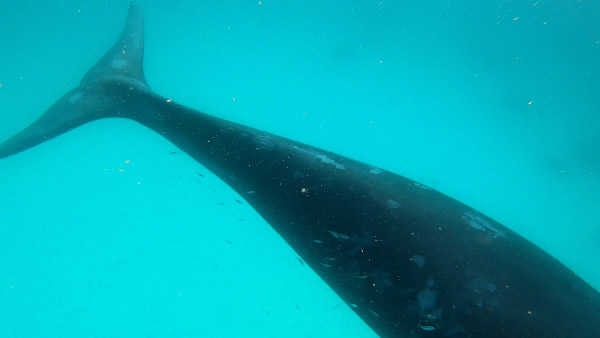
Albany Sea Kayaking Chris, Colin, Ian, Nigel Well, if you want to see some whales you just have to go kayaking with Ian at Cheynes beach. We saw quite a few – all Southern Rights, just lolling about quietly in the shallows. The close encounter whale came to us. We knew it was somewhere nearby but hadn’t spotted it for a while. It ended up doing a couple of curious passes beneath our kayaks before
we moved away. A memorable paddle and some nice fish and chips afterwards.
Whale over there! Photos Chris Fry.
The close encounter whale came to us.
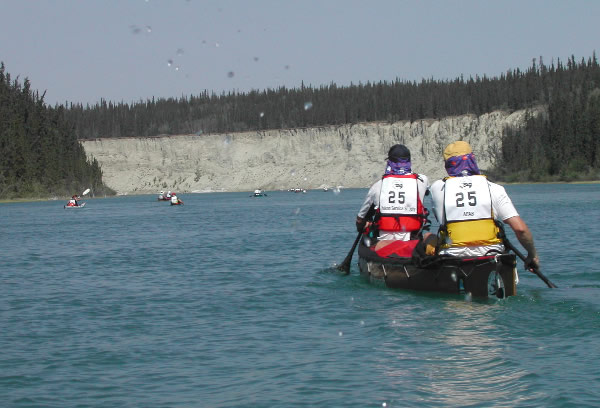
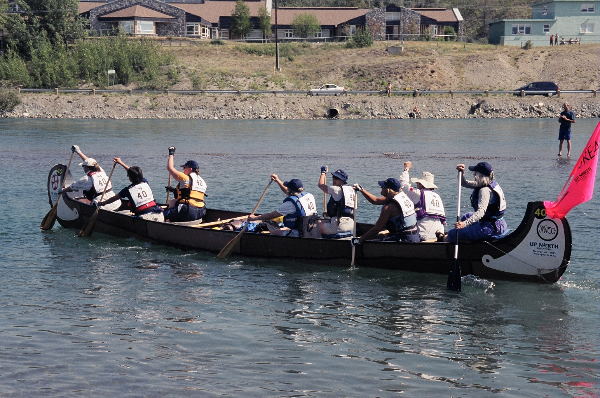
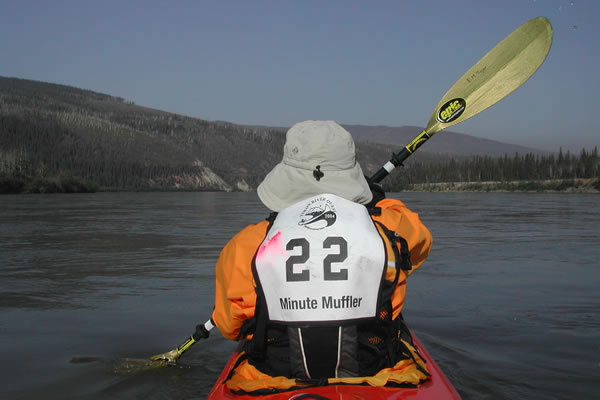
The Yukon River Descent The Race 20 Years Ago.
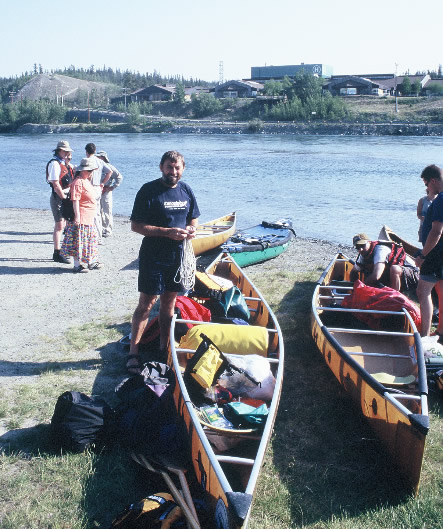
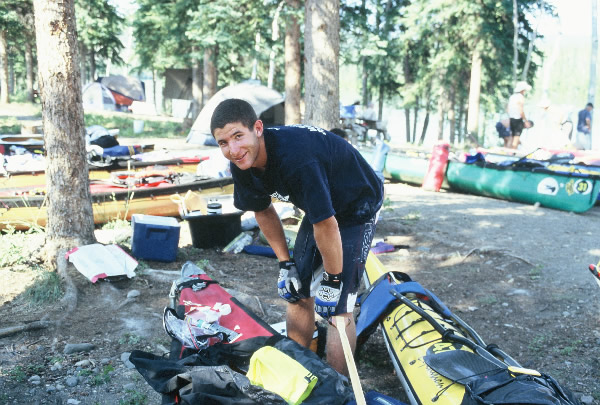
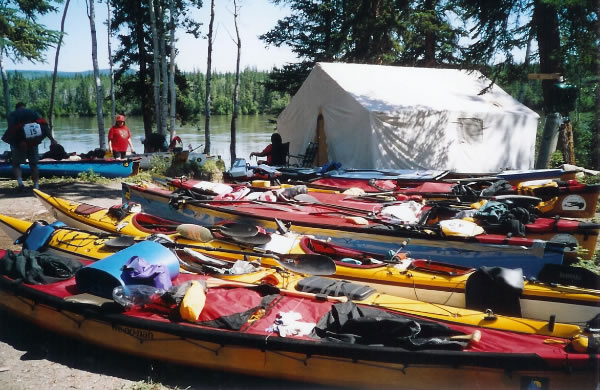
Packing all the gear needed to camp overnight. Most paddlers have support teams so they didn't need to carry so much gear.
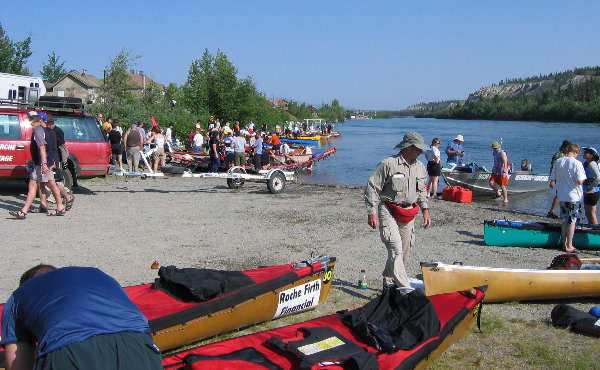
Back at the race start we sat in the hot sun eating our sandwiches and watched the other competitors prepare for the race of a lifetime. A German competitor just sat on a chair quietly waiting; he had competed in this race four times before, as well as completing in the Australian Murray Marathon about six times. What an impressive record and he
wasn’t a young chap. In fact he was a lot older than I was! Just as we had finished our last sandwich, staff from a local pizza parlour came around giving away slices of pizza, but we declined. Sadly it didn’t occur to us to take a few slices for later. About midday an organiser shouted “Please walk to the start “. Race start was at 12.30pm in the town centre on Main Street, a good 600
metres away. It was going to be a ‘Le Mans’ start, which meant that we had to run (that’s if we had the energy) from the town centre to our boat, jump in and paddle away. Ed was raring to go, but I was still fiddling around strapping my hands. By 12.06pm I was ready and as we walked to the start the sun was beating down and the heat was stifling. Wearing all our racing gear, including
our PFD and gloves, it felt as though our bodies couldn’t breathe. When we reached the start line we sweated and searched for a toilet to enjoy our last relaxed pee for the next 24 hours. A large ‘Start’ banner spanned the wide street. All competitors were sheltering in the shade of a hotel. Their clothing and footwear varied. One competitor told me, he didn’t need to wear gloves as it
was too hot. I suspect he didn’t realise that they also prevented blisters! At 12.15pm the organisers asked competitors to step out onto the road and under the banner. As the heat intensified all the team members were called out one by one. There were cheers for some and bigger cheers for others. We received a pretty big cheer for being the competitors who had travelled the furthest to
get there. We knew little about the other competitors, although we had heard that the record holders were there, as well as many other good teams who had done it several times before. The mayor gave a speech and then it was time to go, thank God! 10, 9, 8, the countdown began 7, 6, 5, 4, 3, 2, 1, GO. We were off and running along the main street, across a railway line and along a
gravel path that ran parallel to the river. The competitors started to spread just a little. I knew that I wasn’t running fit, and my rapid heartbeat was telling me so, but I couldn’t slow down. The intense heat burnt relentlessly and my breathing quickened. Ed was 15 metres in front and looking like a true athlete. I was clipping at other runners heels and feeling far from comfortable, but I kept running hoping that I wouldn’t collapse before reaching the canoe. Fifty metres from our canoe, some of the front runners darted down the bank and jumped into their boat. That didn’t seem fair. The boats were laid out from one to fifty five, so if you were number one it meant that you didn’t have to run or paddle as far as the higher numbers and therefore had a distinct advantage. We were number thirty, I suspect that competitors knowing the system probably entered early to get low
numbers. At the time I wasn’t concerned about others leaving the shore before us, I could feel my chest drumming and my breathing labouring and I wasn’t expecting to be up with the leaders anyway. I was probably the least running fittest that I had ever been in my life. Would I reach the canoe? I had to, I couldn’t let Ed down. He was now at the canoe waiting. When I arrived we lifted
the heavy canoe off the stones and into the water.
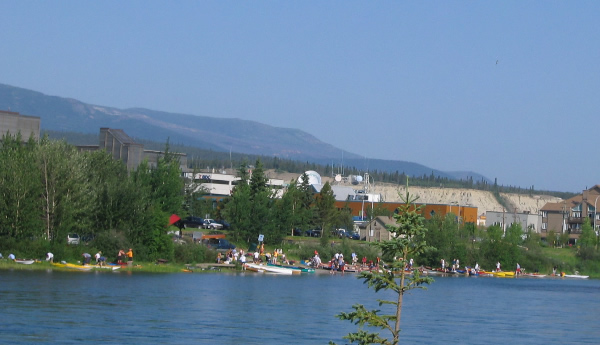
From the other side of the river.
When we dropped the canoe into the shallows we hopped in and I was happy that my lungs had a chance to rest. As we took the first strokes, it dawned on us that we hadn’t paddled this canoe before and we didn’t know how stable it was going to be; almost instantaneously we got used to it. There was no time to reflect on the frenzied start or to
figure out how we were going to catch the competitors who didn’t have to run or paddle as far as we did and who were now well in out front. We paddled out of the eddy and into the moving water being careful to avoid capsizing and making a spectacle of ourselves. Within two hundred metres we were amongst a group of six canoes. After a few kilometres there were only four boats in front.
We were holding the others at bay. Minutes later a single kayak raced by. He didn’t seem to have much control of his boat, although he had a rudder. Ed and I were hanging in there and stroking well, and then another canoe raced by. We let it go; they were too fast to chase at this early stage. Quite quickly we got into a rhythm and no other boats passed us and at the 30km mark we still
had the leaders in sight. We were pretty proud of ourselves, to think they were the professionals and the record holders up ahead. The second and third place getters were jostling for second position; we could see them duelling all the time. We now wished we had done more training and we might have been closer to our rivals to join in with the duel.
Paddlers along the way. Photo taken by Edward Jager.
A voyageur canoe takes off. Where the Takhini River entered the Yukon we saw people waving and cheering and then again just before we entered Lake Laberge at the 38km mark. We moved over to the right side following
another boat around an island and across some shallows. As we sat in seventh position we were hoping they knew where they were going. A kayaker was creeping up behind but stopped for a rest as we approached the lake. The lake was regarded as the most dangerous section on the course. Winds can soon whip a calm lake into one with large waves and whitecaps and any capsize in the freezing water could be deadly. It was amazing to think that only a couple of weeks earlier the lake was iced
over. We were feeling good at the 39km mark as we paddled deeper into the 50km long lake and even though it wasn’t rough, 50km across a calm lake was still a long way. Our first checkpoint was on the right side of the lake, so although competitors were now fanned out, ultimately that’s where the paddlers were headed. We seemed to paddle forever before sighting the checkpoint and as we
saw the paddlers in front of us pass it one by one, it gave us some indication as to how far they were in front. As the front runners closed formation at the check point, we saw the British pair in the double kayak go over to the shore and get out. We were exceedingly happy to pick up a place and cross the checkpoint in 6th position where race marshals were sitting high on a cliff. We shouted our number and they replied “Yea, got you”. As the flat lake stretched before us seemingly forever we couldn’t wait to get across it. The scenery along the shores however, was absolutely beautiful and it reminded me of Yosemite National Park in California, so another part of me wanted more time to take it all in. Ed was beginning to tire and his PFD was chafing his
skin as he was only wearing a sleeveless T shirt underneath it. I knew that if he didn’t change, the chafing would affect his overall performance and we couldn’t have that. I didn’t really want to stop though and go to shore, but as Ed’s clothes were packed away under the spray deck we had no choice. The lake’s shore was indented so I steered the canoe to a point several kilometres ahead so we didn’t have to divert too far. When we finally touched the rocky point I took the opportunity to have a
pee whilst Ed changed. We were off again, but the stop had cost us dearly. One single kayak had caught up and the British mixed double kayak (K2) was level with us, but further over. I silently cursed our luck. Apparently the British pair was being filmed for a TV series. The series was about a top athlete teaming up with a non athlete; the pair would then take on an adventure or
challenge and see how things panned out. The paddlers were Jason Merron, who was the non athlete, and Charmain Gradwell, who was a top marathon paddler. Jason was given about eight weeks to train up. Now here they were paddling beside us! Some minutes later our paths came together. We said a polite ‘hello’ and paddled on. We had heard them talking for miles. I remember thinking that if
they concentrated on paddling instead of talking they would be much further ahead. Every few minutes we would hear Jason say ‘come again’. He obviously couldn’t hear what Charmaine was saying. Holding a conversation in a double canoe or kayak can be frustrating. When the person in the front talks they are usually facing forward so it is hard for the back person to hear. Often one guesses what the other person is saying, so it’s sometimes better not to talk at all!
70 year old Edward Jager. Photo taken by his son.
We powered on and they moved over and sat on our wash. By doing so they got an easier ride as we dragged them along. We weren’t that concerned at the time as they were in a different class of boat, but when we later realised that the prize money was for the first 10 boats across the line, we took them more seriously. For the next few hours the
British pair sat quietly behind us with the film crew taking copious amount of footage of them and us, which was later reduced to a few seconds when the film was released. Ed and I paddled on with vigour, dragging the pair towards the end of the lake and beyond the exquisite lake side scenery. It was a joyous sight when the hills converged; the river was back at last. When the British
pair saw the river approach they paddled off our wash and pulled away from us. I had thoughts of giving chase but they were more rested than we were and we still had a long way to go. Two float planes that flew over us earlier had landed at the river entrance only a short distance around the first corner. They were tied up to the bank next to the ‘Up North Adventures’ boat, which was
ferrying the film crew down the river. As the banks squeezed together we could feel the river give us a lift. What a brilliant feeling! We had now paddled 90kms and taken less than six hours to cross a 50km lake, so were pretty happy with our performance so far. My neck had tightened with stiffness, but as the hours passed by it began to loosen up. As midnight drew close, a chill began
to set in. We turned a corner and to our great delight, passed the British pair who were on shore putting on more clothing. As we slipped by we put on the power to increase the distance between us, as we didn’t want them passing us again. Now any boat in front was a boat too many. Ed began to tire. He wanted a pee so we pulled over to the side. It was then that we realised how fast the
current had been pushing us. As we jumped out, a cloud of mosquitoes circled and dived for our bodies. It was hard to stay still to pee. I quickly donned a thermal top and cag, but Ed didn’t bother, I think he was too pre-occupied trying to get away from the mozzies. We moved off from the shore with haste being chased by a cloud of insects and thoughts of never going to shore ever again. As the night got cooler I couldn’t understand how Ed was keeping warm wearing only a cotton T shirt. He said he was okay, but not long afterward exhaustion began to set in and he started to feel sleepy. He kept stopping trying to fight fatigue. Eventually he couldn’t take it any longer and said he wanted to stop. We paddled on trying to find the right place. As we turned a corner two tents were erected on a flat gravel area. It looked the perfect place. Our first
thoughts were to pass it by so we didn’t invade the campers, but on second thoughts we decided to pull over. The current was swift, so it took some effort to ferry to shore. We landed next to the campers’ food drums left 120 metres from their tents as a precautionary measure against bears. Once on dry land Ed instantly hit the pebbly ground. He lay with his hands and arms by his side,
dead to the world, totally exhausted. I walked around the gravel bar, which was part of an island, filling in time and trying to keep warm in the chilled air. The hills on shore were steep and high and a landslide was taking place opposite us. Every few minutes rocks would tumble and splash into the water. The valley was silent except for the rumbling and tumbling of the landslide and with the dim light, it felt an eerie place. I soon became tired of standing there getting chillier with every
passing moment and watching Ed turn into an icicle perhaps never to wake up again, so I prodded him with my foot. He gave a moan, moved a limb or two and then mumbled the words, “I’m freezing”. Not surprising given that he was still in his T shirt. He stood up and shivered as he put on more clothes and to my relief he was willing to get back in the canoe and paddle on. We hadn’t been
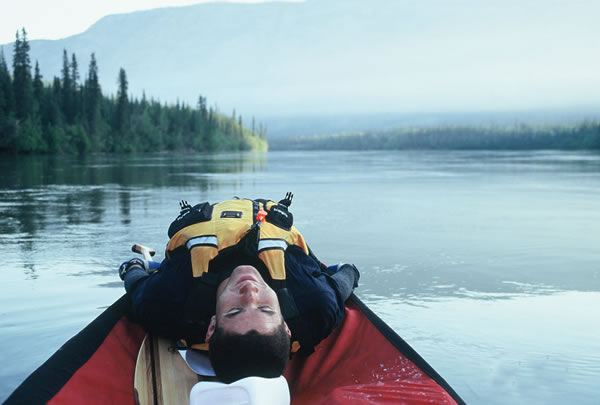
resting for too long, but long enough for the British pair to pass by. I was raring to go to catch up with them. However Ed was so shattered he had to keep lying back in the canoe for a short sleep. Mostly it was only a couple of minutes at a time, but I was getting a little concerned especially after he said, that it was the hardest thing he had ever done in his life, and he didn’t want to do another marathon race ever again! He was tired, stiff and exhausted. I could feel his pain; this was
the first time he had paddled for 14 hours straight. Though I encouraged Ed to rest, I continued to paddle to keep the boat moving with my competitive nature urging me on. Ed started paddling again and then stopped. He just couldn’t keep his eyes open and began hallucinating. Once more I encouraged him to rest, and although he didn’t want to let me down, he had no choice, his body
needed rest, so he lay back with his paddle across his body and under his arm. He woke a few minutes later and continued paddling but soon lay back again and slipped into sleep. This routine went on for a while. He urged me to have a turn at resting, but I just couldn’t and strangely enough my body didn’t need it.
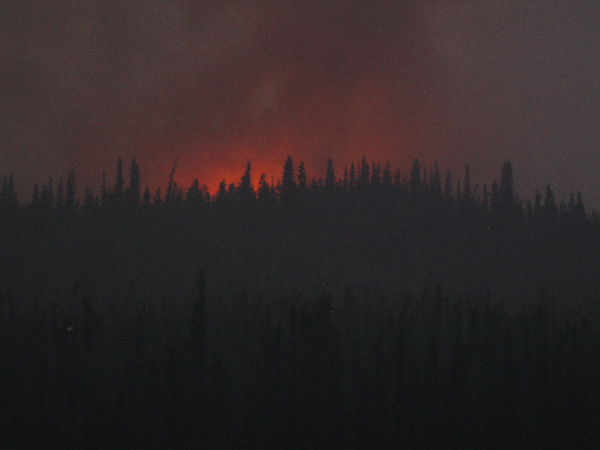
Between 1.00am and 4.00am it was a very lonely river, no one passed us and we passed no one. By early morning the air was full of smoke. It felt weird. It never occurred to me that the north of Canada could be a fire risk. We started to paddle through the smoke, which crept in from both sides of the river. We were in the middle of the wilderness
and hadn’t seen anyone for a number of hours and now we were headed into a thick blanket of smoke. I had reservations about paddling on; how bad was it going to get, and if we stopped what would we do? We certainly couldn’t paddle back upstream against the current. With the paddlers before us still forging forward it meant that they were either getting through or heading into a fire trap! The urge to get to our first rest spot was too strong so we kept paddling. I kept a close eye on the
smoke, moving from one side of the river to the other, trying to avoid the thickest parts but it was almost impossible.
By 7.00am the sun was just a round glow trying to penetrate through the thick smoke. As the morning progressed we spotted Campbell Highway and a touch of civilisation. The river began to divide occasionally, creating islands. We were trying to take the fastest routes, which generally meant following the bigger volume of water. However, at one
sweeping corner we followed the main stream, but a kayak competitor took a short cut channel and passed us. Our lack of local knowledge was becoming evident as when both channels converged he was well ahead of us. I didn’t ask Ed how he was feeling, but I was pretty cut up, knowing that we’d picked the wrong channel. This feeling however only gave me more determination to power on. Further along, we had another difficult decision to make. There was a short cut channel marked on our map that looked as if it would save us time. Having made the wrong decision earlier we decided to take the short cut. When the kayaker in front took the same channel, we were pretty confident we had made the right choice. The short cut was narrow and scenic, and a nice change from the wider river, but the current was much slower. We made good time and we thought that
we were on a winner. We tried desperately to keep the paddler in front of us in sight as he seemed to know where he was going. We turned a left hand corner and soon after met up with the main river. To our dismay another kayaker who had taken the main longer route was only 100 metres away and paddling in the centre of the river in the swift current. Within moments he passed us by as we struggled in a much slower body of water on the left hand side of the river. To catch him we needed to get
across to the main current, which was well over to our right, but the speed of the current was too fast and any attempt would have pushed us onto an island of trees. I cursed. We had taken the slowest route again and now we were forced to follow the other kayak paddler in the longer, slower outside channel. We watched the kayaker who had passed disappear into the distance. The mistake
had cost us dearly, but just when we had thought we had no chance of catching the kayaker, he pulled over to the shore and got out. We later learnt that he’d intended to have a few minutes rest but had overslept, allowing a few other competitors to beat him into the first stopover. We continued. Ed’s shoulder wasn’t getting any better or his fatigue easing, but we were getting closer
to our first stop. We turned a corner and saw the Carmacks check point and camp on the right side of the river. What an unbelievable feeling! There were banners, campers and supporters waving to us on the opposite side of the river about 500 metres downstream. I didn’t expect it to come so soon; in fact it was a total surprise. The river was extremely wide at this point and the current was travelling at a great speed. With the canoe angled, we powered on taking full advantage of the swift
current. Supporters and organisers were shouting and cheering from the jetty giving us terrific support. We docked at the jetty with precision and were whipped out of our canoe by volunteers. They thought that we would have problems walking so they almost carried us ashore. I felt strong, as though we had only been paddling for an hour or two, but in fact we had been on the water for
twenty three hours and had paddled 304kms.
We had paddled 304kms in 23 hours, leaving Whitehorse at 12.30pm Wednesday and arriving at the checkpoint on Thursday at 11.30am, where we have a 7 hour break. It was so hot it was impossible to
sleep through the day.
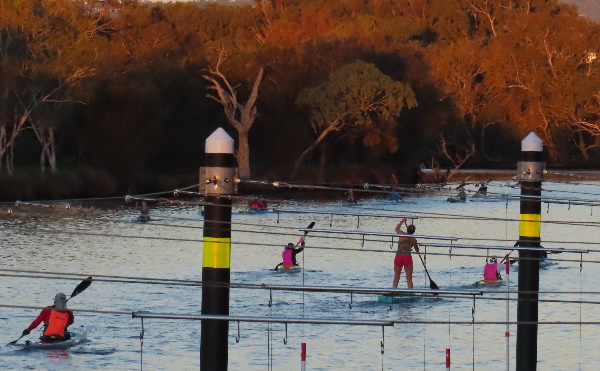
Sunday Morning SUP Race Having a tail end of a cold I decided a 4km SUP race would be less taxing than a 30km flat water paddle from Bells Rapid to Ascot. Organised be SUP WA.
Taking a turn. Photo Debbie Robinson.
Hayley Williams on the turn. Photo Debbie Robinson.
Darren Pratt & Ferenc Szekszardi. Photo Debbie Robinson.
Bells to Ascot Kayak Club Race 30 kilometres.
Garth Civil & Ben Hewitt and Peter Tomczac & Brett McDonald. Photo Veronica Haarmann
Derek Klompmaker & Marisa Pizzuto going for gold. Perfection.
Photo Veronica Haarmann.
Steven Stasiuk thinking if he did the wrong thing entering the race! Only 24kms to go! Photo Veronica Haarmann.
Kevin Kelly & Dave Edwards. Photo Veronica Haarmann.
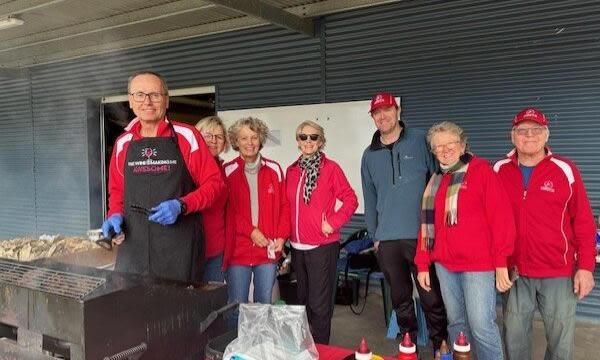
BBQ Wizards from Canning River Canoe Club were creating magic on the Barbie with healthy and delicious burgers for hungry competitors.
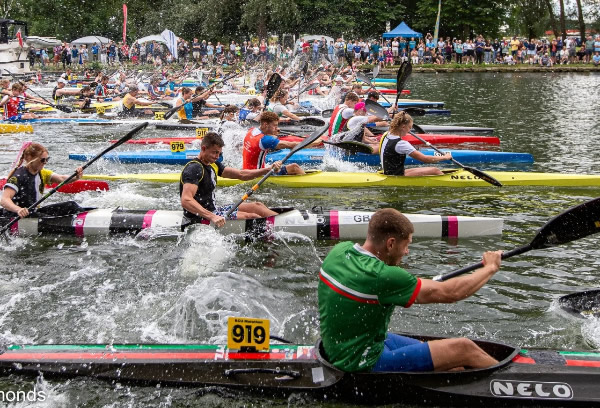
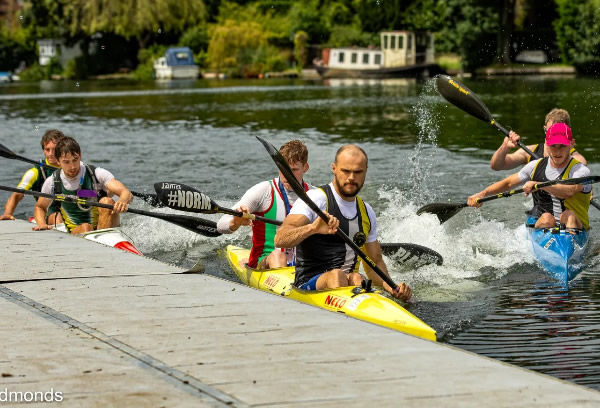
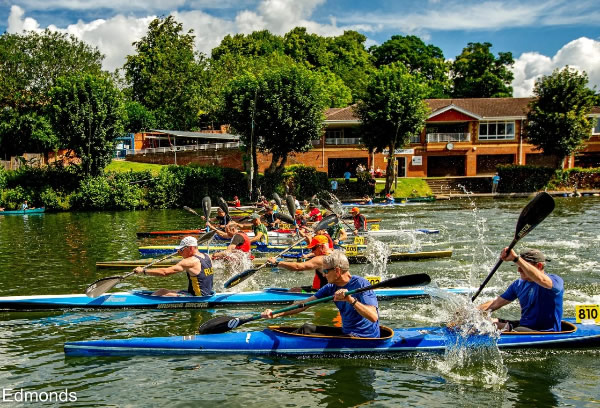
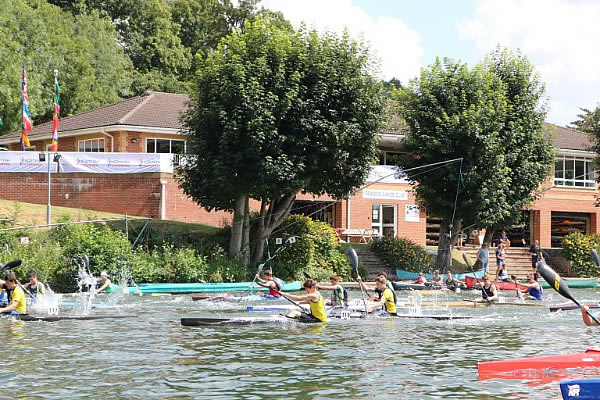
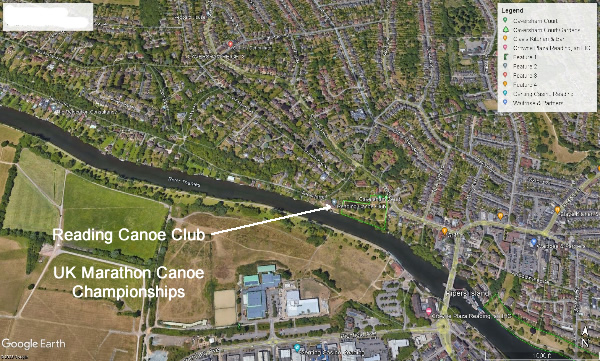
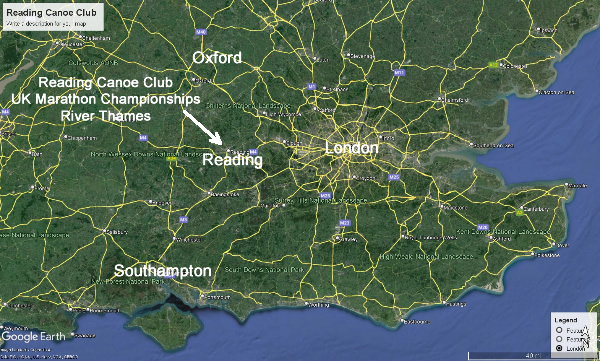
2024 UK Marathon Canoeing National Championships Reading Canoe Club played host to hundreds of paddlers paddling in the UK National
Championships.
River width at the Reading Canoe Club ii 40 metres wide. Widest point on the river is about 55 metres. Narrowest points of river is around 25 metres.
The Venue for the
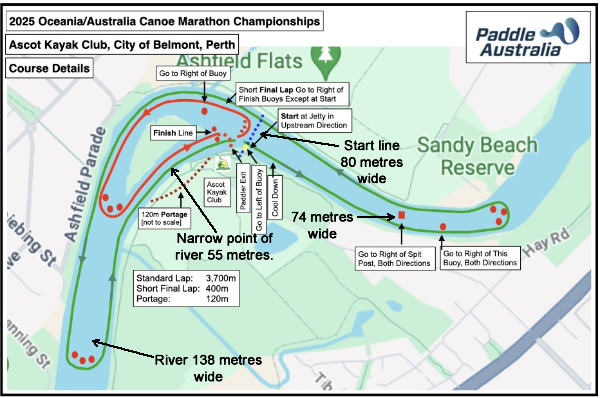
Australian Canoe Marathon Championships 2025
Swan River's narrowest point is between Ron Courtney Island and south-eastern bank 55 metres. Widest point near Claughton Reserve is138 metres. From the jetty to northern bank is 100 metres. From 1st big slalom post to northern bank where the start line for the Australian Championships will be, is about 84
metres. If the new pontoon jetty is constructed before the Australian Championships then the river at this point is most likely going to be around 75 metres wide.
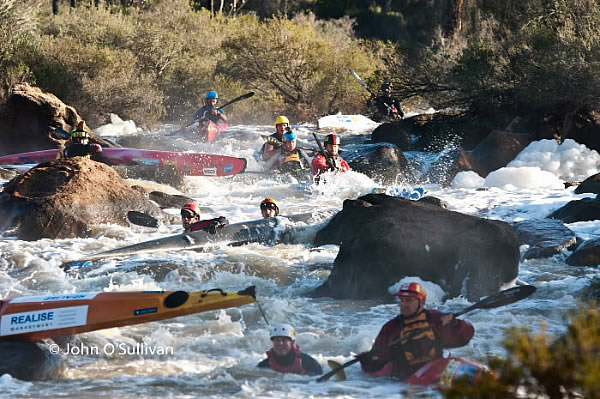
Emu Falls - Shredder Rapid Photo John O'Sullivan The Avon River maps are designed to
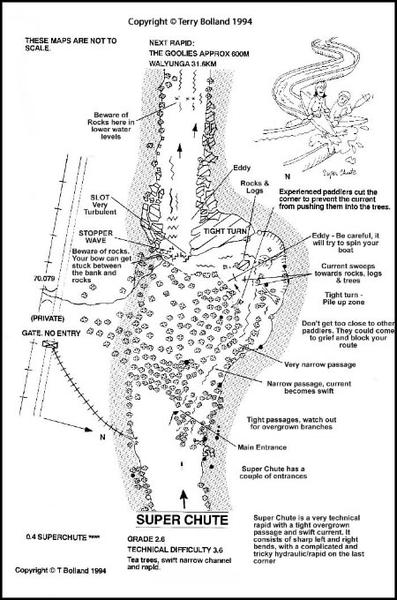
help proficient paddlers become familiar with the Avon River and all its rapids. Beginners, novices and inexperienced paddlers should not attempt this very hazardous section of the river, unless with an instructor or with experienced paddlers. Inexperienced paddlers should learn how to paddle white water on one of the easier rapids before attempting the longer more difficult sections. For experienced paddlers the maps will show the complexities and hazards of the river and should be checked and memorised!
Paddlers will gain the most benefit from the maps after paddling the river a few times (always with experienced paddlers) and have become slightly familiar with some of the main river features and place names. It would be an advantage to consult the maps before each
trip, focusing on the most difficult sections or the sections you have most trouble with.
Memorising the rapid names in sequence would be also be an advantage. Eventually, you will have the complete picture in your mind. This is essential for racing in the Avon Descent, or navigating the river on a social trip.
When paddling the Avon
River your skill level is the most important factor to take into consideration. Remember these maps are only a guide. They are of limited use if you don’t have the fitness or the skill to control your boat in white water.
The river changes slightly each year. Floods can cause trees to fall into the river blocking routes.
Fallen trees
will not be shown on the maps. In high water many of the rocks and smaller rapids that are featured in the book will be hidden (washed out).
The maps are most suited to a river height of 0.6 metres to 1.3 metres as per the gauge at the Walyunga National Park. Above 1.3 metres the river changes dramatically as the small rapids will get covered and washed out, but the bigger rapids like Bells and Syd’s will get much
bigger, more powerful and a lot more dangerous. At these times these maps will be of limited use and only give you a very rough guide.
Rapids are graded from 1 to 6, six being near impossible and constant threat of death. There are many grade 2 rapids on the river. Most are easy to negotiate, but others will need precise manoeuvring. I have appraised, with the assistance of other experienced paddlers, the rapids
into a grade and a technical difficulty. This will give you an idea of the technical manoeuvring needed to paddle that particular grade of rapid. The technical difficulty is from 1 to 6. 1 being easy, 6 being extremely difficult, dangerous and life threatening. A grade 3 rapid with a technical difficulty of 4 will be a lot more difficult to paddle than a grade 2 rapid with a technical difficulty of 4. To give you some idea, the Chute at Walyunga National Park is a grade 2.2 with a technical
difficulty of 2.
In high water levels the grades of the rapids will change.
It is recommended that paddlers kayaking the Avon River rapids should gain experience by enrolling in a basic white water course.
It took me over two years to sketch and piece together the rapids and hazards on the Avon River. To do this, I spent many days standing by the waters edge making sketches and taking compass bearings (before the GPS was common) of the rocks and trees to gather an overall picture of the river. This was sometimes a difficult and frustrating task. In the winter, the rain often soaked my sketches and the high water levels and swift current in the river made it
difficult for me to wade into the river to take bearings, or cross to the other side to get a complete overview. To do the job as accurately as possible I returned in the heat of summer when the river had ceased to flow. I used my mountain bike to get to the rapids. Each map took me between 6 hours to 3 to 4 days to complete, and I visited the rapids six or more times in different water levels to ensure the maps were as accurate as I could possibly make them with the tools I had at the time.
Please note the maps are not to scale. They are just a basic overview of the rapids and some have more detail than others.
I have given names to all the rapids between Posselts Ford and Bells Rapid except for the 10 rapids that were known by their original names before I published the maps in 1994.
Coming Events - 20th July 2024 - IOP Downwind Winter race #2
- 23rd July 2024 - Avon Descent Standard
Entries Close.
- 28th July 2024 - Walyunga N/P to Middle Swan
- 2nd Aug Friday - Avon Scrutineering afternoon.
- 3rd August 2024 Saturday afternoon -Wild Water Races #6&7
- 10th - 11th August 2024 - Avon Decent
- 17th & 18th August 2024 - WA Wild Water Championships
- 7th September 2024 - Nanga Challenge
Ocean Racing this weekend! IOP Winter Series Race 2 Saturday 20 July. Get your registrations in via the
link below.
Ocean Racing State Champs or the first time ever in Western Australia!On behalf of the newly formed Paddle WA Ocean Racing Discipline Committee, we invite you to join us for the first ever State Championships on Saturday 12 October
2024.
Paddle WA White Water Course & Avon Assessment This year the Chase the Avon will be a full day event. Please bring enough food and water for a whole day of Avon Descent training. Session includes Avon Descent Competency The session will not be super structured but
will ebb and flow to cater for things as we go, depending on water levels. Be prepared: It’s likely to be bouncy. As the dates gets closer we will email/text participants with final plan. Session informationMorning: White Water skills Lunch: Will include mini Avon Information Session Afternoon: White Water Trip – on the trip we are only as fast as the slowest craft, so you need to be OK to go with the flow. Click here to register. Courses and Programs (paddle.org.au) What you need to
bring- own craft and gear
- appropriate warm paddling clothing
- enough food and water for a full day
If water permitting we
may be able to do t-tree run around 3/4 August Cost$165.00 or $150.00 if you participated in the 2024 Bells to Ascot (Northam to Toodyay)
Saturday afternoon - Wild Water Races # 6 & 7 Bells Rapid 3rd August.
Ocean Racing State Champs for the first time ever in Western Australia! Saturday 12th October 2024.
|
|
|
|
|
|
|
|
|
|