|
|
|
|
With 10 days to go before I head off to Croatia I’m feeling pretty fit, although it’s hard to know if the radiation and hormone treatment has limited my improvement but I feel good. I do a 7.56km time trial every Wednesday and for the past two months I have been within 10 seconds of each time trial with most
being within 3 seconds. Most sessions I have had a current running one way and a strong wind. So although I feel fit as a fiddle it’s hard to know if I am better than what I was before the treatment. But I'm ready. ***************************** Jenny can now use her left arm if she is careful. Her right arm will be in a sling for at least another 4 weeks or more so although there are things she can do, there are still a lot of things she can’t. I am still working on being the best carer in the world and the feedback
that I have been getting has been very positive and if I keep it up I’ve been told that I will be getting a knighthood from the king. As a carer nutrition has been important so I have prepared many salad dishes. This also helps with less washing pots and weight control. The house work has be put on a Watch & Act. (And only act if necessary.) This has
saved me lot of time to do other things. We are looking for a confident Greyhound dog walker for a few weeks. It is a paid position. Up to 5 times a week, 30 minute walks. ***************************** The new race, ‘Paddle Against the Flow’ this Saturday is going to be a winner. We practise paddling upstream on the Upper part of the Swan River all the time, when the rest of the rapids are low so it will be interesting to paddle it with a lot more flow.
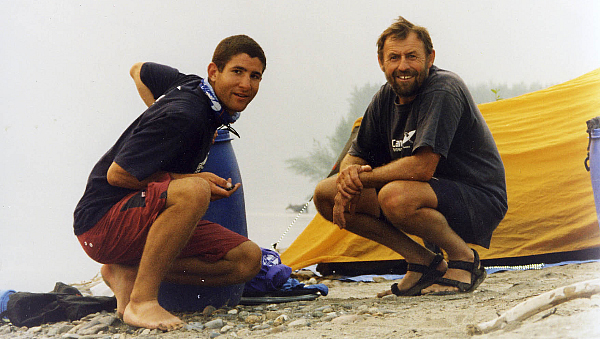
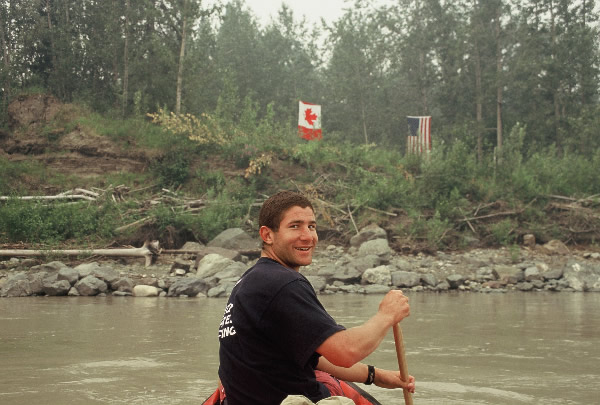
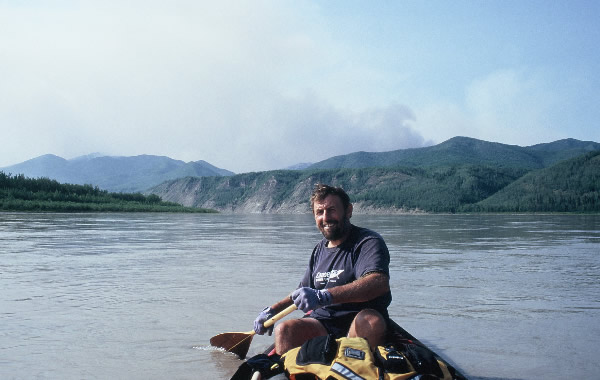
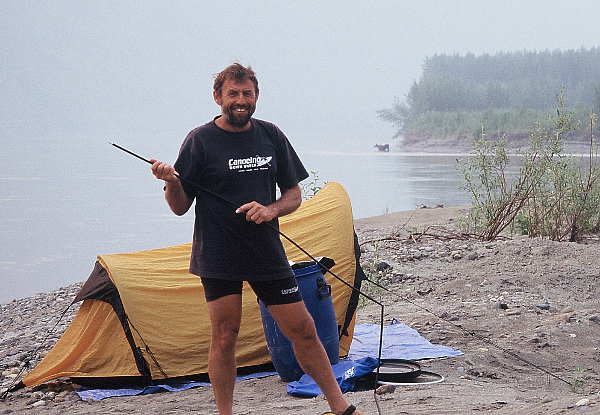
My paddling partner on the Yukon River Ed Vaneer.
- Race Against the Flow
- AKC Progressive Racing Group
- Our Paddling Para Olympians
- 2024 Canoe Ocean Racing World Championships
- The Yukon River Descent - Crossing the Alaskan Border
- Finnlay Caruana - Rising Star
- The Floating Forest - Denmark Accommodation
- Time to Teach Luke to Roll
- Freya Hoffmeister
- Coming Events
Coming Events - 31st August Saturday - Race Against the
Flow
- 1st September - Slalom Winter Series Race 5 - Sunday
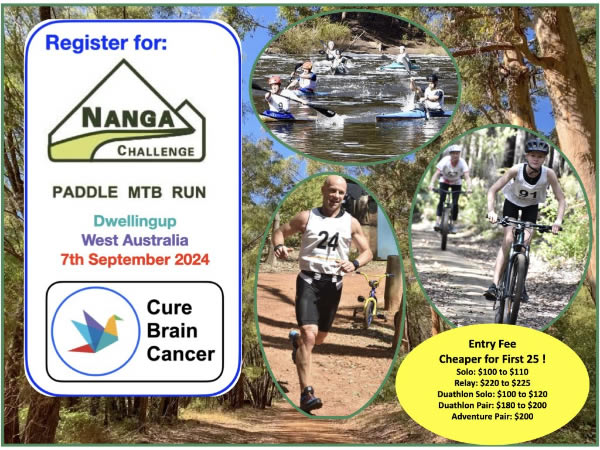
- 7th September 2024 - Nanga Challenge
- 16-17th September - World Masters Canoe Marathon
- 19th - 22nd September - World Canoe Marathon
12th October 2024 - WA Ocean Racing Championships
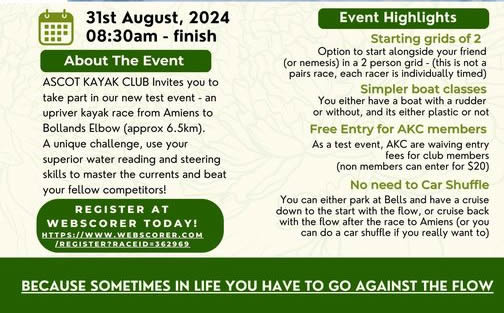
Race Against the Flow Upper Swan Amiens Cres to Bolland's Elbow/Bells 6.5km Upstream Against the Flow Saturday 31st
August
Slalom Winter Series Race 5 - Sunday 1st September, 2024 at Walyunga National Park Setup and registration from 8:00am, Racing starts at 8:30am Enrol here: https://www.webscorer.com/register?raceid=351100
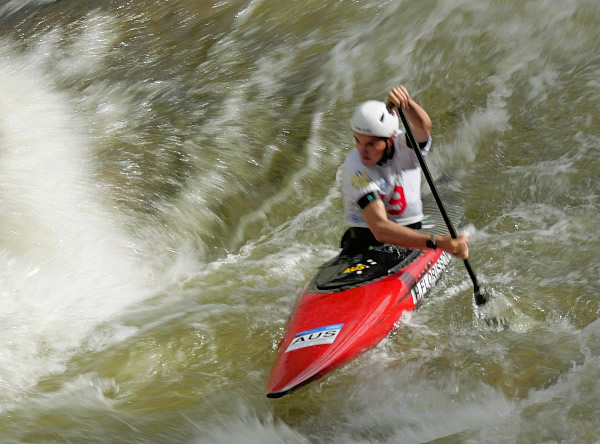
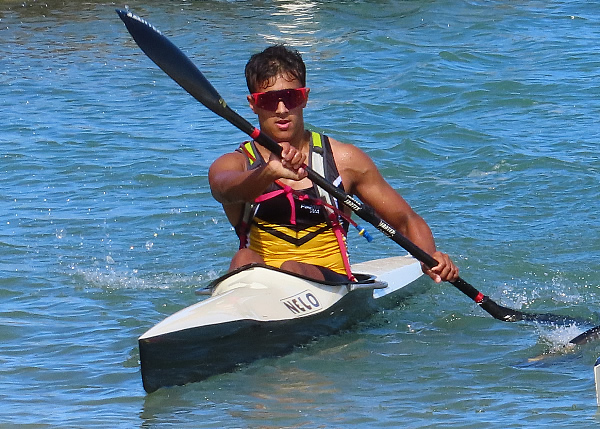
Hunter Florisson playing it cool.
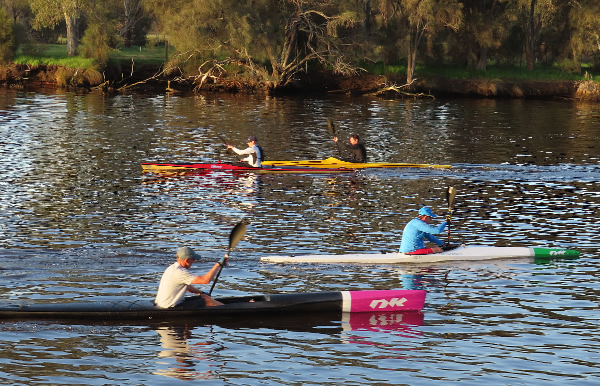
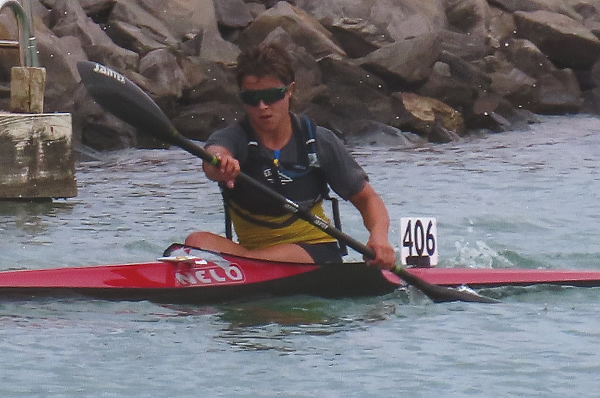
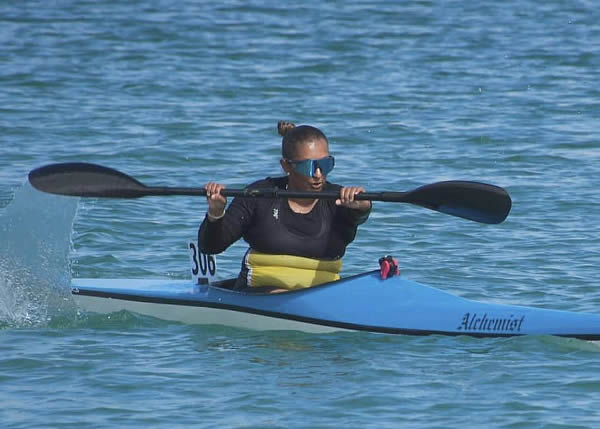
AKC Progressive Racing Group For paddlers new to racing or paddlers who do race. Tuesday Evenings
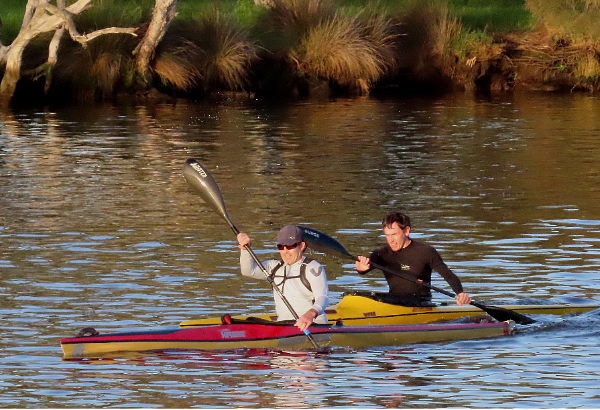
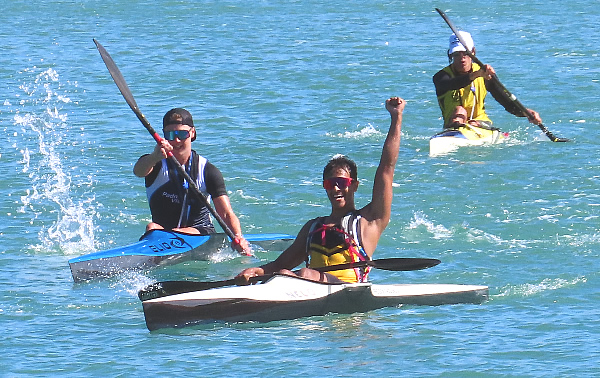
Paddlers start at different times depending on their speed. Chris and Greg having a great fight.
Jordy trying to get away from Ash.
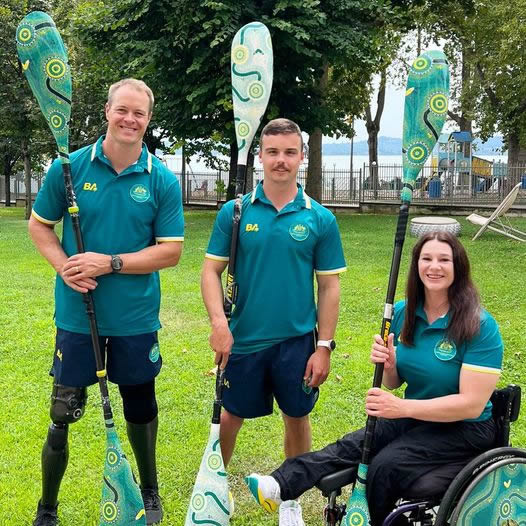
Our Paddling Para Olympians
Chris Mcgrath, Dylan Littlehales and Susan Seipan.
World Canoe Marathon Championships Croatia Three more WA Paddlers getting ready for a showdown.
Connor Jacob. Although he was under 16at the National Championships he won the 18 and under category and the right to head to a World Championship.
Genevieve Stanley. Taking part in the under 23 category.
Nishani Jacob. Taking part in the masters events. Nishani is my
mixed doubles partner.
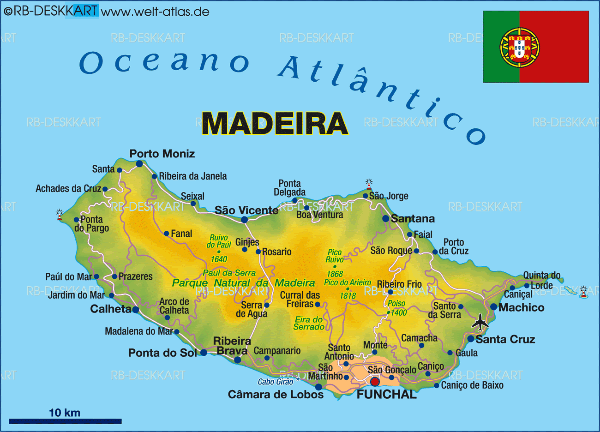
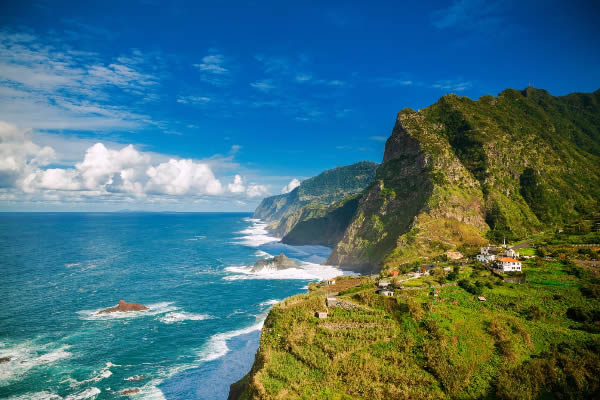
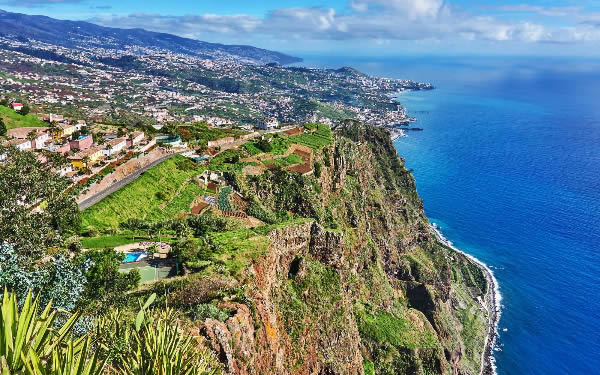
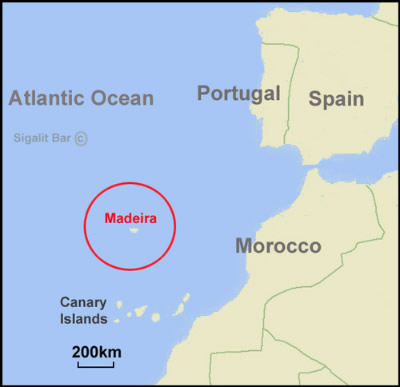
2024 Canoe Ocean Racing World Championships The Island of Madeira Paddle Australia is pleased to confirm members of the Australian Ocean Racing team for the 2024 World Championships. The 2024 Canoe Ocean Racing World Championships will take place in Madeira, Portugal from 4-6 October. “The island of Madeira, with its spectacular coastline and varied ocean conditions, provide the perfect setting for this exciting event.”
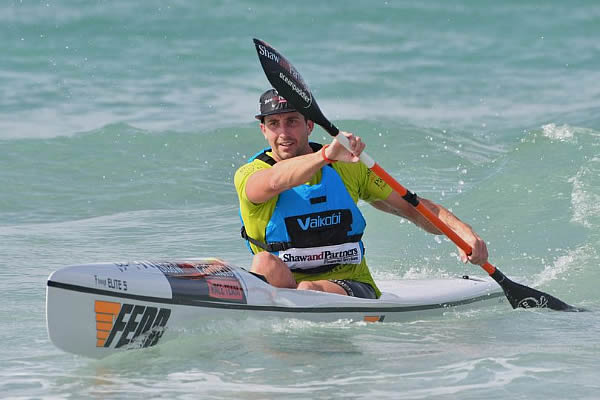
Cory Hill leading the Team.
Congratulations to all the athletes selected. 2024 Australian Ocean Racing Team Junior
Men’s Taiga Daly (Currumbin Creek Paddle Club) Open Men’s Cory Hill Mackenzie Hynard (Currumbin Creek Paddle Club) Masters Women 45-49 Helen Chorley (Mooloolaba Paddlers) Marion Mcrae (Geographe Bay Paddle Club) Masters Men 45-49 Todd Grace (Maroochydore Surf Club) Masters Men 50-54 Robert Pomie (Currumbin Creek Paddle Club) Garth Hunter (Central Coast Ocean Paddler) Michael Manton (Paddle 2 Fitness) Masters Women 55-59 Quona Ross Atkinson (SHSC) Masters Men
55-59 Raymond Hastie (Brisbane Paddling Club) Masters Men 60-64 Jeremy Norton (WYC Paddlers)
The island of Madeira has a surface area of 459 square miles (741 km2), (35 miles long and 13 miles wide).
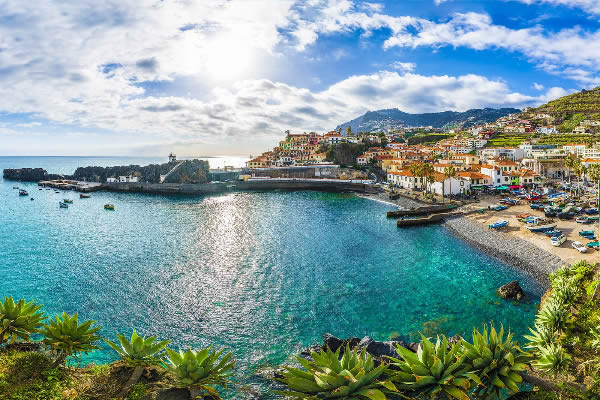
If you are looking for a subtropical paradise with stunning natural beauty and rich cultural heritage, Madeira Island is the perfect destination for you. This island in the Atlantic Ocean offers a variety of attractions, from lush forests and volcanic peaks to charming towns and sandy beaches. You can explore the UNESCO World Heritage Site of
Laurisilva, the largest surviving laurel forest in the world, or admire the colourful flowers and exotic fruits at the art deco Mercado dos Lavradores. You can also visit the Quinta das Cruzes, a historic manor house with a museum and a chapel, or stroll along the Old Zone, a revitalized area with street art and traditional restaurants. Whether you are looking for adventure, relaxation, or culture, Madeira Island has something for everyone.
The island of Madeira has a surface area of 459 square miles (741 km2), (35 miles long and 13 miles wide). The island is 310 miles from the African coast and 620 miles from the European continent, which is the equivalent of a 1 hour 30 minute flight from Lisbon. The archipelago, discovered by the Portuguese in 1418, is made up of the islands of Madeira, Porto Santo and the uninhabited islands of Selvagens and Desertas.
Because of their privileged geographical position and
mountainous relief, have a surprisingly mild climate. Very mild average temperatures, 22ºC in the summer and 16ºC in the winter, and a moderate level of humidity confer upon these islands exceptional subtropical
features. The seawater temperature is also very mild, because of the influence of the warm Gulf current, presenting averages of 22ºC in the summer and 18ºC in the winter.
The Yukon River Descent Crossing the Alaskan Border The day’s paddle ended on an island opposite Nester Creek about 10kms from the Alaskan border. A working fish wheel was anchored and spinning next to white rock outcrops on the west side of the river. As we erected our tents the peace was shattered by a powerboat that sped up to the wheel, stopped and within minutes two men were hauling several good sized fish from it. Many of the fish though were thrown back into the river, probably undersized but what a feast we
could have had! Wednesday 30th June. White rock outcrops. After the previous clear day, I was surprised to wake up to a smoke haze. There was a little dampness in the air and it had been chilly during the night. From my sleeping bag I could hear
the fish wheel across on the opposite shore circulating and making a splashing noise each time the arm hit the water. As soon as I crept out of the tent I could feel looseness in my bowels, and immediately grabbed the trowel and went running into the bushes to go to the toilet. Phew, only just made it! The mosquitoes buzzed around my backside like little spitfires trying desperately to
hit a target. I waved my hand like a windscreen wiper trying to scare them away but it was a risky manoeuvre! The mozzies were also annoying at breakfast time and Ed couldn’t stand it, so he ran along the island shores waving his arms trying to get them away from him. At the same time a boat pulled up to the fish trap and checked it; this time though they didn’t throw any fish back
into the river. As usual, Ed was ready to get on the water first. Today was going to be a memorable day as we were going to cross the Canadian/Alaskan border. There seemed something special about crossing a country border by canoe, so we were quite excited. Our steady paddle through the smoke haze to the border didn’t take long. As we got close we watched with captivated eyes for any
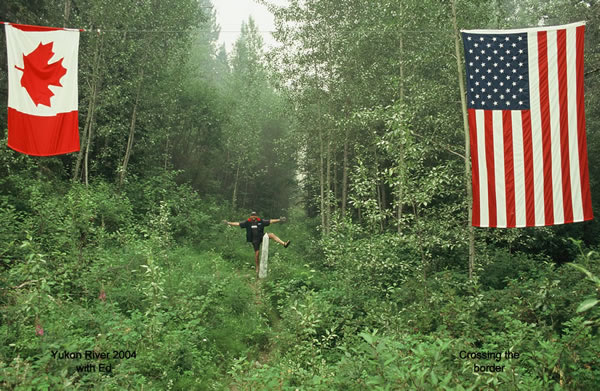
sign that marked the joining of two countries. Then suddenly we saw the Canadian and American flags flying high on the left bank. We paddled to shore, beached the canoe on the rocks and clambered up the bank. There was a border marker post just beyond the flags in the centre of a three metre wide clearing. The clearing was cut through the forest in an absolute straight line. As we looked at it Canada was on the left, Alaska on the right. It was quite an ingenious way to mark the border, and if
you became lost at least you would know if you came to the clearing that you were either entering or leaving Alaska or Canada. Hundreds of frenzied mosquitoes came out of hiding in the thick grass and trees as we walked to the post. We could do nothing to protect ourselves from these hostile insects. We took photos of each other at the post trying to lift one leg in Canada and leaving
the other in Alaska. This must have been one of the most isolated border crossings and we expected that very few people would land and jump from one country to another like little kids. It was fun messing around but short lived as the mosquitoes were over us like vampires, so we soon high tailed it back to the canoe. We leapt into the canoe just happy to escape the bites, still taking photos as we were being pushed downstream into Alaska by the current and into American
waters.
One leg in Canada and one leg in Alaska. Due to the smoky conditions, only outlines of the rugged high mountains could be seen along our route. Just before Clark Island a number of shacks became visible, a sign that we
were getting closer to the community of Eagle. The low visibility, however, had us guessing our position and so we hugged the bank in the hope of not missing the village. At last we saw a jetty where a customs officer stood. We pointed our bow towards him, but as we got closer he shouted at us to keep going and meet him at the store further along. Our pace had slowed considerably as we were now paddling in a large eddy. Not much further on and through the smoke haze we could see a number of
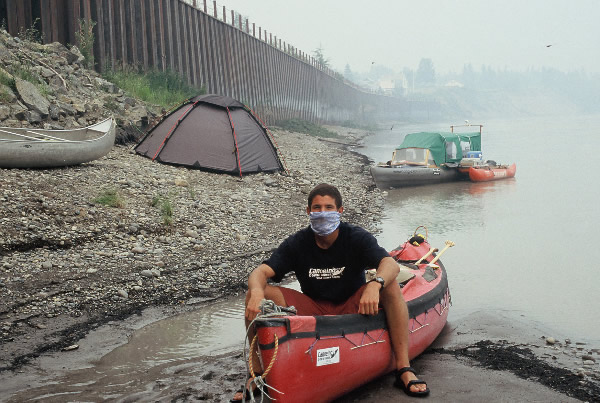
buildings and a high wall that created a vertical riverbank. We pulled in just before the wall next to an unusual looking boat with outriggers which had longadventure.de along its side. We docked on shore and jumped straight into soft mud. As we tried dragging the canoe out of the water our feet became super-glued. We pried them out leaving our sandals still stuck in the deep mud but we eventually dug them out too. It took a little time to free ourselves from the mud and be clean enough to visit the town. We retrieved our
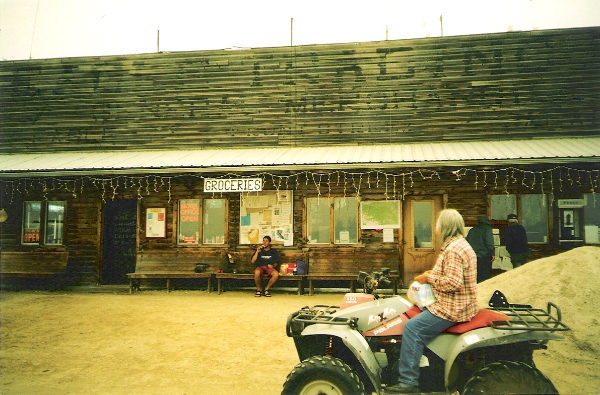
passports from our bags, climbed the track to the top of the wall and walked towards the buildings, one of which was the store and the other a café. I bought some bread, cheese and muffins for lunch, two more rolls of film, a tube of sun screen and two cokes and we sat on the bench outside the store to eat them. A notice board on the outside wall of the store had maps and locations of the fires that were burning out of control. It was a distressing image; the fires were breaking out on several fronts all over Alaska. A woman came to the public phone box and called her friend, I overheard her saying that she was stranded in the village and wasn’t able to leave. She said that the closest fire was coming toward the town from all directions
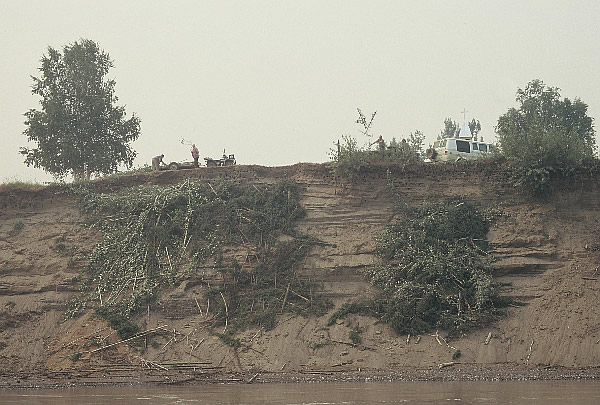
and that all roads were closed and flights cancelled. The only way to leave Eagle was by the river. It was later reported that these were the worst fires here since 1953. The town folk were busily trying to reduce the risk of fire to their properties by clearing branches and fire fuel from around their houses. The timber collected was being driven to the high wall by anything that
could carry it and then thrown over the wall into the river. Although to me it seemed as if they were rubbishing the river, it was the only option that they had to ensure the litter didn’t catch alight. Everyone but the odd tourist seemed to be busy doing something to protect themselves against the fires.
Arriving at Eagle and to visit the border control. Two guys came to the store packing pistols on one side of their belts and machetes on the other. One was telling the other that his house was right in line of the fire
front and it would be a miracle if it survived the night. A woman then jumped out of her car, pinned a poster to the notice board and away she went. The notice read; free meals for all involved in fighting the fire. The customs officer was taking a long time to come and see us and we were becoming a little impatient, but when he arrived we were invited to his house/office near the
store, which looked right over the river. We gave him our passports and because we had entered the US a few weeks earlier it seemed to be a simple process. A stamp in the passport and that was it, our easiest border crossing yet. He talked about the ‘Yukon Queen’, which had earlier arrived from Dawson with a load of older tourists on board. He was a little annoyed that after expressing concern to the tour operator about the heavy smoke problem in town, and the fact that many of the older
tourists could have respiratory problems, they took no notice and brought them to Eagle anyway. It appeared money was more important than people’s health.
The store. The customs officer was pleasant, which made for a nice change! When all the formalities were done he wished us luck. I walked a couple of streets to the post office to post some letters and was welcomed by
a chirpy lady. After posting the letters I returned to the canoe. Ed was lying on his back stretched out on the canoe looking very comfy. I scrambled down to him and started packing up. When we were ready to leave we tried pulling the boat off the mud, but it wouldn’t budge an inch. The suction that the mud had created was amazing and the only way we succeeded in getting it in the water was by dragging the canoe sideways. As we paddled away along the side of the high wall we watched people throw their tree cuttings over the wall edge. Piles of greenery were building up along the riverbank. I felt a little sick to see it, but at least it was only branches and not real rubbish.
People turfing their tree and bush clippings into the river as the fire closes in. Although it was still hazy with smoke we got a good view of Eagle Bluff, a high vertical cliff just downstream of the town. I had seen an overview
photo of it and the surrounding area on the Internet so I had carried this beautiful picture in my mind for several weeks. Now I was here looking at it from another perspective. Though still majestic the haze did detract somewhat from the real beauty. The smoke soon engulfed us giving me the feeling that we would never see the outside world again, but by some miracle it cleared 10kms
downstream giving us great views of the high cliffs and the rugged mountains behind them. I was in awe of the mountain range that looked as if you could walk the ridge top for miles without having to dip down into the valleys. What a great walk it would be. I soon slipped into day dream mode. I do a lot of day dreaming and planning on long trips; it’s a great feeling to be able to dream about things that you want to do when you get home, or dream about things you have done. Although when I get
home and back into normal life, due to reality, many of those dreams just fade away. We spotted a few shacks on a long corner before the beautiful, high, steep Calico Bluff. The Bluff was craggy from landslides. Rocks had tumbled from a great height scattering a varied selection of rocks down the crevasses. High Bluffs were common at most corners where the vegetation was varied and the
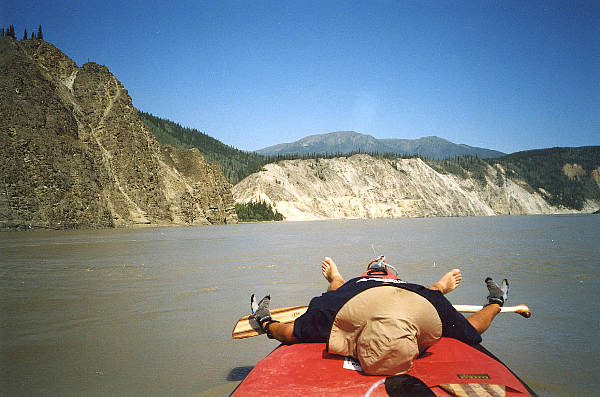
rock formations layered. To fossick here would be a geologist’s dream. We stopped paddling every few minutes to drift and to take in the magnificent scenery. Ed then decided to lie back leaving me to paddle on, and as we approached the Seventy Five Mile River Ed had nodded off. I needed a pee so I headed to shore and beached the canoe. We cast off again and this time I joined Ed by lying back and putting my legs across the gunwales to have ‘a quiet moment’. We drifted with the current passing some stunning scenery. Ed talked about the girl he liked. She didn’t want to get serious, so they’d both agreed to be friends until after the trip. I could sense he was missing her. He went on to talk about his Mum and how she used to look after him. He was close to
his mum, but his father left when he was young. His mum was overseas and she was returning to Australia on Thursday and he seemed to be missing her as well, in fact I think he was missing all his friends. At 20 years old and away from home for the first time it was to be expected. We continued to lie back and let the boat drift, dangling our feet over the side to get some sun on them.
It was so relaxing. A big landslide had occurred on the left bank just after a high bluff and before Miller’s Camp. It was quite a spectacle but luckily it was in the wilderness as it had taken out hundreds of trees that were now mangled like matchsticks The boat was gently spun by the swirls. We were really enjoying the tranquillity of our ‘quiet moment’. With eyes closed and hats
over our faces, all we could hear was the noise of the water rushing over rocks. It felt as if we were going to slide down a rapid, but we lay back resisting the temptation to check where we were headed. It was difficult not to look up but instead to drift out of control and let the river take us where ever it pleased, but these were daring times, – well not really, we were just so comfy and too lazy to look up!
It was good to lie back and just drift with the current. At the 220.5km mark from Dawson it was time to end our ‘quiet moment’ and start paddling again but it was hard to get back into a rhythm. It reminded me of my 24
hour kayaking record that I set when I paddled 220.8kms in 24 hours on totally flat water. Soon after, we noticed new fires in the distance and we had to decide whether to stop at that point or try to paddle through the smoke to find a camp. We paddled on. On rounding a left hand corner we could see a valley carved between two mountains. We needed water and as it looked a promising
site we started to paddle across the wide Yukon River. The swift current made us battle and we had to pick up the pace to avoid being swept downstream beyond it. Upon arriving we were greeted by a stream of beautiful water cascading down the gully, a far cry from the milky glacier fed Yukon that we were paddling in. We soon topped up our water supply and took off towards the smoke. Montauk Bluff was hidden behind a haze. It would have been a magnificent sight on a clear day, but the fires had hidden it from us. At the 238km mark we decided to stop. We saw a thin island just down from Trout Creek and worked hard to get over to it. It wasn’t a good camping site so we made another ferry glide to an island over to the right side of the river. The best camping spots were usually on the upstream end of the islands but on this occasion we had to go to the far end to find a decent spot. We were excited to see a collection of moose prints dotted all over the shore. The banks were steep but not high, which meant that we didn’t have to carry the gear very far.
We leave the fire behind us for a while at least. As we erected our tents a moose on a nearby island entered the water up to his belly, had a good look around, a good soak and after a while retreated to the trees. The
moose was a symbol of the Alaskan wilderness and it was so perfect to be here watching its day unfold. Seeing it brought back more memories, this time it was in Norway. I had worked on a farm there in 1970 and I remember cycling down a road after a mid summers night’s party in the very early morning. It was misty, really misty and a little magical and it was one of those times when I didn’t want the day to end. Then out of the mist a moose stood in a middle of a grassy clearing, only metres
away. There was nothing in the world more beautiful than the scene in front of me. I stopped, stood on the side of the road and just watched. The moose wasn’t fazed by my presence at all and continued eating…….. The smoke haze and the sun on the Yukon brought a mystical look to a truly beautiful scene.
A good campsite. A moose in the background goes for a dip.
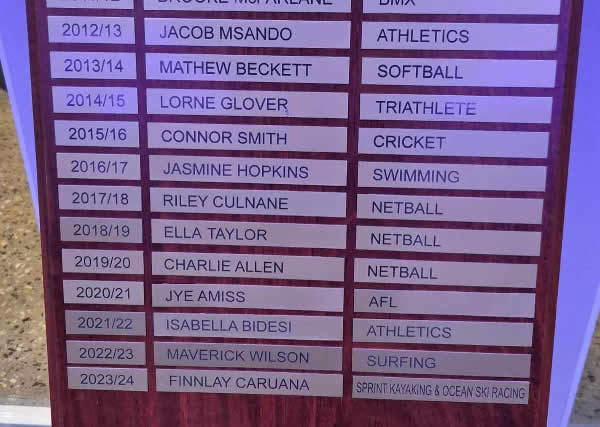
Finnlay Caruana Rising Star
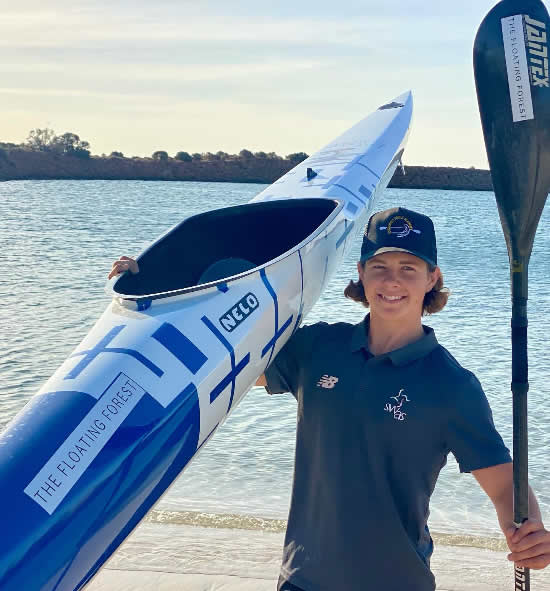
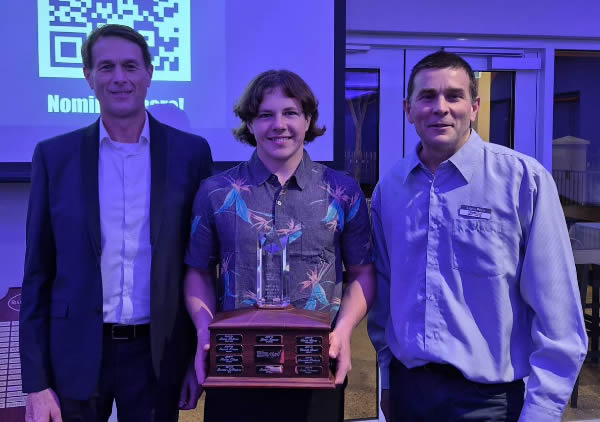
I (Finnlay) attended the Busselton Freight rising sport star awards dinner last night with 11 other local athletes aiming to come away with the title of 2023/2024 Busselton Freight Rising Sport Star winner. Fortunately for me and thanks
to my results at nationals and Asia Pacific competition this year, I was able to come away with the title. This award ($2000.00) will really help with getting new equipment and further helping me develop and succeed in my sport. I really appreciate all the financial support from Sharon and Damian from The Floating Forest and the South West Academy of Sport for their contributions to training and competitions over the last year. Big thanks to Erin Culnane from 4u Physiotherapy for her help in keeping me and my body in peak form for racing. Also to HydraSafe for their continued
support for supplying their electrolyte products. Last but not least, mum and dad have sacrificed a lot to help me achieve my goals and I am very very grateful for their efforts to get me where I am today.
Check out The Floating Forest -
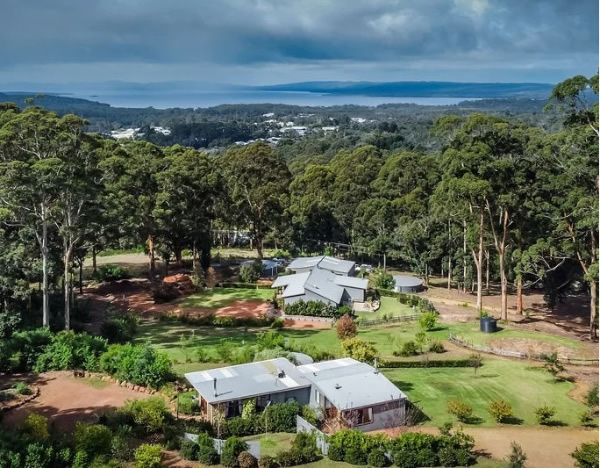
Denmark The Floating Forest Denmark is your ideal choice for self-contained private accommodation. Relax in our
beautiful hideaway open plan studio chalets or our two bedroom cottage, a perfect base for exploring Denmark and the Great Southern region of Western Australia. Need a break? Couples or small families looking for some time away together, hard working people who need some time out of the hustle and bustle of the corporate world or singles looking for a peaceful and tranquil getaway. Secluded relaxing and breathtaking. Stay in one of our four private, character open plan one bedroom chalets or our two bedroom cottage at the Floating Forest. You are surrounded by forest and stunning manicured gardens, all you can hear is nature. Wake up to kookaburras singing, dancing wrens in the gardens and kangaroos grazing on the lawns. Wake early for gorgeous sunrises from your deck. The physical comfort of modern, fully equipped accommodation with slow combustion fireplaces, decorated with stunning local original art
and crafts, outdoor areas each with a BBQ, Nespresso VERTUO coffee machine (and pods), selection of T2 teas and spectacular views over Wilson's Inlet. Please contact us if you are a
couple with a baby or would like to bring an extra guest. To protect the local
wildlife, please note that we do not allow pets. The Floating Forest | Denmark accommodation | 168 Mount Shadforth Road, Denmark WA, Australia
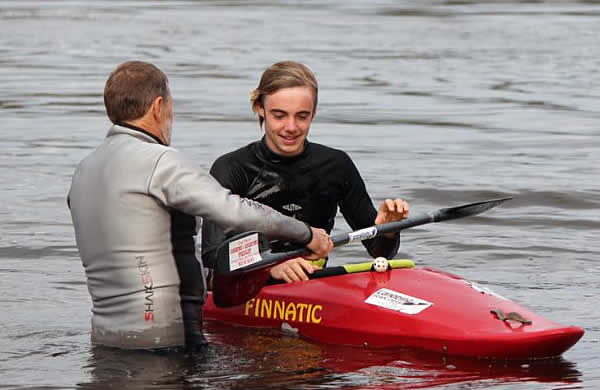
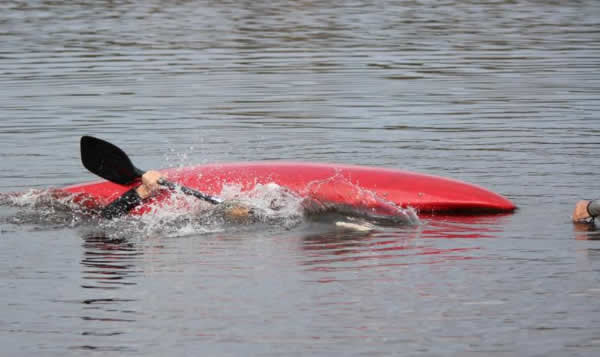
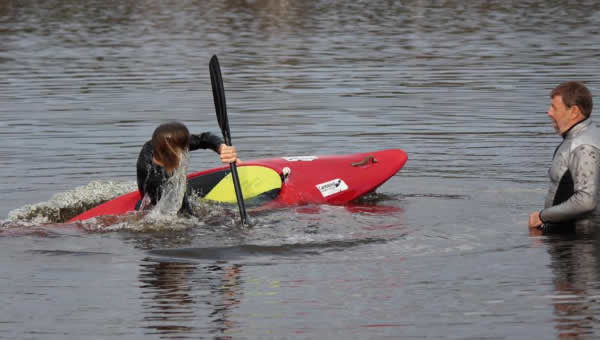
Time to Teach Luke to Roll 2016 Luke hadn't been paddling a playboat long but he was keen to roll it. The water was cold, it was cloudy, mid winter but I couldn’t let Luke go home back to Kalbarri without teaching him. It was a big ask though; could he concentrate long enough in the cold water to be successful or worse still, could I stand being in the cold water for too long teaching him. I knew with the cold water Luke only had 15 or 20 minutes at the most to get a roll, but would
he? With little time to teach him I was taking a few short cuts, as we had no time to be doing too many lead up exercises or in depth explanations as the water was up to my waist and cutting off the blood supply to my lower extremities. After explaining the hip flick/knee lift Luke tried a few attempts which got better with practice. It was then time to attempt his first
roll with me positioning his paddle and guiding it into the right position and movement. I stood by him on several attempts and with my assistance it looked promising so then I let him have a go without my assistance. Unfortunately his first time without my assistance didn’t go quite to plan. As most people find out when they try rolling for the first time, that being under water and trying to figure out what to do with their paddle is quite confusing and Luke was no different. Adding the
head pain and numbness created by the cold water I was wondering if he could pull it off. Although Luke was a quick learner his first few attempts were similar to everyone else’s, his paddle once I had let go of it just went in a direction that didn't help to give him support. After a few more failed attempts I thought he might have to go home without being successful so I
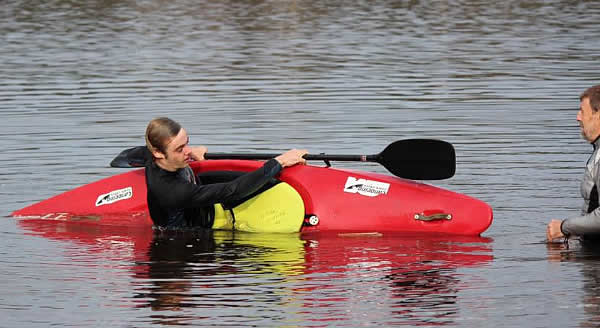
changed tack and instead of getting him to do a 360 roll I got him to do a 180 roll and go down the same side that he would come up. Beforehand we had been practising a few high brace strokes so doing the 180 roll he was more familiar with the motion so on his first attempt he manage to right the kayak without any assistance. It wasn’t the perfect roll, his paddle was too low, his head
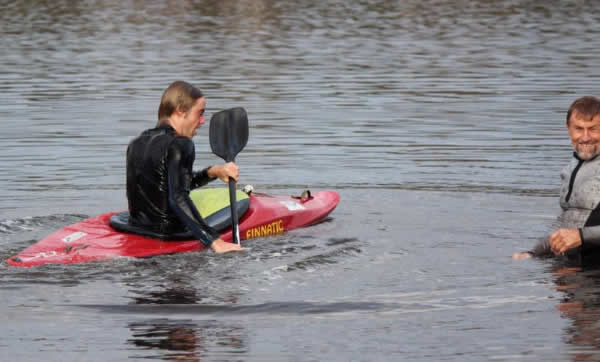
came up too soon and he didn’t have a hip flick/knee lift but it was a good start. He had another attempt that was a little better, the next was better still. I could see he was cold so I said if he did a couple of good ones we could stop. Luckily the next few were good. In less than 15 minutes he was rolling so now he could go home with a playboat I was lending him. To help him refine
his technique he can now look at a few rolling videos and if he practised in his swimming pool at home I’m sure by the time he comes back to Perth he will have mastered several different rolls and be teaching me. With our 25 minute session over I was pleased to be out of the water.
Okay Luke lets see how good you are! Don't take too long I'm getting cold!!
Not the perfect roll, but it was a great start and all the other rolls got better.
Happy days. Luke can now go back up to Kalbarri and practise in warmer waters.
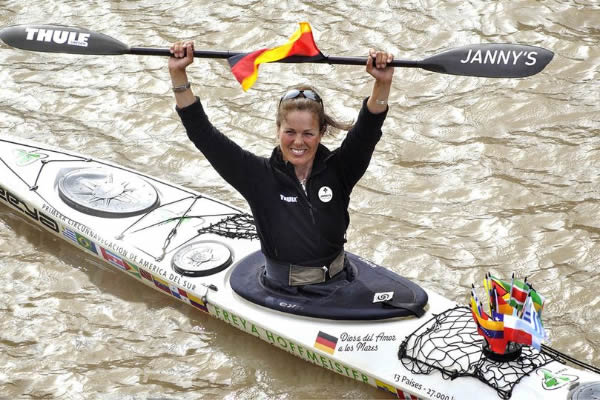
Freya Hoffmeister Freya has paddled around several countries, Iceland, New Zealand, Australia and South America and now she is paddling around North America. Between 2011 and 2015, her
27,000-kilometer circumnavigation of South America spanned 13 countries, stretching from the Panama Canal to Cape Horn, and crossed the equator twice. She spent most nights in a tent and was self-sufficient for weeks at a time. One of the most intense moments of her voyage was at Brazil’s Pororoca tidal bore at the mouth of the Amazon: “I thought I would wait for the tide coming in,
but it came in rough. Within 15 minutes, it had side-surfed me for eight kilometers. I was afraid for my life.” Hoffmeister is now roughly halfway through a 48,000-kilometer, decade-long journey to circumnavigate the North American continent. Check out Freya's and other great expeditions here:- https://bit.ly/4716nu6  : @freya_hoffmeister : @freya_hoffmeister
Freya Hoffmeister
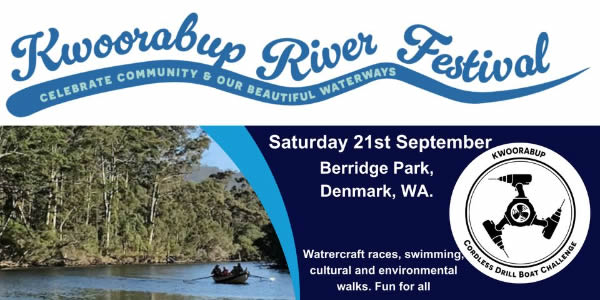
Denmark River Festival September 21st 2024 In celebration of the beautiful environment that is the Kwoorabup (Noongar for Denmark) River, Denmark Rowers are hosting a day of water craft activities and a fun swimming event combined with environmental and cultural activities for all the family.
EVENTS Dragon Boat races on the Kwoorabup River.
A 5km Kayak race out into the Wilson Inlet and back to Berridge Park (for adults over 16).
A 1.2km swim down river from Berridge Park to the Rail Trail Bridge. First wave is competitive (wetsuits OK) and the second wave is non-competitive (wetsuits, costumes, snorkels and fins allowed)
Environmental and cultural activities with information on the Kwoorabup River and its surrounds
Short course paddle races over 300m in front of Berridge Park on Kayaks, Stand Up Paddle Boards and Surfboards (Longboards, Surf Skis etc)
St Ayles Skiff rowing
pursuit races for teams of four rowers and an experienced cox. Get your team together and get in touch with Denmark Rowers for a few practice runs.
Kwoorabup Cordless Drill Challenge. Get started now in designing and building your version of an EB (Electric Boat) using a cordless drill to power it in an environmentally friendly manner.
Food and coffee vans and a raffle to be drawn at the end of the day.
#denmarkrowers #denmarkdragonboatclub.WeaternAustralia
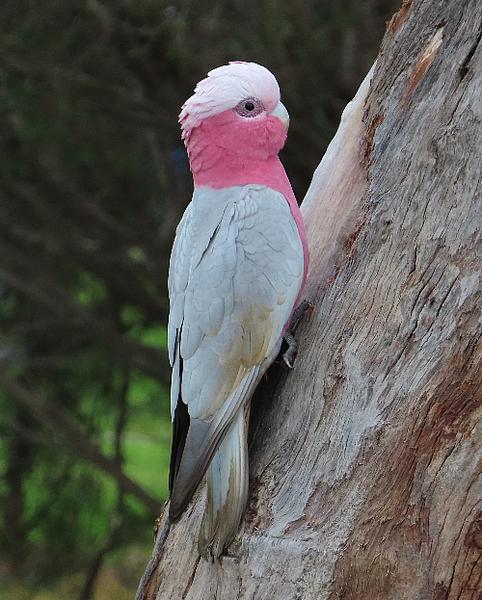
A Galah having a chew of a tree.
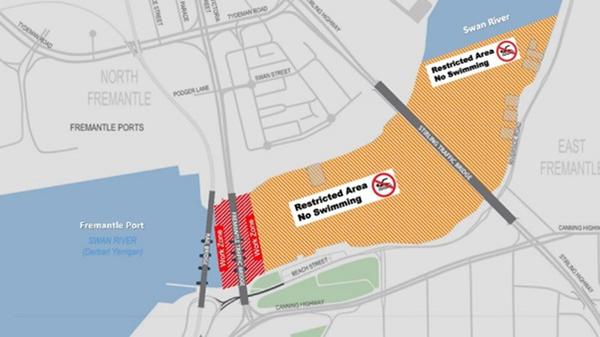
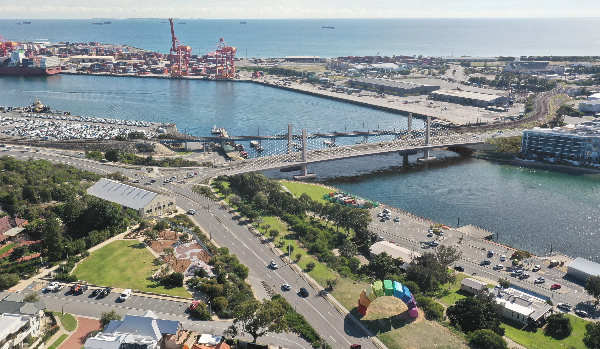
No Paddling Near the New Fremantle Bridge
New bridge for FremantleThe Fremantle Traffic
Bridge was opened in 1939 as a temporary structure (the fourth built at this site) and has served its function well. The bridge has been deteriorating over several years, and despite extensive strengthening and maintenance works, it needs to be replaced. A new extradosed bridge with cantilevers and cable support will be built on the existing alignment and will be the fifth bridge in this location.
What’s happening
Piling works to start in SeptemberTo build the new bridge, in-river piling works are required to construct four temporary jetties and permanent bridge foundations.
It is anticipated that piling will start on 4 September 2024 and is expected to last up 12 months, weather permitting. These works will mostly occur during standard working hours, from Monday to Saturday 7am to 7pm. - The shared path on the Fremantle Traffic Bridge will temporarily close during piling works with pedestrians and cyclists detoured via Stirling Traffic Bridge. The path will re-open outside of
work hours (morning and evening, as well as Sundays). More information around timings and dates will be sent out in our regular Roadworks Update publications.
- Due to heightened levels of underwater noise, restricted areas will be implemented from the Fremantle Traffic Bridge to the east of Stirling Bridge and will apply to swimmers and passive craft users. This will mean the following recreational activities
will be prohibited during standard working hours:
- Swimming
- Snorkelling
- Scuba Diving
- Dogs in Water
- Passive Craft:
- Stand-Up Paddle
- Kayaking
- Rowing
- Hydrofoil
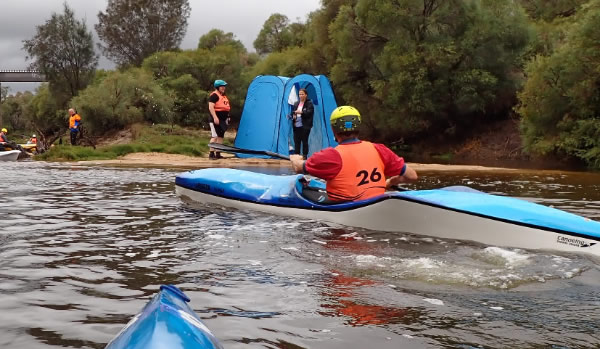
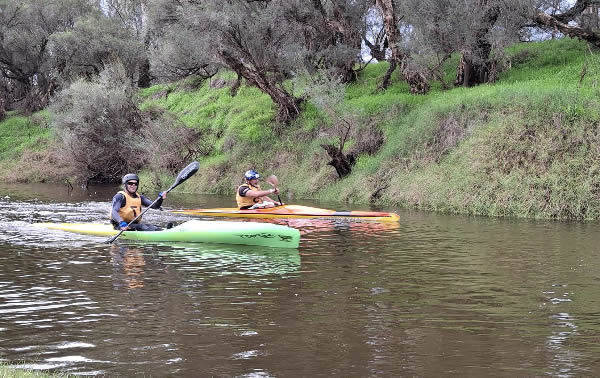
Race Against the Flow Upper Swan Amiens Cres to Bolland's Elbow/Bells 6.5km upstream Against the Flow
Two paddlers at a time will race upstream to Bolland's Elbow from Amiens Crescent.
|
|
|
|
|
|
|
|
|
|