|
|
|
|
At the Avon Descent meeting on Tuesday night the organisers said the race is definitely going ahead and it will start at Northam and finish at Bayswater no matter what. Hopefully this week's rain will help lift the river levels.
- Wild Water World Cup
- Wild Water Race - No Rain Race
- The Yukon River - 20 Years Ago
- Texas Water Safari
- Perth Wild Water Centre
- Coming Events
- IOP
Race
- Slalom Winter Series
- Wild Water Race
- Northam to Toodyay
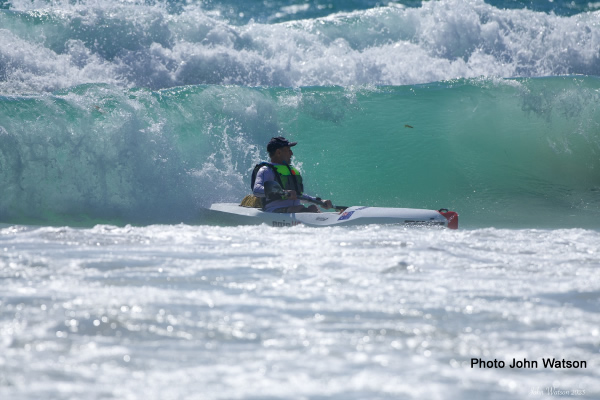
- Ocean Racing State Champs
Wildwater Canoeing World Cup 3 & 4 in Mezzana, Italy Our Aussie paddlers were back in action over the weekend.
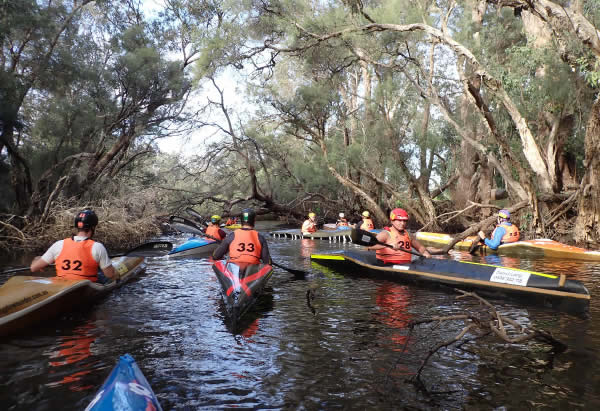
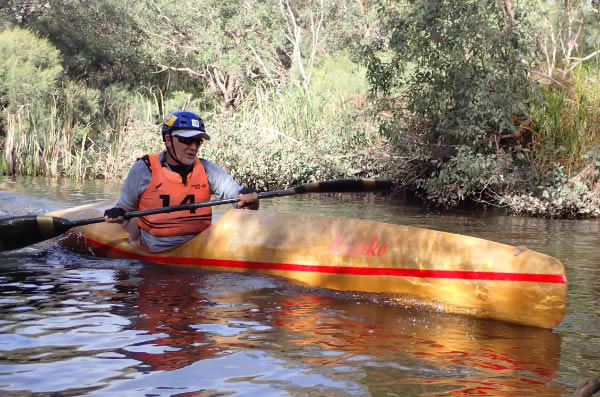
Wild Water Race #4 Drain Race Again or No Rain Race Due to a very, very low Avon River we had to run the Wild Water event back on the Upper Canning River. Although some paddlers were away and some of the regulars were not there, we still had 33 paddlers on the water. The weather was spot on and no shelter was needed to be erected. Kris & Steph Smith had us all wearing bib numbers before our
3.5 km paddle upstream. The river level wasn’t quite as high as two weeks ago but it was still okay.
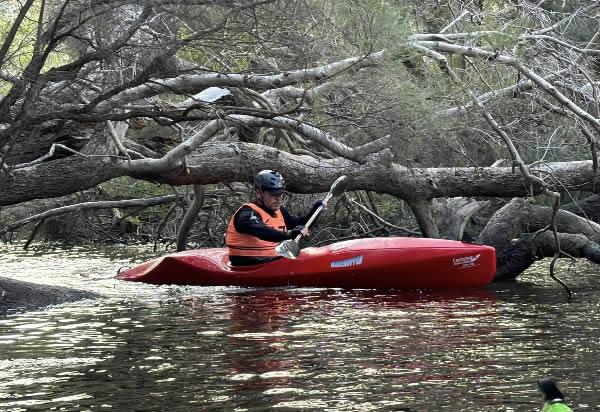
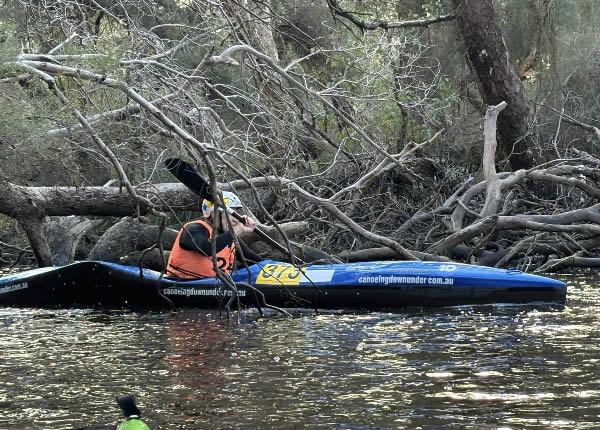
Paddling upstream and meeting a tree hazard. When all paddlers were at the start, Penny was in charge of getting us off at 30 second intervals. Two tree sections just after the start caught some paddlers off guard and became stranded on a tree trunk to shake their kayaks back and forth to try to get off it. A couple of paddlers starting behind the stuck paddlers and caught up lost a few seconds. There was also a couple of capsizes. With the water level being
a little down from two weeks ago there were a few shallow spots that I noticed but that didn’t bother me until under 18 years Oliver Thorpe passed me and I realised his lightweight figure had him floating above the water and travelling at a terrific speed. (I must lose some weight.) It was his first time in a Wild Water kayak. Last time he paddled a wavehopper and still beat most paddlers. Today he was 4th which is a great result, so if he keeps paddling wildwater he is bound to hit the top
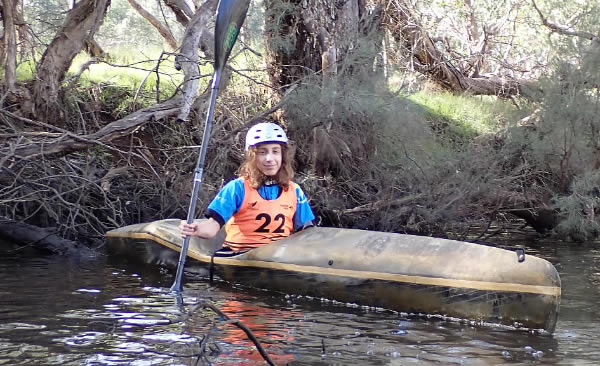
spot. When Oliver passed I tried to keep him in my sights as I had a beat another junior under 18 Kai Stafford so I couldn’t slack off. Kai had been getting closer to my time over the last few weeks and at any time soon he will be beating me, but as I still had some fight in me I beat him by 3 seconds. Kai will have to wait another two weeks before trying
again.
Manny Carabott ducking under a tree. Photo Jane Liddle.
Rob Riggir.
Rob is the one working solidly on getting a white water course in Perth.
Slalom paddler Kai Stafford. He is training pretty hard to beat me in wild water races and he was only
2.7 seconds behind in this race so he should be zooming by me at the next race! . Another paddler I beat two weeks ago Jamie Cartwright had his sights on me. In the flatwater he had been training hard and now he beats me on flatwater very easily. I was hoping he would get stuck in the trees, but he didn’t and today things must have gone his way as he beat me by
several seconds. By the end of the race, it was Luke Dooley 1st, Wayne Martin 2nd and Dave Worthy 3rd, Oliver Thorpe 4th. Under 18 Rhys Macrea was 7th and under 18 Kai Stafford was 13th but both will soon climb the ladder. Steph
Bedden-Smith was the first women, 2nd was Maya Elston and 3rd was Jess Shaw. Thanks to Kate Macrea and Christopher Greed for timing and Penny for being the starter. Soup and buns were delicious thanks to Peter Gigengack and Kate
Martin and stoves etc provided by Geraint Madison. The biggest thanks were to Kris & Steph who organised the event. Why don’t you give wild water ago? Hopefully in two weeks time we will be racing from
Bolland’s Elbow at the bottom of Bells Rapid to Amiens Crescent. It is a very good, pretty safe course. Results here:-
Through the trees hazards. Photo Jane Liddle.
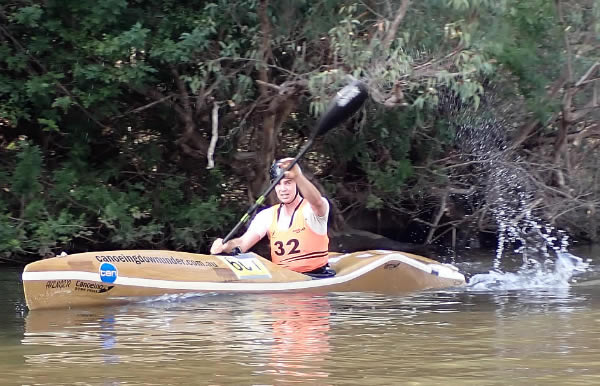
Luke Dooley this week's winner and leader of the wild water series.
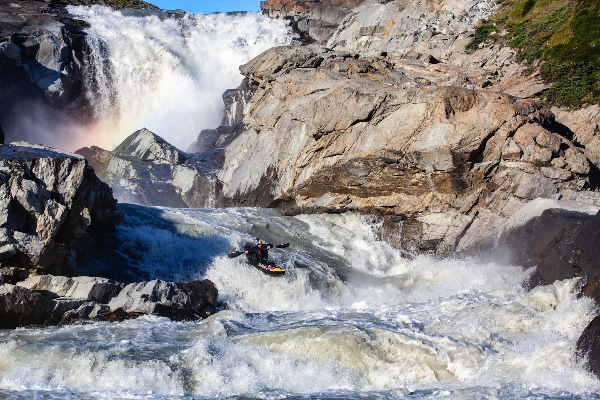
Discovering the Russell river an epic gem flowing out of the Greenland ice sheet towards the west. https://www.facebook.com/david.sodomka
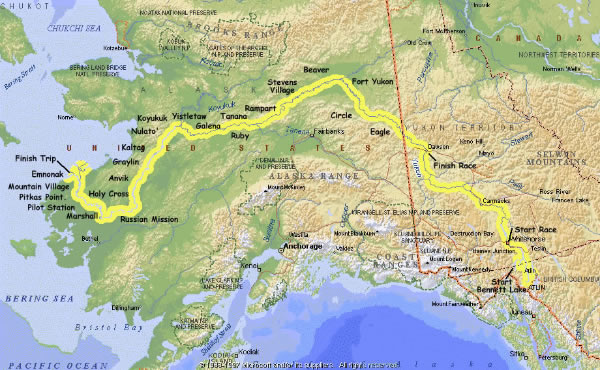
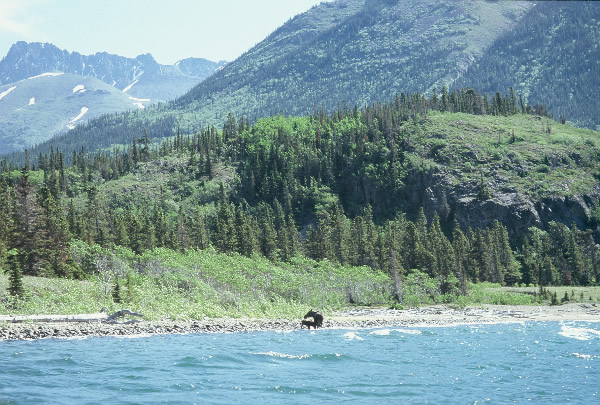
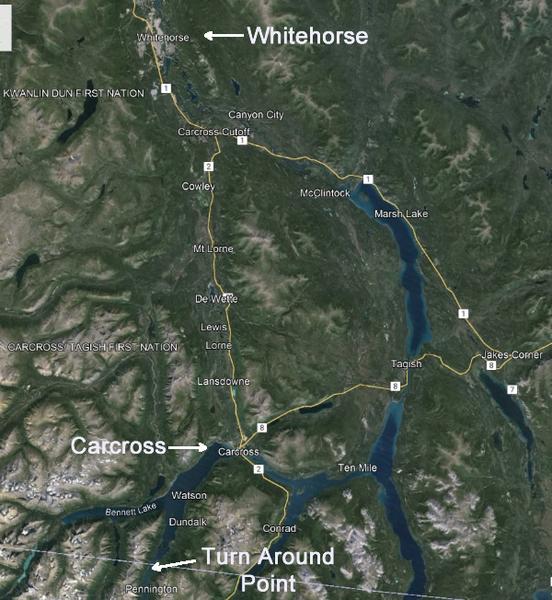
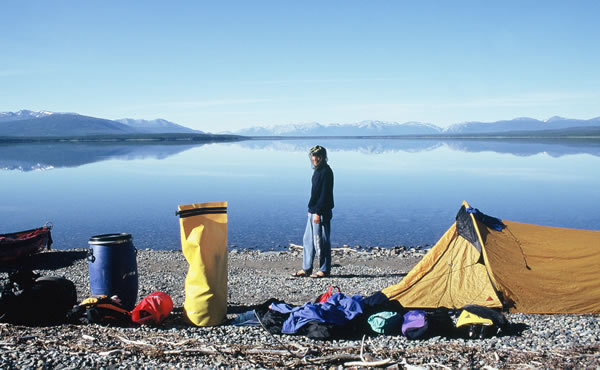
The Yukon River Twenty Years Ago Wednesday 16th June. Day 3 Despite getting up earlier at 8.00am it still took us two and a half hours to get ready and get on the water. The wind didn’t feel half as bad as the previous days and I felt a little more positive that we were going to achieve a lot more. However, once we left the shore the conditions deteriorated. As I glanced over to my left to check the shoreline, I saw a moose and two calves grazing near the water’s edge. We moved deeper into the bay to get a closer look, but the wind and waves had us fighting for stability and control. For a brief moment I got Ed to steady the canoe whilst I took out my camera and got a couple of quick shots. By this time the wind had blown us
well towards shore and danger. The moose, sensing us, moved her family into the forest. The surroundings were reminiscent of a Canadian Wilderness picture book and it was thrilling to see our first real wildlife.
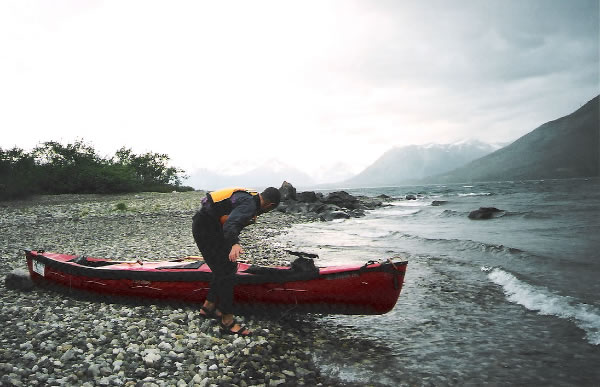
The weather in the mountains was pretty hostile at times.
At the next resting point we found old spoons and an array of rusting cans left by the early prospectors on their way to the gold fields, we left them there for someone else to discover. As we stood on the point full of relics we felt the wind increase even further and our hopes of reaching our desired destination fade. We were experiencing what
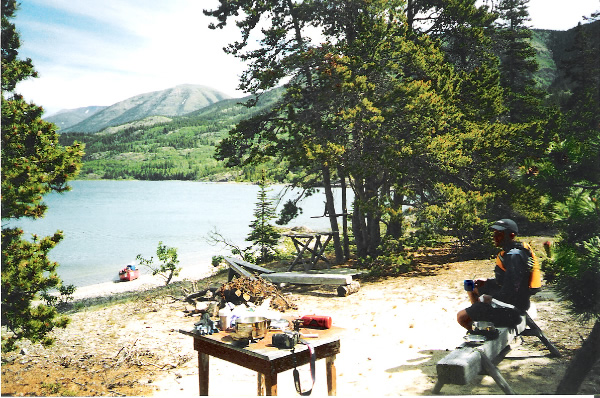
many of the locals had warned us about, rough, windy, dangerously cold lakes. By 1.00 p.m. we had reached an island which marked the border of British Columbia and the Yukon Territory. Out in front of us the lake was full of white caps and the narrow channel acted like a massive wind tunnel. We moved across to the island, landing on a magnificent grainy beach with an old timber
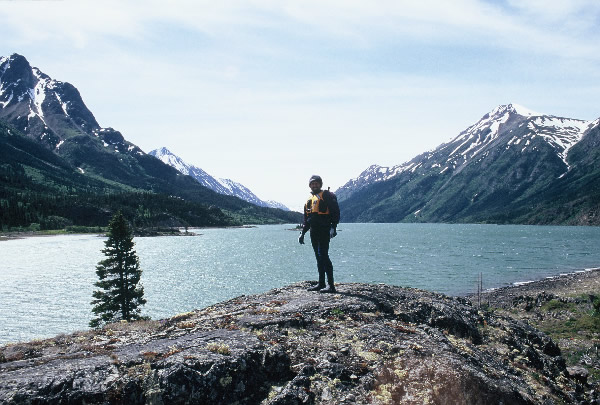
bench and table nestled in a clearing of the pine forest. Fully sheltered from the wind, the surrounds looked particularly inviting. Immediately we walked to the other side of the island to check the conditions. As I stood on a rocky outcrop looking along the lake, buffeted by the strong wind, I could see a tiny island, a derelict building and the complete narrowing of the channel. It
was our goal, but the wind and common sense told me that this was far enough. Paddling at 2kms an hour it could take us two days to get there. With the Yukon Race being only a week away and the fact that we were 150km from Whitehorse where it started, we really didn’t have the time to keep going. We were so close but yet still so far away. Reluctantly, we decided not to go on, but instead to turn the boat and head for Whitehorse. Why couldn’t it have been a calm day? We had lunch in the shelter of the island utilising the table and bench made from a railway sleeper. The view was stunning, the lake looked calm, and though it was a great camp site there in the friendly forest, it was too early for us to stop as we were now on our way to fulfil another goal, getting back to Whitehorse to race.
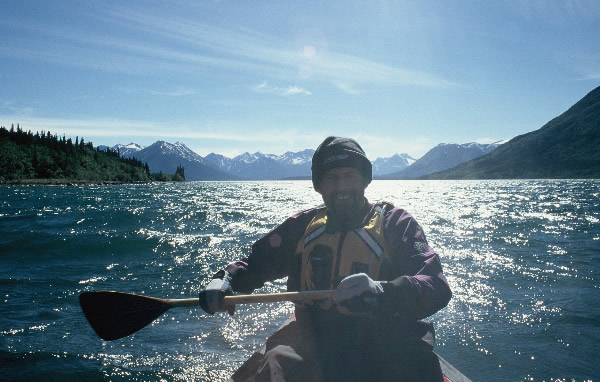
The wind was howling down the lake although it looks calm.
Time to turn-around and head to Whitehorse.
As soon as we left the shelter of the island, the wind whipped us down the lake at an enormous speed. Wow! This was great, but the canoe became more like a tank as the strong wind and continuous waves hitting us at an angle affected our steering making us work really hard to keep control of the boat. Nevertheless we were still travelling at a
super-sonic pace so we were happy. As the waves picked us up and the canoe started to surf Ed accelerated his paddling rate to surf faster. I could sense he was enjoying the ride but this wasn’t the warm waters around our home city of Perth, we were in a cold Canadian mountain lake. As another wave picked us up, we started to surf once more and Ed again paddled harder to gather speed,
not really thinking of the consequences of capsizing in a freezing lake far from shore and ending up like a frozen fish! A few minutes later a large wave pushed us broadside and broke over the top of the boat. The boat quivered with instability and for a moment I thought we might capsize, but thankfully our bracing skills kept us afloat. The wave flushed across the spray deck leaving
puddles of water in our laps. I immediately straightened the boat and suggested to Ed that we had to be more careful; we couldn’t afford to have fun in this unforgiving environment. From then on, I was more alert for any big waves creeping up from behind and we both took more care.
We turned and started our journey towards the start of the Yukon River and the town of Whitehorse. The wind was pushing us along at a terrific speed. Now our concern was keeping upright. Our passage back to Carcross
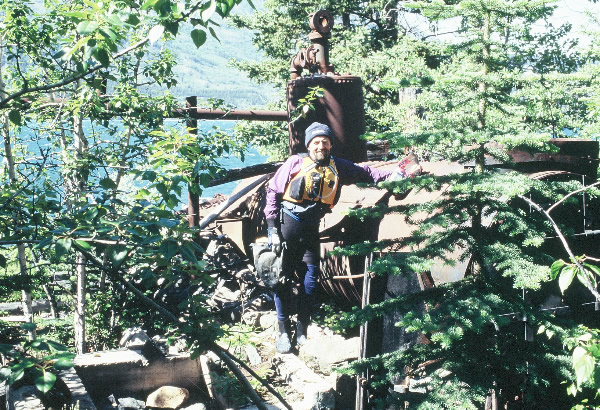
was much quicker than the way up. We were virtually flying down the lake. We were now familiar with all the points along the shore and when we came to the old hut that we had passed on the way up, we stopped to explore it. The hut had a very low roof and we just couldn’t work out why it was so low, making it impossible to stand up in, even for a short person. Alongside the hut there was a large boiler and a lot of other steel relics that had deteriorated with time and the harsh conditions.
Though there was a great camp site nearby with fantastic views of the mountains, we decided to take advantage of the wind and move further on. We later camped two or three kilometres from Carcross, but well out of sight of the town. Over in a corner on the other side of the lake, we could see a sail boarder and two kite boarders flying across the water. The weather conditions were
perfect for them, it was sunny with plenty of wind to help them race across the lake. But I couldn’t help but think that they must be crazy sailing in such freezing water! We pitched our tents and lit the fire to cook dinner. The smoke from the fire was more of a nuisance, so we soon let it die out. The evening turned out to be hot and the sun just kept on shining. We found an old
spoon with ‘Billy’s Bakery’ engraved on it, presumably another relic from the gold rush days. Ed was tired and suffering with lower back pain so he soon retired to his tent.
Alongside the hut there was a large boiler and a lot of other steel relics that had deteriorated with time and the harsh conditions. Thursday 17th June. Day 4 I woke up during the night feeling cold so I zipped up my sleeping bag to bring back some warmth. I snuggled down and went back to sleep and had a vivid dream, this time about building roads. In the morning Ed said he had heard a bird in the night making a funny call. It was actually a waterbird called a Loon. The water out in the lake was dead calm and there was not a breath of air. It took us two hours and twenty minutes to ready ourselves, leaving at 10.22am. It was an easy 2km paddle into Carcross where we originally started from. Carcross had once been an important community back in the gold rush days. As we entered a narrow channel the current built up against old railway bridge pylons, so we made sure that we were careful going between them. We pulled in on the left
side near a native Indian information building. A native Indian spoke to us from the balcony, “Where are you going?” he asked, I didn’t quite understand him at first, but he then went on to say “You have to be careful crossing those lakes ahead of you, they are very dangerous when the wind picks up, which it will”. I left Ed sitting in the canoe and rushed off to the post office to
post some post cards. It was only a small post office but it had three workers. I then called at a store for two small bottles of orange juice and two ice creams, a bit of a treat. As I crossed the road a car drove past with two ugly, rough looking characters inside, reminding me of the film Deliverance. In contrast, on the other side of the road, were several rich, overweight tourists, one with a big fat cigar stuck in his mouth. What an awful sight! I just couldn’t wait to get back in the
canoe to find the wilderness. We enjoyed our ice creams on the riverbank before paddling down the short channel aided by the current. The right side of the river was dotted with abandoned houses and cabins. We moved under our first main road bridge of our journey and into Nares Lake. The mountain to our left was snow-less, but still quite beautiful. Noisy geese were taking off ahead joining forces with another flock to create a wide V as they flew higher into the sky. Seagulls mingled in small groups in several places on the lake and looked a little out of place as we were miles from the ocean! A few houses were dotted around the lake and in the woods. Some were basic cabins while others were quite grand. Nares Lake wasn’t big so we soon paddled across it and
entered the much larger Taglish Lake and into Windy Arm to pass between Bove Island and the North shores. Here the views of the distant snow clad mountains were absolutely stunning. I felt a little sad; there was something special about paddling below snow-capped mountains and now we were leaving them and going in the opposite direction. We soon stopped and sat out on the very calm
lake stunned by the absolute beauty, taking photos to try to capture the visual experience that overwhelmed our hearts and mind. We paddled on and then stopped again wanting the view to last forever but we knew it couldn’t. By lunch time we couldn’t resist stopping at a point called Perthes Point that gave us grand views of the mountains. The name reminded us of our home in
Perth, Western Australia. It too is a beautiful place, but here the scene was much more dramatic. The day was absolutely quiet and apart from chewing on our bread and slurping our hot noodles, the only other faint sound we could hear was from the two streams that were cascading down Lime Mountain.
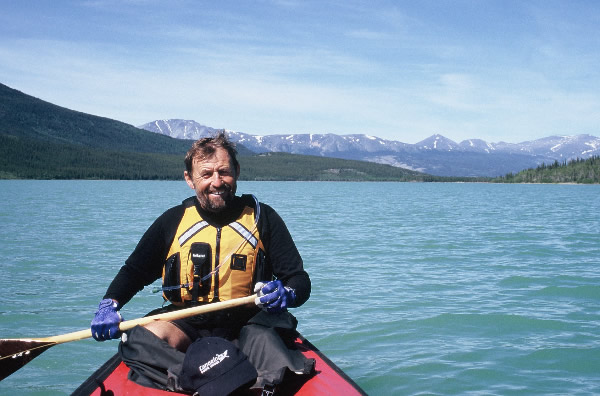
The lakes calm as we head away from the mountains.
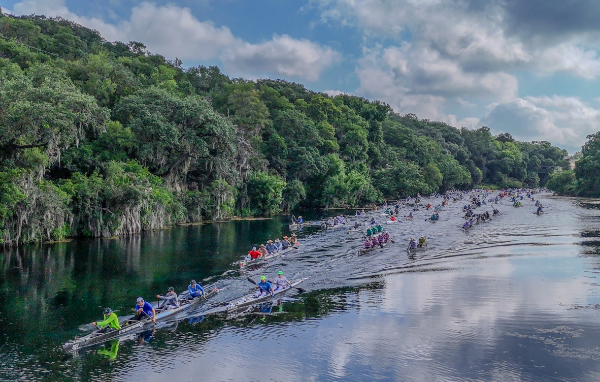
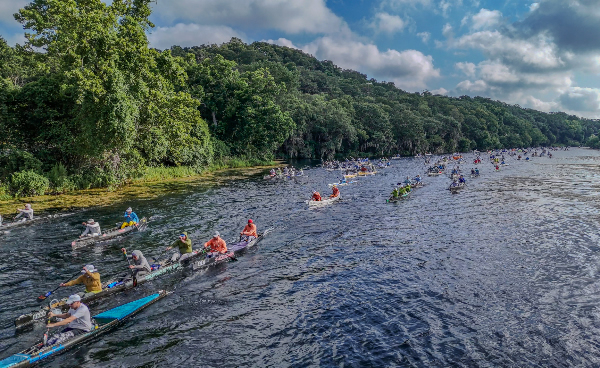
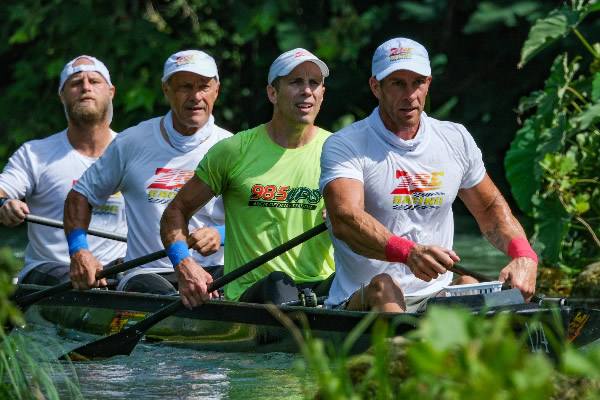
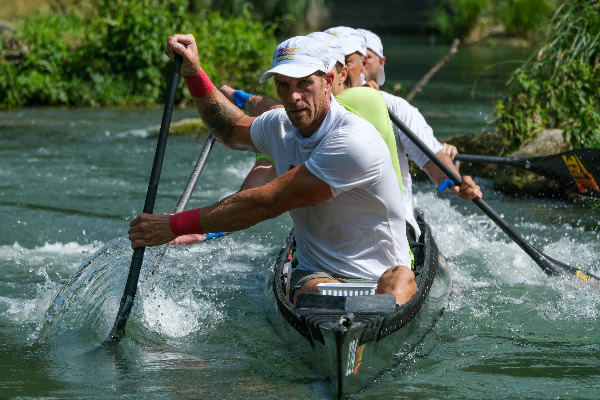
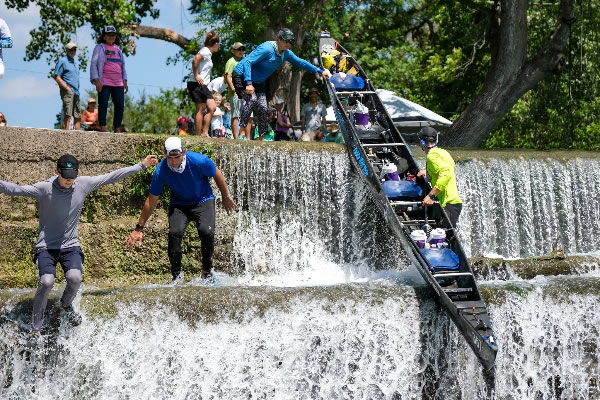
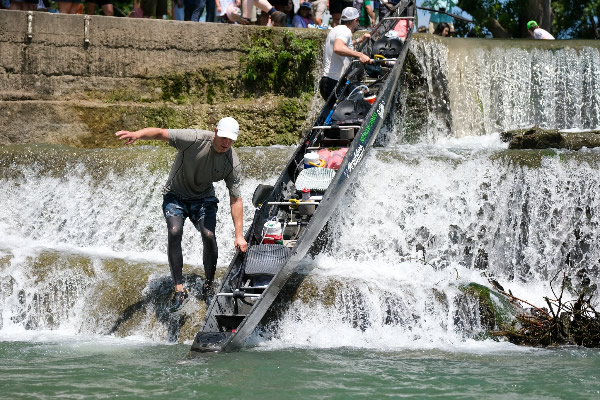
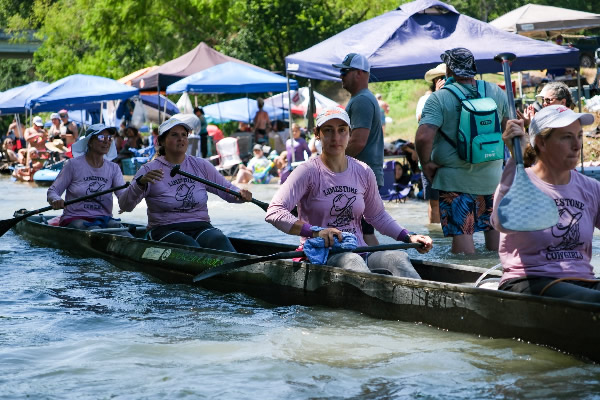
Texas Water Safari A 420km race from the headwaters of the San Marcos River, San Marcos to Seadrift on the coast of the Gulf of Mexico. They don’t call the Texas Water Safari The World’s Toughest Canoe Race’ for nothing. In addition to the length, the challenges include whitewater rapids, multiple portages, and the relentless, soul-sapping Texas heat. Competitors have four days and four hours to paddle from San Marcos, in the center of the state, to the shy little town of Seadrift on the Gulf Coast. There is no prize money for the winners; just
Texas-size bragging rights for the finishers.”
The start on Spring Lake, the headwaters of the San Marcos River.
Spring Lake Dam. San Marcos, Texas. Photo Kate Tart.
Okay guys which way do we go? Photo Kate Tart.
Must be this way. Cottonseed. Martindale, Texas. Photo Kate
Tart.
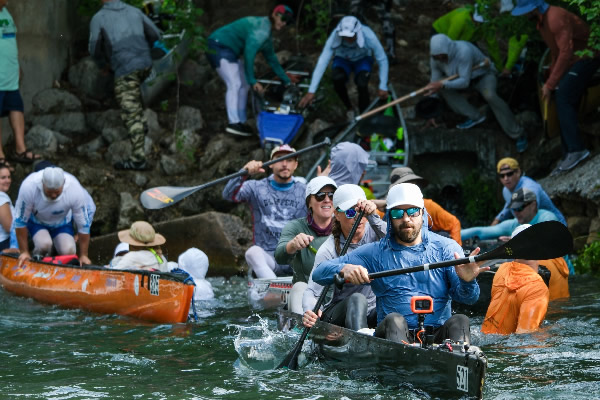
Portaging Staples Dam. Staples, Texas. Photo Kate Tart.
Staples Dam. Staples, Texas. Photo Kate Tart.
At Luling, Texas. Photo Kate Tart.
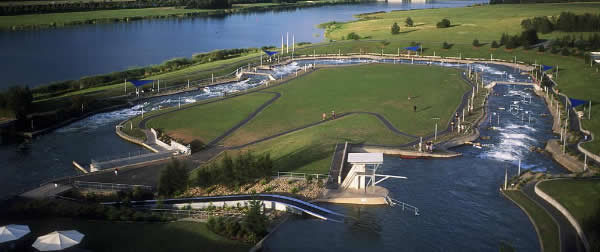
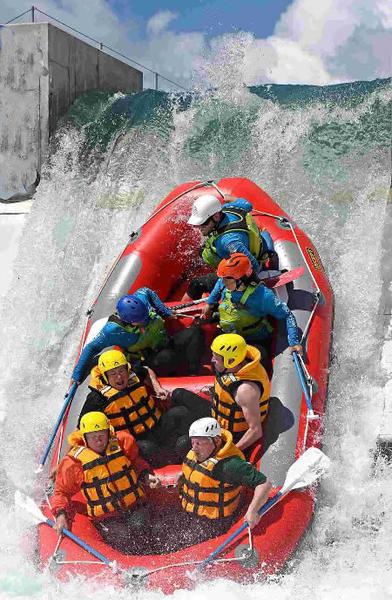
A White Water Centre in Perth?
It just makes sense
2024 Campaign
Imagine a year-round white water adventure centre in WA.
Under the excellent stewardship of Rob Riggir, volunteer extraordinaire we are progressing at amazing pace!
We need to develop a comprehensive proposal for the Perth Whitewater Centre.
Every dollar helps towards making this dream a reality.
Share this link to your socials, newsletters,
emails .... everywhere!
https://asf.org.au/projects/paddle-western-australia/perth-white-water-centre---business-case
Penrith White Water Course.
Donate here:- https://asf.org.au/projects/paddle-western-australia/perth-white-water-centre---business-case
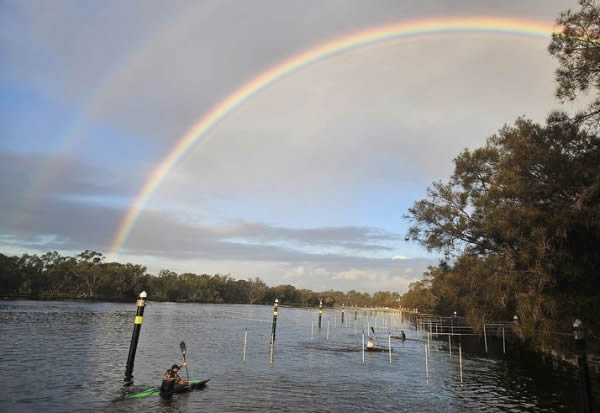
Slalom at Ascot Kayak Club. Photo John Hilton.
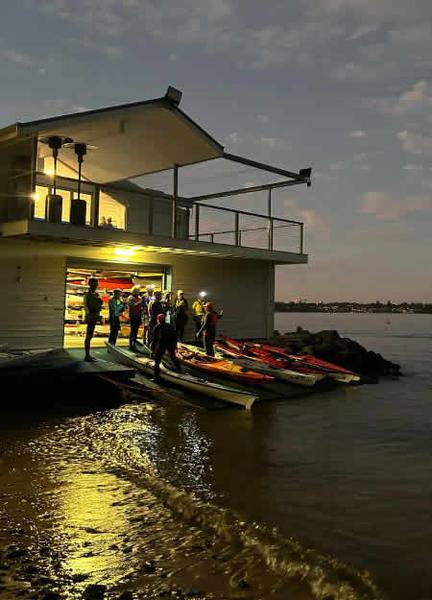
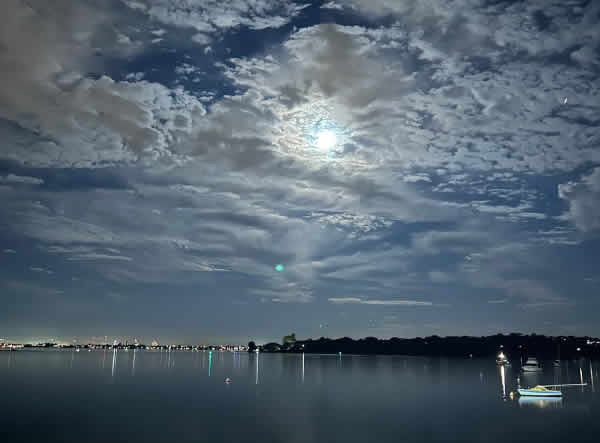
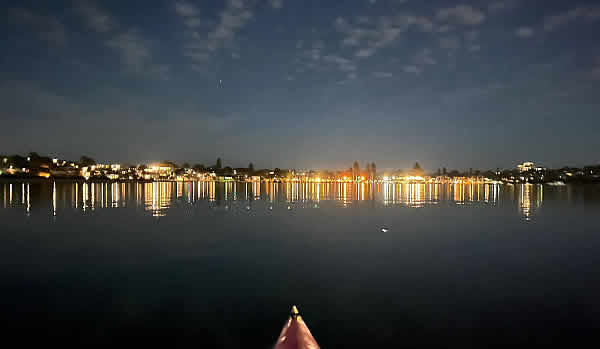
Mid-year paddle on the shortest day of the year under perfect conditions followed by Buzzy burgers.
Coming Events - 29th June 2024 - IOP Downwind Winter race #1
- 30th June 2024 - Slalom Winter
Series #1
- 7th July 2024 - Wild Water Race
- 14th July 2024 - Northam to Toodyay
- 20th July 2024 - IOP Downwind Winter race
#2
- 28th July 2024 - Walyunga N/P to Middle Swan
Change of Date Welcome to the first of the 2024 IOP Winter Series races. Thanks to Brad Hardingham - Realmark for the continued season sponsorship. Sorrento SLSC Saturday 29th June
2024.
Race check in will be at Sorrento SLSC from 7am with race start around 7.30am. Further details of the start format will be provided at the race briefing. Cost is Free for IOP members. Non IOP members $15 and there is a race day insurance surcharge for those not belonging to any Paddle
Australia club. Take the opportunity to sign up with IOP when you register to save on race insurance costs.
Leg leash and PFD mandatory. For further details take a look on the IOP Facebook page. Enter here:- https://paddleaustralia.justgo.com/workb.../public/events...
Don't fear - She will be right!!
Slalom Winter Series Starts
Sunday 30 June  Register now for some high adrenaline action! Welcome to Winter Series Race 1 - Sunday 30th June, 2024 at Walyunga National Park (due to water levels race location may change to Ascot
Kayak Club). Setup and registration from 8:00am, Racing starts at 8:30am Helmets and PFD's are compulsory. Paddling is a great way to Act Belong Commit Slalom WA is proudly supported by: Department of Local Government, Sport and Cultural Industries Healthway Lotterywest
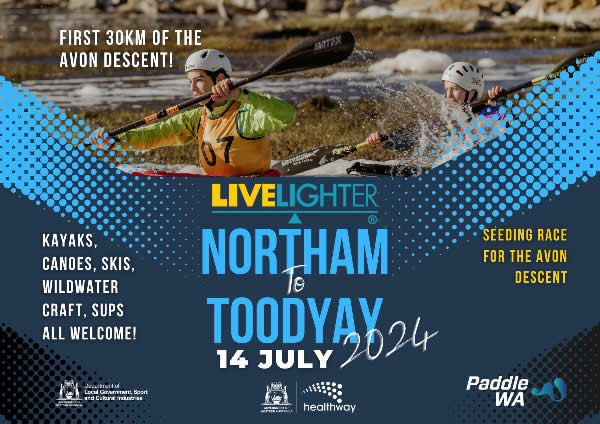
Northam to Toodyay DETAILS Start Line: Broome Terrace, Northam Finish Line: Duidgee Park, Toodyay Race check
in: 08:00am-08:30am Briefing: 08:30am Race Start: 08:45am Course - 30km: The race starts 500 metres above Northam Weir The river to Katrine Bridge is characterised by flat water and intermittent deep pools 2km after Katrine Bridge is Glen Avon Rapid, a small but tricky rapid After 7km of coffee rock, Sinclair’s Crossing underneath Dumbarton Bridge can have many channels in low water Soon after is Extracts Weir- decision made on day to
determine if portage is compulsory. COMPULSORY PORTAGE for novices. The rest of the race to Toodyay is shallow with a gravel bed Note: there will be a cut-off time to reach Katrine Bridge, which will be posted closer to the event. Any craft that do not reach the bridge by
this time must withdraw from the race. In the event of extreme river levels, competitors will be kept informed of any course changes.
Race Cost: PWA Members (18+):
$35
Non-PWA Members: $57 (includes $22 compulsory insurance coverage)
PWA Members (16-18): $25
Non-PWA Members: $36 (includes $11 compulsory insurance coverage) Safety: Due to the course being held in wild water conditions, it is compulsory for all paddlers to wear helmets and PFD’s. Each competitor should also have a whistle attached to their PFD for emergency situations. No helmet or no PFD = NO RACE. Enter here:- https://www.webscorer.com/register?pid=1&raceid=349463
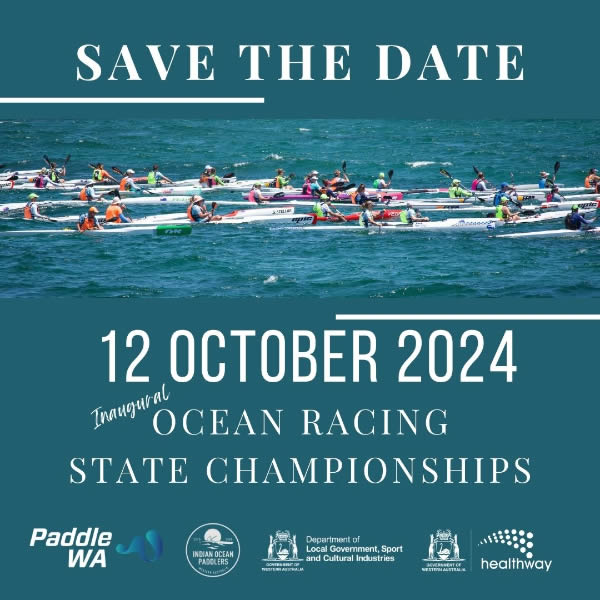
Ocean Racing State Champs or the first time ever in Western Australia!On behalf of the newly formed Paddle WA Ocean Racing Discipline Committee, we invite you to join us
for the first ever State Championships on Saturday 12 October 2024.
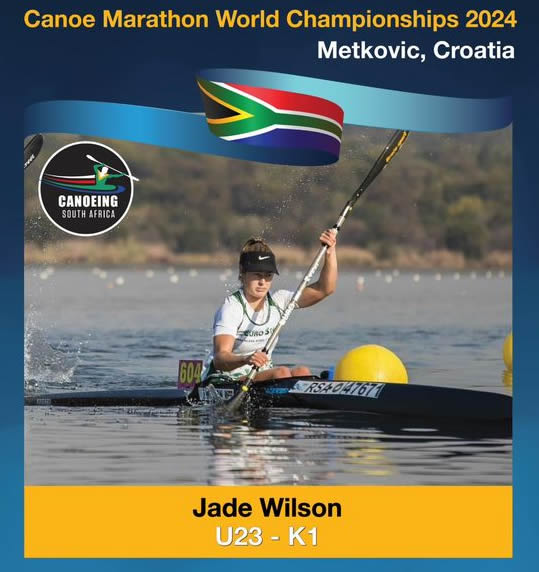
A few weeks ago Jade Wilson from South Africa trained in WA and paddled in a few of our races.
She was fast. Now she will be going to the World Marathon Champs in K1 and K2.
|
|
|
|
|
|
|
|
|
|