|
|
|
|
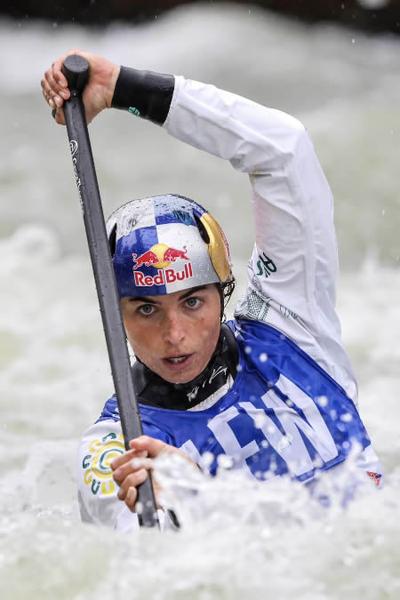
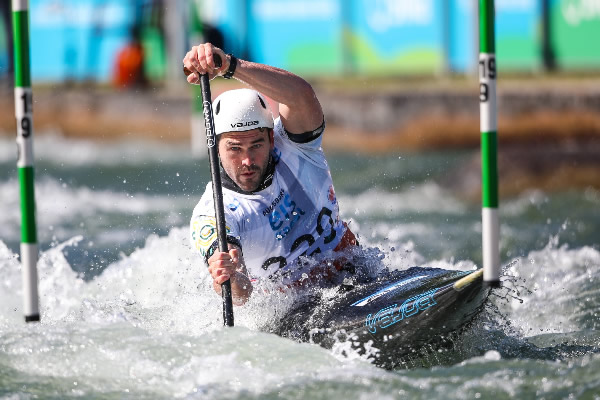
I have 3 Paddler's of the Week this week. - Jess Fox won gold in Women's C1 at the Canoe Slalom World Cup in Augsburg, Germany.
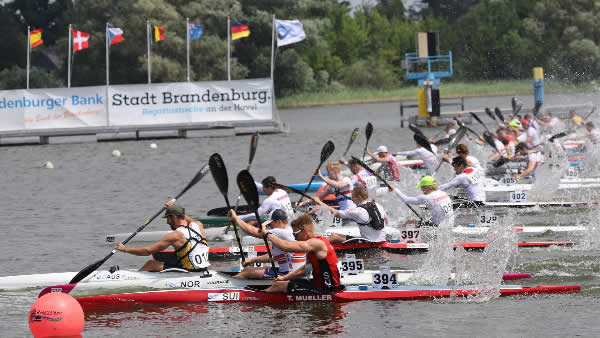
- Josh Kippin competed in a World Cup marathon event in Brandenburg, Germany and came 6th in the short course and 7th in the long course.
- Canada's Canoe Legend Bill Mason is also up there, although if you are not around 70- 80 years old you probably would not of heard of him, but he was a
master paddler and promoter of canoeing back when I was a lad.
WA wild water paddlers Nina Mueller and Harry Langley have left for Europe to take part in some World Cup Wild Water Races. They will then return to Australia and go back to Europe for the World Championships at a later date. Having to pay their own way they can't afford to
stay in Europe for too long. It makes me jealous to see the new Paris White Water Stadium and Sprint Course. Story below. Have you heard of Squirt Paddling? It never really took off in WA, we didn't really have the
extremely slim-line kayaks over here, although a few paddlers tried some of the moves in a very low cut slalom kayak. Some of the moves are similar to what you see in Freestyle Paddling. See below. The Progressive Racing Group at Ascot is still paddling through the winter months. It's a great session for beginners who have stepped into TK1s or K1s,
paddlers with plastics boats who are about to tackle the Avon Descent or experienced paddlers. We paddle around a 3.8km course with six turns. Paddlers are sent off at staggered times so every paddler finishes at the same time. It's a very social group. Tuesday's at 5.00pm, Ascot Kayak Club. Or give me a call.
This Weekend Races - 9th June 2024 - Wild Water Drain Race #3 Upper Canning.
- 9th June 2024 - K4 vs Rowing Challenge Guildford to Bayswater.
- 9th June 2024 - WA SUP Paddle Loops. Ascot Kayak Club.
- Jess Fox
- Josh Kippin
- Bill Mason - Canadian Canoeing Legend
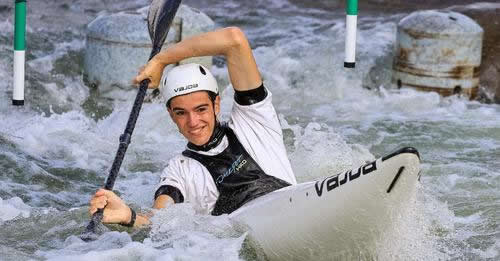
- Hunter Florisson - Can You Help
- Burgess Falls
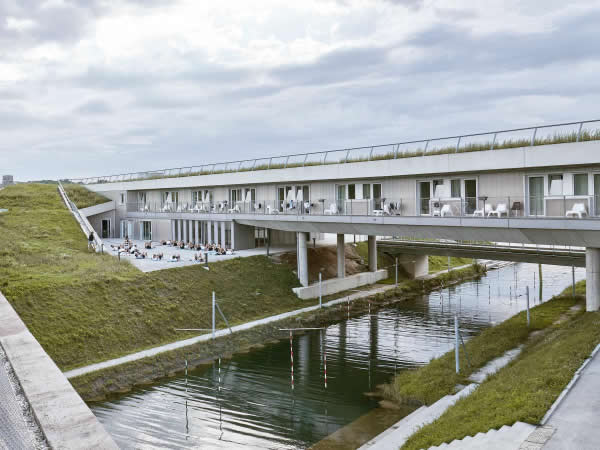
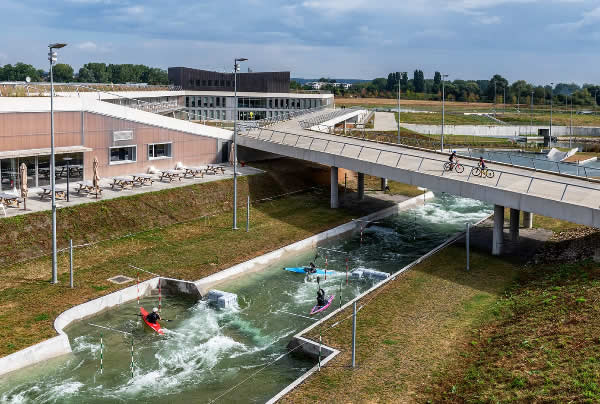
- Paris 2024 - Slalom & Sprint Course
- What is Squirt Boating
- Coming Events
- Birds
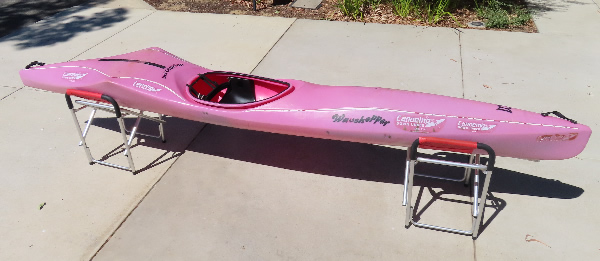
- Wavehopper For Sale
Jess Fox at the Slalom Canoe World Cup in Augsburg, Germany.
Jess won the women’s canoe final in Augsburg.
It was her 75th World Cup medal of her career.
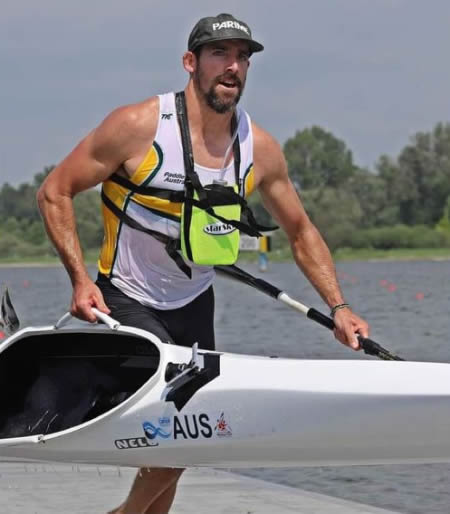
Josh Kippin at the
Canoe
Marathon World Cup in Brandenburg, Germany.
Josh is in the white kayak on the left.
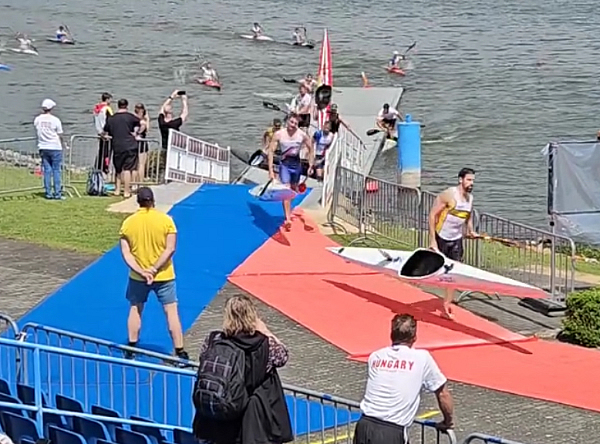
Josh at a portage. In the short course race Josh slipped in a hole between the red carpet and the railing and lost 2 or 3 places.
WA's Josh Kippin in the Canoe Marathon World Cup in Brandenburg, Germany, over the weekend ! Josh was 6th in the Short Course and 7th in the Marathon!
Who Was Bill Mason When it comes to canoeing in Canada, Bill Mason was the GOAT.
From his books, artwork and films, he left a legacy still being felt to this day, decades after his passing.
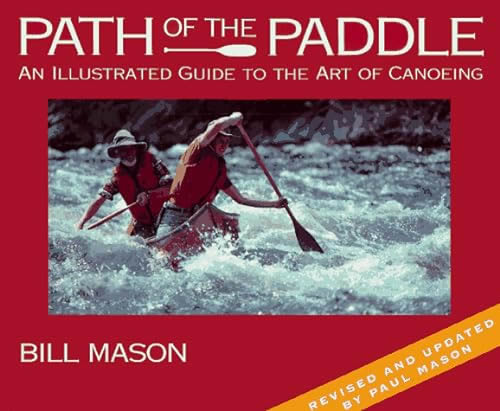
In his career, Mason wrote three books (Path of the Paddle, Song of the Paddle, Canoescapes).
Bill Mason was born in 1929 in Winnipeg, Canada and died on Oct. 29, 1988 from cancer. He was only 59.
In 1998, a Canada Post stamp was issued honouring Mason. A rock spire in Nahanni National Park Reserve has unofficially earned the name "Mason's Rock" in honour of him.
Paddle Canada honours
Mason with the Waterwalker Film Festival, and the Bill Mason Outdoor Education Centre in Ottawa helps teach children about the outdoors. There is also the Bill Mason Exhibit at the Canadian Canoe Museum that draws in people from around the planet.
His daughter Becky and son Paul continue his legacy by offering paddling skill instruction and workshops and continue on the tradition of the
family.
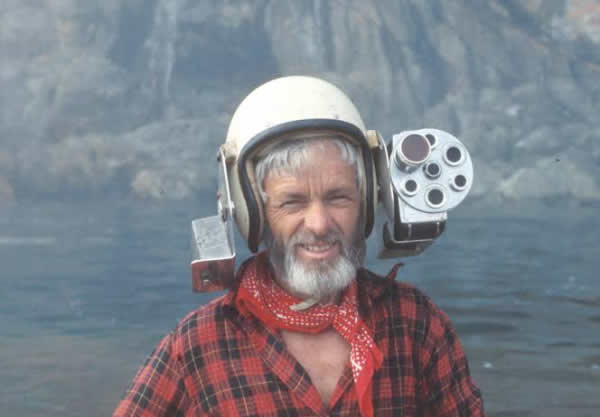
Bill was quite a wilderness Explorer. He was also a Canadian naturalist, author, artist, filmmaker, and conservation activist who was known primarily for his canoeing books, films,
and art, as well as his documentaries on wolves.
Bill as a canoe instructor. In the 1970s, Bill Mason was one of the most famous canoeists in the world. He was also one of the first people to use a fiberglass canoe. Mason’s canoe
of choice was the Chestnut Prospector, which he helped design. The Prospector was a lightweight and maneuverable canoe that was perfect for Mason’s style of paddling.
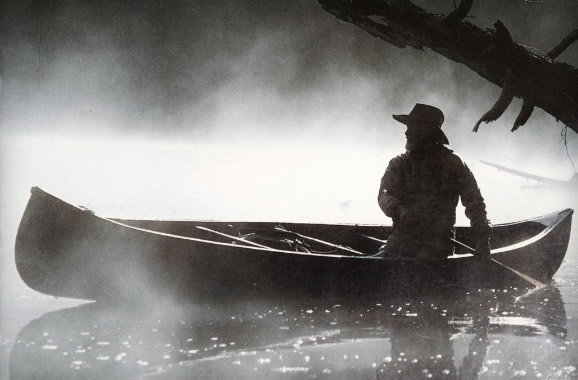
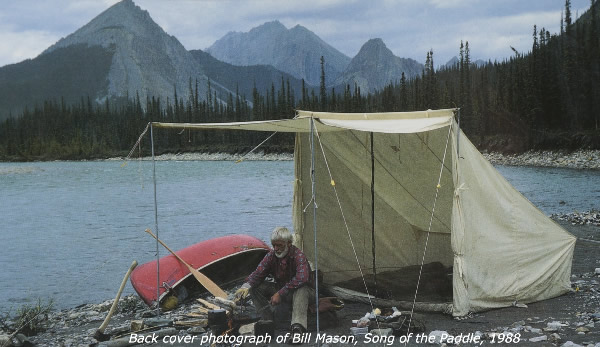
Bill as an a wilderness solo paddler.
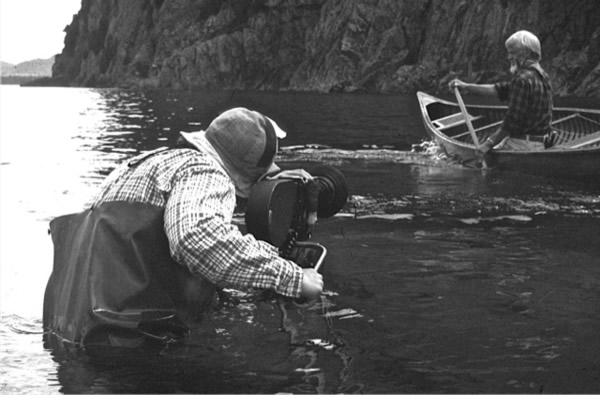
Bill as a writer of canoe books and film maker. He began working as a commercial artist after graduating from the University of Manitoba School of Art in 1951.
He joined the staff of Crawley Films in Ottawa and helped animated the TV series Tales of the Wizard of Oz.
In the early-1960s, Mason began working with the National Film Board. His first film, Wilderness Treasure in 1962, earned a Canadian Film Award.
Many of the films Mason made for the National Film
Board featured Mason himself, as well as his family. He became known for his spectacular and meticulous shots, and the clean editing of his films.
In 1966, Mason directed Paddle to the Sea, based on the 1941 children's book of the same name. The film earned an Academy Award nomination for Best Live Action Short Film.
Two years later,
Mason released The Rise and Fall of the Great Lakes, a short film about a canoeist who travels through time as he canoes across the Great Lakes. The entire film was narrated as a ballad and it won a BAFTA in 1971.
In 1971, he released Death of a Legend, which worked to end negative myths related to wolves. The film won a Genie Award. He returned to the plight of wolves in Cry of the Wild, which earned $5 million on
a $74,000 budget.
Many of Mason's films taught canoe techniques, while also serving to raise environmental issues especially on The Great Lakes.
His film Waterwalker, released in 1984 was his last film and featured a musical score by Bruce Cockburn. It earned a Genie nomination for Best Documentary Feature. It became his most well-known
film.
You can watch many of his films, for free, on the NFB app and website (https://www.nfb.ca/directors/bill-mason/)
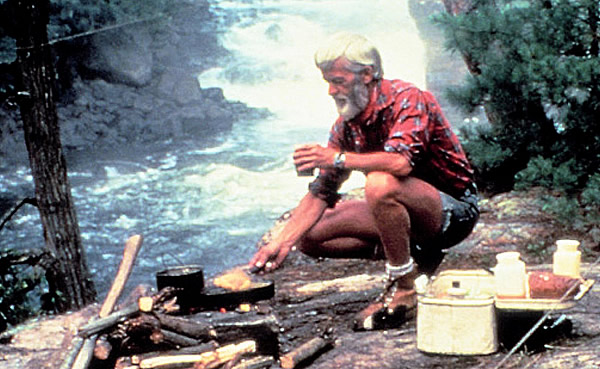
Bill in the Canadian Wilderness before lightweight tents.
Bill as a film maker. Many of Mason's films taught canoe techniques, while also serving to raise environmental issues especially on The Great Lakes.
Can You Help Hunter Florisson My name is Hunter Florisson, I am 18 years old and I have been kayaking since I was 8 years old.
I absolutely love paddling and I volunteer in my spare time to pass on my love of paddling by coaching juniors and adult beginners at my local club.
I have many paddling dreams, and one of them is to represent Australia on the world stage in Canoe Slalom.
This year, I have been selected to represent Australia at the 2024 ICF Junior and U23 Canoe Slalom World Championships in Liptovsky, Slovakia, which is SUPER exciting!
I train (rain, hail or sunshine) a
minimum of 10 sessions per week which include both on and off water sessions.
This international tour is an amazing opportunity for me to compete against athletes from all over the world and gain invaluable experience in an overseas environment unfortunately travel costs, competition costs and equipment are a costly exercise so all financial assistance is appreciated. Donate here:- https://asf.org.au/projects/hunter-florisson/help-hunter-to-the-2024-canoe-slalom-junior-world-championships
Hunter has been achieving great success, despite unique challenges faced here in WA. In order to compete at an elite level, our young athletes face high travel costs, and most have to
eventually relocate over East to continue their paddling career - due to lack of facilities on this side of the Nullabor. Like Hunter, many are disadvantaged due to a minimal White Water season and no WA White Water Centre.
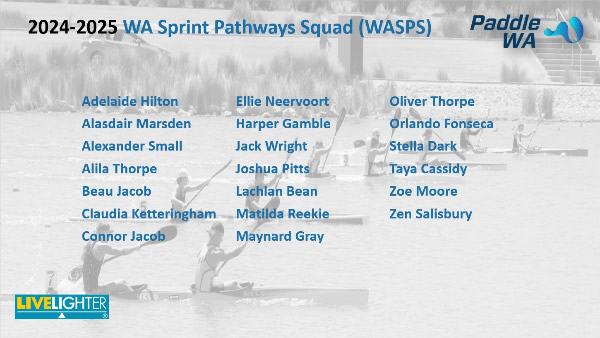
Paddle WA and the Sprint Technical Committee are very pleased to announce the WASPS squad for 2024-2025. Congratulations to all the athletes selected for the upcoming season. WASPS athletes will be joining additional on-water sessions through the season to further progress in their Canoe Sprint journey.
Kalbarri Adventure Race Paddle Section Always on the Long Weekend beginning of June. You can choose to participate in paddling, mountain biking or running events over distances that suit your abilities whether you are an elite athlete, weekend warrior or first timer or junior. Compete in just one discipline or be adventurous and
tackle two or all three disciplines. Paddlers get to explore the Murchison River between Murchison House Station and Kalbarri if you tackle the Ultra event, the longest of the three paddle distances. Beginners and Juniors tackle a short circuit that starts and finishes in Kalbarri. Mountain bike courses explore the diverse and spectacular landscape around Murchison House Station, a working cattle property alongside the Murchison River. Apart from the great scenery you may come across herds of goats and cattle, just don’t crash as you watch them! Runners are truly spoilt with two spectacular
events. Run into and along the base of a gorge on the Murchison River and tackle an awesome abseil, and/or run the coastal cliff tops around Kalbarri. Which is the best, most spectacular, most awesome run? You probably need to do both to judge for yourself, we are still arguing about that question.
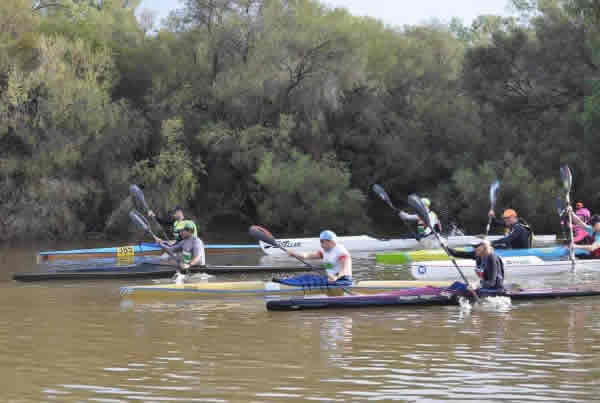
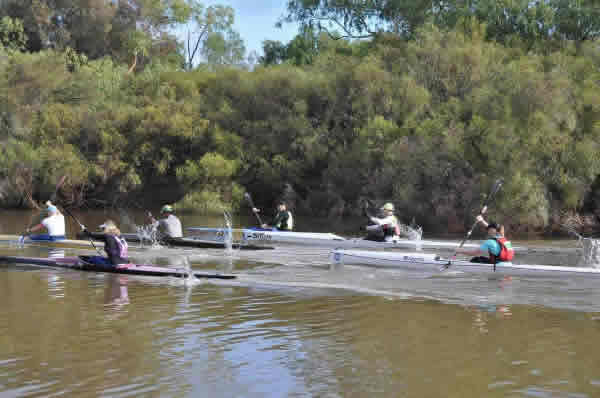
Last weekend paddlers, runners and mountain bikers gathered at Kalbarri. Several of them were from Ascot's Progressive Racing
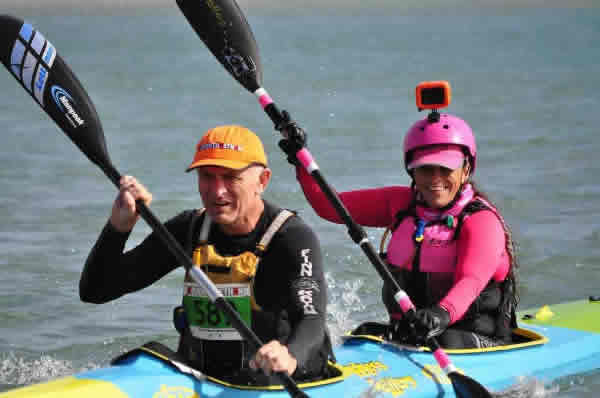
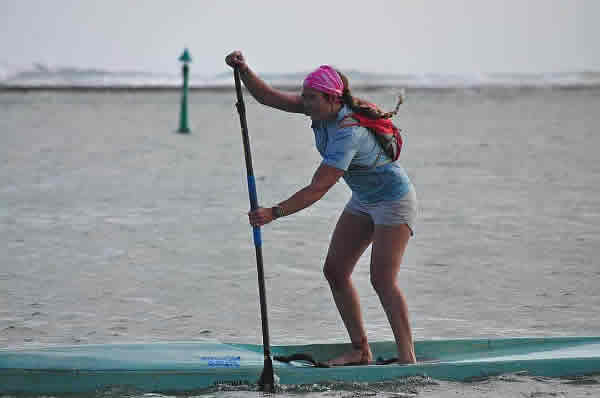
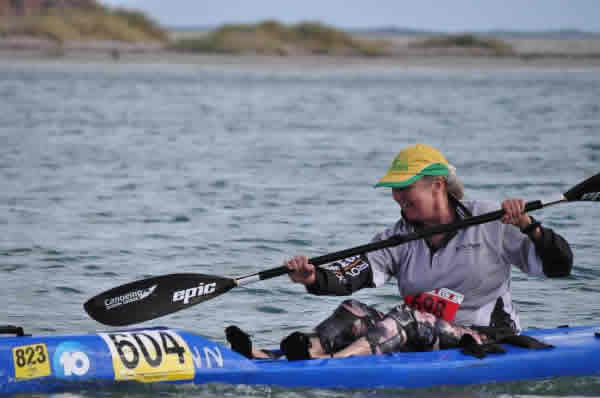
Group. The long paddle course was 16.5km. This flat water paddle that features spectacular scenery, tidal influences and shallow water. Photos Isabel Combe collection.
Unfortunately it was a trifle windy and very hard work.
Tashka Goswell battling against the strong wind. It took her 2.36 hrs. It was taking 10-12 mins a km. She would usually be doing about 8-9kms an
hour.
Once a local of Kalbarri, Jane Dooley battling the wind.
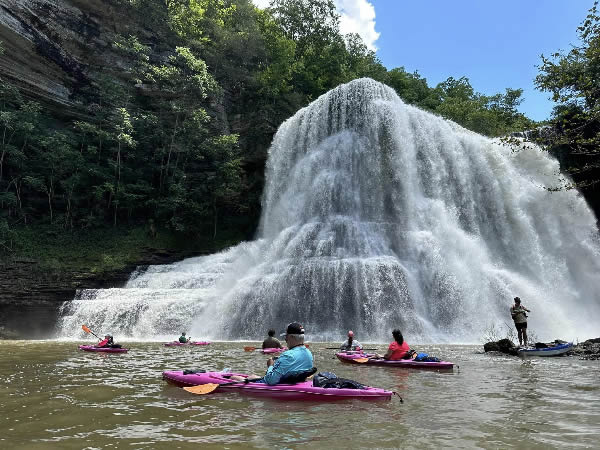
Burgess Falls Tennessee State Park. USA Burgess Falls is a 217-acre natural area in Putnam and White Counties and is located approximately thirteen miles southwest of Cookeville. It is managed by Tennessee State Parks. Burgess Falls lies on the rugged dissected eastern edge of the Eastern Highland Rim resulting in the occurrence of sheer bluffs, narrow ridges, waterfalls, and diverse forest communities. It was named for Tom Burgess. For many decades the Burgess family provided settlers with meal and cut
lumber from their grist mill and lumber mill on Falling Water River above the falls.
Burgess Falls is most noted for its scenic value as Falling Water River drops nearly 250 feet over three waterfalls. The last of these falls is the most spectacular and begins where the water comes to the sharp edge of the riverbed and plunges more than 130 feet into the gorge. Protruding rocks halfway down break the curtain of water and spread a
mist around the base of the falls. The bluffs rise on each side of the gorge framing the falls in rough gray rock. A steep trail leads to the edge of the falls, and a stairway leads into the gorge.
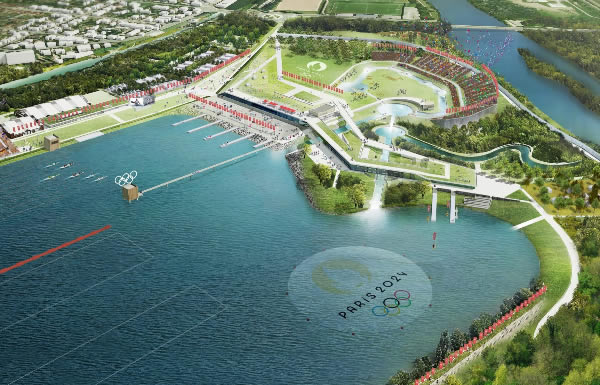
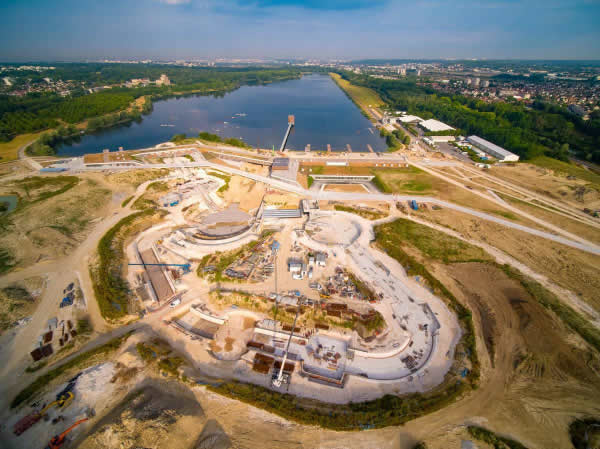
Paris 2024 Slalom and Sprint Course
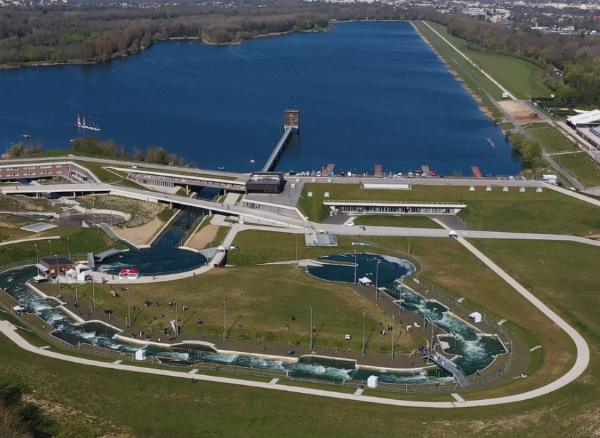
The Vaires-sur-Marne Nautical Stadium will host the Olympic rowing and canoe-kayak events, and the Paralympic Para rowing and Para canoe-kayak events at the Vaires-Torcy leisure complex in 2024. The French Rowing and Canoe-Kayak Federations are delighted with this brand-new Nautical
Stadium, which was the first newly developed Olympic facility to be delivered in 2019.
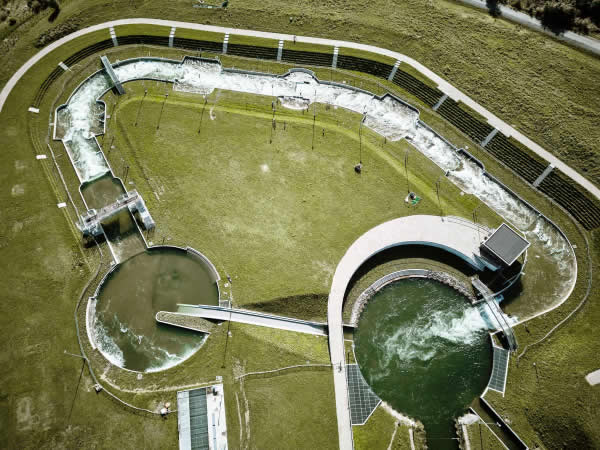
Designed by architects Auer+Weber+Assoziierte, the complex is structured around three core features of the Vaires-Torcy leisure base: the lake, the white-water stadium and the living area, which includes the new buildings with a landscaped roof that can be accessed for walks. The 4,400 sqm sports centre is comprised of the new
white-water stadium and its two courses over 300 and 150 metres; the 2,200m rowing and sprint canoe-kayak course, equipped with a finishing tower; a sports medicine centre; a weight-training centre; various administrative spaces; a media centre; and a training and accommodation centre.
This outstanding hub will bring together the representative bodies of these water sports and welcome athletes of all levels; for
canoeing-kayaking, it is already home to the headquarters of the French Federation and its regional committee, as well as its national and youth hubs; and for rowing, it will be home to the Île-de-France Rowing League and its youth hub, as well as the French Rowing Federation’s logistics platform. The overall complex is an international centre of excellence for sport. Along with Beijing and Sydney, it is one of three sites in the world with the facilities needed to host Olympic and Paralympic
canoe-kayak and rowing events.
This major project, the only one of its kind in Europe, meets the demand for leisure facilities serving communities in the Paris region while satisfying the standards of excellence required for high-level athletes. Integrated within a 150-hectare site with remarkable landscaping (including 450 trees that have been planted to provide a space where Paris region communities can enjoy
somewhere to breathe in an urban setting), the new facilities have been developed in line with a high environmental quality (HQE) approach, successfully protecting and showcasing this site. Looking beyond elite competition, the white-water stadium enables the Vaires-Torcy leisure complex to offer a wide selection of leisure activities to benefit communities from across the Paris region. Alongside the activities already available around the lake, such as rowing, catamaran sailing, stand-up
paddle-boarding, windsurfing and dinghy sailing, the white-water stadium offers rafting, hydrospeeding and, of course, canoeing and kayaking.
Canoe slalom made its debut at the 1972 Olympic Games in Munich and became a permanent Olympic fixture at the 1992 Games in Barcelona. Athletes from European nations have achieved enormous success in the sport at the Games, winning roughly 90 per cent of all canoe slalom medals.
For centuries, canoes were used as a means of transport (as well as a useful tool for hunting and fishing) in North America, Siberia, and Greenland. The first recorded competitive canoe sprint race took place at the British Royal Canoe Club in 1869.
Canoe sprint races
take place on flatwater and feature sprints over various distances (women’s races are either over 200m or 500m, while men’s races are either 500m or 1000m), with one, two or four athletes per boat.
Canoe sprint became an Olympic medal discipline at the Berlin 1936 Olympic Games, after previously featuring as a demonstration event at the Paris 1924 Olympic Games.
Sleeping above the slalom course must be good.
Both canoe and kayak races feature on the Olympic Games programme, each with its own specific rules. Canoeists kneel in the boat and use a single-blade paddle on one side at a time, whereas kayakers are seated and use a double-bladed paddle.
Slalom races take place on
an artificial white-water course. Competitors have to navigate boats through a course of gates (18 to 25) in the fastest time possible, taking care not to incur penalties for missing or touching gates.
These races put athletes’ concentration, reactions and technique to the test.
Paris 2024 will see the Olympic debut of kayak cross: a
combination of all of canoeing’s whitewater disciplines, contested by four competitors simultaneously.
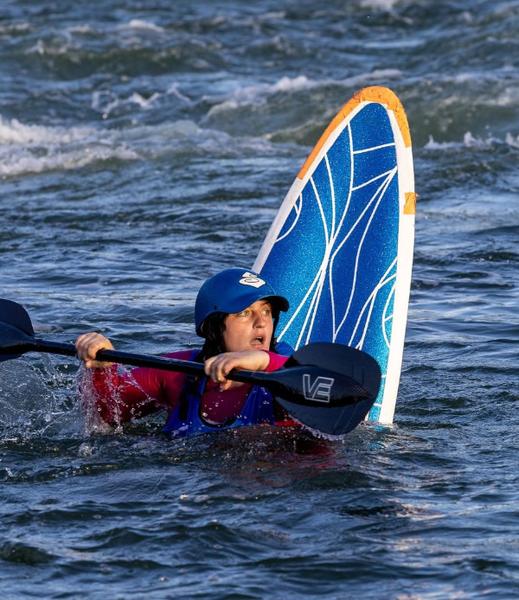
Squirt Boating Squirt boating is a form of whitewater kayaking where the boat is designed to be as low in volume as possible while still allowing the paddler to float. Squirt boats are
designed to utilize both surface and underwater currents to manoeuvre within the water.
The kayak is a thin, tight-fitting watercraft and it barely floats. That’s intentional. The result is a craft that lets paddlers perform tricks much more easily than on a traditional kayak.
The name “squirt” is said to come from the idea of how the
boat shoots forward like it’s being squeezed through the water. Squirt boats barely stay afloat even in calm river conditions, but they’re agile enough that the paddler can easily turn right or left with the flick of their stick.
Look how thin these squirt boats are.
A squirt boat is used primarily to perform freestyle tricks in specific water conditions like flatwater or in eddy lines. Becoming perpendicular to the water is far easier in a squirt boat than in a normal kayak as the boat itself barely floats — add the paddler into the equation, and it’s something akin to a bucking bronco on the water, flapping
and floundering but still somehow in total control. Perpendicular or near-perpendicular stances are the basis for many freestyle moves in the sport, and squirt boating developed a niche following among freestyle kayakers since it first appeared in the 1980s.
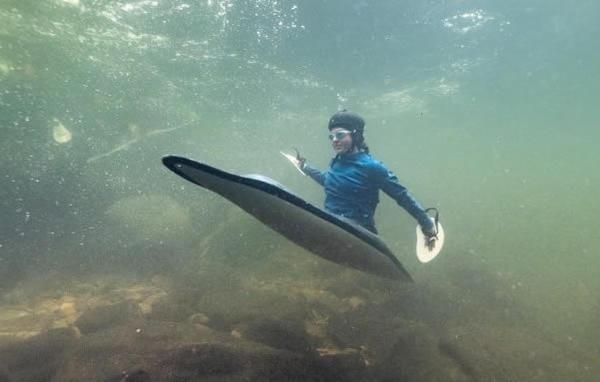
The kayaking term “mystery move” is most easily demonstrated on a squirt boat. In this trick, the kayaker — or squirt boater, in this case — completely
submerges themselves below water using a combination of paddle technique and the boat’s easy maneuverability. Some paddlers prefer circular hand paddles to the traditional kayak paddle, allowing for more movement underwater. This is Squirt Boating. The Mystery Move
(youtube.com)
Underwater video footage by local photographer Gabe DeWitt shows Wall effortlessly spinning her boat like a corkscrew, her arms and
hands slicing through the current with the surgical precision and intention of an interpretive dancer.
Remember that paddler that you thought was totally out of control, hull submerged and stern sticking straight up in the air?
Diehard paddlers looking to engage in squirt boating are likely to have a boat custom-built to their body size and style. Most squirt boats are
between 2.5m and 3.3 metres. A shorter boat makes it easier to flip, twist, and submerge but will also be more difficult to maintain your balance on. It’s best to start on a longer boat and progress to a shorter boat as you improve.
Coming Events - 9th June 2024 - Wild Water Race #3
- 9th June 2024 -
K4 vs Rowing Challenge
- 9th June 2024 - WA SUP Paddle Loops
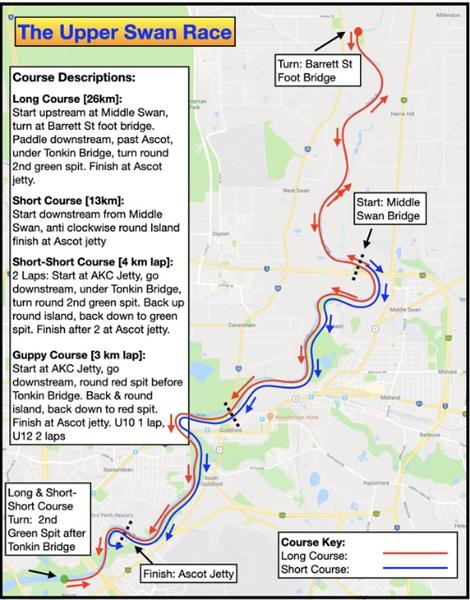
- 16th June 2024 - Upper Swan Marathon
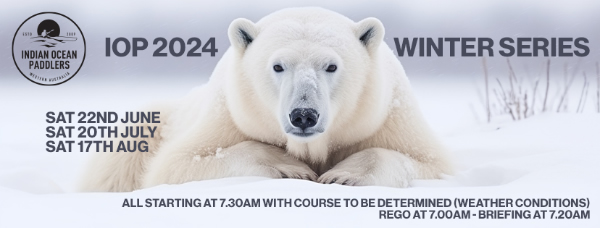
- 22nd June 2024 - IOP Downwind Winter race
#1
- 23rd June 2024 - Wild Water Race #4
- 14th July 2024 - Northam to Toodyay
- 20th July 2024 - IOP Downwind Winter race #2
- 28th July 2024 - Walyunga N/P to Middle Swan
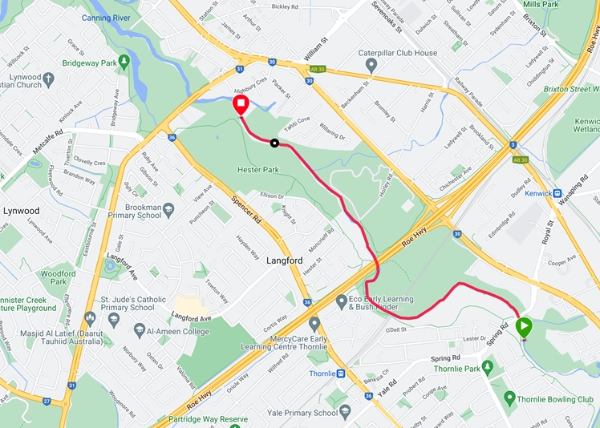
Wild Water Race #3 Enter Here:- https://bit.ly/2024WWR3 The 3rd of 8 races for the 2024 Wild Water Season
Location: Hester Park, Spencer Road Langford.
Registration: 08:30am-09:00am
Briefing:
09:15am
Race start: 10:00am
Course: Starting and finishing at Hester Park, paddlers make their way upstream to the starting point (drain) with the return leg being the race.
Transport: A car shuffle is not
required
Safety: Due to the course being held in wild water conditions, it is necessary for all paddlers to wear helmets and PFD’s. Each competitor should also have a whistle attached to their PFD for emergency situations.
Winter Down Wind Ski Races
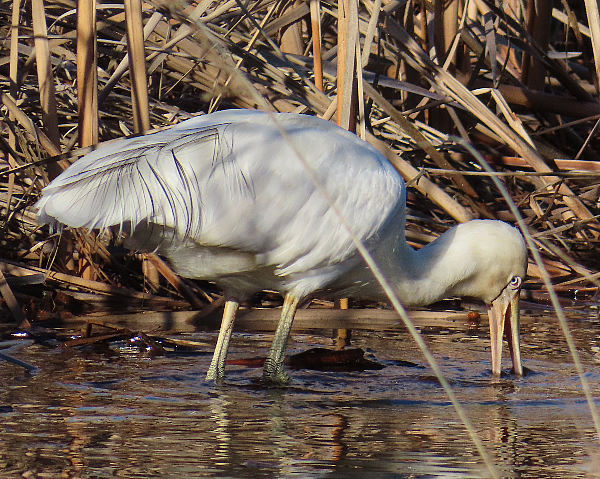
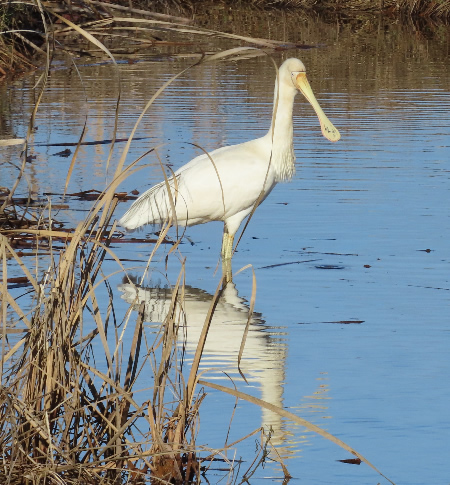
A Yellow-Billed Spoonbill enjoying the wetter weather.
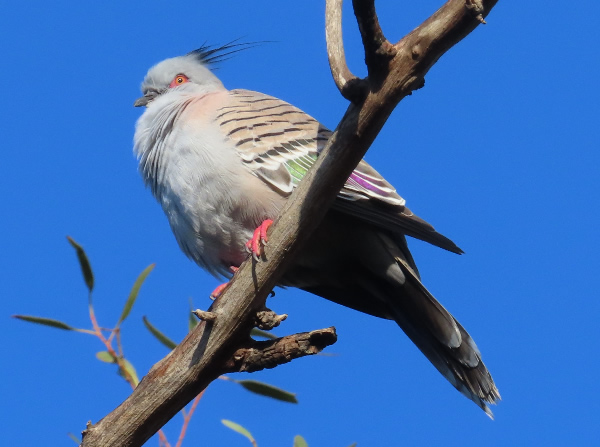
Crested Pigeon soaking up the sun.
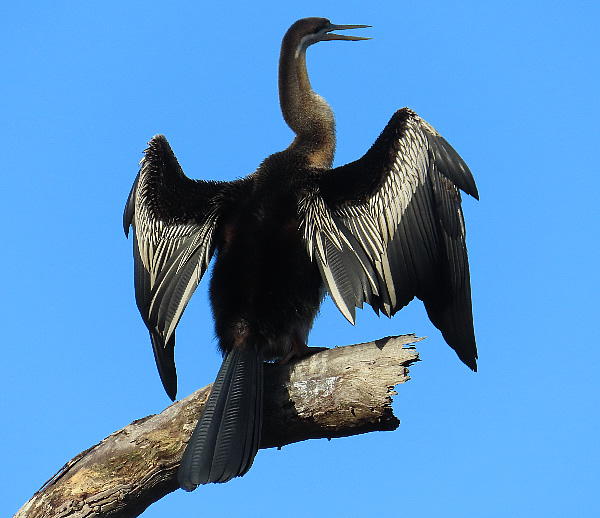
A Darter chattering to his mates.
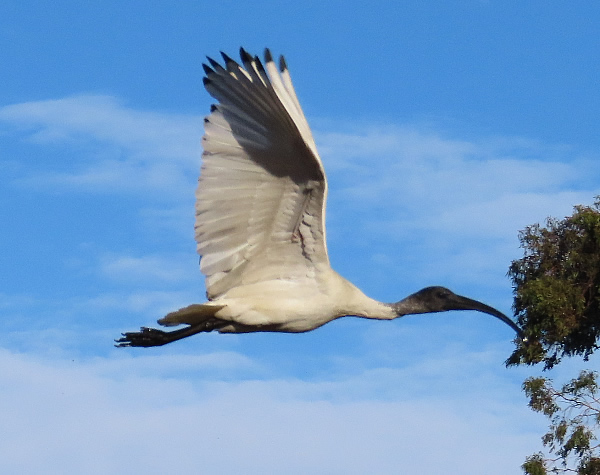
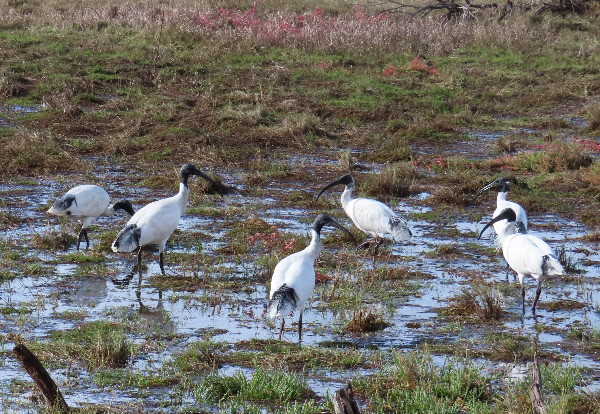
Australian White Ibis enjoying the soggy ground.
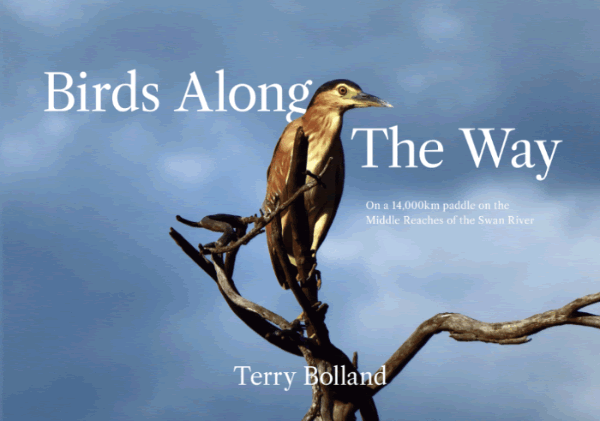
The Book 144 pages, 360 photographs, 280 of them being of 52 different species of birds and 80 being scenes of the river. $35.00 for paddlers. $45.00 for the general public. $60.00 in shops. 0417977330
|
|
|
|
|
|
|
|
|
|