|
|
|
|
On My Way Home
Friday night is SUP paddling night, a time for me to perfect something different from the kayak and I must admit it feels good to get better at a sport that I haven’t done
before.
Many of my canoeing skills has made it much easier for me to adapt to SUP paddling over the last year so I felt quite at ease straight away.So now a few of the Ascot PRG paddlers who have recently bought SUPs use Friday night’s as a fun night. Tonight we had Nigel, Sharon,
Kate, Debbie and Tashka. We had a few minutes practising a few moves around the club and then paddled upstream against the wind chatting along the way. At a spit post we decided to turn. Tashka started to turn first but I thought I would try to beat her to it and went rogue. My sleek, but rushed turn didn’t quite work to perfection and I found myself overbalancing and over I went in slow motion mode. I was wet. I soon jumped back on and off we paddled back towards the club. After practicing a
few turns at the club and with it getting dark the others called it a night. Five or six evenings a week I paddle the 400 metres home after a race or training session leaving the guys to wash down their boats and make their way home from the club. In winter this short paddle home can get a little cool, it can be wet, it can be windy, or the clouds and the sky can be awash with
red creating a spectacular picture of sheer beauty. This evening was not spectacular, but it was near perfect. The wind had dropped and the night was quite magnificent. It had been a 28 degree day, a bit hot for a May Day, but it’s been warm for months and still no sign of rain. Although I was slightly chilled from my dunking, as the water was much colder than the air
temperature, at least I was refreshed. There was a red hue over the island to the west as the sun was setting. It’s usually much more stunning when there were clouds, but tonight was cloudless, and although the sky lacked the more dramatic look, it was still worth a few moments of my time gazing at it. Darkness was soon upon me. I noticed a couple of lights sparkle on Ron Courtney Island from invisible fishermen. I could only see their shadows, but I knew they were there. The river was dead calm but just after the island, at the south end; I noticed V waves shimmering across the water. Several white ghosts started to appear and it was hard to
make out what they were, then the ghost like shapes turned into 11 pelicans that were gliding across the water in some sort of hunting formation. It was so surreal. I often see two or maybe four pelicans floating around in the dark, but this was something special, the gang as a group were ducking their huge bills in the water and feeding on fish. The evening was so pleasant I
just kept paddling beyond my take out point. It’s time like this I don’t want to head home, but just be out there deep in thought and taking in the atmosphere. With what's going on around the world I couldn't help but think how lucky we were in Australia. The moon high in the sky over towards the east still had several days to grow before it was full, but it gave enough light to
reflect on the dead branches of a big tree. Half of the tree still had leaves although they were also dead and still. There was no wind to rustle them. It was a shame that so many trees are dying along the river bank due to erosion and I suppose the extra dry weather that we are having this year. The darker it came the brighter the moon shone. It’s reflection in the water reminded me
of Broome, the Kimberley and many of my kayak expeditions. I just loved when the moon was present on those trips. I just stood there aloft a 14 foot board in a dream, a perfect dream of some of my past exploits. I was in heaven. I could see a bright light about 400 metres away on the Bayswater side, probably a vehicle at Claughton Reserve and another smaller light of a bike travelling
at a good speed on the cycle path on the east side. It started clattering across a wooded foot bridge and the rumble echoed across the water. A little further several orange lamp post lights around the Tonkin Highway Bridge gave a striking reflection in the water below the bridge. They lured me on. As I moved upstream there was suddenly complete silence. It was strange as
the airport is close by and the Tonkin Highway bridge about 700 metres away, but there was an eerie hush. Moments later the piercing screech of a flock of 28 parrots rang out as they were crossing the river. Seconds later they were gone, it was silent again. Then the sound of galahs piped up from the area of Garvey Park. I reached Claughton Reserve and turned. The darkness of the
river heading south suddenly became a little lighter when I turned and headed north and the half-moon (first quarter) reflected in the water. To the north-east about 5 lights in a jagged line were moving across the night’s sky. They were planes several kilometres away on the approach to the airport. I don’t know why, but I always enjoyed watching the lights when I paddled from the
south. I reached the steps where I get out and disturbed a white egret perched on a log nearby. It flew majestically across the river to find peace on the other side. The moon and the street light gave me enough light to climb the steps without stumbling in the dark. I crossed the road to see a new lit-up 'For Sale' sign on the house 2 doors away. I was surprised to see that my
neighbours were leaving. Within minutes my SUP was put on a rack and as the garage door was going down I heard someone shouting outside. Then I saw a little white dog running my way and before I could stop the door closing completely it had run inside the garage its tail wagging and looking pretty pleased with itself. When I opened the door to let it out it still didn’t want to leave
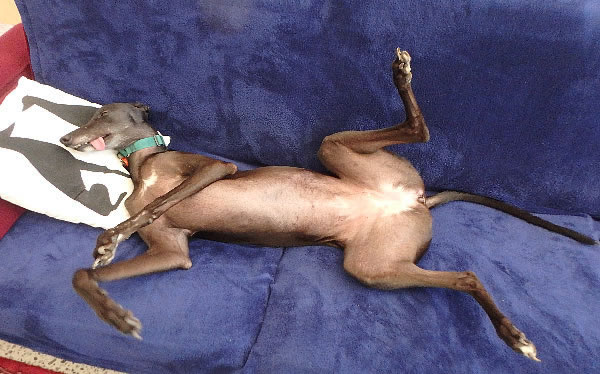
until its owner came across and collected it. I left the garage and climbed the stairs to the living room and opened the door. My eyes scanned the sofa expecting to see Nikki sleeping upside down; legs up in the air showing her belly and private parts, but she wasn’t there. I kept my emotion contained, but it’s going to be hard to get used to not seeing her in that position on the sofa
or seeing her friendly smile (which means I’m comfy here and I’m not getting off) or the excited greeting that I get when she thinks that I have been away too long. There is one thing for sure I will be looking for her every time I open that door. We will never forget you Nikki.
Nikki in one of her very relaxed positions.
- Paddler of the Week - Ramon Andersson
- The Liffey Descent
- Andy Birkett
- New Sprint Course in Kazakhstan
- Coming Events
- The Ramon
- Upper Swan Marathon
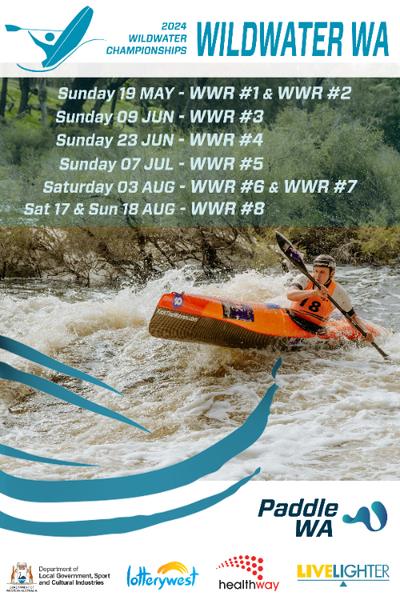
- Wild Water Race #3
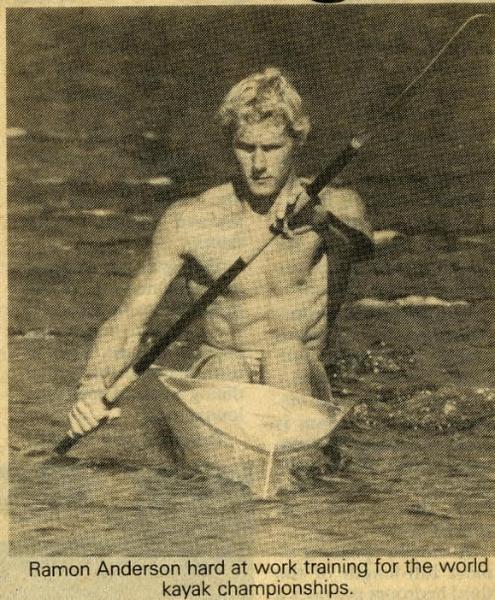
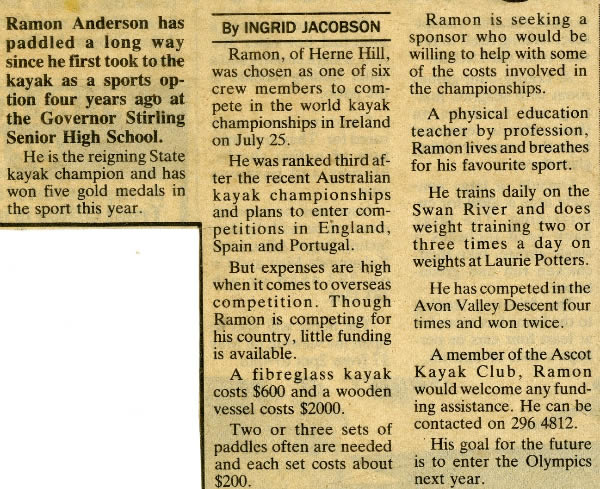
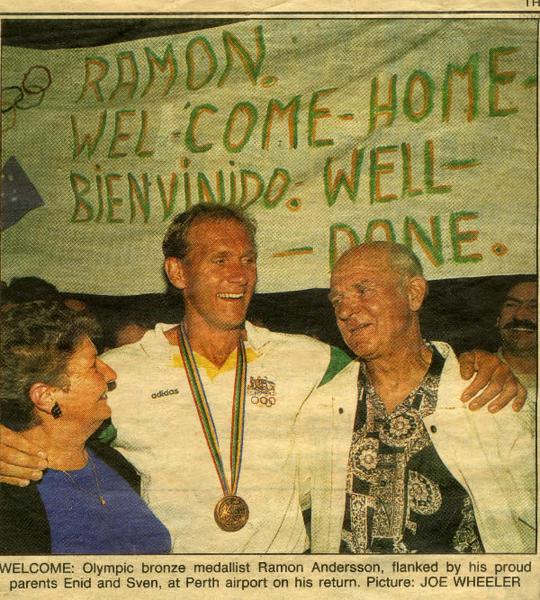
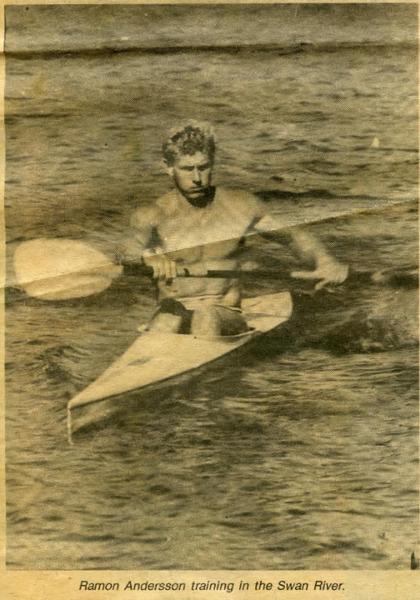
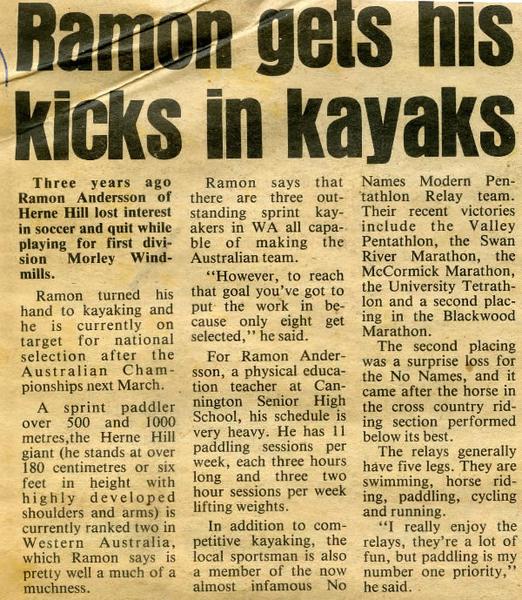
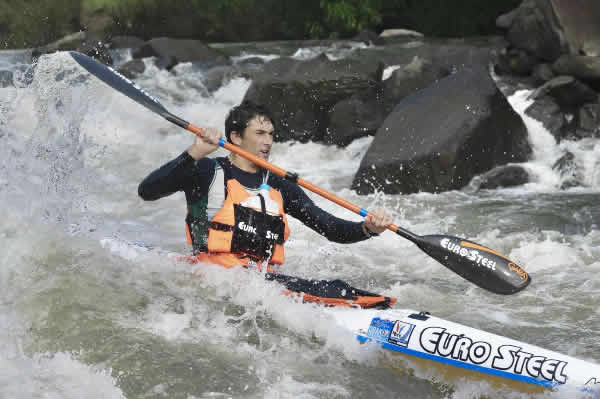
With the Ramon Race This Weekend This Weeks Paddler of the Week is Ramon Andersson Ramon Andersson grew up Hearne Hill in the Swan Valley and after
watching the Avon Descent as a youngster he developed an affinity for canoeing at high school. At university, it wasn’t long before his passion for paddling surpassed his other love, football. At 20, he gave away state league
football to become a full time paddler and a member as Ascot Kayak Club.
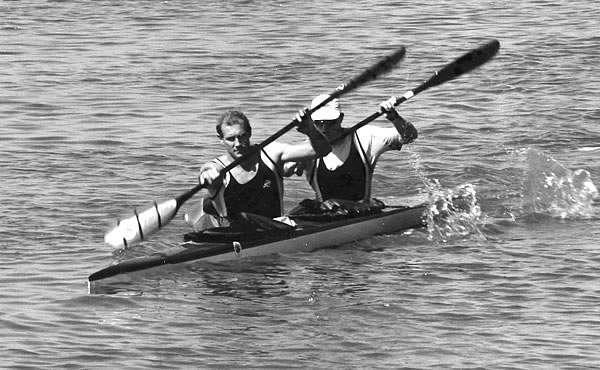
Ramon with Steve Wood won the 1992 World Canoe Marathon Championships.
Ramon started paddling in 1980. He has represented Australia on many occasions in varying disciplines, all with great success. He has contributed immensely to the development of the sport, especially through his role as WAIS Head Sprint Coach. In 2018 he was awarded Services to Paddling by Paddle Australia. SIGNIFICANT ACHIEVEMENTS- Ramon won silver at the 1991 Sprint World Championships in the K4 10,000m event in Paris.
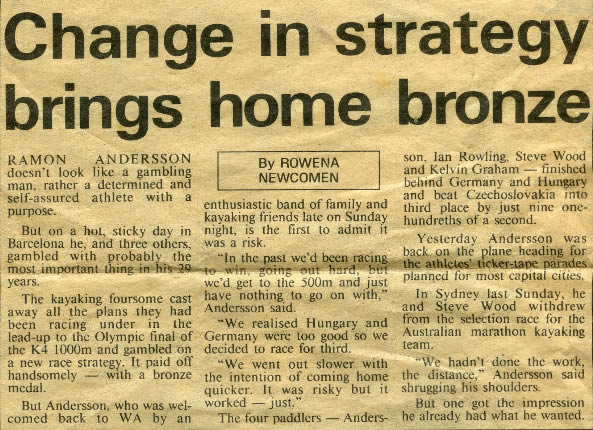
- In 1992, Ramon won bronze at the Barcelona Olympic Games in K4 500m
- In 1992 he became the K2 World Marathon Champion.
- Ramon finished 9th at the 1996 Atlanta Olympic Games in the K4 1000m event.
- Ramon was 1992 WAIS Athlete of the Year, 1992 & 1993 WA Sports Star of the Year and 2011 WA Sports Federation Coach of the Year.
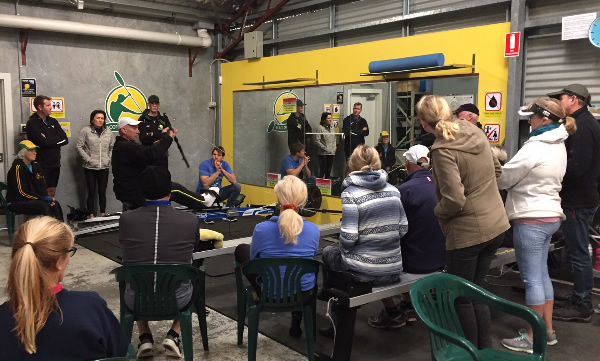
Ramon giving a coaching session. - Between 1988 and
2000, Ramon won 29 Australian Championships, a silver and two bronze medals at the World Championships, and 14 World Cup medals.
- In 1992 and 1993, Ramon was named the WA Sports Federation Sportsman of the Year,
becoming the first male to win the award two years in a row. He was also the WAIS Athlete of the Year for 1992/93, and runner-up Australian Institute of Sport Athlete of the Year in 1992.
- In 1995, he overcame
chronic fatigue syndrome to be selected for the 1996 Atlanta Olympic Games, where he again competed in the K4 1000.
- Since retiring from elite paddling, Ramon has gone on to pave a successful career in coaching.
Ramon’s influence and impact at the grassroots levels has significantly helped to raise the profile of paddling in Western Australia.
- At a state level, Ramon has been the Head Coach of the Western Australia
Institute of Sport (WAIS) Sprint Canoeing Program since 2003, taking the program from a small part-time program, to one of the most successful programs at WAIS, where it won Program of the Year three times between 2007 and 2012, and more recently in 2021.
- Ramon has coached many Olympic and National team athletes including dual Olympian and 2008 bronze medalist Lisa Russ, World Cup winner and 2012 Olympian Alana Nicholls as well as London 2012 Olympians Jesse Phillips and Steve Bird. His most recent success is both Shannon Reynolds and Jaime Roberts representing Australia at the Tokyo Olympic Games.
- Ramon was inducted in the WA Paddle Australia the Hall of Fame and Paddle Australia Hall of Fame.
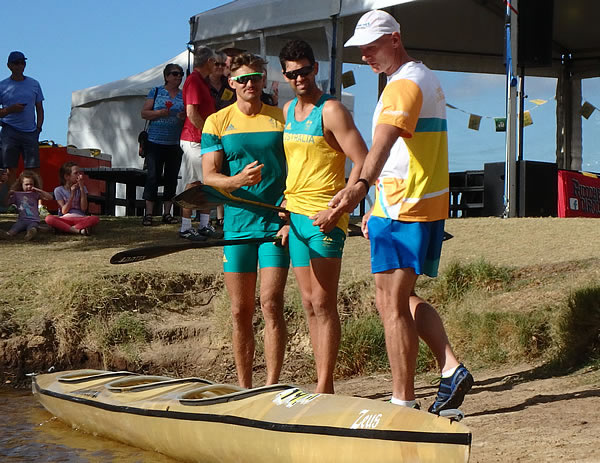
Ramon with Olympians Steve Bird and Jesse Phillips. In 1992, Ramon won bronze at the Barcelona Olympic Games in K4 500m
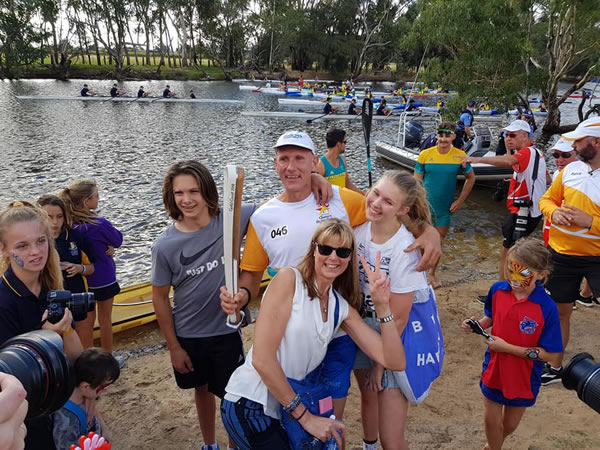
Ramon with Ethan, Sharni and Marie at the Olympic torch relay 2018.
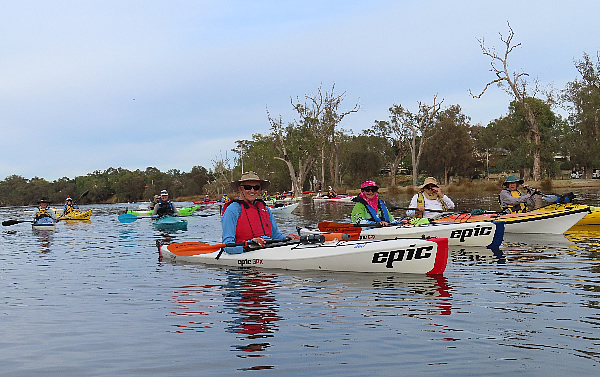
The Over 45 Canoe Club (about 50 of them) on their way for a picnic at Woodbridge Riverside Park. Unfortunately there is no public landing spot at the Riverside Cafe for kayaks so paddlers have to
take their own food and drink to the park nearby.
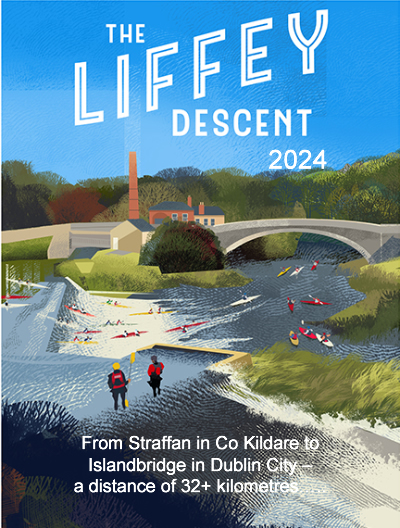
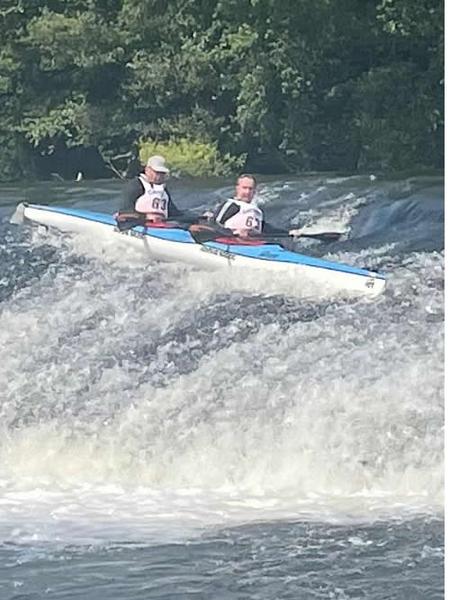
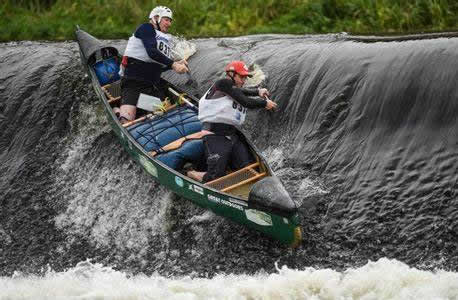
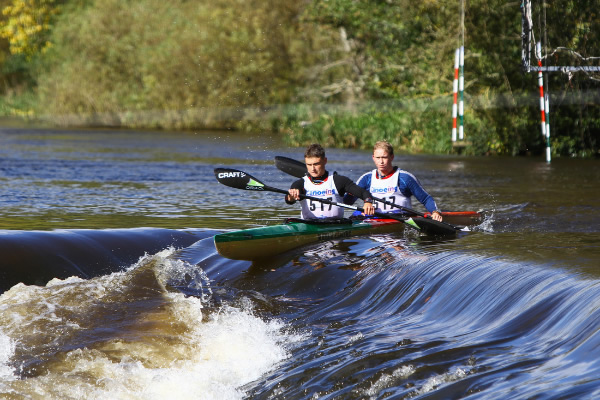
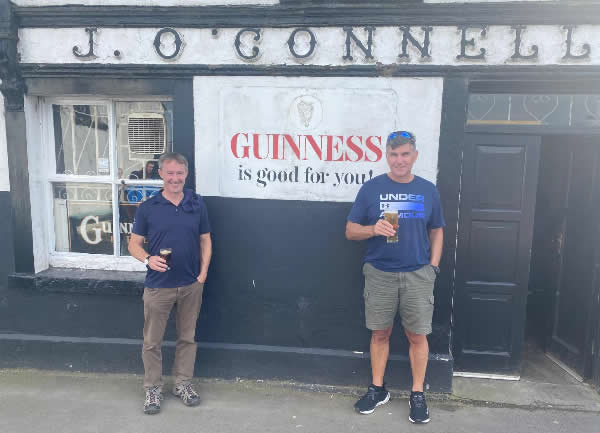
The Liffey Descent Joe Dowse & Gordon Lentz The race course consists of 10 Weirs and 1 portage. It starts within the grounds of the world famous K Club in Straffan, Co. Kildare and finishes 30+ kilometre later at the Garda Boat Club, Island bridge, Dublin.
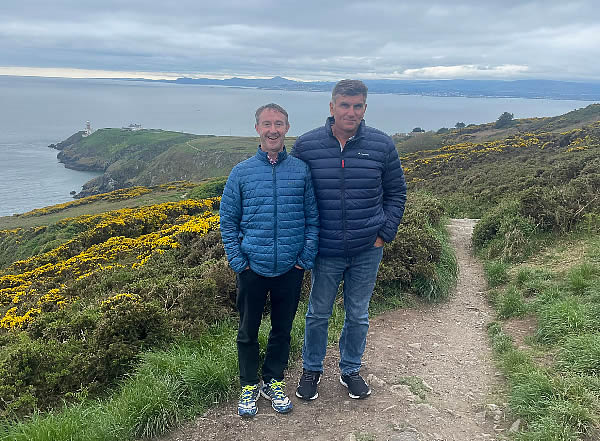
Joe & Gordon at Howth Head I look up and the small wispy clouds are rolling along overhead and the sunshine has barged through, the grass and trees are in full bloom and it’s an amazing emerald isle post card
picture of forty shades of green, but I need to snap out of tourist mode and focus as the race is just about to start. We are tucked into the side of a rushing flooded river with Gordon holding a branch to keep steady and my heart is in my mouth. The river is cold at 9 degrees and is running fast and furious, and the bare faced fight by 43 K2’s for pole positions in an area the size of a small tennis court is about to start. Dear Lord! how did this happen, and how did I end up in a pack of K2’s
fighting for a small open space on a river outside Dublin?
Well, in my sightly addled 55-year-old brain I am taken back to my youth where as a cocky young paddler I entered the Liffey Descent three times in the junior K2 class determined to get a gold medal. It was not to be, and I was second three times, and hard as it is to admit it even now, the winners were just faster crews. So, 38 years later here I am trying
again for gold. This time I have Gordon in the back like a big diesel engine ready and primed to put on the power. We came 3rd in the Dusi last year and feel we can manage big water and weirs so can really give this a go. We have been training for four months through business travel disruptions, a case of covid and family events but we are fit, fast, and determined to see off a mix of local Liffey descenders, British marathon specialists and some paddlers who have done over 30 Liffey descents.
Bring it on….
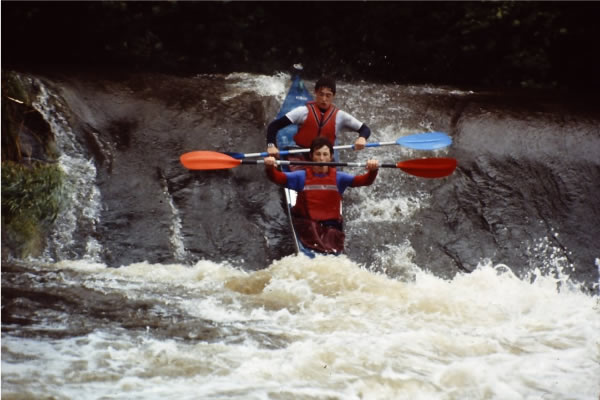
38 years earlier Joe in the rear and his mate paddled 3 Liffey Descents coming second three times. 1983. The boats start to hit each other, and some bad words are said. Paddles are being slapped and while Gordon is
being polite, I don’t expect that will last long and a fight may break out. This is not the nice aussie river manners that I have started to become accustomed to, this is viscous first past the post and to hell with rules and objections. First past the post wins, period. The starter is floating us on to the start grid and everyone is edgy, then someone clashes paddles, others join in and bang we are off, it’s an illegal start but it’s let go and we are suddenly in the middle of the pack awash
with waves and turbulence.
Gordon digs deep and the boat surges as we pile into a few boats, but we push, scratch and barge ahead and we are soon in open water. The race is on as each boat tries to gain a space and not get side slapped or deliberately pushed into the bank. We power on and find ourselves in a good position just under the pedestrian bridge which is full of people shouting encouraging words such as “go
on Ya Boy Ya”, or “for ft@$!%* sake go faster!”.
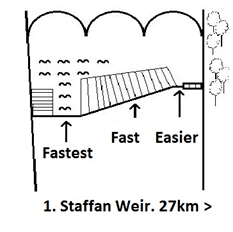
Time to practise before joining 43 K2s on the line. We can begin to hear Straffon weir, and as we round the last corner, the roar of the water is crystal clear and really starts to focus the mind. There is only one way
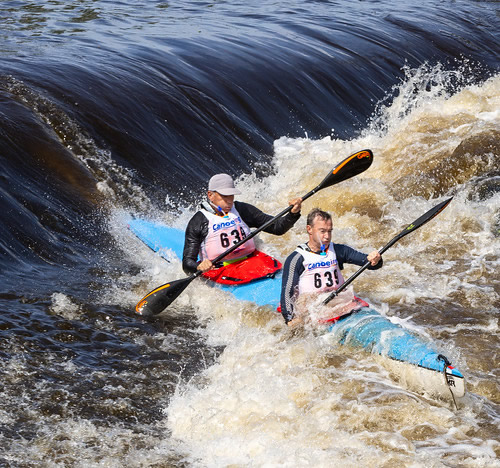
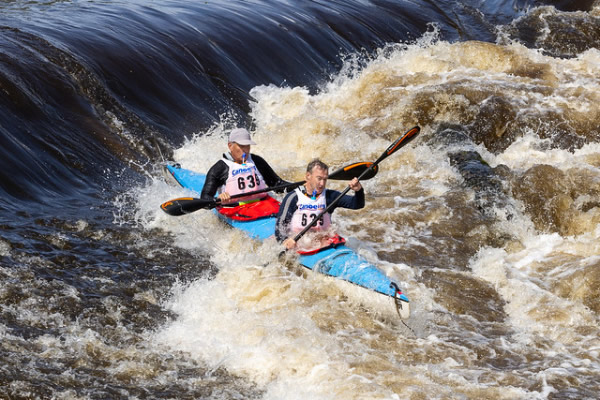
down the weir, which is to shoot it from the right, veering left into the fish tank stopper, rise up and on to the water spout and through the main stopper. The big risk is to get hit by another boat and knocked off sideways or brace in the fake waterspout and find that it’s just air. We line up with the old tree in the distance as a guide and suddenly the open drop is in front of me and down we go, water hits me and crunch we hit the nose on the weir, but rise up and onto the shoot. There are
shouts and curses, we miss another boat but keep up and make it on to the main tongue of water. Then suddenly we are facing the stone wall of the bridge entrance, full rudder is applied, but the boat lurches sharply to the left and suddenly there is water up my nose. Darn it we are over. There is no room to swim and we shout at the other K2 to get the f@%^* out of the way. They shout back, using words that even sailors would find offensive.
This manoeuvre has us pushing past the rescue boats and under the bridge arch as we fight for space. We get purchase on the bank where there is a scrum of K2’s who also got knocked out. Gordon gets a foothold and pushes the boat over three other boats as we find a spot to empty and get back in. There is a small opening in the trees and we push the
boat over bodies and rudders to take it, some of the others are fighting to lift their boats in the deep water and are much slower than us as we had filled the boat with airbags and had very little volume to drain out. We are wet and pissed off, but as we get back in with our spray desks on and paddle off, we can be thankful for a fast turnaround and an unbroken boat.
Into the stopper of Staffan Weir.
Now on to the jungle section, where we tread our way through the oak trees and corners, as these are no flexible WA tea trees. They are solid and unforgiving and boats that fall in here get swept under the branches quickly and snapped in half. We manoeuvre ourselves behind an experienced crew and follow their back wash as best we can. The jungle
thickens up and then thins out and we grind on into shallows and eddies to avoid anyone catching us. Then suddenly the trees open and we are at the beginning of Templemills weir. We have a support team there waiting, but we don’t need anything so go past to their cheers and words of encouragement.
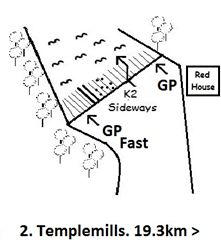
Templemills weir has a quick choice of a riskier but faster main shoot, or a safer but slow and potentially boat
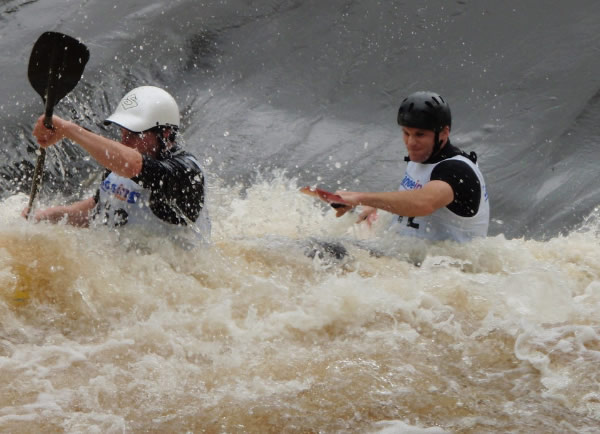
breaking slide on the right. We go for the right and line up the boat on the current with a fixed fence post in the distance, right here we go, and we take the boat straight over. If we fall off the line we will fall into the stopper and break the nose, but we get it right, punch through the trees and are on our way to the next weir. The two K2’s we had been trailing take the faster line and are in the water swimming as we glide by. One of them is in our class and has damaged their nose. Great,
one down, more to go…
A pair slide down Templemills Weir.
There are some small rapids now as we head to Vanessa weir and it’s a sidewards sliding weir, not too tall, but you must lean hard left to get over the stopper at the bottom. Vanessa may sound like a nice girl’s name but this gal can catch you with sharp rocks at the bottom and pull off a rudder. We get the line right and woosh we are through.
After this we push on to the town of Celbridge and under the bridge. Its full of spectators and we get a round of applause as we paddle, but being Ireland there are also a few words of abuse thrown by random spectators for fun. Like “go on will ya, you eejit, my granny can paddle faster than that”. The adulation does not last long as we are soon confronted by Castletown rapids. It’s a Z shaped route through the rocks and I drag up old line memories as we poke the nose through and avoid the
fallen trees and rocks. Our rudder which was designed by Wayne and is made of heavy stainless steel now comes into its own. I can hear it bash the rocks as we thread our way through the rocks and trees. Its blunt, unbending and not afraid of being hit, just ideal for the liffey race.
The next section is over the hidden weir or ghost weir. This weir only comes out when the dam is being lowered for the race. It’s a
nasty rocky weir and has a strong stopper that turns sharply back on to the weir face. We decide to take it at speed and are very glad we did as the stopper grabs the tail and nearly pulls us back as we go over. Now it’s a long haul into the wind and through Leixlip lake and on to the portage.
We have already got my nephew ready to clear a gap for us and we pull up fast and clamber out the side of the portage bank.
Its slimy and muddy and hard, but Gordon pushes up the back and I pull on the nose. We shout at the spectators to get out of the way, hit a race official in the
stomach with the nose as we turn. What was he thinking? and who is dumb enough to stand near where the big K2’s are getting out. We empty the boat, get ourselves ready and start jogging onward. Again, it’s all for one and rules be damned. David my nephew is
shouting at people to get out of the way on the road and physically clears a path for us down the grassy slide and the river. He squirts gel and drinks into our mouths and helps encourage us on as the legs are getting very tired from the long portage. We slide past the muddy entrance and drop our boat onto another boat, again some pleasantries are exchanged, and we get our spray decks on, as now we really need to concentrate.
In front is blood bridge, named after the number of boats that get broken on the bridge pillar. You need to get out and into the middle of the river within a few meters of the portage or the current will take you left to right and into the stone pillar. There is only one way to go which is out and into the rapids fast. So, we coordinate our start and paddle like we are possessed. Out we go and we paddle faster as the water is pulling us to the right, we edge left to
keep the nose at an angle to the water and make it past the bridge. Those spectators on the bridge can bay for another boats blood, but they are not getting ours today.
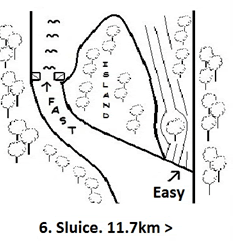
For another 4 km we paddle on and get into a good rhythm before we get to the Sluice. We decided long ago that we will shoot this on the front right side of the weir as the main sluice shoot is too risky. Our route is slower, but we need to get to
the finish. We push over and down into the turbulent pool but after some frighting scratching noises we are in the main flow and off. We pass some more boats that are in poor condition and one crew looks a bit shell shocked as I think they had a bad swim at the Sluice. The protocol is to nod politely, but then push on.
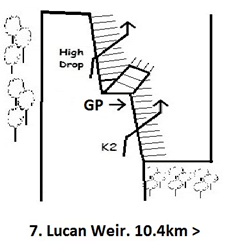
Now to confront one of the biggest and highest weirs on the river at Lucan. This has to be taken at a 35-degree slope as too much and you break the boat, and too little and you get caught in the stopper, with another boat dropping from the top of the weir onto your boat. We pick up speed and line it up as we feel the boat sliding away from us, but
the angle is good and we both lean into the weir. At the bottom I get soaked as the nose goes through the stopper but a few rocks have kicked the back of the boat hard sideways and Gordon is thrown out. I am nearly out of the boat but get my paddle into the river bottom and push up and stay in the boat. Gordon is quick, recovers well and pulls himself back into the boat. Our family and support crew are on the bank shouting words of encouragement and I can see them out of the corner of my eye. My
cousin thrown biscuits to us for fun and we pull in to the bank to get our spray decks on and paddle off, even though the boat is full of water. Gordon starts pumping furiously as we have only 3 km to get it empty before the next weir.
Joe & Gordon slide down Lucan Weir.
What Jo & Gordon can do so can they! Anna Liffey weir is one of the simple weirs and Gordon has emptied the boat so we glide down the fish pass with ease. It’s another few km to Wrens Nest weir
and one of the largest V shaped weirs on the liffey. This is where I paddled in my school days and can do the main shoot in my sleep, however it was nearly 40 years ago and I am not so confident now. We can hear the roar of the water and the paddles of paddlers in front of us being thrown out of their boats into the left-hand stopper. We line up the nose and down we go, I wait for the nose to rise out of the shoot and nothing is happening, I start to worry, oh shit have I got the line wrong? But
suddenly the nose shoots up and we are on to the top slide. We keep it steady and smash through the eddies and waves to the bottom, yeaeehae.
The journey now is through the lower liffey valley which is a beautiful scenic section. We can actually enjoy the race here as it’s gentle padding with trees, weed beds and super valley views. The water soon flattens out as we reach the beginning of Palmerstown weir. This is
the last big V weir and can only be overcome with a clean fast shoot down the very middle. Each side has a nasty stopper and so we paddle hard, get our speed up and then bang we are down and out onto the bottom; however, we still have a nasty wave to contend with and we smash into it at an angle. Gordon holds her steady as I try to get my paddle out and pull us onwards. We make it and then we are into the last tree section where the sides are covered in forest. It’s a sort of hidden nature
reserve, and while dark and overgrown, is an amazing place right in the heart of the city.
We are nearly there and so paddle on increasing our speed as we head to Chapelizard weir. This is a high side shoot, and we line the boat up carefully. This has a reputation as a paddle breaker due to the iron reinforcing bars breaking through the weir and catching paddlers paddles. We manage to shoot it well and head on to the finish. It’s now a
four km race to the finish. All the training comes back and we get a solid pace on, no one is passing us. We pass one boat that has water shooting up from a broken nose, a damaged rudder and a back paddler with one broken blade. Typical carnage from the liffey. We gather speed and then like a cold drink on a hot day there is the line which we are very glad to see. So we have made it,
after 35 years I am back where I started, wet, sore and tired, but thrilled and so happy to have completed another Liffey descent. It’s been many days of early stars, hard work, long runs and effort, but the sense of completion is worth it.
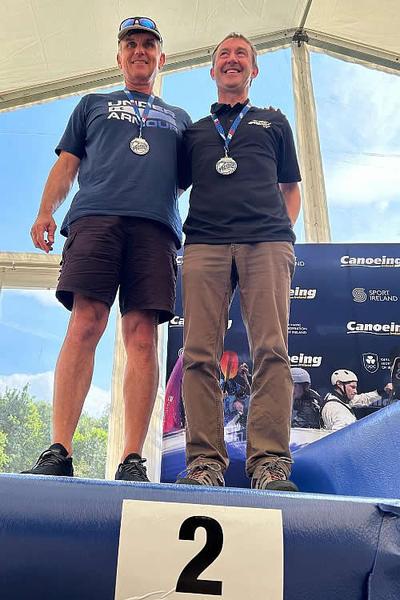
On the podium. 2nd in their class.
We get out and change and then wait to see how we did. To our delight we are announced as the aussie team all the way from Ascot canoe club in Perth and are 2nd. Many of our competitors did not finish and I suspect that their boats were broken on the V shaped weirs towards the end. We could see damaged boats as we passed but tried to keep focused
as it’s easy get confident towards the last sections but these are really high V weirs and the race is never over till you cross that line.
Overall, it’s been an amazing race. I am thrilled at our 2nd placing and yet a bit frustrated as this is my fourth silver and we only lost to the British crew by 4 mins. That swim at Straffon potentially cost us the race, but it was an amazing experience, thrilling weir shoots
and as usual Gordon did an amazing job powering the boat along and fending off the pirates and vagabonds. Results here:- Liffey Descent , 2024-05-11 : : my.race|result (raceresult.com)
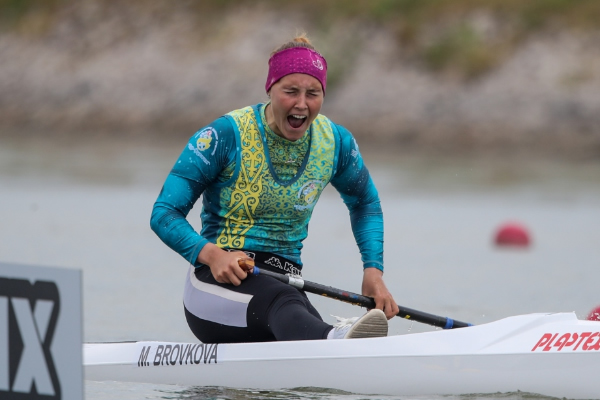
South Africa's all-round paddler Andy Birkett has been named in the team for the Paris Olympics!
Andy's selection in the kayak sprint event is a testament to his hard work, dedication and immense talent. As a multiple Dusi Canoe Marathon
champion, and a world champion he has consistently shown his prowess in the water and will no doubt make South Africa proud in Paris.
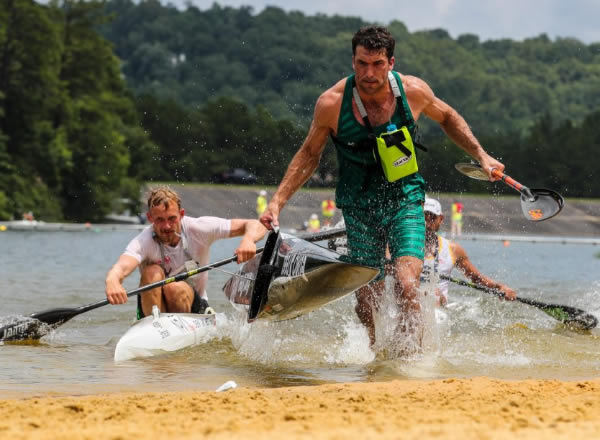
Andy Birkett exits the water in the Men’s K1 marathon event at The World Games 2022 in Birmingham Alabama. PC: Balint Vekassy In Birmingham Alabama he almost convinced himself his time was up, after asthma
contributed to a performance well below what he had been hoping for. But a day is a long time in sport, and on Tuesday South Africa’s Andy Birkett once again climbed to the highest branch of the tree, having achieved what many thought was impossible by outracing Danish superstar Mads Pedersen for World Games gold at the Oak Mountain State Park. Commentators were pondering how long the 31-year-old 2018 world champion could stick with the 26-year-old two-time world champion, who has shown a penchant for blowing opponents out of the water with a sudden burst of speed that leaves the remainder of the field wallowing in his wake. Surely it’s just a
matter of time, the commentators proclaimed. Fans on the beach agreed. Birkett was being incredibly brave, he’ll be really happy with a solid silver, one onlooker said, receiving knowing looks from all those gathered around the big screen. Then the trademark Pedersen blast came. But when the mist settled, there was Birkett, powering alongside. Another blast. Still he clung on. The
South African had a steely focus, only revealing after the race that indeed, Pedersen had broken him. If only the Dane new. “He did succeed, I kept on shortening my paddles to try and find another gear to stay on his slip. I just had to dig deep and try and stay there,”
Birkett said. “The pace that Mads was setting was insane. I had the goal today of trying to stay with him, and if I could stay with him until the finish, then I would feel like I won the race, because I don’t think anyone has stuck with him in a race for a while. “He was so
strong out there today. I was going to say to him at one stage, if you pull ahead I’m just sitting on the slip, I’m just going to try and secure a podium at best. But I found another gear towards the end and just backed myself. In many ways Birkett had become the forgotten man of canoe marathon paddling. When he became world champion in 2018 many believed he had finally wrestled the
crown from teammate and paddling legend Hank McGregor, after finishing runner-up to the big South African in 2016 and 2017. MEN’S MARATHON - BIRKETT Andy (RSA) 1:23:52.83
- PEDERSEN Mads Brandt (DEN) 1:23:53.13
- ALONSO Ivan (ESP) 1:25:14.82
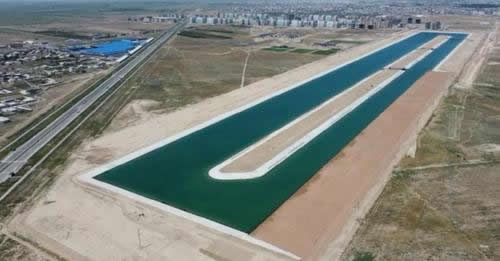
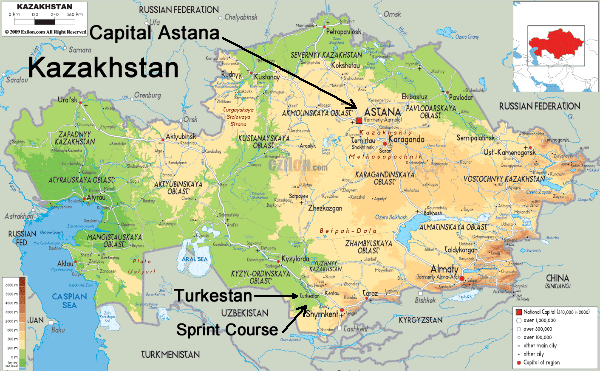
A Canoe Sprint venue is being created in Kazakhstan A Canoe Sprint venue is being created in the heart of an historic region in Kazakhstan with the aim of developing paddle sports
across the country. The course will be in Turkestan in the south of the Central Asian nation and will be able to host Canoe Sprint and Paracanoe competitions as well as rowing and Para rowing events. It is expected to be fully completed by the end of the
year. Denis Zharmenov, Chair of the Rowing and Sailing Association of the Turkestan Region, was in Szeged, Hungary last week to discuss plans to develop paddle sports in Kazakhstan with International Canoe Federation President Thomas Konietzko. He also held a
meeting with John Edwards, Chair of the ICF Paracanoe Committee. “With my team, we are putting in an enormous effort to develop paddle sports in Kazakhstan,” said Mr Zharmenov. “In 2020, I persuaded the local authority of our region to start building a new course
from scratch. “It’s crystal clear that without such a venue we cannot develop paddle sports to the level we are aiming for.
The new sprint course in Kazakhstan.
Kazakhstan, officially the Republic of Kazakhstan, is a landlocked country mostly in Central Asia, with a part in Eastern Europe. It borders Russia to the north and west, China to the east, Kyrgyzstan to the southeast, Uzbekistan to the south, and Turkmenistan to the southwest, with a coastline along the Caspian Sea. Its capital is Astana, while
the largest city and leading cultural and commercial hub is Almaty. Kazakhstan is the world's ninth-largest country by land area and the largest landlocked country. It has a population of 20 million and one of the lowest population densities in the world, at fewer than 6 people per square kilometre. Ethnic Kazakhs constitute a majority, while ethnic Russians form a significant minority. Officially secular, Kazakhstan is a Muslim-majority country, although ethnic Russians in the country form a
sizeable Christian community. The Course. “The course is close to being finished now and it will be built to all the international requirements. “It will be very unique as it has been built in the centre of the city. “To keep the water inside of the course fresh and clean we are using the same system used for any swimming pool to purify it. “We are at a stage now where we
are building the boat houses, judging towers and spectator areas. “It’s an exciting project. “Mr Konietzko and Mr Edwards have both been a great source of support. “Whenever we have needed help or guidance when it comes to building the venue or developing paddle sports, they have always been there to help us.” The venue will stage its first Paracanoe competition from September 16 to 19 when it plays host to the Open Cup of Kazakhstan. Mr Zharmenov says he hopes to attract international athletes to the event which will take place after the Paris 2024 Paralympic Games. “I would like to ensure that there will be many competitions held at this course in the future,” added Mr Zharmenov. “In September, we are organising a Paracanoe competition, called the Open Cup of Kazakhstan, with representation from other countries.
“Kazakhstan is the ninth biggest country in the world when it comes to scale, and this will be our only international Canoe Sprint course. “Turkestan is unofficially considered the spiritual capital of Kazakhstan and we have so many
ancient buildings here. “The Canoe Sprint course is conveniently located. “It is a stone’s throw away from the airport and when it comes to accommodation and food, we are not going to have any problem as the venue is located in the centre of the city where there
are so many hotels and restaurants.” Canoe Federation of Kazakhstan General Secretary Zhassulan Taitenov said a new course would be a big boost for the country. "A sports facility for sprint canoeing in Turkestan will give positive dynamics to the development of Canoe
Sprint and Paracanoe," said Mr Taitenov. "The federation is looking forward to the opening and launch of this sports facility. "With the support of the ICF and the Asian Canoe Confederation, this sports facility will expand our geography of international competitions and
raise the prestigue of the general Canoe Sprint family to a new level in the region." The ICF Canoe Sprint World Championships will take place in Central Asia for the first time when Samarkand, Uzbekistan plays host later this year. The event featuring only non-Olympic
disciplines will be held from August 23 to 25 – just two weeks after the staging of the Canoe Sprint competition at the Paris 2024 Olympics.
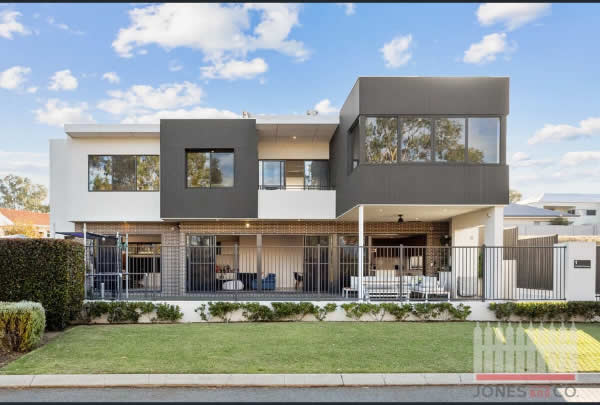
Do You Want To Be My Neighbour 20 metres from the river. You might need close to 2 million dollars though!
Looks out onto the river. Discover the epitome of waterfront elegance at this exquisite 3-bedroom, 2-bathroom residence, complete with a 2-car garage, nestled in the prestigious neighborhood of
Ashfield Parade. Designed with an unwavering attention to detail, this home offers a harmonious blend of luxury and comfort with high ceilings, sleek concrete aggregate flooring, and a sophisticated security system to ensure your privacy and peace of mind.
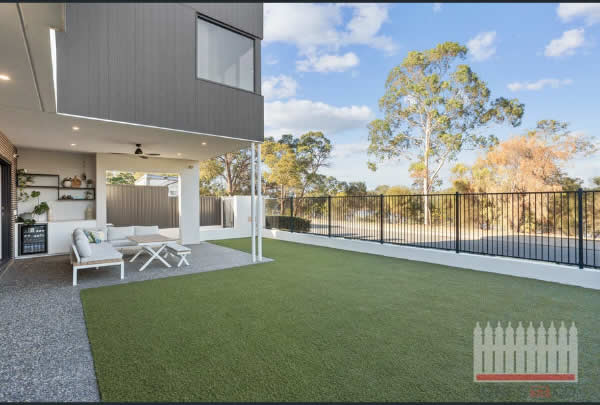
20 metres from a kayak ramp. Entertain in style by your heated pool or in the elegant outdoor alfresco area, both ideal for hosting gatherings or enjoying quiet moments by the water. With direct
gate access to the river, enjoy leisurely strolls or morning jogs along the scenic paths, or simply unwind by the serene water's edge. We could do rolling practise in the heated pool!!
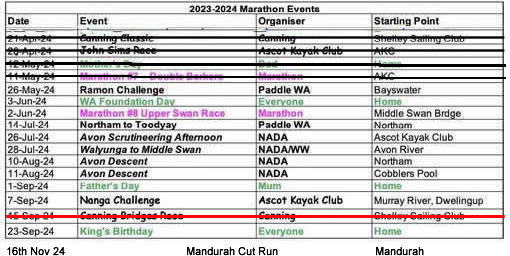
Coming Events 26th May 2024 - The Ramon 2nd June 2024 - Upper Swan Marathon 9th June 2024 - Wild Water Race #3 23rd June 2024 - Wild Water Race #4 14th July 2024 - Northam to Toodyay 28th July 2024 - Walyunga N/P to Middle Swan
|
|
|
|
|
|
|
|
|
|