|
|
|
|
Women in Paddling and their Challenges, their Determination
and their Aspirations. For those people getting this newsletter on their phone or ipad, remember to click View Entire Message to make sure you get to see the entire newsletter.
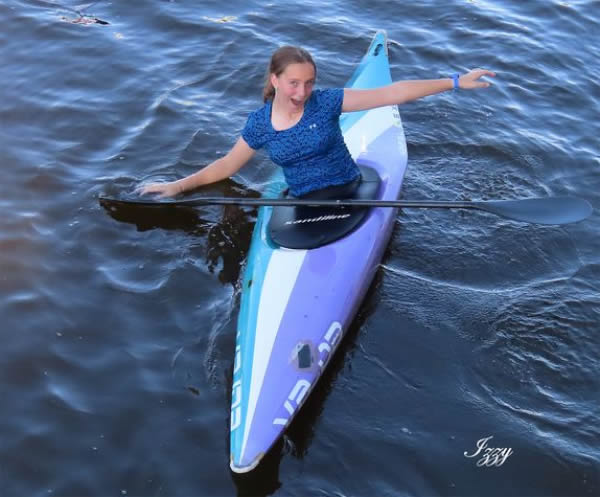
Izzy Florisson She is only young but she has got the skill, she has got the will, she has got the drive, she has the motivation and the determination. And she enjoys a challenge. So what year will she become an Olympian?
- Paddler of the Week - Leana Stendall
- Paddling Canada - Alaine Davin
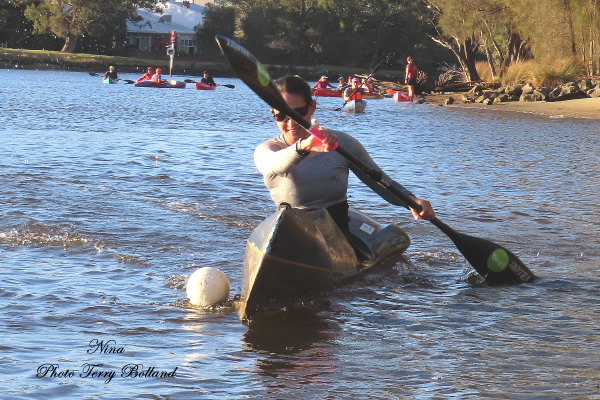
- Wild Water - Nina
Mueller
- First Female Canoe/Kayak Medalist at an Olympics -
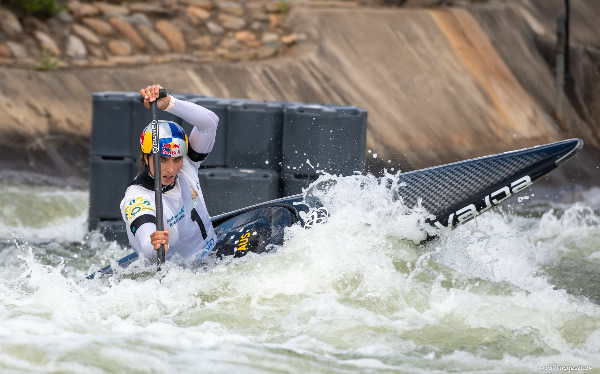
Danielle Woodward - To the Olympics - Jess Fox
- Slalom / Kayak Cross - Noemie Fox
- Coach of the Year - Myriam Fox
- Chasing Olympic Selection Sprint - Yale Steinepreis
- Living with a Broken Leg - Nikki
- AKC Slalom Paddlers
- Chasing Olympic Selection Slalom - Brody Crawford
- Coming Events ---
- Pinjarra to Ravenswood Race
- City Lights Race
- 2024 Australian Canoe/Kayak/ SUP
Marathon Championships
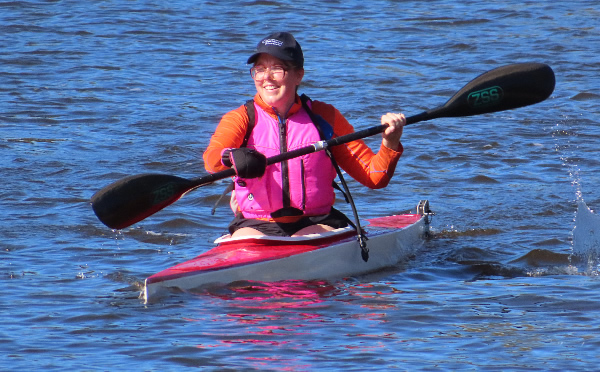
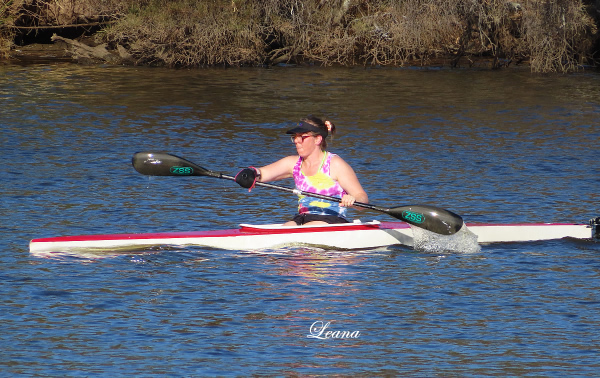
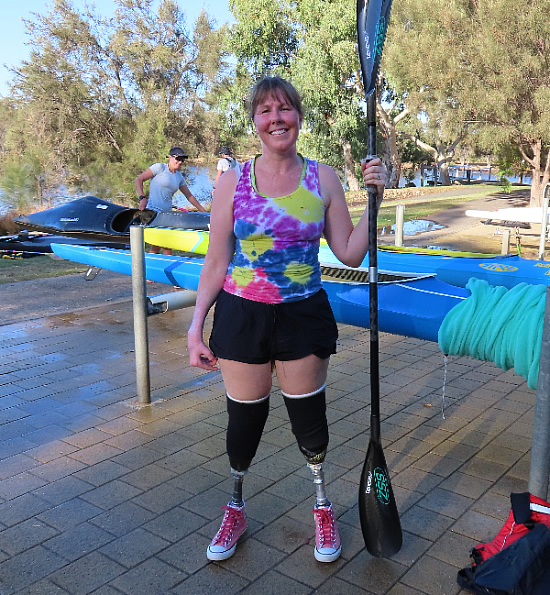
Paddler of the Week Leana Stendell Leana woke up one morning vomiting and 12 hours later, she was in a coma, where she stayed for 12 days and almost lost her life when she contracted sepsis. Not only that she had to have her legs amputated up to her
knees. Seeing Leana in a kayak and looking so happy you would never know she was once on her death bed and has no legs. Leana also lost her thumb tip and the function in her right hand. She is now left handed and uses a special glove on her right hand that attaches to the paddle when paddling. After the trauma of nearly dying, having her legs amputated and having her life shattered, Leana has put that behind her and is making a slightly different but fulfilling happy life for her and her family.
She has two young
daughters and a husband.
Leana is certainly an inspiration.
Leana taking part in the Sandy Beach 4 km race. To steer her kayak she slips a long alloy bar around the kayak's T bar and steers the kayak with her knees.
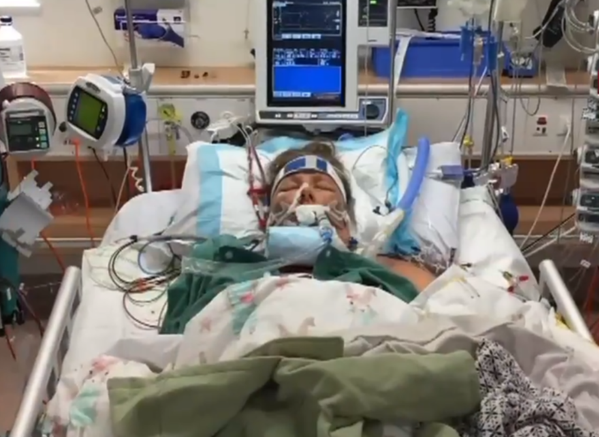
Leana in hospital. A Perth mother is warning others after she lost her unborn baby, had to have her legs amputated and almost lost her life when she contracted sepsis. Leana Stendell fought back from sepsis when doctors didn’t expect her to live - and now, she’s sharing her inspirational story of survival. “He wrote in his notes that I wasn’t going to make it, make the night... but I did!” the woman told 7News about her doctor. Stendell woke up one morning vomiting and 12 hours later, she was in a coma, where she stayed for 12 days. She was pregnant and her son was delivered at 33 weeks, sadly stillborn. “I think for my
family, that was traumatic because I was asleep, so I don’t have any memory of that and they are there holding that memory instead,” she said. The Perth mum had Strep A and it progressed so quickly, she developed sepsis. “Sepsis is
a time-critical emergency, where the body’s response to an infection can cause shock or organ failure or death,” Royal Perth Hospital Jonathon Burcham said.
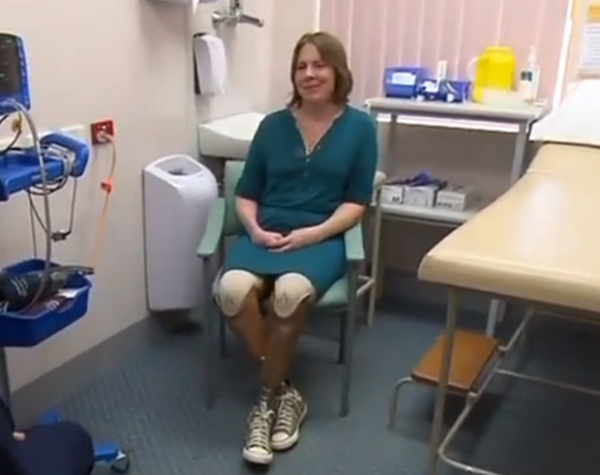
Leana wearing her prosthetic legs The mother of two spent four months in hospital where both her legs were amputated below the knee. “I remember making that choice that I was going to be okay and I was going to be happy,” she said. In Australia, there are 55,000 cases of sepsis every year and 8700 deaths which is more than seven times the national road toll. A new nurse research
program at Royal Perth Hospital is hoping to find a faster way to diagnose it and save lives. “What we really need is a blood test or another test that can say yes this is sepsis or not,” Burcham said. The financial cost of the mother’s brush with death is huge with
prosthetic legs each costing $17,000 each. She said despite the loss, she has gained a whole new outlook on life. “More so now I’m just grateful and I see the happiness and joy in things and that’s where I want to be,” Stendell said.
Leana is a regular participant at the AKC Progressive Racing Group time trial. Leana first got into paddling when she went to a Para Sports Open Day and met Para Paddler Mark Daniel’s with the specific idea to get out on the water. She wanted
to do some exercise and walking and running were off the table, for obvious reasons! Disability does mean that being inside is a safer place, but she said, she was a big outdoors gal before she became ill. Leana loved hiking and being in nature so kayaking seemed to be a perfect fit. And she assumed feet were optional! (She still has a good sense of humour.) She joined the Ascot Kayak Club Paracanoe programme and Mark and Helke Melville (Orthotist/Prosthetist) worked together to find a way to get her down to the water and in her boat and then to help her to feel confident in a boat.
Over the last 3 years Leana has become
more independent moving from being in a K2 only, to paddling a single TK1 which she does very efficiently. She is also enjoying being on the water and paddling a stable sit-on kayak with her children.
It's thanks to paddling with Kirsten,
a supportive friend and occupational therapist that she feels safe on her own. The biggest leap for her was joining in on the club activities. She now has the addition of a community and friends that have really helped her to feel included and this has been the best part.
She said, life doesn’t need to stop, it will just meet you where you are at.
Mark Daniels, Helke Renee Melville and Kirsten Campbell, above helped Leana gain her confidence. How would we be if we didn't have people helping people.
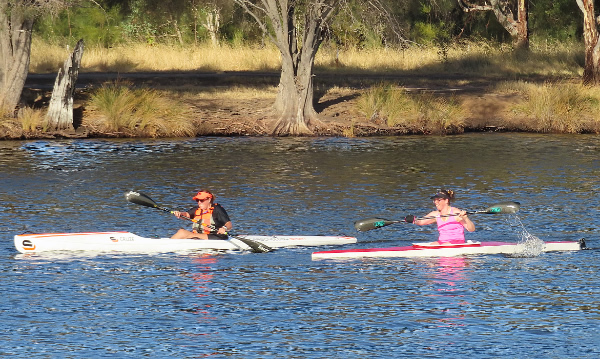
Leana keeping pace with Julie McDonald.
Leana is part of the Ascot Kayak Club and the Progressive Racing Group. She is hoping to get some new electric legs but they have a cost of $40,000 each.
Women out number men in the PRG group. That's why it's such a social racing group.
Alaine Davin
Hay River, Canada, 2008
16,500 kms as the plane flies from
home. Alaine’s mum died a day after arriving in Canada to do a long canoe expedition.
Below is a shortened version of the next 10 days.
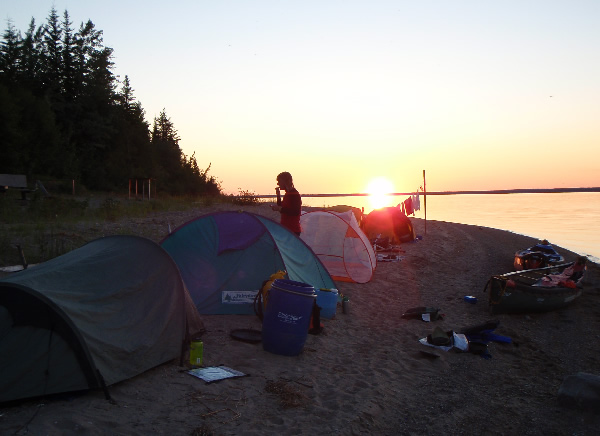
Day 33 or Day 1 for Alaine & Leonie. Tuesday 8th July Tony and I had just paddled over 2000kms in the last month from the town of Jasper down the Athabasca and Slave Rivers to the town of Hay River on the Great Slave Lake and it was now time to greet Alaine Davin and Leonie Cockman at the airport who were going to paddle with
us for the next 2000kms. Our journey ahead would take us across a small section of the Great Slave Lake and down the entire 1650 km Mackenzie River to Tuktoyaktuk on the Arctic Ocean. The day was sunny and hot with clear blue skies. Only a handful of people waited at the small airport and only a handful of passengers got off the plane when it arrived. The girls looked quite refreshed
and clean looking in their bright coloured T-shirts and they were excited and awestruck by the size of the huge Great Slave Lake that they had seen from the plane‘s windows. Back at the hostel there was so much to catch up on for hours there was rarely a quiet moment. We later took a taxi into town and had an enjoyable meal at a restaurant.
Leonie, Alaine & Tony. Happier times. Day 34 or Day 2 Wednesday 9th July. After a
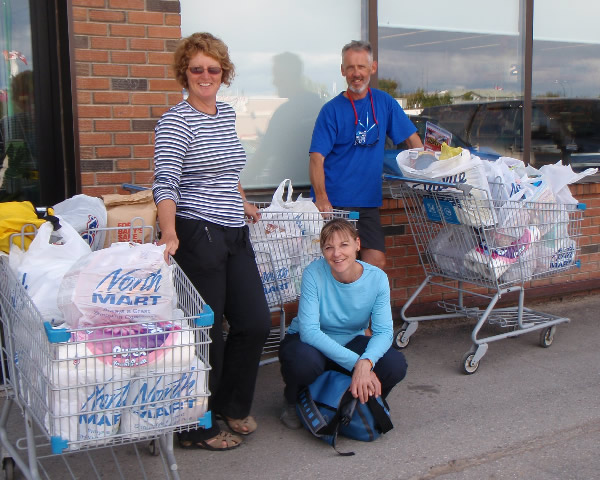
good breakfast we caught a taxi into town and visited the rental company to sort out the rental canoe, but they were still waiting for it to come back from another trip. So it was then time to grocery shop as we needed food for the next four weeks. We were pleasantly surprised that there were only a few food items that we couldn’t get in the supermarket. We returned to
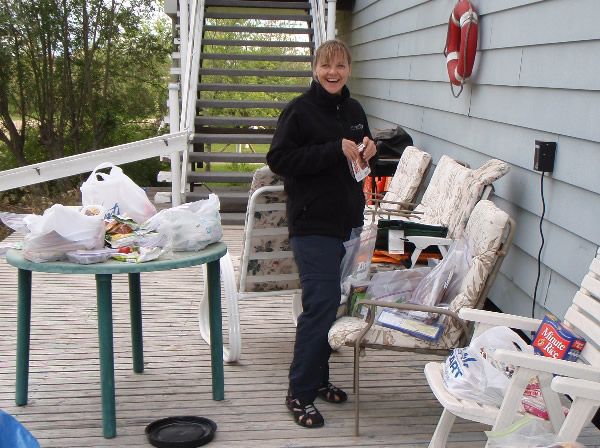
Harbour House hostel and began to pack the food into day packs, seemingly a never ending job.
Alaine packing food in to day packs. Day 35 or Day 3 Thursday 10th July.
The day we found out that
Alaine's mum had died. Doug from the hostel kindly lent us his vehicle so we could get around town more efficiently. By the afternoon we finally finished our last-minute shopping and we busily packed with the hope of leaving Hay River in the morning, although the weather didn’t sound very promising and Leonie was still waiting for some paddling gear that had been
lost. In the evening we were invited by the Groenewegen family, the owner of the hostel to join them at their home for ‘smokeys’ (sausages) and coffee. About 40 minutes into our celebrations, Rick received a phone call. He then came across to me and took me to the
other room and told me that the call had been from Australia and it was sad news. Alaine’s mum had died that morning. We broke up the party and as we returned to Harbour House we walked back along the beach and sat down on a step overlooking the lake. I could see that Alaine was a little puzzled and had no idea why we were sitting or what I was about to tell her. How
do you tell someone that your mum has died? I didn’t really know what to say and so I didn’t beat around the bush, I simply said, “I’m so sorry Alaine, but your mum has died.” It was quick and simple, but so devastating. Alaine immediately broke down in tears and was shattered. She had known for months however that this day was coming as her mum had been seriously ill for a long
time, and maybe in some way, Alaine had already begun to prepare herself for this devastating news. In reality, perhaps you can’t prepare yourself with such news, as it is extremely painful when it happens. Long before Alaine left Australia, she, along with her Dad and Mum had discussed the possibility of this happening and they all came to the decision that Alaine should not go back for the funeral. Instead she should continue with the trip and enjoy it the best she could. Although that’s what
they agreed on I could see that Alaine was in two minds as her Mum meant so much to her and not being at the funeral would be so devastating. It also meant that she wouldn’t be home to comfort her own daughter, Emily whom she loves dearly or be there for her husband Tom and the rest of her family. Not going home was a very hard decision for Alaine to make. “Mum just waited for me to
leave before she died. I knew in my heart that my last goodbye was just that, but at the time I couldn’t bring myself to think about it,” Alaine said. Day 36 or Day 4 Friday 11th July It wasn’t the day to be leaving as Alaine had to grieve and make several
calls home. Once we leave Hay River there were very few communities to make any phone calls although I did have a satellite phone for emergencies.. Day 37 or Day 5 Saturday 12th July Hay River When we awoke there was hardly any wind despite the
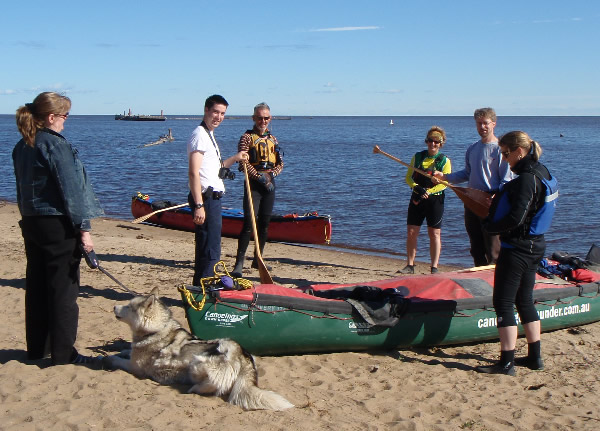
weather forecast saying there were going to be 15 – 20 knot winds. We took photos and just before 10.00am we were ready to go. Although Alaine was in better spirits we could see her face was full of sadness. It was a big decision for her to leave the shores of Hay River. Donning our PFD’s we dragged the canoes into the water and entered them for the first time as mixed pairs. Ahead was a new adventure for us all, but more so for the girls who hadn’t camped out self-supported from a canoe for more than two days before. As the lake beckoned, four different individuals in two canoes paddled away from civilisation and into the big, vast yonder. I couldn’t help but wonder what the group dynamics was going to be like and how Alaine was
going to cope with all the time she had to think along the way. The skies were clear apart from some wispy clouds. Within metres we looked back and waved goodbye to our new friends, the Groenewegen family who were there to see us off. In front of us there was nothing but the
massive lake. Alaine was still amazed at its enormous size and couldn’t believe that she was actually paddling on it, but I could feel that deep down she was a little apprehensive about leaving, as her mum‘s death was clearly on her mind. The lake was magnificent and calm, so very different from a few days earlier but the calmness didn’t last long. With the increased wind, paddling all
of a sudden became that much harder. We went from paddling 6 kms an hour to 3 – 4 kms an hour. Alaine and Leonie, who were in the front seats began to feel the brunt of the wind and the wet of the splash over the bows and the fact they hadn’t really trained very much in the weeks leading up to the journey they were quite sore by days end. That afternoon we landed on rocks for the
night and using driftwood timbers we pulled the canoe above the lapping waves onto a shaly spot to camp.
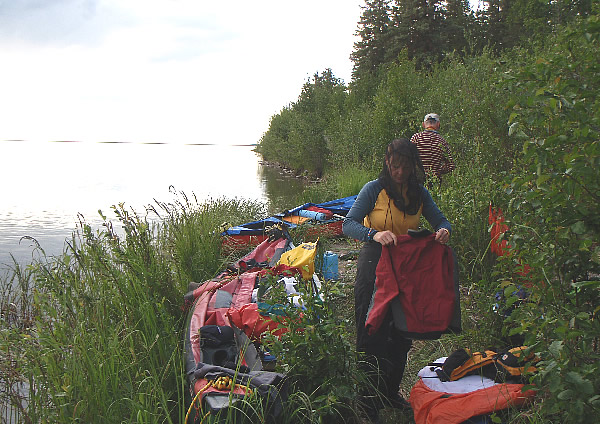
Alaine was a little apprehensive to leave.
The Groenewegen family were there to see us off.
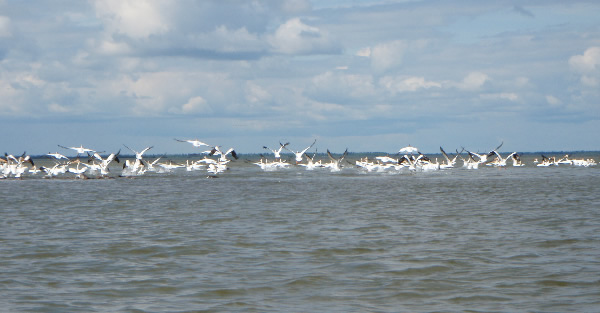
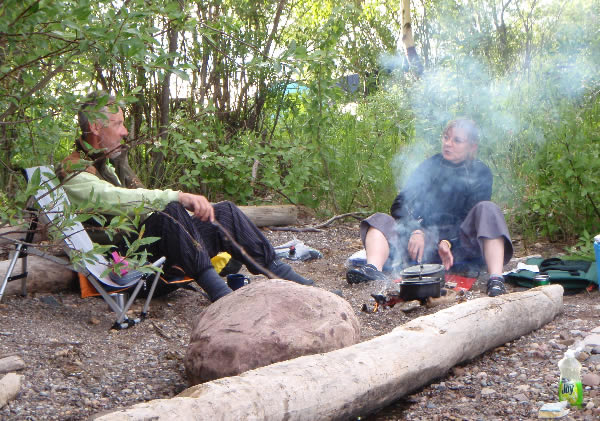
Day 38 or Day 6 Sunday 13th July The wind was still blowing quite hard when we got up, which wasn’t a good sign. But we packed up nevertheless and got ready to go by 9.00am. We paddled around the point and straight into a fairly stiff wind, not hugely strong but strong enough to slow us down and make the canoes bob up and down. We slogged on until reaching the last point before entering the river mouth, and landed on an island to camp near hundreds of pelicans that were standing in the shallows and on the rocks nearby. It was a magnificent sight. As we fished the air was full of dragonflies and it was quite a sight. Tony had started a fire on a small but neat beach on the northern side of the island and afterwards we sat and drank a cup of wine, and looked out over the huge lake that had pelicans dotted all over it. This would be our last night on the lake and it felt fitting that we should be camped on the junction of the mighty Mackenzie River and the
amazing Great Slave Lake.
Tony and Alaine. Day 39 – Day 7 Monday 14th July The insects were worse on the beach
when we were making breakfast due to the lack of wind. Alaine made a couple of very tearful satellite calls to her dad and sister, and then she needed to bandage her blistered hands. As a result, she was somewhat slower in getting ready and was obviously struggling to hide her sorrow. About lunch time we stopped on an island just before Beaver Lake to rest up for a few hours as we
were going to paddle the lake at night when the wind calmed, which was about 40kms long and 6 -10 kms wide. The terrain around it, which was said to contain buffalo, was low and featureless, generally marshy, boggy with extensive weed-covered mud banks separated by reaches of forest. Once we got going we wouldn’t be able to land easily before reaching the far end. Around 6.00pm we
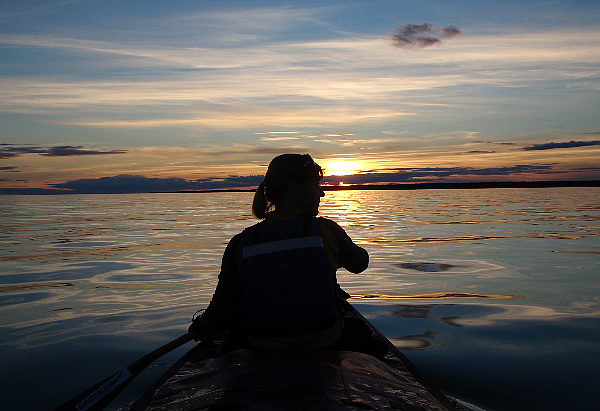
pushed on with the lake blossoming with beauty, and fluffy clouds skating in different directions across the sky. The setting sun was dazzling in more ways than one, but on a slightly down side, it was shining directly in our eyes. It was bright in front, but much darker behind where a double rainbow had formed right across the sky. How much more perfect could the night be? With every
hour the sun was getting lower in the sky and eventually the moon began to rise. It was huge and virtually full and an incredible scene. We paddled on looking back, the sky brightening as the moon floated up from the water and began to arch across the sky. There was still no wind, the lake was like a millpond and Alaine hadn’t seen anything like it before and for a few hours she had something beautiful to take the sorrow from her mind.
Just as we were getting used to the big, bright beautiful moon a cloud started to drift towards it. As the cloud partially covered the lower part of the moon, it was as if something really special was being dragged away from us. We were disappointed when it disappeared behind the cloud leaving our enchanting and magical world a little less special. Nevertheless the shadow was still an exhilarating sight. I was pleased when at midnight the sun had dipped below the horizon. It stopped the glare and it left a red haze that added another dimension of wonderment to the sky. The moon at times shone through a thin layer of cloud haze and when it did, it looked exquisite. Looking behind was like peering into a completely different and darker world. It too was incredible. As the calm glassy lake met the green shores on our right and the
water and the sky on the horizon blended into different shades of blue, we truly were immersed in the magnificence of nature. Whichever way we looked, the scene around us was quite glorious. We eventually reached landfall at the end of the lake and camped. I didn't know what Alaine was thinking at this time, but I was hoping that this beautiful, majestic world around us would give her some comfort.
Having a few hours rest before tackling the lake crossing at night.
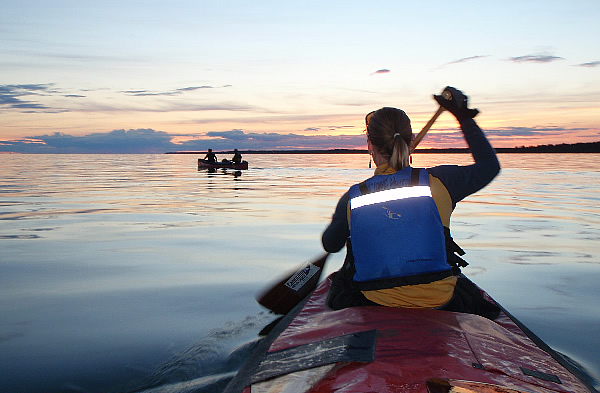
Crossing Beaver Lake at night. It didn't get dark in the north of Canada at that time of year.
Day 40 – Day 8 Tuesday 15th July After a few hours paddling down the river we reached the community of Fort Providence, pulled the canoe up the rocks, got changed and climbed the steep hill to where the local First
Nation people were sitting. We asked them where we could get onto the internet so Alaine could send an email home. They directed us to the town office but we were told the school was the only place with public computers. But it wasn’t open until 1.00pm, a three hour wait. At 12.50pm Alaine and I walked to the school so she could send her Eulogy for her Mum’s funeral. We waited
outside for a few moments until a young guy came over and opened up. He chatted to us as he led us to the computer room where he was about to take a small class for computer lessons. Here Alaine was able to type her Eulogy and send it home at the same time trying to hide her tears. We moved on further down the river. Day 42 – Day 10 Thursday 17th July It was going to be another emotionally hard day for Alaine as it was the day of her mum’s funeral. Nevertheless she put on a brave face, but because she was in the front of the canoe it was hard for me to see the tears streaming down her face. We were planning to
stop at twelve noon to pay our respects, but Alaine then realised the funeral was at midnight our time and not midday. I couldn’t begin to imagine how difficult today would be for Alaine as I knew she was dreadfully missing her own daughter Emily and husband Tom and was feeling bad that she wasn’t there to comfort them and her dad at the funeral. We crisscrossed the river all day
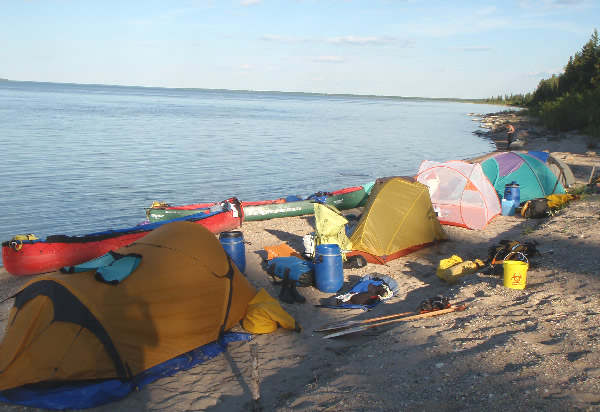
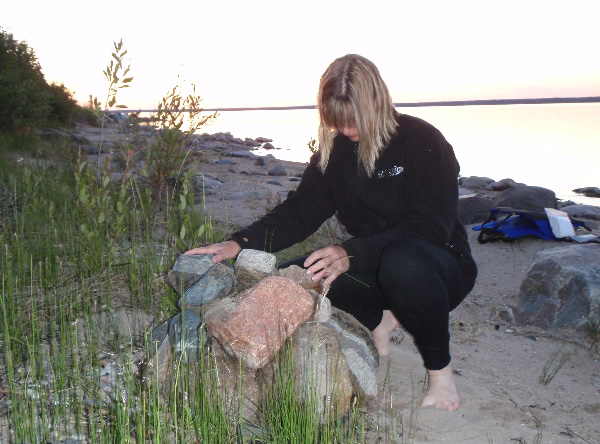
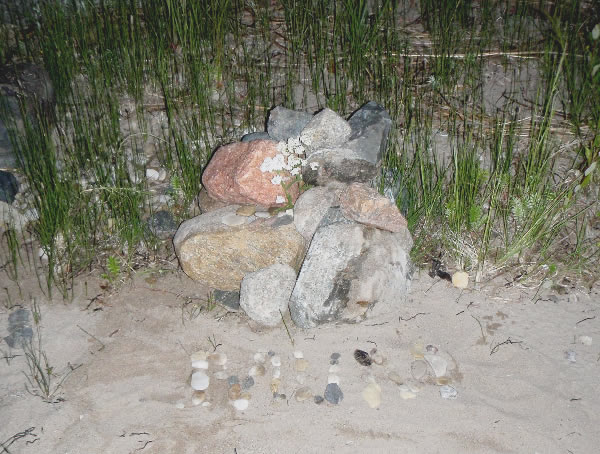
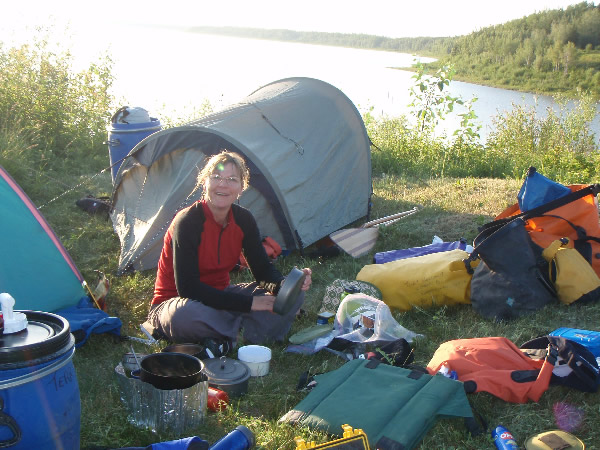
heading from one point to another and eventually found a beach which was one of the best we had seen so far. We landed at Browning’s Landing, where there was an old cabin and a boat that lay deteriorating in the forest. A large set of seats and table was set away from the water and close to the forest line. It was an abandoned sawmill site, but it looked as if it was now used by the First Nation people as a fish camp, a place to camp at and relax. Our tents were soon erected and we all went about our business. I fished again, but this time without success, while Tony wrote and went for a walk along the shore. Alaine pottered and Leonie washed and then put on a mud pack face and sat there on the beach in her deck chair taking in the sun and resting. As the evening drew on and midnight was close, Alaine and I walked 200 metres along the beach to erect a cairn in her mother’s memory. We stopped at the prettiest point and carried different coloured boulders from around the area and placed them on top of each other about 15 metres from the water’s edge. The cairn was surrounded on three sides by green grasses, a few bear footprints and faced the beach and a number of big boulders and the calm, beautiful
Mackenzie River. Although it was very sad that Alaine couldn’t be at home with all her family and friends to console one another or to share the happy memories of her mother’s life, Browning’s Landing was a lovely place for Alaine to mourn and leave a memory of her Mum. It seemed quite fitting that the cairn overlooked the Mackenzie River, which was named after the Scottish explorer Alexander Mackenzie, as both of Alaine’s parents are Scottish. Alaine placed smaller pebbles on the cairn and then on the ground in front, portraying the letters, ‘MUM.’ As the sun went down, she wept as she placed some white bush flowers between the rocks of the cairn. With her face being full of sorrow she read a recitation that she had prepared beforehand. It was a beautiful reading and such a moving moment. Alaine was close to her mum and she always made time to ring and visit her parents regularly and take them out. Before leaving Australia, Alaine and her mum had talked about the possibility of her dying, whilst Alaine was on the trip and they both agreed that Alaine shouldn’t return home for the funeral once she had left Australia. “Mum said she’d be at my back, pushing me on, so even if she should die, she would still be there with me. And I’m sure she is,” Alaine said. We walked barefooted back along the sandy beach to camp in silence. The early morning was calm, cloudless and peaceful. Ahead of us were 26 days on the river, Alaine developed an injury in her wrist as we were paddling long distances so the trip wasn’t easy for her in more ways than one, physically and mentally, but like all strong women she coped……and she loved it.
Camped at Browning’s Landing on the day of Alaine's mum's funeral.
The funeral was taking place back in Perth. Alaine made a cairn and placed bush flowers on it before doing a reading to her mum in tears.
The sun sets over the Mackenzie River as Alaine reflects on her mum's death.
Although Alaine was struggling with sadness, she loved the trip. Alaine worked at Canoeing Down Under for 15 years and when I was away on all my trips she managed the shop. She
was very well liked with the customers. After this trip Alaine and Leonie joined me again on a part of another expedition across Canada.
Alaine loves the outdoors and it didn't matter what the scenery was like, even if
it was shit, she saw beauty in it.
WAs Nina Mueller Nina started paddling at a young age as a slalom paddler. Ascot Kayak Club and Swan Canoe Club had some very good juniors coming through back then. WA already had Robin
Bell, Robin Jeffery and Kynan Maley compete at the Olympics and it was a time when WA juniors were going to shine.
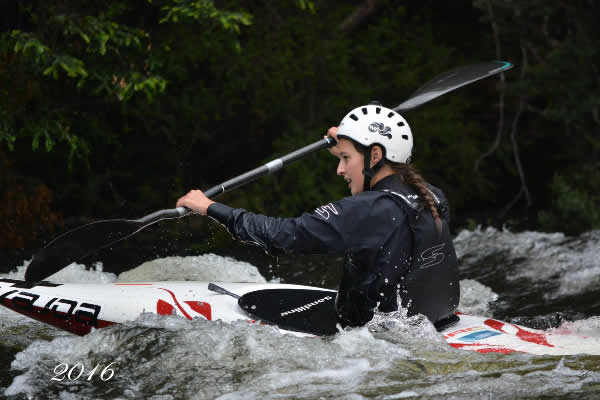
Back in 2016 Nina was a slalom paddler ready to go to a junior world championship.
Slalom is still her favourite, but she also excels in Wild Water and as the 2022 Australian Wild Water Champion and the winner of this years selection race she
is hoping to go to the World Championships in Europe this year. Having no white course here in Perth makes it very difficult for our slalom athletes to reach the top without going to Sydney. Nina has to juggle her training with
working as a midwife. February 2016 - Article by Australian Canoeing - The national canoe slalom junior team was announced on Sunday following the conclusion of the Australian Open in Penrith. Western Australian athletes have dominated this year’s team selection with Ascot Kayak Club paddler Nina Mueller set to make her maiden appearance after some standout performances at the Australian Slalom Championships and at the Australian Open. Mueller produced some outstanding results in Tasmania and although she may
not have gotten the results that she had hoped for in Penrith she is excited by the prospect of racing on the junior team this year. “The last few days have not been great racing for me but I was super proud of my results in Tassie and I think that has helped me get through the last few days,” Mueller said. “I am very excited. I do not have to higher goals, I think my aim will just to be to put down the best run that I can do and be as prepared as I can be.” The 17-year-old K1 paddler enjoyed the challenge of racing against so many world class athletes that she admires but it is a local favourite that she draws the most inspiration from. “I got coached by Ros (Lawrence) a few sessions before the race this week and she is definitely a real inspiration for me,” Mueller said. With more than half of this year’s junior team made up of Western Australian athletes, Mueller believes that their success lies in their flatwater
training. “We do not get big water like this over there so I think that technically we are a really good team and I think that is probably where we sit ahead,” Mueller said. Despite the program prospering from training on predominantly flatter water, Mueller is excited about
a potential whitewater stadium being built in Perth. “A course like this over in Perth would help our team improve so much because we all have to come over here before the race to get use to the real water and I think if we had that at home we would be a lot different and we would improve so much,” Mueller said. The ICF Junior World Championships will be held in Krakow, Poland from the 13 to 17 July 2016.
Back in 2016 WA had such a talented group of junior slalom paddlers. Many of them have been to a junior or senior world championship, thanks to the coaches and parents that have helped them on their way.
Nina in 2024 With a win at the Australian Wild Water Selection Race Nina is hoping to be selected to go to the World Championships in Europe this European summer.
Slalom events first appeared in Munich in 1972 and then not again until Barcelona 1992, where it was held on a specially built artificial course. It has been on the program ever since and continues to be one of the spectacles of the Games.
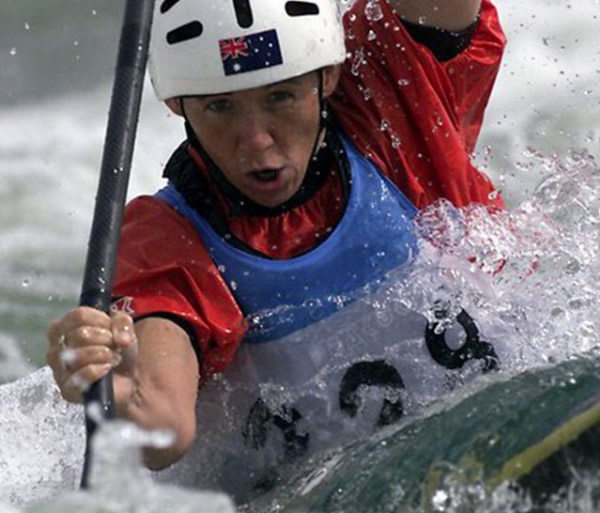
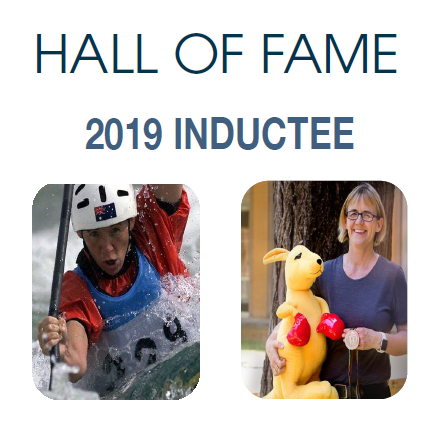
Danielle WoodwardDanielle Woodward’s silver medal in the women’s K1 slalom in Barcelona was a history-making achievement. The Victorian kayaker became the first Australian woman to win a canoe/kayak medal at the Olympics, as well as the first Australian to win a medal in a slalom event. Woodward went on to compete at the next two Olympics, placing
12th in 1996 and 8th in Sydney. She has since served as a leading administrator in her sport.
Danielle Woodward PLACE OF BIRTH VIC OLYMPIC HISTORY Sydney 2000, Atlanta 1996, Barcelona 1992. CAREER EVENTS K-1 - Women Danielle first became involved in paddling in 1979 through the Illawarra Canoe Club in NSW. She was primarily interested in the disciplines of canoe slalom and wildwater canoeing, although over her career she has been involved in canoe polo, flatwater, multi-sport marathons, dragon boat racing
and touring. Danielle was selected to her first Senior Australian Canoe Slalom Team in 1982 and remained on the senior team every year until her retirement in 2001. During this time Danielle held the National Women’s Slalom title from 1983 until 2001 and was only beaten twice in that time. Danielle went on to represent Australia at the 1992 Olympic Games in Barcelona, where she won a
silver medal in the women’s K1. This was a history-making achievement as Danielle was the first Australian woman to win a canoeing medal at the Olympics, as well as the first Australian to win a medal in a canoe slalom event, competing at the next two Olympic Games, placing 12th in 1996 and 8th in 2000. She held the position of National Coach in 1997 for canoe slalom. She retired from
competitive canoeing in 2001 and from coaching in 2002 to focus on her career. Over the years, Danielle continued to be involved with national selection for canoe slalom and also represented canoe slalom in the capacity of State Delegate and Paddlers Representative to Paddle Australia. She was appointed Director to the Australian Canoeing Board in 2007 and was Australian Canoeing President 2008 to 2016. In 2013, Danielle was appointed to the Australian Olympic Committee Board. Danielle was
awarded an OAM in 2002 for her services to sport, particularly to canoe slalom and Olympic sport.
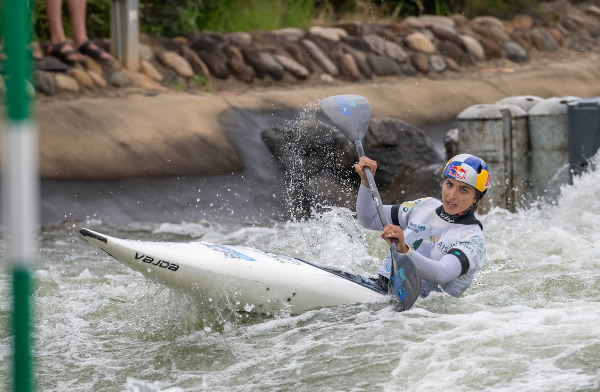
In 2012 at just 18 years of age, Youth Olympic Champion Jess Fox shocked the London field to finish with the silver medal in the women's K1 event. She then went on to win bronze at Rio 2016. At the Tokyo 2020 Games, Australia's 4-member
Canoe Slalom team recorded its best ever performance with two medals and all boats in the top-10. In her third and fourth Olympic Games events, Jessica Fox won two medals. In the women's Kayak Singles, she claimed her third consecutive Olympic medal, a bronze. She followed this with gold in the new Olympic Games discipline, women's Canadian Singles. Her fourth medal stamped her as the
most successful Canoe Slalom women in Olympic history.
Jess Fox 27th Januaray 2024. Jess Fox added another K1 Oceania title to her trophy cabinet after a sensational final run saw her cross the line in a time of 101.09 seconds ahead of silver medalist
Klaudia Zwolinska (POL) and bronze medalist Noemie Fox (AUS). Jess also won the Oceania Champs in C1, making it a double, K1 & C1.
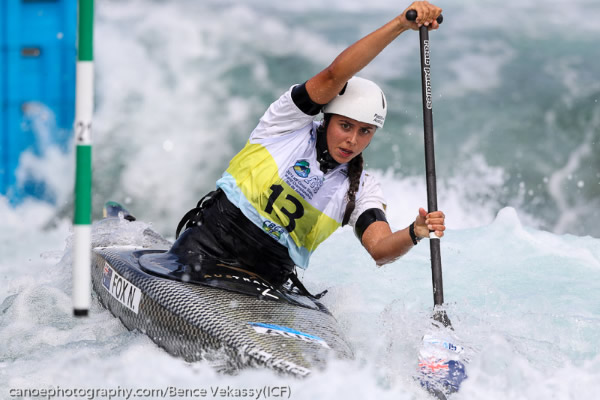
Noemie Fox Noemie won three medals in the at the ICF Canoe Slalom World Championships with two golds (C1 team: 2019, K1 team: 2023) and a silver (C1 team: 2017). 2022. Australia’s Noemie Fox is fast making a name for herself in the
Extreme Slalom event, after claiming silver at the ICF World Cup in Poland. While her Olympic champion sister Jess won gold the day prior in her pet event the K1 Slalom, Sunday’s racing was Noemie’s time to shine delivering an impressive Extreme Slalom final to bring home the medal. Australia's female kayakers have won their first K1 team world championship gold with a near-perfect run at the Lee Valley White Water Centre in London. Key points: - Sisters Jessica and Noemie Fox along with Kate Eckhardt combined for the gold
- The Australian trio were one of two teams who did not
collect any penalties
- The three also competed in the women's C1 team event, finishing 11th
In challenging conditions on
Tuesday, sisters Jessica and Noemie Fox, from Sydney, and Tasmanian Kate Eckhardt were one of just two teams to not pick up any penalties. Delivering a clean and quick run secured gold to open their world titles in style. It was a welcome return to the course for Jessica Fox,
who won Olympic silver in the solo K1 as an 18-year-old at London 2012. Spain, with a single gate touch, took second, while Great Britain had the fastest raw time on the course, but two gate touches saw the home nation relegated to third. The same Australian trio had also
contested the women's C1 team event — which they had won in 2019 — where a 50-second penalty for a missed gate left them 11th and last. "Back in 2019 we won the C1 and four years later to win the kayak, and to be the first Australian team to win the kayak, is so special," Noemie Fox said. "We all work together, push each other, learn from each other, and inspire each other. "To be rewarded together like this is really special and to have an opportunity to compete and beat some of the bigger nations is why we love this event." Australia's men came ninth in the C1 and 10th K1 events, which are unique to the world championships. Paddle Australia.
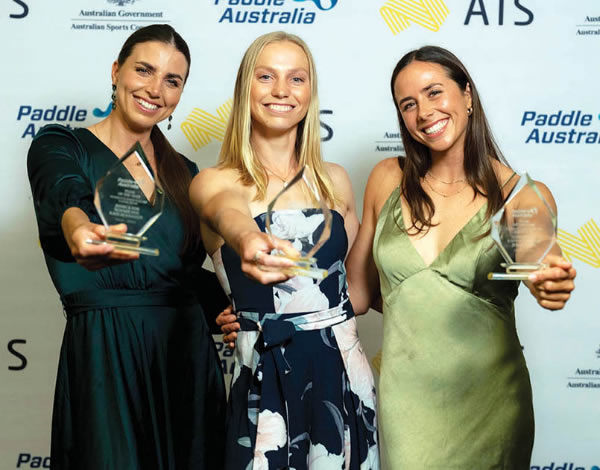
2023 Team of the Year Award teammates Jess Fox, Noemie Fox and Kate Eckhardt, for the trio’s history-making Kayak Team gold at the 2023 ICF Canoe Slalom World Championships in Lee Valley, London. Photo Paddle
Australia.
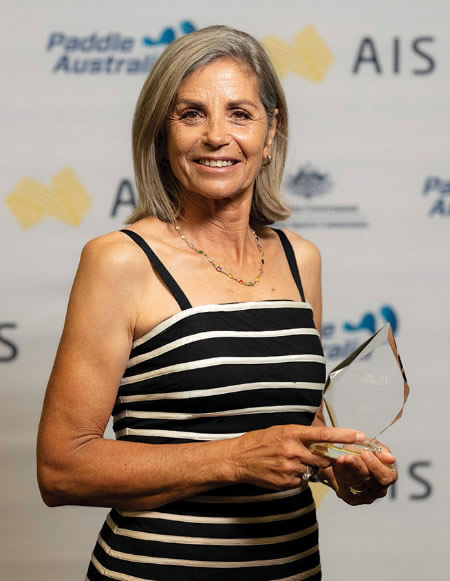
Myriam Fox – Australia's Coach of the Year. Photo Paddle Australia. Myriam Fox, a trailblazer and a driving force behind gender equity in paddling, earns her rightful place in the Hall of Fame for her remarkable contributions to the sport. Her journey has been marked by advocacy and dedication for equality in sport, culminating in significant milestones for Canoe Slalom. As an athlete, Myriam won an Olympic bronze
medal, 2 individual and 5 team World Championships for France and as a coach she has supported Australian athletes at five Olympic Games. However, one of Myriam’s most iconic achievements was her pivotal role in developing Women’s C1 in Australia, contributing to the introduction of the event into the Olympic program for Tokyo 2020. Her advocacy and relentless efforts resulted in a historic moment for women in the sport. The inaugural Olympic title was fittingly claimed by her daughter and
accomplished athlete, Jess Fox. This achievement not only symbolized a proud family legacy but also elevated the profile of Canoe Slalom in Australia. Jess and Noemie Fox’s success has undeniably shone a bright light on the sport, but Myriam Fox sees even greater opportunities on the horizon. With participation in Canoe Slalom on the rise, and Australia set to host the 2025 World
Championships in Sydney and the Brisbane 2032 Olympic and Paralympic Games, the future looks promising. Myriam’s vision for the sport extends far beyond individual achievements; she envisions a thriving and inclusive community of paddlers. Myriam’s impact extends beyond the Olympic stage. Over more than two decades, she has served as a coach with Paddle Australia, nurturing and guiding
generations of paddlers from their early pathways to Olympic podiums. Her mentorship and coaching expertise have been instrumental in shaping the careers of numerous athletes. Recognizing her broad and enduring contributions to the sport, Myriam Fox was awarded the IOC Coaches Lifetime Achievement Award in 2022. This prestigious accolade reflects her significant influence on
paddling, not only in Australia but also on a global scale. Myriam Fox’s legacy stands as a testament to her unwavering commitment to gender equity and the growth of Canoe Slalom. Her pioneering spirit and dedication have left an indelible mark, and her induction into the Hall of Fame is a well-deserved recognition of her outstanding contributions to the sport. As the sport continues
to evolve and thrive, Myriam’s impact will continue to resonate in the paddling community for generations to come. Photo Paddle Australia.
West Australia's
Yale Steinepreis,
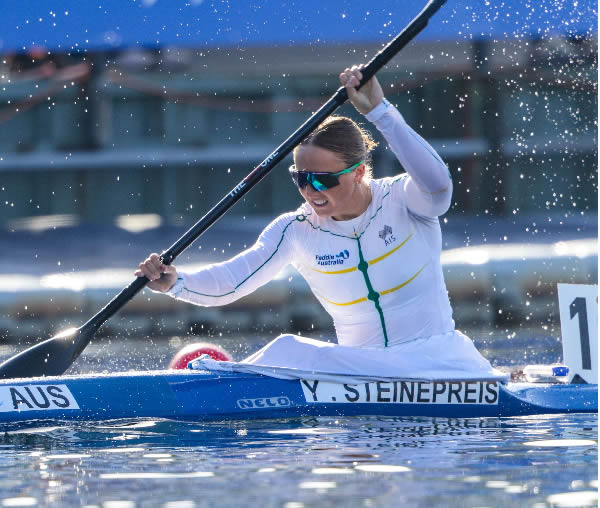
Will WAs Yale Steinepreis represent Australia at the next Olympics? Photo Paddle Australia. The last couple of seasons on the runway to the Paris 2024 Olympic Games have been punctuated with amazing performances and international success for Yale Steinepreis, including taking home a silver medal in the K1 200m at the 2023 ICF Senior World Championships. The outstanding individual achievement came after the 26-year old Australian had already had a
taste of the World Championships podium the previous year, when the Aussie quartet of Steinepreis, Ella Beere, Ally Clarke and Aly Bull won a historical silver medal in the K4 500m in Dartmouth, Canada. “It was shocking, to be honest,” Steinepreis confessed, talking about the team’s 2022 World Championships performance. “When we crossed the line, Ally Clarke and I just turned to each
other and went like – what did just happen?! “We were aiming to make the A Final, really, so to have that race was unbelievable. It was life-changing in a way and cool to be doing it with my best friends. As a crew, we felt like we deserved to be there and we proved that we deserve to be part of this program.” Steinepreis has come a long way since she got involved with paddling at age 16. She first tried the sport thanks to her grandmother’s involvement in kayaking, joining Paddle Australia’s talent identification program and then the Bayswater Paddlesport Club. “My grandma (Rosalie Evans) is also the Executive Officer of
Paddle Western Australia, so we can just talk paddling all the time. She’s one of my biggest supporters, but probably one of my biggest critics as well, because she knows and understands the sport so well, being a paddler herself. She’s done much more impressive things than I have done and she’s a big support,” Steinepreis said. Achieving a degree of self-confidence has been so
crucial for Steinepreis’ success on the water that it’s now an important piece of advice she would give younger athletes, who might go through similar challenges in their paddling journey. “You need to understand that every athlete is different. Just because someone can do something better than you, it doesn’t mean that you don’t have your own special things that make you a great
athlete. “I think you could see in our K4 last year that we are very different athletes, but Ella [Beere] and I can get the boat out really fast, and then the other girls bring us home. Each of us have our special thing in our boat.” With only a few months until the Paris
2024 Olympic Games, Steinepreis’ eyes are set on making the team for her Olympic debut. And yet, the secret of her success in racing might lie in the way she enjoys the daily training environment and the process of putting in the work to become a better athlete. “Going to Paris would be unbelievable, but this journey has been what matters to me,” Steinepreis said. “Getting to move to another State, experience what life is over here and travelling overseas, I think I’ve had a pretty good journey so far. “I enjoy the daily commitment, waking up to hit goals. I enjoy working with my coach and the learnings that I get every day from him. And I just
enjoy being with the girls, having fun and putting in some hard work around it. “We’re competing against each other all the time and it’s so intense that when we go to Worlds or World Cups I feel like I am already in that environment on the daily. That’s where I think we’ve made such a step up, because when we go to these [international competitions] we have trained really hard
and we only have to do exactly what we do in training.” “And it’s a lot more fun than what people think!” she said. Paddle Australia.
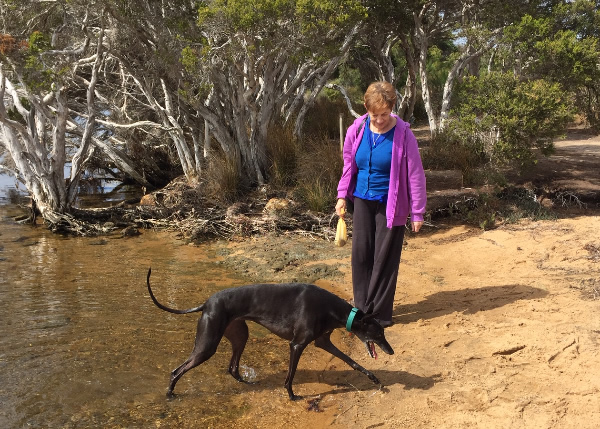
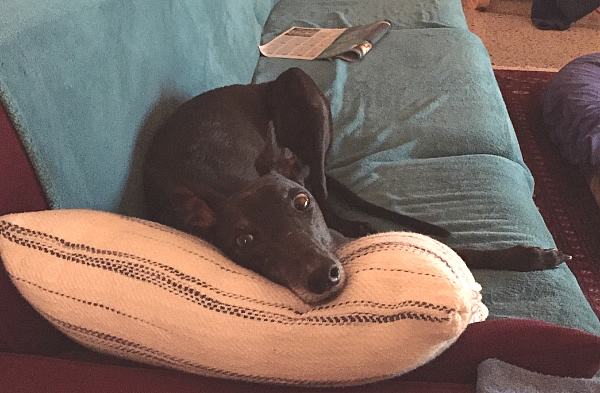
Nikki Living with a broken leg. It was on the 5th December 2016 when Jenny decided to take Nikki to a grooming place to get her washed. As Nikki was a fairly young dog with lots of energy she thought it was a good option to take it to a professional. As Jenny sat in the waiting room there were suddenly yelps and a cry. When she investigated Nikki was bleeding and her left limb from her knee down was dangling and she was in serious pain.
When I arrived it was a distressing sight for all concerned especially Jenny who had heard Nikki's cries. We had no time to ask how and why it happened and took her straight to the vet who gave her pain relief, patched her up the best they could and booked her in for surgery early the next morning. We assumed though that she had jumped out of the tub halfway through the wash. She
was not in a good shape overnight, we comforted her through the evening and Jenny stayed with her all night. An operation was done the next morning and we were told the operation went well, so for the first six days she was cared for at the vet hospital. The house felt dead without her, no excited Nikki to take for a walk or greet us when we got home.
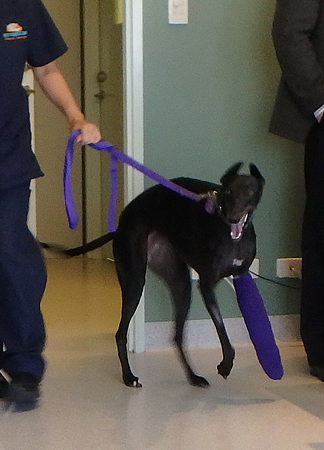
Nikki leaving hospital after surgery on a broken leg. For Nikki to get around she had to hop on three legs and we had to keep in a pen for a time so she didn’t get too excited. Two months later and the break in her leg
was healing well, but she still needed a large bandage to make sure that she couldn’t move the leg. So she still couldn’t go for walks other than to the toilet or to the car to visit the vet. However she seemed to be managing very well with three legs. She was happy, but she would have been happier if she could go for a proper walk and a good run. Although the operation to fix the break went well and the break healed, the time in a bandage caused her foot to be fused straight in line with her leg. The leg also ended up in a sort of a backward position so she therefore wasn't able to walk properly and always favoured hoping around on three legs. Even after having physio the foot didn't improve and it looked as if it would always be in a backward position and
have a fused foot. The surgeon wasn't happy with how the leg looked or how it had healed, nor were we, so he suggested that Nikki should have another operation to straighten and get the leg in a better position. There was also a suggestion that if Nikki couldn’t bear weight on the leg it might have to be amputated. We were not fond of her losing her leg, so we were keen to go for
another operation. The second operation went well, a plate was screwed into her leg to make it straight so at least if she did get back to walking on four legs, her leg would be straight and not at a weird angle as before. So after 3 days in a vet hospital bed she was allowed home with strict instructions again not to get her excited or let her run around. Within a week the bandages were taken off and after another week the stitches were taken out and soon after she started putting her foot down on the soft surfaces, although she hopped most of the time. As the weeks went by she started using her leg more and more, first on the grass and sand, later on harder surfaces like timber and finally concrete. However once she got a pace up she still
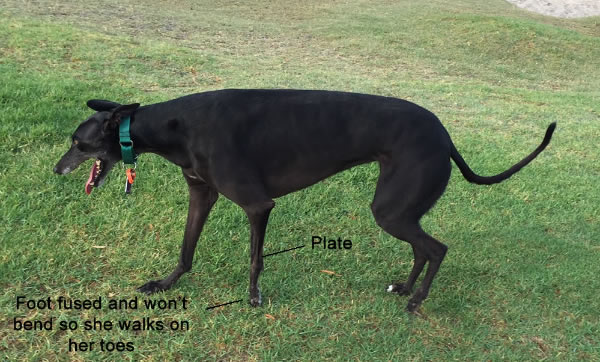
preferred to hop. When standing, she stood on 3 legs. Although her upper leg had healed well with the plate inserted, her foot was still fused and pointing downwards so she was unable to put her foot flat on the ground which meant that when she walked, she was tip-toeing. Even with physio her foot wouldn’t go back to how a foot is supposed to be, so when she walks she walks on her
toes.
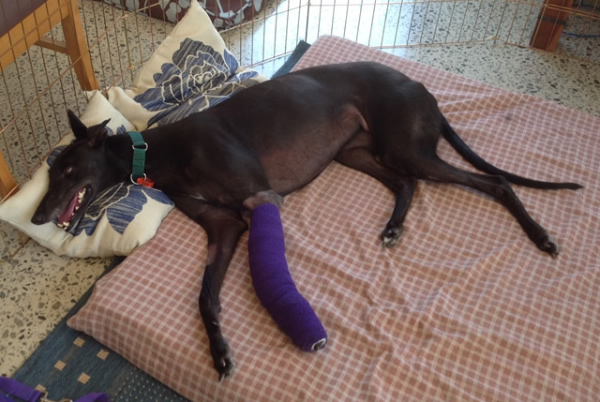
We had to keep her in a pen for the first part of her recovery. After seven months since the accident, two operations and $10,000 spent she still had a few more months to go before she would be fully
recovered. She was able to go out for a short walks twice a day to try to get her used to walking on 4 legs. For the last 7 months I have had to lift her out of the car because of her broken leg but now she was able to jump in the car but not out of the car. We can't wait for the time when she will be able to do both and then Jenny will be able to take her for a walk by herself,
my strength won't be needed to lift her out. The accident has certainly changed her life and ours, but on the positive side Nikki still seems very happy and she has taken all the vet visits, operations and physio in her stride. The vet and nurses have really treated her well and she just loves to go back to the vet surgery and meet the nurses. Since the accident though, and with her walking on her toes we have had to drive to a park so she can walk on soft surfaces. She will walk on hard surfaces, but it’s not ideal because she has to walk on her left toes. When she wants to walk faster on hard surfaces she will hop on 3 legs. It is now 8
years since the accident and she is still a happy hound with a few behaviour customs that are quite funny. Like, she won’t go for a walk unless I’m there with Jenny. Sometimes I will pretend that I’m going walking with Jenny just to get her in the car and then I go paddling. But now she can recognise if I have my general walking shorts on or if I have my paddling shorts on. If I have my paddling shorts on, she will not move off the couch. So I have to change in my walking shorts. If we drive to
a different place for her to walk she will look at where we are and if she doesn’t like what she sees, she will sit down and not move. She has many other delightful behavioural traits that keep us amused. You can’t beat caring for a greyhound though.
Nikki walks with a limp because she has a plate in her leg and a fused left foot so she has to walk on her toes. You can imagine how many people stop us and suggest she has a burr in her
foot.
She loves sitting in the water and day dreaming.
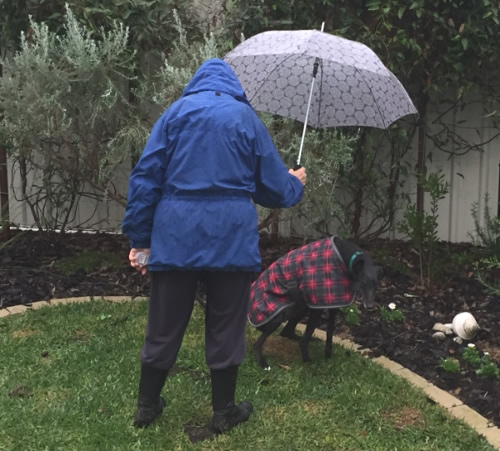
I tell you - She is not spoilt.
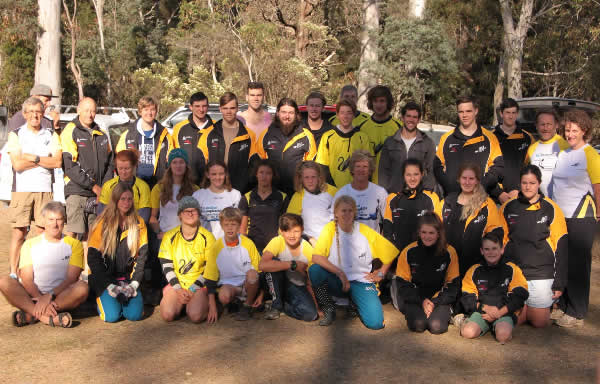
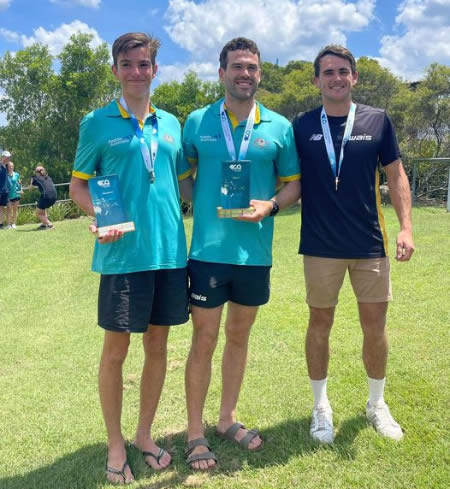
AKC has six athletes competed at the Canoe Slalom Oceania Championships in Penrith 26-28th January. Ben Pope Brodie Crawford Steven Lowther George
Pankhurst Hunter Florisson Genie Collin
A big Congratulations to our WA Slalom Paddlers competing at Oceania’s this
weekend. C1 Brodie Crawford - fastest Oceania C1 George Pankhurst - 2nd U23 Oceania Hunter Florisson - fastest Oceania C1 Junior K1 Ben Pope - 3rd Oceania Genie Collin - 3rd Oceania Kayak Cross Hunter Florisson - Gold
West Australia's
Brody Crawford
Will WAs Brodie Crawford get to the Olympics? This weekends race will decide. Australia’s Brodie Crawford finished second in the men’s canoe final, provisionally qualifying a men’s canoe quota for the Paris 2024 Olympic Games. It was a breakthrough result for Crawford, with Olympic selections to be finalised following next weekend’s 2024 Canoe Slalom AUS Open. But for Crawford, finishing on the podium after a tough day of racing was a result to be proud of. “It was high pressure but it felt good. I had a really good semi final but one move cost me a lot of time. I did that move a little bit better (in the final) and the run was solid,” Crawford said. “I have worked really, really hard over the last six months, I have left no stone unturned, but I pushed myself. “So when you get on the start line you just think I have done it all, I am prepared there is nothing to worry about, and that gives you confidence,” he said. Crawford said he’s loved welcoming paddlers from across the world to Penrith, and racing against the world’s best. “When we go to their home ground it is a lot harder and when they come here it shows the quality of paddlers we have here,” Crawford said. “We have world champs here next year, so it shows how quick we can be,” he said. Paddle Australia. Not so good news for
Brody. Victorian Tristan Carter was crowned the men’s canoe champion at the Australian Open at the weekend. His result puts Carter in pole position for nomination to the Australian Olympic Team for his first Olympic Games. Selectors will nominate the final team in the coming days.
Four of the Bayswater paddlers playing a ball game without paddles for support.
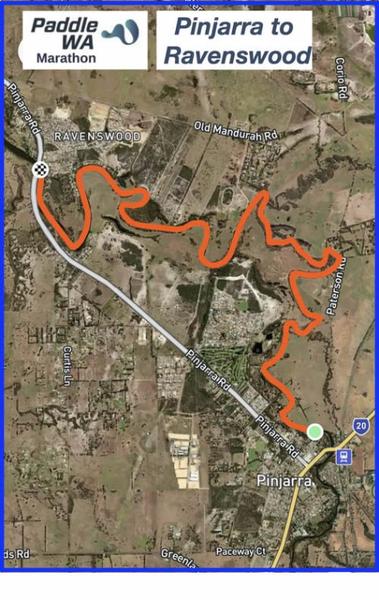
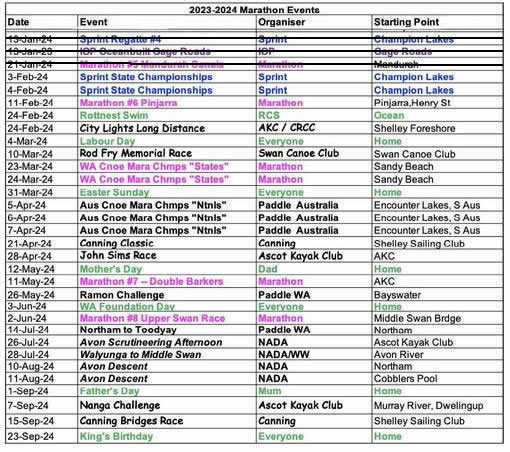
Register Pinjarra to Ravenswood Feb 11th
2024 Paddle Australia Canoe Marathon
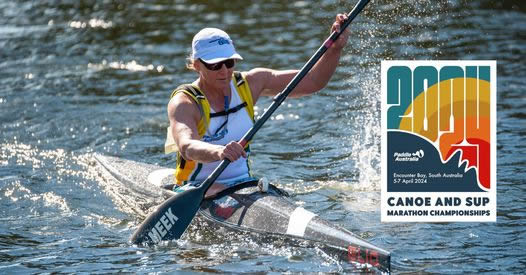
and SUP Championships The 2024 Paddle Australia Canoe Marathon and SUP Championships will be held at Encounter Lake in South Australia from 5 - 8 April 2024. This event will be used to select the teams (Junior, U23, Senior and Masters) which will
attend the World Championships.
Click on the link below to get your registration in.
|
|
|
|
|
|
|
|
|
|