|
|
|
|
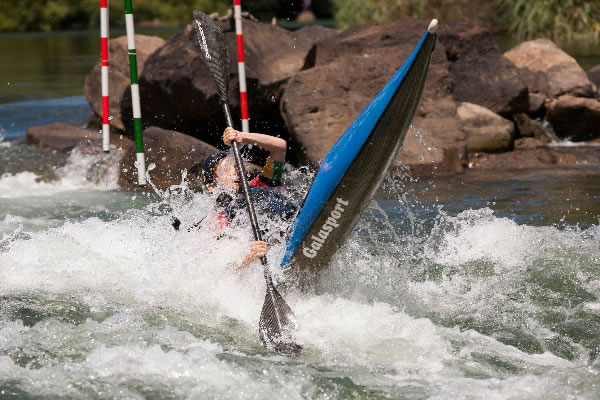
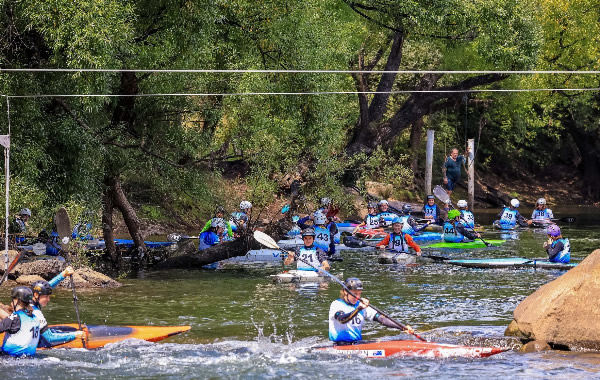
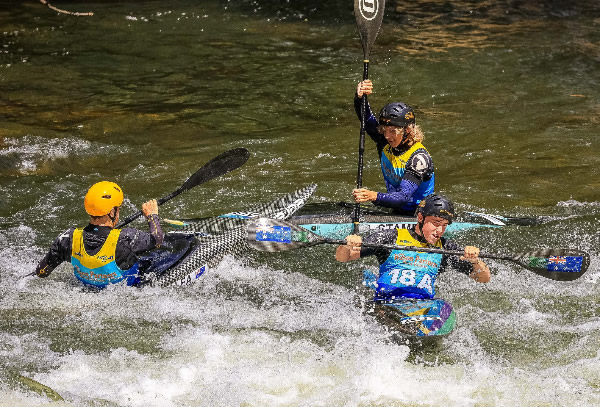
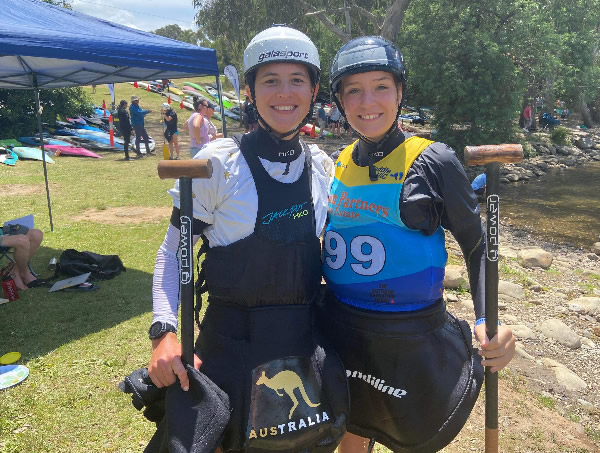
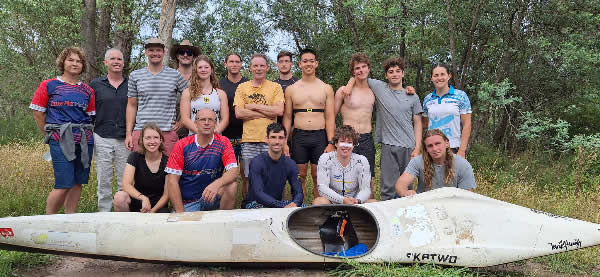
Only a small WA Slalom Team and a small Wildwater Team went over to the two different championships in Victoria, but yet again WA punched way above their weight and did extremely well bringing back several medals.
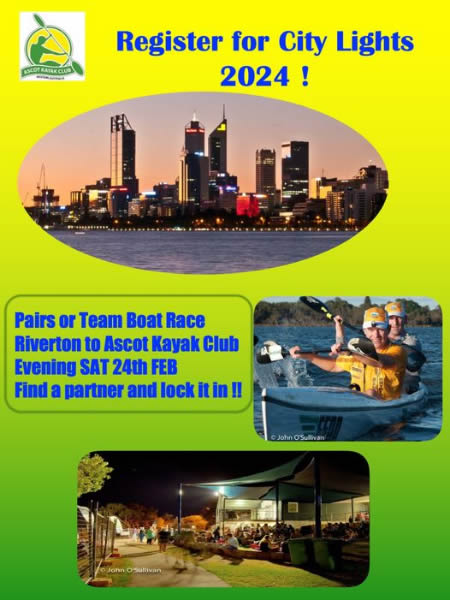
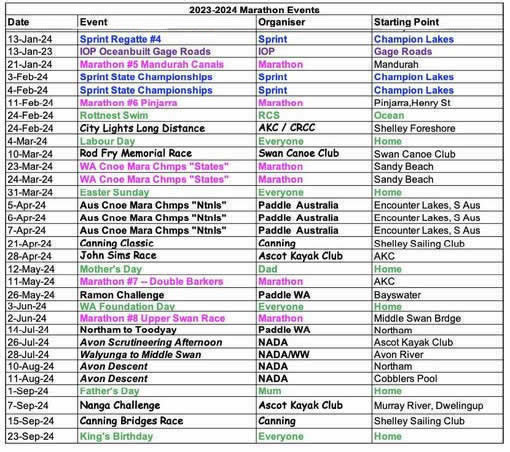
Surely it is time we got a White Water Course in Perth. We deserve it. It's going to be a hard February for Racing Paddlers as we have the WA Sprint Champs, Pinjarra to Ravenswood 17km Marathon Race and the City Lights a longer 28km Marathon Race.
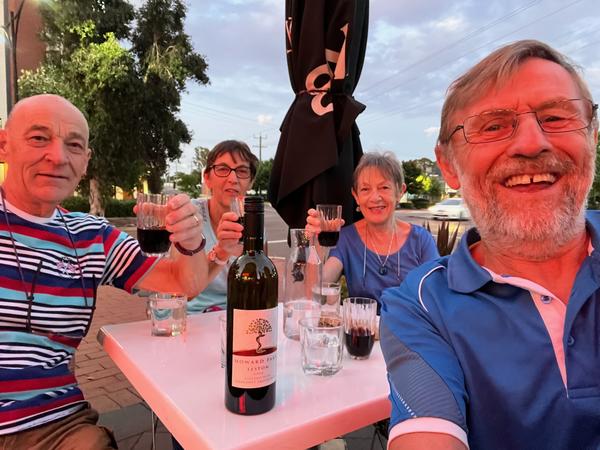
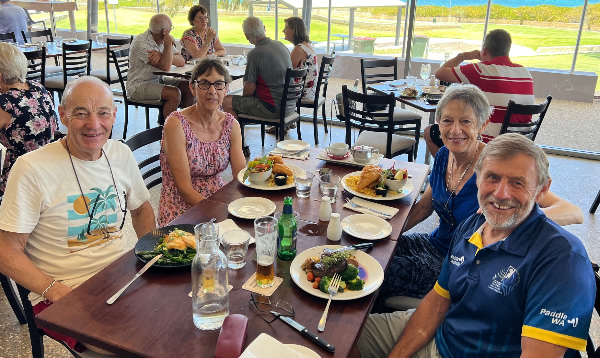
Eric, Jean, Jenny and I and of course Nikki lying on her bed at 8 Napkins in Bassendean. A week last Thursday I felt that I was getting my energy, and breathing back
after having covid. A training session that evening did however, indicate that I wasn’t as fit as I was before covid, but it was a promising session. Come Saturday morning in a 10 km race I performed better than expected, but I was a little behind the eight ball and a little stiff at the end. No matter things were looking up so I don’t think I should throw my paddle away just yet! In the last 4 weeks I put on 3 kgs. I put the blame of having covid, but more so on my sister in law and husband who have been our visitors for 6 weeks. They have been forcing me to drink more wine and eat more cake, ice cream and have meals out with them. Apart from that, they were great visitors. Saturday afternoon we
went to the movies to watch The Boys in a Boat. I left inspired and I was ready to take on the world again, so I went out for a 45 minute SUP session before dinner to shed some weight of the ice cream I had eaten and to conquer the world. Sunday morning it was back on the SUP to chase Darren Pratt around a 3.1 km circuit. I used to turn early, as with
Darren being one of WAs best, he was far too fast. My fitness was not as good as it should have been, so I finished up doing 6kms before having breakfast with Jenny, Jean and Eric at the Swan Café. I did another 4 kms on the SUP after breakfast before heading home. So I appear to be getting my mojo and fitness back, which is good news, but this Sundays
race around the Mandurah canals will test out that theory.
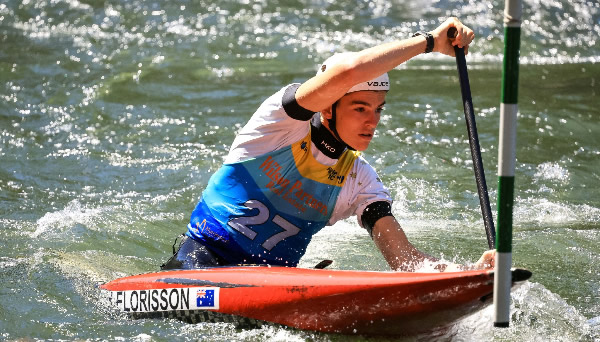
- Junior Paddler of the Week - Hunter Florisson
- Senior Paddler of the Week - Nina Mueller
- 2024 Australian Aged Slalom
Championships
- 2024 Australian Wildwater Selection Event
- Sprint Regatta
- Wavehopper verses Wildwater Kayak
- Buoys Training Friday Mornings
- Memories
- Coming Events
- WA
Sprint Championships
- Pinjarra to Ravenswood Race
- City Lights Race
Junior Paddler of the Week
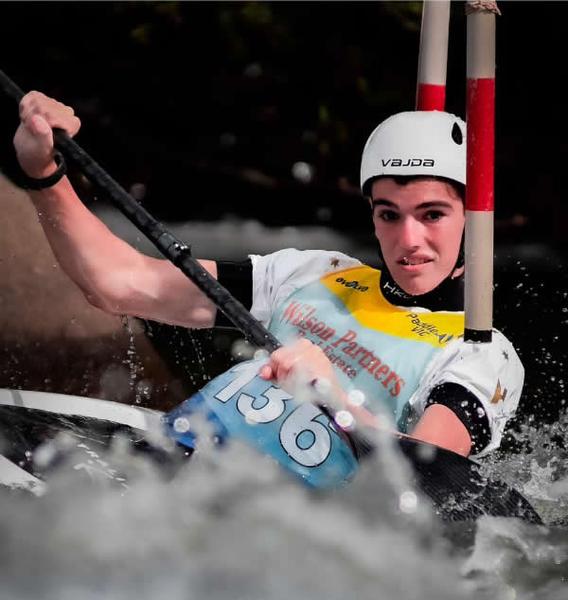
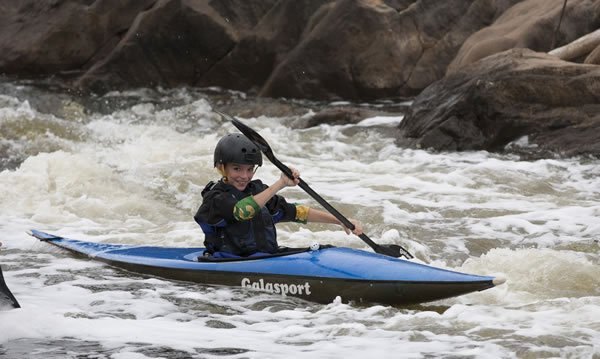
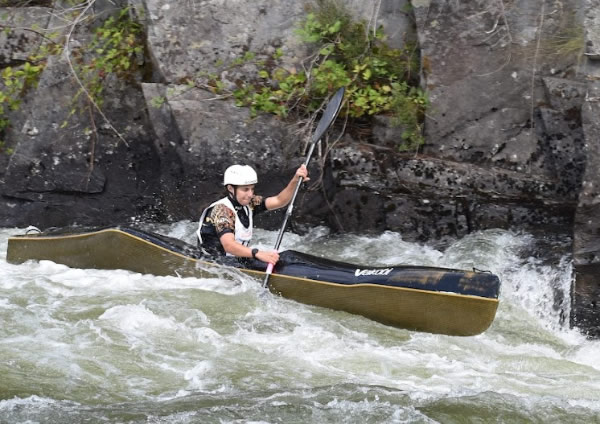
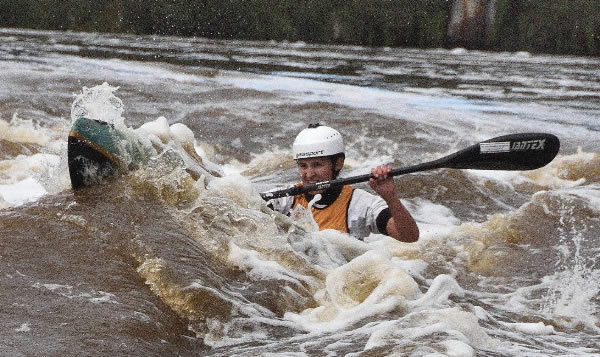
Hunter competed in the recent Aged - Australian Slalom Championships. He was on fire at the championships in Victoria. Now he is training and competing at the Penrith white water course. Men’s C1 U18 GOLD - Hunter Florisson Kayak Cross - Junior GOLD - Hunter Florisson Mens K1 U18 SILVER - Hunter Florisson Judy Boocock Trophy for fastest junior men’s C1 - Hunter Florisson Teams - GOLD - Open. Mixed Hunter Florisson, Rhys MacRae, Nina Mueller
Hunter is equally at home paddling K1 or C1.
Back in 2017, 11 years old Hunter Florisson was getting ready and raring to go to the 2017 slalom championships in Victoria.
In 2019 Hunter Florisson won the U13 event at the junior slalom champs.
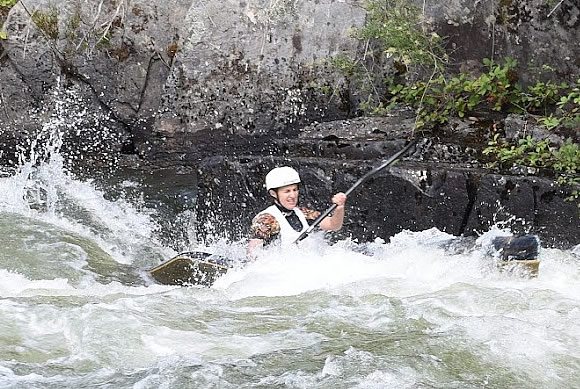
Paddler of the Week Nina Mueller Wildwater Champion Nina's first love is slalom paddling and she is good at it. Slalom paddlers can generally adapt to any paddling sport especially on white water so it's no wonder that she is Australia's best wildwater paddler. Put her in a K1 in the Avon Descent and
she is equally as good. Nina is also a quick flatwater K1 paddler. She has just returned from Victoria where the Australia Wildwater Selection events were held.
Nina at the 2024 Australian Wild Water Selection Event in Victoria last week. She was 1st in the Classic Race and 1st in the Sprint Race.
Nina competed in Europe last year.
Nina at the 2022 Wildwater Champs. She was 1st in the Classic Race.
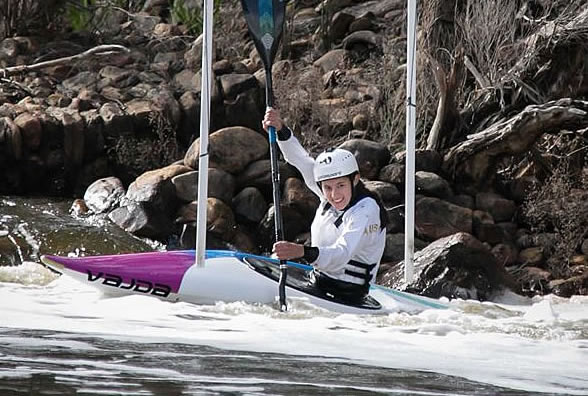
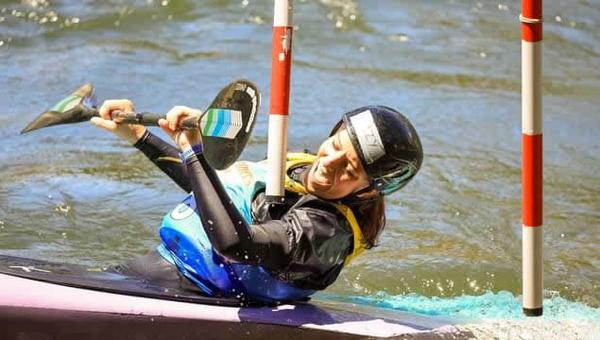
Nina in her slalom K1. She was first in the women's K1 category at the Aged Slalom Championships.
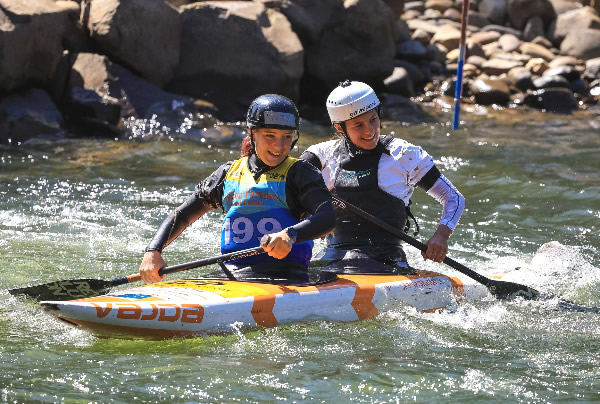
SILVER - Open Nina Mueller & Izzy Florisson. 2024 Aged Slalom Championships.
2024 Aged - Australian Slalom Championships
Eildon, VIC white water course.
Competition was close especially in the team events.
Women’s C2 SILVER - Open Nina Mueller & Izzy Florisson
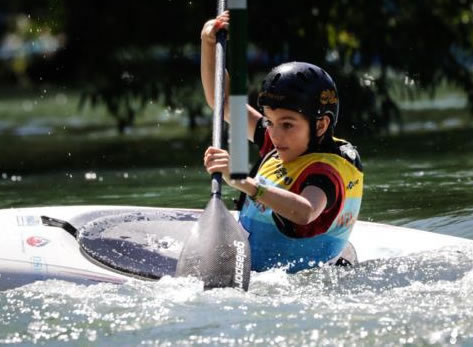
Izzy Florisson having fun. SILVER - U14 Womens.
Men’s C1 GOLD - U18 Hunter Florisson SILVER - U16 Rhys MacRae Women’s C2 SILVER - Open Nina Mueller & Izzy Florisson Men’s K1 GOLD - U16 Rhys MacRae SILVER - U18 Hunter Florisson SILVER - U14 Beau Jacob Women’s K1 GOLD - Open Nina Mueller SILVER - U14 Izzy Florisson Judy Boocock Trophy for fastest junior men’s C1 - Hunter Florisson Teams GOLD - U14 Mixed Izzy Florisson, Kai Stafford, Beau Jacob GOLD - Open. Mixed Hunter Florisson, Rhys MacRae, Nina Mueller Day 2 Results (in very wet conditions!) Kayak Cross - Junior GOLD - Hunter Florisson Well done to Rhys and Izzy for making the kayak cross semi finals. Big thanks to John Wilke (WA head coach) and Zlatan Ibrahimbegovic for coaching, Kate MacRae for being a great team manager and all the WA support crew and cheer squad.
2024 PA Wildwater Selection Event –
13th/14 January.
Mitta Mitta,
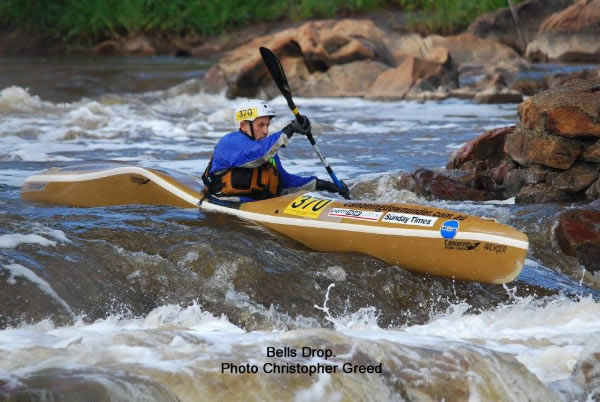
Vic Widwater racing is a competitive canoe/kayak discipline whereby the athlete must manoeuvre a 4.5m long and quite unstable craft down a section of river as fast as possible. The boats are constructed from composite materials such as carbon, kevlar and fibreglass and must weigh a minimum of 10kg including mandatory airbags fitted in the bow and stern. Wildwater racing
boats are not permitted to have rudders. Instead, the athlete must tilt the boat to one side, utilising the boat’s curved profile to effect the turn. The boats must adhere to a minimum width, with the widest part of the boat being on the deck behind the cockpit. This ‘winged’ profile creates good secondary stability when the boat is on edge for turning. Wildwater athletes use ‘wing-blade’ paddles to produce more power and efficiency. Wildwater courses vary in difficulty and technicality, ranging from class 2-4 whitewater and no two courses are the same. Even the same course can differ from day to day (or even during the same day) due to fluctuations in water level. The athlete must select the fastest route through the rapids whilst avoiding hazards such as rocks, wave trains and powerful river hydraulics which can slow the boat down or even cause a
capsize. Experienced athletes will however use various river features to their advantage to further enhance boat speed beyond physiological limits. Refined technical skills and ‘river reading’ ability are as important as aerobic capacity, endurance and power.
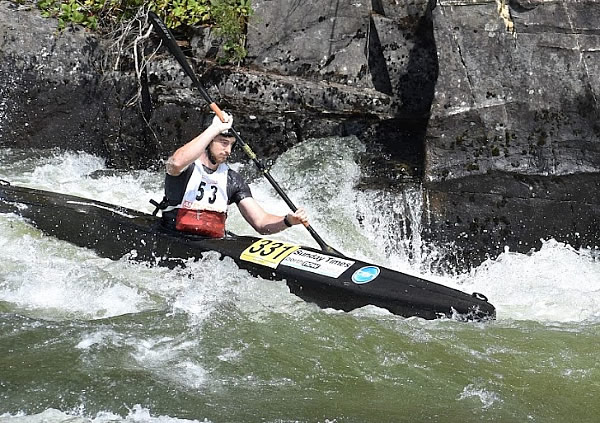
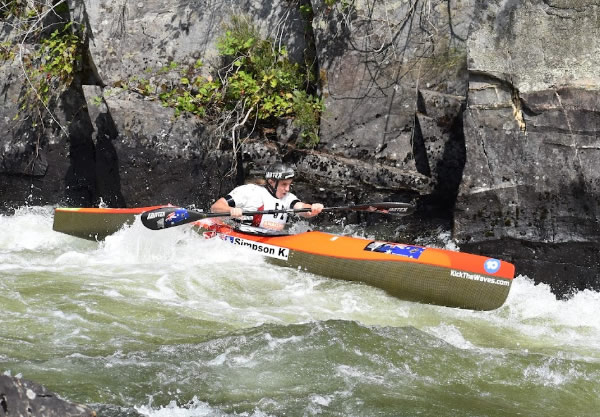
Some of the athletes. Nina Mueller Wild Water Female Champion. Harry Langley third male. Matt Dalziel Wild Water Male Champion. A WA paddler who moved to Tasmania .
There are two forms of wildwater races; classic and sprint. Both are time trials whereby the athletes are set off at intervals (usually of one minute). The classic race ranges from 10-30 minutes and is thus aerobic in nature. The athlete must learn all the intricacies of a 4-10km section of river and must be
familiar with the course at a variety of water levels because variations in flow may create different options for faster lines. Some courses can be learned in just a few runs however other courses, can require 10-40 runs down the course before the athlete is able to get a ‘clean line’ without hitting any rocks! The sprint race is usually held on a very difficult section of white
water and there are a number of heats, with the top 10 athletes making it through to the final. The race is between 200-600m (45-120 seconds) and the sprint races are either contested on artificial white water courses or on a natural river. Due to the difficulty of the white water and the short duration there is very little room for error in order to get a good result. Sometimes 10 athletes can finish within the same second. Wildwater racing is a very ‘free and natural’ competitive sport; there are few rules, no whistles, no boundaries, no umpires and virtually no infrastructure. Just the athlete and the river, racing against time. Every training run and every race is a journey. That is the beauty of wildwater racing.
WAs Nina Mueller. 1st in the Classic Race and 1st in the Sprint Race.
Nina competed in Europe last year. Photos
Sharon Leigh.
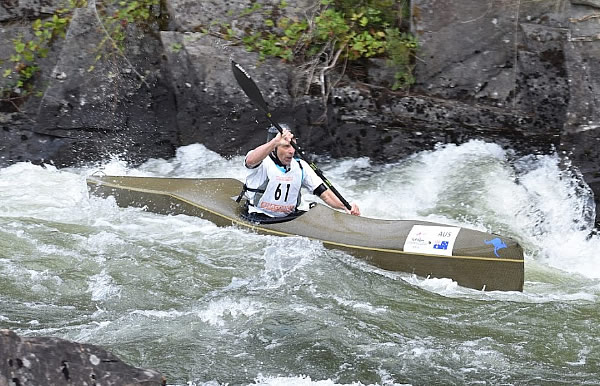
Matt Dalziel 1st Classic Race. 5th in Sprint Race. A West Australian who moved to Tasmania. Matt is a very experienced wildwater paddler. Photos Sharon Leigh.
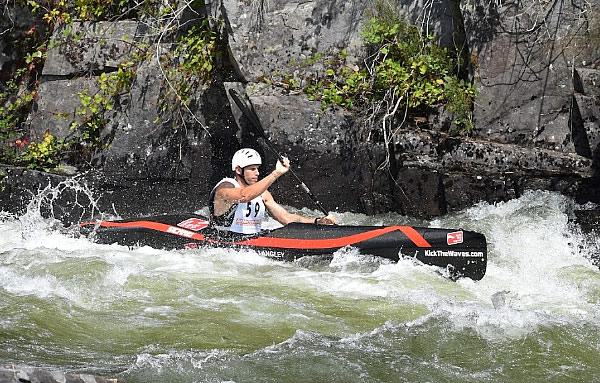
WAs Harry Langley 3rd in Classic Race and 3rd in Sprint race.
Harry competed in Europe last year. Photos Sharon
Leigh.
WAs David Burdett 6th in the Classic Race and 6th in the Sprint Race.
David competed in Europe last year. Photos Sharon Leigh.
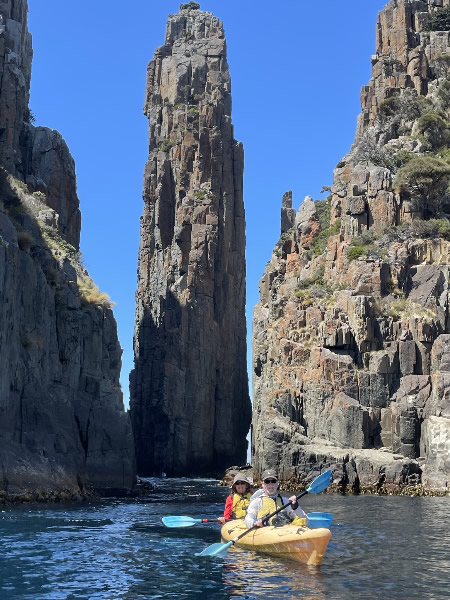
Julie and Paul Wright on a Roaring 40s Kayaking trip in Tasmania.
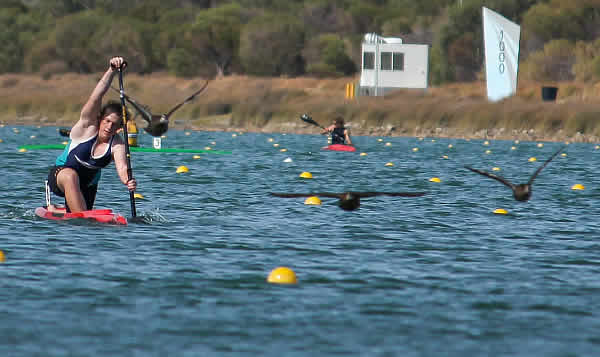
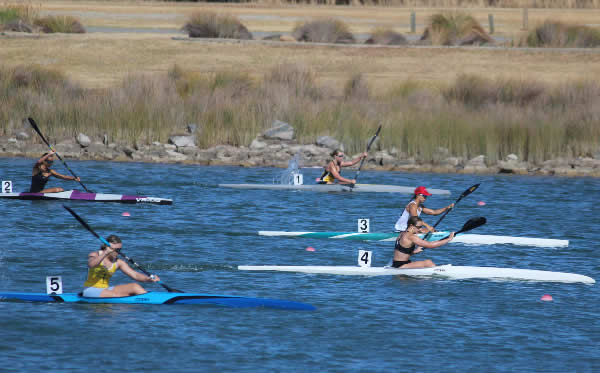
Jordan Jenkin trying to beat the birds. Jordan is from South Australia and came to WA for a week to be coached by Gary Nagy and take part in the sprint regatta. Photo Andrea Virag
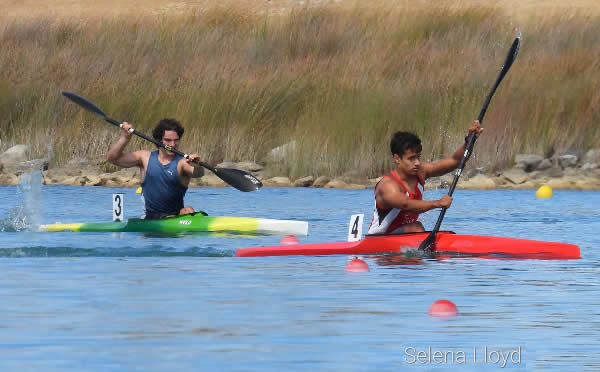
Jack Wright & Connor Jacob. Photo Selena Lloyd.
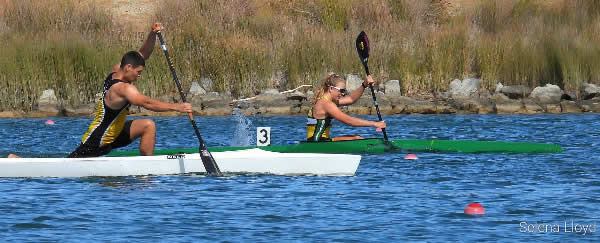
Gary Nagy & Samantha Lourey Photo Selena Lloyd.
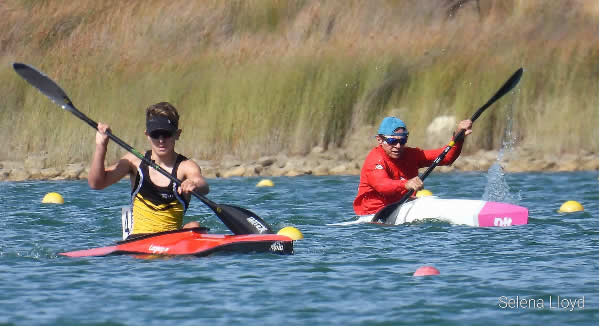
Orlando Fonseca & Phil King The young and the older! Photo
Selena Lloyd
Wavehopper versus Wildwater Kayak One of my readers asked:-
What are wavehopper boats I see in your newsletter from time to time?
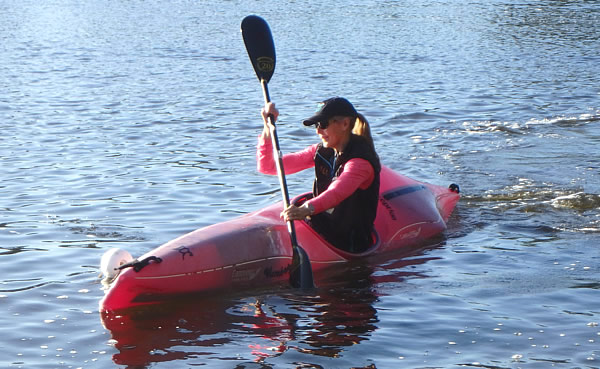
A Wavehopper - plastic 20kg+ no rudder Wavehopper or Wildwater Kayak A Wavehopper (which is 4.0 metres long) is a kayak mainly used for white water trips or wild water racing. It is slightly more stable, more forgiving and shorter than a Wild Water kayak so it is a good training kayak for the less experienced and a great kayak for paddling the Avon River and having fun on manageable rapids while being relatively stable. It also has more rocker than most wildwater kayaks so it turns easier. A Wild Water kayak (which is 4.5 metres long) is made lighter by using fibreglass or carbon/Kevlar materials, whereas a Wavehopper is plastic so it is heavier, but it will take a lot more bashing.
Wildwater Kayaks are faster due to their narrowness, slightly less rocker and greater length. However their narrowness makes them more
unstable so they can be twitchy and more of a challenge.
Wavehoppers and Wildwaters kayaks don’t have rudders so it has to be steered by tilting the boat and using selective paddle strokes. The widest part of the boat is a flared section behind the cockpit. This flared section (wings) creates good secondary stability when the boat is on edge for turning. Wavehoppers and Wildwater kayaks are not suitable for the ocean or open areas where there is a lot of wind. Having no rudder and a high profile deck, (which catches the wind,) paddling windy areas can be a challenge for the most experienced paddler. If you want to learn how to paddle a kayak without a rudder
the Wavehopper is a good kayak to try and a step forward to paddling a Wildwater Kayak. Why not give them a go.
Wavehopper:- Length of 4000 mm. Width of 600 mm. Weight of 20kg or more. Wildwater Kayak:- Maximum length of 4500 mm. Minimum width of 600 mm. Minimum weight of 10kg
Check out the different types of boats by going to my blog here:- Paddle Craft Definitions – Canoeing, Kayaking & Other Adventures (wordpress.com)
A Wildwater Kayak made with kevlar materials, so quite light.
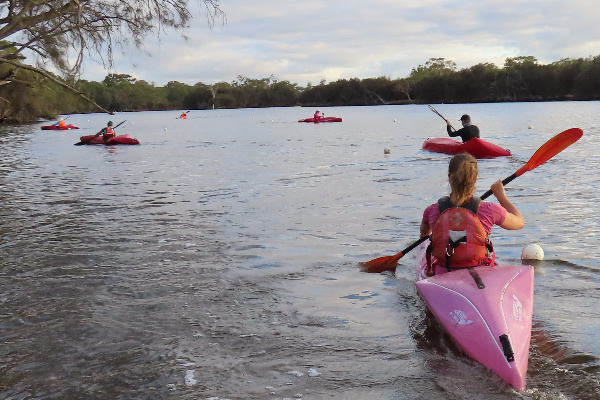
Buoys Training This Morning - Friday 6.00am Come and join us.
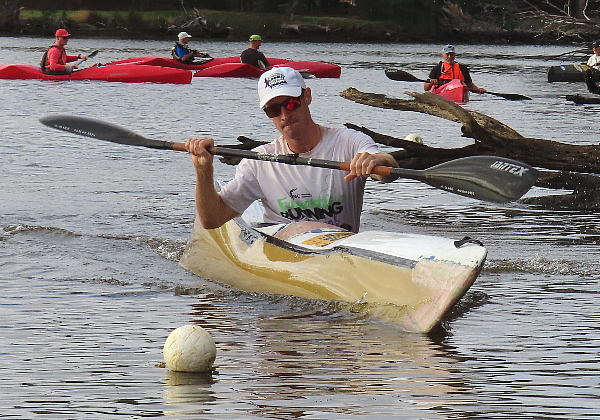
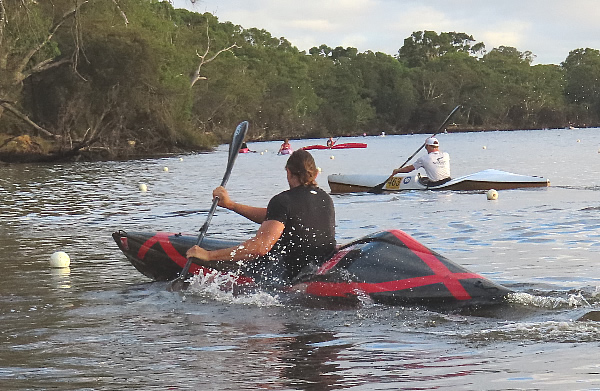
Michael Glorie hasn't been paddling a wildwater kayak long, but he is certainly building up his skills. Buoys training give you the skills and will increase your confidence. Putting a kayak on the edge doesn't feel natural and paddlers are afraid that by tilting their kayak they will capsize. It's just practice. If you need any help, give me a shout. I admire paddlers who get in there and give all kayak disciplines a go.
Harry Langley racing around the buoys at a terrific speed. His confidence is high. He knows how to use boat tilt and paddle placement to weave around the buoys like they are not there.
You are not too old or too young or too new to learn.
It just means practice. You will love it when you see
yourself getting better. Three more morning to go and We will have a race on the evening of 29th January at Sandy Beach. And another on the evening of the 5th February at Ascot.
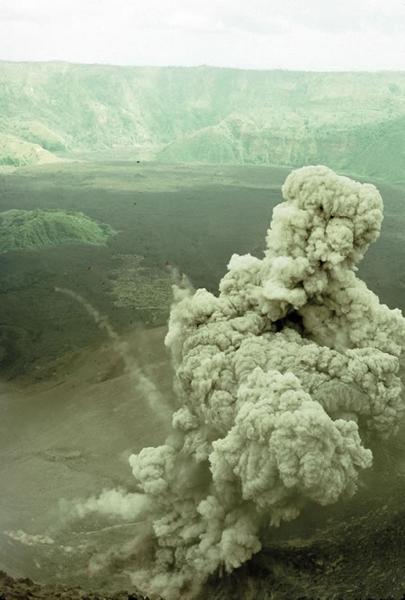
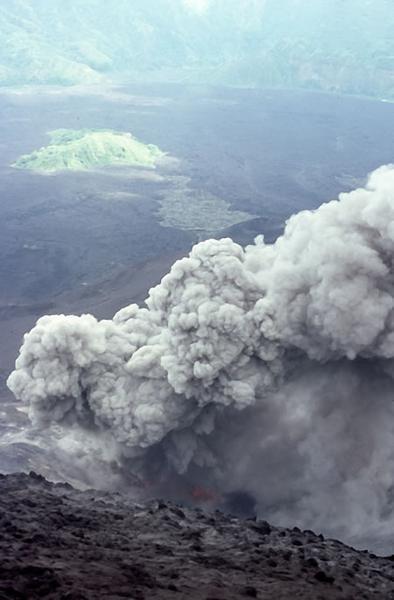
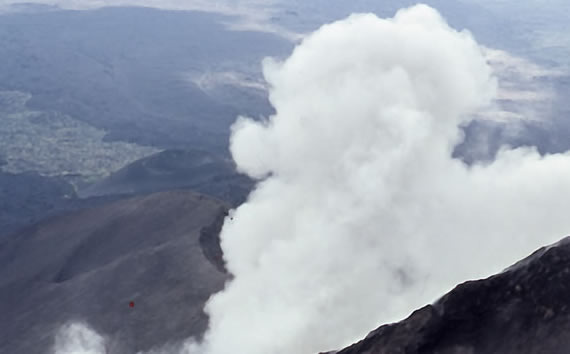
Memories On A Lip of a Volcano Kintamani, Mount Batur, Bali 1976 Arriving in Bali and after the usual sight-seeing around Kuta Beach, I moved up to relax in Ubud, where artists and wood carvers are famous and where the tropical jungle and rice paddy fields surround this beautiful place. From Ubud I moved further up the
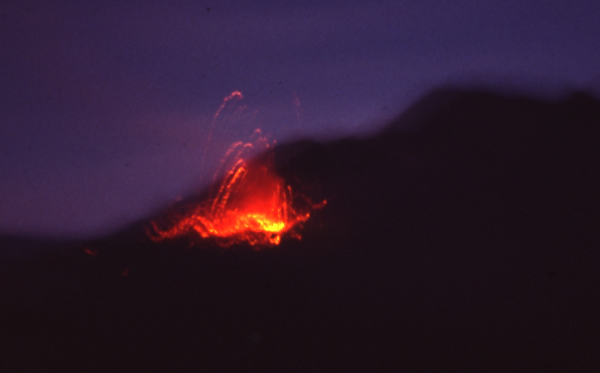
mountain on the back of a truck and found a cheap hotel on the edge of the Mount Batur crater rim. The hotel had a tremendous view of Bali's largest crater lake and the active volcano which was erupting at the time. The view at night, watching the volcano spew red hot lava high into the sky, was just amazing. I couldn't wait for a closer look so I soon planned to walk up to it with two English guys who I met at the hotel. We were all excited about our venture, but we really didn't know what to
expect.
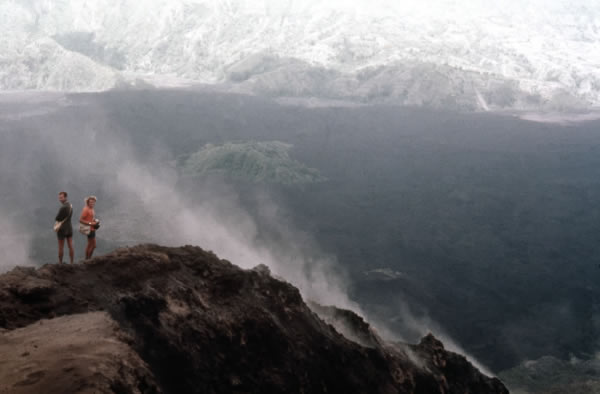
At 7.30am the next day Terry, Chris and I trekked down into the crater and walked across a lava field to find some hot springs before climbing up to the summit of a non-active volcano to look down into the active one, which was on a lower level. Loose shale and sharp volcanic rock made it a pretty hard climb. Eventually we reached the higher non-active volcano summit where we were able to peer into the erupting volcano below us. I was over the moon. I had never ever imagined visiting a volcano on this trip, now I was looking straight down into one. It was cool on top of the mountain crater but the
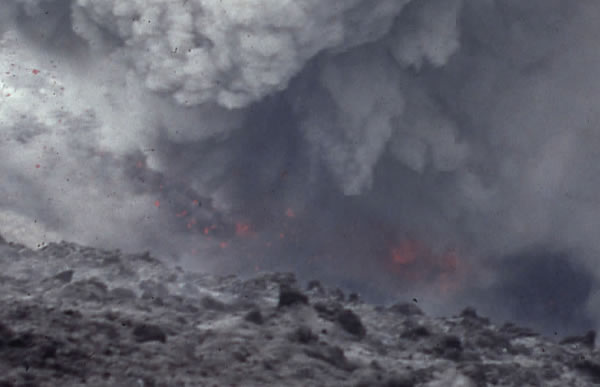
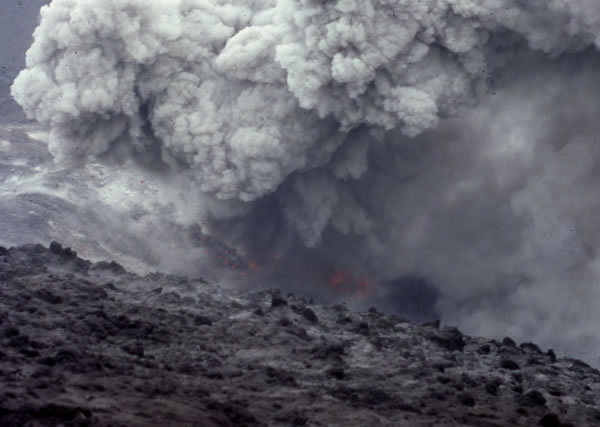
cold did little to dampen my joy of peering into a crater full of red molten lava. Every few minutes the volcano erupted giving out a very loud bang, followed by a huge cloud of smoke and number of burning rocks which flew in all directions. It was just amazing. We couldn't believe what we were seeing. We were literally jumping with joy. We watched for several minutes and then out of
the blue the next explosion sent several huge burning rocks with smoke trails headed straight towards us. Luckily, all but the odd rock failed to make our position and dropped back into the crater. If felt like a close call and this scared Chris who was already a little nervous about being so close to the volcanic action, so he moved back away from the edge to where it was
safer.
Terry and I were in hysterics. We were like kids in a lolly shop, even worse. I couldn't think of anything at that time that had made me so excited. We listened to the thunder crack and then watched the red hot rocks fly through the air, often in our direction. When the boulders stop flying and the smoke moved away we waited and looked into the crater to watch the whole process start
again.
Terry and I peering down into the volcano.
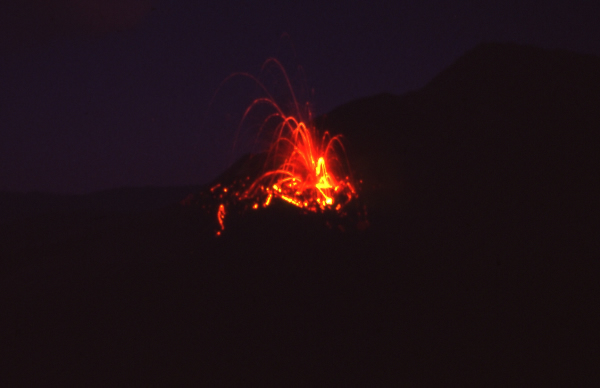
Burning boulders shoot into the air.
The red hot lava in the crater expanded until it could no longer hang on and it just burst and exploded. At the bottom of the crater we could see a red hot spot. It grew wider and wider like the petals of a flower
opening. Eventually the red hot lava expanded until it could no longer hang on and it just burst and exploded, spewing the hot burning boulders high into the air. The sense of joy in seeing such an amazing sight was mind-boggling. We were just staggered at the whole eruption process and that we were actually witnessing one of the most astonishing and breath-taking sights you would ever come across. We were overwhelmed with emotion and joy. You would be hard pressed to find two people being more
excited than we were at that time. Chris was still staying well away from the edge of the crater but we continued to watch the spectacular eruptions time after time. We just couldn't leave it. How could we, it was something we would probably never see in our life ever again and what a grand firework display it was.
I felt that nothing could drag us away from such an amazing, joyous spectacle, then suddenly our joy turned to concern when we saw a red hot smouldering boulder headed straight towards us. This time it didn't look as if it was going to drop short. We fixed our eyes onto the boulder wondering which way to run, but we just stood readying ourselves to
move at the right moment. Like a burning missile it propelled itself through the air in a slight arch as it honed in on our position. Boulders from other earlier eruptions had landed 50 to 100 metres away but this one was still headed towards us. This boulder had purpose, it was red hot and leaving a long smoke trail. As it propelled itself to within a hundred metres or so, we could then see it was going to fall a little to the right of us. As we watched it hit our shaly mountain top only metres
away, we were ecstatic and relieved.
Over an hour had passed, but with that near miss we thought it was wise to leave the mountain before our luck ran out and return to the hotel. On the way down we were still on a high with memories of time on the mountain that will never leave us. It was one of the most exciting things that I had done in my life.
Training & Racing Around the Buoys We still have a few more Friday mornings for paddlers to join us at the 6.00am buoys
training.
The first part of the session is practice and then we have a race to see if the practice is working. It is one of the best ways to increase skills, balance and paddle strokes.
Claughton Reserve, Bayswater 6.00am.
WA Sprint Championships 3rd & 4th February
Pinjarra to Ravenwood Race 11th February 2024
|
|
|
|
|
|
|
|
|
|