|
|
|
|
I had a lady ring me from Claremont who had been shown my bird book by a friend. She loved it so much she wanted 6. In fact her and her husband thought it was the best bird book they had seen and was extremely complimentary. It's at times like this that I realise all my hard work and long hours putting it together was well worth it. Most of my books that I have written I haven't promoted so they usually end up in my garage cupboard. Please let your friends know it's around. With only 250 printed I will soon have to do another reprint of the book and hardly anyone knows about it yet. There are several WA paddlers who have been selected to represent Australia in slalom and wildwater and are off to Europe in June/July/August.
The Sprint Championships are on this week so there maybe a few sprint paddlers heading that way as
well.
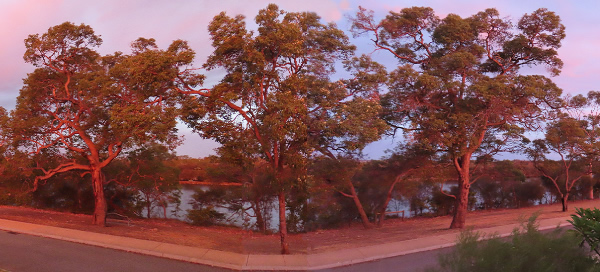
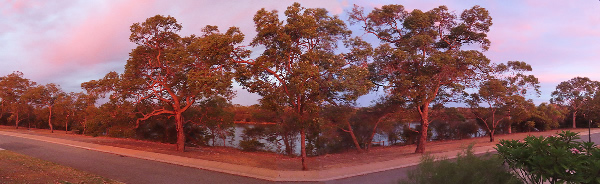
A view from our front room as the sun goes down..
I love living in Ashfield/Bassendean. It's not Dalkeith, but it's like living in the country, with open space, parks, the river and with Bassendean having a village feel. I don't even have to drive to get to training. And we still have all the necessary conveniences close by. We have been living within 250 metres of the river for 46 years and its been great, but to have the river on our doorstep like we have for the last 8 years is so amazing and rewarding. Life is just so good.
- Paddler of the Week - Peter Martin
- Memories - Robyn Jeffery and Kynan Maley at the Olympics
- WA White Water
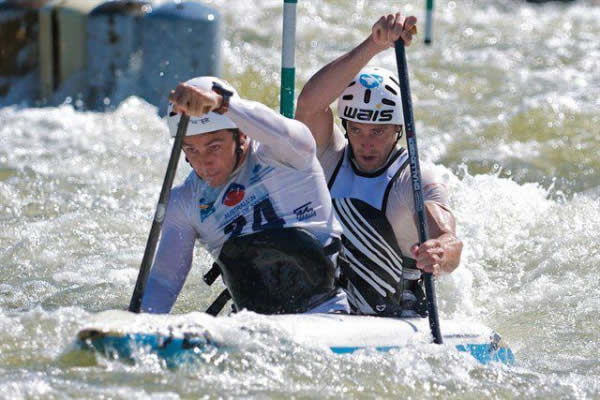
Paddlers Selected in the Australian Team
- Australian Sprint Championships start
- The Dolphin Show
- In Search of an Abandoned Mission in the
Kimberley
- Birds Along The Way
- For Sale - Epic Paddles - Excalibur Kayak - Wavehopper
- Coming Events -
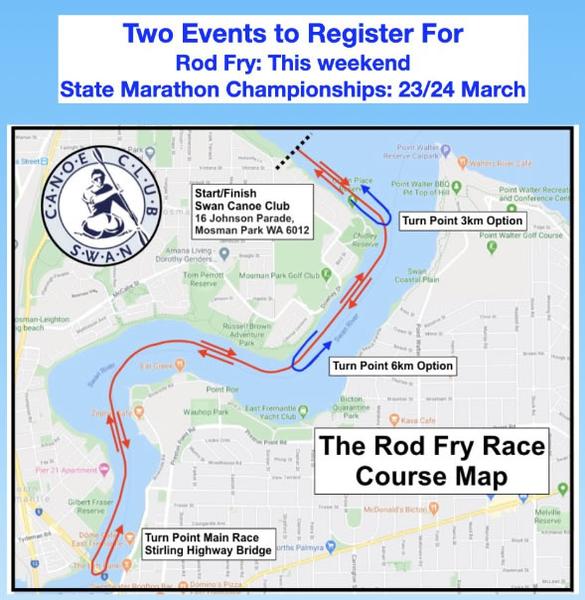
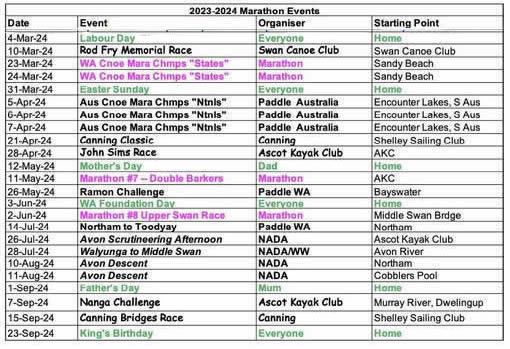
- Rod Fry Race
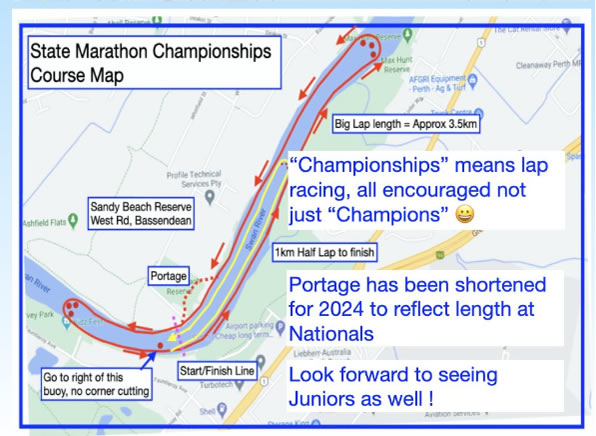
- WA Canoe Marathon Championships
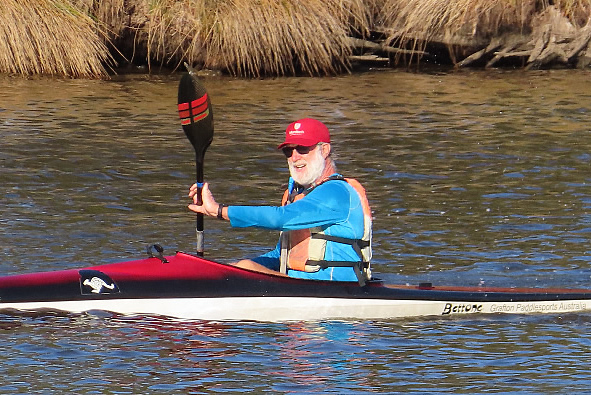
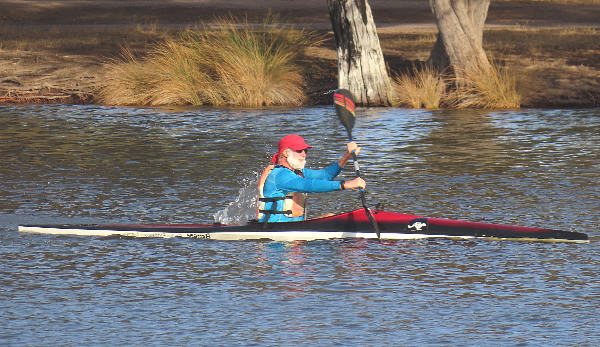
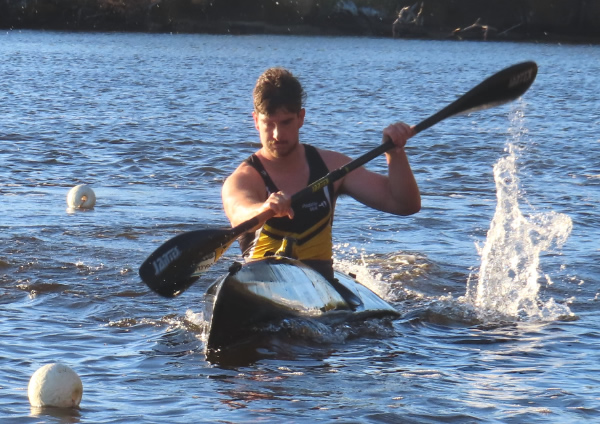
Paddler of the Week Peter Martin
Peter was happy that he got a PB in our Progressive Racing Group handicapped race on Tuesday. He is getting ready to race at the National Marathon Championships in South Australia. His wife Judy and
his daughter Bronwyn are also going across and competing.
In his earlier years Peter was involved in organising local marathons, coaching juniors, especially guppys and he was very successful in getting them to race. Peter is a life member of Ascot Kayak
Club and Paddle WA so you know he has done his fair share of work.
In 2012 WAs Robyn Jeffery and Kynan Maley were in training for the London Olympics. What a wonderful journey they had!! A few years before their paddle at the
Olympics, WAs Robin Bell was a world slalom champ and won a bronze medal in C1 at the 2008 Beijing Olympic Games. At the moment C2s are not in the Olympics which is very disappointing.
So that class
has virtually been wiped out.
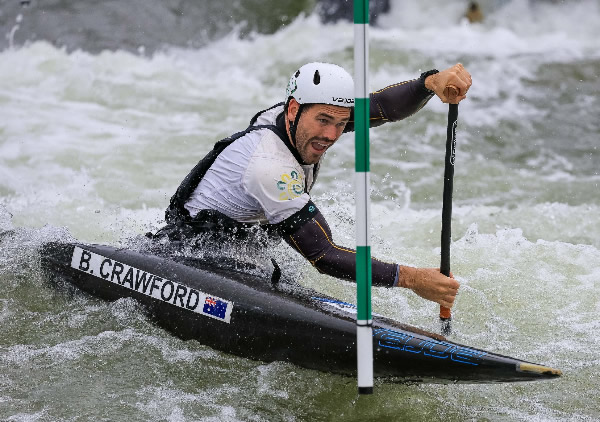
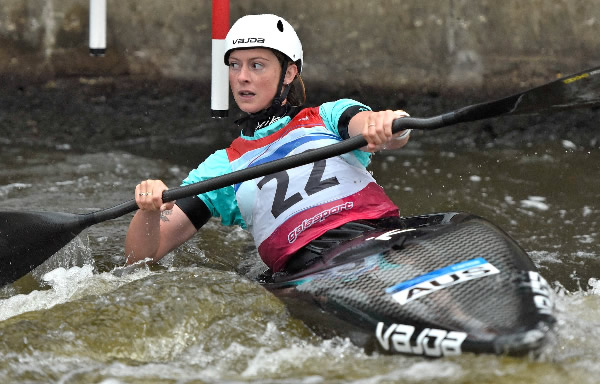
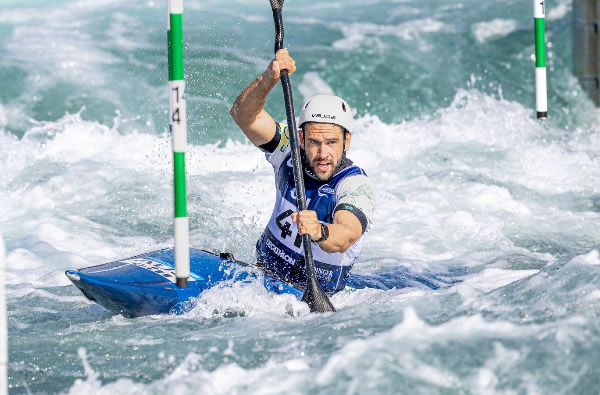
Europe Bound World Cup/World Slalom Championships Five West Australian paddlers have been selected to race in slalom championships in Europe this winter.
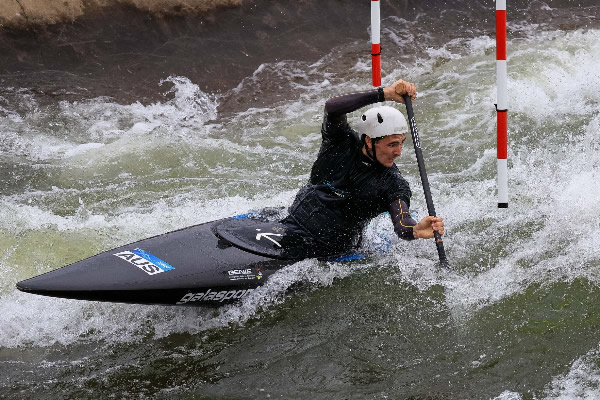
Brody Crawford narrowly missed out going to the Olympics, but he has been selected to compete at the 5 World Cup Slalom Races this season. Photos Paddle Australia.
Genie Collin has been selected to paddle in the 5 World Cup Races.
Ben Pope will be racing at 3 World Cup Races.
George Pankhurst will be racing in World Cup Races 3,4 and 5 and the U23 World Championships.
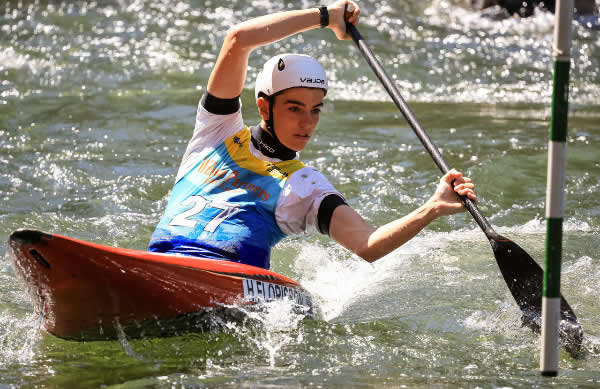
Hunter Florisson is racing in the Junior & U23 World Championships. Photo Graham Fraser Photography.
Wild Water Championships & World Cup Three West Australian paddlers have been selected to race in World Wild Water Championships in Europe. WAs Harry Langley, Nina Mueller and David
Burdett have all been selected to paddle for Australia in 5 premier Wild Water Races. 1 & 2. ICF Wildwater Canoeing World Cup in Republic
of North Macedonia on 14-16 June 2024. 3 & 4. ICF Wildwater Canoeing World Cup in Italy on 20-22 June
2024. Culminating in the:- ICF Wildwater Canoeing World Championships in Spain on 14-18 August 2024.
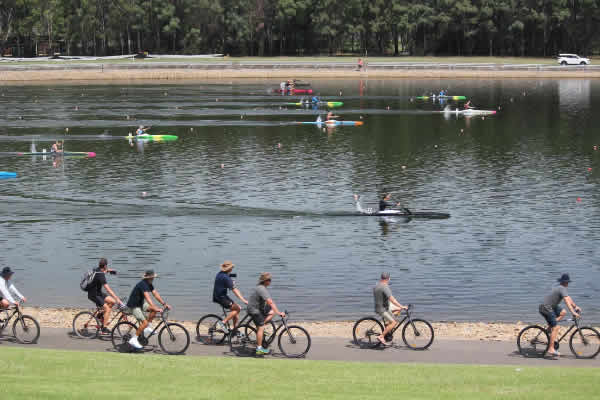
Australian Sprint Championships have begun
Penrith Sprint Course. Day 1 wrap, calm and humid conditions. 500m across the board
owing to pontoon starts. Our medallist’s and finalists on day 1 with a huge congratulations to: Gold  Orlando Fonseca. K1 14’s Kat o’Kelly Kennedy. Para K1 500 Silver  Connor Jacob. K1 500 16’s Stella Dark and Tilly Reekie. K2 500 16’s Bronze  Belle McBennett k1 500 18’s Day 2 recap. WA athletes - team boat gurus as the remaining K2 and the K4’s on show this arvo in fast and furious conditions. Congratulations to the following medallists and finalists (ie qualified finals rather than direct finals) Gold Stella Dark. K1 16’s Connor Jacob and Finn Caruana k2 16’s Beau Jacob and A Tan K2 14’s Beau Jacob and Orlando Fonseca, A Tan and F Ireland 14’s Mark Daniels. Paracanoe Va’a Stella Dark,Tilly Reekie, Alila Thorpe, Taya Cassidy K4 16’s Silver Zen Salisbury and C Ireland (NSW) k2 16’s Belle McBennett and Sarah Major k2 18’s Sammy Lourey k1 21’s Connor Jacob, Finn Caruana, Zen Salisbury, Sasha Small k416’s Zoe Moore, Adelaide Hilton, Claudia ketteringham, Harper Gamble k4 18’s Luke Egger k4 open with Armstrong, Reid, Morris Bronze Luke Egger and Noah Havard (QLD)
The Dolphin Show
Labour Day Paddle When you retire a public holiday doesn’t
mean as much as when you are working for someone, but it does seem to feel better than a normal day. Anyway after walking Nikki on Labour Day I went for a 9km paddle on my SUP, talked for a while at the club and later typed some of my 1972 diary, the time when I hitch hiked from the UK to Australia, via Europe and Asia. By 5.00pm it was time to go paddling again, this time in my kayak.
I had paddled 2 kms when I met Nina. She stopped to tell me there were dolphins up ahead. I just hoped they weren’t going too fast for me to catch them up.
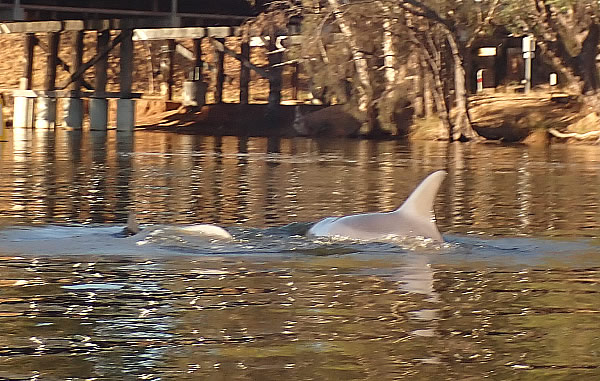
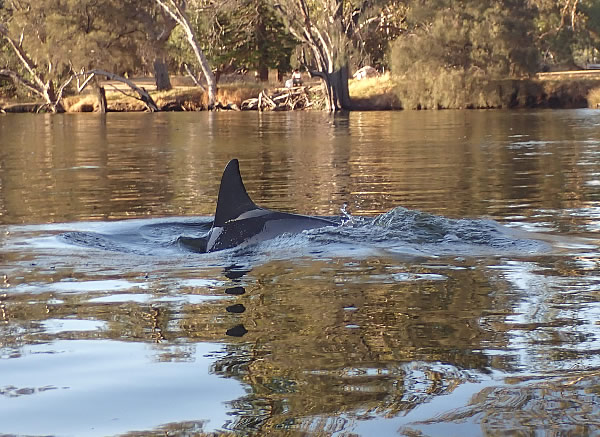
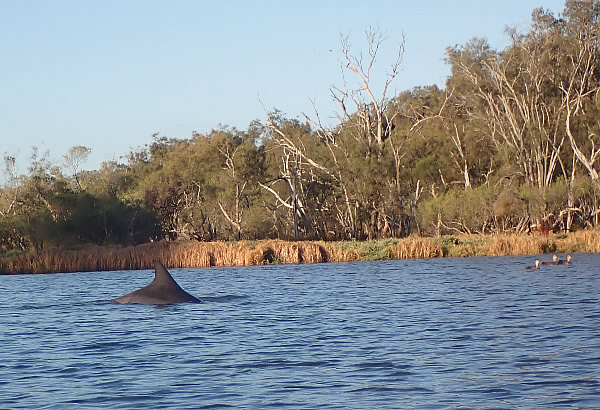
When I reached Point Reserve they were there giving all the fisher-people along each side of the river a good show. They were chasing fish and circling around. I floated in my racing kayak trying to get a picture, but they were quite elusive popping up all around me. It’s not easy trying to gauge where they are going to surface, but it’s even
harder being in an unstable kayak seemingly balancing on a log with a camera in my hand. I’m often on the verge of capsizing, but somehow I seem to manage to keep dry. It’s too costly to capsize and lose my camera. One of the dolphins accelerated so fast it created a big wave for all to see. Then the hunt was on. The chase lasted a few metres, fish were flying through the air,
but at least one wasn’t so lucky as the dolphin surfaced with a wriggling fish in its mouth. A couple fishing on shore were not only surprised, they got wet from the splash as it chased the fish close to shore. It was fun watching and I just thought, how great it is to be on the water watching dolphins 38 kilometres from the ocean. I expect to see them around Fremantle and Perth
city, but when they are so far up the river it makes it that much more special to witness their antics.
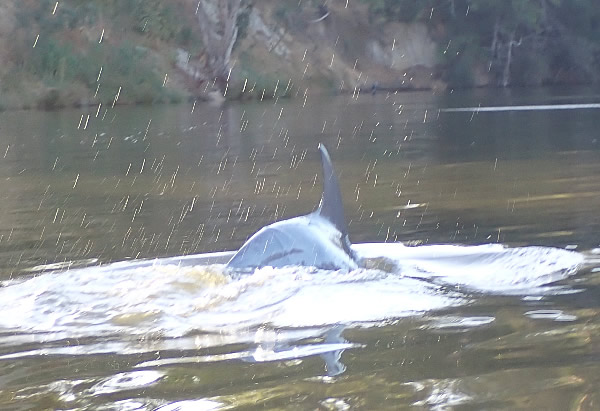
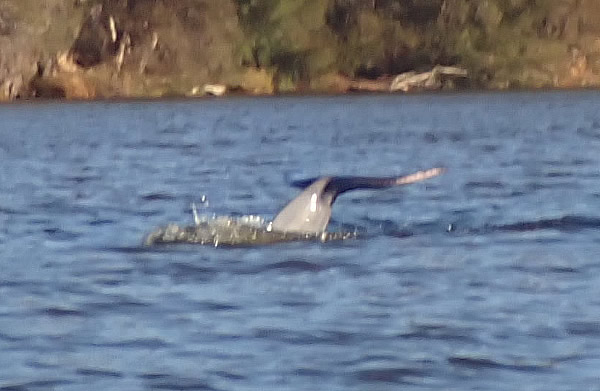
A burst of speed and a hunt for fish.
It was hard to tell where they were going to surface.
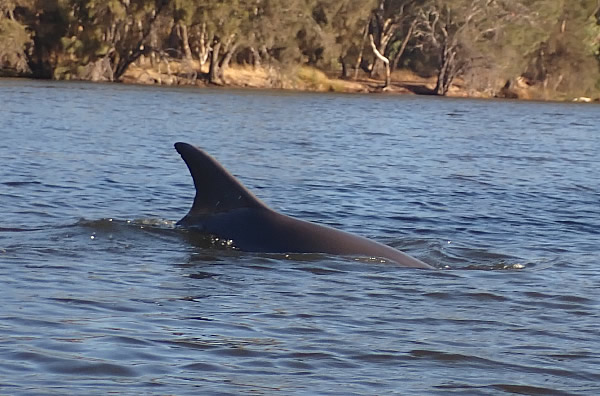
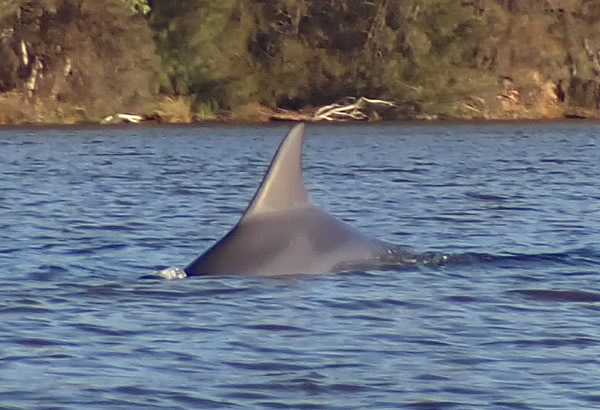
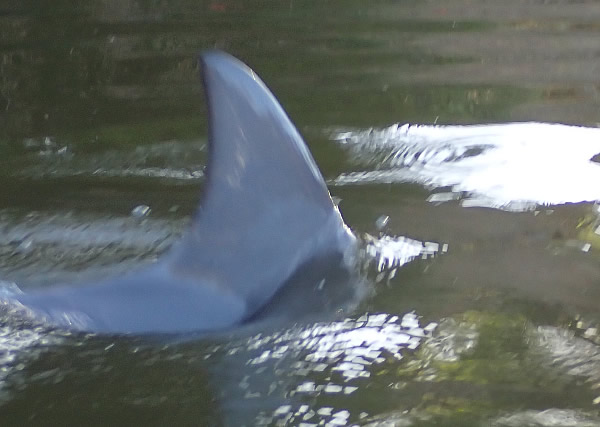
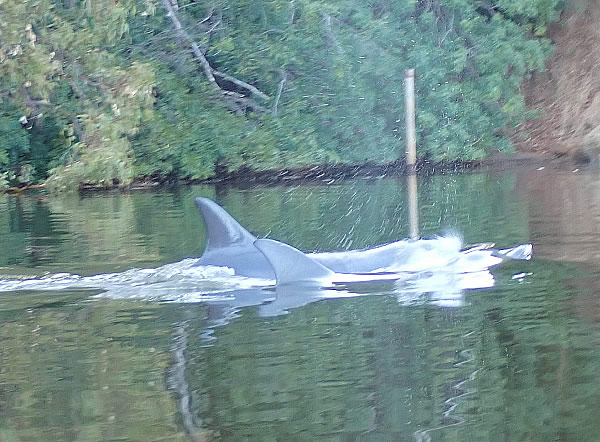
Eventually they decided to move upstream. I lost them for a moment and then one surfaced less than a metre away giving me a bit of a surprise when it surfaced and blew out to breath. At least I managed to get its photo, although a little blurred. When a dolphin surfaces for air, it breathes out (exhales) first and then breathes in (inhales) fresh air; it only takes a fraction of a second for the dolphin to do this. If you are close by, it is easy to hear a dolphin’s ‘blow’ at the surface; in fact you will often hear a dolphin before you see it! The blow is the sound you hear, and the spray of water you see, when the dolphin forcefully breathes out and clears away any water resting on top of
his blowhole. The water spray is not coming from the dolphin’s lungs; it is just water sitting on top of its head around the blowhole being blown away before he inhales. Dolphins are able to hold their breath for several minutes but typically they breathe about 4 or 5 times every minute.
They surfaced just beside me.
A couple with their two kids were on the bank fishing. The kids were actually playing in the shallow water and then were surprised by a dolphin surfaces nearby. They instantly run out of the water shouting to their parents; was that a shark? I shouted back it’s only a dolphin and they were happy to hear that and couldn’t help but shout and get excited every time the dolphin surfaced. It was good to see them so thrilled with nature. The two dolphins moved under Guildford Bridge. Five blokes in a rubber duck saw them and headed downstream leaving the river to be peaceful. Being a public holiday
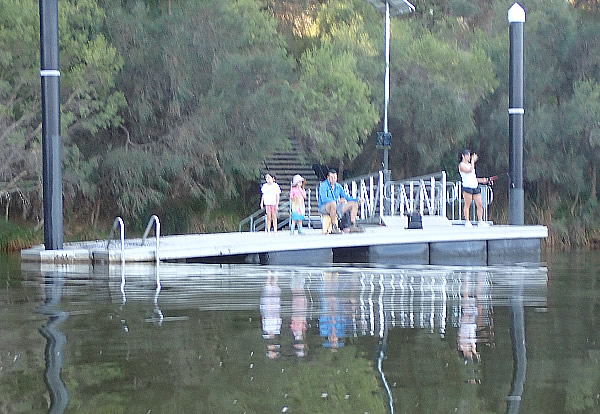
there were lots of people fishing. Every time a dolphin would surface a hand would go up and point. They moved under the water pipeline and started to pass another family fishing from the Success Hill jetty. The joy the kids and the adults got from seeing them was good to witness. A kayak fisherman was a little further. They passed him by and turned the corner of Fishmarket Reserve to
head east and further upstream meeting a man in a small dingy powered by a electric motor. He stopped and just looked.
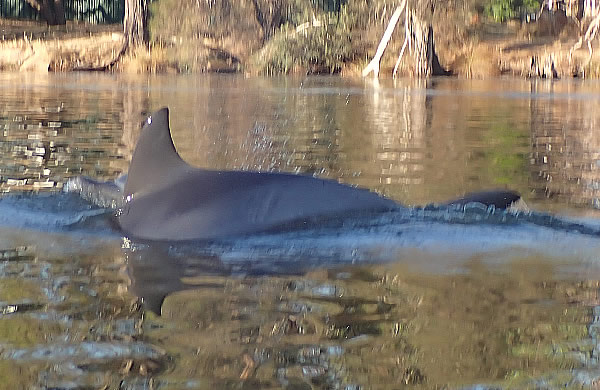
They were happy to frolic as they approach Guildford Bridge.
I was now 40 kms from the ocean by river and just over 5.4kms from home. Although I wanted to follow them further I promised Jenny and Nikki that we would go to 8 Napkins for posh dinner, so I turned watching one dolphin head upstream towards Barkers Bridge. To my surprise when I turned to head home the other one was heading downstream in the opposite direction to the other, which I found quite odd as I thought they would keep together. Passing the excited family on the Success Hill jetty I increased my pace and said goodbye to the dolphin and headed home at a faster pace, thinking to myself how lucky I am to be able to paddle on the river every day and enjoy such encounters.
They are about to head under the water pipeline bridge.
A family on the pontoon getting a good show as the dolphins swim by them.
Heading upstream passed Fishmarket Reserve. The good news is that I saw them the following morning and evening and the morning after. So keep your eyes peeled.
In Search of the Abandoned Kimberley Kunmunya Mission
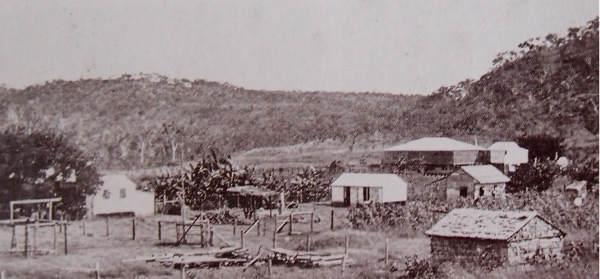
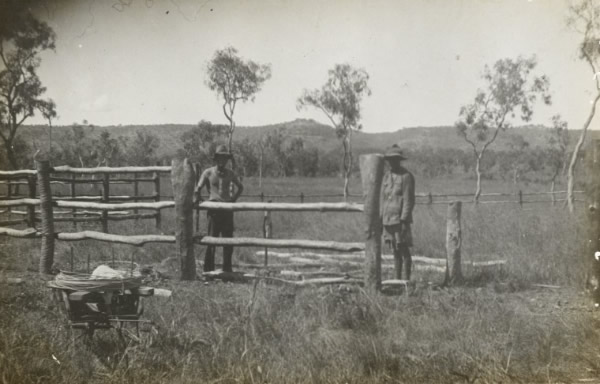
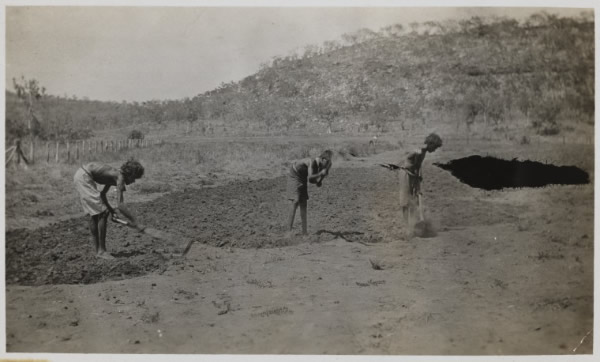
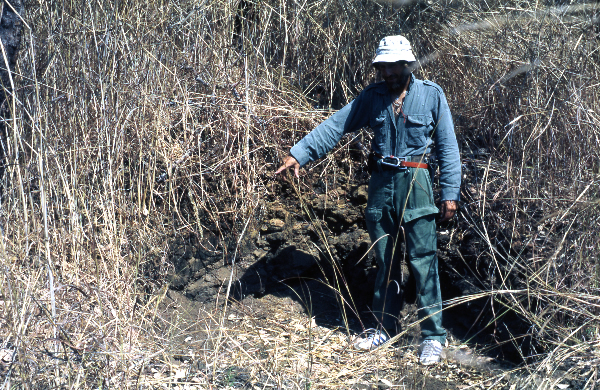
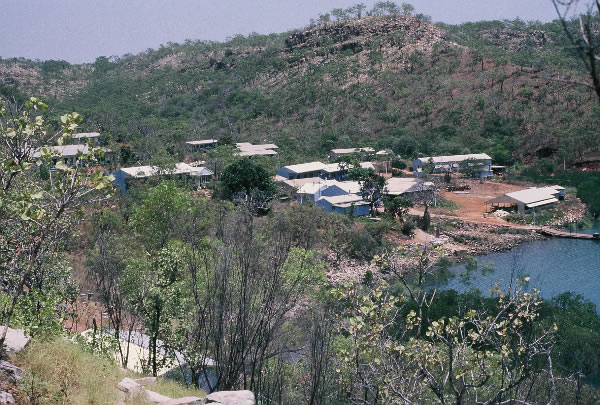
in the scorching heat. 1982 Port George IV Mission began in 1912 at Walcott Inlet in the west Kimberleys, but by 1913 was located at Port George IV. and in 1920 to 1951 the Mission moved to Kunmunya and took its name from that place. My goal was to explore the abandoned mission grounds.
Kunmunya Mission was run by the Presbyterian Church. 1920 to 1951.
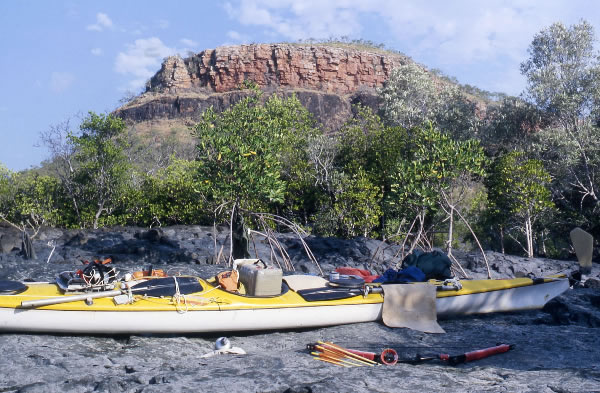
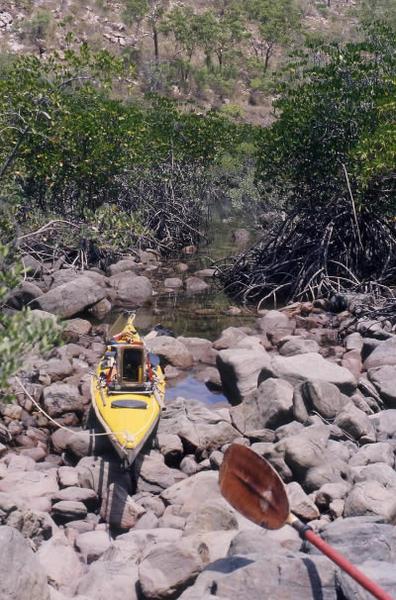
The temperature was 38 degrees when I left Kuri Bay heading towards Augustus Waters, the ruins of the Camden Harbour Settlement of 1865 and to find and visit the abandoned Kunmunya Mission. It turned out being a glorious paddle to the nearest camping spot which was below the vertical cliffs of Kunmunya Hill. It was a stunning sight, however there
was no beach, only a rocky shore lined with mangroves. The high tide enabled me to slice through the mangroves onto a slippery rock ledge. I had no time to lose, once ashore I had to start my 15 kilometre walk to the old Mission and back before it got too late in the day. There was a choice of two routes, the direct one over the hill or a longer route following a creek line. With my pack full of cameras and survival equipment I decided on the direct route.
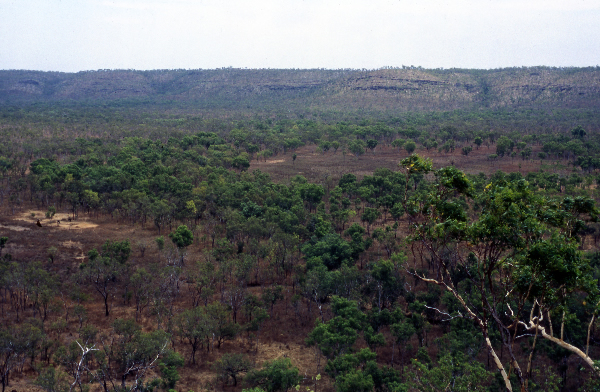
I moved up the gully between Kunmunya Hill and another hill to the east, chasing a 2 ½ foot goanna lizard, with the last 6 inches of its tail being white. I can usually walk up the hills without stopping but this time it was too hot and too steep. Once on top of the ridge I set a compass course to the old airfield. Disturbed by my presence a
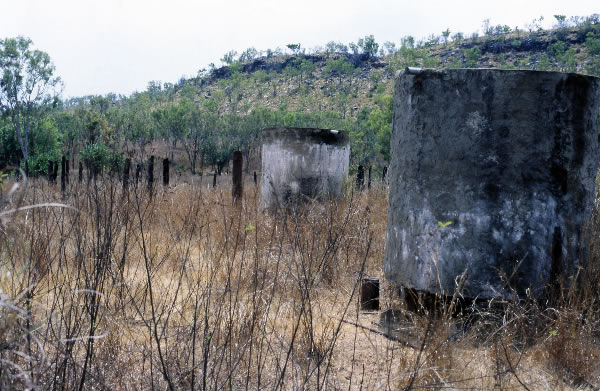
wallaby with a bushy tail flashed off flying across the rocks and spinifex. I just wished I could run as fast. When I descended the ridge heading towards the old, now very overgrown airstrip a flock of parrots cheered me on. With nothing to see there I followed the mule tracks towards the settlement passing an old aircraft. A corrugated iron toilet with a large and deep hole formed in concrete was in good condition. Behind that there was an old stockyard with a giant clamshell and two old water
tanks, which looked as if they were concreted around steel. A herd of cattle, with a bull that didn’t seem too impressed with my presence stood between me and the other ruins. A big wave with my camera bag and they were off.
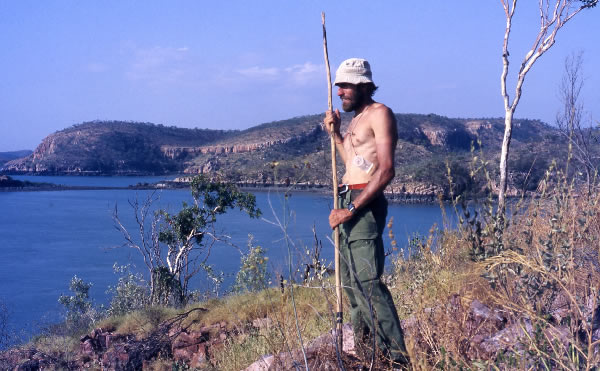
A view from the top of Kunmunya Hill.
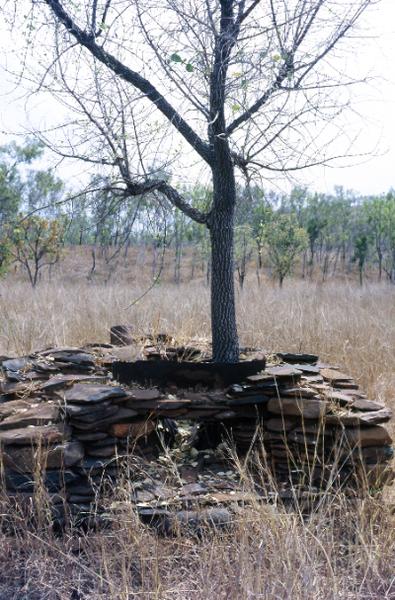
My next stop was at the private toilet, it had no lid covering the large square hole, but it was still in good nick. Close by was a collapsed corrugated building with small rock walls. Other old sheds stood precariously, but an old stone fireplace really took my fancy. It had a tree growing through the middle of it, proof that it hadn’t been used
for years. Other foundations, concrete water tanks, small bath, old wheels were still present, but the larger buildings had been dismantled.
I moved over to the lush pandanas palms and paperback trees that shaded pools of water. Stepping down into the water course a large kangaroos sprung to life and run a few metres to hide in the long grass. Topping up my water containers in the stagnant pools, polluted by cattle and donkeys I headed back over the ridge where I came across an old
concrete dam wall that blocked off a creek. Walking pass the waterless dam, three more tin shacks formed the extended boundary of the mission grounds.
Mules on my track gave the impression that they were going to charge me, but after a few forward paces making one hell of a racket, they turned tail and ran away. Within a few minutes I had rounded up seven mules all going in my direction. Crossing the plain and the airfield the mules now nine galloped off bellowing their guts out. Following a
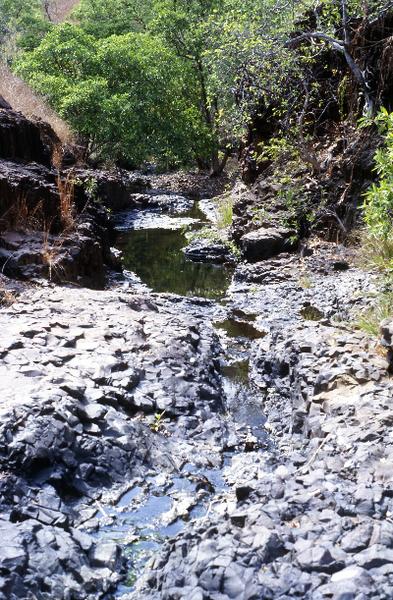
small creek home gave me more shade and several pools of water and at the junction of two creeks a small running stream flowed but disappeared several times seeping under a bed of rocky boulders. The creek at times was steep with a few large drops and good swimming holes at the bottom of them. When the mangroves appeared a trickle of water was still dripping over the rock bed. The heat was intense and I could now feel the strain on my body and my legs start to wobble.
Reaching the open, less vegetated coastline I could visually see my camp lying 1 ¼ kms straight across the bay. Unfortunately I had to follow the coast around so it was double the distance. Because it was low tide and with my energy sapping I tried taking short cuts across the mangroves but the oyster laden rocks and mud won out. I was hot, tired
and millions of flies annoyed me and I couldn’t take a footstep without slipping or tripping on the rocks. My legs were now like jelly, a condition I have never experienced before. I started to get out of breath and my ears kept blocking. I was knackered, shattered and possibly on the verge of collapsing. Finally I had to stop as I staggered up the small grade. I relieved my back of the heavy burden of water and camera and sat for a short time replenishing my water intake. I think I was
suffering from the first stages of heat exhaustion? With only half a kilometre to go I knew I had to take it easy, but I really had no choice as I was exhausted and feeling giddy. My kayak was exposed to the powerful rays of the sun and needing shade I stumbled under a mangrove tree nearby. The tide was 100 metres out and I had told Rod at Kuri Bay that I would return that afternoon. I
had no chance of carrying my kayak over the slimy rocks and paddle four hours back to Kuri Bay, my superman strength that I usually had, had been completely sapped by the torturous walk in the burning sun. (When I returned to Kuri Bay the following day Rod told me that I had walked the 15 or so kilometres in 39°.) Reflecting in the shade of my harrowing ordeal, twinges of cramps
started forming in my legs. This had been the most exhausting walk that I have ever endured and after a short rest I made myself wash and cool my body. I drank lots of water, (not of good quality) and ate dried fruits and eventually I had the strength to light a fire to make a beautiful hot drink. My sweaty drenched cardboard stiff walking clothes had to be dried in the sun, they were my protector from the mosquitoes and sandflies that would attack me later in the day. The extremely hot night and the lack of sleep didn’t enhance my enthusiasm to cart my gear over the green slimy rocks and paddle against the wind back to Kuri Bay. Before reaching Brecknock Island a mystery object hit me hard on the stern. I checked behind to see nothing other than a ring of ripples. Of course I expected it to be a shark.
The coastline near Kuri Bay.
I paddled up a creek on Augustus Island to collect fresh water and found thousands of butterflies living in the gulley.
I hadn't been up the gulley long, but the tide had turned and the water had gone leaving me to carry everything to water deep
enough to float my kayak..
Brecknock Island was the first settlement for Kuri Bay but it didn’t last long. Only a concrete footpath is left visible to the eye. I left it and moved over to Augustus Island and checked a water course circled on my map. My information was right, there was water, so I tipped out my old water and topped up my container with cleaner
water. The vegetation on Augustus Island enticed me to explore another stream that I thought was likely to contain water. I had an ambition to explore as many water sources as I could which I hoped would help me to learn more about the fresh water creeks and the area. The small inlet and narrow mangrove channel posed a tricky entry. Two goanna lizards dived into the first stagnant pool
about 20 metres from my kayak. Massive paperbark trees, the largest I had seen so far dominated the entrance to the chasm. The vertical chasm walls that narrowed and towered over my head, blocked out the sun from penetrating the cool depths. In the quiet of the gully I could hear the sound of trickling water falling over the rocks. Butterflies, not one or two but thousands, that were clinging to the cold rock faces took off and fluttered all around me as I approached. It was amazing, something
that I have never seen before. It was just like being in a butterfly enclosure. I just wanted to sit in this serene setting watching the butterflies, but I knew I couldn’t. Having only spent minutes exploring the canyon the cunning tide had caught me out. I returned to find the kayak was left high and dry 15 metres from the deep water. The problem was aggravated by oyster clad rocks
and mangrove roots that blocked the waterless channel. Dragging the boat over the oyster rocks was too damaging so my gear had to be taken out of the kayak and carried over the rocks and the mud to be loaded in deeper water. It wasn’t easy, my kayak weighed 40 kg but nothing is easy up here, you have to grit your teeth and just get stuck in. After returning for my gear I loaded and briskly got the hell out of the mangroves to the open water. Further along the coast I passed several pearling
rafts. The hospitality of Kuri Bay 7 km across the Brecknock Harbor was in my sights. But before arriving a whale surfaced a few hundred metres away and entered my serene setting. As I paddled closer I could hear the water boil before its body broke the surface. I stopped, looked and listened. I could hear noises like a cow bellowing in a high pitched sound. Being half way across the
bay it could only be coming from the whale unless my hearing was playing tricks on me. For 10 minutes I was sharing this majestic land with one of the most magnificent creatures in the world but my peace was then shattered when a power boat skimmed across the water at high speed heading to Kuri Bay.
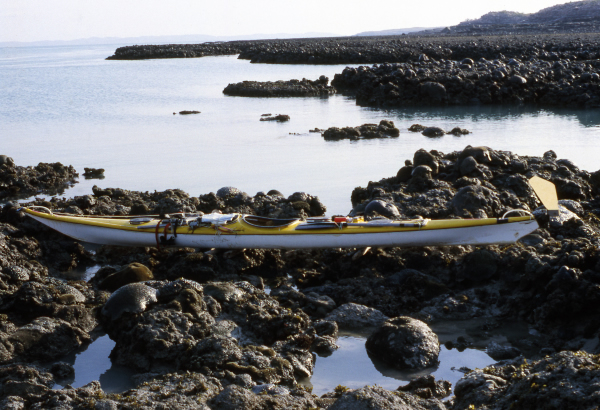
Getting to the water on a low tide can be difficult, exhausting and dangerous. Just another challenge paddling the Kimberley Coast.
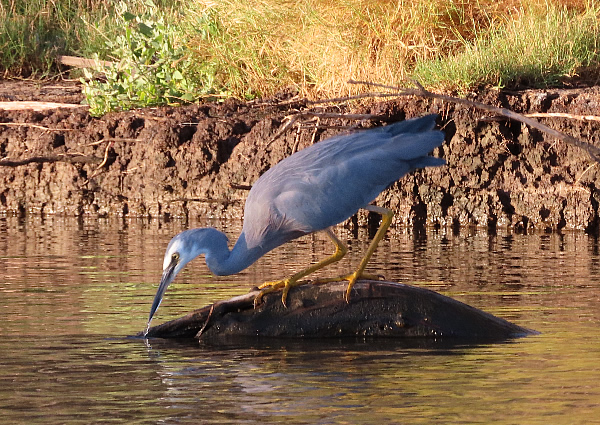
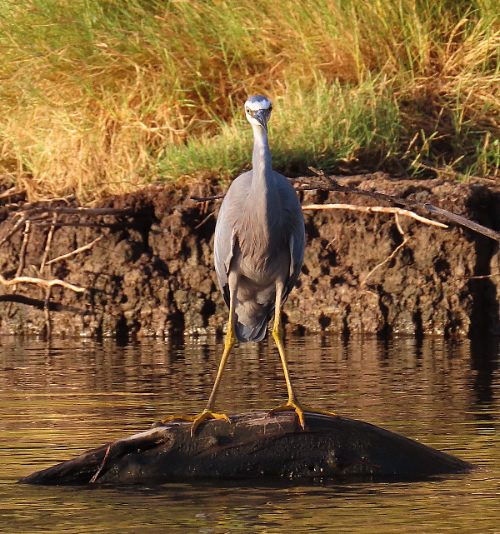
A White Faced Heron ready to grab a feed.
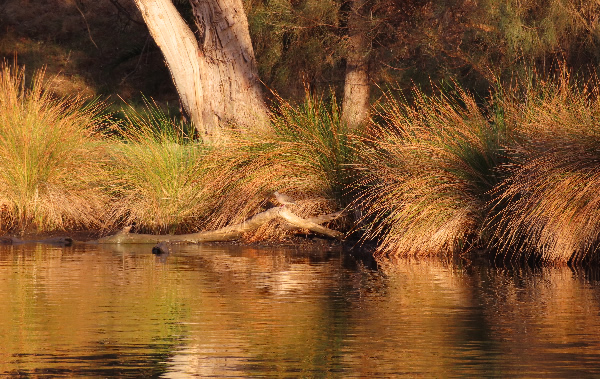
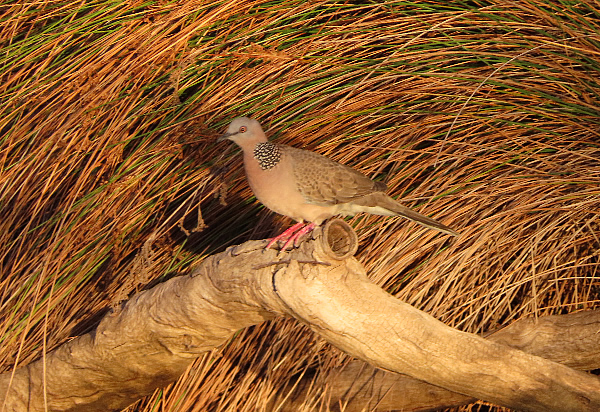
A Spotted Dove enjoys a rest and the last rays of sunshine.
********************************
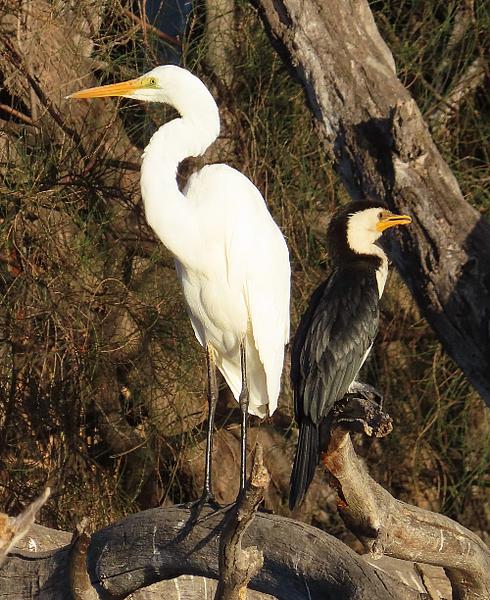
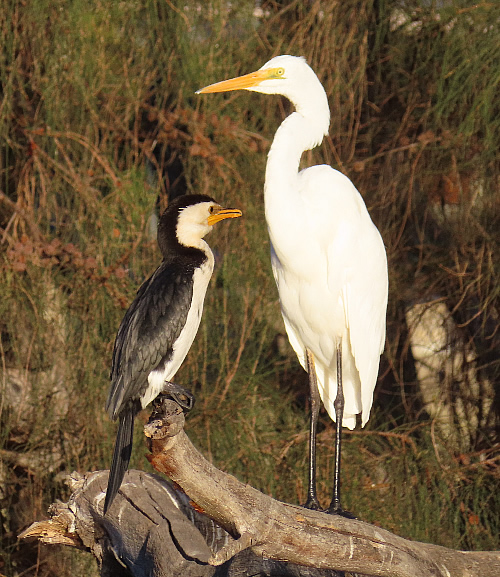
A Great Egret and a Little Pied Cormorant sharing some time together.
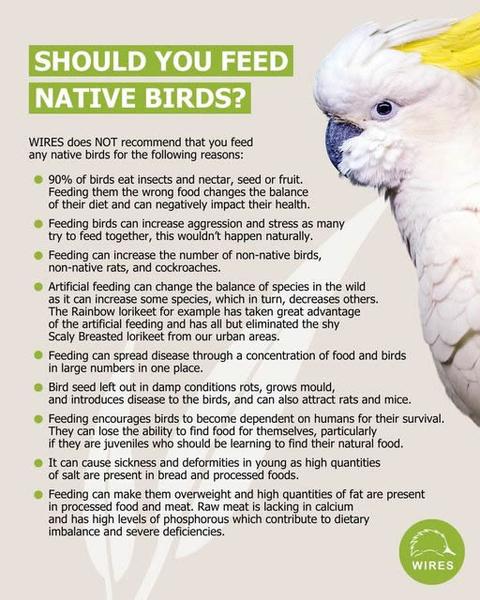
To feed or not to feed? While it may seem like a kind gesture, WIRES advises against feeding native birds for several crucial reasons. Read through to understand the impact artificial feeding can have on their health, behavior, and the delicate balance of our ecosystems. Native birds thrive best
on their natural diet – let's keep them happy and healthy in their environment!
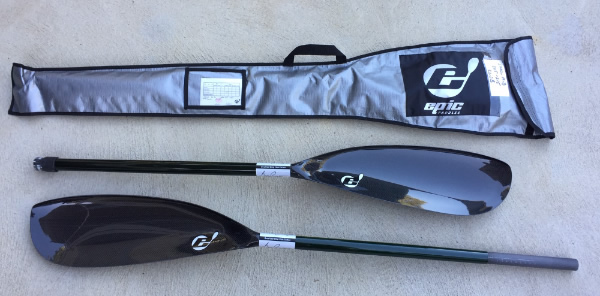
Epic Paddles Small Mid Wing
Epic Small Mid Wing Paddle
Special Small Mid
Club Carbon - $460 (usually $499.00) - 737g
- Carbon fiber blade, Green oval shaft
- Fully adjustable length & feather
Small Mid Full Carbon - $570.00 (usually $649.00) - 680g
- Carbon fiber blade, Black 3K carbon oval shaft
- Fully adjustable length & feather
All Epic paddles include a silver bag with purchase.
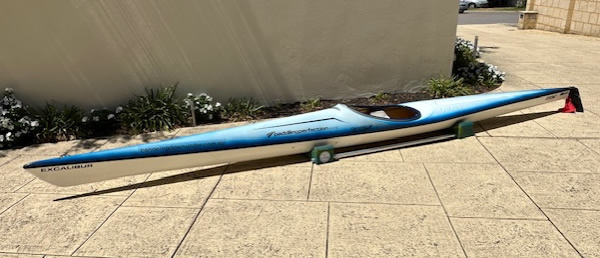
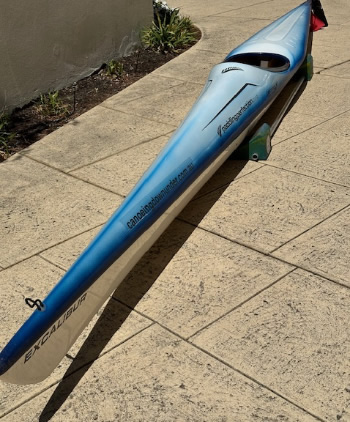
Excalibur by Paddling Perfection
Kevlar Paddling Perfection $500.
In pristine condition - kevlar. Contact:- Stephen
Jarvis
<whitford@iinet.net.au> Mobile 0408912041
$500.00 is an amazing price for such beautiful, lightweight kayak. They would be around $4000.00 new. It's not a total beginners kayak, it's more for the intermediate paddler and above. Length 5.7m Width: 0.55m
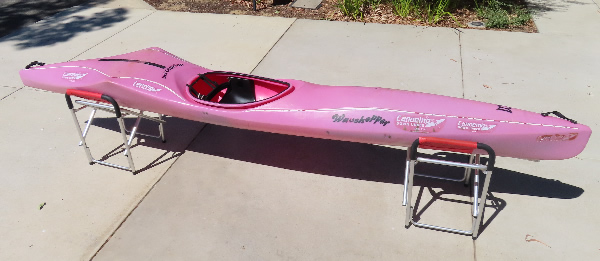
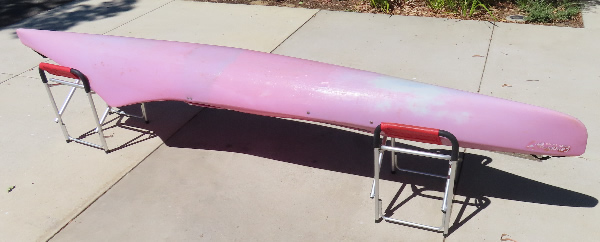
$250.00 Contact Terry 0417977330
Having to say goodbye to a few of my 50 some kayaks.
|
|
|
|
|
|
|
|
|
|