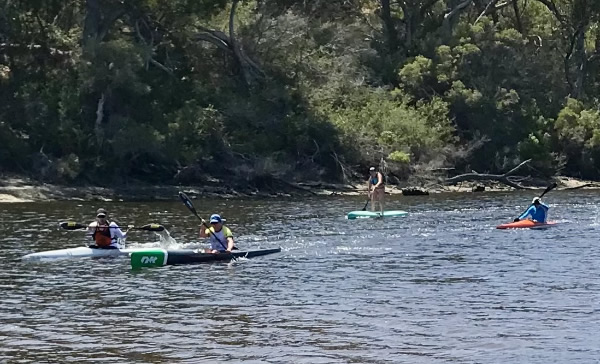
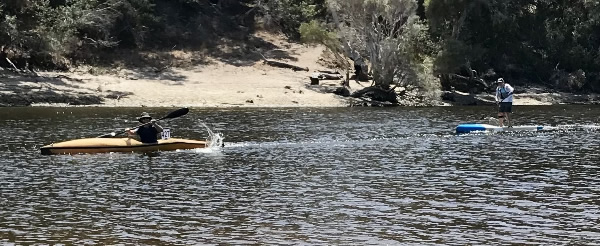
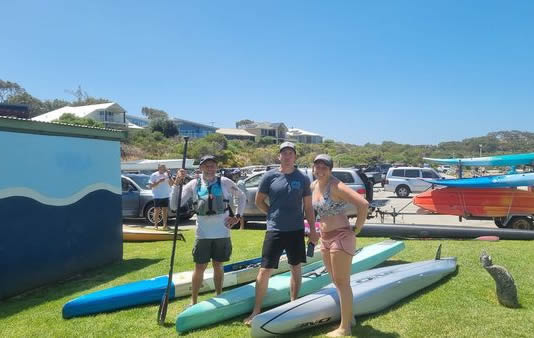
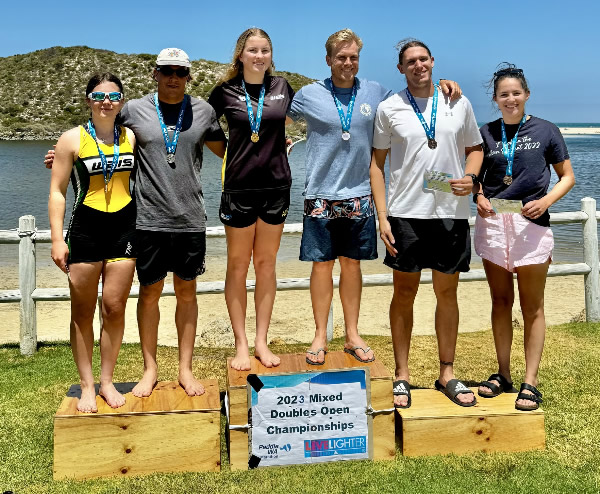
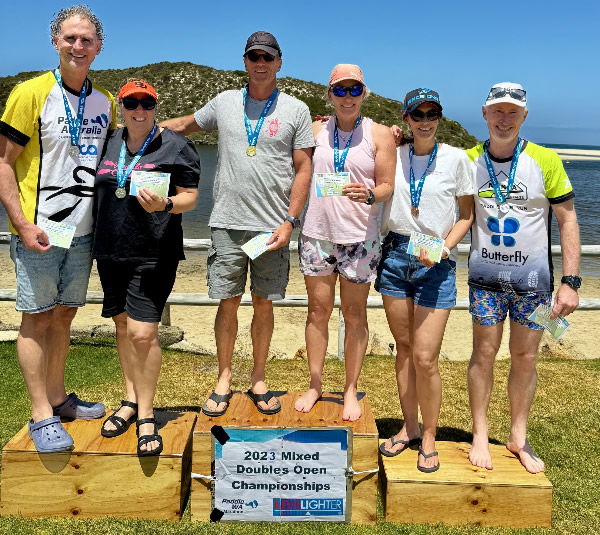
The weather was perfect when I got up last Sunday morning. There was no wind and it was cloudy, so I imagined it was going to be great weather conditions for my first SUP race. Yes today I was going over to the dark side. I was paddling a SUP (Stand Up Paddleboard) in the Moore River Race.
I bought a used
SUP for $200.00 a few months ago with the idea of a new challenge and to warn off the chances of being put in an old people’s home and having to play non-physical activities like cards, dominoes and the alike. My vision for my future years is to keep challenging myself with the hope that when I really get old I will still have good balance, good skills, good fitness and an unwavering desire to be on the water.
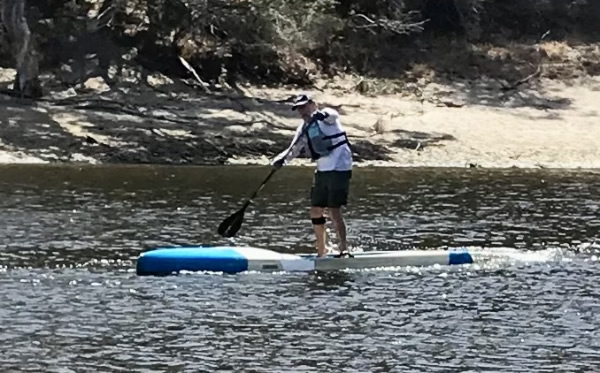
So what’s the difference between paddling a kayak and a SUP? Most racing SUPs are 14 feet (4.2 metres) long and around 20 to 23 inches wide. A SUP is harder to push through the water than a race kayak (it doesn’t glide well,) it’s more like paddling a 4 metre wide kayak, which when paddling feels sluggish.
Because I have always paddled canoes I didn’t find
paddling with a single blade very different and I instantly got used to it. What I did find different was the strain on my back, from the different stance and paddling action, although my body is now getting used to my different muscle groups that are working.
My balance on flat water is pretty good considering my age, so I’m comfortable on my 23 inch wide, by 14 feet long board.
The narrower the race board the more difficult they are to balance, but they are generally faster. I don't like going slow so I’m now after a faster board.
It's quite easy to paddle forward, but turning a SUP quickly and sharply needs much more skill. It can either be done with a cross bow draw (which is easier to keep balance,) but not as effective as walking back onto the rear end
of the board. Walking back lifts the nose up and with a good sweep stroke or two it will turn very quickly as most of the board is out of the water. This manoeuvre however has its risks as it becomes much more unstable. It’s not easy to walk back on a board, keep balance and make the turn at the same time.
There are different boards for different conditions, like in kayaking, so you have
to choose a board that is going to be suited for your skill level and the conditions. For now flat water is for me although when the power boats are around it can get a bit choppy.
I will never stop paddling a kayak, but it is uplifting and confidence building to try new things that challenge me.