|
|
|
|
The newsletter is a little smaller this week as I kept away from typing for a few days and I have been busy getting ready for going overseas to take part in
the
World Masters Canoe Marathon in Denmark.
The World Open & Junior Championships follows.
WA has Josh Kippin, Coran Longwood, Stephan Weyers, Harry
Hewitt, Ben Hewitt, Dave Burglund, Gergeley Balazs Nagy and little old me going. Unfortunately there will be no newsletters for 4-5 weeks.
I will however keep
in contact by putting things on my
Terry Bolland facebook page. https://www.facebook.com/terry.bolland.1
https://www.facebook.com/canoeingdownunder My Avon weekend didn’t quite go as planned. Although I reached the
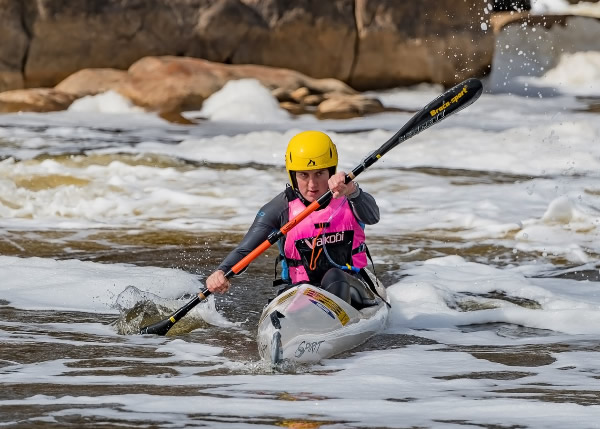
end of the first day in good time I could feel a twinge in my wrist along the way. This was unusual as I wasn’t paddling as fast as I normally did and I have never had an injury during a race before. So why did it happen? I was paddling a wild water kayak without a rudder though, which takes a lot more steering
with sweep strokes and body tilt, but I have paddled a wild water kayak hundreds of times before. Or was it the shallow water, but I don't think that was the reason, so I’m lost to why it happened. I had hoped that with a rest overnight it would be okay in the morning and although it had improved a little, I was
far from certain it would hold up. With my World Masters Race in less than two weeks I just couldn’t risk it getting any worse so making one of the biggest decisions of my life was quite easy. I will not paddle day two. It just meant I would get a DNF next to my name in the results and I would have to face all
the team paddlers who I have joked with them about their short paddle legs. It’s not easy making a decision to quit, but my marathon experience over the years has reinforced the fact that some injuries take weeks, months and years to heal, so it was a small sacrifice to pay to be able to start paddling
again a couple of days later. (A friend of mine paddled in the 24 hour Canoe-athon back in the 1980s. He paddled about 160 kms and won the event but the following day his wrist was so swollen that he couldn’t turn a tap on for weeks and had an injury for months and in the end he had to give up paddling. He later became a good cyclist.) So with two and half days of rest, no typing and managing my slightly swollen wrist I went out on Tuesday evening and paddled to the club and back, just 1 km. It felt good.
The following day I reduced the angle on my paddle to 30 degrees so my wrist wasn’t cocking as much. I
paddled 6.5kms in the morning and another 6.5kms that evening without any ache.
Thursday morning I did a 10km paddle and I increased my paddle angle up to 50 degrees. I felt more power come back into my left stroke when I increased it to 50 degrees. Thursday evening I joined the gang doing island
sprints and I paddled hard and put a lot of strain on my wrist and had no problems. So it looks as if I have avoided a serious injury developing. Friday I will increase the angle of my paddle back to 60 degrees, the angle I usually have my paddle at and see how that goes. Fingers
crossed.
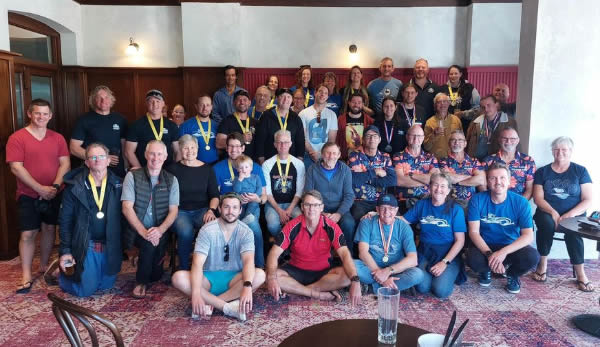
Some of the Avon Paddlers celebrating and having lunch at the
Bassendean Hotel on Monday lunch time. I listened with eager ears how they managed to get to the end!
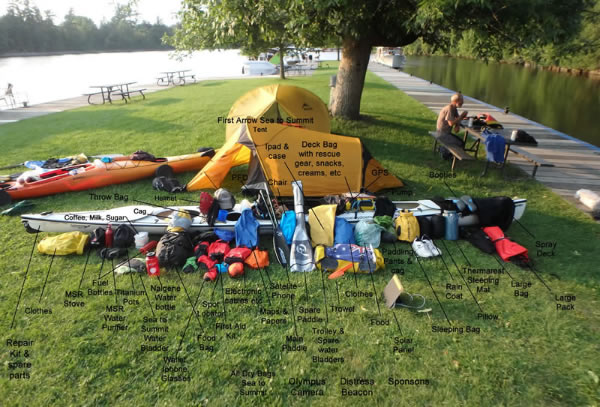
Have you been expedition paddling. It is so
rewarding. 66 days across Canada. 6 Years to the Day - see below.
The Progressive Racing Group in a 3.8km time trial on Tuesday evening.
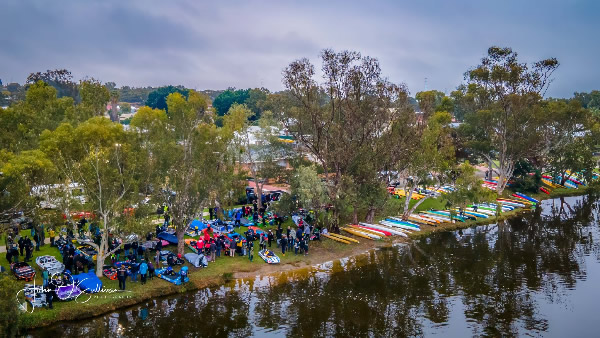
The start at Northam. Photo John
O'Sullivan.
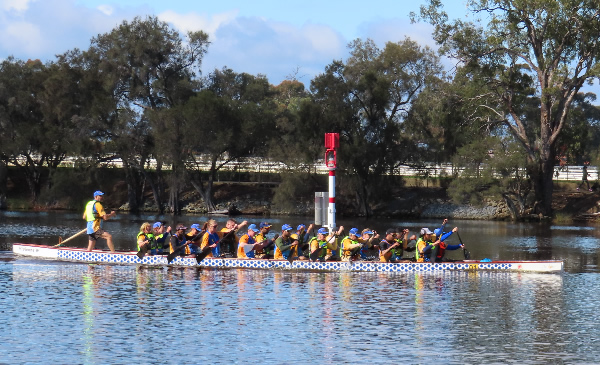
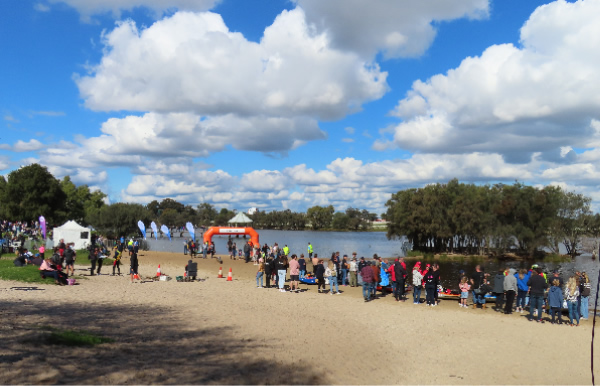
Dragon boats, outriggers, SUPs, skis, surf boats and kayaks were all part of the Bond to Bayswater Belter which was run Sunday morning before the Avon paddlers arrived.
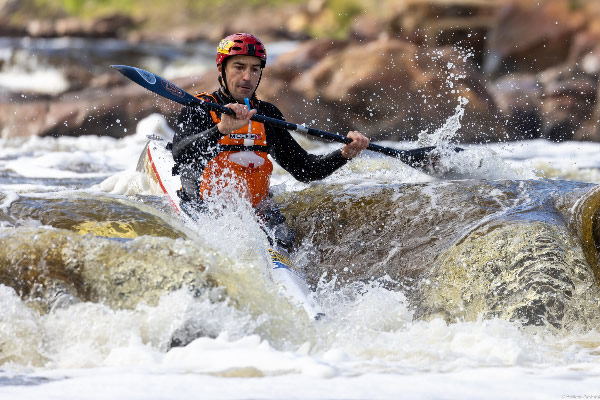
The Avon Descent singles winner Ben Carrick who beat Luke Dooley by 1 minute 20 seconds. Photo Andrzej Anderst.
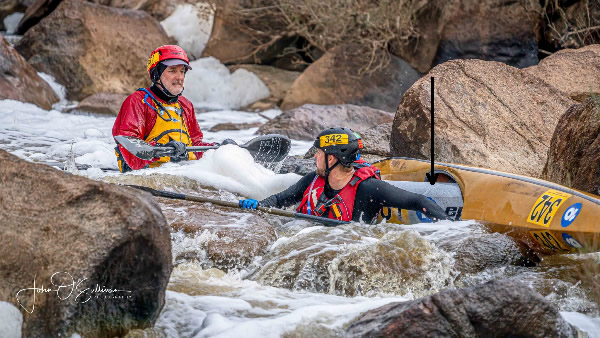
A skis nose sits inside of the kayak! I wonder what Adam is
saying to Phil! Photo John O'Sullivan.
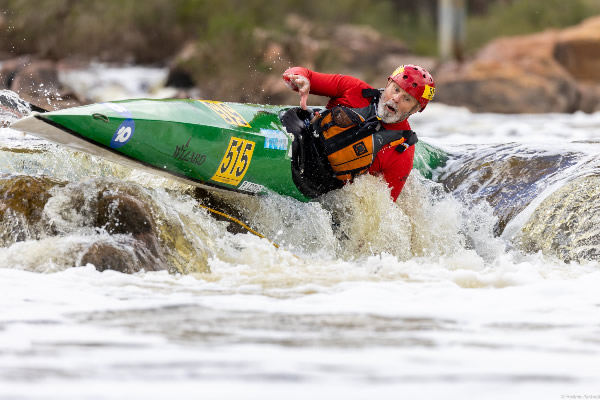
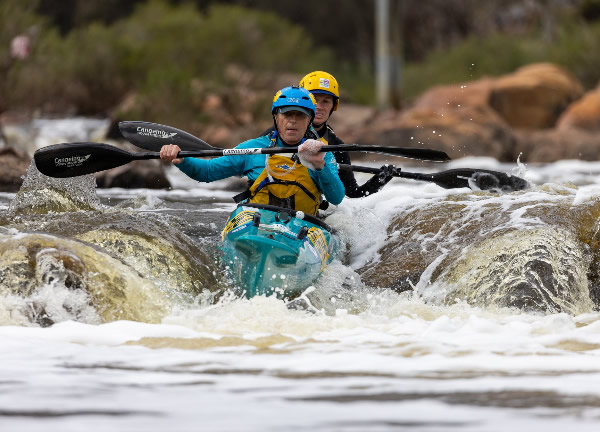
Peter Liddle getting some air time at Devil's Slide, Bells Rapid. Photo Andrzej Anderst.
Sarah Major - First Women. Photo Gordon
Innes.
Support teams catching up with their team member.
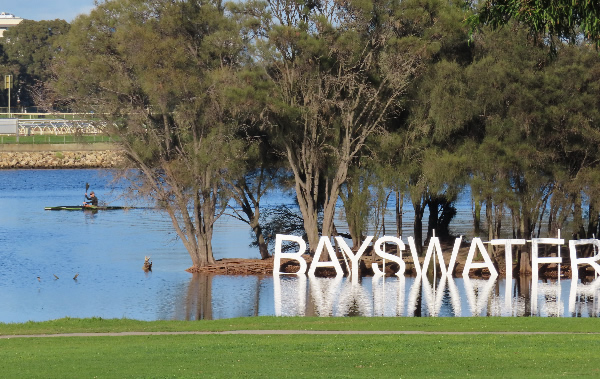
Paul Dymock paddles by the Bayswater sign Monday morning after the Avon Descent.
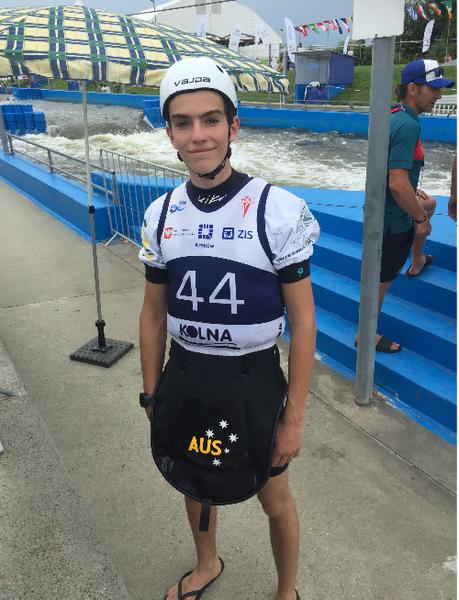
Hunter Florisson Slalom Paddling in Europe with the Australian Slalom Team
Hunter ready and raring to go. What an adventure for young
Hunter and his entire family.
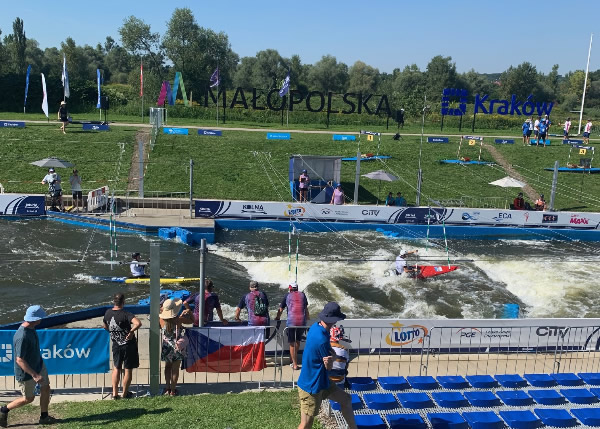
The Florisson's in Europe We are having a great time, it was very hot at the course today for the teams run. The U18s C1 men’s came 10th, unfortunately a few too many penalties. Hunters C1 heats are on Thursday so hopefully it will be a bit cooler. We have also found
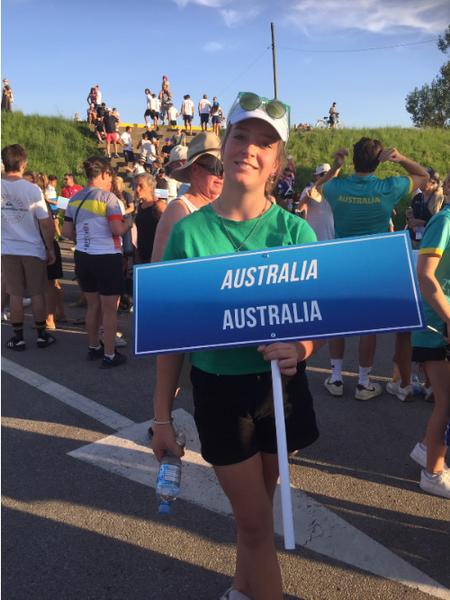
out that Hunter will now be competing in the Kayak Cross on Sunday as one of the juniors has concussion and isn’t allowed to race Kayak Cross now. Only have photos from the opening ceremony (They asked Izzy to be the Country name bearer as they usually have Polish
school kids but as it is school holidays they couldn’t round up enough kids) Unfortunately Izzy hasn’t had the chance to paddle yet as there has been no spare/free water time allocation. The countries are only allocated 40/45 minutes of training water, sometimes they
get 2 sessions per day and sometimes 1. In the Aussie timeslots they are also sharing with Japan, New Zealand and either Ireland or Great Britain (I think). There are 48 countries competing so it’s tricky fitting them all in. Hunter has paddled in Prague, Bratislava and Krakow. He said Bratislava is his favourite course so far.
Izzy carrying the Team Banner.
18th August 2017 - 6 Years to the Day Arrive Kingston
Across Canada 2017
Reaching the last lock on the Trent
Severn waterway was such buzz and I will never forget the experience. Not because we had gone through 45 locks and paddled 387 kms in 8 days and 5 hours, roughly averaging 45 kms a day, but because Ian, who opened that last lock gate at Trenton played ‘Men at Work’s’ song, ‘Down Under’ over the loud-speaker as we left the lock. It was one of those special moments that will stay with me forever as it was such a perfect ending and such a touching moment to a great paddle through the waterway. I
was all choked up and emotional as I left the lock.
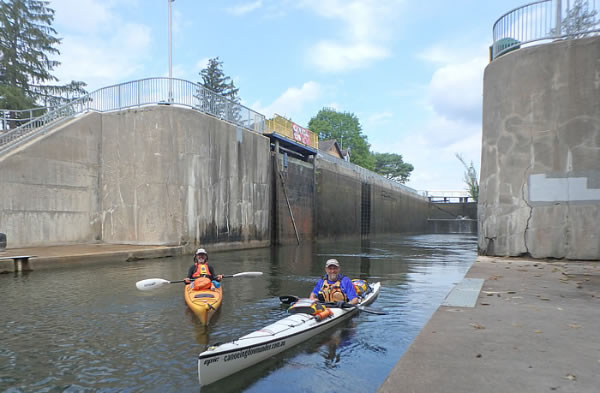
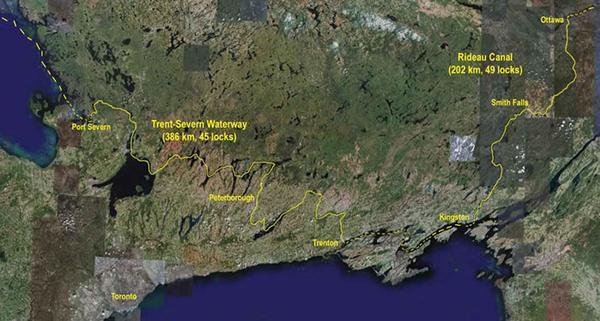
Trent Severn waterway. 387kms - 45
locks.
We rose early so to be able to reach Kingston around
lunchtime.
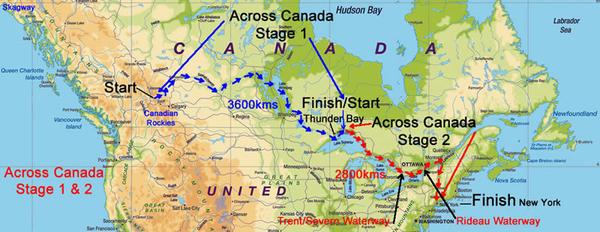
John and I had paddled nearly 1700 kms to reach Kingston on our 2800kms kayak across Canada.
Every stage of our journey so far had something to offer, the first and second sections on Lake Superior and Lake Huron’s, North Channel and Georgian Bay it was the beauty and the isolation and not knowing what the weather was going to throw at us on these great lakes which seemed to have a weather pattern of their own. High cliffs, massive waterfalls, super clear lake water, calm bays, hundreds of islands, rocky outcrops and shores, rock formations, beautiful beaches and historic sites had us
spellbound every day. We experienced thick fog, calm conditions, wild seas, sunny days and driving rain but we only lost one and a half days of paddling because of bad weather which was amazing considering the bad reputation that these lakes have. Then we paddled the 347 km Trent Severn canal river/lake system with its 45
locks and it was quite amazing. After coming out of the canal system on Lake Ontario we paddled 130 kms before reaching the town of Kingston.
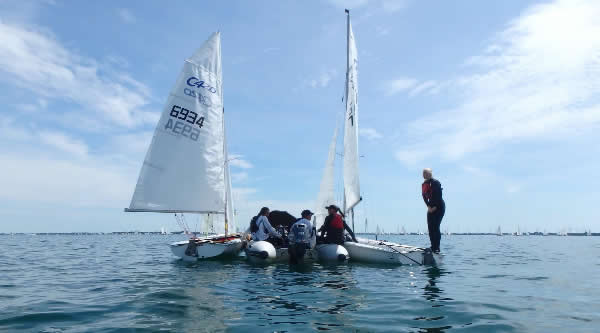
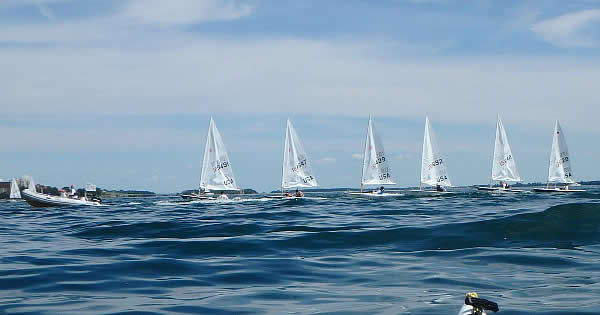
Getting closer to the town we came across 150 or more
sailing boats.
All of a sudden power boats started towing the yachts back to base 6 at a time.
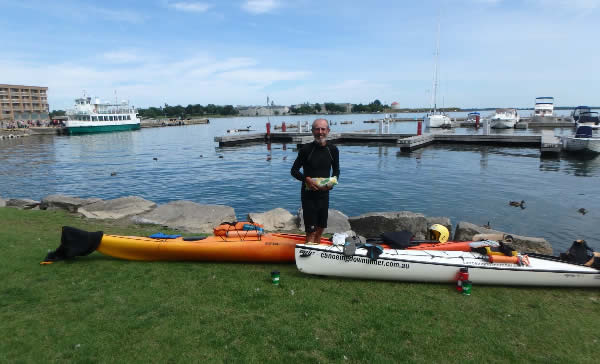
18th August 2017 - Six Years to the Day We rose early so to be able to reach Kingston around lunchtime. Getting closer to the town 150 or more sailing boats, sailed by students were out on the water going nowhere as there was no wind. It was a spectacle but we were hoping that they weren’t going to return to shore when we are passing through. They must have heard us as minutes later they started being towed in by power boats, some 5 being towed at once. They were coming from all directions across
our path. It was like a stamped, all trying to get to shore before a typhoon or something was going to hit. The power boats had towed the majority of the boats into port in ten minutes or so. It was quite a display and quite fun to watch. It was a bit hard taking photos in the wash though. When we arrived in the town square it was busy with people, more than we have ever seen this trip so far, there was life out there. It looked a really nice town. We pulled our boats up the shore rocks and John went to find some food whilst I tried charging my iPad battery using the solar panel, but the sun went in. It's a bit hard to charge the iPad, my phone and my camera with a small solar panel.
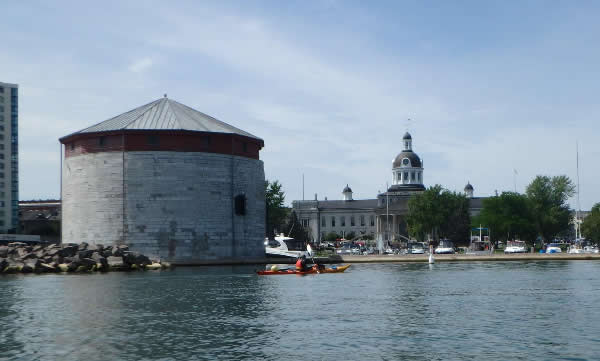
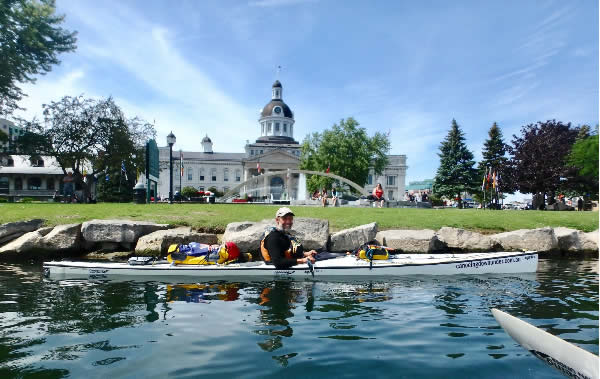
We arrive in Kingston. John and I had paddled nearly 1700 kms
to reach Kingston on our 2800kms kayak across Canada.
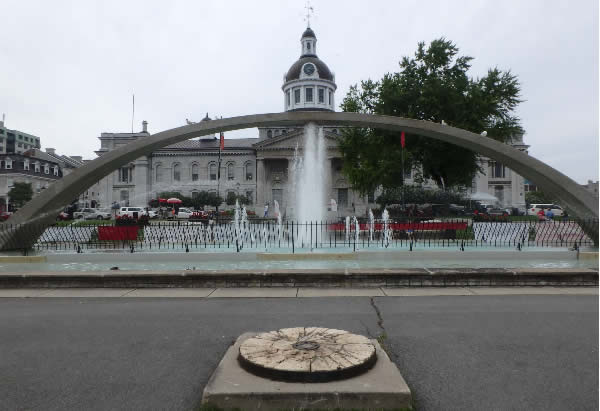
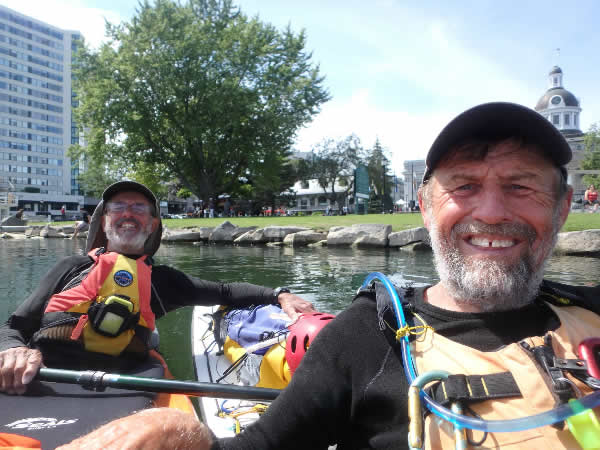
Arriving at the Kingston's City Hall.
Kingston's City Hall is a national historic site, and remains the centre for administering and governing the City of Kingston. The City's strategic location – where the St. Lawrence and Cataraqui Rivers meet Lake Ontario – have made it an important location for Indigenous peoples since
time immemorial. The area began to be settled by Europeans in the 17th century and became the First Capital of a United Canada in 1841.
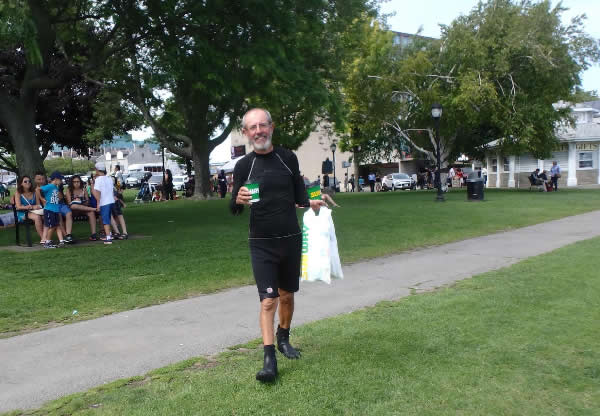
John bringing a subway lunch. John walked across the busy square in his booties and baggy shorts, then I saw him walk along the footpath in the search for food. When John was hungry nothing would stop him finding food. He had that walk of determination and would have mowed down the biggest Canadian if they got in the way. He returned later with a foot-long Subway, cake and coffee. I didn't complain, we needed a treat as we started paddling at 6.10am to ensure we would have time to stop at
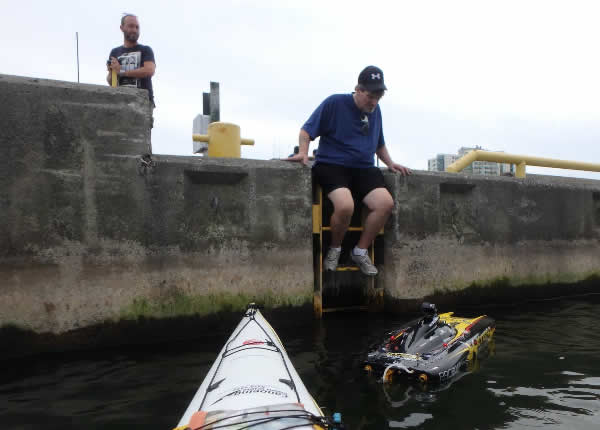
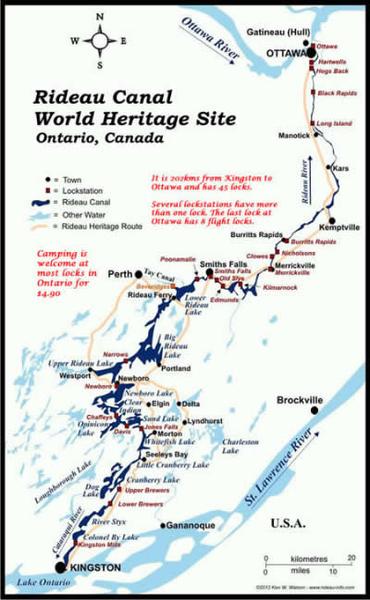
Kingston and get to the first lock on the Rideau Canal 49kms away. After eating lunch in the busy park we paddled away from the activity rescuing a remote controlled speed boat after it had gone out of range of its owner. Here at Kingston we have a three way choice to get to New York. We could take a short cut by paddling a few days on Lake Ontario and getting into the Eerie Canal which cuts off miles, but by doing that we would miss out a lot of country. Or we could have gone down the St Lawrence Seaway straight to Montreal but the big
ships use the locks and no kayaks are allowed to use them so each lock would have to be portaged, which wouldn't be fun, especially as we didn’t know the area. Then there was the route that we have chosen which is to paddle the Rideau Canal and pass through its 40 odd locks which
came out at the capital Ottawa. This is the longest route and puts on 200kms of slower going, but we would see the Canadian capital, see more people, more country and we don't have to portage.
With lunch over it was time to leave town.
We return the radio controlled speed boat.
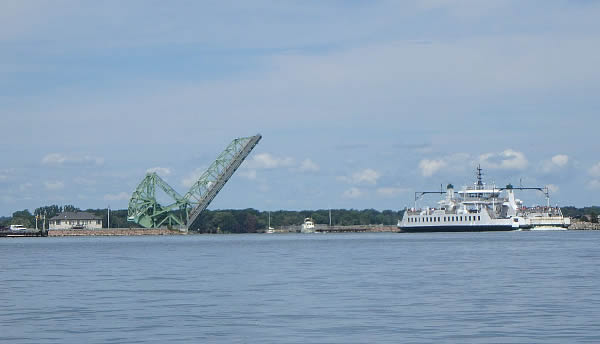
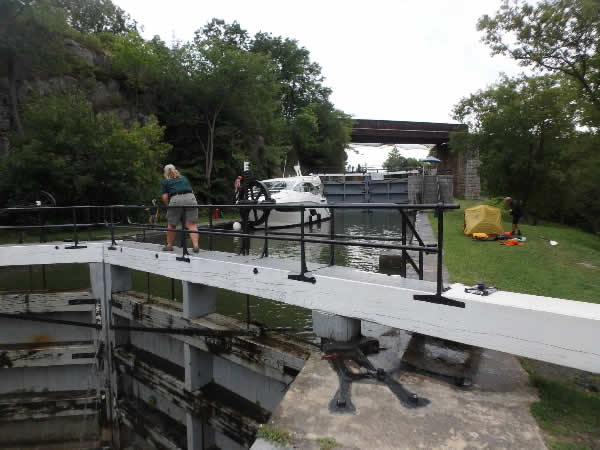
We continued our journey towards the canal passing a lift bridge and paddling to our first lock 8 kms away where we made camp. John dropped his gear close to lock and when it filled up it
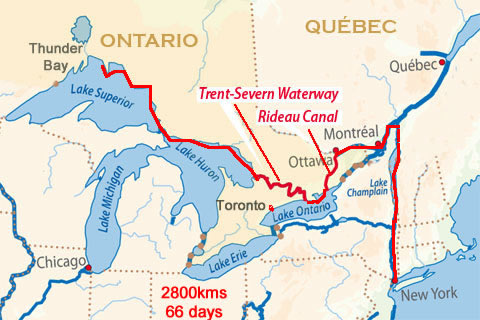
spilled over nearly swamping some of his gear. We had already been through 45 locks and now we were about to paddle another 40 locks on the Rideau Canal to Ottawa and by the end of our journey we would have paddled for 66 days, 2800 kms, on 30 lakes, several rivers and through 120 locks, 108 of them Canadian.
The first of 40 locks on the Rideau Canal. Destination Ottawa.
First & second stages Across Canada.
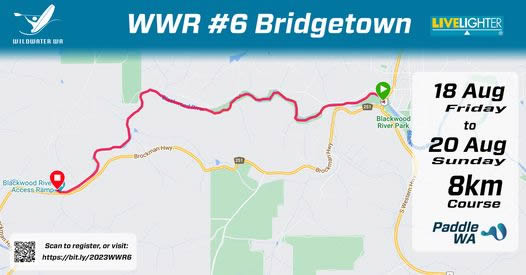
18th, 19th, 20th August The last of 6 races for the 2023 WildWater Season.
Location: Blackwood River Park, Bridgetown
Race Events: Teams Race (Sat), Geegelup Cup (Sun)
Registration: 01:00pm (Sat) & 09:00am (Sun)
Briefing: 01:40pm (Sat) & 09:40am (Sun)
Race start: 02:00pm (Sun) & 10:00am (Sun) Course: Starting upstream of the town bridge and finishing 8kms downstream. The course comprises of rapids, winding sections of moving water and ti tree obstacles. https://bit.ly/2023WWR6 or
https://www.webscorer.com/registerseries?seriesid=322369 |
|
|
|
|
|
|
|
|
|