|
|
|
|
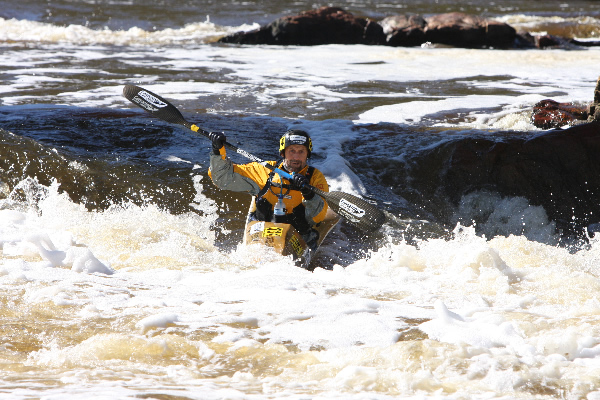
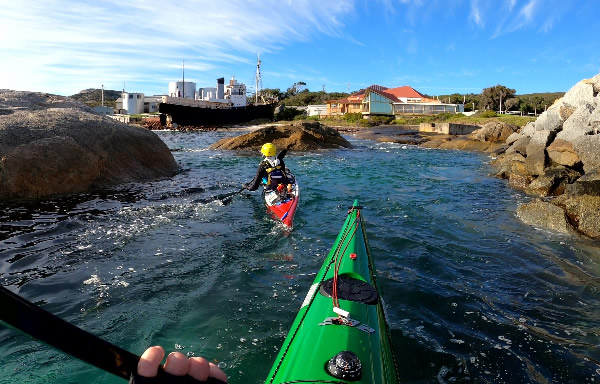
I paddled the Toodyay T trees on Wednesday with Warwick and Ben as the last part of my Avon training. I haven't paddled the Avon Valley at all so far this year, but hopefully my past knowledge of the river will
get me through on Sunday. I will be on my way to Northam for registration later so it's all happening this weekend. Good luck to all Avon Descent Paddlers. See you all on the start line and hopefully I will see you coming in at the finish line!
Paddlers expect a few surprises this weekend.
Chris & Scott's close encounter!
15 Years to the Day - 11th August 2008 In the Arctic - Near the end of the Mackenzie River. Read the story below.
- Who's Out There
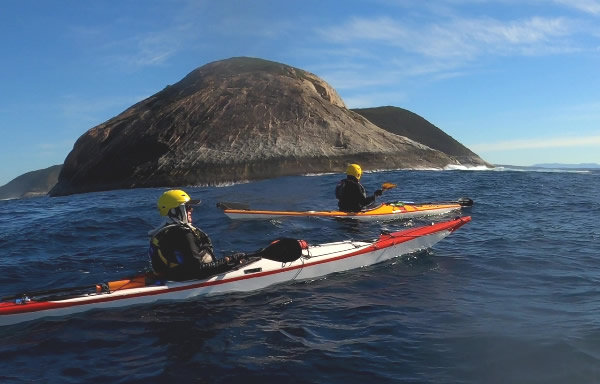
- Paddle Albany
- Bells
Sprints
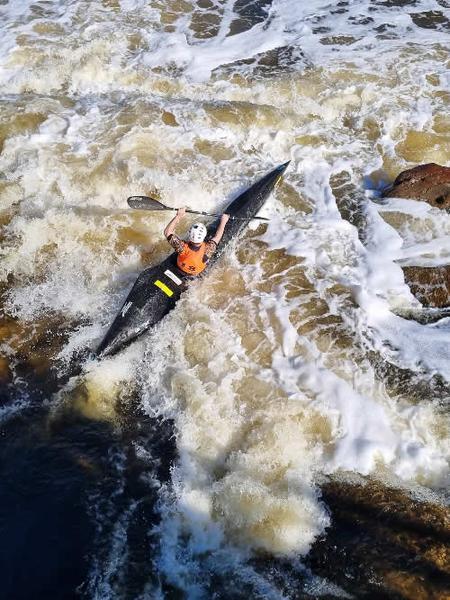
- Wild Water Champs - Bridgetown
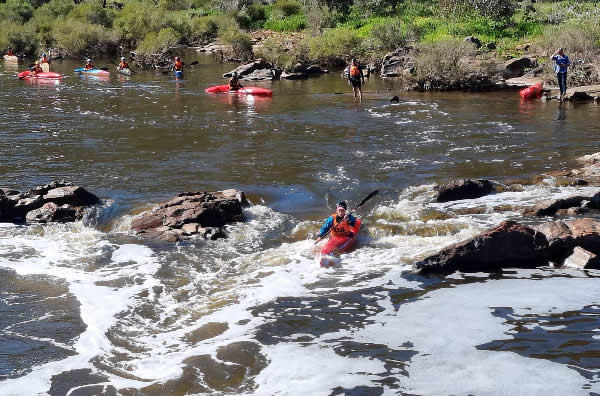
Murray Whitewater Festival - King of the River - Victoria
- 15 Years to the Day - A Day in the Life of TB
- Stolen Kayak - Watch Out for it
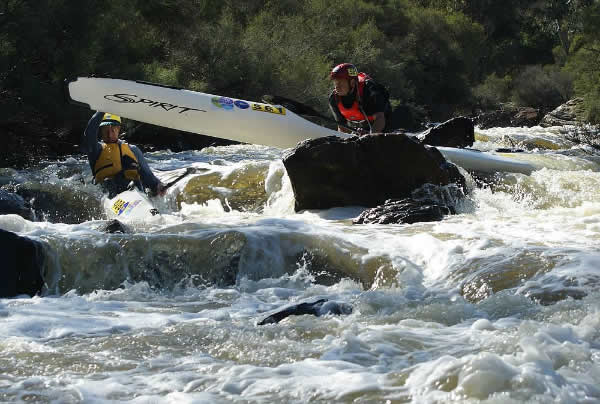
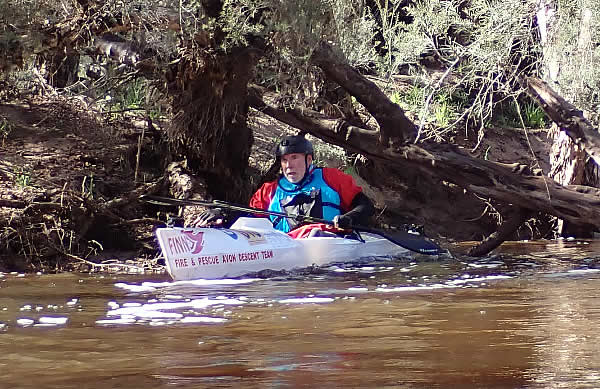
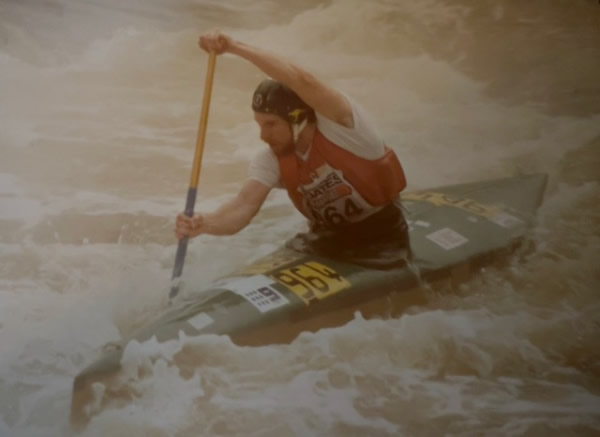
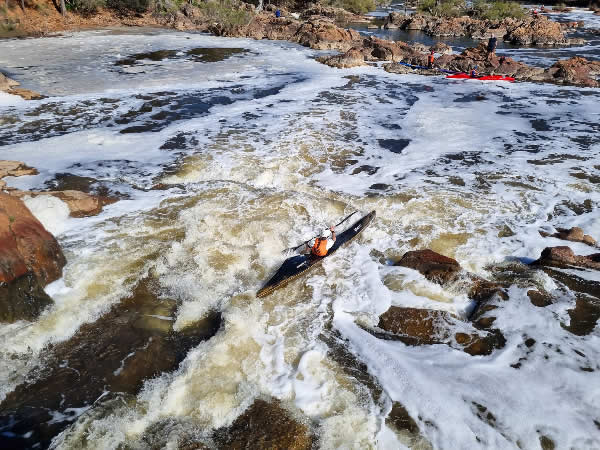
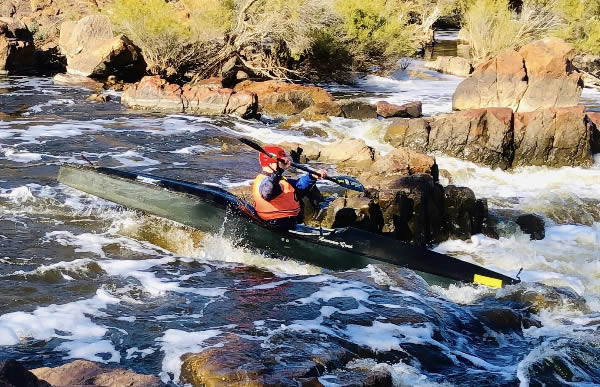
Warwick Smith dodging the fallen tree. In the late 70s, 80s & 90s Warwick was a very active C1 paddler. I paddled against him in a wild water C1 in the Avon Descent twice in the mid 80s, I also paddled against him in slalom C1, sprint C1, and I don't think I ever beat him but that's all in the past! After several years
bringing up a family he is back paddling a kayak and a ski. He was going to paddle a new kayak in the Avon but due to the low water he has decided to paddle a ski instead.
Warwick Smith 1984 - 1988 Avon Descent C1 Downriver . C1- 5 Individual Class wins 1986 Avon Descent Race Record Holder for C1 9:46:00
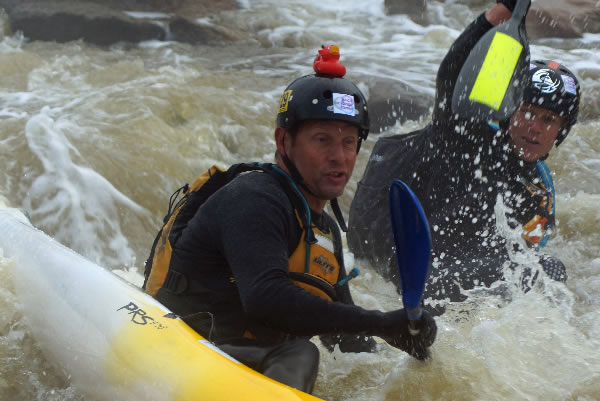
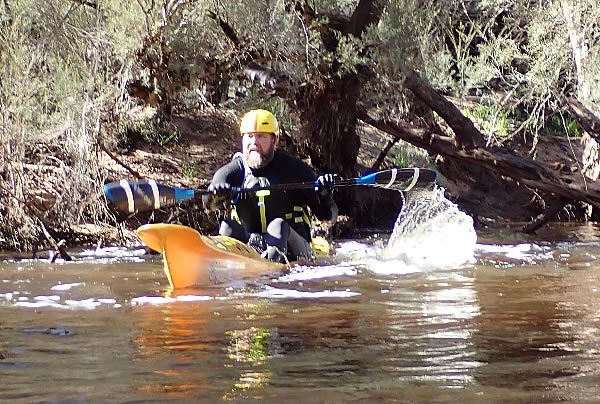
Ben Day in the T Trees Ben has
been training hard and getting ready for the Avon Descent.
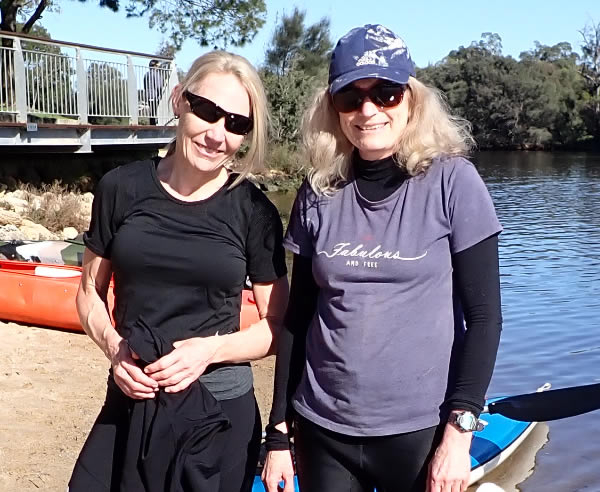
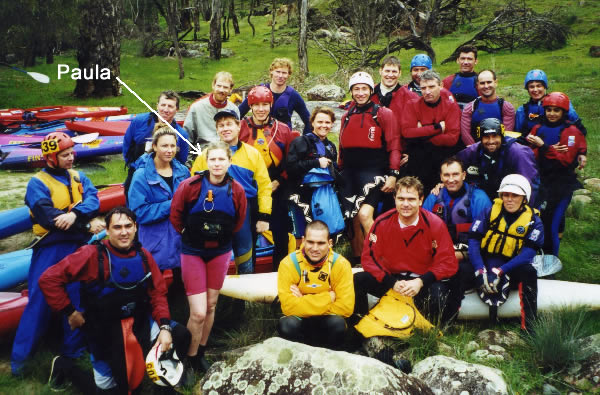
Paula Davies Paula started
paddling in around 1999 when she joined my Avon Descent training program. She paddled the Avon Valley many times and competed in the Avon Descent. She stopped paddling in 2005 and I hadn't seen her since. So it was a great moment when I met her and her friend Robyn on the Ascot beach. It's good to see her back in a
kayak. I just love meeting people that I haven't seen for a long time.
Robyn Salkeld and Paula finishing their paddle at the Ascot Kayak Club.
Paula was part of the 1999 Avon Descent training group.
Over the years CDU instructors and I have lead thousands of paddlers down the Avon Valley. One year we had 100 novice paddlers enter the Avon Descent who had been through our courses. Some valley trips we had up to 33 paddlers and 9 instructors on the water at one time in 3 different groups, 3 instructors in each group.
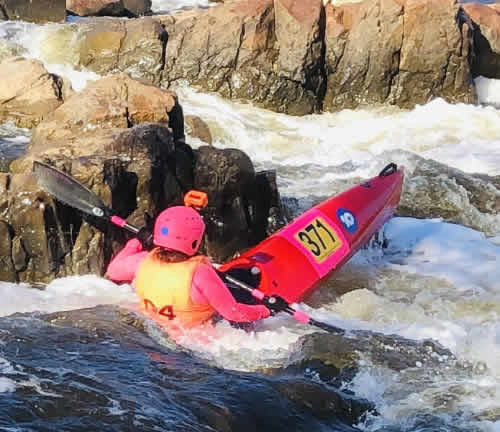
Back in the late 90s and early 2000 most paddlers paddled kayaks. Nowadays most novice paddlers now paddle skis. The pink kayak is Paula's.
Coach Andrew Crothers and his young paddlers at Bayswater.
Certainly some amazing scenery around Albany.
Steph Smith on the Approach Rapid before Bells Drop. Photo
Melanie Hackett
Christopher Greed cutting across Bells Drop to get a faster line. Photo Melanie Hackett
Nina Mueller taking the fastest line. Photo Melanie
Hackett
Lawrence Greed skimming down Devil's Slide. Photo Tim
Edwards
Isabel Combe at Devil's Slide.
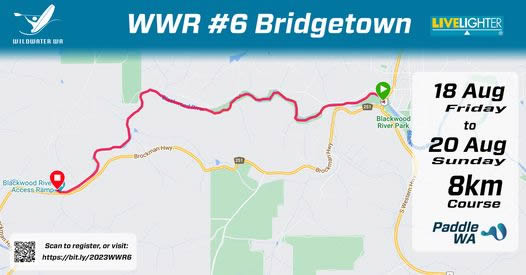
Wild Water Champs 18th, 19th, 20th August The last of 6 races for the 2023 WildWater Season.
Location: Blackwood River Park, Bridgetown
Race Events: Teams Race (Sat), Geegelup Cup (Sun)
Registration: 01:00pm (Sat) & 09:00am (Sun)
Briefing: 01:40pm (Sat) & 09:40am (Sun)
Race start: 02:00pm (Sun) & 10:00am (Sun) Course: Starting upstream of the town
bridge and finishing 8kms downstream. The course comprises of rapids, winding sections of moving water and ti tree obstacles.
Murray Whitewater Festival 2023Registrations Close TOMORROW!
Lets fly at the Murray Whitewater Festival Kokatat is in
California @danejacksonkayak and @kilianivelic on Upper Cherry Creek
King of the River - Victoria
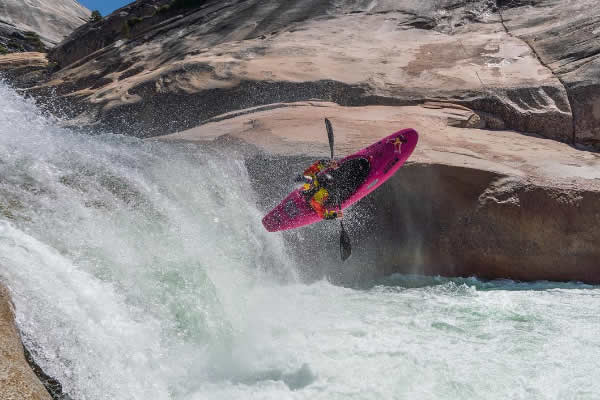
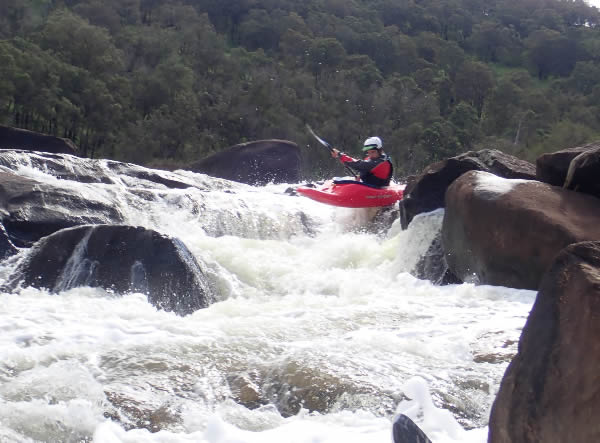
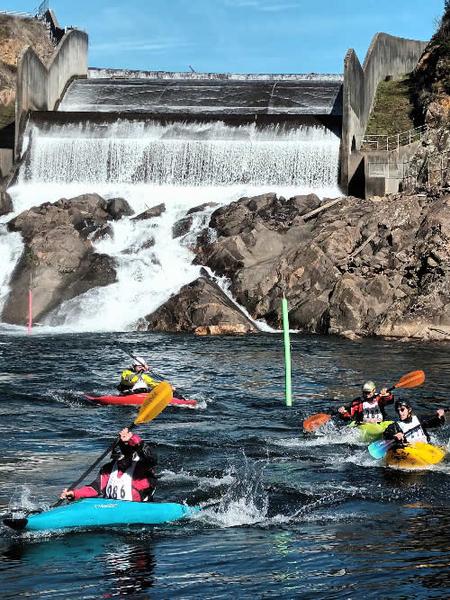
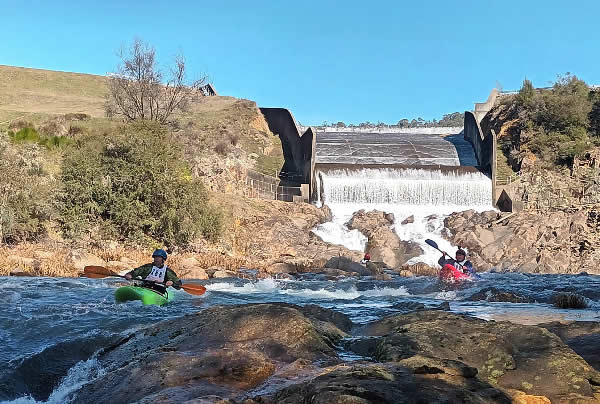
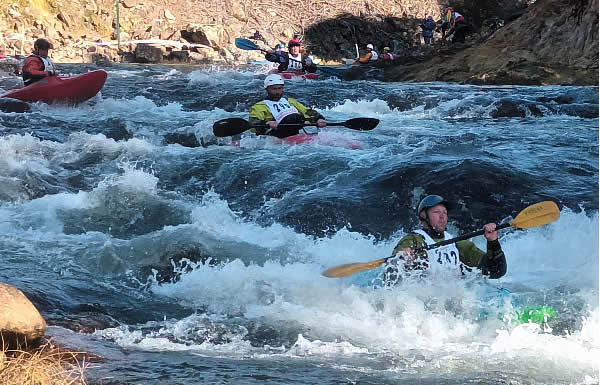
The race course proved a hit, with a technical course on the top rapid.
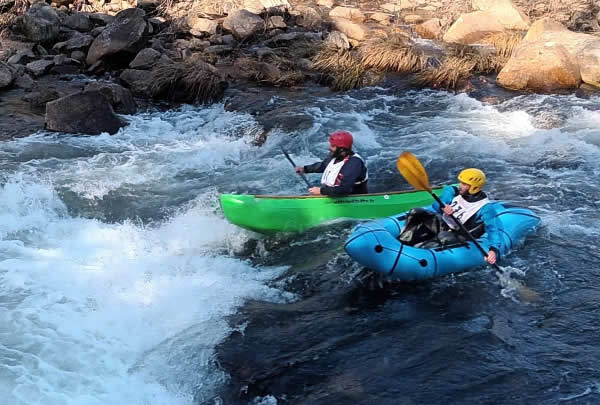
Lots of fun below. Photo Roy Farrance
Having good fun on the rapids. Photo Roy Farrance
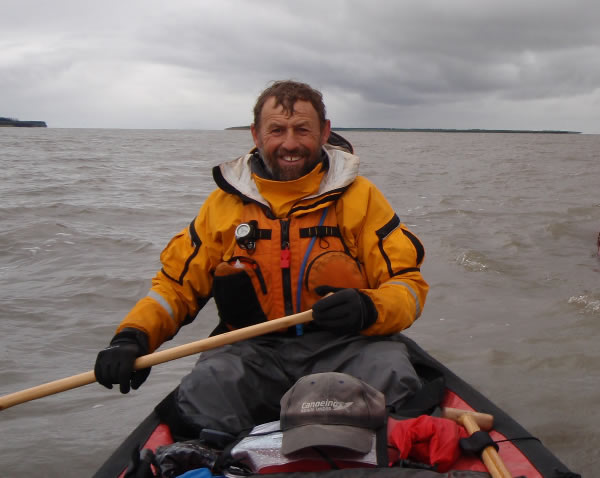
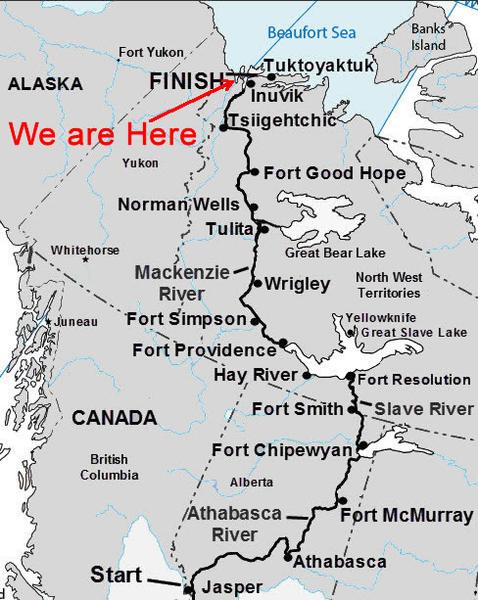
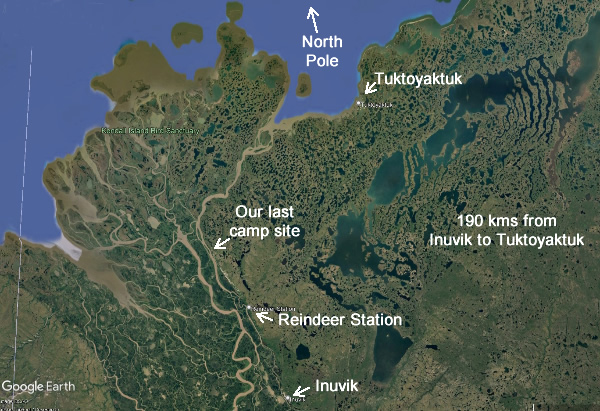
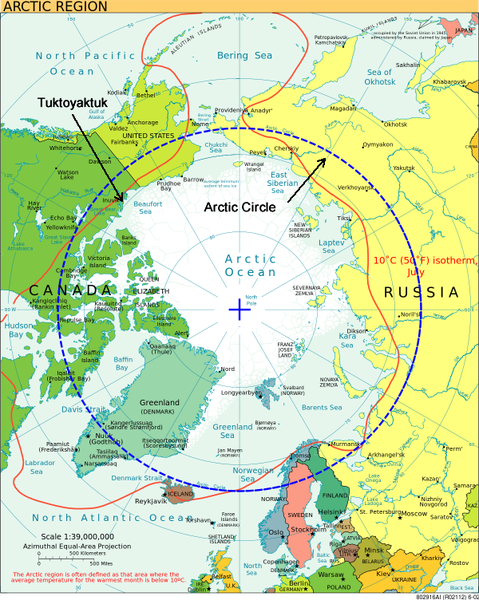
15 Years To the Day It was 11th August 2008 Three Rivers to Tuktoyaktuk Intro Inuvik - Far North Canada:- Tony and I had just paddled 3810 kms, Alaine and Leonie 1910 kms and we only had 190 kms to go to complete our journey
to Tuktoyaktuk our destination. With Tony deciding to leave us here at Inuvik it meant Alaine, Leonie and I had to paddle two canoes 190kms to Tuktoyaktuk, 40kms of that in the open ocean, but before leaving Inuvik the locals reminded us of the family that had drowned in the area recently after their boat capsized in rough waters.
Leonie, who had been paddling with Tony took on the challenge of paddling a canoe by herself. To help her keep the canoe straight and give her a little lift we tethered our canoes together using my body towline. We were well above the Arctic Circle and it was getting colder and more wintry every day. As we started our move closer to the ocean the weather deteriorated and became wet and windy. Not only that we met large waves head on which wasn’t a problem for Leo and I as we were sitting in the rear of the canoe, but for Alaine the waves were cascading in her lap and with every kilometre we travelled the colder she got. After a day and half of paddling into the bleak weather we made camp on the eastern channel 85 kms from Tukyoyaktuk and not too far from the ocean. When I stuck my head outside the tent the next morning the weather had deteriorated further with more rain, high winds and black clouds so it wasn’t looking good. We were in the Arctic and it was beginning to show. I decided to ring Jenny back in Perth on the satellite phone to get the latest weather forecast. We were too exposed to take risks and I was concerned with the 40km ocean part of the journey. The weather forecast was not good so I had to make a tough decision; either to keep paddling into bad weather which we could die doing it, or retreat back to Inuvik against the current and be happy and alive but disappointed. As team leader I decided to take the safe option and turn back. That decision only made the day look even bleaker, but it was better to be safe than sorry, so after kicking sand on our campfire that morning we started a cold, wet, windy paddle back upstream against the current to Inuvik and made camp about 27 kms upstream.
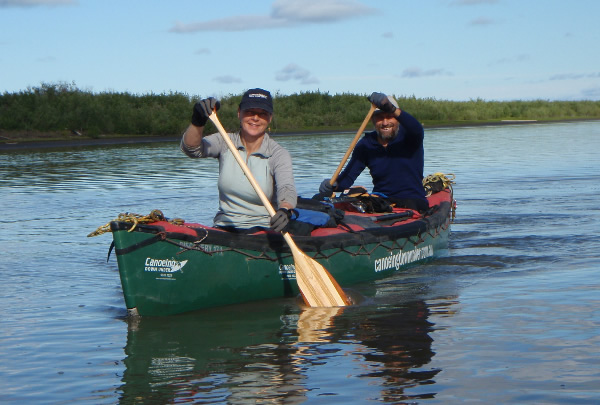
The last part of our journey.
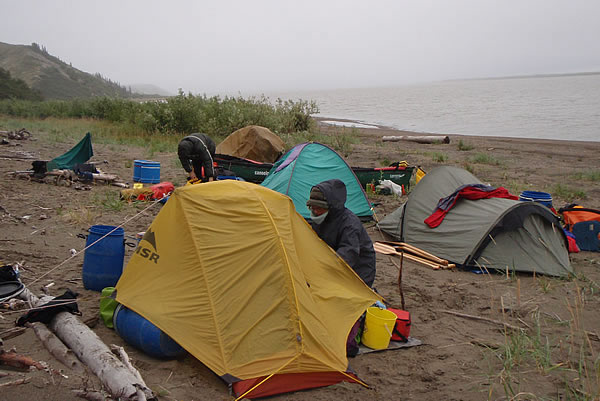
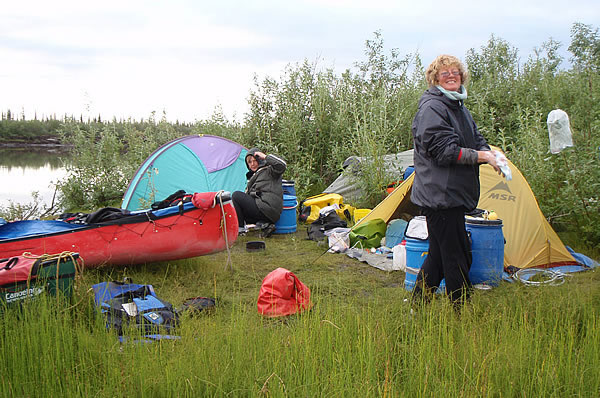
Camped as far north as we would go on the Mackenzie River Delta.
The weather deteriorated over night.
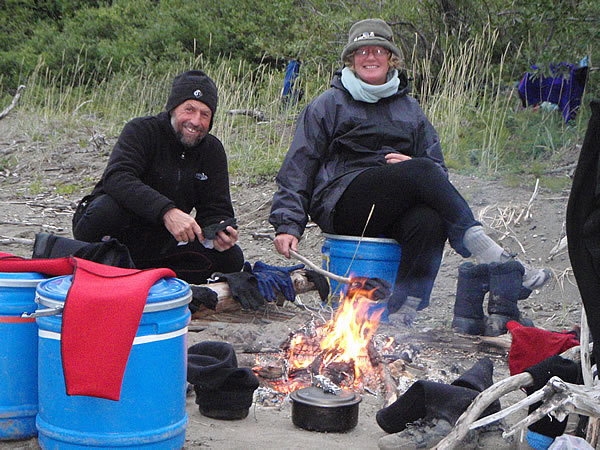
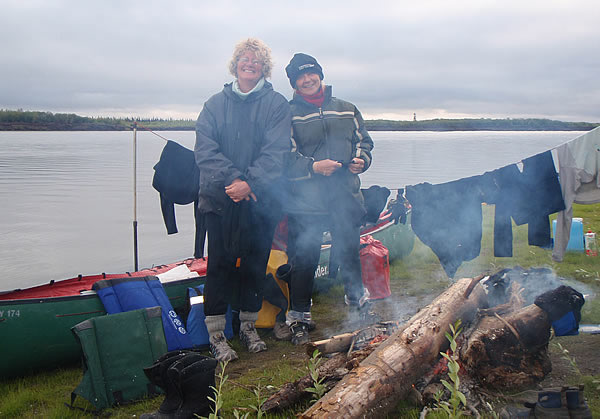
Trying to get our clothes dry before heading back to Inuvik.
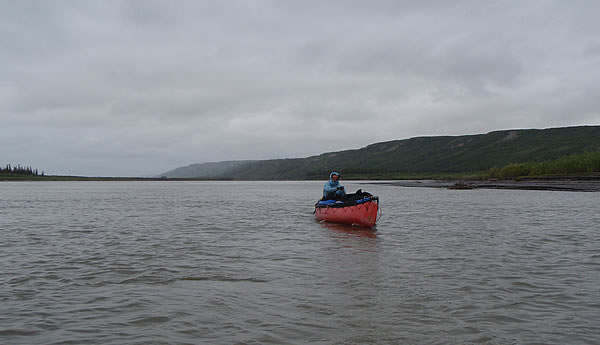
It was hard work paddling against the current for Leonie.
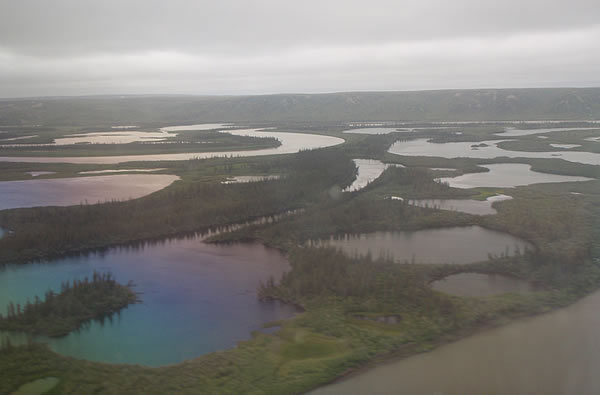
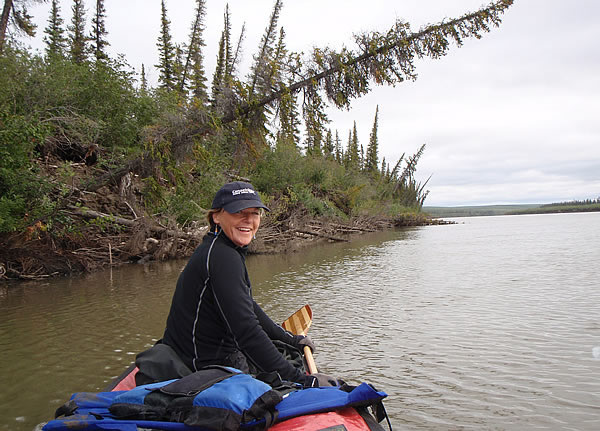
Beyond our river banks were thousands of channels and lakes.
Keeping warm was a problem and the wet wood didn't help.
We were camped on bear tracks which we did many times.
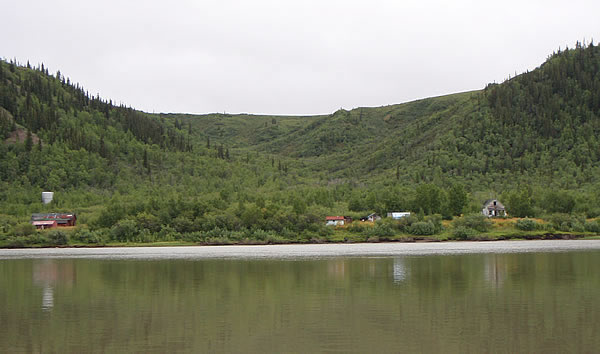
15 Years to the Day Monday 11th August - Day 66 When we rose to an icy cold morning Alaine was admiring the river calmness and beautiful colours that blended into the water and trees. She asked me to take a picture of it. She saw beauty in just about everything. Unbelievably the weather had changed for the better overnight. It was still bleak, but not half as bleak as the day before. We took off ferry gliding across a swift current at the first bend. We soon reached the Reindeer Station, that we saw on the way down, but passed it on the opposite side of the river. At least the view of the buildings and the hills were much clearer today as there wasn’t as much mist as on the way up. We kept close to the shoreline to keep out of the main
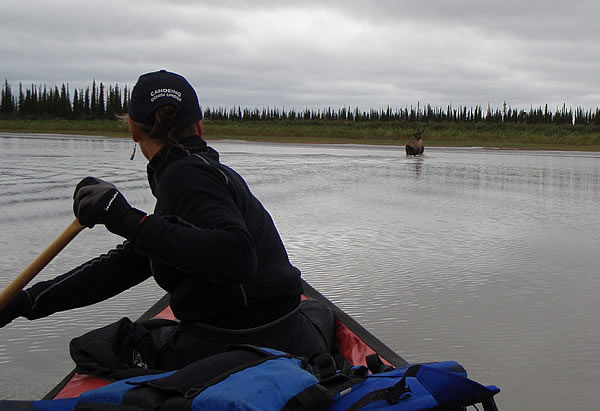
current. It was slow going but at least we were moving. A few channels entered from the west, they were inviting us to explore, but we passed them by. I noticed movement way ahead on the left side of the river. It was a moose that walked out of the undergrowth, onto the mud flats and entered the water. I urged Alaine to paddle harder so we could get closer for a photo. The moose was swimming
fast and within minutes it was half way across the river. I urged Alaine to go faster, but she said, “We shouldn’t get too close we’ll frighten it”. She cared about everything. “Frighten it, don’t worry about frightening it,” I said, “I want to get a picture, that’s more important.” With the extra speed we still couldn’t get close. Within minutes the moose had crossed the river, started to rise up as it virtually walked on water before hitting the shallows and then onto the mud flat. Immediately
it started running across the mud flat like a camel. It was such a funny sight and the girls couldn’t stop laughing. It stopped as it entered the vegetation, looked back at us for a few moments and then ran off. After a brief stop for a pee at Annie’s cabin, which was surrounded by a battery powered electric wire fence to keep the bears at bay we pressed on towards the deluxe cabin which we had
seen two days earlier on the side of the Caribou Hills. We easily landed on the only rocky shore for kilometres and had lunch sitting on a log near a path that led to the grand cabin. After lunch we scrambled up the muddy trail stepping over rusting metal culverts, and avoiding holes that streams of water were flowing through and then pushed through high grasses and weed to the wooden steps of the cabin. Amongst other bits and pieces lying around there was an old winch that stood rusting on the
side of the path. From the river the cabin looked quite new, but on closer inspection it was a little run down, although a busy bee would soon get it back in shape. Up on the balcony we had splendid views westward of the river and surrounds. To think that for eighty kilometres directly west there were just channels, lakes, low lying islands and mudflats. Imagine how many mosquitoes lived out
there. We could see some of the lakes, low vegetation and short spruce trees. Further over from our eastern channel another channel, the Oniak Channel met up with the main Middle Channel that carried most of the water out of the MacKenzie River. It was a magnificent spot to have a log cabin if you liked insects. Behind us, looking east were hills and gullies with low vegetation, scattered spruce trees and impressive slabs of rock and boulders. It would have been a great place to rest up, relax
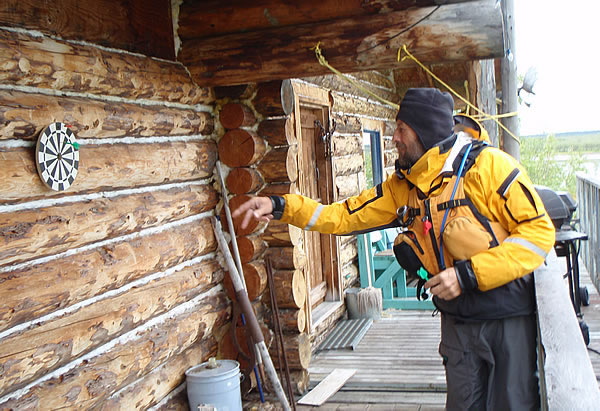
and admire the views but our time in Canada was coming to a close as we had flights out of Inuvik in a few days time. A dart board hung from the wall which brought back memories of when I was a teenager and used to play darts in the local pubs. I was an average dart player but I fancied myself as a better one. Three plastic darts were stuck in the board begging to be thrown, so I picked them up
and threw all three in the 20s. Not too bad I thought, but I guess I was less than 2 metres away! It gave me pleasure to throw them for a while and to think about my days when I was 15 – 18 years old. We peered through the windows and checked the workmanship of the cabin before retreating down the slope and back to the canoes. Within 15 minutes we were back into the narrow channel and moving
away from the hills. There was a cabin to our left and another to the right down a channel opposite to where a barge had parked. They were deserted and run down. Taking the turn we were now on our last leg of the journey and we soon reached our first night’s camp on the way down. It was a great camp. We stopped briefly to have a pee, but we decided not to camp there but to move on a few more
kilometres. We would then have less distance to paddle the following day. The grounds around a cabin a few kilometres ahead looked inviting, but when we got close the grass was tall and wet making it very unsuitable to camp. We drifted towards shore as a porcupine swam towards us from out of a small bay. We watched it and then moved on, stopping further to check out another campsite. It wasn’t
suitable but it gave me the opportunity to see the lakes and a new world on the other side of the bank. There were hundreds of lakes marked on my map but without being in the air or walking to find them, they were invisible from the river. We finally found a small camp spot where a creek entered the river on the left. It wasn’t the idyllic holiday spot that we were hoping for on our last night
on the river, but it would have to do. We dragged the boats up the 1 ½ metre slope and I managed to erect my tent in a tiny area between the bushes and the girls’ two tents. I was safer from bears there! We were all in good spirits, we ate popcorn and marshmallows, yet there was a definite sense of something missing in our hearts, a big hole caused by our retreat. Even with one day left, it was
really hard to be excited. Although I had paddled 4000kms, the girls 2000kms we hadn’t reached our real goal. Unlike many other nights the wolves were not howling, we weren’t even camped on bear tracks so something seemed to be missing, although we had seen seals, a porcupine and a moose that day.
The abandoned Reindeer Station. Reindeer Station (known as Qunngilaaq in the Inuvialuktun language) is an uninhabited locality in the Northwest Territories. It is located in the Caribou Hills, along the Mackenzie River’s eastern channel. The community was established in 1932 to house a herd of 3,442 reindeer purchased by the Government of Canada. The venture was intended to replace the traditional livelihood of the local Indigenous peoples, but few chose to become reindeer herders so the government eventually sold the animals and Reindeer Station was abandoned in 1969. Most of its residential buildings were relocated to the larger centres of Tuktoyaktuk and
Inuvik
We meet a moose that swam across the river.
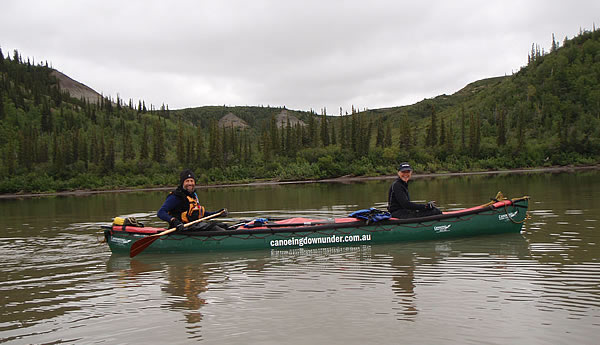
Passing the Caribou Hills.
I always wanted to be a champion dart player!
Our last campsite on the river - 66 days sleeping in a tent.
Day 67 – Tuesday 12th August 2008 We only had about 15kms left to paddle, so we didn’t need to hurry. Over breakfast we started reflecting on the trip, more the last two days rather than the happy
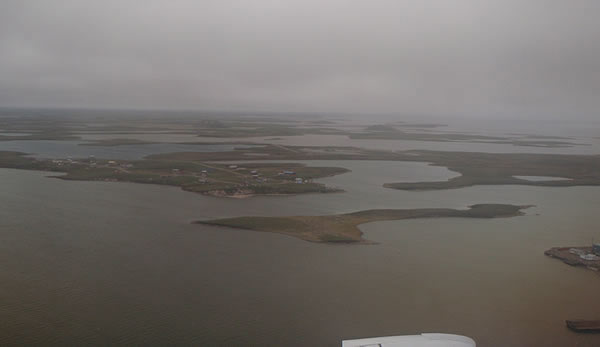
memories of the amazing months and miles we had spent on the river. The weather had dealt the final blow, yet this morning as we cruised towards Inuvik there was no wind, the sun was out and there were very few clouds about, it was near perfect, however we probably would have felt better if it had been wild weather. When we reached Inuvik we celebrated with a bottle of wine, checked into a hotel, had the best Eggs Benedict you find anywhere in the world and managed to get a flight the following day for a days sight seeing trip to Tuktoyaktuk. When we were in the air talk about being happy. Instantly we had an amazing view of all the lakes and waterways that were
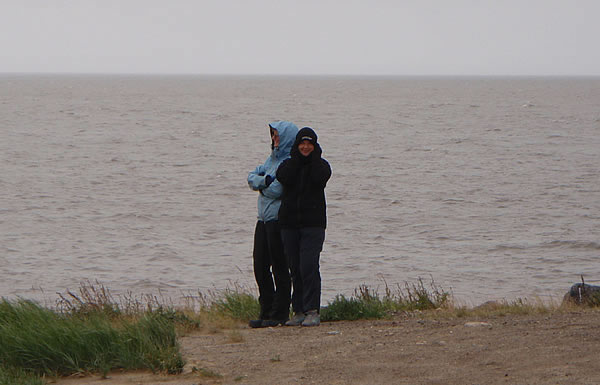
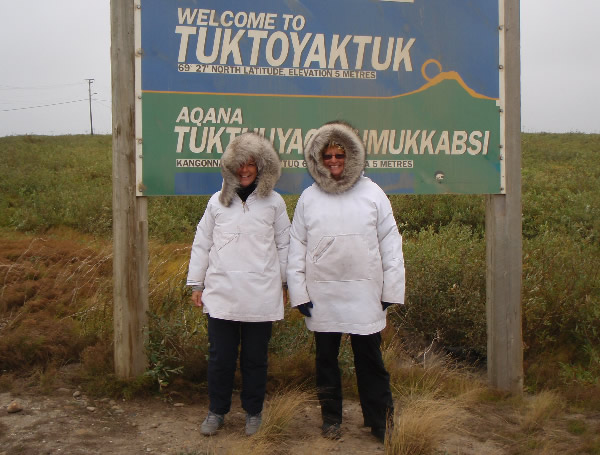
beneath us. As we flew further north the views became better, the lakes became bigger and for a long time it looked as if we were flying across the ocean, but it turned out to be a huge lake system. When we landed at Tuktoyaktuk airport the weather was cold, cloudy, the sky was full of rain and the ocean looked pretty hostile. After an amazing day in Tuktoyaktuk seeing sights of the Arctic and
First Nation culture the small plane flew us back following the river so it was great to see what we had missed out on and to see exactly where we had camped and paddled. We could also see hundreds of lakes and channels that were thickly scattered throughout the Mackenzie basin. It was an amazing trip back and to have been to Tuktoyaktuk, even though we hadn’t paddled there, was just a magnificent ending to our journey.
Alaine only 2 hours before finishing our trip.
Close to Inuvik for the second time. At the finish of our 67 day expedition we celebrated with a bottle of wine.
Arriving at Tuktoyaktuk by plane.
It was a pretty bleak place to live. The north pole that way.
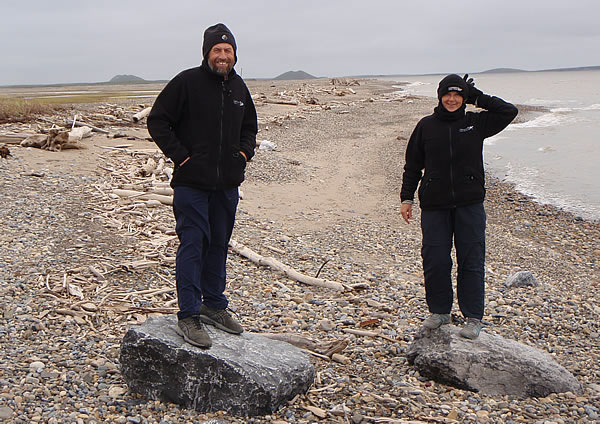
Pingoes in the background. A pingo is a periglacial landform, which is defined as a non-glacial landform
or process linked to colder climates. It is estimated that there are more than 11,000 pingos on Earth. The Tuktoyaktuk peninsula area has the greatest concentration of pingos in the world with a total
of 1,350 pingos.
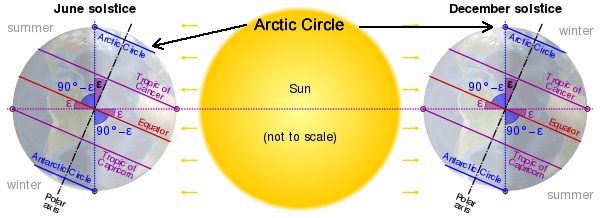
During the Northern Hemisphere’s winter months, the Arctic is one of the coldest and darkest places on Earth. Following sunset on the September equinox, the Earth’s tilted axis and its revolution around the sun
reduce the light and heat reaching the Arctic until no sunlight penetrates the darkness at all. The sun rises again during the March equinox, and increases the light and heat reaching the Arctic. By the June solstice, the Arctic experiences 24-hour sunshine. Like the polar bear, many other animals of the Arctic are white: beluga whales, snowy owls, juvenile harp seals.
Relationship of Earth's axial tilt (ε) to the tropical and polar circles
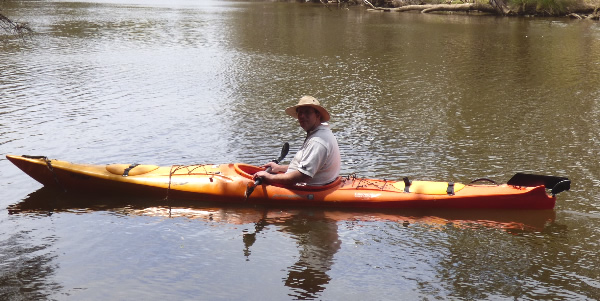
Stolen Kayak Perception Kayak contact Marc Rumpus on 0417190240.
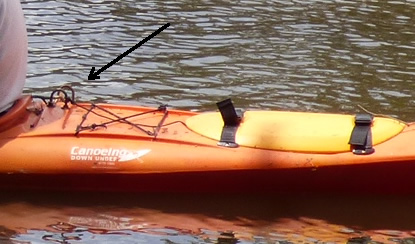
Stolen from the Caversham area. This is the kayak in question. You will note two U bolts just behind the cockpit. Approx 5 cm high. Those
are a one off. There is also, or was, a plastic sticker from Ushuaia , “Antardia”, as I was lucky to go kayaking there, just forward of the cockpit.
There are two U bolts behind the cockpit that were put on later so they are a one off. Other Perception kayaks wouldn't have these U bolts. If you see it please contact Marc Rumpus on 0417190240.
2023 Nanga Challenge, 9th September 2023: Supporting WA Wild Life Sport: | Adventure racing | Location: | Dwellingup, Australia |
| Registration closes: | Wednesday, September 6, 2023 23:59 (GMT+8) | Organized by: | Ascot Kayak Club.....Race Director Jayden O'Brien | Event website: | http://ascot.canoe.org.au |
|
Western Australia’s leading wildlife rescue, treatment and rehabilitation service Entry Options: Nanga Challenge: Paddle, MTB, Run: Solo, Relay Team of 3 [or 2] or Pair [do whole course together] Nanga Duathlon: Paddle & MTB, Paddle & Run, MTB & Run: Solo or 2 Person Relay Course Options NICE: 8k Paddle, 15k MTB, 10k Run NASTY: 12k Paddle, 23k MTB, 13k Run Cheaper if you Enter Early ! Best rate for first 25 entries, goes up for the next 25 & goes up again: Entry Category | First
25 | 26 - 50 | 51 - 75 | 76 + | Solo (for the crazy types) | Gone | $110 | $120 | $130 | Pair (entire course together) | Gone | $190 | $200 | $210 | Relay (Team of 2 or 3) | Gone | $210 | $240 | $270 | Duathlon (Paddle & MTB or MTB & Run) | Gone | $100 | $120 | $130 | Duathlon (Relay
Team of 2, same options) | Gone | $180 | $200 | $220 |
Discount for Juniors: If you're team are all 18 or under, you qualify for a 10% discount. Email akctimer@gmail.com for the discount code Tee Shirt Cut-off: We will order enough Tee Shirts to cover the number of participants in 2022. If
your entry comes in after the tee shirts are taken, fear not, you will get a tee shirt but it will arrive after the event Registration Notes: - Registration Deadline: Entries close: 11.59pm 6th Sept (if you are new to moving water
you must enter before Friday 1st Sept)
- Late Entry: Entries on day: $500
- Included in Entry Fee: - Lunch - Tee shirt - Great Time - Help the community - 90% profits to WA Wildlife
- Park Pass: All must have park passes (suggest car pool) buy either at gate [$15.00] or online at: DPAW Passes
- Camping Fees: START / TRANSITION / FINISH for 2023 all at CHUDITCH campsite. NO ONLINE BOOKINGS, will collect camp fees (with discount) on weekend. Note no fires at Chuditch to protect fauna. There is big communal kitchen area.
- Extra Tee
Shirt and/or Food Voucher: Can be purchased in registration
- Registering Team/Pair: One entry: Complete team mates names, age group, emails, emergency names/nos, race shirt size.
Race-day Geography &
Timetable: 2023 Event HQ is CHUDITCH CAMPSITE 7.30 am SATURDAY Registration Opens 8.30 am Registration Closes 8.40 am Paddle Volunteer Briefing 8.45 am Event Briefing at Event HQ – All participants must attend 9.00 am (approx..) Event start 9.45 am First MTB starts. |
|
|
|
|
|
|
|
|
|