|
|
|
|
For the next few weeks I thought I would choose the date that this newsletter comes out and see what I was doing in other years on that particular date. Last week I was walking the Canning Stock Route in 1990
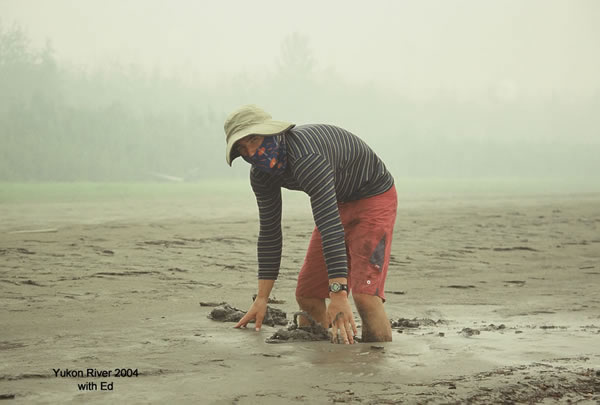
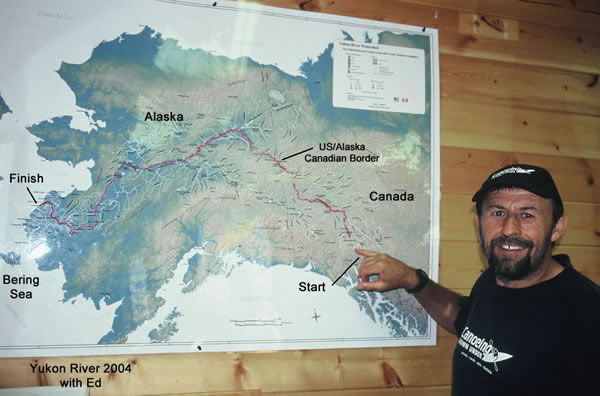
and this week I'm just days off finishing the entire Yukon River in 2004. It's not the most exciting day of the expedition, but not all days on an expedition are exciting.
Not all days on an expedition are exciting, but they are certainly memorable.
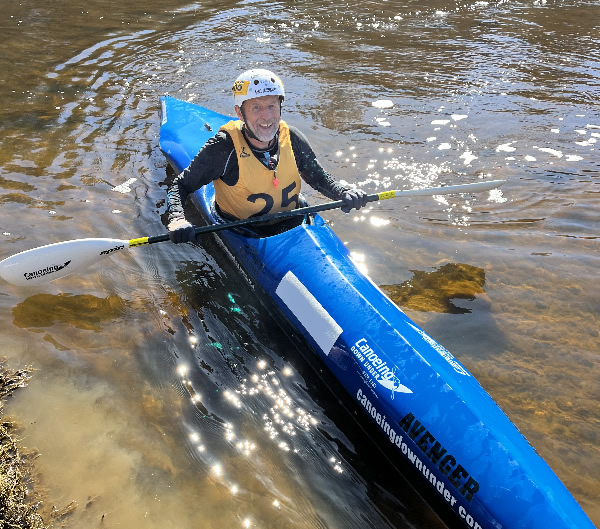
In a months time I will be heading off to the World Masters Championships in Denmark. I just have to survive the Avon Descent and not injure myself.
- Avon Descent Entries Close Sunday
- Avon Assessments
- Have You Wondered What Category Your Boat Is In?
- Colin Thorpe
- Northam to Toodyay Race
- On This Day 21st July in 2004
- Birds Along the Way
- Walunga to Middle Swan Seeding
Race
- Avon Assessments
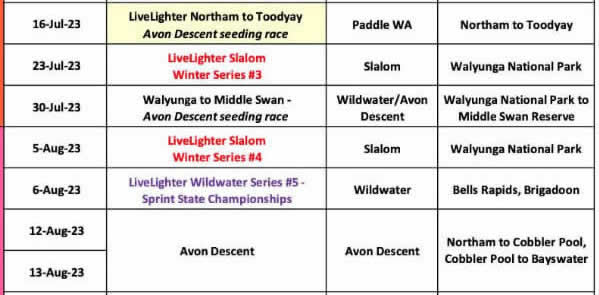
- Coming Events
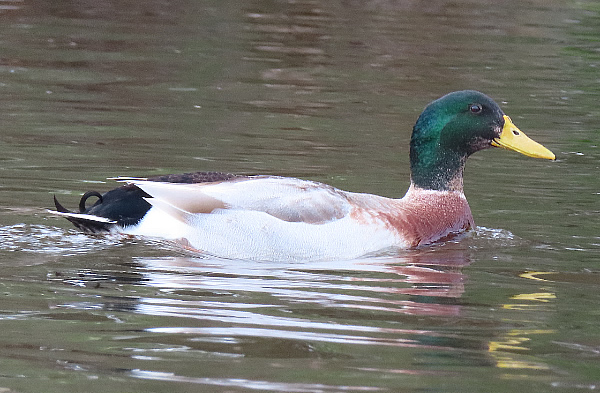
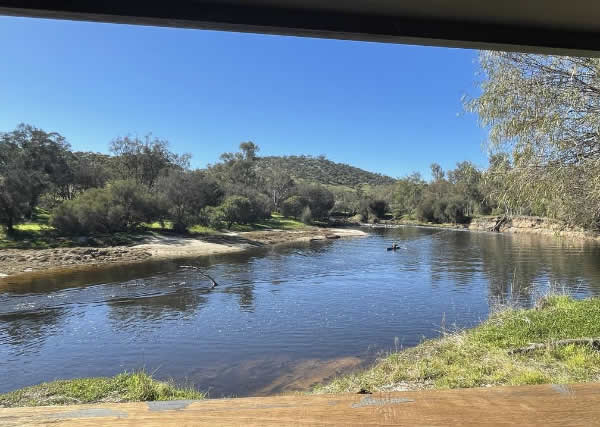
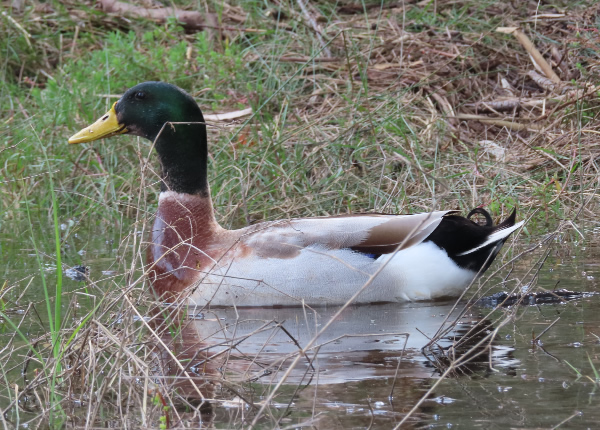
Taking a photo of this Mallard Duck
may have cost me my non waterproof camera. When I usually take photos from my K1 kayak I try to take them so I don't have to turn my body too much. As you can imagine I have to take my hands off my paddle to stabalise the camera to get the best shot but that makes me pretty unstable. As this duck passed by I turned my body to follow it and at the same time I had a bit of a shake and overbalanced. In the process of preventing myself falling in,
my camera slipped into the water for a couple of seconds. I instantly pulled it back into the kayak but the water had seeped in and being a non-waterproof camera it stopped working. I'm lucky really as I have
had it for over 2 years and have taken hundreds of bird photos from the camera that are going in my book. As most of the photos were taken from in my K1, I'm surprised that I haven't dropped it in the water or got it wet before now.
A Mallard Duck. The Mallard Duck was
introduced to Australia as early as 1862, with a rapid range expansion during the 1950's. In Western Australia, it was introduced before 1912 and is found in and around Perth.
Avon Descent Entries to Close this Sunday 23rd July so don't forget to get your entry in. Well it's not long now
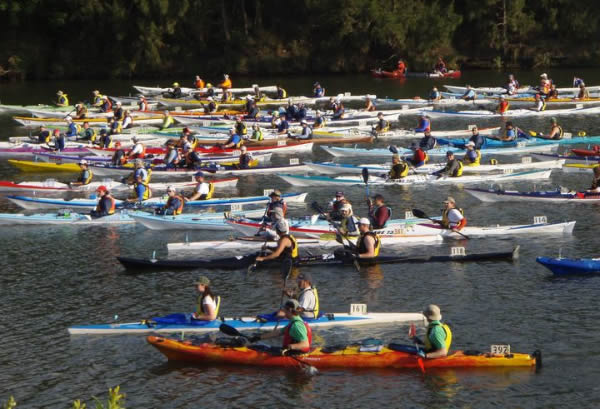
before the Race of the Year is here. It will be the 50th Avon Descent and for scores of paddlers in Perth it has been something to look forward to every year. No other race in the world is like the Avon Descent. It is unique. The Avon Descent is a real challenge no matter how fit or how skilled you are. It is a race that lifts your self-esteem, gives you confidence, helps shape your thinking, and creates positivity. It’s a race that challenges you in ways you would never have thought. It is a race that is gruelling, but fun. It is also a race where you can make new friends along the way. To take part in an Avon Descent is an accomplishment that you will never forget, you will never be sorry and it will give you a great sense of satisfaction and pride. Every thing you do after the Avon Descent will be easier. Why not give it a go. Avon Descent – Not just a race To check out my Avon River Guide Go Here: Avon River Guide – Canoeing, Kayaking & Other Adventures (wordpress.com)
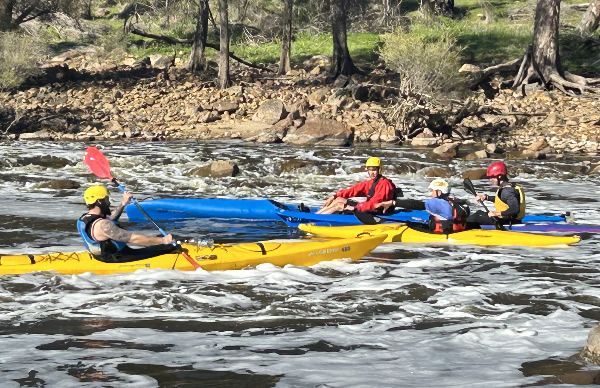
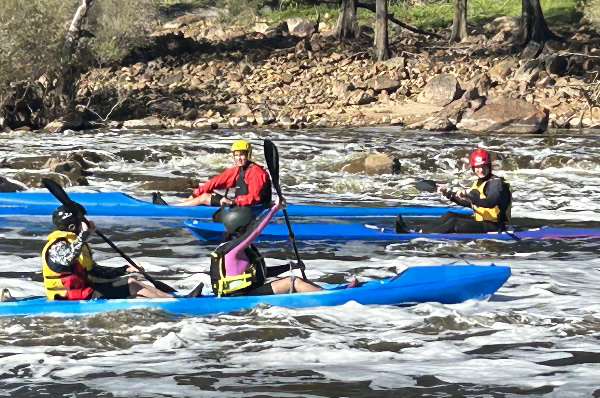
Avon Descent Competency Assessments I conducted Avon assessments last weekend giving 15 new Avon paddlers some insight to white water skills and hazards.
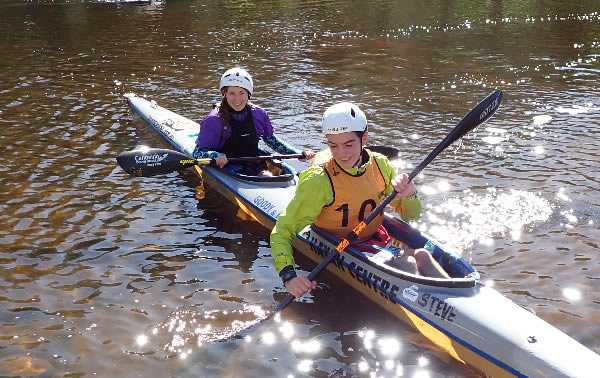
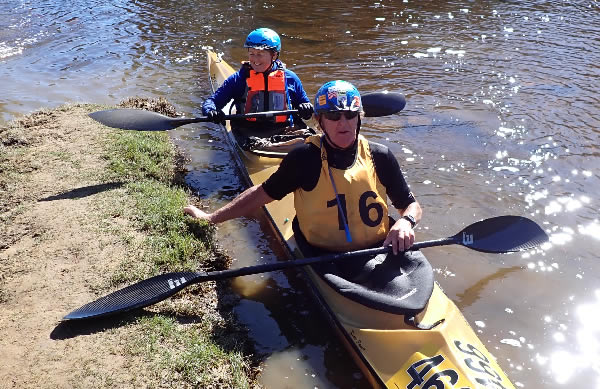
Explaining a few things to young guns Josh Pits & Jack Wright. Photos Tom Canavan.
Have You Wondered What Category Your Boat Is In? When it comes to entering a race have you been confused in which category your boat fits in to? Paddlers think that the Finn Multisport kayak is a multisport kayak. It has the name Multisport but in fact it is a Long Plastic. Long Plastics are above 4.5 metres. The Finn Multisport is 5.2
metres.
A Multisport Kayak is usually a composite kayak made of fibreglass, kevlar, or carbon and above 5.2 metres in length. Most multisport kayaks are around 5.8m - 6.3 metres, see below. A multisport kayak is not in the same class as a K1 which are a maximum of 5.2m. (Some races however don't have ICF classes so then the longer Multisport Kayaks can race against the shorter K1s. Check
to see the categories when you sign up to a race.)
MS or MSK1 – Multisport
Kayak Min length
- A Multisport Kayak is over 5.2m and can vary in length above that. Notes - These craft are longer and usually wider than a K1 which give them more stability and easier for a general paddler to paddle. Due to their length, they are still very fast. They are more like an Ocean Racing Ski, but in kayak form. It means that paddlers who don’t have such good balance, or who are paddling in
rougher conditions still have good speed, but more importantly better stability.
These craft are
used a lot in New Zealand’s and Australia’s multisport events. In WA there is a big following amongst older paddlers who want stability and good speed. Composite Construction = Made of Fibreglass, Kevlar, Carbon etc Go here if you want to find more out about the different kayaks on the market. Paddle Craft Definitions – Canoeing, Kayaking & Other Adventures (wordpress.com)
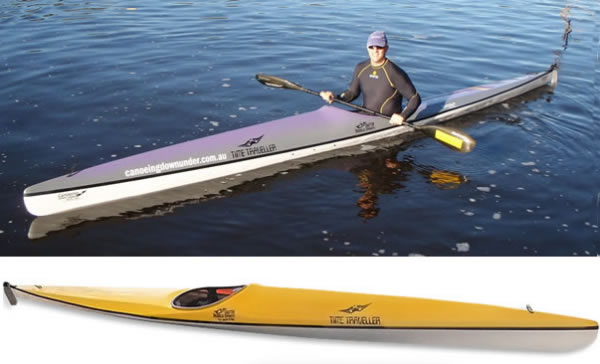
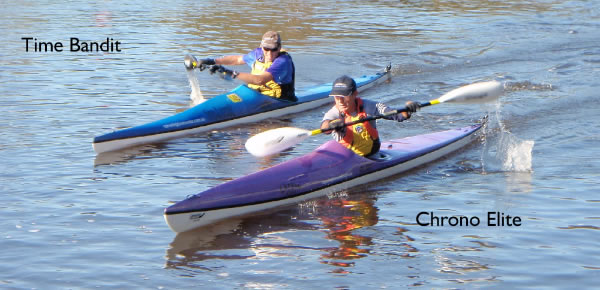
The Time Traveller Multisport kayak is 6 metres long and 54 metres wide. It is a stable kayak and better suited to heavier paddlers.
The Time Bandit which is more unstable than the Time Traveller and is 6.2 metres long & 42 cms wide. The Chono Elite, which is shorter, 5.8m and slightly more unstable than the Time Bandit tends to be faster. There are many other Multisport Kayaks on the market made in Australia and New Zealand.
Colin Thorpe It was a sad day
today as it was the funeral of 81 year old Colin Thorpe. Colin has been an organiser and paddler for over 40 years. He was a Swan Canoe Club member and later ran the WA Uni Canoe Club, which he was involved with up until very recently. His son Simon and daughter Sonia were two of the best white water paddlers in WA in the 80s and 90s. He was a great organiser and always encouraged others to take to the water. When the Harvey White Water Course was closed, he desperately tried to get
WA a White Water Park. Unfortunately money to build such a venue was always a barrier and it never came to fruition. Many paddlers in this state would have be touched by Colin in one way or another. My condolences go out to Colin's family.
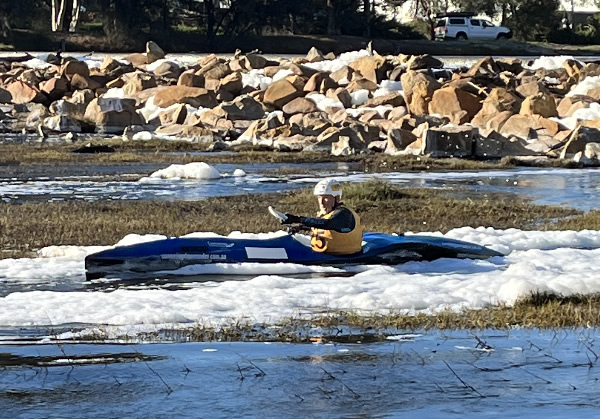
Northam to Toodyay Race It wasn’t the best feeling waiting for a start of a race in my paddling gear when the temperature was minus 2 at Northam, but the pain of having frozen hands and feet at the start of the race did mean that we had clear sunny skies for the rest of the day. I was on grid one with the
ladies, the short plastics, the wild water kayaks and Wavehoppers and a few strays. There were 25 or more on our grid and although Warren who gave the briefing said we should go down the Northam weir in a nice orderly fashion, I don’t think that was on the mind of many seasoned racers, as most wanted to get there ahead of others to get a clearer run of it. One boat going sideways on the weir turns the slide drop into amusing crash scene and can cause several minutes delay. When the hooter sounded about 6 paddlers took off with conviction including me, although I wasn’t ahead, but I kept a good speed and arrived at the weir 4th with Bronwyn Martin taking off to portage and Stephen Coward and the double of Melissa and Derek Klompmaker paddled the weir. They both paddled over it
without a problem so did I and followed them into a narrow channel and under the rail bridge. Lucky for me Stephen Coward went straight on and got stuck in the shallows and although Marissa and Derek tried another way straight through they bottomed out as well. Knowing a deeper route to the left that’s where I headed with Kieran Simpson, also in a wild water kayak close behind. It worked well and I was off down the river with no one in front. It did mean though that I had to be more alert to the
way ahead and pick a route that would be faster and away from the shallows.
The paddlers behind me had the advantage of seeing where I was going and if I got stuck in the shallows they could take a different route. Following someone does have an advantage, you don’t have to think of the path, you don’t have to be so alert, but alert enough that if the paddler in front does make a mistake you can
make a diversion. About 2 kms into the race I realised that I hadn’t set my watch so I paused to turn it to race mode. It was rare, in a race such as this that I led the way and although I have paddled this section several times in 28 Avon Descents I don’t practise this section, so I really don’t know it, as I
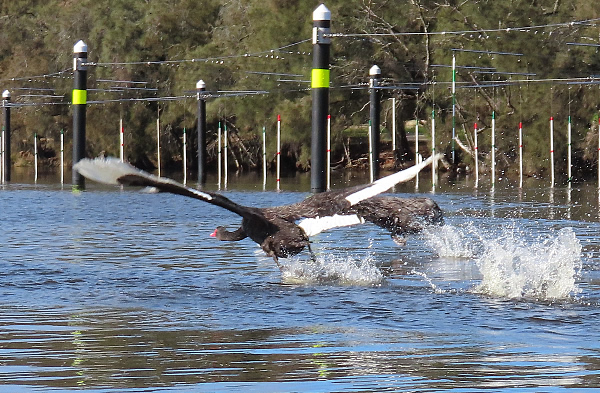
do the tea trees or the Avon Valley sections. The waters ahead were still, the day was clear of clouds and groups of birds, spoonbills, ibis and ducks kept taking off before me and then landing a little further ahead and taking off again. This went on for ages and I
was somewhat dreading any one passing me as they would take over the tranquil view and bird spectacle. I think I paddled about 10 kilometres before anyone passed.
Northam Weir is behind me. Photo David
Brown.
Alistair Fox. Photo Francois
Beukes
I could hear voices behind me and I thought it was Kieran talking to someone else but in fact it was the doubles pair of Sue and Andrew Hewlett who started on the same grid. They managed to pass me, but not long
after I passed them. A few kilometres further they passed me again and then I had Amanda Bowman on my tail. I was expecting her to pass and eventually she did so I took a little ride. Not long after we passed Andrew and Sue and I took the lead again.
Only the green hills, the winding peaceful river, a multitude of shallow channels with riffles of water running between sandbars and rocks stood
before me. When the current slowed and formed a wide, long pool I scanned the way ahead and beside me for deeper water. I should have known to have diverted towards the shores, but I was hoping the centre of the river would be deep enough, but it wasn’t so I got beached on a big sandbar. It was my worst
nightmare. Being stuck on a sandbar and not knowing how far it stretched. For a ski paddler they can jump up and drag their boat to a better spot. A wild water kayaker has to take their spraycover off, lift themselves out of the small cockpit and then after they find deeper water squeeze back into the cockpit and put the spraycover back on which takes a bit on time. I didn’t want to do this so I pushed my way towards the right bank with my paddle a centimetre at a time. In the struggle 3 or 4 K1
paddlers passed me, all paddling near the banks. Amanda who was behind me jumped off her ski and pulled it towards the bank and was off paddling in deeper water leaving me to sit on a sandbar like a stranded turtle. When I managed to claw myself into deeper water the
K1 paddlers were 3 or 4 hundred metres ahead and the fact that the deeper water was quite shallow and non-moving didn’t help to move me along. Nevertheless I couldn’t wallow in my sorrow, I had to get a move on which I did and I soon caught up with Amanda and eventually passed her again. By this time a few faster paddlers were around and Paul Waters in a PRS long plastic caught me and eventually went by and he started five minutes behind so he was flying. About the same time dozens of kangaroos
were bounding along a paddock heading in the same direction. I reckon there were over 50. There was such a long line of them, and I was so impressed that I shouted out to a paddler behind me. A few kilometres further Katrine Bridge came into view which I was most pleased about as it meant I had paddled 17kms and
over the half way mark. Somehow I managed to catch up with Paul, but when a double of Garth Civil and Andrew Heartcliffe came by with Darryl Long wash riding on one side and another paddler on the other side, Paul increased his pace, went with them for a short time and got away from me. Glen Avon Rapid seemed to
take forever to come. It was good to have a few paddlers ahead of me at the time so I could see where they went as the first drop is usually very rocky with no real good channel. I watched them go down and followed, it worked well, but I hit a pretty big rock with my nose. I already had a lot of coffee rock scratches on my nice carbon kayak now I suspect that the nose would have a bit of damage. After getting down the main drop all the dangers were behind me so it was all go. One unlikely person
was emptying his kayak on the bank and he soon passed me a kilometre downstream. I heard later that several good paddlers had capsized here.
Josh Pits followed by Jack Wright at Dumbarton Bridge. Photo Francois Beukes
I only had 4 kilometres to go. Photo Helen Murphy at the bird
hide.
It was pretty lonely paddling to Dumbarton Bridge where there was a small rapid and a few spectators. All I could think about after that was getting to Extracts Weir before my opposition. As I approached Millard’s
Pool, before Extracts Weir Peter Tomczak and Sharon Copley caught me up in a double. I managed to stay beside them for a minute or two then I was dropped when we hit some shallows, nevertheless I tried desperately to stay on their rear wash. Knowing it was only 6-7 kms to the finish line I just gave it my all and somehow, with a lot of effort, I was able to stay on their rear wash until we arrived at Extracts Weir. With the knowledge that I don’t waste much time on a portage and the fact my
kayak was only about 12 kgs I was feeling confident that few paddlers would be passing me before the finish line now. As soon as I was out of my kayak I trotted around the weir towards the far end where I would put in. I left Peter and Sharon behind and I could see Paul dragging his plastic PRS ski to the waters
edge. By the time I got back in, leaving my spray deck off, he was about half a minute ahead. I tried catching him but he was too quick and when we hit some of the twisty channels he was able to steer his craft a little better than me having a rudder. Having just spent a lot of energy keeping up with the double and running around the weir, it was at this time that I wished I had a rudder, as using my body lean and sweep strokes to manoeuvre my wild water kayak was very tiring after such a long
race. As I got closer to Toodyay though, I started to gain on Paul, but not enough to catch up. Then Peter and Sharon caught up and passed to beat me to the finish by 10 seconds, although their time was 2.40.01 and mine was 3.00.11 as they started behind me. I was pretty pleased with my performance as I was the
18th fastest single, and only 4 K2s, and 2 Long Plastics beat me, Paul Waters and Connor Jacob. I ended up beating several faster paddlers and I was first in a Wild Water kayak. The river was a little low and it was a tough paddle, but it was a great race that ended up with some tasty food, cooked by
Canning River Canoe Club at the end. Results Here:- https://www.webscorer.com/racedetails?raceid=321434&did=396836
Finished with lots of scratches on my kayak.. Photo David
Brown
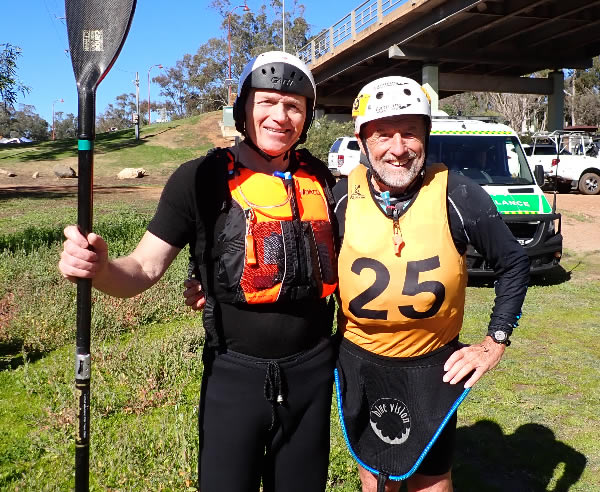
Paul Waters and I at the end.
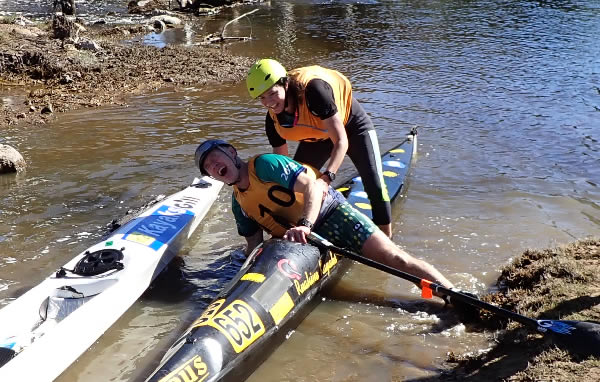
Amanda Bowman helping Grant Pepper out of his kayak.
Young guns Lily Farrell and Hunter Florisson.
It was 21st July 2004 19 Years Ago to the Day
A Day in the Life of TB
The Yukon River
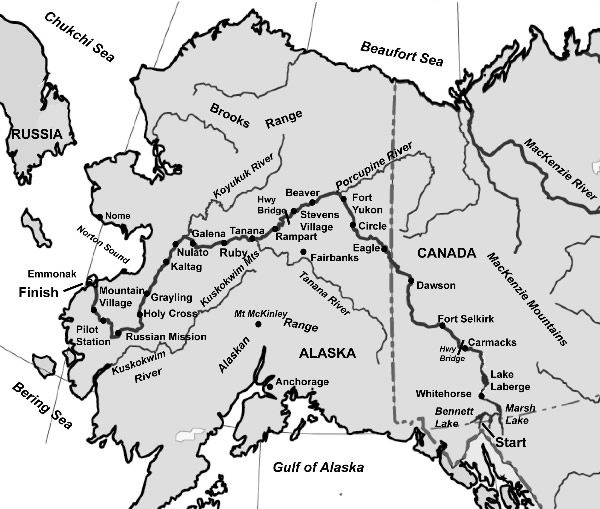
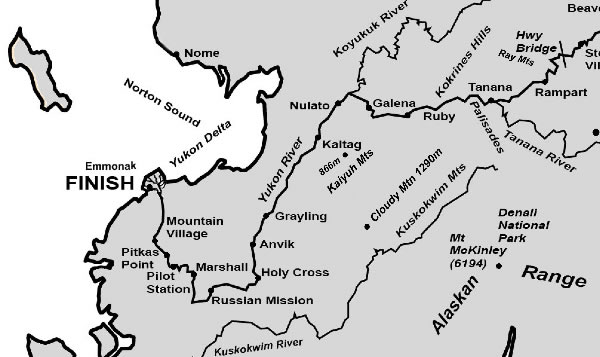
It was 3300 kilometres from the mountains near the Canadian/Alaskan border to the end of the river in Norton Sound.
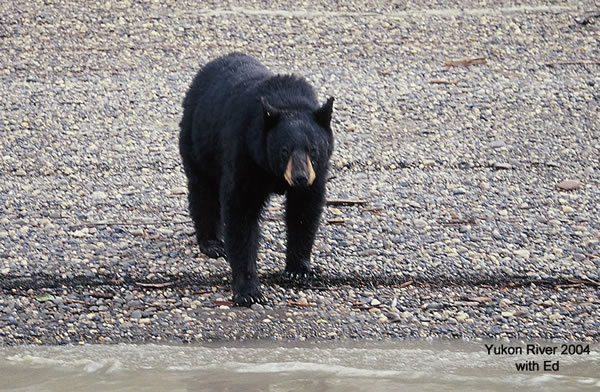
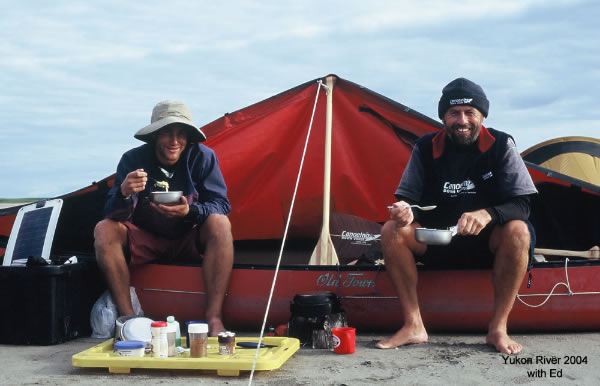
Ed and I were near the end of the 3300km Yukon River expedition. We had raced in the Yukon River Quest, seen some amazing stunning scenery, we had met up with bears, been eaten alive by mosquitoes, plagued and annoyed a few days by
midges (no-see-ums), and trotted across mud flats to make camp. Many nights we camped on bear tracks.
As the days went by the high water of the beginning of the expedition was now much lower and the current a lot slower.
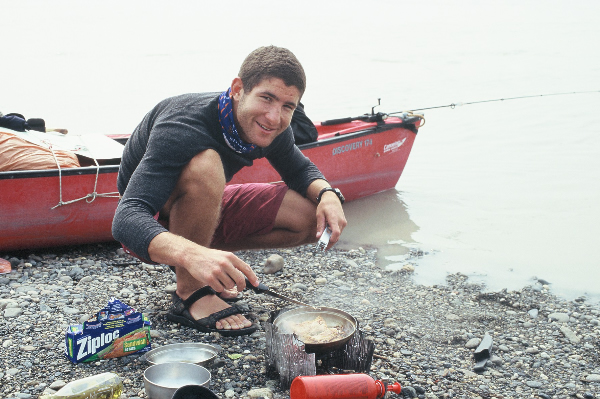
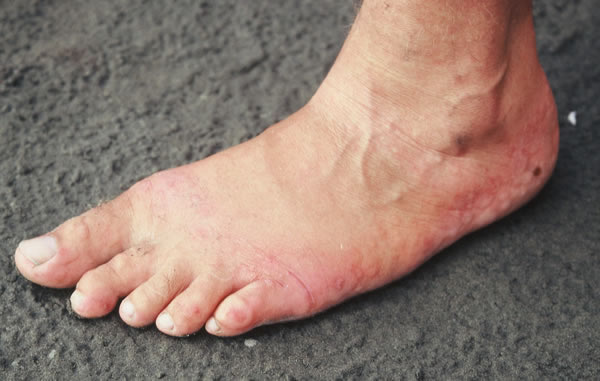
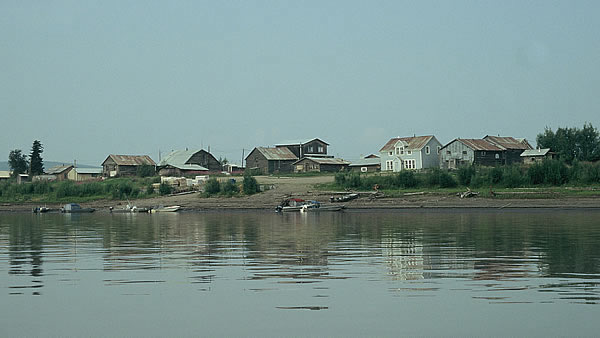
Wednesday 21st July. Day 36 Ed woke me up a little earlier than usual so that we could go into Russian Mission to get water, and be on our way without losing too much time. I had a disturbed night’s sleep, water was lapping against the beach close by, the tent was flapping and the blisters on my feet were somewhat tender and swollen. Russian Mission was about 1km away so it didn’t take us long to get there. We arrived about 8.30am to a deserted community. I put my sandshoes on to help give my feet some more comfort instead of my sandals that chafed me. We walked quietly through the village hoping not to start the numerous dogs barking. One creamy coloured mangy dog tried barking but its mouth opened and nothing came out. Like most of the villages along the way tidiness was not a strong point. We
carried the mosquito repellent and blasted ourselves several times, but the mosquitoes still ravaged us. They seemed to be immune to the spray. We found a building that looked like a Washeteria (a laundry) to get fresh water, but it was closed. Ed waited whilst I walked, with some discomfort, further up the hill. I stopped a
pick-up truck that had three canoes loaded sideways on it to enquire about water. One guy, who turned out to be the school’s principal on his way to take kids canoeing, said we could get some water from the school. I returned for Ed and walked to the school kitchen, and by that time the principal had arrived too. The three of us chatted whilst the water bottles were being filled. We walked back to the canoe still being savagely attacked by mosquitoes. They were just unbelievable and there was no let up despite all the spray we had on. Hard as it might be to believe, it was actually nice to get back to the canoe and paddle off and be
free of insects. As we got further out in the river I turned to have a last look at the town and was surprised at the many newer houses higher up the hill. It was yet another village that was bigger than it initially appeared. It was a hot, cloudless and windless day. I stopped to sponge the water out of the boat to protect my
feet from getting wet, whilst Ed, who was in the front kept paddling. I then needed a pee, so I stood up and tried peeing in my cut off coke bottle. Despite the extra drag it caused when I stopped paddling Ed seemed to be in a real hurry and paddled harder. There I was, standing up in the canoe, penis in hand and stuffed into a makeshift pee bottle, trying hard to get the water to flow. Not only did I have to keep balanced, as the canoe rocked from side to side, but we zigzagged down the river
too. Ed paddled on one side for a few strokes and then paddled on the other trying to keep the boat straight. Instead of stopping and letting me finish the task, he powered on and with every change of paddle strokes the canoe continued to wobble. I felt a little vulnerable, to say the least, but I finally emptied my bladder, sat down and paddled away. Ed seemed oblivious to what had gone on, but if anyone had witnessed it, it would have been a very funny sight.
My feet had small blisters appearing which were becoming quite painful. Because the river levels were going down many of our stops we had to wade and walk through mud which I suspect didn't do my feet any
good.
There were no chemists or doctors in the small First Nation villages we passed. Nor were there many shops and if there were they didn't sell the food that we needed to eat.
We paddled passed hills on our northern bank and stopped on a sand bar near Elsie Island. By now we were familiar with chicken paste and cheese on our bread. We also ate extremely spicy noodles, bought at a village, which were so hot
they set our mouths on fire. Sometime later we saw a stream running out of the hills and took the opportunity to fill our water containers. The weather was hot and the little wind that blew was blowing on our backs. The hot weather encouraged me to doze whilst paddling, a technique I’ve perfected and which I am well used to doing
on my long endurance trips! We took a shortcut down a channel after Roundabout Mountain, which saved us several kilometres, and drifted passed Round Point where we proceeded to have our quiet time. It was just so blissful. Quiet time was lying back and drifting with the current for 30 minutes.) Thirty minutes or so later, as we
were still relaxing and lying back, a power boat motored down the channel slowed and came over to us. Our first reaction was to say that we were okay and were just drifting with the current. They had heard about us up river, and they couldn’t resist a chat. The man and boy were from Nanana, a village upstream, and the women and girl were visiting from Wyoming in the U.S. They were on their way to the sea and then to the town of Nome. After our talk we said our goodbyes and took off leaving them to drift. They attempted to start their engines but failed, they tried again and failed. We felt a little guilty as they had turned off their engines to talk to us. Within minutes, black clouds had built up on the horizon and headed our way. We could see that this storm was going to be a big one. When the rain came, the drops hit
the water so hard they splashed upwards at least two to three centimetres, creating miniature volcanoes which surrounded us as far as the eye could see. It was an awesome sight, the trouble was we were in it and getting very wet. The other rainstorms that we had experienced had passed over within minutes, but this one just kept going. An approaching black cloud turned into a monster sphere, like a spaceship directly above us, plunging us into semi-darkness and then the rain turned to hail. Our bodies were suddenly subjected to a barrage of ice stones catapulted from the heavens at a rapid rate. As the hail pelted us it was both painful and intense, almost like being caned. The sky was dark and violent, but yet the wind was calm. As the eye of the storm passed over, the wind began to gust and strengthen. Our concerns were now heightened, as the wind gained in intensity and dictated our fate. Our canoe became more difficult to control as the wind whipped us across the large expanse of water in a crablike fashion and the waves slapped against the canoe. We had to keep our wits about us, as a capsize hundreds of metres from
the shoreline would be perilous, and attempting to drag a heavy canoe to shore would be almost impossible. The storm had cut visibility to almost nil, we had no idea where our power boat friends were, and we were in no position to find out. If their engines hadn’t started they would be drifting and getting wet but at least they
would be in no danger of capsizing. The wind lashed us from the south-east and then it stopped for a brief time before swinging around to the south-south-west. The canoe was now even harder to control as the wind buffeted us broadside, we both resorted to paddling on one side but our steering still didn’t get any better. The rain
persisted but thankfully the hail stopped. Our canoe was filling up with water as it run off the spray deck and pooled into our laps, which in turn seeped through the Velcro flap closing the deck around our waists. I had to stop the water from seeping in so I took the spare paddle and pushed it under the spray deck, which raised it up and took out the hollow. It worked a treat. I was getting cold, the water had penetrated my cag and my cotton T shirt was soaked. I just don’t know how Ed was coping with only a thermal but he said he was okay. We weren’t dressed for a wet cold spell and were relieved when the storm passed over. The wind had shifted again and was now blowing us down the river, which in turn gave back our control. We looked behind again to see if we could see our boatie friends, but the storm
was still lashing its fury in that direction so we could see nothing. We felt even guiltier when we thought that they might be stranded out there.
As we moved down the river we had left the dramatic scenery behind, we camped on sandbars and used the canoe cover as a wind brake.
With the main thrust of the storm over we headed to a sandbar to bail out the water, change into warm clothes, and took the opportunity to have a pee. The rain had certainly freshened up the afternoon. We cruised on further, crossing
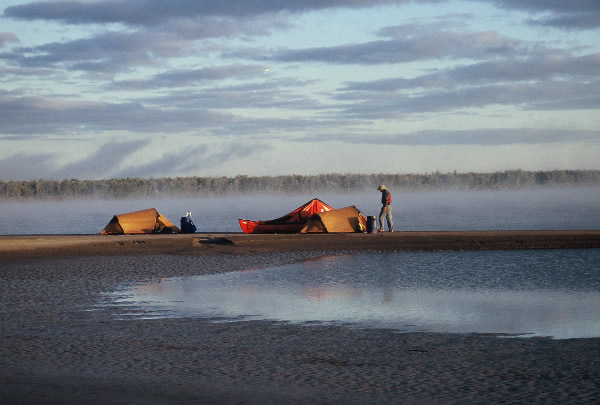
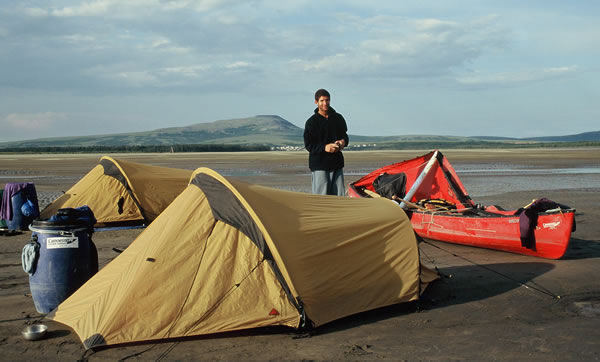
the channel that led into the village of Marshall. We decided not to visit the village as it was well out of our way plus the fact that we would have to paddle down a long slough (a channel), with little current when leaving the town. We found an island sandbar to camp on in sight of the village, and walked along the bar trying to
find a dry spot to erect our tents. Marsh birds were flitting as the sky turned black and a new thunderstorm brewed on the horizon. We were readying for another pounding, but luckily the storm bypassed us leaving us to erect our tents in the dry. The dying sun’s rays shone on Pitcher Mountain lighting it up like a giant beacon.
The mountain, located behind the village, was like a huge stairway with a gradual incline leading to its summit. I was sorry that we were going to miss climbing it. As we settled into our camp for the night we could see our friends in the boat limp down the channel into Marshall. We were both relieved and pleased to see them,
although I imagine their hopes of reaching the ocean now were a lot more fragile than ours.
The latter part of the Yukon.
Camped on the drying sand flats near the village of Marshall.
2023 Walyunga to Middle Swan Sunday, July 30, 2023 Register here: https://bit.ly/2023Avon3 Location:
Top Carpark (Boongarup Pool), Walyunga National Park Race check in: 08:00am-08:45am Briefing: 08:45am Race Start: 09:15am Course: Starting in the long pool from the top carpark, racing 23km downstream through the Walyunga Slalom Course, Terminator 2, Bells Rapids, the lower Ti Trees and Amiens through to Middle Swan Reserve.
Competitors follow a winding river consisting of exposed
rocks and Ti-trees with the added fun of rapids and a strong current. In the event of extreme river levels, competitors will be kept informed of any course changes. Transport: A car shuffle is required prior to Race Check In. Due to the
distance between the start and finish, your car shuffle must be completed prior to Race Check in at 08:00am. Safety: Due to the course being held in wild water conditions, it is compulsory for all paddlers to wear helmets and PFD’s.
Each competitor should also have a whistle attached to their PFD for emergency situations. No helmet or no PFD = NO RACE.
After a tough few years due to the COVID pandemic and devastating Hawkesbury floods, it's fantastic to see the iconic 111km charity
fundraiser back on 28-29 October 2023. There are distance options to suit all paddlers with the full-length 111km Classic, the 65km Windsor to Wisemans Dash and then three-paddler relays over both distances. This is the 44th year of the event and the 30th year where funds raised by paddlers have supported the Arrow Bone Marrow Transplant Foundation. |
|
|
|
|
|
|
|
|
|