|
|
|
|
I have just come back from having my last session of radiation for my prostate cancer so it’s celebration time.
After seven weeks and 33 sessions I will have to wait for some months to find out if it has worked or not, so fingers crossed. I have been
lucky that I didn’t suffer tiredness, one of the symptoms, so I have been able to train at the same intensity and my good life hasn't been affected.
The treatment has gone very smoothly and the staff at Genesis Care in Subiaco have been amazing and I actually enjoyed going there. So if you are ever in a similar situation Genesis Care in Subiaco is the place to go. I was told that I couldn't put this weeks newsletter out unless I mentioned the terrific win that Australia had in the cricket. There were even paddlers who stayed up
until 1.30pm and beyond watching it. No wonder there have been less paddlers on the river this week.
- Who's Out There
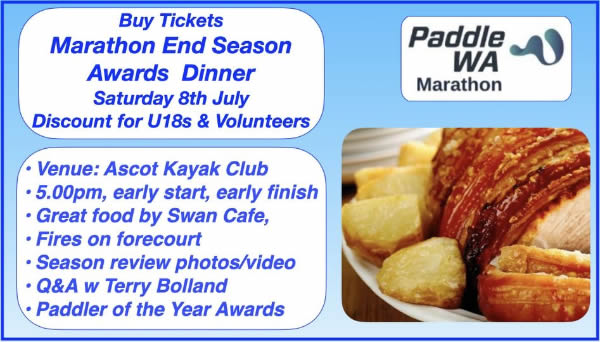
Marathon Dinner - Albany Sea
Kayakers
- Bells To Amiens Race
- To Paddle the Grand Rapids
- Birds Along the Way
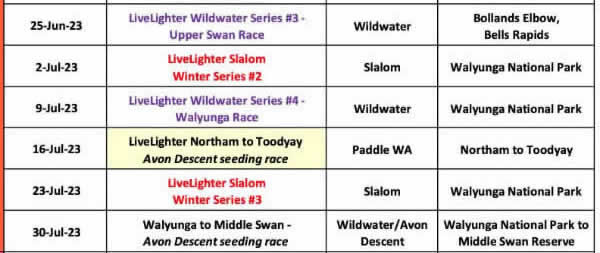
- Coming Events
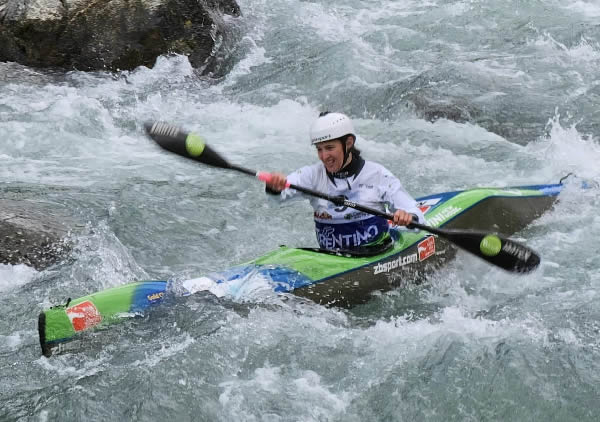
Nina Mueller One week into my trip to Europe! I spent a few days in Augsburg, Germany to watch the Wildwater Senior World Championships and catch up with family. It was so good to be back - 7 years after paddling at my first European race in 2016! Then 5 days in Mezzana, Italy for my first World Cup for
Wildwater. Didn’t have the best race unfortunately but have had a great time learning a new river and exploring Val Di Sole! 2 more days here before enjoying some days off in Milan. Then I’m heading to Switzerland to finish my trip off with another race in Engelberg - excited to paddle another river!
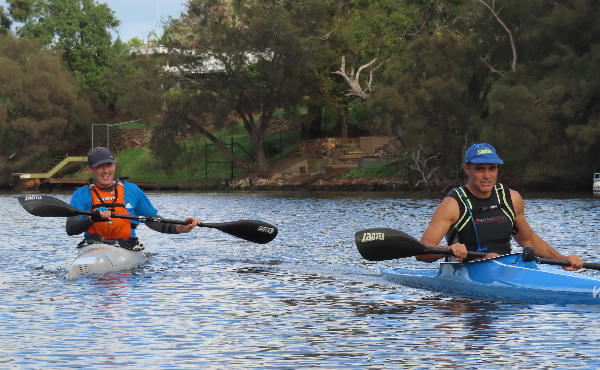
Jordy Hamer & Mark Pracilio were on a training session.
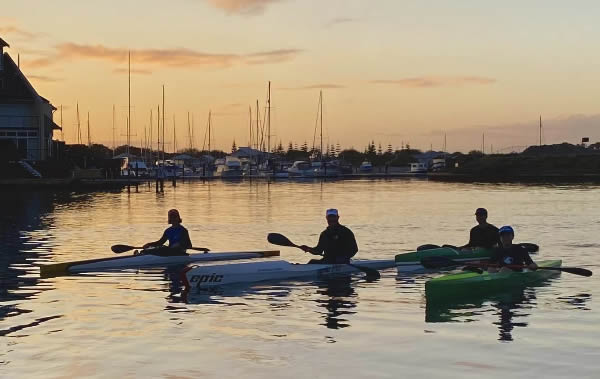
There have been some very cold mornings this week but it
was perfect conditions this morning in the marina for the Friday morning Busselton squad who got stuck into a 2.2km time trial. If you have a
picture of your training group send me a pic.
Albany Sea Kayak Club Paddlers
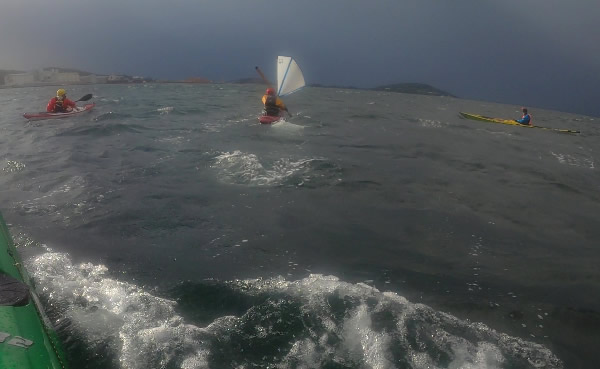
Looks like some winter weather. Photo Chris
Fry
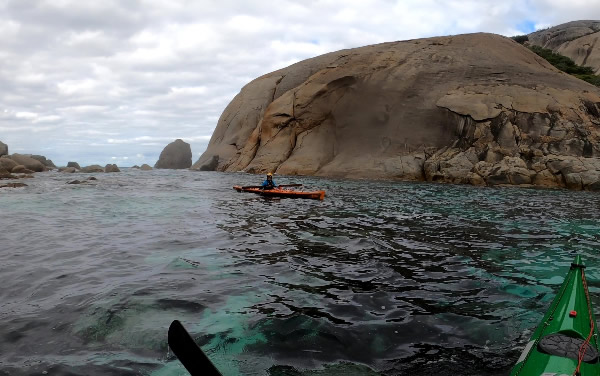
Susan at False Island Cove.
Photo Chris Fry
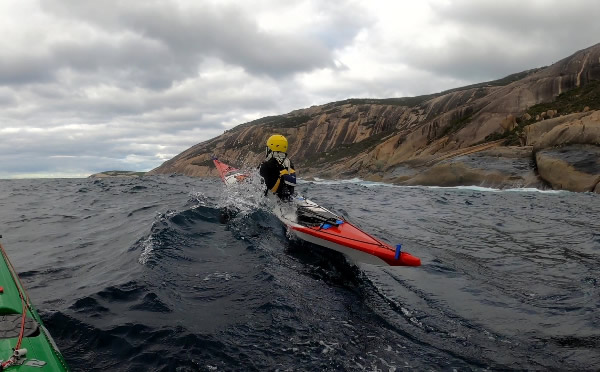
Colin taking on a few lumps. Photo Chris
Fry
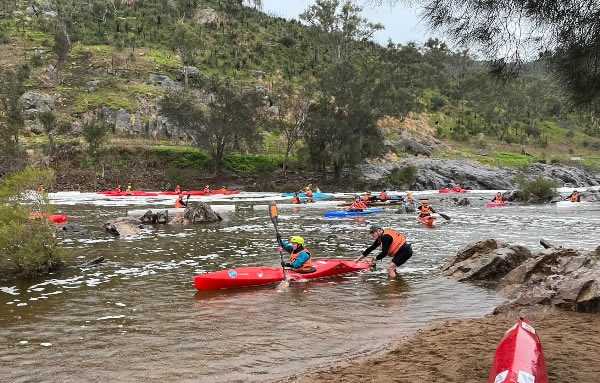
Paddlers are sent off at 30 seconds or 1 minute intervals.
Grant Pepper beat me by 59 seconds last year.
Grant you have no hope this year!!
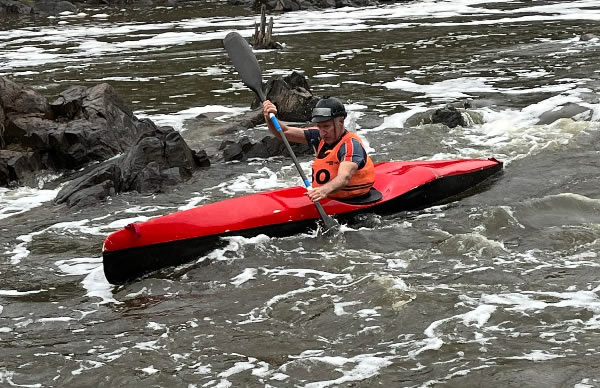
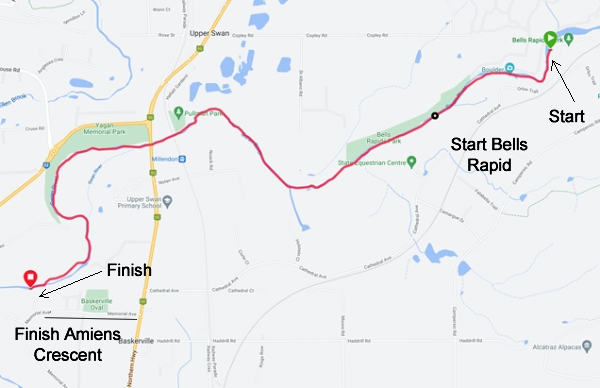
Bells to Amiens Race Registration for the 3rd race of 2023 are now OPEN! Register here: WWR #3 is scheduled as the Amiens Race from Bells to Amiens, and promises to be a fantastic fun race thanks in part to the awesome river levels we currently have. This race is perfect for those wanting to get some moving water experience or
additional practice ahead of upcoming races and the Avon Descent! Register now for some of the best fun you can have on the water... Seriously is!!
Avon Descent Safety & Competency Assessments Sessions available: Saturday 15th July 9.00am - 12.00 noon Saturday 22nd July 9.00am - 12.00 noon Sunday 23rd July 9.00am - 12 noon Saturday 5th August 9.00am -
12.00 noon Sunday 6th August 9.00am - 12 noon Cost: $60.00 AKC club members / $120.00 non club members Location: Walyunga National Park (subject to water levels)
What to Bring: Your own kayak and gear
Please note the sessions are subject to water levels. If there are any changes we will advise 24 hours prior. Walyunga
Park Fees apply https://exploreparks.dbca.wa.gov.au/park/walyunga-national-park Any queries email akcadministration@gmail.com Book here: https://www.ascotkayakclub.asn.au/for-sale/
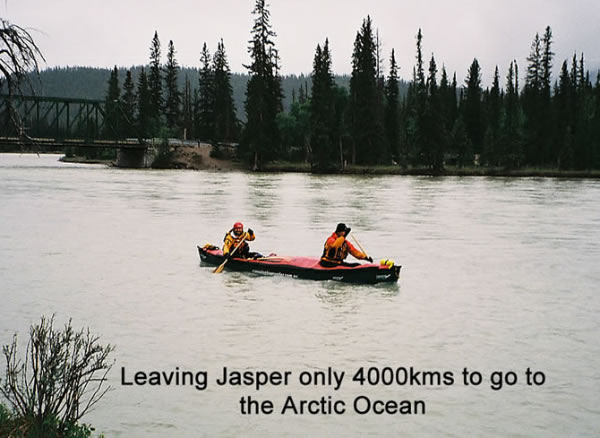
To Paddle the Grand Rapids (Canada) in a canoe
The canoe was full of food, gear to last 4 weeks.
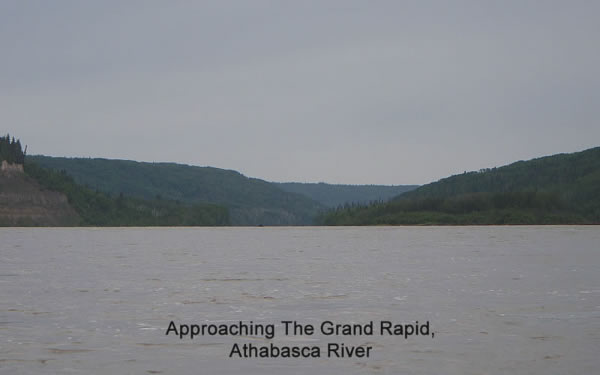
It was said that we would hear the roar of the Grand Rapids from about 7kms upstream, but we were a little closer than that when we first heard the roar. It grew louder as we drew closer. Although I had read a
couple of more recent accounts about the Grand Rapid, I got most of my information from reading manuscripts and looking at old photographs of early expeditions. To see photos of timber longboats going down the rapids was quite amazing and many didn’t make it. In my research prior to the trip, I was never able to find any
recent photos of canoeists tackling the grade 4, 5 & 6 rapids on Athabasca River or find any of the big Grand Rapid itself apart from a few historic ones, so we were about to run the Grand Rapid blind. Even Google Earth only had blurred images, so they weren’t of any great assistance to us at all. From a kilometre away the
river looked like a huge funnel as it narrowed to nothing and dropped away out of sight in the far distance. It felt as though the edge of the world was near! We were entering another phase of our journey, the most dangerous one and like many of the early explorers we also faced the possibility of dying. The challenge of paddling into the unknown, hundreds of kilometres from help with our lives on the line was certainly more spine-tingling, gripping, and exhilarating than if the way ahead was
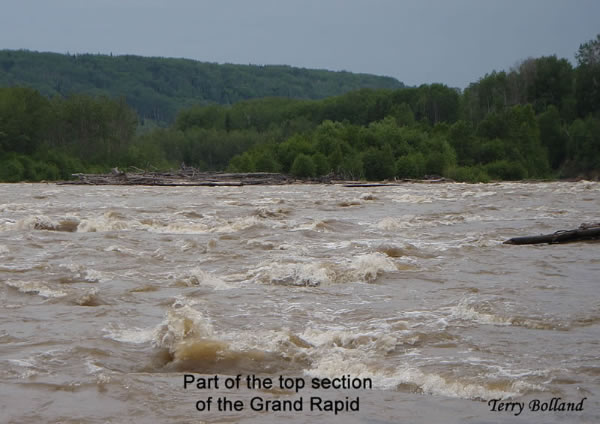
safe, but strangely I wasn’t nervous. I relished feeling like an early explorer. The left bank of the river looked steeper and more vertical than the right and the hills beyond the rapid overlapped. But in the foreground where the rapid started, just left of centre there was an outcrop of logs piled up and stranded.
Other logs that were stranded on outcrops were protruding well out from the right shore and upstream of the island and behind these features the river fell alarmingly away and disappeared into a canyon.
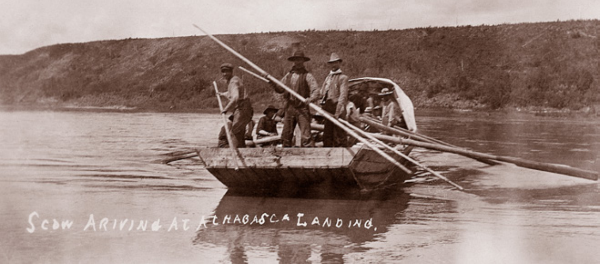
As we got close we could see an island and before it the white water spread across the river. Early explorers used to row their boats to the upstream end of the island, the part that we could see, unload their gear and passengers, and with an empty boat
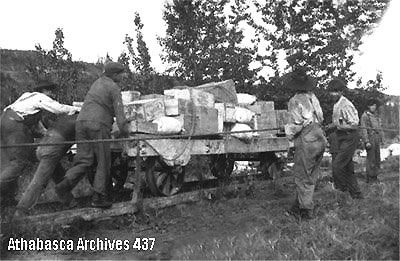
the best boatmen would tackle the rapid. Many boats didn’t survive and several people died. But that didn’t stop people from coming this way as at that time, it was the only way to get into the northern regions of Canada. The passengers’ gear was then transported to the north end of the island by a tramway that was built on the island. If the boats managed to get down, the passengers and gear were picked up at the downstream end of the island and often this could take
days.
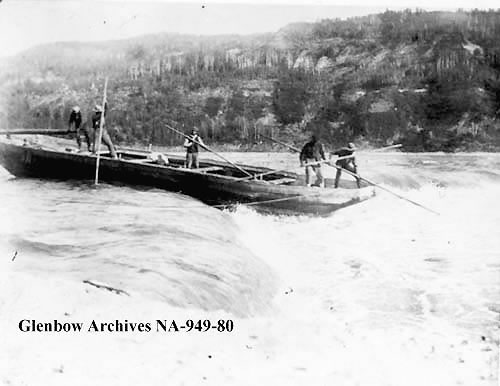
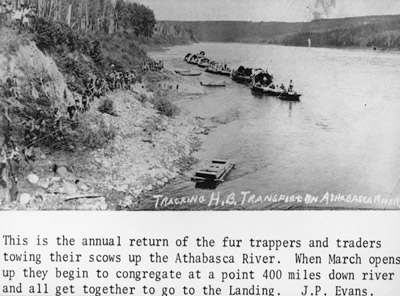
In the early days the Athabasca River and these Scow boats were the only way people and cargo could get into the northern regions of Canada.
The cargo was taken off the boats and loaded onto a rail car to be shunted to the end of the island.
A scow boat poling up the rapids.
They came back up the rapid as well as going down.
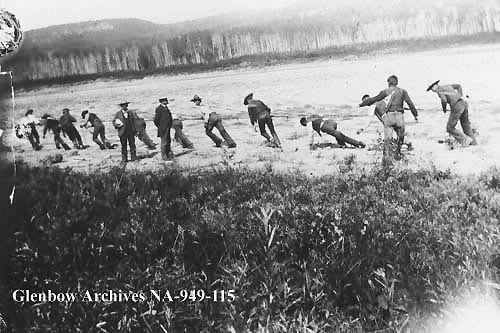
The men often had to pull the boats back up the rapids.
The men pulled the boats back up the rapids.
After reading historical accounts of the rapid it was hard to believe that we were actually here tackling the rapid. We were reliving history, but we too, couldn’t forget about our safety as we were about to paddle into a set of
difficult rapids. My notes mentioned a portage track somewhere on the right hand side, but we were in the dark as to exactly where it was. Several hundred metres before the real rough stuff we started looking for the track as well as concentrating on the smaller drops and accelerating currents that we were now amongst.
At a safe spot after our first rapid we grabbed the opportunity to land. The shore was
well vegetated and the hill, where we thought the track may be, looked impenetrable. We walked along the shore and inland towards the hill trying to find the track, but without luck. We decided to move a little further downstream, although we certainly didn’t want to miss the track or we would be forced to tackle the huge
rapid with a high likelihood of killing ourselves doing so. We side-stepped several waves and rode over a few small drops before riding across a mixture of cross-currents. We eddied out again, pulled ashore and I took the opportunity to search through my notes that I had made during my research for this trip. Reading them gave me
a much better idea as to where the track was located, making me feel much more confident we hadn't passed it. Before jumping back into the canoe we walked along the shoreline over loose shale, rocks, vegetation and at times a steep crumbling slope to find it. At first, things weren’t looking too good as the banks ahead were getting steeper. But just at the point where it was too difficult to go any further, we noticed a small creek and a track a few metres inland leading vertically up the hill.
An old sign saying ‘Portage’ confirmed our thoughts that this indeed was ‘The Track’. I don’t know about Tony but I was certainly relieved to see that signpost, because now we could get on. Before scrambling back to the canoe I made a GPS note of where the ‘Portage’ was. Looking downstream beyond our portage point looked
quite frightening. Not just the fact that there were some serious rapids, but it seemingly just kept going and going and we couldn’t see what was around the corner. Were the rapids downstream grade 5 & 6 which my information indicated. Although the way down looked frightening the rapids didn't look as big as grade 5 & 6 but we really couldn't see all the way down. What we did know however, was that for safety sake we couldn’t paddle any further than the portage point, although the thought of a difficult portage did make us think momentarily about paddling on.
We paddled down to a portage point where the rapids got bigger.
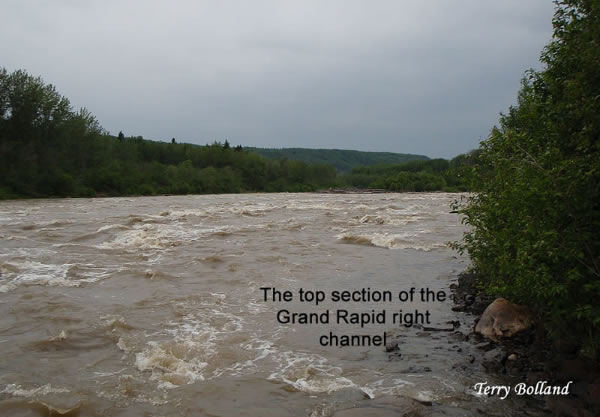
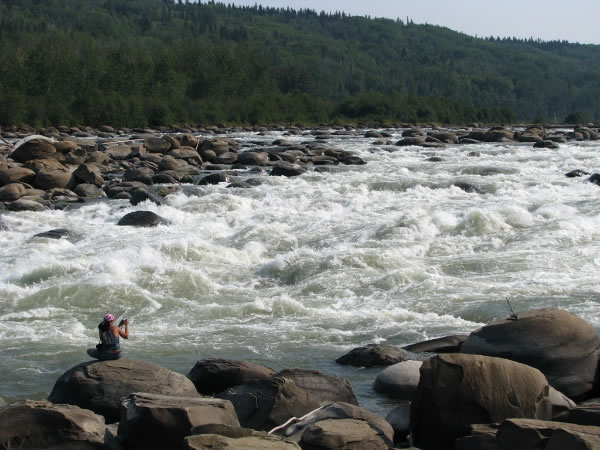
A photo of part of Grand Rapid from the internet.
We returned 200 metres or so to the canoe checking out all the drops, eddies and currents on the way. We had to decide if we were going to line the canoe down the rapid or paddle it. If we did paddle, it was crucial that we paddled
into an eddy about 20 metres upstream of the portage point. If we missed it we only had one other chance to get to shore and after that, we had no hope of getting out at all! To line means to lower the canoe down the rapids by using a rope instead of paddling but it would be very time consuming. It was going to be tricky to paddle
and we knew from research that the other two expeditions that had been this way, had lined their canoes on this section. After a good inspection we were confident that we had enough skill to paddle it so we gave it a go. It was make or break when we paddled away from shore. The rapids that we were going to tackle before the
portage were not big, just grade 2s but that wasn’t to say that we couldn’t make a mistake and end up capsized, broadside to a rock or more importantly, miss our take-out point. We had so much gear in the canoe that if we did capsize we would never be able to swim the canoe to shore before being washed away. The chance of us getting the canoe back if it was swept down this long rapid was remote, more remote than where we were. So we had to paddle perfectly to avoid any mishap, our
lives depended on it. Rocks, some shallow and others well buried created white water. It was my intention to steer the canoe between these sections on the unruffled waters. Shallow rocks could push us off course or even capsize us, so I watched carefully, but with Tony’s body blocking my view it was a little hard to see
everything. Logs stranded on rock shelves and rock boulders protruding from the shore forced us to paddle away from the bank and into the faster currents where we skirted some of the drops and paddled over others. The rapids were not too difficult, but it was what could happen if we capsized that made the attempt that much more dangerous.
When we reached our get-out eddy we performed
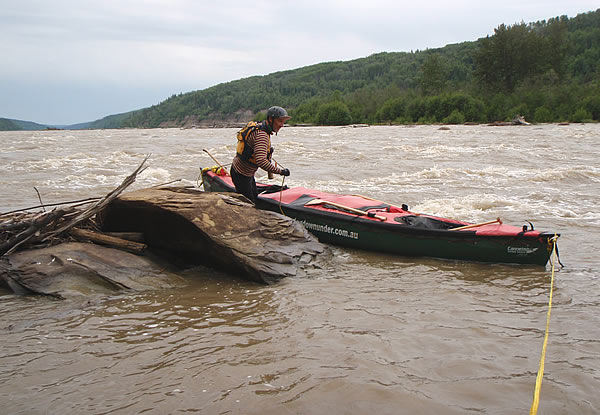
a perfect break-in (turn) into the eddy which I was very proud of. We had taken it easy and at no time were we under any threat of losing control of the canoe. We cut into the eddy ensuring the bow was pointing upstream which gave us more control. The elation and relief of being safe was very satisfying. All we had to do now was to line the canoe around a rock shelf that jutted out from the shoreline into the river for about 6 metres. With throw lines attached to both
bow and stern we held onto the ropes and lowered the canoe down slowly and carefully. When the canoe was safely guided around the rock shelf we used the stern and bow lines to pull it across the eddy and back to shore. We had done it! We had managed to get the canoe pulled up onto the rocks only metres from our portage route. Now
the hard work begins. More next week.
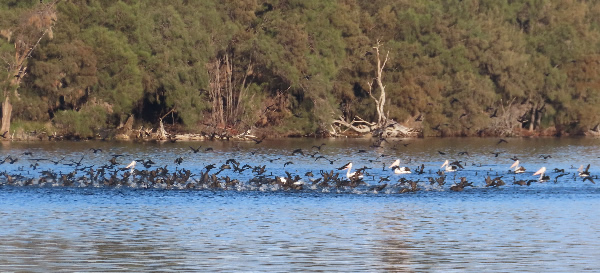
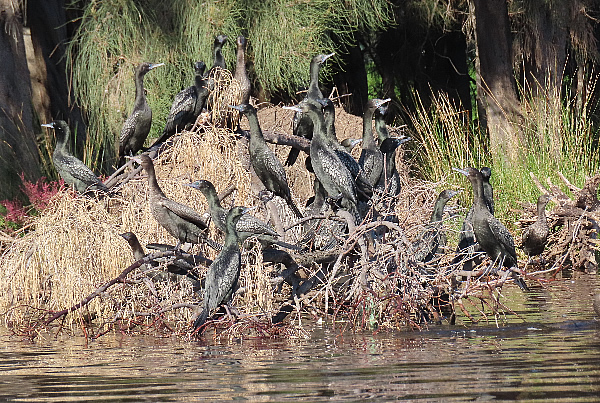
Little Black Cormorants chasing fish.
Little Black Cormorants chasing fish.
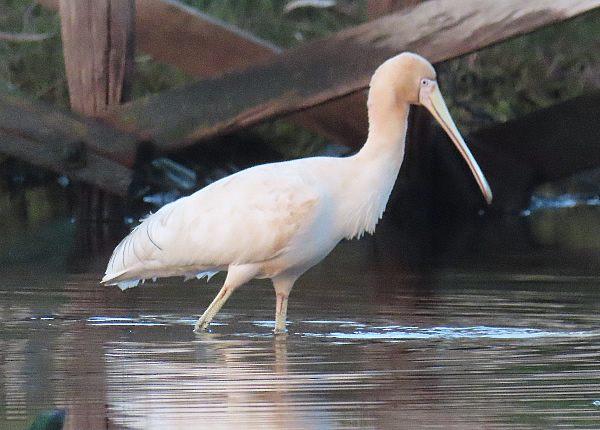
Spoonbill at feeding time.
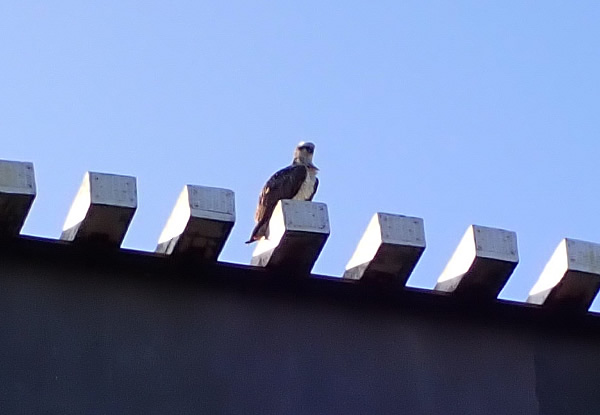
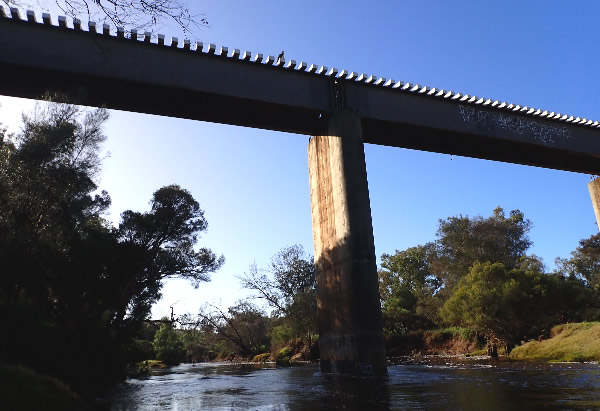
An Osprey on the railway bridge crossing the Avon River. |
|
|
|
|
|
|
|
|
|