|
|
|
|
Well what a month we have had racing in the white water.
It was good to finish
off the season by winning the 2022 Australian Wild Water Championships in the 65+ category, winning the WA Wild Water Championships and becoming the WA Series Winner in the 65+ category. I was also 21st overall in the Australian Wild Water Championships and 13th overall in the WA Wild Water Champs so with those results it seems that we are not attracting enough new Wild Water paddlers to the exciting sport. So why not give it a try.
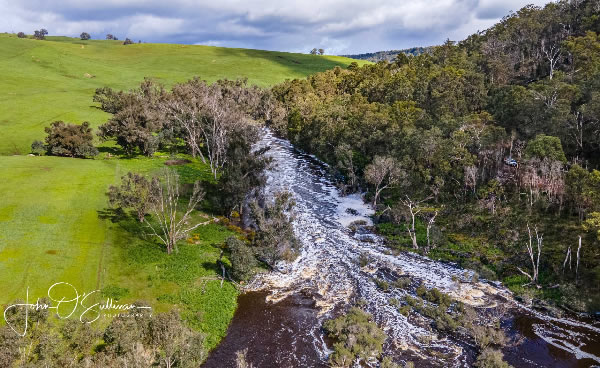
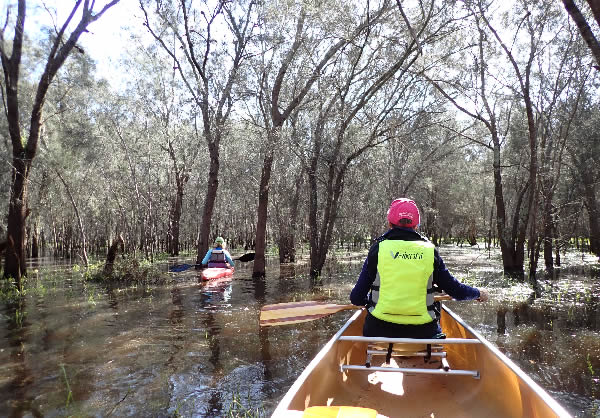
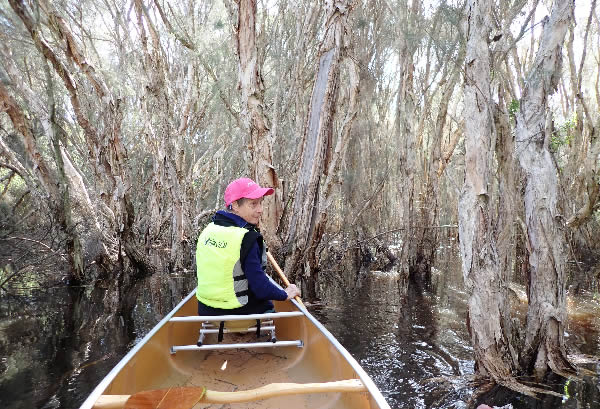
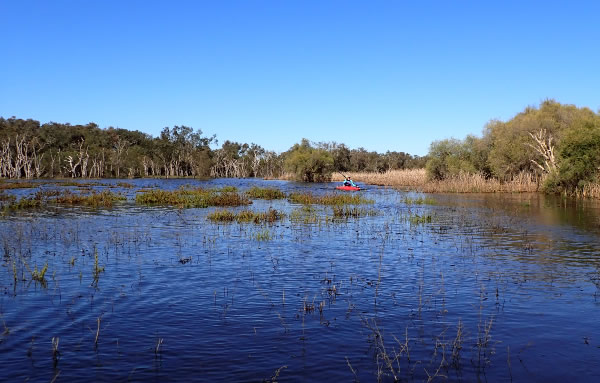
With the water levels being high for a few days just recently I was able to paddle up Bennett Brook and into the lake system which is only there when the water is high. I managed to get photos
of three different ducks on the small lake that I don't see on the Swan River. I feel spring is coming as yesterday was glorious. It will be good to have lighter evenings and warmer days.
- Bennett Brook Birds
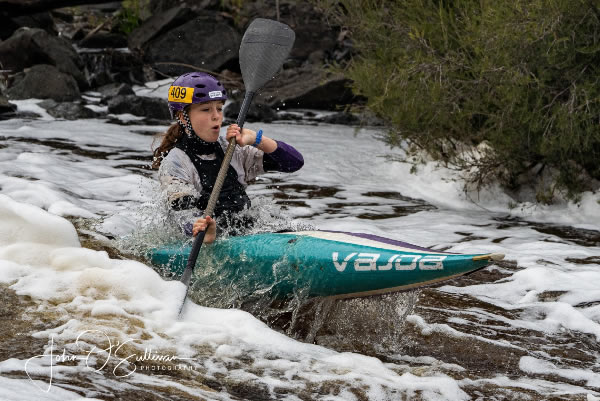
George Pankhurst - Slalom Champs - WA Wild Water Championships
- Bennett Brook in High
Water
- Paddle WA AGM & Awards
Up Coming Collie Water Releases - Coming Events
Nanga Challenge - Bridgetown Marathon -
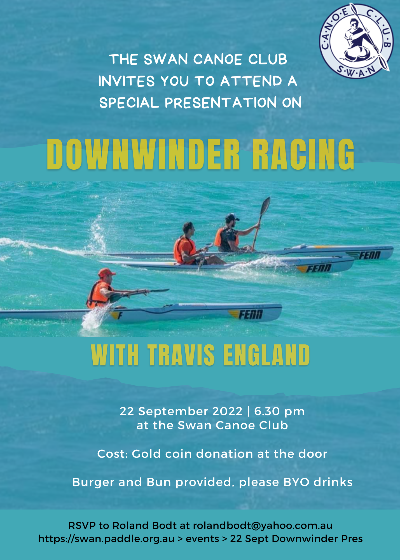
Downwind Racing Lecture - WA Slalom Championships
Canning Bridges Race
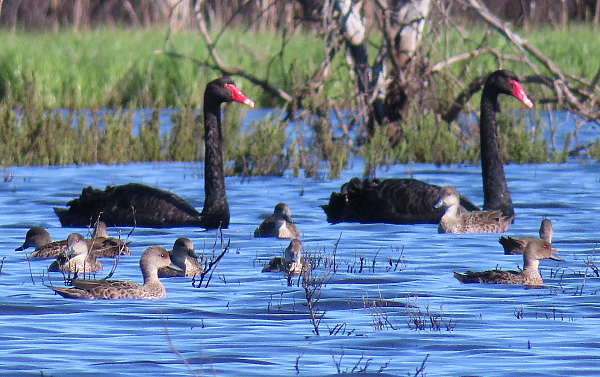
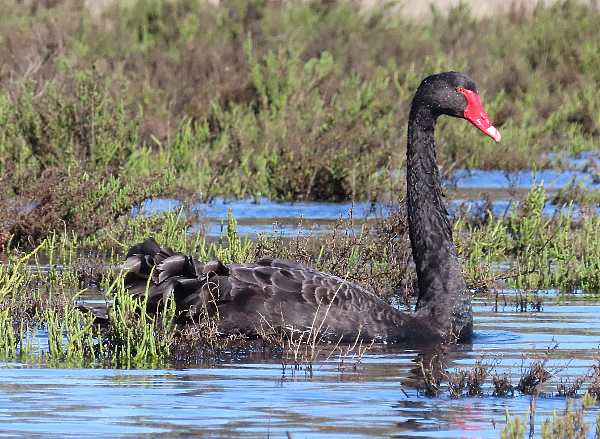
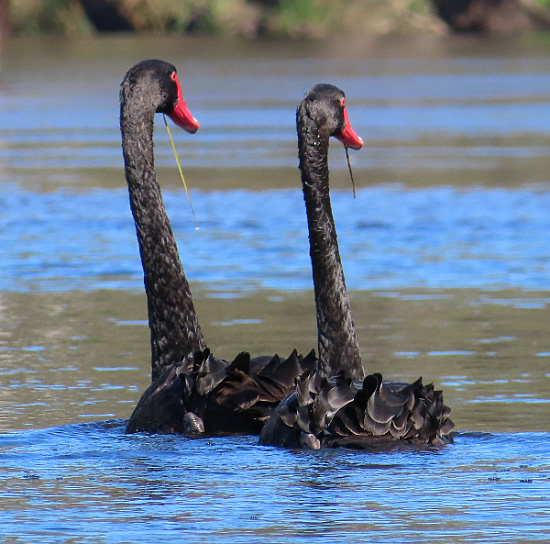
Taken on Bennett Brook Flood Lake
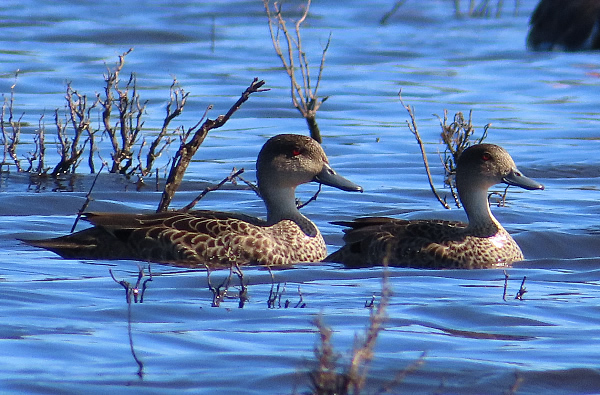
Two Swans with a bunch of Grey Teal ducks.
George Pankhurst Just returned from competing in Europe and he loved it
National Team: Junior
Hometown: Perth
Club: Ascot Kayak Club, WA
Coach: Zlatan - What age did you start paddling? I started paddling at the age of
9.
- How did you get into paddling? I started paddling because it was in my
sisters school newsletter and I decided to have it a shot and I have been doing it ever since then.
- What has been your biggest accomplishment in the sport so far? Making the
2020 junior team.
Change of
Date...
Slalom State Champs
is now SATURDAY 3RD SEPTEMBER. Due to the recent flood levels
and lack of paddler/safety availability the decision has been made to move the state champs.
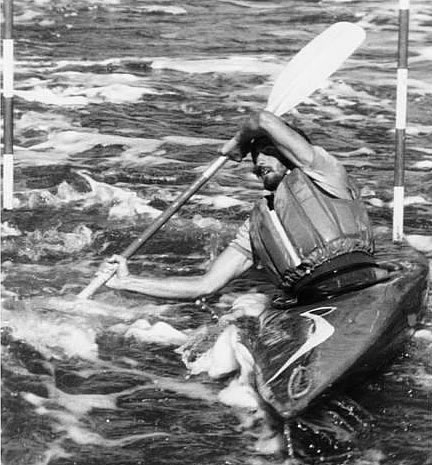
I made this Sabre Slalom Kayak back in the late 1970s.
I also made another Sabre Kayak that I took across to England in 1981 but I didn't join it. To get it on the plane as hand luggage I cut the deck and hull in half so it was in four pieces and joined it together when I arrived in England. I then took part in the Commonwealth
Slalom Championships in Scotland.
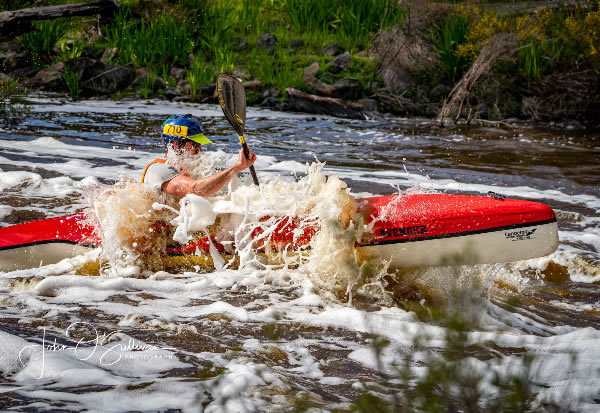
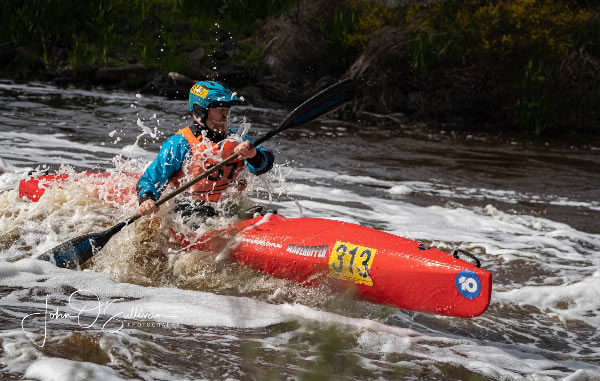
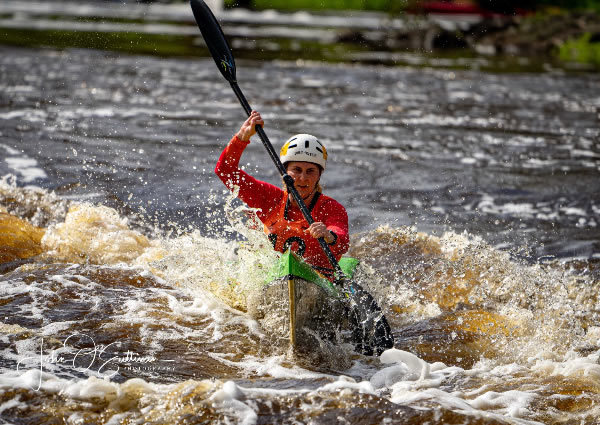
WA Wild Water Championships One week after the Avon Descent, two weeks after the Australian Wild
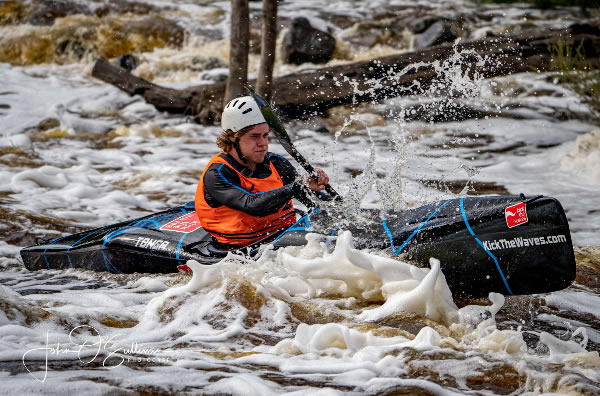
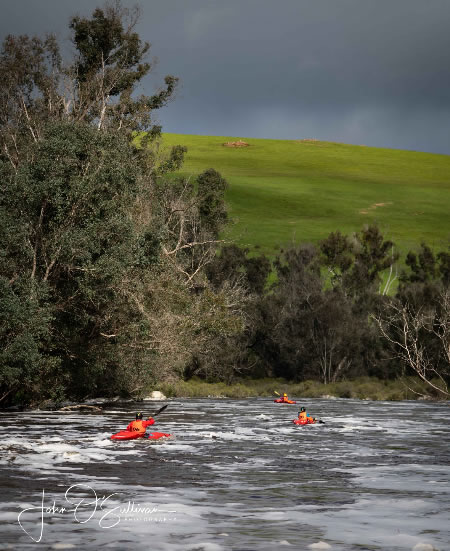
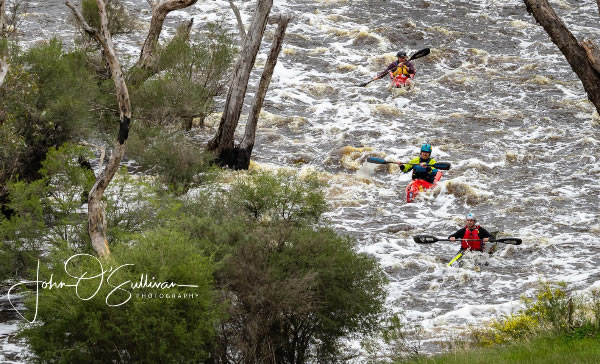
Water Championships, Wild Water paddlers, volunteers and rescue paddlers headed south to Bridgetown for the WA Wild Water Championships. I didn’t make the Wild Water Sprint event on Friday as I arrived late afternoon, putting up my small tent at the Caravan Park and then going to the pub to have dinner with several other paddlers. Although we had had a lot of wet days, Saturday was dry and quite warm and even warmer in my sleeping bag Friday night. I met a few paddlers down at the river in the morning and did a practice run, the rapids being higher than usual, but still paddler-able with some being pretty testing.
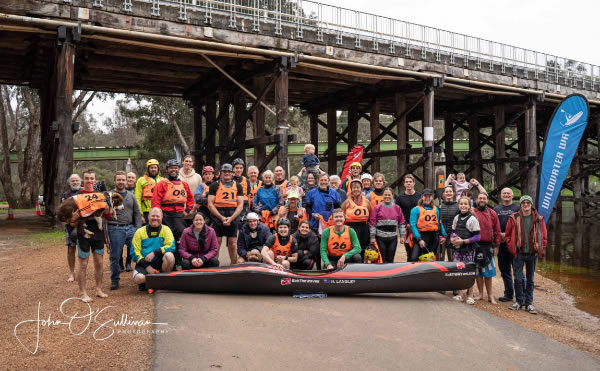
The Team. Photo John O'Sullivan.
Special thanks to John for his great photos.
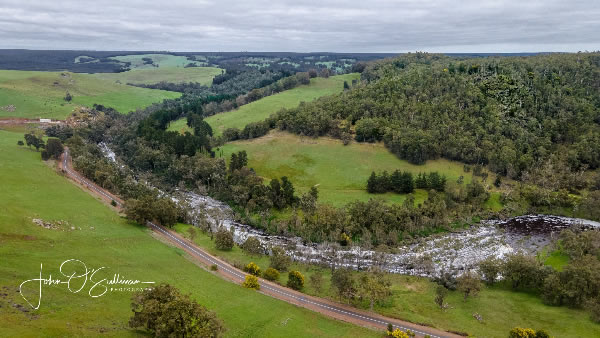
The end of the wild water course. Photo John O'Sullivan.
It was back to the river in the afternoon for the team event. Kris Smith put together teams of three, with the less experienced paddlers mixed with the more experienced paddlers. Although most of the teams had a less experienced paddler I was put under pressure as I became the
slowest in my team having Christopher Greed and Michael Liddle being the other two team members. So it was up to me to keep up and not make a mistake and let my team down. Darryl Long was also put under pressure as he had Luke Dooley and Harry Langley in his team, the top two paddlers. When we took off Christopher and Michael led the way with me trying to keep
up. It was down two rapids before coming to Haystack Rapid the first big one. I had taken it down the main chute in the morning practice but it wasn’t as difficult as when it is at a lower level, but for the team event we decided to take the right channel which was less bouncy and slightly quicker. The right channel can only be taken when the water is high. At the
next big rapid, ‘Big V Rapid’ or ‘Championships Rapid’ some call it was really going off at the bottom of the drop with big standing waves. The current was also going through a stand of tea trees. The key here was to avoid the trees at the bottom as well as the big eddy on the right, which we did, slipping through some trees and heading for ‘Photographers Rapid’ which is always a challenge. Christopher and Michael got down cleanly so I was under pressure to do the same. I followed the V and then
hit the big waves applying a quick support stroke as I launched off one wave and hit another, but I was down and avoided a dangerous log after the end of the rapid. Some of the other team members weren’t so lucky and now in front of us we had about 12-15 paddlers that we had to pass. That wasn’t such a problem on the wide section of river but when the river
narrowed we still had about five paddlers to pass which wasn’t easy. When the river slightly widened I only had three paddlers in front of me, one being Billy who was next to John Dinucci and difficult to get around but I manage to pass him when I brought it to his attention that his team members were a little behind and he slowed.
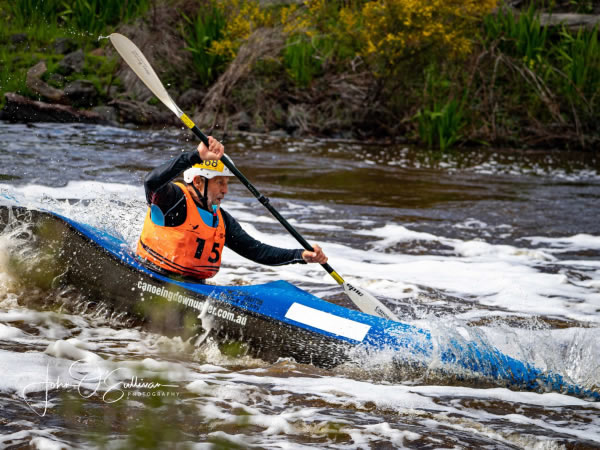
Me at Photographers Rapid. Photo John O'Sullivan.
Christopher Greed. Photo John O'Sullivan.
With a clear river ahead Christopher and Michael tried to form a V for me to sit in and take advantage of their wash but with all the swirling water I found it easier to sit behind them and then get them to sprint ahead just before the rapid. There were about 5 other rapids in
front of us but my confidence was high when I cleared ‘Photographers Rapid’ so those last rapids gave me no problem. At second last rapid the boys told me to go ahead and lead and then on the last rapid, which was on a straight and only a few hundred metres from the finish I ramped it up, Michael passed me but Christopher was having a little trouble to catch me which he just did as we paddled across the line. The time was taken from the first paddler to lead off and the last paddler to go across
the finish line. Our time was pretty good so we had a chance to be in the top 3 but Darryl’s super team was yet to finish and when they did they beat us on time so we came second. It’s really a great feeling when you have three paddlers that are equal in fitness and skill and you can really work as a team. Although I was a little slow for my team it still went
well and I think Christopher and Michael enjoyed the race. After a shower and a quiet sit down listening to the birds in the trees it was time to walk to the pub with Steve Stasiuk. Bridgetown with its hills and green fields and forests were looking at its best and Steve was telling me how he loved it down there. About 40 people, maybe more later grouped on a
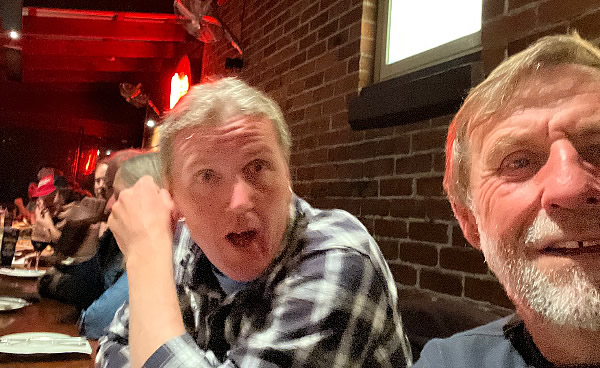
long table at the pub chatting, eating and drinking and bringing another good day, after we had walked home to a close.
The long table in the pub with Steve Stasiuk!!
The Wavehopper team and the beauty of the Bridgetown landscape. Photo John O'Sullivan.
Practise time for Darryl, Kris and Warren. Photo John O'Sullivan.
It was another warm night in the tent. The birds were singing and the morning mist hung around for a while after rising. It was soon time to go down to the river to do a car shuffle. At the end I left my dry clothes in Steve’s car and brought back Steve S, Dave Worthy, John
Dinucci and new to white water paddling Billy who was really excited. It was the main singles race this morning and the most important part of the weekend. The race was to determine who were going to be the WA State Wild Water Champions in all age categories. There were 3 in my class the 65+. John Dinucci who is 71 and the same age as me and Warren Southwell who has
just turned 65 years old. On the flat Warren is faster than me but I was hoping he wouldn’t be on the white water. Kris seeded us and I was 1 minute behind Jane Pankhurst and 1 minute in front of Josh Richards. Josh and Jane are both faster than me on flatwater but I was keeping my fingers crossed that they wouldn’t be on white water. The water had risen in the night so we didn’t know how much the river had changed if at all. The slower paddlers started to go off first, mainly the wavehoppers. I was hoping to race against Steve S but he chose his Wavehopper to paddle rather than his Wild Water kayak. With Jane away it was my turn to paddle to the line. Bruce McWhirter was the official starter again and eventually he said go and I was off. The first 3 main rapids including ‘Haystack Rapid’ went well. At the ‘ big V Chute/Championship Rapid’ the waves at the bottom of the rapid looked big so I decided to take a smoother line on the right, but nearing the bottom the eddy caught me and spun me around. What a disaster I thought, I’m usually good at not eddying out
but this year I have done it twice racing in the bigger water. Am I losing my touch? (I found out later several paddlers did the same thing.) Once I cleared the eddy I had to put my spurs on and
try to get some extra speed. Lying ahead though was ‘Photographers Rapid’ which is generally the most difficult. With the water level higher there was a longer V Chute going down the drop which led into a line of big standing waves. I decided rather than try to dodge the waves I would slip down the V Chute and hit the waves directly and it worked well as I flew and bounced through them with little trouble.
Peter Gigengack. Photo John O'Sullivan.
After clearing ‘Photographers Rapid’ my confidence was high, but somehow I had to make up 20 seconds or so that I lost earlier so I put my race face on and charged down the river and skimmed down the rapids without losing time and as perfectly as I could have done them. I was
happy but I needed to go faster. The swirls and eddies along the way though were quite annoying pushing the kayak from side to side so I had to be focussed and make decisions ahead of time to pass through them without losing much time. At times the water felt like porridge and although I was travelling at a good speed it didn’t feel like I was. When the swirls weren’t there it was great paddling. About three or four rapids from the end I saw Lawrence Greed ahead. I was gaining on him and I was hoping I was going to be able to pass him without losing time. At the second last rapid I passed him on a wide corner and kept the pressure on. In racing a fraction of a second can kill all hopes of winning or beating someone you want to beat, so there was no way I was going to slow up. I crossed the line at a good speed a few seconds ahead of Nina who started 2 minutes behind me. She is the Australian Women’s Champion so I didn’t feel too bad. Josh Richards came across the line soon after, but did he do enough to beat me? In all the white water races so far I have beaten him, but I have to wait 2 hours until presentation to find out the result. Josh though said with a smile he got some inside information and he beat
me! It was back to the caravan park to have a shower, take my tent down and a drive to the Cidery where a lot of people were already there, drinking and eating food put on by the Wild Water Committee. It was another social gathering and time to find out our results. Josh was a grinning so I think he might have known the result already. Just as we were ready for the
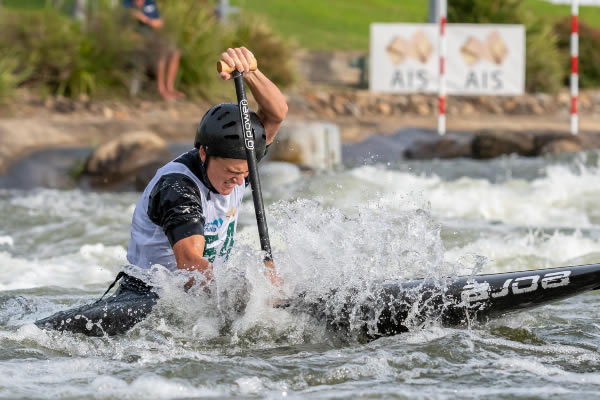
presentation the rain came down. Big umbrella’s were erected to shade us from the rain then Kris Smith the organiser started to read out the times. Luke had won the open, Nina Mueller won the ladies. When it came to Kris reading the 65+ results I had my fingers crossed and as luck should have it I beat Warren by 38 seconds and John by 1 minute 39 seconds so I was happy. I was also the 65+ series winner, winning all races. Clare and George Pankhurst did an amazing job paddling the Wild Water C2 down the big rapids. Again it was thanks to Kris, Steph, all the timers and rescue personnel for making the event another success.
Kris Smith.
Kris will now be able to have a rest. For the last 6 weeks he has organised the Australian Wild Water Championships, the WA Wild Water Championships, 3 Wild Water Races and an Avon Descent Seeding Race. Photo John O'Sullivan.
Alexandra Vogel 2nd women. Photo John O'Sullivan.
Bennett Brook in High Water
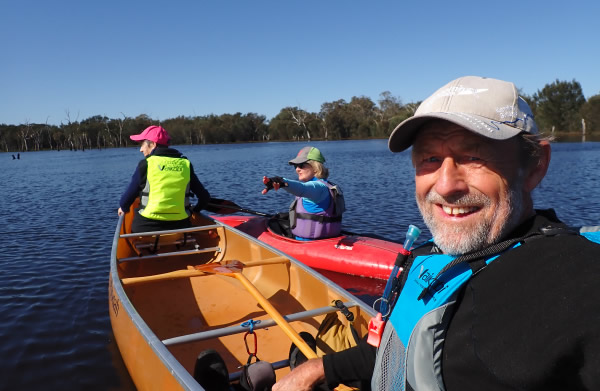
The Bennett Brook Lake is only formed when the Avon River is 2 metres or higher. With Jenny and Pam.
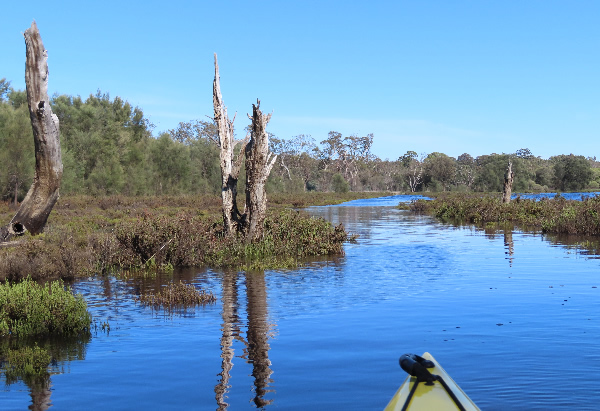
Pam checking in the north part of the lake.
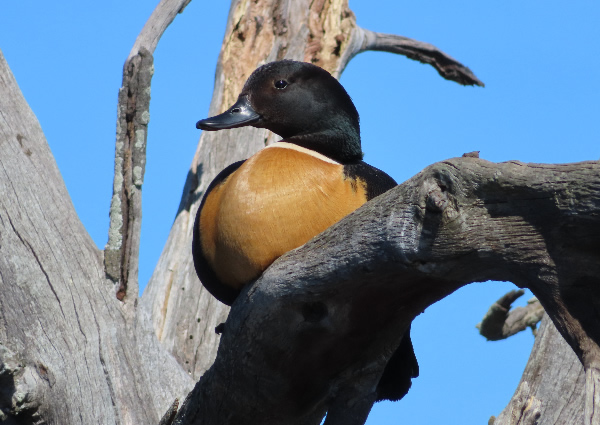
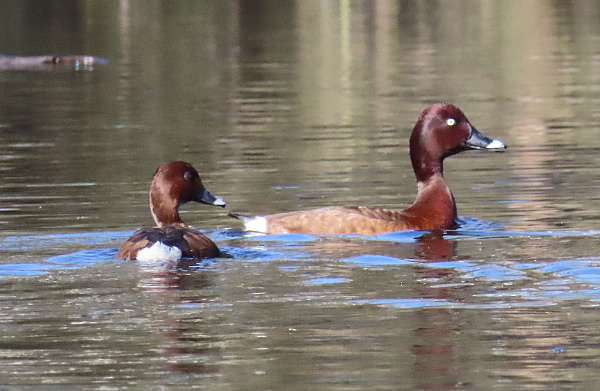
Hardhead Duck. The name ‘Hardhead’ has nothing to do with the density of the duck’s cranium, but stems from early taxidermists who found that the head was the most difficult part
of the duck to process. The Hardhead possesses one of the strangest names among Australian birds. It was formerly known as the ‘White-eyed Duck’, but this feature is present only on
drakes, with females having dark eyes. Nevertheless, this discrepancy has never been an impediment to naming birds in the past — female Blackbirds are never black, for instance. Hardheads dive for their food, leaping forward and diving smoothly under the water. They eat aquatic plants and animals, particularly mussels and freshwater
shellfish.
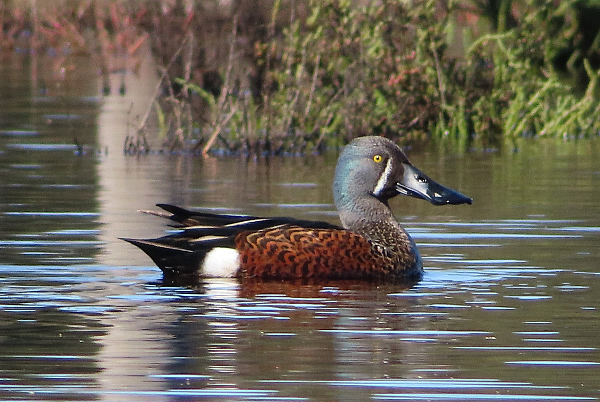
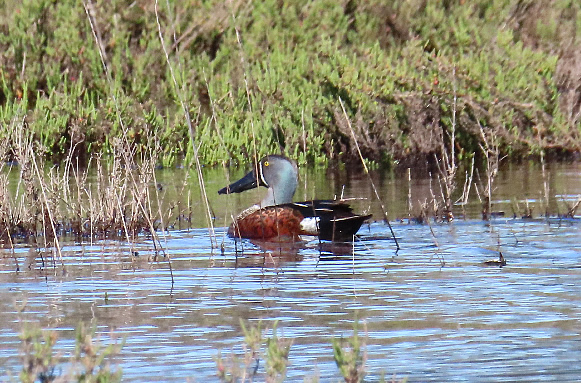
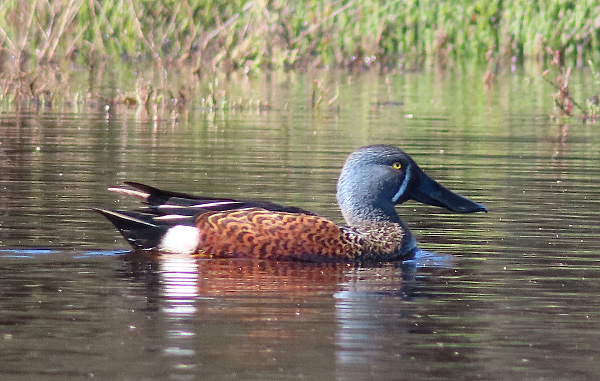
Australasian Shoveler duck. The Australasian Shoveler is found in all kinds of wetlands, preferring large undisturbed heavily vegetated freshwater swamps. It is also found on open waters and
occasionally along the coast.
The water dropped overnight reducing the wetland and making it more difficult to enter it. I was lucky enough to get more photos of the Australasian Shoveler duck and many Grey Teal
ducks.
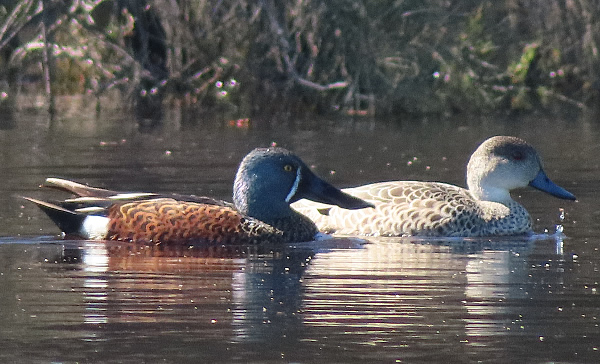
Australasian Shoveler duck with a Grey Teal duck. The Australasian Shoveler is found in all kinds of wetlands, preferring large undisturbed heavily vegetated freshwater swamps. It is also found on open waters and
occasionally along the coast.
The Australasian Shoveler is a low-floating, dark headed duck, with a low sloping forehead blending to a heavy, square-cut, shovel-tipped bill. The male in
breeding plumage has a deep grey-blue head with a vertical white crescent between the bright-yellow eye and the bill The back and rump are black, and the shoulder and wing coverts are blue-grey with several white bars. The underparts are chestnut, with white patches to the rear of the flanks. Outside the breeding season, the males are much duller. Females have mottled brown upperparts, chestnut underparts, and a dark brown eye.
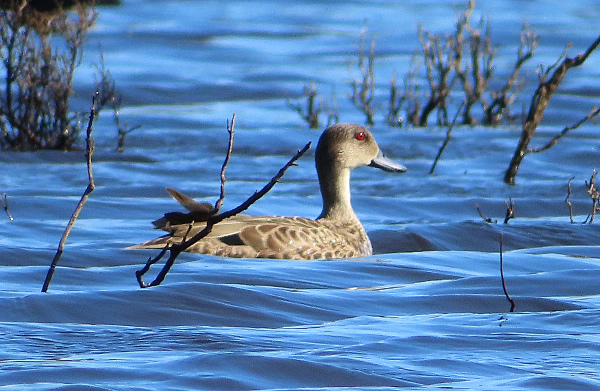
Grey Teal Ducks When it comes to spectacular movements, the Grey Teal is unsurpassed by any other Australian waterfowl. Responding to rainfall, or lack of it, they cover vast
distances in search of suitable water, and occur on every type of wetland. When the water dries up, they disperse to look for more, turning up almost anywhere, including at waterholes in the desert. These extensive travels have also taken some Grey Teal beyond Australia's shores to Indonesia, New Guinea and New Zealand, and even to subantarctic Macquarie Island.
Grey Teals feed in small to large flocks. Food consists of a variety of types and includes dry land plants, aquatic plants, seeds, crustaceans, and insects and
their larvae. Feeding methods are also varied. Birds may dabble (filter surface water or mud through the bill), upend and feed from the bottom, or graze from the surface of the water on plant material.
Swan amongst the samphire plants.
Paddle WA AGM & Annual Awards
We are pleased to announce 2022 Paddle WA AGM will be held from 10am on Saturday 15th October at Ascot Kayak Club.
Further details and an agenda will be circulated in the coming months, and an RSVP form will soon be made available. |
|
|
Board Member Positions
At the 2022 Paddle WA AGM, there will be two
vacancies to the Paddle WA board as elected directors (i.e. financial member).
Click the button below to find out more about the Paddle WA Board, the role and function, member responsibilities, and to submit a nomination.
Please submit nominations by COB Friday 23rd of September.
For queries and nominations, please contact Rosalie at eo@paddlewa.asn.au |
|
|
Change of Date...
Slalom State Champs
is now SATURDAY 3RD SEPTEMBER. Due to the recent flood levels and lack of paddler/safety availability the decision has been made to move the state champs.
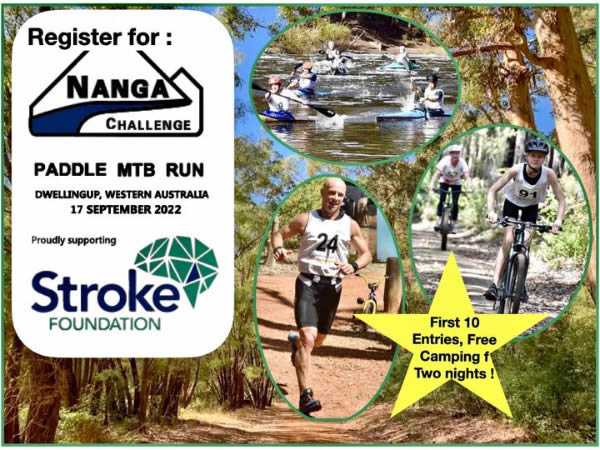
Nanga Challenge
17th September | Dwellingup, WA
AKC's popular adventure race, The Nanga Challenge, is back for 2022 and will be supporting The Stroke Foundation!
Paddle | MTB | Run
Two course options are available, the nice, or the nasty.
Competitors can compete solo, as a duo, in a team, or as a pair.
Find out more in the link below
Registrations close 11.59pm on Wednesday 14th September.
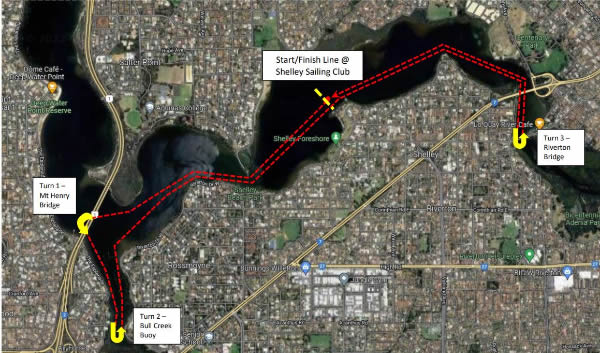
Canning Bridges Race Sunday 11th September Shelley Sailing Club, Watersby Crescent Shelley Registrations are now open for the inaugural Canning Bridges Race 2022. New course and race format and incorporating the first CRCC Championship race - open to all Club members and guests. Choice of long course (12.5km), short (5.1km) or guppy (3km). All paddlecraft welcome. Sunday 11th September. Check-in from 7.15am. Race start 8.15am. Shelley Sailing Club, Watersby Crescent, Shelley. Race details and registration here -
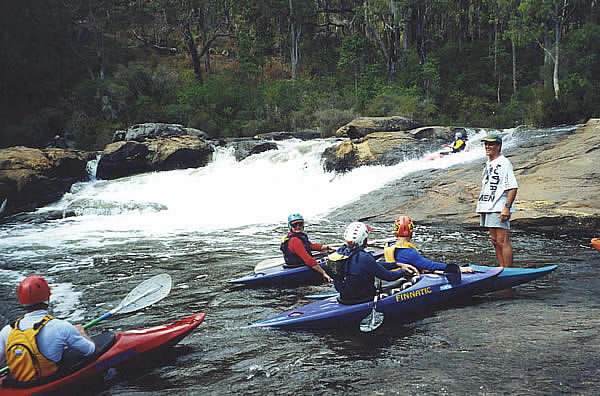
Upcoming Collie Releases! This weekend will see the fourth scheduled water release from Wellington Dam, providing more whitewater opportunities for paddlers! Thank you to Harvey Water for coordinating these releases. For more information, click the link below  |
|
|
|
|
|
|
|
|
|