|
|
|
|
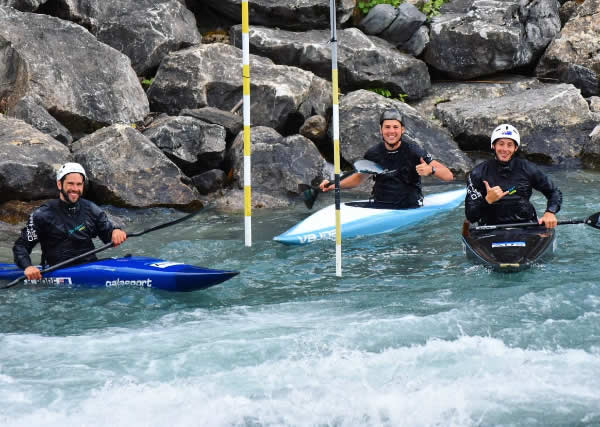
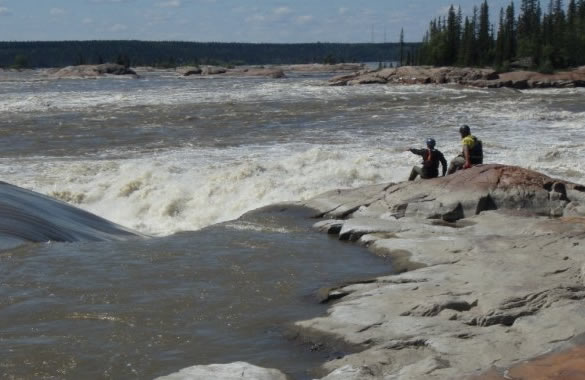
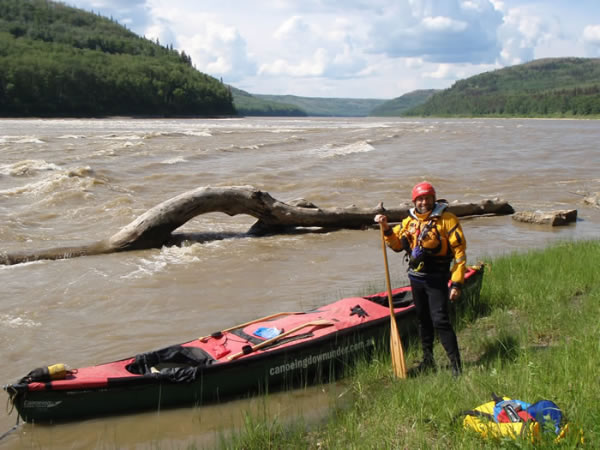
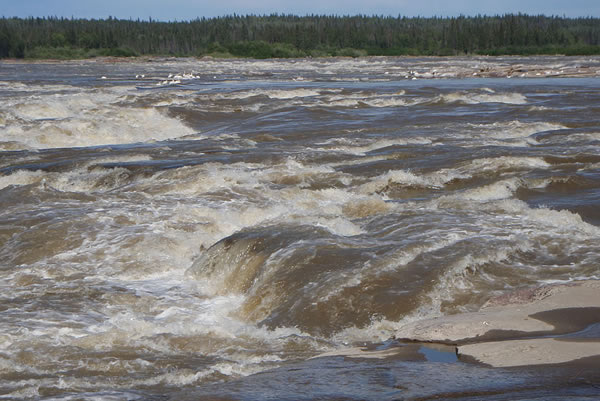
Paddlers checking a enormous rapid.
I'm glad we didn't paddle these rapids in our canoe.
In the mountains.
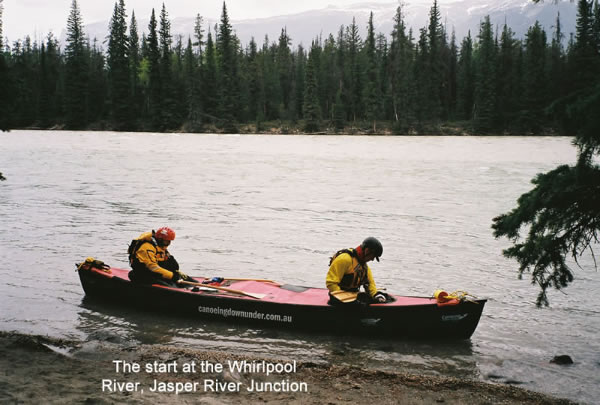
Leaving Whirlpool River junction upstream of the town of Jasper for a 4000 kilometre paddle to the Arctic Ocean.
We paddle several grade 3 and 4 rapids on the Athabasca River.
At Crooked Rapid water broke over the bow giving Tony a drenching but I soon skirted over to the right and into calmer waters. It was quite pleasing to have negotiated another big rapid. We knew that Rock Rapid was 500 or so metres away, and although we didn’t have any idea how to negotiate it, our confidence was still high.
All the big waves were on the left hand side of the river, so we kept to the right side which was still the safer. As we approached ‘Rock Rapid’ it didn’t look so bad downstream, but as we got closer I could see a bundle of big waves peaking and exploding like an erupting volcano a few hundred metres ahead. Knowing that we were heading for trouble we had no option to divert and as it now looked completely calm on the left hand
side we headed over, foregoing the chance of getting out and checking our route.
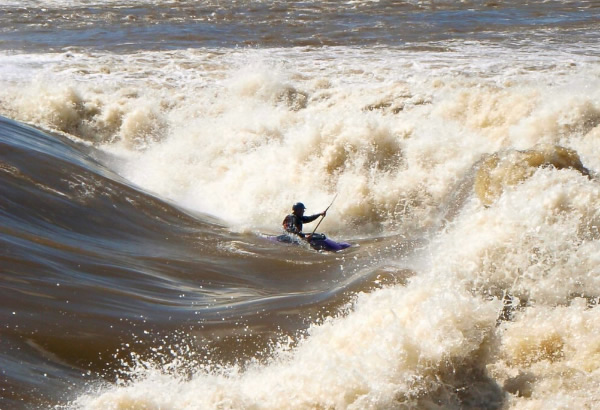
It seemed safe enough to take the rapid on the left so as we moved across the river on an particularly swift current, our heavy canoe was being whisked away as if it was a cork. By the time we reached the centre, I suddenly noticed a flat line of water that spanned the whole width of the river and beyond it the river dropped and disappeared over the wide ledge. At the bottom of the fall there was a huge high wave waiting. We
couldn’t escape to the safety of the left side as it was too far, the water too fast and the bank was actually lined by a vertical cliff and worst of all, we had come too far to go back to the right shore! The only way forward was straight towards the ledge. I looked beyond the ledge and thought shit – bloody hell…..this is a big one, we could be in trouble here.
Over the roar of the rapid I shouted to Tony to straighten up and just go for it. There was nothing else we could do. Our chances of getting through it seemed slim as it was one hell of a drop with a massive wave that followed. Although we could have been looking at death in the eye or at least be subject to a horrific capsize, I didn’t feel any panic or any real fear.
Tony put in two good strong bow draws strokes which brought the bow around, so within seconds we managed to get the canoe straight. We were soon at the top of the ledge with the massive wave dancing wildly before our eyes and I could only think of paddling strongly. We slid at great speed, down what seemed to be a giant water slide. The wave at the bottom was colossal. I shouted to Tony to paddle hard as we had to hit it
with speed – oh shit……
As we headed down the ramp and towards the monster wave I expected to be sucked in and spat out. I still felt no fear and I don’t know why. Maybe things were happening too fast to sense fear or I just knew there was no turning around, and we had no choice but to deal with the situation. At the bottom of the slide we looked up to see the wall of water towering above us and it really didn’t seem possible to get through it without
capsizing. The size of the wave was bigger than anything that I had ever been through before.
What goes down must come up and by hell we did come up. The heavy canoe charged through the wave and Tony got a walloping. For a fraction of a second he was gone, then the wall of water crashed on me holding me captive for a few seconds under the bubbling aerated mass of water. It took us a while to adjust our vision and see what was ahead as a waterfall of water was cascading down our faces. I was expecting another
big wave but the next one was much smaller and we speared through it without problem. It was an amazing experience! We thought we were going to be gobbled up by the huge roller coaster and somehow we came out of it intact and still upright.
With a ton of water now held on the top of our canoe causing a little instability and Tony praying to any gods that would listen, the waves started to ease. It was hard to believe that we had gone through such a massive wave! But the rejoicing had to wait as the canoe was filling with water as it puddled on the full-length of the spray deck, drained into our laps and seeped through our leaky skirts. Although at the time of
breaking through the waves the canoe didn’t feel remotely unstable as it started to fill with water it soon became much heavier, tippier and a lot harder to control.
As the river started to turn to the left we could see water falling off a small cliff. We desperately needed to bail out so landing on a rocky shore next to the waterfall and low cliffs was a bonus. As we pulled into the eddy we were pumped with excitement but most of all, we were relieved to have passed through the rapid without swimming.
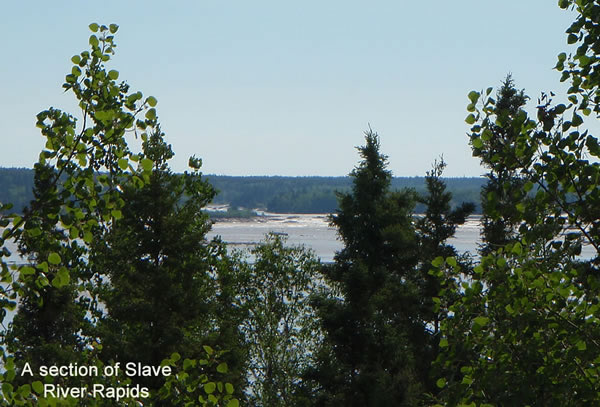
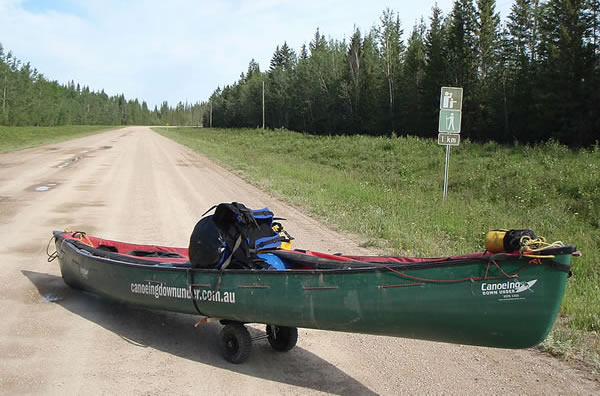
When we arrived at a long section of the Slave River Rapids which were grade 4, 5 and 6 if not higher we decided to portage.
Looking towards some of the rapids as we walk along the track.
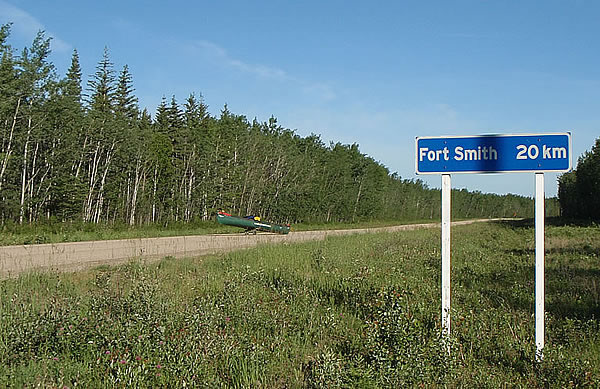
The portage around the rapids was over 23 kilometres.
We put in below the last rapid
You can read the entire story here:
https://terrybolland.wordpress.com/three-rivers-to-tuktoyaktuk-stage-1/
Stage 2 here:
https://terrybolland.wordpress.com/three-rivers-to-tuktoyaktuk-stage-2/
Bolland's Elbow to Amiens
Wild Water Race
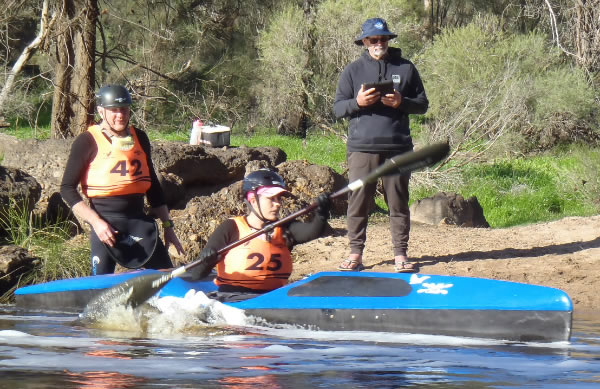
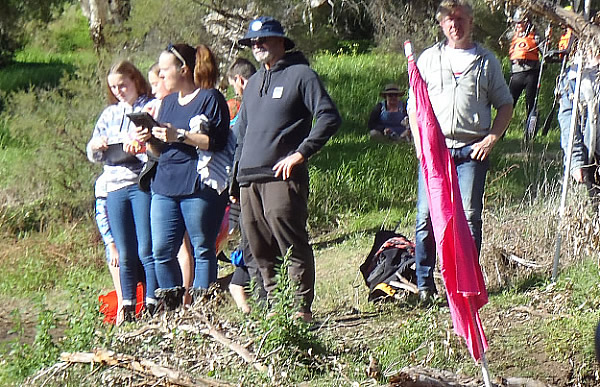
Cody Pope and Phil Langley waiting for their turn.
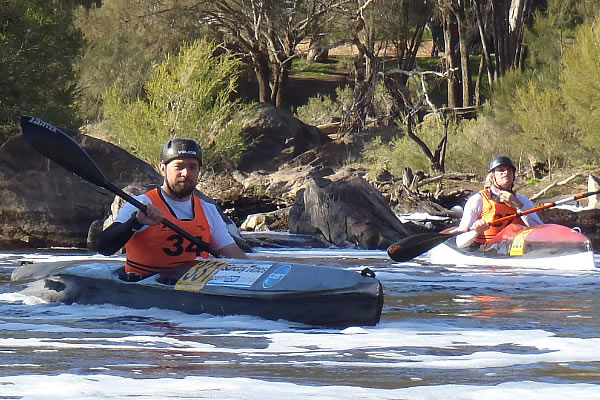
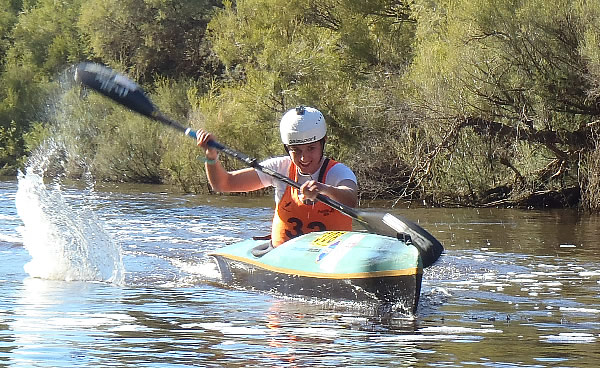
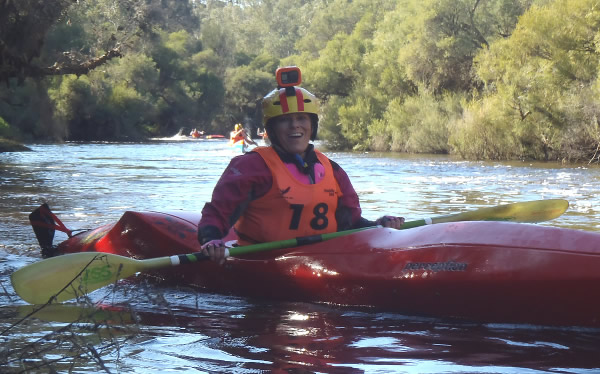
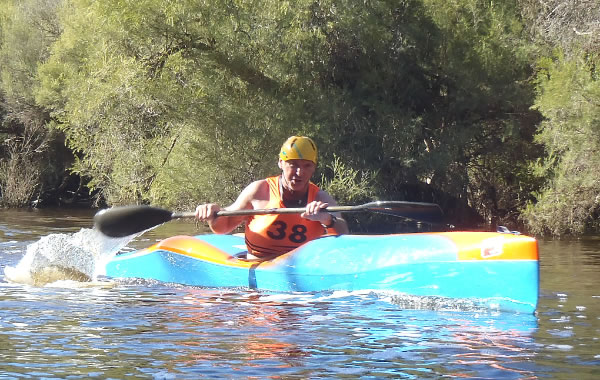
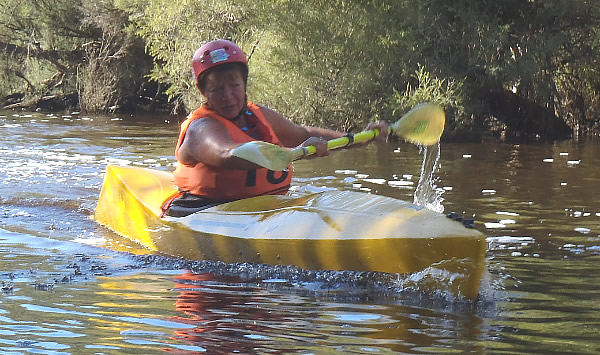
It was a perfect day. 22 degrees, full sunshine and more than enough water to enjoy the Wild Water Race from Bolland’s Elbow at the bottom of Bells to Amien’s Crescent.
To save a car shuffle I decided (like always) to paddle from Amiens upstream to Bolland’s Elbow. It’s a 50 to 70 minute paddle depending on the water level. I had a practise run the day before, but the water had gone down so some of the short cuts that were only just covered with water would no
longer be there. So it was good to check out those short cuts on the way up. A few other paddlers, Wayne Martin, Simon O’Sullivan and Luke Dooley had the same idea. It was a nice paddle, other than the rising sun dazzling me on some sections making me guess where I was going through some of the T trees.
A crowd was gathered at Bolland’s Elbow when I arrived and Kris Smith and his volunteers were there ready to give a briefing when everyone had arrived. There were a lot of picnickers arriving at Bells so I imagine it would be chaos later in the day.
Hunter Florisson was off first as he had to go to work and then all the juniors and wavehoppers were next. Hunter (16) was the 7th fastest. He is entering his first Avon Descent this year. He is currently the top slalom paddler in WA and being a good marathon paddler as well he should
do well.
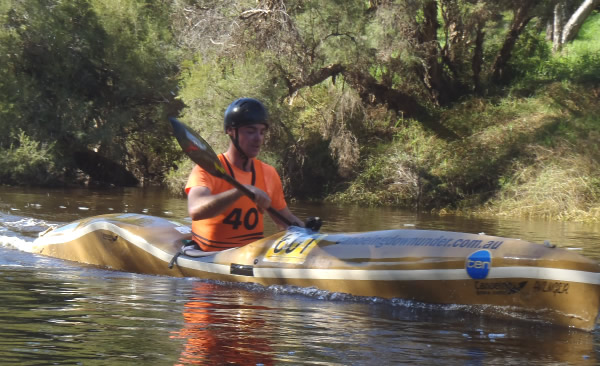
Nina Mueller paddling into first place.
It was eventually my time to go. I had John Dinucci a minute in front of me so I had someone to chase. John 71, is a couple of months older than me. The first few kilometres are pretty open with little to slow me down apart from a few shallow spots. Within a kilometre I could see that I was
catching John so that inspired me to continue to paddle hard.
By the time we reached the S Bend I was about 100 metres behind, but he ended up being pushed into some tree branches so I got closer. With another open section of river it was just paddle as fast as I could, which I did catching and passing John just before a tight section of trees near the railway bridge. The short cut that was there yesterday was still there, but a lot lower, however after paddling it on the way to the start I knew I could use it. (Apparently Simon O”Sullivan didn’t. I beat
him). Apart from a tree with a small gap and the water current being slower it still appeared to be the fastest route. After passing the railway bridge and the Great Northern Highway Bridge I was into the most difficult section of river but nowadays it’s really not that difficult, but parts can be tricky.
I was getting closer to Danny Murphy and a couple of wavehoppers. I passed Kate Crossing just before a tricky section I call the Roundabout. It’s not quite as tricky in higher water so I fled through it at good speed. I then saw Jeannette stopped and then Isabell closing up to a tree section
where Patrick Irwin was stuck on a small branch. I passed Isabelle and I was just about to go to the right of Patrick when he started reversing and blocking the route. I quickly edged to the left of him ducked under a tree, skimmed a bush with my right side and off I went.
I had expected that Grant Pepper would have caught me up by now as he only started 2 minutes behind me and unlike last year he is a much faster this year, but at that point he was nowhere to be seen. Danny wasn’t far ahead and as we headed through the ‘Gauntlet’ I could see Demi on the bank,
apparently because she rescued a junior paddler she was looking after.
Danny was now in my sights with Maya Elston just in front of him with a junior paddler in front of her. Heading through the ‘Squeeze’ on the right side of ‘Amphitheatre Island’, I caught up with a junior paddler and continued chasing Danny and Maya. I was hoping to pass them before the end of the
island where there was a tricky turn, but I only managed to catch them up. I was hoping they were going to paddle the turn without trouble so I didn’t have to slow down but something better happened. They both headed straight on into the trees with no way through leaving me to negotiate the turn without worry. I raced to the finish line and Grant still hadn’t caught me up. I was happy.
I turned and parked my kayak looking upstream and watched the faster paddlers sprint over the line and by the time Grant arrived he only beat me by 49 seconds which I was pleased about. I knew Nina would beat me, but I was hoping it wouldn’t be by much and it ended up being 52 seconds, which
wasn’t too bad as she is fast and an excellent white water paddler. I was much happier when I found out that Chris Little had only beaten me by .4 of a second.
It was another great race thanks to Kris Smith and his volunteers.
Isabel Combe after crossing the finish line.
Dave Worthy crosses the line in 2nd place.
Jeannette Busch crossing the line.
The timers. Beck, Scarlett and Peter with Bruce looking on.
Luke Dooley relaxes as he crossed the line in first place.
Results here:
First Time Avon Descent Paddlers
or paddlers new to white water - read on.
From My Book
Canoeing Down Under
LEANING AND EDGING
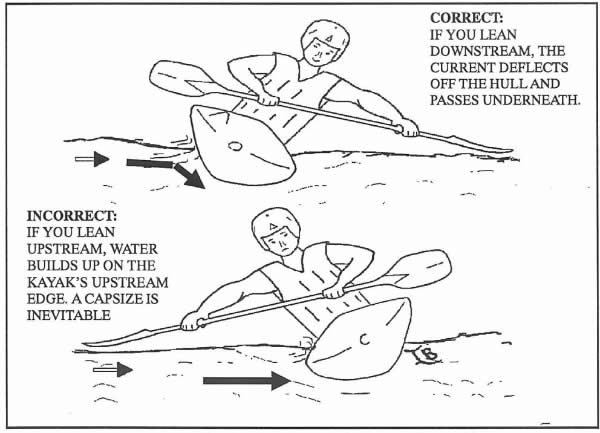
- Leaning is a skill that is constantly used in white water manoeuvres such as the Ferry Glide, the Break-in and the Break-out. The ability to lean at the appropriate time minimises the risk of a capsize.
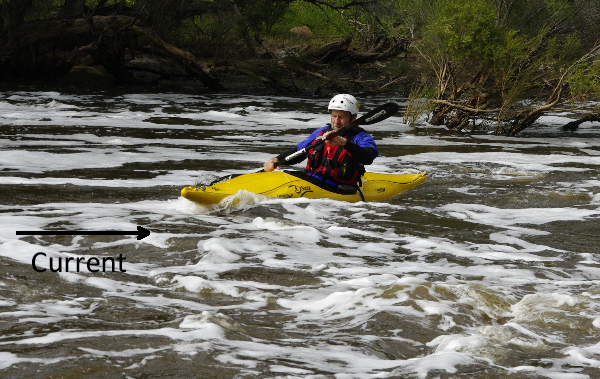
- The basic rule is that whenever you are crossing a current, you must lean the boat downstream. Leaning the boat downstream causes the upstream edge of the boat
to rise, allowing water to deflect off the hull and pass beneath it. If the water is allowed to push the boat's upstream edge down, this can cause the boat to flip and capsize.
- If your boat comes broad-side to an obstacle, it is essential to lean downstream towards it, ensuring the upstream edge of the boat is raised. This will help prevent a capsize, and the possibility of the boat
wrapping around the obstacle (see Rescue Chapter).
Edging is another important manoeuvre, which, combined with leaning, ensures maximum boat
control. To edge your kayak, maintain your body in an upright position and use your knees and thighs to lift the boat's side out of the water.
Edging is more commonly used in advanced manoeuvres, and it is often hard to detect the subtle differences between leaning and edging in easier manoeuvres. Being proficient at leaning and edging is necessary, and it is extremely important that the paddler develops a natural feel for the river current and is able to apply the relevant skills at the right time. Incorrect lean is the most common cause of a capsize when learning white water
techniques.
Ferry Gliding
across the current
FORWARD FERRY GLIDE
A Ferry Glide is the most efficient way of crossing a current without losing ground. The boat is paddled in the opposite
direction to the current flow, at an angle that enables the oncoming moving water to push on the boat and assist it to glide across the current. The success of this manoeuvre is dependent on the balance between the correct boat angle, the assistance of paddle strokes and the tilting of the boat. If perfect boat positioning is
achieved, minimal paddle strokes will be required. The slower the water, the greater the boat angle. The faster the water, the greater need for a reduced boat angle.
Ideally, to gain proficiency you should first attempt the Ferry Glide mid stream of an easy flowing current which does not have an unstable eddy line.
Ferry gliding is easily learnt in two stages:
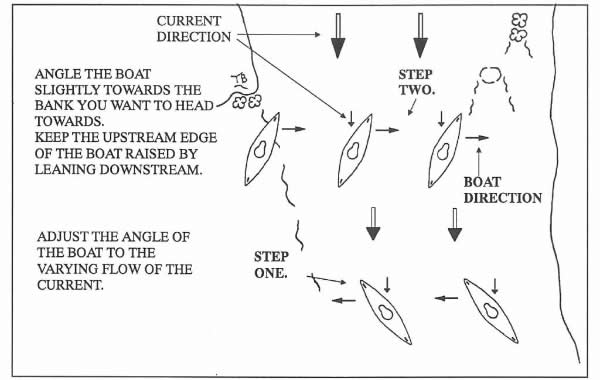
1. Crossing the current
- Move into an easy current and keep your bow pointing almost directly upstream.
- Angle your bow slightly in the direction of the bank you intend to head towards.
- Paddle forward on both sides of the boat and lean downstream. If the boat is positioned at the correct angle, the water will push against the bow of your boat and assist you to glide sideways across the river flow in the direction you wish to
travel.
- If your boat starts to swing broadside to the current, the angle is too great. To correct this, execute Forward Sweep Strokes on the downstream side to bring it back to the correct angle.
- If you change boat direction midstream, ensure you adjust your body to a downstream lean.
2. Crossing the eddy line
As you progress into swifter currents, the eddy line (which is the point at which moving water meets the
slack water) must be crossed. Paddlers continually cross this line when performing white water manoeuvres (eg crossing the current, the Break-in and the Break-out of an eddy). Care must be taken when crossing this line, as the stability and control of the boat can be considerably reduced by the water turbulence, fluctuations and different water speed.
When you attempt to cross an eddy line that is unstable:
Ferry Gliding
For more white water instruction go here:
https://terrybolland.wordpress.com/white-water-manoeuvres/
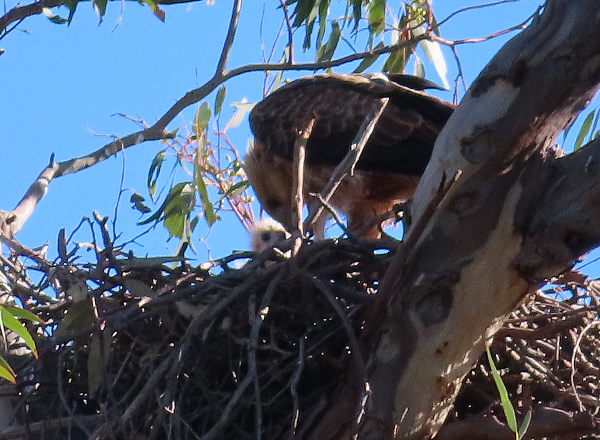
It was hard to keep my kayak still as I was taking this photo this morning so it isn't very crisp but it does show that there is a young Whistling Kite in the nest.
On Ron Courtney Island.
The Whistling Kite appears to be monogamous, with some breeding pairs remaining in a territory throughout the year and pairs actively defend the area around a nest. The bulky nest platform is built of sticks in a tall tree and may be reused, growing larger over time. Both sexes build the nest and incubate the eggs (the female does most of the incubation however) and may breed two or three times a year. The
young stay with the parents after fledging for about six to eight weeks.
Birds Australia.
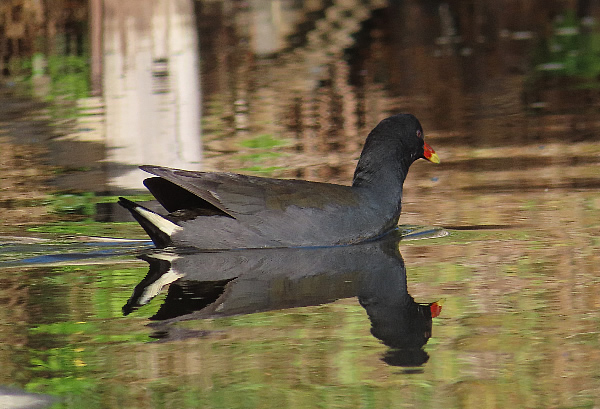
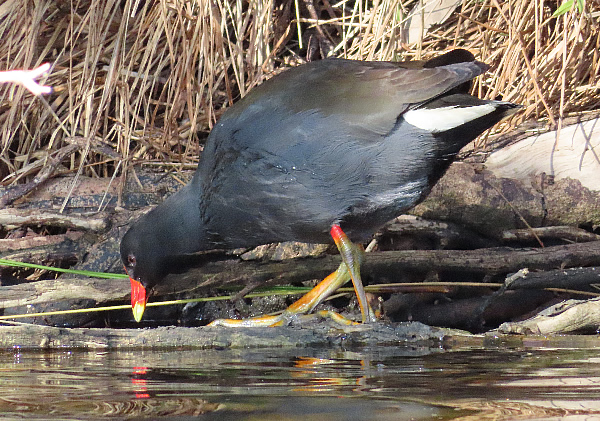
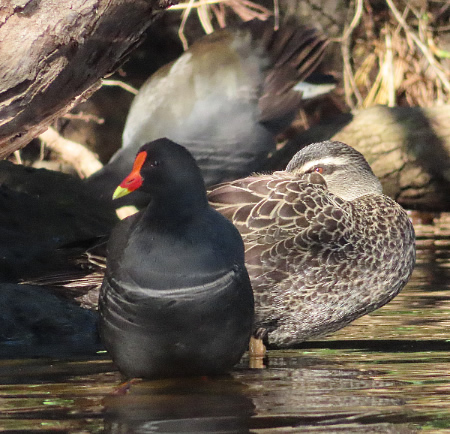
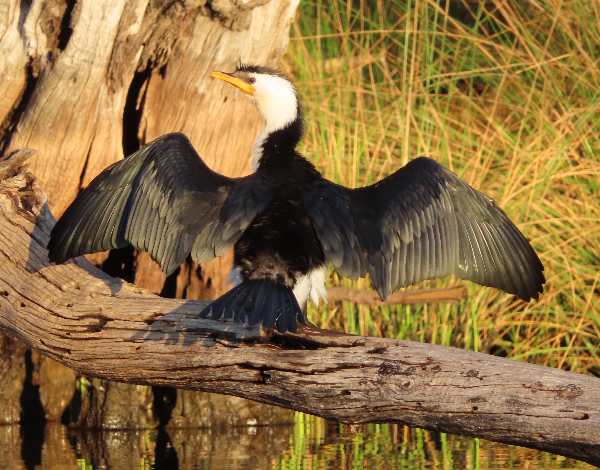
The Dusky Moorhen feeds in the water and on land on algae, water plants and grasses, as well as seeds, fruits, molluscs and other invertebrates. It will also eat carrion (dead animals) and the droppings of other birds. It does not dive when feeding; its tail is always visible above the water when
upended.
The Dusky Moorhen feeds in the water and on land on algae, water plants and grasses, as well as seeds, fruits, molluscs and other invertebrates. It will also eat carrion (dead animals) and the droppings of other birds. It does not dive when feeding; its tail is always visible above the water when upended.
Birdlife Australia.
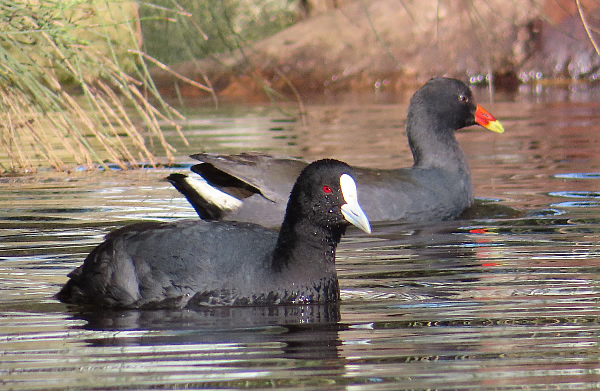
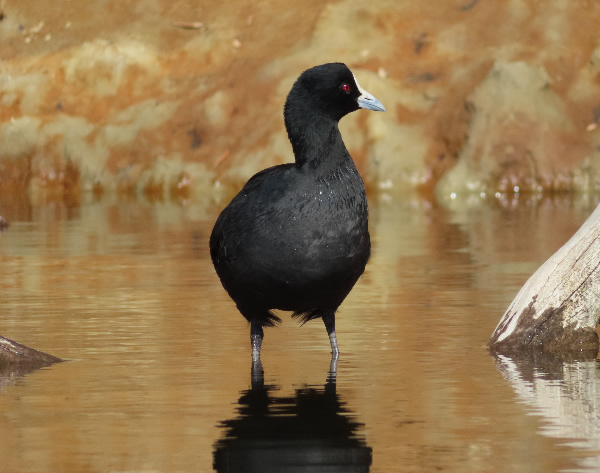
A Coot.
Food is mainly obtained during underwater dives, lasting up to 15 seconds and ranging down to 7 m in depth. Birds also graze on the land and on the surface of the water. In Australia, Eurasian Coots feed almost entirely on vegetable matter, supplemented with only a few insects, worms and fish. Birds of the northern hemisphere tend to take much more animal prey.
Eurasian Coots may breed at any time that conditions are favourable, and may produce successive broods. During the breeding season pairs establish and maintain territories with vigour. Their aggression is also extended towards other species. Nests of ducks are often seized and used as roosting sites, the unfortunate owner's eggs being pushed off into the water. Young ducks and grebes are sometimes killed. The nest is often a
floating raft of vegetation or is built on logs or tree stumps that are surrounded by water. Both sexes share incubation and care of the young. If food becomes scarce, the young birds may be killed by the parents.
Birdlife Australia.
Avon Descent
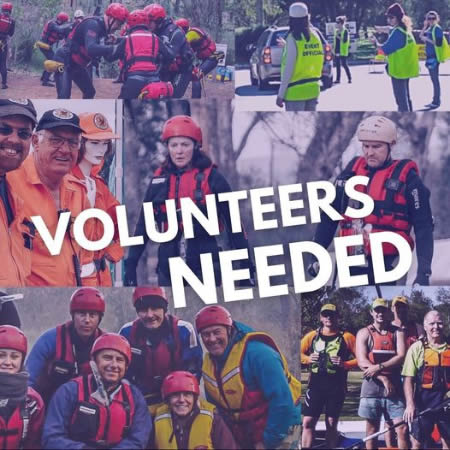
Urgent Call for Volunteers
.
The Avon Descent Support Unit needs your help! We are desperately seeking volunteers to assist with rescue & recovery on the weekend of the #avondescent.
Critically seeking people interested in rescue swimmer, boat crew, flag marshal & recovery positions (details on our website).
.
Training starts THIS WEEKEND so plenty of opportunities to come along, learn more & meet the awesome ADSU crew.
.
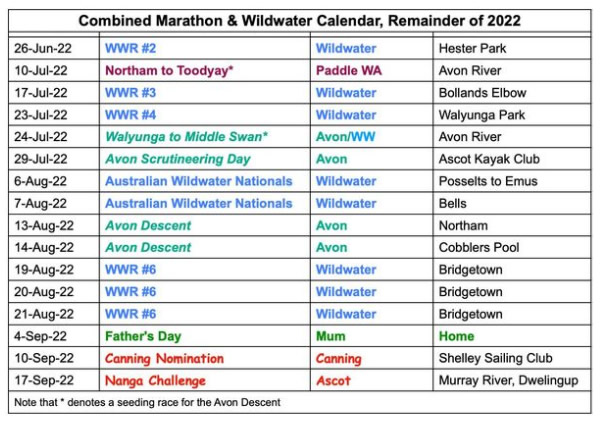
Avon Descent Scrutineering
Paddlers - lock Friday 29 July in your diaries for scrutineering!
.
We will be holding scrutineering at Ascot Kayak Club from 3-7pm, & the Swan Cafe will have some yummy dinner options available too.
.
We’d appreciate if all paddlers could please ensure they attend scrutineering at @ascotkayakclub . We appreciate the commitment it takes to get there, but it is a critical step towards helping make #avondescent safe for all participants (penalties could apply for non-attendance).
Ascot Kayak Club
Avon Competency Assessment Courses
Avon Descent - Safety and Competency Assessment Courses - first few dates have been set - book in early.
25th June 9-12 noon
23rd July 9-12 noon
6th August 9-12 noon
All paddlers are required to provide evidence of competency to participate in the Avon Descent, if they haven’t competed in the event previously.
Location Walyunga (Subject to change - depending on water levels)
If the morning sessions fill up - we have the option to run an afternoon course.
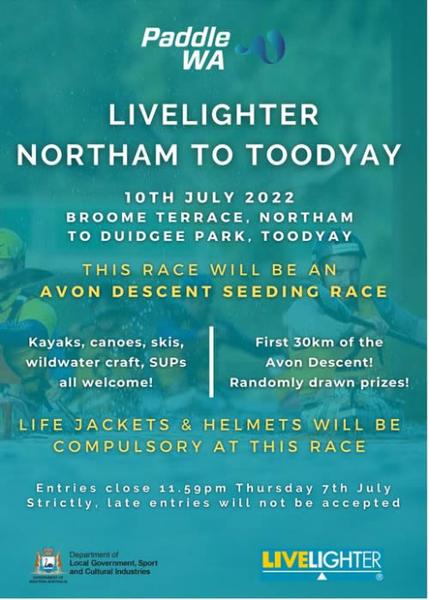
Northam to Toodyay
Sunday 10th July
-
Log in or Register if you haven’t already [keep a note of Username and Password]
-
Hit #1 MENU [Parallel lines top left on phone]
-
Hit #2 EVENTS & COURSES
-
Put Northam in the Search for Events box
-
You’ll see the link
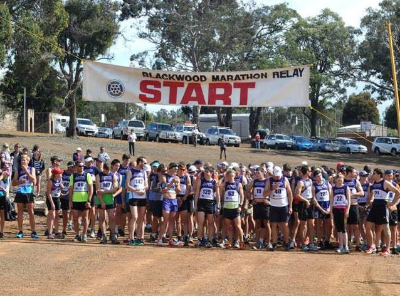
Rotary Blackwood Marathon Relay
Saturday October 29th
The Rotary Blackwood Marathon Relay is a major event attracting hundreds of visitors to the district. This year it is to be held on Saturday October 29th and many people congregate at Jayes Bridge, in the Boyup Brook Shire, at lunch time. We are seeking Expressions of Interest from organisations who can offer food for sale at this site. This could be a great opportunity for you to raise funds for your own
business or organisation. For further details, please contact the Catering Director-Jillian Beale.
k-jbeale@bigpond.com . Mobile 0417928224.
|
|
|
|
|
|
|
|
|
|