|
|
|
|
This week I paddled 280.43 kilometres
bringing my total to 9017.95 kilometres.
I'm trying to average 40kms a day.
How warm has this summer been.
Paddling for Prostate Cancer.
If you would like to give a donation to Prostate Cancer, big or small it will be most welcome.
Go to: https://fundraise.pcfa.org.au/fundraisers/terrybolland
Sunday was always going to be a difficult day to paddle 40kms. It was Race Around the Buoys final Summer Series Race at Ascot Kayak Club. My usual routine is to paddle 27kms in the morning session and 13-18kms in the evening session. However with the two race runs this morning only being
3kms in total and a practice run or two being another 3 kms I still had 21 kms to paddle. I gained another 3kms putting the buoys in place so I was getting closer to my 27kms. Between my runs I also paddled up and down to create a few more kilometres and ended up paddling 14.89 kms by the end of the race, but that was well short of my usual target.
To make the day more interesting my Garmin 735XT watch started vibrating and wouldn’t stop. When I turned it off the vibrations stopped but when I turned it on again it started up again and later it wouldn’t show any data. Back at home I left it hoping it needed a rest and at 3.00pm I
checked it again and it was of no use, there was nothing on the watch face and it still vibrated. I then realised I couldn’t go paddling that night without recording my time so I rushed to Rebel Sports in Morley to see if they had any idea how to fix it. Of course they didn’t so I had no alternative to buy another watch. I chose a Garmin Forerunner 55 ($325.00) it was much cheaper than the next model up which had a $900.00 price tag.
I went out and paddled 16 kms that night and thankfully my distance was recorded. Panic over.
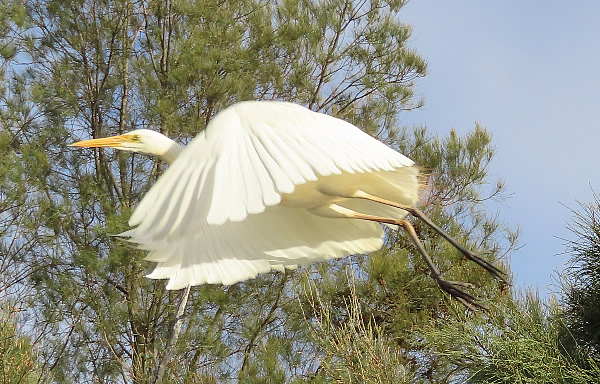
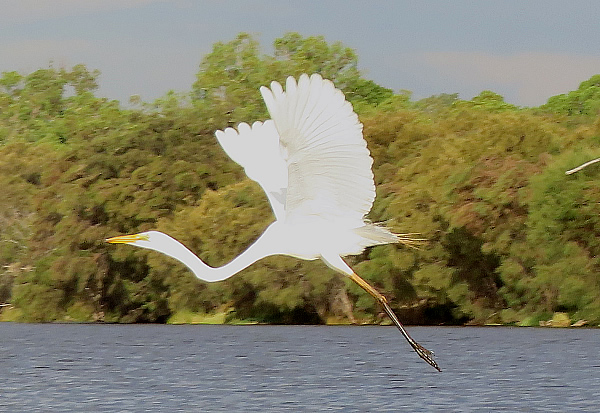
An Egret in flight.
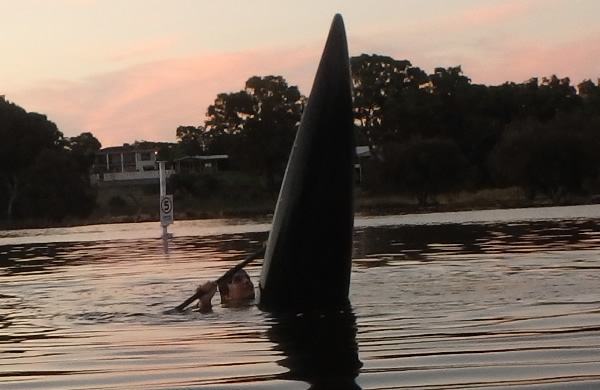
Like an umbrella.
Jenny reckons I should get rid of all the boring paddling photos in the newsletter and just put bird photos in.
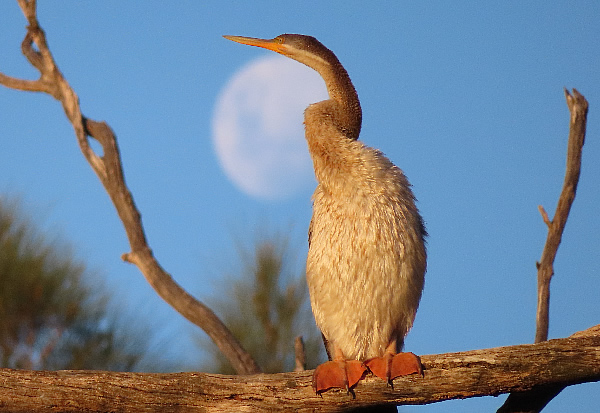
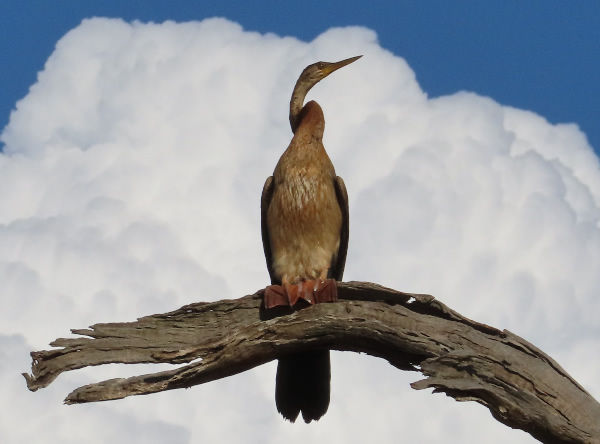
A Darter high in a tree on the near full moon.
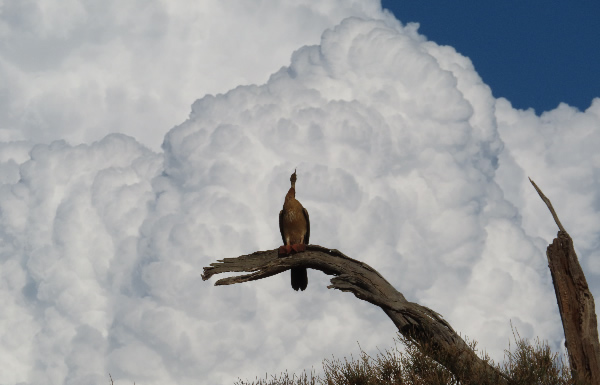
Tuesday night the moon was hidden by amazing cloud formations.
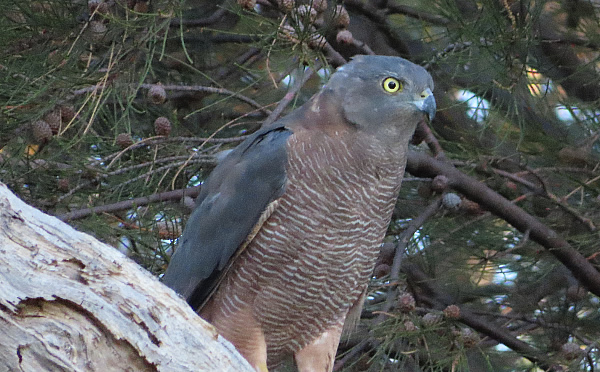
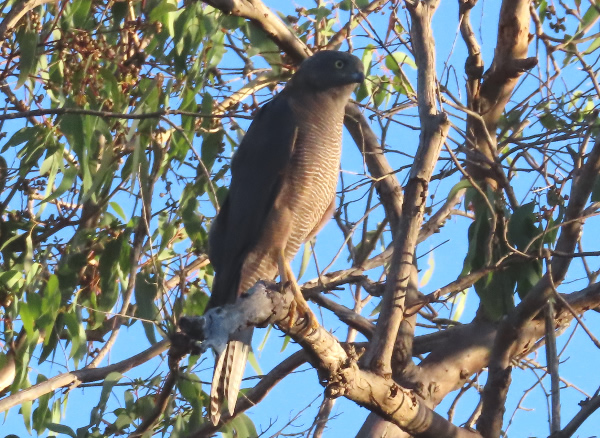
A Goshawk in Guildford.
More photos at the bottom of the newsletter.
- Hunter Florisson
- Who's Out There
- Racing Around The Buoys
- On My Paddles - Birds Along The Way
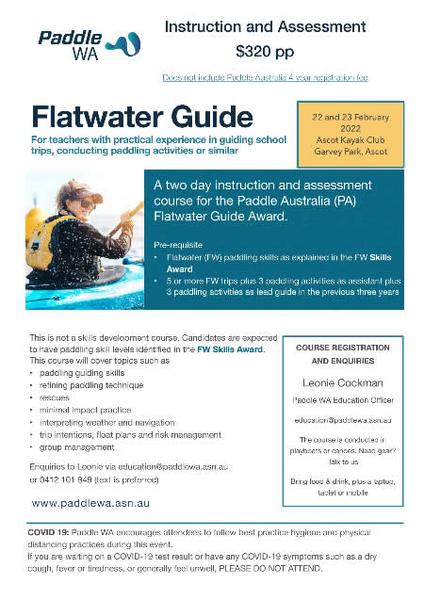
- Flat Water Guide Course
- AKC Junior Development Coach Wanted
- WA Sea Kayak Festival
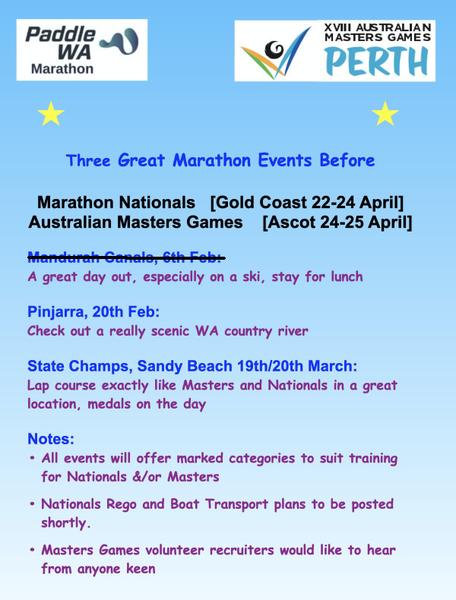
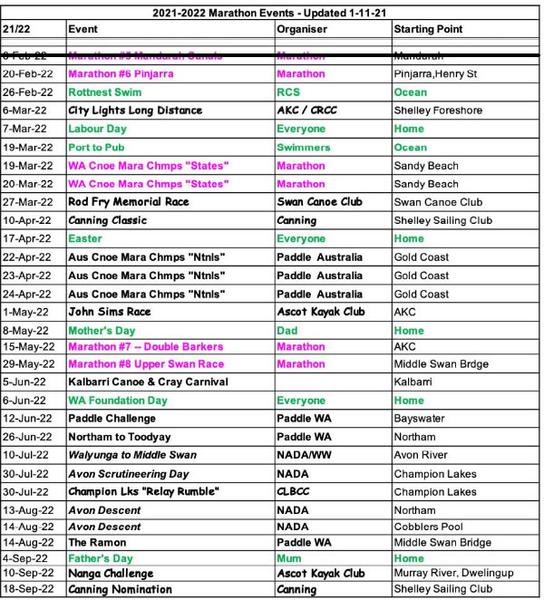
- Coming Events
Ascot paddler Hunter Florisson doing some cooling down manoevres on a hot summer night.
Hunter has been named on the
2022 Canoe Slalom National Development Squad.
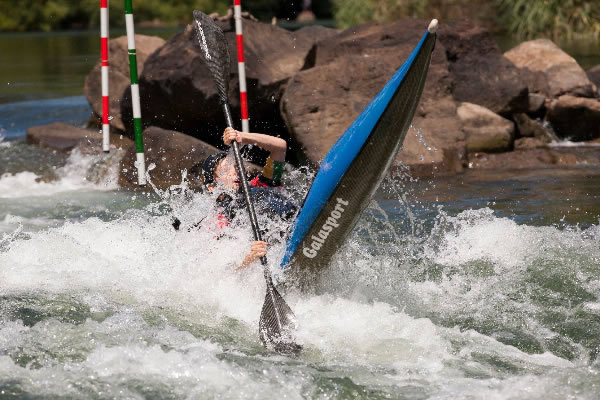
Hunter at a slalom event getting vertical.
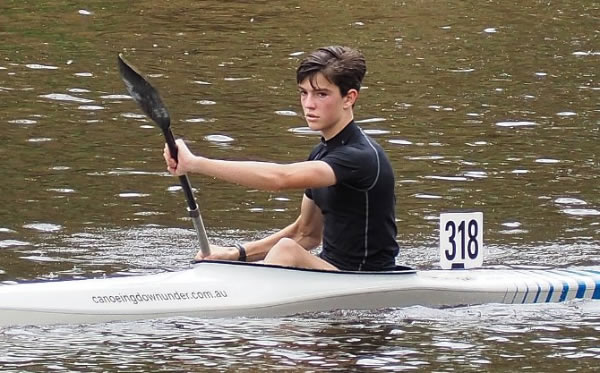
Junior Paddler of the Year (Non-Olympic Disciplines) awarded to Hunter Florisson November 28, 2021 Hunter Florisson from Ascot Kayak Club in Western Australia has been rewarded for his impressive results this season, in being named the 2021 Junior Paddler of the Year (Non-Olympic Disciplines.)
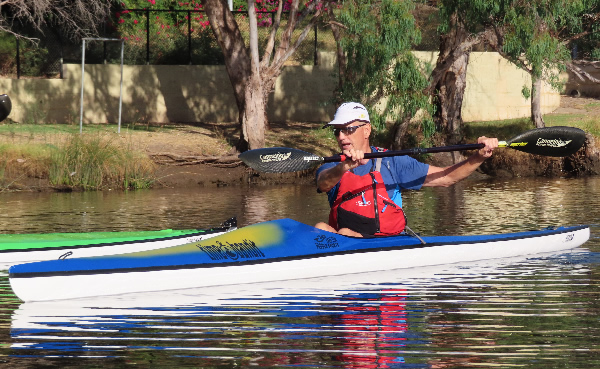
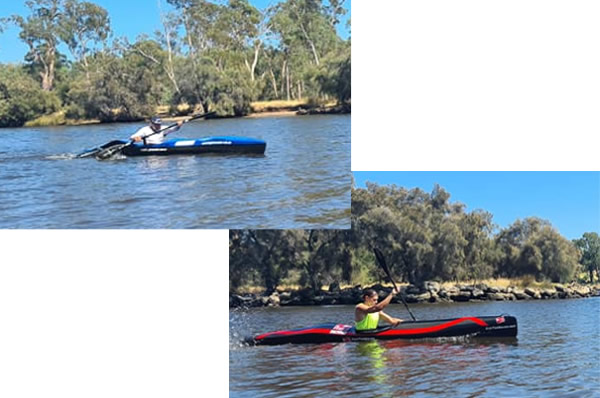
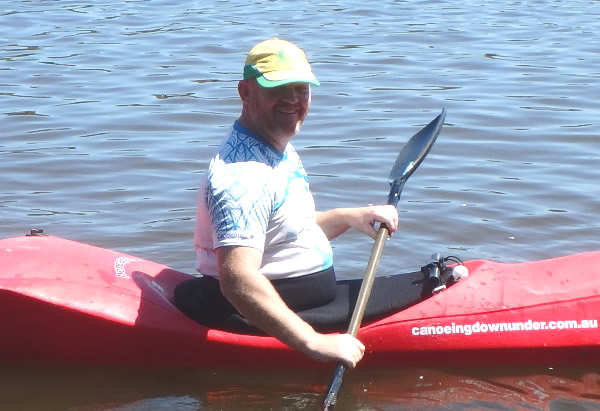
I'm usually paddling on the river by myself on a Sunday night but this last Sunday Anthony Clarke was trying out his new kayak.
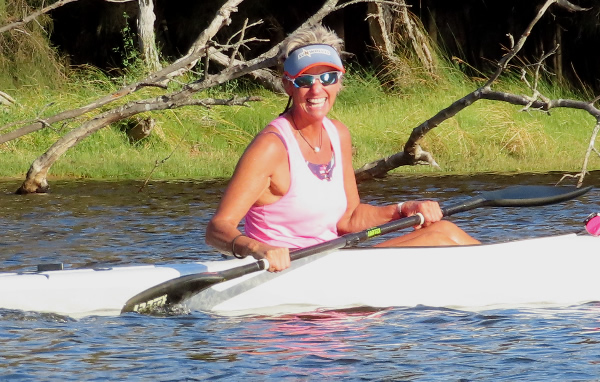
Nicky Taylor enjoys a paddle as you can see.
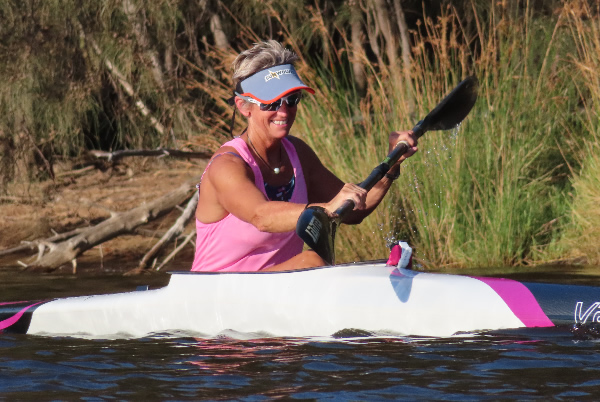
You will see her paddling doubles quite a bit with Olympians and anyone keen to give double paddling a go.
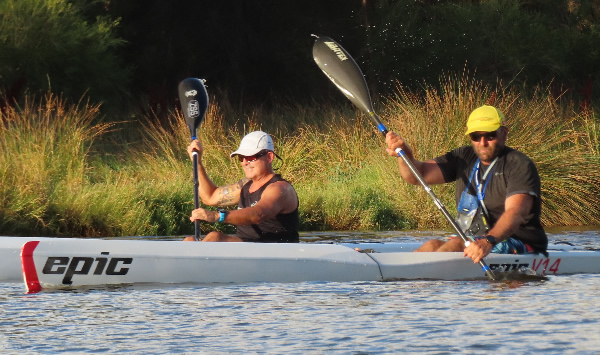
Tom Rogan (right) with his mate Craig.
Tom has been paddling for several years. He is fun to have around.
(Don't get too close when paddling towards him though, he has been known to splash you in the face!!!)
He can put his hand to anything. He built the portage ramps that we had at the Australian Marathon Championships when it was in WA.
Craig is fairly new to paddling.
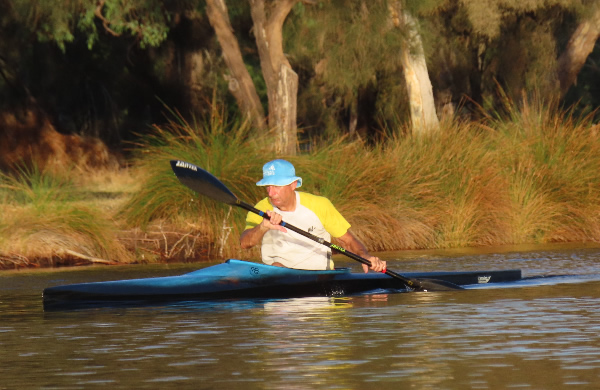
Richard Lowther.
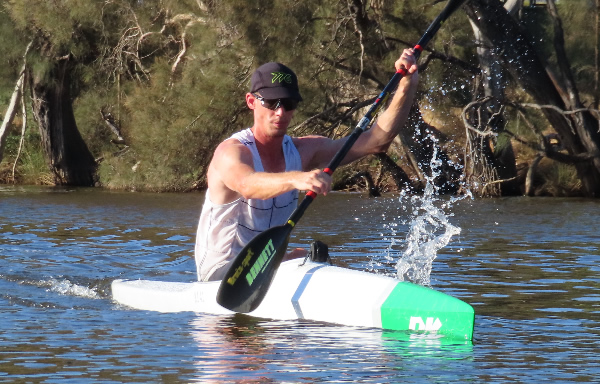
I used to keep up with Richard but he has been training hard this year and he is now impossible to keep up with.
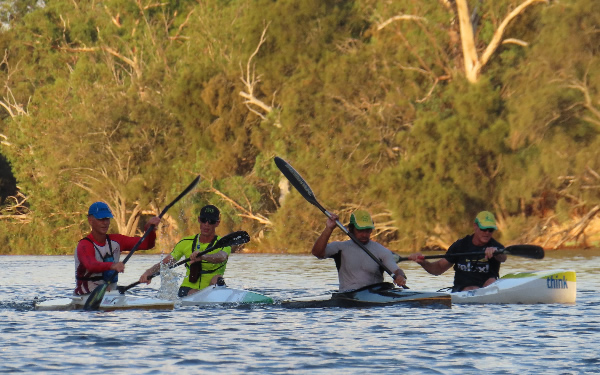
Brett McDonald, Anthony Clarke, Peter Tomczac and Kim Mahony on their way back from a training session.
Patrick Tullock has been out of action for a while. Now he is back and teaching others the forward technique.
Patrick has been an Australian Marathon Champion in his age group.
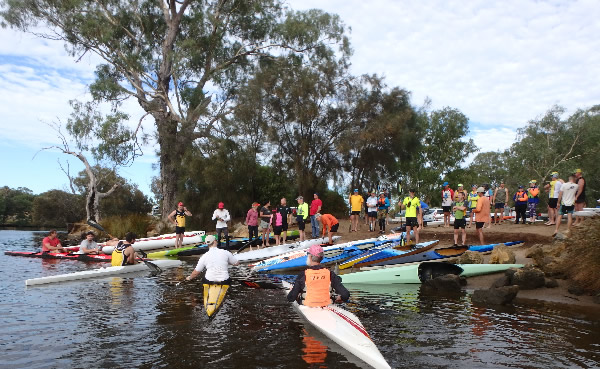
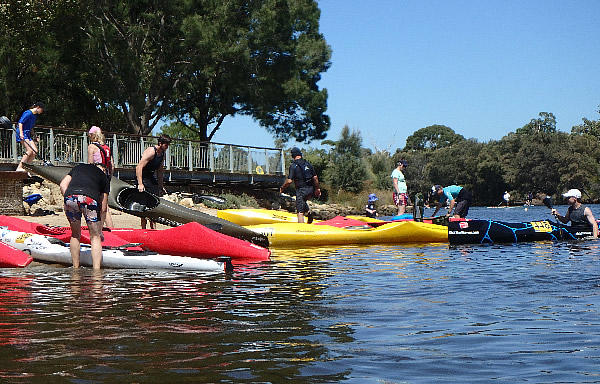
Paddlers at Sandy Beach on Saturday morning after the race.
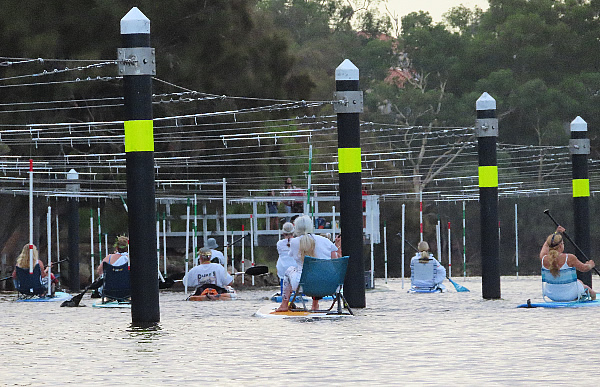
Stand Up Paddle Boarders (sitting down) paddling through the slalom poles.
David Burdett who has been winning all the summer series races was beaten by Harry Langley on this longer course.
Christopher Greed was 3rd.
Nathan Jamieson 4th place.
Me coming 5th and Harry right on his winning run.
Photo Steph Bedden.
Kris Smith.
Wild Water Committee Chairman.
Kris is a wiz on the ipad sorting out all the results and does a lot of work for Wild Water.
Results here:
https://www.webscorer.com/seriesresult?seriesid=263821&gender=O
On My Paddles
Birds Along My Way
Brown Goshawks feed on small mammals, with rabbits a particularly important prey item, as well as birds, reptiles and insects and sometimes, carrion (dead animals). They hunt stealthily from a low, concealed perch, using sudden, short bursts of speed to pounce onto prey and use their long legs and clawed toes to reach out and strike it. It will occasionally stalk or run
along the ground after insects. Prey items are taken back to a perch to be partially plucked (mammals, birds) and then eaten.
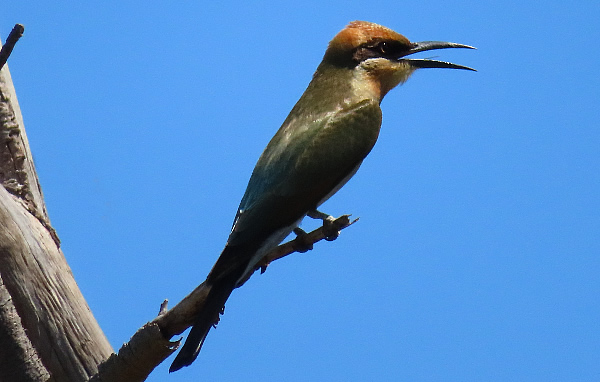
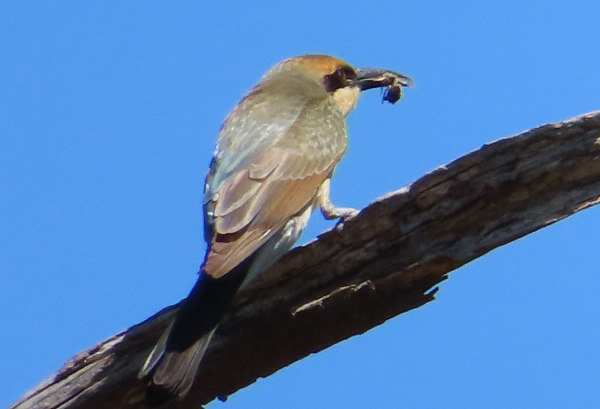
Rainbow Bee-Eater with a meal.
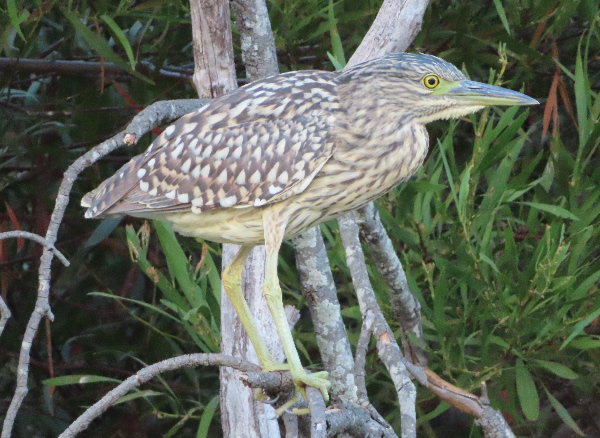
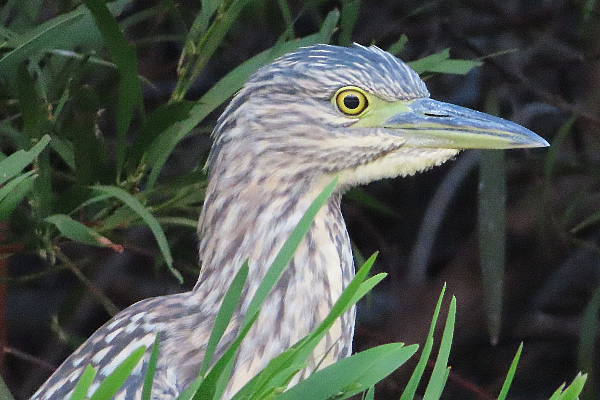
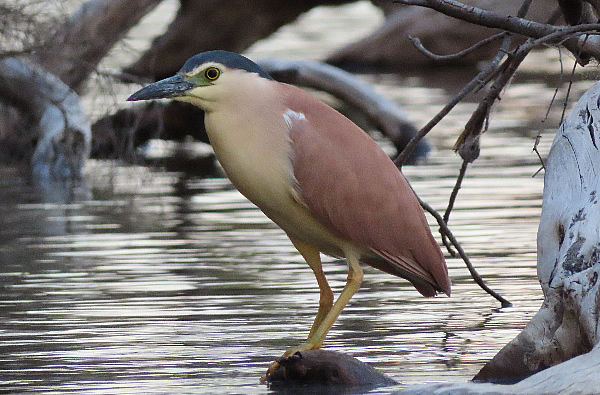
Juvenile Nankeen Night Heron.
The juvenile has brown and white streaking to help with camouflage while building up their survival and hunting skills.
This young feller's habitat opposite Fishmarket Reserve is under threat as a landowner is clearing the trees around it.
Nankeen Night Herons feed primarily at night in shallow water on a wide variety of insects, crustaceans, fish and amphibians but can occasionally be observed feeding during the day.
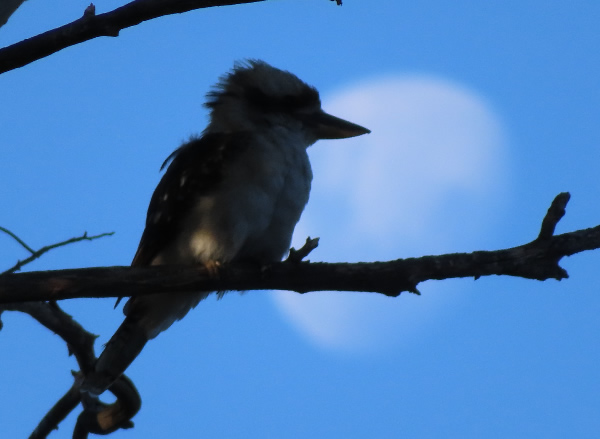
A Kookaburra getting ready for a moonlit night.
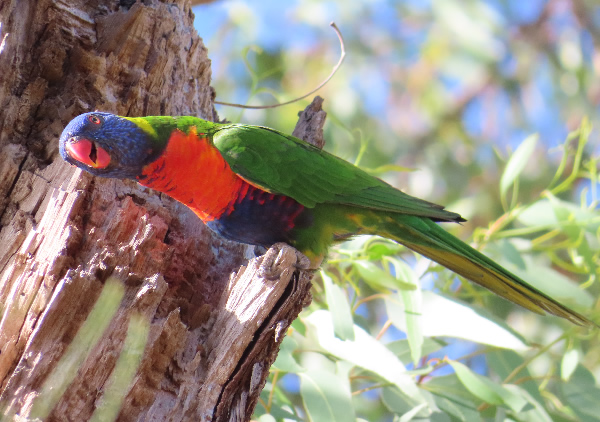
Rainbow Lorikeet
The rainbow lorikeet is a declared pest in Western Australia. It is a small, brightly coloured parrot that was introduced to WA during the 1960s.
The rainbow lorikeet has been established in Perth, Western Australia since 1968. From fewer than 10 escaped or released birds it is now well established in the metropolitan area.
In Perth, rainbow lorikeets occur in open woodlands with mature exotic vegetation. The trees in which the lorikeets thrive include the lemon-scented gum, date and cotton palms, Norfolk Island pine, coral and fig.
Lorikeets nest in tree hollows and on the platforms at the base of palm tree fronds, where they excavate a nest. Breeding can occur from April to December and the majority of nestlings fledge in August. Pairs may breed twice per year when conditions are favourable.
In Perth, rainbow lorikeets eat pollen and nectar, foliage, fruit, seeds and flower parts. They feed from exotic lemon-scented gums, spotted gums, cotton palms, date palms, coral trees, fig trees, native jarrah, marri and she-oak. They also glean invertebrates such as lerp and psyllids from leaves and twigs.
Rainbow lorikeets roost in large, noisy groups which leave the roost at dawn. Large foraging flocks of 10-50 birds can travel more than 50km to feeding sites. Lorikeets fly high and rarely go to ground, spending most of their time in the outer foliage of tall trees.
Damage
The rainbow lorikeet is a major pest of agriculture in Australia. It is a serious pest of cherry, apple, pear, stone fruit, grape and vegetable crops, and field crops such as sorghum, flowers and ornamentals.
Rainbow lorikeets cause significant damage to commercial table grape crops in the Swan Valley and orchard fruit crops in the Perth hills.
The lorikeets damage suburban garden fruit and flowers, foul outdoor areas and vehicles with droppings and harass and compete with native birds. Lorikeets have been reported feeding on backyard grapes, figs, pears, apricots, nectarines, loquats, mulberries, mangoes, passionfruit, cherries, apples, peaches, plums and guavas.
Rainbow lorikeets aggressively protect feeding and nesting resources, potentially excluding native species. They are carriers of Psittacine Beak and Feather Disease and are a potential disease risk to wild and captive parrots.
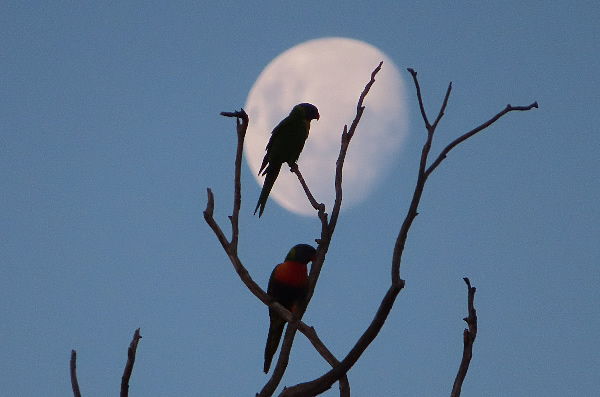
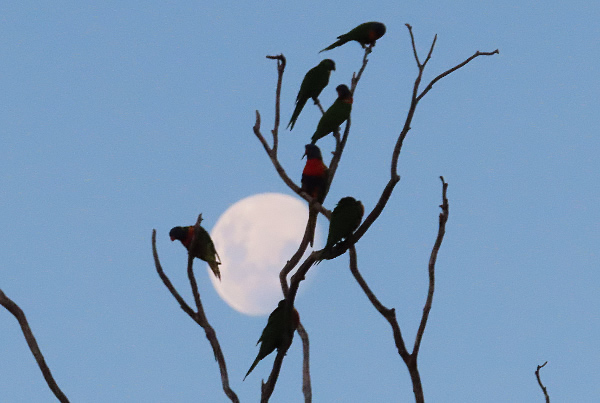
Rainbow Lorikeets hang around and chatter away in the moonlight.
The rainbow lorikeet is a declared pest in Western Australia.
Status
Under legislation administered by the Department of Agriculture and Food, rainbow lorikeets are declared pests in the southern parts of the State including the Perth metropolitan area.
Rainbow lorikeets are subject to an Acclimatised Fauna Notice in the south-west land division under legislation administered by the Department of Parks and Wildlife (DPaW). Under this legislation they can be shot or live-trapped on private land in the south-west, in accordance with an open season notice, without the need to obtain a damage licence from DPaW.
Risk management
Given the size of the lorikeet population in Perth, eradication is unlikely but a reduction in the numbers at key locations may be possible. To prevent satellite populations becoming established in the wild, small groups of lorikeets originating from escaped or released birds have been retrieved or removed from many country locations.
It is essential that any lorikeets in the wild outside the existing Perth range be immediately reported so they can be safely retrieved or removed.
Department Parks & Wildlife.
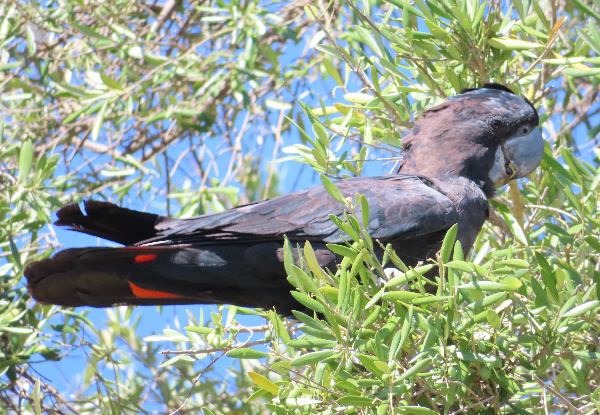
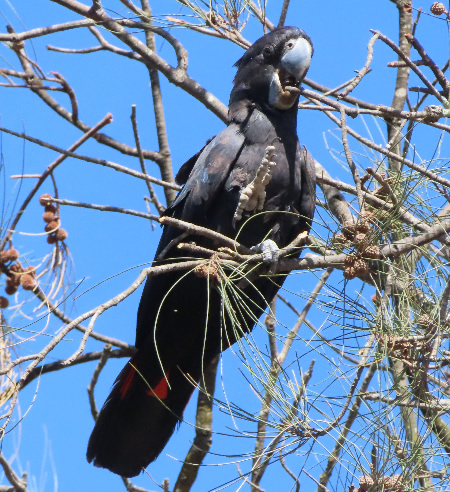
Red Tailed Black Cockatoos are eating well along the river at the moment.
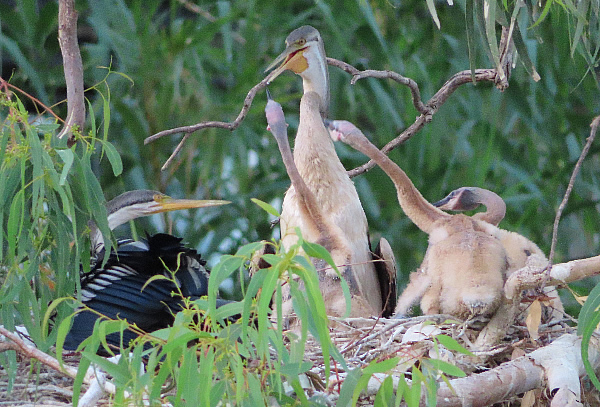
Young Darters want attention.
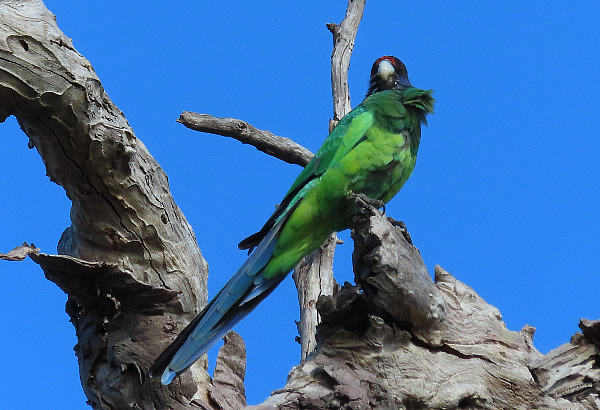
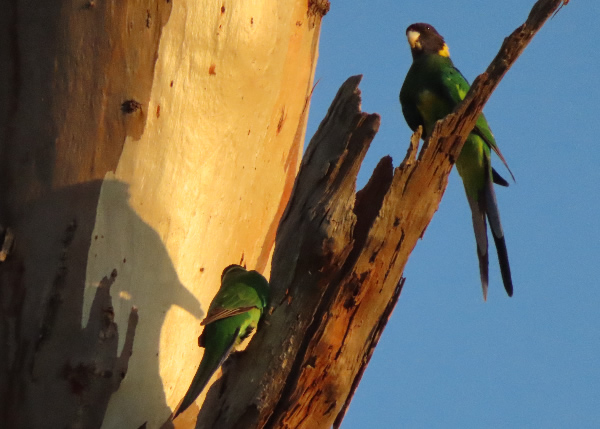
Twenty Eight Parrots, or Ringed Neck Parrot.
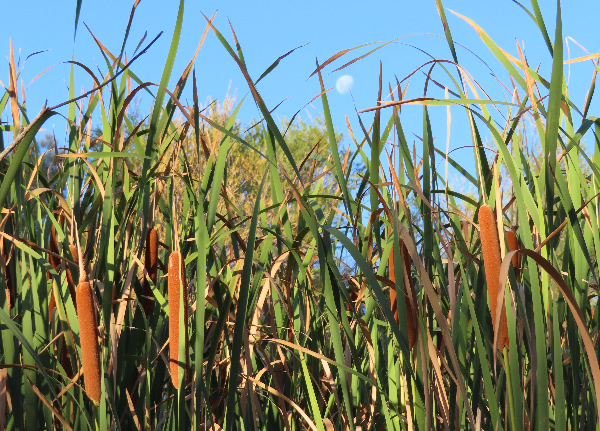
Bullrushes on the Helena River.
Position Available:
AKC Junior Development Coach
Ascot Kayak Club are seeking expressions of interest from suitable applicants to become the new Junior Development Coach.
The AKC Junior Performance Squad is the next training level above their current junior development program, which serves as a transition to competitive racing. The squad will continue to instill a love of paddling in participants, while preparing them for racing across the disciplines Sprint, Marathon, Wildwater, Slalom and Ocean Racing.
https://www.paddlewa.asn.au/blog/2022/02/09/position-available-akc-junior-development-coach/
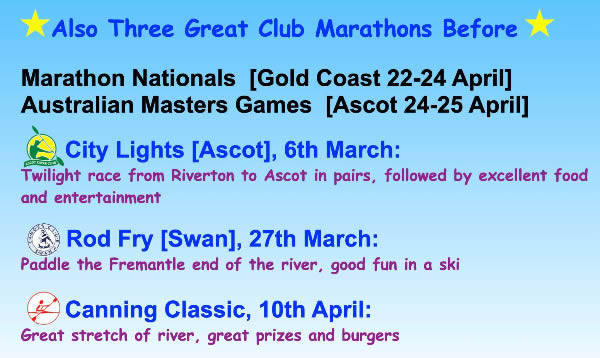
AKC CITY LIGHTS
SAVE THE DATE - SUNDAY 6TH MARCH
WA Sea Kayak Festival 2022
25th - 28th March 2022 | Camp Grace, Busselton
Registrations are now open for the 2022 WA Sea Kayak Festival!
Busselton and the surrounds is a wonderful location offering paddles of all adventure levels, from the calm waters Geographe Bay to more challenging paddles off the coast.
Experienced sea leaders are there to support each trip. Qualified instructors will be available to help you learn new skills and experience the wonderful world of sea kayaking. A range of presenters (depending on Covid travel restrictions) will talk on their kayaking adventures. The Fest is a great way to be immersed in all things sea kayaking.
Registrations close on Friday the 11th March 2022.
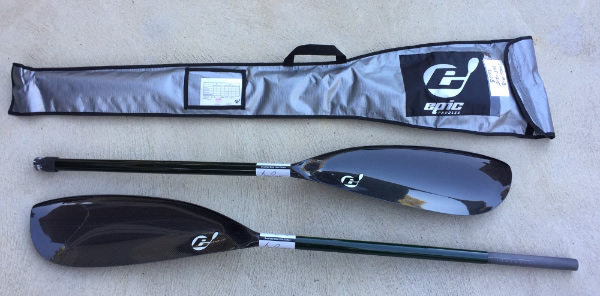
Club Carbon - $460
- 737g
- Carbon fibre blade, Green oval shaft
- Fully adjustable length & feather
- Includes Paddle Bag
|
|
|
|
|
|
|
|
|
|