|
|
|
|
I finished my 7000km goal.
However this week I paddled 288 kms.
It's hard not to paddle long distances now.
I'm not really finished until June 2nd though.
- It's Done - 7000 kms
- Down River Practise & Racing Around the Buoys.
- To Explore Waterways to Lake Powell
- On My Paddles
- Australian Masters
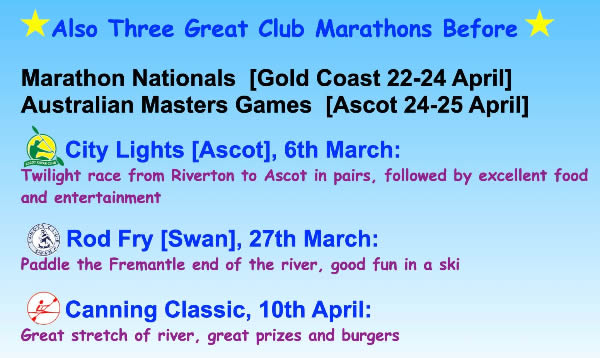
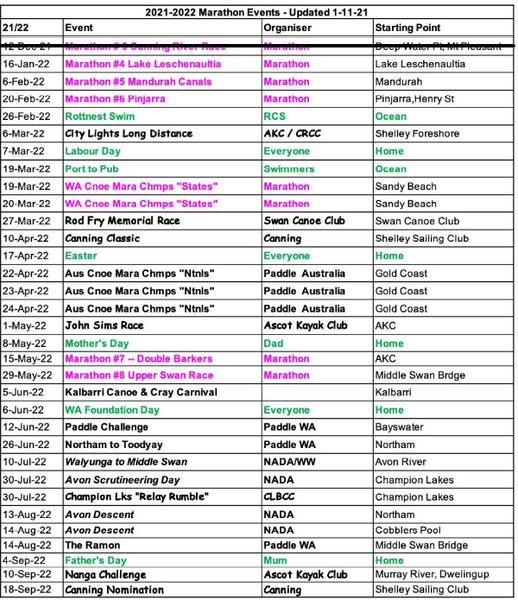
- Coming Events
It’s Done – Well my Main Goal Is!
It was meant to take 12 months but I paddled the 7000 kms in just under 7 months. 70 years old, 7000 kms, 7 months. (sounds good)
I started the challenge on June 3rd 2021 so the 7 months was up on January 2nd 2022 completing 7160.00 kms in 214 days (30 weeks and four days) so on average that is over 1000 kms paddled a month, 233 kms a week or 33.45 kms a day.
The first 4 ½ months I was paddling 20 and 30 km days, then I started paddling some 40 km days. It was then I realised that if I paddled about 44 kms every day from then on I could paddle the 7000 kms in 7 months, which sounded good, so that’s what I did. However not every day did I have time to paddle 44 kms so I started paddling some 50 km days to make up the difference and to be sure I achieved the target.
All but 200 kms of my 7160 kms have been on a 20 km stretch of flat-non-moving water on the Swan River near home in Ashfield.
So I have paddled every day. My lowest paddling week was 145.20 kms and the highest week I paddled 343.11 kms.
In the month of December I paddled 1369.03 kilometres, my biggest month.
I have been lucky that I have been living in WA as covid has only interrupted my challenge for 4 days where I was only able to paddle 11kms in the allotted hour. My biggest day I paddled 70 kms, but I have also had many days paddling over 50 kms.
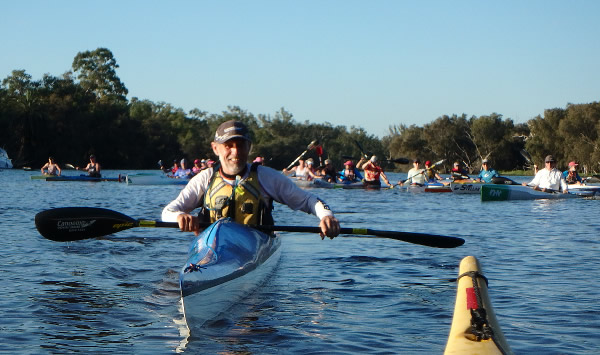
I hope to continue to paddle at least 20 kms or more every day until June 2nd. It will probably depend on the virus.
Thank you to those paddlers who paddled that last 5 kms of the 7000 kms with me last Wednesday and I am very thankful for all those people who have given a donation to the Prostate Cancer Foundation.
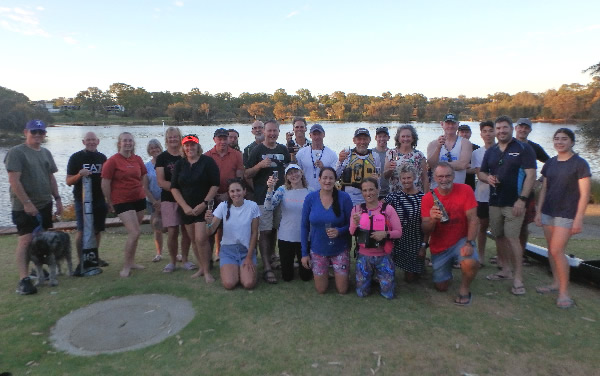
A group of about 30 paddlers joined me on my last 5 km paddle before reaching the 7000km mark.
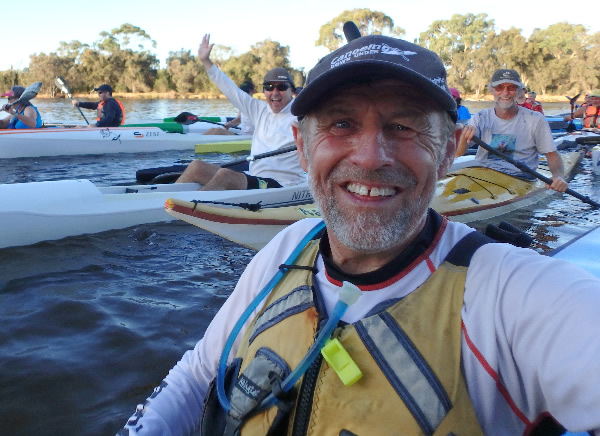
Nigel Emmett (left) was more excited than I was.
My biggest concern from here is being stopped from paddling due to the virus.
Some of the group celebrate with champagne that Jane & Peter Liddle supplied.
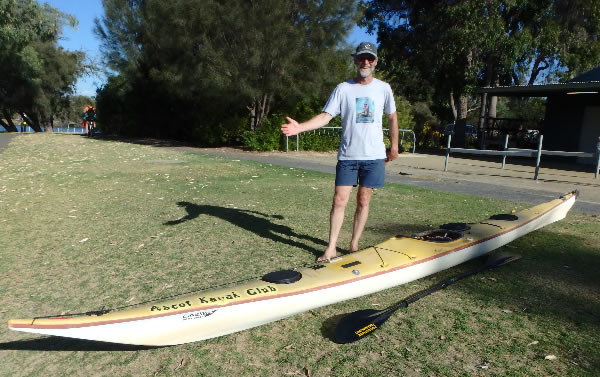
John Snowball who I gave my trusty Nordkapp kayak to, that I used on my Kimberley trips, joined us on the paddle.
I paddled it later and I couldn't believe how difficult it was to turn compared to other sea kayaks. But despite it's heavy weight it moved along okay. I can't imagine wanting to paddle a kayak with such a small cockpit anymore as they are so difficult to get in and out without using your paddle as a support.
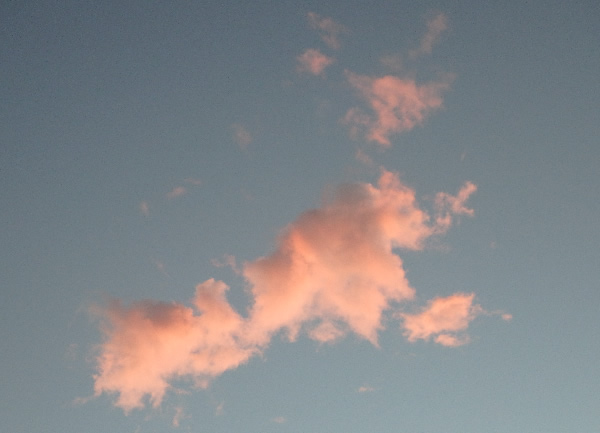
As I paddled home at sunset that night I looked up towards the clouds with a little joy in my heart and a little relieved. It had been a pretty hard 2-3 months.
Now I thought I could take it a little easier.
That hasn't happened yet. I have got used to doing 30-40 kms a day.
I love being on the river when the sun is creating patterns and pictures of the clouds.
This cloud formation reminded me of Japan.
(I spent 3 months hitch hiking around Japan and had a fantastic time).
Across the other side of the sky there clouds displaying an archipelago of islands in Alaska.
The next time you are out on the river at sunset and there are clouds, have a look up.
WA Wild Water Summer
Series around the buoys.
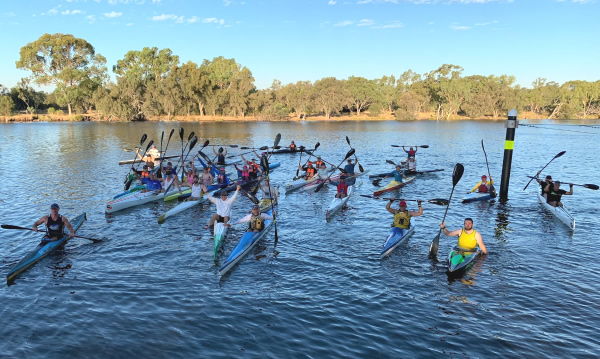
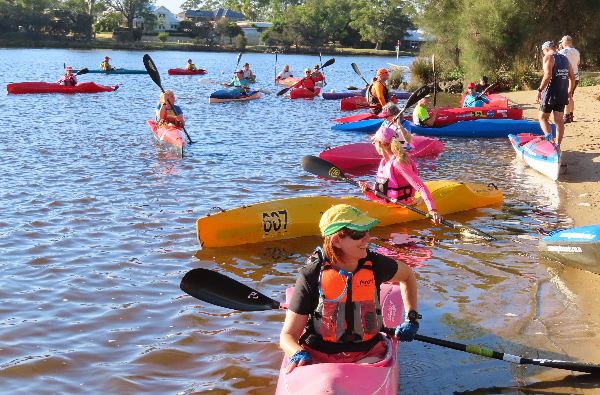
I have been putting the buoys out at Claughton Reserve to run the training session in wild water kayaks and wavehoppers for many years now, (it's the only time I get up at 5.00am) but I did think this year we wouldn't get the numbers. How wrong was I. 25 paddlers turned up including several new paddlers, which was great to see.
It was also good to see some of our top Wild Water paddlers take part this morning.
No matter how good you are in a K1, practising to control and turn a DR kayak will make you a better paddler overall.
It takes several practise sessions for a beginner to master the techniques but with perseverance it will come.
A Wild Water (WW) kayak is the same as a Down River (DR) Kayak just different terminology. I see Wild Water kayaking is generally run on pretty big rapids, and Down River racing is usually run on less difficult rapids.
If you are wanting to take part in any or all of the remaining five training sessions, please follow the link below on Webscorer to register your details. You are only required to register once no matter how many sessions you plan on attending.
The FREE training sessions will be held over 6 consecutive Friday mornings at 6am from the 7th of January through until the 11th of February at Claughton Reserve, Bayswater.
This mornings group about to get away.
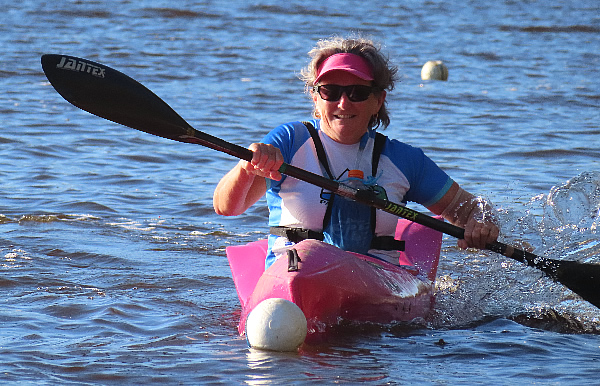
It's the first time in a Wavehopper for Kate.
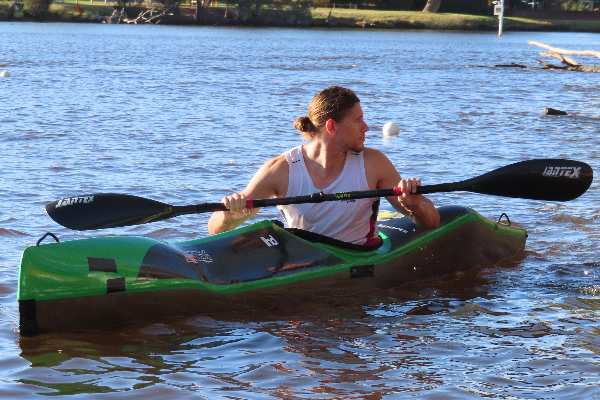
Harry Langley is paddling a Wild Water/Down River Kayak 4.5 metres long and is made of composite materials and weighs about 9-10kg.
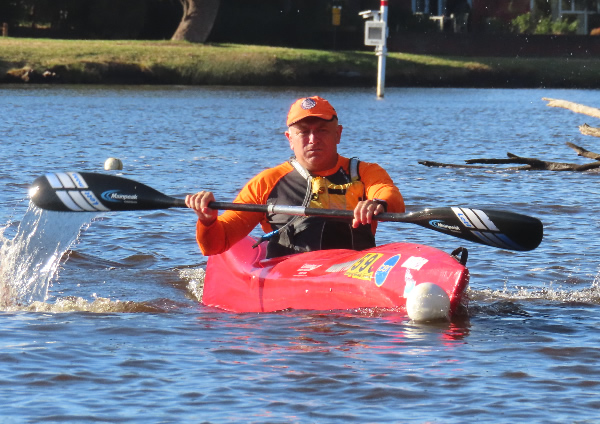
Geraint is paddling a Wavehopper. It is shorter 4.00 metres long and is made of plastic and would weigh around 25 kgs.
This kayak is easier to handle than a WW Water Kayak.
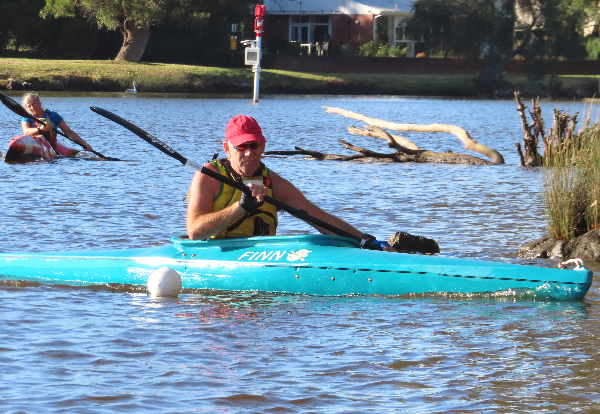
Chris, who is a beginner is paddling a Finn Kayak without a rudder, as rudders are not allowed in WW/DR Racing. The Finn kayak being 4.25 metres long doesn't turn as well as a WW or a Wavehopper but it will respond better once paddlers get the confidence to edge it on it's side.
Jane Liddle about to have a head on collision with a buoy.
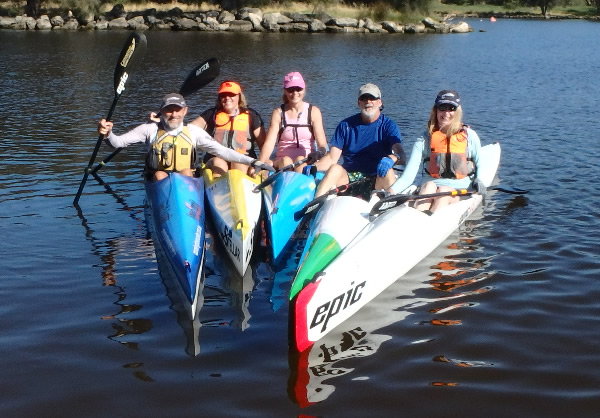
Me, Julie, Marie, Ross and Jo after a paddle.
Julie paddled 12 kms with me for 5 mornings between Christmas and New Year.
Richard who was following us said I never stopped talking for 6 kms.
I was telling Julie my life story and after 5 sessions I still only scratched the surface.
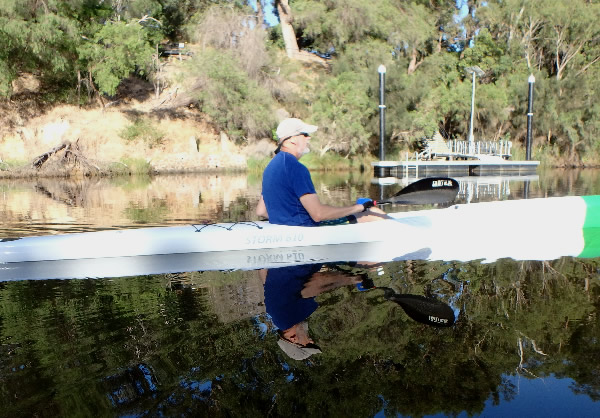
Ross Burdett in reflection.
Pam Riordan and gang on New Years Eve.
Heading out for a moonlight paddle and picnic without the moon.
Clive Dawkins and his wife motoring along.
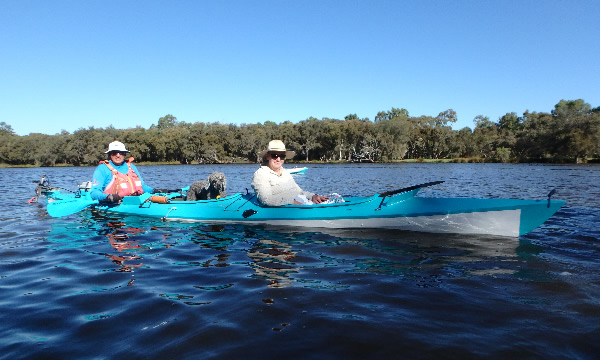
This double kayak was made of timber but painted. Three person kayak or should I say two person kayak and a dog. They have a motor fixed on the rear for easy paddling.
To Explore
Elleker Canals and Lake Powell
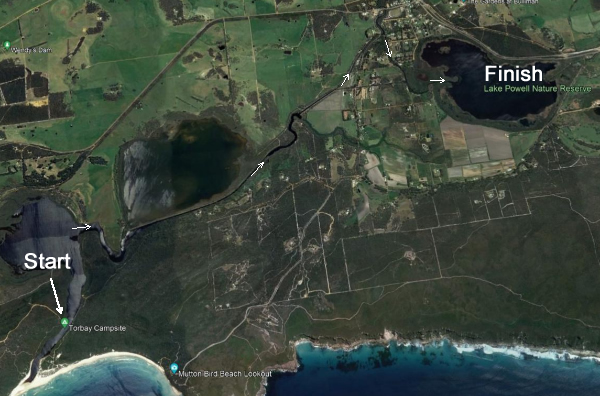
The natural drainage of the coastal plain in the Torbay area has been much altered by modern day engineers to enable more land for agriculture. Previously it was prone to flooding every winter and to being dried out every summer. Nowadays the birds like the modern day idea and Lake Powell is a nature reserve with water all year round, very much a popular
spot with local and migratory birds.
This is a long tale as it took us a long time indeed to sort out the logistics, not being sure who was going to paddle where on this complicated adventure. All the cars were required to make sure we could all get back to the campground.
Eventually we set off from a breezy Torbay Inlet, found the natural river start to the canal and ventured forth, up-canal. None of us had been towards the Elleker end and it was with fingers crossed that we ventured further into the unknown. However, one or two had some commonsense and said - “This way!” This is a pretty paddle with the water quality being excellent due to a few rainy days beforehand.
Miira, Lynne, Jane, Sue, Ping, Kate and Robyn.
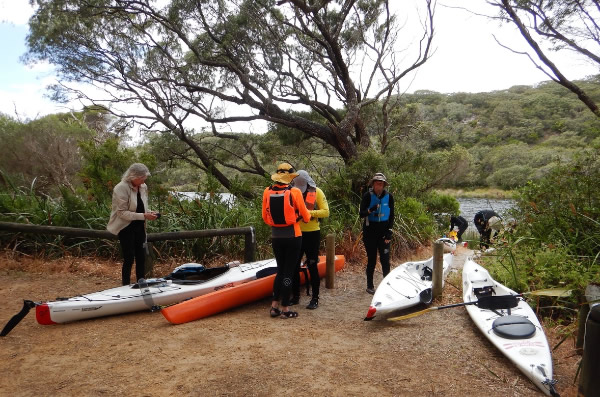
Seven of us set out from the camp ground at Torbay Inlet as far as the bundt - then three turned around and headed back as they didn’t want to climb over the bundt. They had this in mind before we set out as we checked it out beforehand.
Photo Robyn Korshid
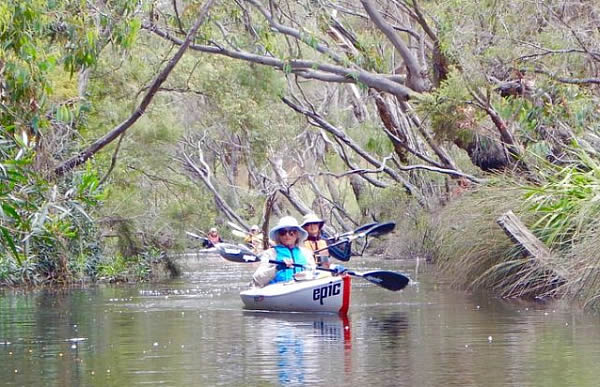
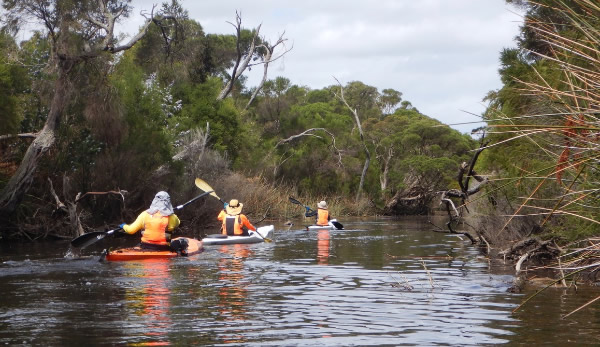
Marbellup Brook leading to Lake Powell - Ping, Sue and Kate. Log free - a pleasant surprise.
Photo Robyn Korshid
Ping, Sue & Kate.
Photo Robyn Korshid
On Marbellup Brook, heading to the lake.
Photo Robyn Korshid
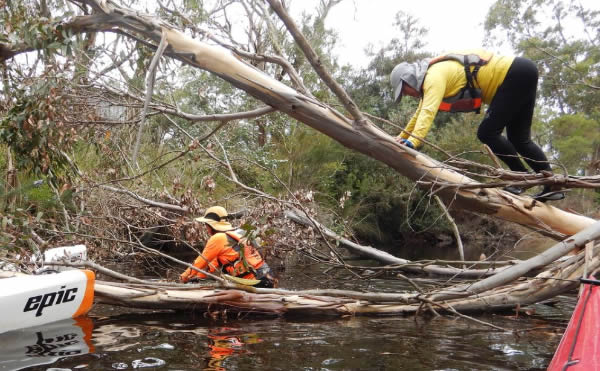
Now four of us were more foolhardy than the rest and determined to clamber up and over an earth bundt into Marbellup Brook (what is left of it) and paddle to and across Lake Powell. We had been advised that the BIG log we could see in the distance from the put-in
did not go right across the river. Wrong, as you will see from the photo, below. However with the assistance of the youngsters, we all got through the complicated maze of branches to paddle this quite charming and interesting kilometre or two before reaching the lake. On crossing the lake we did not see many birds, but could see the bird hide which led us to our cars on the other side. It was a fun afternoon with much humour at our antics in the
log-jam.
Sue and Ping climbing over the trees.
Photo Robyn Korshid
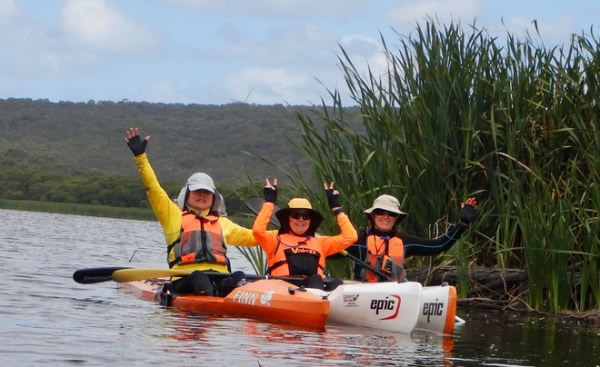
Ping, Sue and Kate in Lake Powell.
Photo Robyn Korshid
The paddle distance was about 10.5km.
Ping, Robyn (who organised the trip and took the photos) and Susan.
The End! At the bird hide on the other side of the lake.
Again, water quality good.
On My Paddles
Birds Along My Way
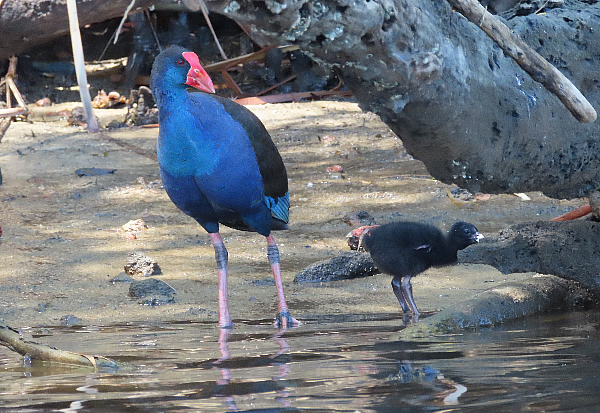
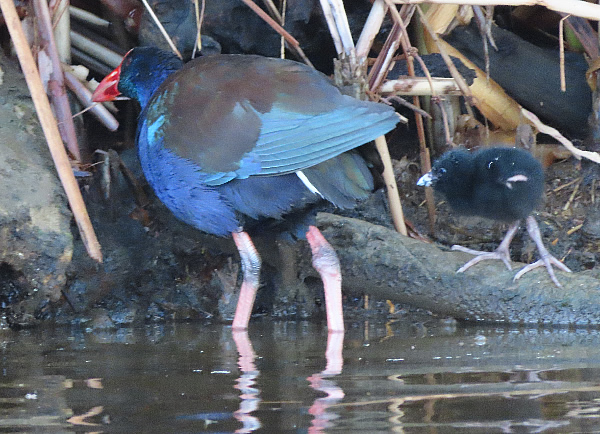
Purple Swamphens residing in Redcliffe.
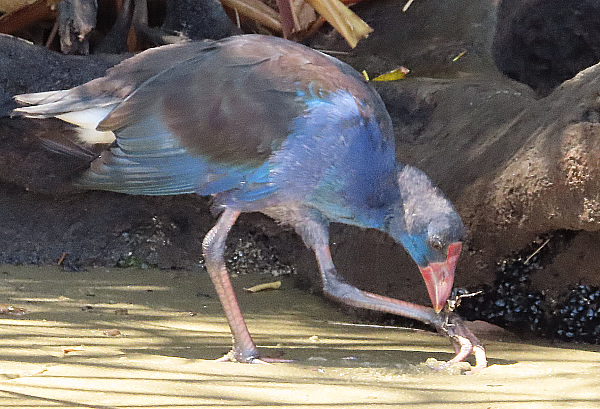
A Purple Swamphen catches a crab for lunch.
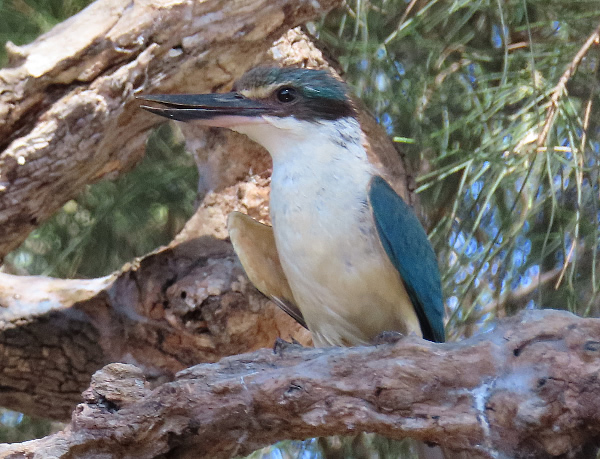
A Kingfisher opposite Governor Stirling School.
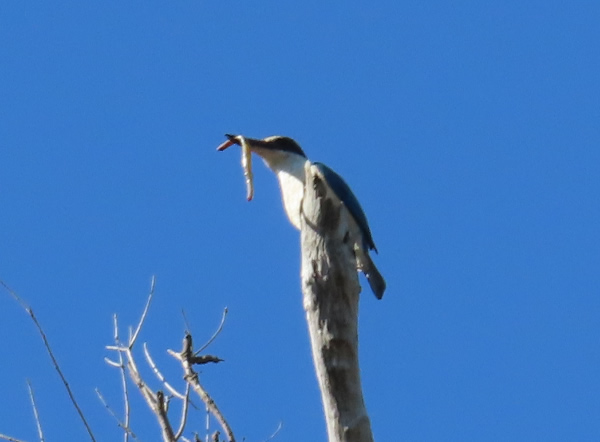
A Kingfisher with lunch.
Opposite Sandy Beach.
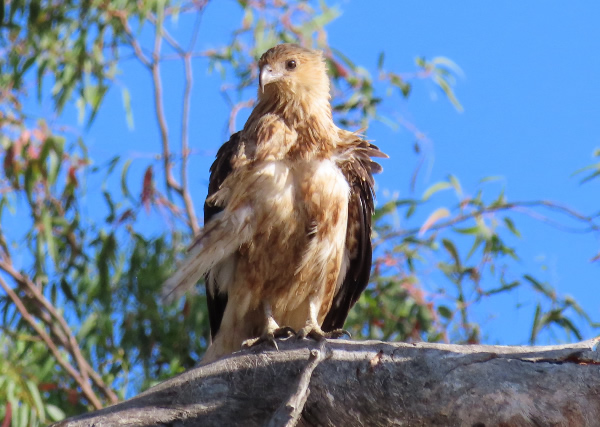
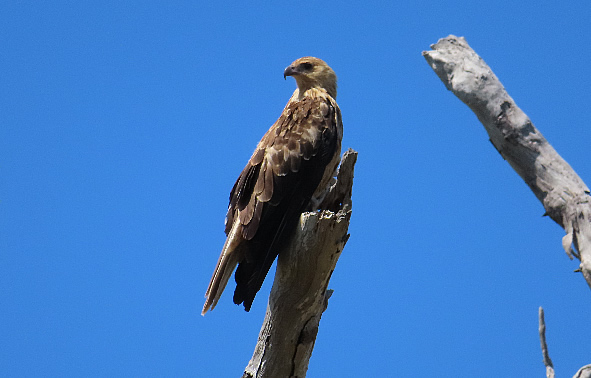
This Whistling Kite on Ron Courtney Island had just been flying low over the ducklings below.
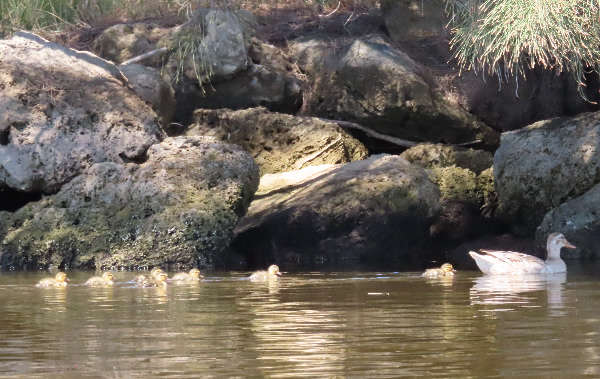
This was a picture taken of a resident light coloured duck near Ascot Kayak Club 5 days ago. The last time I saw it, it only had one duckling left.
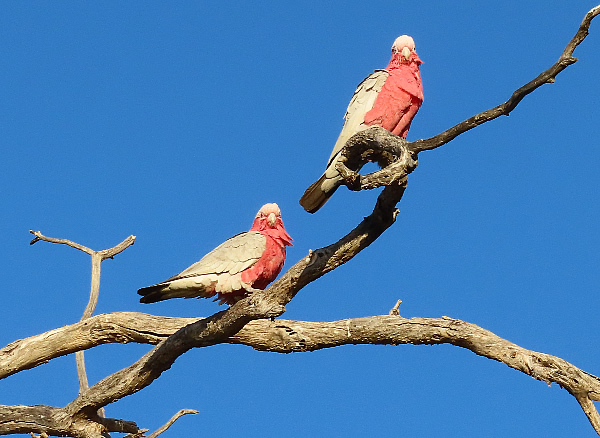
The Galah,
also known as the pink and grey cockatoo is found throughout Australia, it is among the most common of the cockatoos. With its distinctive pink and grey plumage and its bold and loud behaviour, it is a familiar sight in the wild and increasingly in urban areas.
Galahs form huge, noisy flocks which feed on seeds, mostly from the ground. Seeds of grasses and cultivated crops are eaten, making these birds agricultural pests in some areas. Birds may travel large distances in search of favourable feeding grounds.
Galahs form permanent pair bonds, although a bird will take a new partner if the other one dies. The nest is a tree hollow or similar location, lined with leaves. Both sexes incubate the eggs and care for the young. There is high chick mortality in Galahs, with up to 50 % of chicks dying in the first six months. Galahs have been recorded breeding with other members of the cockatoo family, both in the wild and captivity.
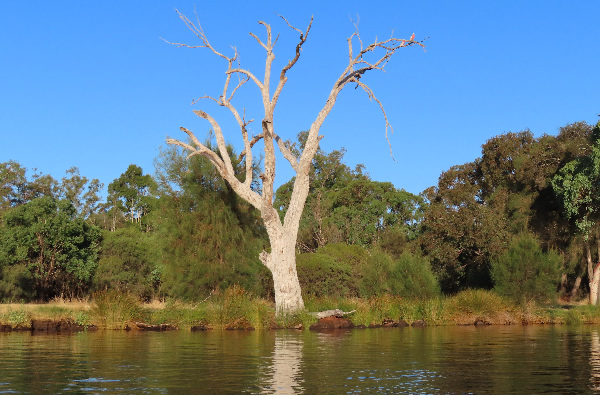
These two Galahs were captured at the top of this big dead tree just before sunset.
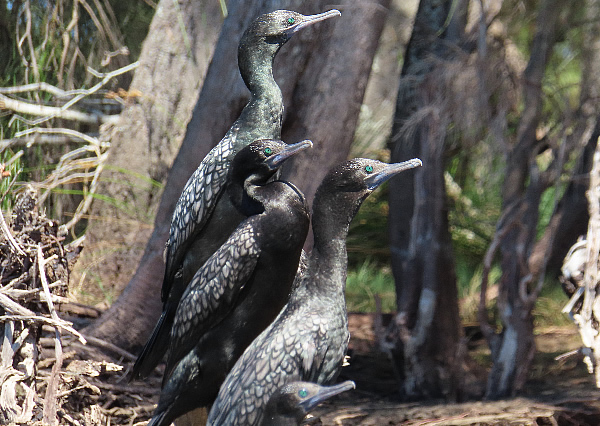
The Little Black Cormorant
is a small, slim, totally black cormorant with a greenish sheen to the back and a slender grey hooked bill and green eyes.
The Little Black Cormorant feeds on fish, crustaceans and aquatic insects. It catches prey underwater, by diving and swimming using its large, fully webbed feet for propulsion. It has special nictitating membranes that cover and protect the eyes underwater. As their feathers are not waterproof, cormorants are regularly seen perched with their wings outstretched to dry after fishing.
Most species of cormorants congregate in breeding colonies, but the Little Black Cormorant also regularly forms large flocks at other times. Foraging Little Black Cormorants may occur in flocks of hundreds or possibly thousands, which sometimes feed co-operatively. They have been recorded surrounding schools of fish in open water, and forming a line across marine inlets to catch fish washed out on ebbing tides. Flocks advance across the
water’s surface, with birds flying ahead from the rear, alighting and diving in front of the feeding flock.
Australian Masters Games.
Be in it!
The 18th Edition of the Australian Masters Games will be held on the 23-30 April 2022 in Perth, WA.
The Masters Canoe/Kayak Marathon will be held on Sunday 24 April (singles) and Monday 25 April (Anzac Day) 2022 (doubles).
No portages are involved.
Venue - Ascot Kayak Club.
Early Bird Registration until 11th February 2022.
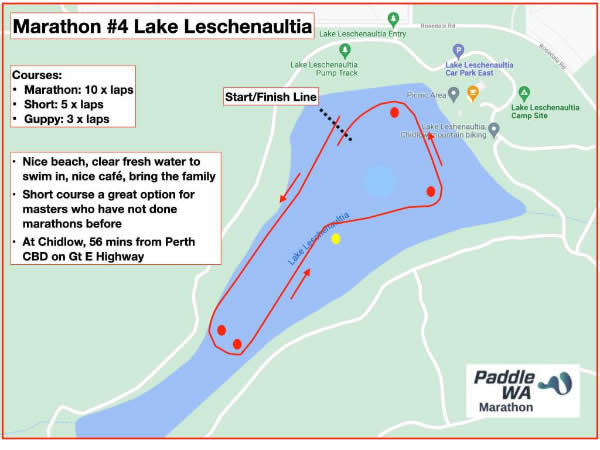
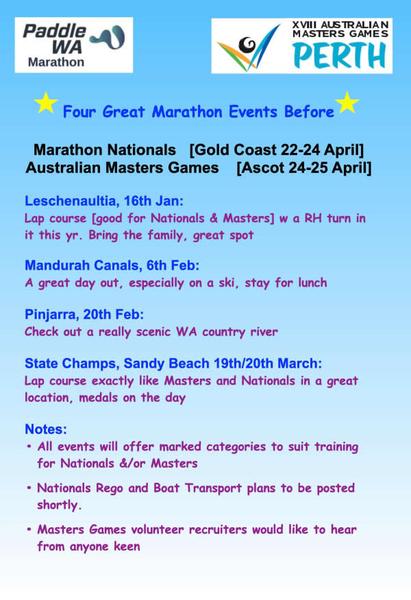
Register Lake Leschenaultia, Sun 16th
Great opportunity for Marathon Nationals & Masters Training
|
|
|
|
|
|
|
|
|
|